*Claim bandits demanded N1m for each of the 344 pupils
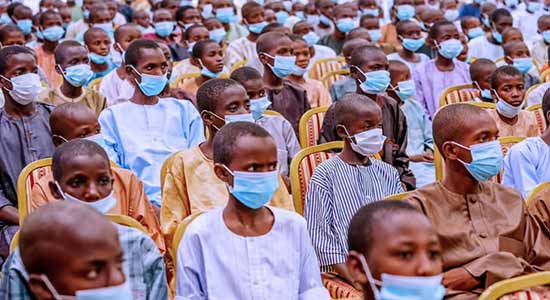
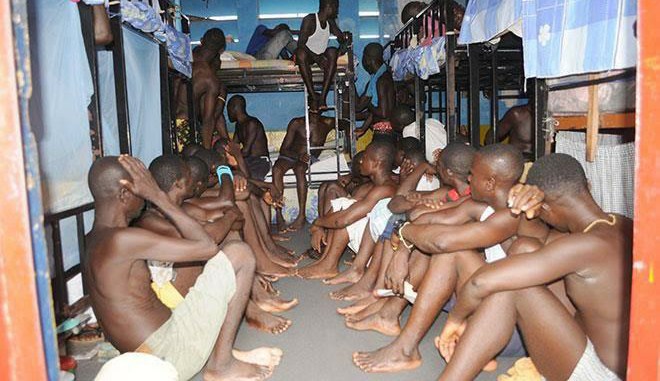
The schoolboys who were kidnapped from Government Science Secondary School, Kankara, in Katsina State, by suspected bandits on December 11, have given more insight into the developments that led to their release by their captors.
Speaking to Wall Street Journal (WSJ), based in the United States, some of the boys narrated how they were thoroughly beaten by the bandits, adding that a ransom was paid to the kidnappers before they were freed.
Their narration conflicted with that of the federal government, which said no ransom was paid.
Senior Special Assistant to the President on Media and Publicity, Malam Garba Shehu, on Tuesday, said the rescuing of the 344 schoolboys from their captors who took them to a forest in Zamfara State, was facilitated by repentant bandits. He also reiterated an earlier statement by the Minister of Information and Culture, Alhaji Lai Mohammed, that the federal government didn’t buy freedom for the pupils.
The WSJ, in a report yesterday, quoted three of the 344 boys as saying in interviews that the kidnappers told them a ransom had been paid for their release, while a person familiar with the kidnappers’ talks with the government said a sizable sum had been paid for the boys’ freedom.
Eight of the freed students, boys as young as 13, the report said, were forced to eat raw potatoes and bitter kalgo leaves to survive. They were seldom allowed rest and slept on rocky ground.
“Government officials denied paying ransom and said the kidnappers released the schoolboys because the military had surrounded them.
“However, three boys said their kidnappers told them they were initially paid 30 million naira, equivalent to around $76,000, but decided not to release the boys because they had demanded 344 million naira-1 per head.
“They threatened to release only 30 of us when the 30 million initial ransom was paid, said 16-year-old Yinusa Idris. They even took 30 of us away on motorcycles ready to release,” the news medium stated.
It quoted another of the abducted pupil, Imran Yakubu, a 17-year-old, as saying that the kidnappers told them: “One million naira must be paid per each student…or we will recruit or kill you.”
The paper also noted that person familiar with the negotiations said a ransom was transferred in three batches.
The boys were further told, according to the WSJ, on December 16, that if they returned to school, they would be kidnapped again.
“There were more than 100 armed men in the school courtyard. They were shining bright flashlights and streaming into the pastel-coloured buildings. ‘Gather here. We are soldiers,’ they said.
WSJ added: “The gunmen, some on foot, others on motorcycles, ordered the boys to walk in a long column, hitting anyone who walked too slowly with a whip or rifle butt.
“At one point, when the guards were looking at the sky, two students close to the back of the convoy tried to slip away. The hostages were all told to halt so they could watch their classmates being punished.
“The older one’s hands were tied to a tree and he was beaten. Water was poured on his body in the early morning so that he could feel the freezing cold,” one of the students narrated.
However, the Nigerian military said that “ kinetic and non-kinetic approaches were used to ensure all the boys were rescued unhurt”, saying that there was resistance from the abductors who laid an ambush against the troops.
The Coordinator, Defence Media Operations, John Enenche, and Ahmed Jibrin, former Director, Military Intelligence, who spoke when they featured on an NTA programme, “Good Morning Nigeria”, insisted that no ransom was paid.
“Following the directive, the troop closed in on the abductors from four different fronts, including the reinforcement that was made from other divisions to ensure that the entire location was sealed off.
“The bandits were all under siege and they were fully aware of that, feeling the impacts of the presence of the troops both from the air and on the ground,” said the military.
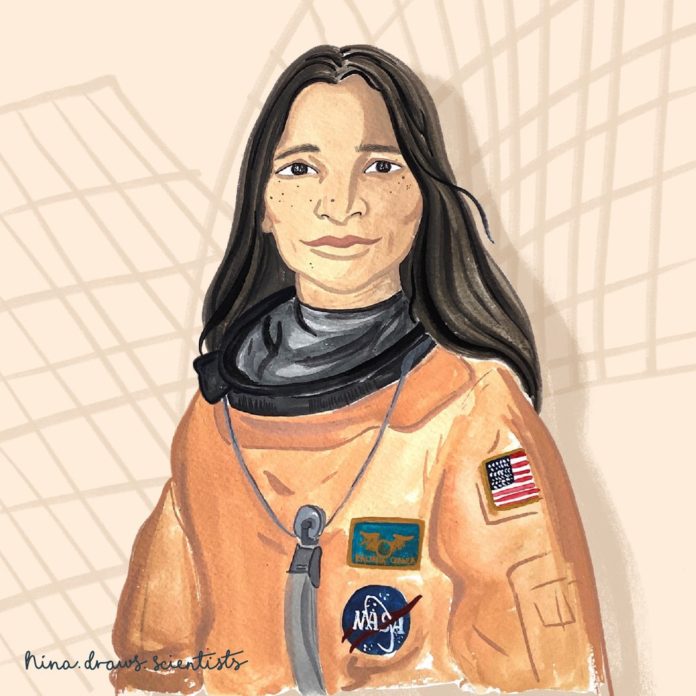
Dr Kalpana Chawla, the first woman of Indian origin to travel into space, in 1997. | Nina Chhita
Instagram accounts like ‘How 2 Rob a Bank’ want to teach us more about women in maths and science – yet they face harassment and deactivation.
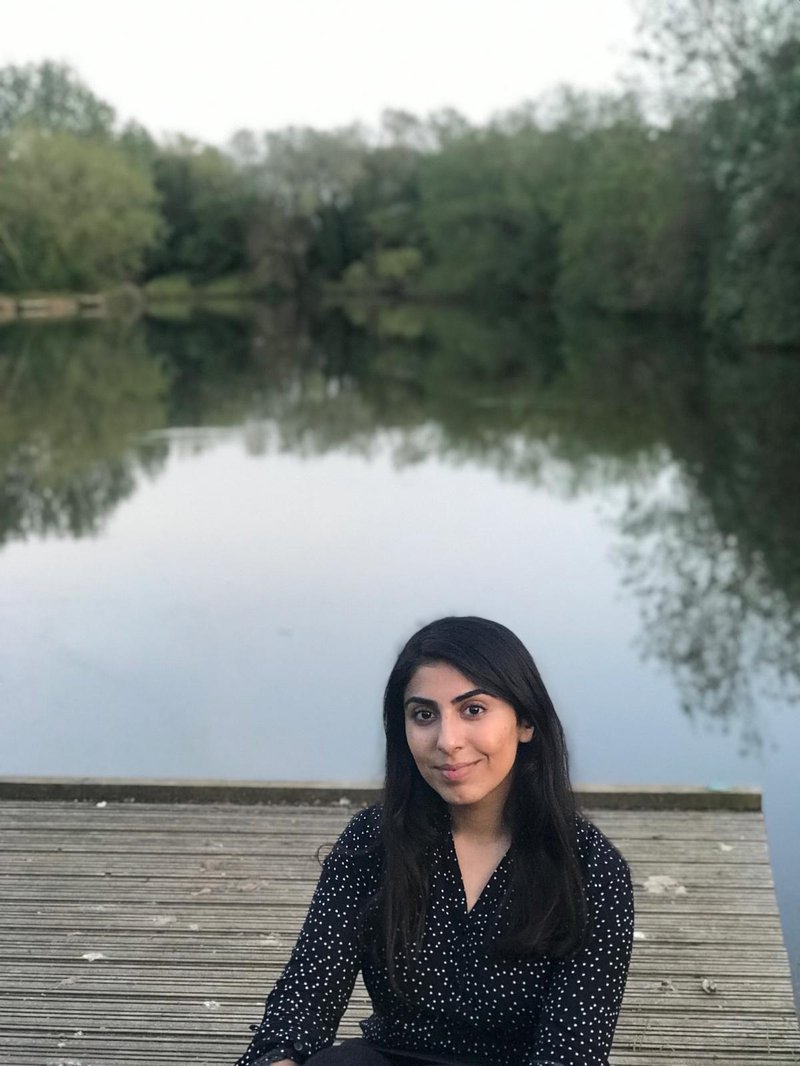
They had tried to engage with the people leaving negative comments on their Instagram posts, but Bia Kazmi, a business and data analyst and co-founder of the Instagram page How 2 Rob a Bank, did not expect their profile would be deactivated after people had reported it.
Their crime? Being women who encourage people to use maths in their daily life.
Even within a seemingly neutral subject such as maths, gender bias can cause serious problems to women trying to make a difference, it turns out.
Kazmi says they founded the page simply to encourage people to use maths in an everyday way. “We don’t post many things that suggest we are women, and a lot of our followers just assume we are men – unless they really look for excerpts from our podcast, where you can hear our voices.”
Kazmi and her friend Zoey Luu chose the name How 2 Rob a Bank because they wanted a fun title to let people know that maths can be fun too, and isn’t just about trigonometry and algebra.
After they posted the solution to a particularly difficult mathematical conundrum, the Two-Envelope Problem, they encountered a problem of their own.
Bia Kazmi, co-founder of How 2 Rob a Bank. | Bia Kazmi
“The problem is very controversial, and quite difficult to understand, even if you have a maths background,” Kazmi explains. A man started a discussion online, claiming they had it wrong and were spreading false information. “We tried to engage with him, arguing that there was a lot of research on this, but he said we needed to take the post down – or he would report us for falsifying information. He was very patronising in the way he talked to us on DMs and in the comments. That’s not the way he would have spoken to a man.”
Despite their attempts to explain the solution, he claimed the post was “blatantly wrong” and that the authors “refused to accept it”. He persuaded other people to report their profile.
“That’s when the war began: lots of his followers reported us, and our account was deactivated,” says Kazmi. The account was shut down temporarily because of the way the Instagram algorithm works. “That’s what happens with bots making decisions,” explains Kazmi.
How 2 Rob a Bank is not the only Instagram page that has received negative comments or abuse. Nina Draws Scientists and Women Doing Science, two pages dedicated to sharing insights on women working in STEM (science, technology, engineering and mathematics) fields, have had a similar experience.
Promoting women scientists online
In the strongly male-dominated world of STEM, women are discovering new platforms to express their views, and one of these is Instagram.
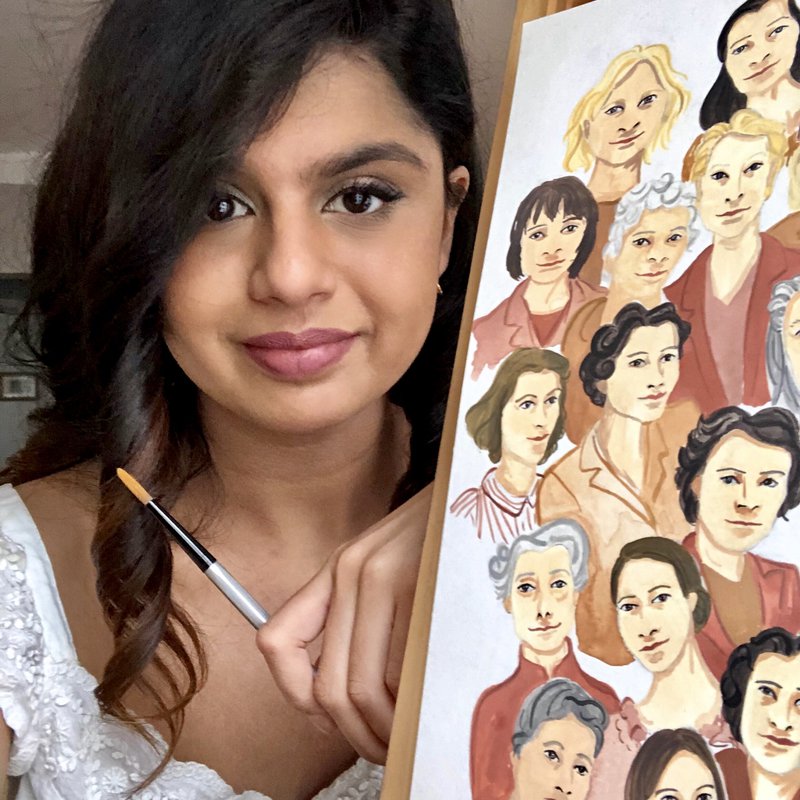
“I realised that people around me didn’t know much about women scientists,” explains Nina Chhita, a medical writer and illustrator who started the Instagram page Nina Draws Scientists. She creates illustrations of women scientists and shares their life stories.
“We had a Christmas quiz at work, and there was a section called ‘name the scientist’,” she says. “Fewer than half of them were women, there were no women of colour, and most people couldn’t even name Rosalind Franklin, which I personally found uncomfortable. Our knowledge is lacking, and I think this has a big impact on how we see scientists.”
On average, according to UNESCO, globally only 29% of researchers are women, and they are often published less and receive less pay than their male colleagues.
Meanwhile, only half of British adults can name a woman scientist, and when asked to identify a famous person working in science, most people come up with a man.
Chhita’s Instagram page is intended to provide inspiration for women who are pursuing a career in science, and who often feel unrepresented.
Nina Chhita, founder of Nina Draws Scientists. | Nina Chhita
“My page is for people who want to learn more about women in science, or need inspiration,” she explains. “It’s not really a page for anyone else – I just want to provide that positive energy which I think is needed.”
Chhita adds: “I love learning about the women I illustrate, and finding other people who get as excited as me makes me even happier.” She receives encouraging messages from her followers who appreciate that she’s introducing them to women they had never heard of.
However, not all her posts are as well received as she hopes.
“I’ve had negative comments when talking about and drawing women from underrepresented backgrounds,” says Chhita. One of the comments accused her of doing “social engineering” – essentially, of being manipulative. Another one said: “The first black woman to do something someone else already did is not really revolutionary.”
“All I was saying is that science needs to be more inclusive,” she explains. She turned off public comments from people who aren’t her followers, because they sometimes only want to “rant”. Unfortunately, she adds, this means she feels in a bubble, which does not aid healthy discussion.
Online harassment
Another woman who has experienced this kind of online harassment, specifically directed at silencing women working in science, is Alexandra Phillips. A PhD student in organic geochemistry at the California Institute of Technology, Phillips founded the Instagram page Women Doing Science in 2018, and now has more than 90,000 followers.
Her page highlights women actively working in STEM and shares ‘action’ shots of them at work, in order to redefine the visibility of female scientists.
“The image we got most harassment on was a picture of a woman wearing heels in the lab,” explains Phillips. “Everyone seemed really upset with the idea that a scientist could both be wearing heels and be taken seriously.”
In that case, Phillips and the team behind Women Doing Science had to delete offensive comments and block several users.
“People get upset if they see a picture of a woman wearing make-up or heels, or even with her hair down, when in the lab,” she continues. “We got a lot of women commenting against the woman’s desire to be portrayed as attractive, rather than behaving in a safe manner.” Around 85% of her followers are women, and it isn’t just men who have left negative comments on the posts.
Similarly to Chhita, Phillips created Women Doing Science because she wanted to see better representation on social media of women actually doing scientific work.
Alexandra Phillips, founder of Women Doing Science. | Alexandra Phillips
“I’m usually in the basement lab, sitting in the dark, and I get to see pictures of women in the field, looking at sharks underwater, saving cancer patients’ lives, all sorts of amazing things – and from scientists all over the world,” she says.
Despite increased visibility for women working in STEM, a lot of work still needs to be done for the stereotypes to be debunked completely, and for young girls to finally find women scientists in their textbooks.
There’s also a general perception that women scientists should look ‘serious’ and not feminine. “I think it’s hard for the internet to accept that a woman who is in a bikini or in heels can also be an excellent scientist,” Phillips says.
A 2019 study from the Journal of Vascular Surgery set out to quantify professionalism among US vascular surgeons on social media, and condemned some female doctors’ “inappropriate attire”, which the authors of the paper defined as “pictures in underwear, provocative Halloween costumes, and provocative posing in bikinis and swimwear”.
Julia Ravey, a PhD student in neuroscience at UCL who shares insights of her life as a scientist on her Instagram page, also says she received negative comments when posting pictures of herself in a bikini. Launched in 2018, her page has more than 16,000 followers and advocates for a fairer and more honest representation of women in science.
“Growing up, I had no real role model in science that looked like me,” says Ravey, “and even now, no one ever thinks I’m a scientist when they meet me, because I wear dresses and make-up. I wanted to break down these barriers and show that you can be whoever you want to be. On Instagram I show who I am as a person, both my womanhood and my scientific research.”
Some of the comments she received under a picture of her wearing a bikini claimed it was “inappropriate for a scientist” and that she was “self-centred” for posting it. The person who left the comments also wrote they wouldn’t want their daughter to look up to Julia, and that posting pictures in swimwear makes her an inappropriate role model for young girls.
Kazmi, from How 2 Rob a Bank, says that the combination of the power imbalance within the heavily male-dominated STEM community and “men who have ego problems or chauvinistic tendencies” is what creates the hostile environment for women. “Maths, which has an objective truth, shouldn’t have these sorts of issues, but it does.”
She adds: “We stopped sharing that we are women after the incident – and we got more respect as a result.”
How 2 Rob a Bank’s Instagram account was reactivated a few weeks after it had been shut down. Kazmi believes that by sticking together, women in STEM can fight those stereotypes: “As women, we need to actively support each other, it’s the only way to solve this problem.”
We asked Instagram to comment on allegations of abuse, harassment and deactivation but we did not receive a response.
ABUJA (Sundiata Post) – An Abuja chief magistrate court has ordered the release of 29 out of first batch of 30 Oyigbo (also called Obigbo), Rivers State residents allegedly detained by the Nigerian Army in Abuja following the recent #EndSARS protest in the community. The bail granted to the 29 Oyigbo residents on Thursday (today) followed the alarm raised by a human rights group, the International Society for Civil Liberties and the Rule of Law (Intersociety) on Wednesday alleging that the Nigerian Army had abducted 400 Oyigbo residents. The report said 150 of the 400 abducted Oyigbo, Rivers State residents were being held incommunicado at the Sani Abacha Barracks, among other military dungeons in Abuja. Sundiata Post learnt that an Today, the international human rights lawyer and Nigerian-British citizen handling the matter, Richard Ebuka Okoroafor, filed a bail application for first 30 of the victims. The Chief Magistrate Court at Wuse considered their bail and granted 29 out of the 30 bail. Sundiata Post learnt that the 30th victim was unable to be granted bail on religious ground. Other batches among the 150 will get their bail applications processed after Christmas and New Year holidays.
The full report by Intersociety reads:
How 400 Obigbo Residents Or More Were Abducted By Soldiers & Transported To Secret Military Dungeons In The North, 52 Rescued In Niger State, 3 Tortured To Death & 150 Languishing In Abacha Barracks (Abuja),Etc
Decree 2 Is Back
The International Freedom of Exchange had referred to Nigeria’s Military Decree 2 of 1984 “as the Nigerian State Security (Detention of Persons) Decree No. 2 of 1984, which allows for indefinite and incommunicado detention of Nigerian citizens without trial”. From every indication, this infamous and anti democratic military law is back and put in clandestine practice in Nigeria under the present central Government and this time around is being used by the country’s heavily Muslim-dominated and controlled Nigerian Army to target on religious and tribal grounds citizens of old Eastern and Mid Western Nigeria particularly the Igbo citizens of Judeo-Christian faith.
Nigerian Army Abducted 400 Obigbo Residents Or More
The Int’l Society for Civil Liberties & Rule of Law (Intersociety) is shocked to note that the number of Obigbo residents, all Christians and mostly Igbo citizens, abducted and disappeared by the Nigerian Army, has risen to 400 or more; out of which, 150 have been discovered to be held indefinitely and incommunicado without Court trial in different secret Army and Spy Police dungeons located in the Federal Capital Territory or Abuja.
•Some of the detainees
In our latest finding, 52 defenceless Obigbo residents, all Judeo-Christian Igbos were recently rescued and their release secured through three different Courts and four processes in Niger State. The 52 rescued abductees exclude three that died from torture in soldiers’ captivity. While one died on the road during their secret and night long transportation from Obigbo-to-Obinze (Army Barracks)-Abuja, two others died in Army secret detention custodies in Niger State. It was further discovered that most of the abductees were transported by road while others including elderly ones among them were airlifted through the local wing of the Port Harcourt Int’l Airport in Rivers State and the Sam Mbakwe Airport in Imo State.
Corroboratively, Intersociety had back in September 2020, been told or received some independent reports that ‘dozens of citizens of Igbo Christian extraction were being held secretly and outside the law in places like Gusau Prisons located in Zamfara State. They are defenceless and unarmed citizens vindictively arrested across various states in old Eastern and Mid Western Nigeria, labeled “IPOB terrorists” and secretly transferred to far away Zamfara State, etc where they are secretly being held without trial.
Army Now Abducts & Transfers To Prisons
One major attribute of the dreaded Decree 2 now being used clandestinely by the Lt Gen Tukai Buratai-led Nigerian Army is the extrajudicial transfer and incarceration of citizens abducted by Army at prison facilities without recourse to court orders or remands. In other words, citizens abducted by soldiers are now sent directly to prisons from military custodies on orders of the Army High Commands including the COAS. This is one of the dreaded features of the obnoxious Decree 2 now in clandestine practice in the country.
Some Magistrates Now Sign Detention Orders For Army Outside Courtroom
The military authorities, too, now get some magistrates to sign detention orders for them outside the courtroom and due processes. The above was the case in the case of the 52 rescued Obigbo residents and three others that died in Army captivity in Niger State as well as 150 others presently languishing without trial in Army and Police spy dungeons in Abuja. It is also forbidden by the country’s criminal justice system for citizens to be arrested and detained and tried outside the areas where they are alleged to have committed the offences for which they were arrested. Intersociety, it is recalled, had in its last statement, disclosed that “between 200 and 300 Obigbo residents were abducted by soldiers and detained in secret military detention facilities located within and outside Rivers State”. New findings, however, now indicate that 400 of them or more were abducted.
Obigbo Army/Wike Massacre: The Background
The Army massacre in Obigbo, Rivers State, a densely Igbo-populated area, occurred following killings and property destructions associated with October 2020 country-wide protests by aggrieved citizens against the atrocious conducts of the dreaded Special Anti Robbery Squad of the Nigeria Police Force, now renamed “SWAT”. In the killings and property destructions that followed, over 350 citizens including civilians, soldiers and police personnel were killed and properties worth billions of naira burnt or destroyed. Lagos State where over 70 persons were killed and properties worth billions lost, was the hardest hit.
The ‘End-SARS’ protests had taken a violent dimension on 20th October, following clandestine recruitment and sponsorship of Islamic hoodlums by Government of Nigeria to counter the protests, attack the protesters (leading to killing of scores of peaceful protesters and burning or destruction of properties belonging to them and neutral others) and make the protests look like “all Southern Christian affair”. This remotely introduced reprisal violence into the protests which was further aggravated by Army killings at Lekki Tollgate in Lagos State in the late evening of 20th October 2020.
In Rivers State, Governor Nyesom Wike took the sad incident personal and decided to use same for political reasons. He not only incited security agencies including Police and Army against Igbo residents in Obigbo and environs but also politicised it and labeled the unfortunate killing of some soldiers and police personnel in Obigbo as ‘terrorist acts perpetrated by IPOB’; a leading self-determination group agitating for regional self-governance for the people of old Eastern and Mid Western Nigeria. IPOB, a non-violent movement, was vindictively proscribed in September 2017 by the Northern Muslim-led Government of Nigeria. This was chiefly to heighten its violent crackdown on the group and cover traces of its involvement in the killing of over 180 Igbo citizens and over 130 maimed in same Sept 2017 in Abia State.
Gov Nyesom Wike’s politicisation of the EndSARS violent protests in Obigbo and other parts of the state came against the background of the fact that soldiers and police personnel and over 300 civilians were killed across the country during the period, particularly in Lagos, Abia, Enugu and Northern Nigeria. In other words, the killing of soldiers and police personnel during the period though despicable and condemnable, was not restricted to Obigbo but also the case across the country. In furtherance of the politicisation of the sad incident, the Rivers Gov on 21st Oct 2020 declared a curfew in Obigbo and environs and invited Nigerian Army to ‘flush out IPOB terrorists in the area who killed six soldiers and four police personnel and burnt police stations’. In response, the Northern Muslim held Army let loose and went on unspeakable war-grade invasion and massacre mission, killing almost 100, injuring 110, abducting 400 or more, disappearing scores without traces till date, torturing hundreds and burning down houses and destroying properties.
Obigbo Army Abductions: The Summary
By the accounts given by Barr Richard Ebuka Okoroafor, an international human rights lawyer and Nigeria-UK citizen and some of the survivors; the 400 abductees or more including the rescued 52 and 150 presently languishing in various Army detention facilities in Abuja, were abducted between late October and early November 2020 in different parts of Obigbo in Rivers State. Some were abducted in the morning and evening time while leaving for or returning from work. There are those abducted on their way to watch football matches or play same, or on their way to attend functions such as weddings, or on their way to meet their contractual obligations or buy food items, or while hawking such as selling sachet water or biscuits. Others were abducted in their sleep in the hours of the blue law or at relaxation joints, etc.
As exclusively reported by Sahara Reporters, some were moved at late hours of the night by air to their present dungeons in the North while the rest were transported by land also at night. Before being bundled to the North, most of them were assembled and detained at Elele Army Battalion in Rivers State, 144 Battalion at Ukwa in Abia State and 34 Brigade, Obinze in Owerri, Imo State from where they were held for days amidst torture before being moved secretly to their present dungeons in the North.
All the abductees were accused and are still being accused of being “terrorists” and were tortured severely in custody to admit being so, leading to death of three in custody and many others being traumatised. At arrival in Niger State, the 54 abductees including the two that later died were spread and held secretly in clusters and detained in over four secret Army detention facilities in the State including Kontagora, Bida, Zungeru and Jebba. Suspicion was also rife that but for the exclusive report run by Sahara Reporters on 24th November 2020 and timely efforts of Barr Richard Ebuka Okoroafor and leaders of IPOB as well as some human rights bodies contacted, the abductees would have met their waterloo in captivity.
As disclosed by court documents seen and verified by Intersociety, the first bail was granted by a Magistrate Court sitting in Minna, presided over by a Grade 11 Magistrate to first four abducted Igbo citizens (Jude Nwachukwu, Chibuzor Ebere, Obi Uche and Michael Uzoma), followed by another bail granted to second batch granted on 3rd Dec 2020 by Hon Justice Hajiya Maryam Mahmoud of the Niger State High Court involving 26 abductees and among them are: Obinna Nwoke, Emeka Ibeana, Uchenna Ibeana, Nnowi Ifeanyi, Mbanefo Simeon (57 years old), Aloysius Mgbedike, Cletus Nnamdi, Onyema Fortune, Benjamin Andrew, Ebuka Ayota, Robbison Igwe, Igweze Ndubike, Ifeanyi Uwakwe, Emmy Simon, Malachy Umeh, Opara Uchenna, Opara Isaac, Richard Igwe, Obiekwe Uzoma, Joseph Ibe, Paul Ashiegbu and Amechi Ugo.
The third bail involved twelve abducted citizens (Gilbert Ibe, Ibe Emmanuel, Sunday, Paul (Okada Boy), Nwachineke Moses, Chukwu Nwodo, Power Peter, Ifeanyi Alozie, Okeke Bill, Mazi Ibeneme, Okpara Chigozie, Obnna and Chika) and was granted by Hon Justice Aminu Bappa Aliyu of the Federal High Court, Minna, Niger State on 10th December 2020. The fourth bail was granted by the same Federal High Court sitting in Minna on same 10th Dec 2020 by the same Judge. The bail was granted to ten abducted citizens (Chibuchi Adam, Aloysius Obinna, Oluchukwu Emma, Andrew Ichim, Ogochukwu Abel, Tobechukwu, Wisdom Okpara, Bright, Cornelius, Igwe Obinna, Monday Emeka, Paschal and Mr. Oyim). All the 52 abductees granted bail were accused by their captors of “involvement in terrorism, arson, destruction of properties and breach of public peace”. Their bails were granted in accordance with Section 169 of the Administration of Criminal Law of Niger State and Sections 35 and 36 of the 1999 Constitution.
Names Of Three Dead Abductees In The Army Captivity: Okechukwu Anyanwu (in his 30s), Kingsley Iwuagwu (in his 30s) and Chijioke (in his 20s)
Six Survivors Interviewed In Owerri
The following survivors, interviewed by Intersociety in Owerri on Friday, 18th Dec 2020 have these to say:
(1) Ifeanyi Emmanuel, 28 years old. He is a building designer/bricks layer and hails from Osisioma LGA in Abia State. He was abducted by soldiers at Obigbo West close to Obigbo Market on 8th Nov and labeled a “terrorist”. He was on his way to honor his contractual obligation valued at N1.6m. (2) Miracle Movement (not his real name). He is 20 years old and hails from Owerri North LGA, Imo State. He works as salesman at Ekeson Increase Materials Investment, Obigbo and was abducted by soldiers on 8th Nov 2020 at East Market, Obigbo. (3) Lord Billabond (not his real name). He is 25 years old, from Ahiazu-Mbaise LGA, Imo State. He is a bricks layer/builder and was abducted by soldiers on 8th Nov along Afam Road Junction, near Obigbo Market. (4) Emmanuel Njoku, 18 years old JAMBITE and sachet water seller/hawker. He is from Aboh-Mbaise LGA in Imo State and was abducted by soldiers on 8th November 2020 at Obigbo Market. (5)Anuisem Emeka, 27 years old. He is from Ahiazu-Mbaise LGA, Imo State. He is a bricks layer and was abducted by soldiers on 8th Nov 2020 along Imo Street, Obigbo (boundary between Obigbo and Abia State). (6) George Ekechukwu, 19 years old and a hair-cut apprentice. He is from Aboh-Mbaise LGA, Imo State and was abducted by soldiers on 8th Nov 2020 in Obigbo.
Names Of 111 Of The 150 Abducted Obigbo Residents
The names below, verified by Intersociety, are among the 150 Obigbo residents, abducted by soldiers since late Oct and early Nov 2020. It has been independently confirmed that most of them are presently held in the Nigerian Army’s Abacha Barracks. Some are said to be held at Spy Police or SSS facilities in Abuja. Undisclosed large numbers, likely in their hundreds, are also strongly believed to be held in secret military locations in other parts of Northern Nigeria and some are reportedly camouflaged as ‘white clothed new intakes’ in some military training centers in the North including the Federal Capital Territory.
Among them are at least 10 women and husbands and wives including those with kids. The husbands and wives among the abductees were abducted together while going about their lawful businesses and other legitimate social activities and have been held incommunicado for two months. Their names are: Ogoke Iheme, Ikenna Opara, Ambrose Ume, Mike Uzodinma, Emma Felix, Ositadinna Aboy, Ugbouku Asisi, Wisdom Chibuike, Wisdom Emeka, Austin Mba, Ejike Somto, Chukwu Emmanuel, Dike Mgbonu, Okeosisi Phillip, Oliver Badmus, Okechukwu Ekechukwu, Pius Vincent, Boniface Okafor, Mbadiwe Godwin, Sima Man, Joseph Nwaaba, Mr. P, Omenne Happy, Eze Imo, Gozie Oliver, Nwamadi Monday, Izunne Gilbert, Nwabueze Chineyeze, Favour Uchenna, Ego Samuel, Ibenwolu Faith, Abel Daniel, Young Winner, Pepper White, Freedom Kekeboy, Obinna Ekechukwu, Adonai Uwakwe, Celestine Uwakwe, Arinze Water, One Man, Onyenma Amaechi, Chukwunonso Andrew, Chikwado Hossana, Ndubuisi Officer, Samuel Jaja, Okoli Kanayo, Kosisochukwu Ojiako, Miracle Ojiako, Uzoma Ojiako, Titus Emeka, .Goodness Nwagbaraukwu, Victor Ajogwu, Mathias Onidoma, Okechukwu Raphael, Raphael Obinna Asadu, Osmond Osita Mamah, Kevin Ubaka Ugwu, Chukwudubem Ezeh, Ozioma Kosalu Udeh, Simon Ngwu Ezeh, Onyebuchi Emeje, Mmadukwe Helen Nwanyi, Patrick Anayochukwu, Ezeugwu Uchenna, Okwor Timothy Chima, Julia C. Chukwudi-Okoro, Ogbo Godwin Omale, Ernest Ugochukwu, Linus Sunday Okoro and Sabastine Asogwa.
The rest are: Livinus Onyebuchi Ojobor, Innocent Ugwueke, Simon Akunna Amadi, Elizabeth Nnaji, Maduabuchi Josiah Eze, Ebere, Promise Okpe, Omeje, Christopher Peter, Promise Ijeoma Eze, Appolonia U. Agbo, Ugwu Anthony Okechi, Cosmas Ugwu, Benedict Ezegwu, Nelson Attamah, Michael Ugwuanyi, Godwin Ezeugwu Attamah, Emmanuel Attamah, Obinna Orji Godwin, Chukwuemeka Omeh, Linus Ukoro Eze Martin, Oluchukwu Ugwoke, Eze George Okwudili, Geoffrey Ugwuoke, Nwodo Emmanuel, Ogbonnaya, Mamah Remigus, Odinaka, Ben Chukwuemeka, Oloko, Nnama Celestine, Chinwe, Desmond Onyebuchi Ezeme, Charles Ugwu, Chinwe C. Nestor-Ezeme, Ezeme Nestor-Ezeme Chika, Nkem Faithful Makata, Eze Ikechukwu, Gerald Ugochukwu Abonyi, Odo Kyrian Obiora, Ezeugwu Paul Ikechukwu, Odo Michael Ifeanyi and Sunday Aneke. Most of these defenseless Igbo citizens are also found to have their States of origin drawn majorly from Abia, Imo and Enugu States.
COAS Buratai & Nigerian Government Are Breeding Another Intractable Insurgency
It is on record that Intersociety has consistently warned the present central Government of Nigeria since 2015 that it is breeding more insurgencies by its violent crackdowns and unleashing of state violence and weaponry against Igbo population; a nation-state with links to over 80 countries of the world including super powers and western democracies. The excessive use of state violence against Igbos in particular and others in general is capable of turning the country into situation that can be worst than Somalia and Rwanda; with calamitous humanitarian consequences.
Nigerian Army Must Release The Remaining 348 Abductees & Account For Three Dead Ones
The Nigerian Army and the Government of Nigeria must, as a matter of extreme urgency, release the remaining 348 Obigbo abductees or more including 150 presently being held incommunicado since two months in Abuja and other secret military and spy police detention facilities in other parts of the North. The Army must also account for the death of three abductees (late Citizens Kingsley Iwuagwu, Okechukwu Anyanwu and Chijioke). The UN, EU, US, UK, Canada and others are hereby called upon to prevail on the Nigerian authorities to retrace its steps before it plunges the country into crises of unquenchable proportion. The attentions of the ICC and internationally respected rights bodies and personalities are also drawn.
Signed:
For: Int’l Society for Civil Liberties & Rule of Law
Emeka Umeagbalasi, Board Chair; Chinwe Umeche, Head of Democracy & Good Governance; Obianuju Igboeli, Head of Civil Liberties & Rule of Law; Ndidiamaka Bernard, Head of Int’l Justice & Human Rights and Comrade Samuel Kamanyoku, Head of Field Data Collection & Documentation
Seplat Petroleum Development Company Plc, a leading Nigerian independent energy company listed on both the Nigerian Stock Exchange and the London Stock Exchange, announces a Crude Purchase Agreement (CPA) with Waltersmith Petroman Oil Limited (Waltersmith).
The CPA is for the supply of between 2,000 and 4,000 bopd from existing working-interest production from the Ohaji South Field within OML53, for Waltersmith’s new 5,000 bopd modular refinery at Ibigwe Field, in Imo State.
Previously, Seplat’s share of Ohaji South crude was primarily evacuated to the export Terminal via a third-party Crude Handling Agreement with Waltersmith. This new agreement benefits Seplat by selling its crude oil directly to Waltersmith for refining, thereby eliminating crude losses and downtime experienced along the evacuation and export route. The transaction would also boost the capacity of Waltersmith in providing its products particularly to the immediate region of our operations thereby supporting Seplat’s commitment to national energy security.
Seplat maintains its guidance of 48,000 – 52,000 boepd for the 2020 financial year.
In the statement announcing this deal, Roger Brown, Chief Executive of Seplat, said:
“We are delighted to sign this Crude Purchase Agreement with Waltersmith as it ensures that Nigerian crude will be refined locally by a Nigerian refiner. The agreement will eliminate losses we previously experienced on the export pipeline, meaning more revenue will be booked by Seplat for the same amount of oil produced from the field. Waltersmith’s refinery will also benefit the Nigerian economy by creating local jobs to refine our oil.”
Vials of Sinovac Biotech Ltd.'s CoronaVac SARS-CoV-2 vaccine are displayed at a media event in Beijing, China, on Thursday, Sept. 24, 2020. Chinese vaccine developer Sinovac said that countries running its final-stage clinical trials like Brazil, Indonesia and Turkey will get its coronavirus shots at the same time as China, underscoring how vaccine supply agreements could cement diplomatic ties in the Covid-19 era. Photographer: Nicolas Bock/Bloomberg
(Reuters) – Chinese vaccine maker Sinovac Biotech Ltd’s COVID-19 vaccine has shown to be effective in late-stage trials in Brazil, the Wall Street Journal reported on Monday, citing people involved in the vaccine’s development.
Sao Paulo state’s Butantan Institute, which is organizing the late-stage trials of Sinovac’s vaccine CoronaVac in Brazil, said on Monday that any reports on the efficacy of the shot before a Wednesday announcement were “mere speculation.”
Brazil is the first country to complete late-stage trials of CoronaVac, which is also being tested in Indonesia and Turkey, the Journal reported https://www.wsj.com/articles/sinovacs-covid-19-vaccine-shown-to-be-effective-in-brazil-trials-11608581330?mod=latest_headlines.
The results from the Brazil trials put CoronaVac above the 50% threshold that international scientists deem necessary to protect people, the Journal report said.
Butantan is poised on Wednesday to announce CoronaVac’s efficacy rate, according to the Journal.
Sinovac did not immediately respond to Reuters’ request for comment.
Sinovac and AstraZeneca Plc’s vaccine candidates may be ready for use in Brazil by mid-February, the country’s health minister said last week.
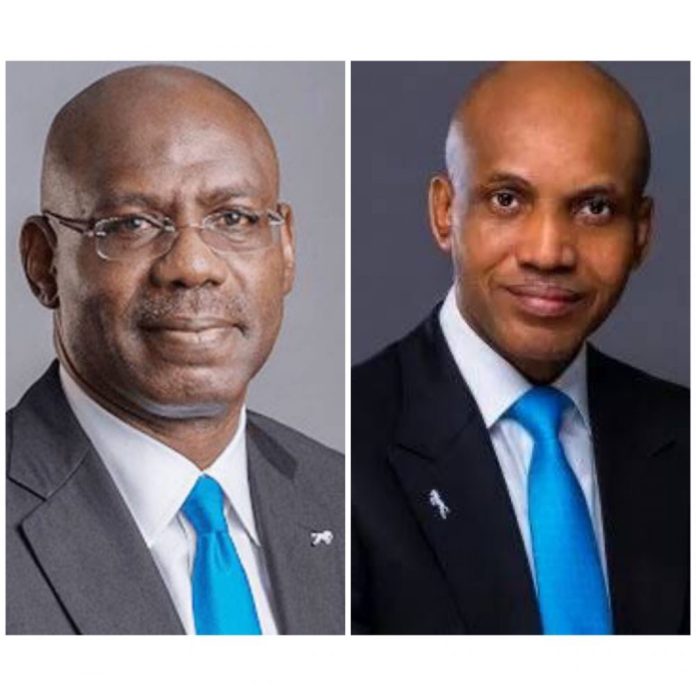
The Board of Union Bank Nigeria Plc has announced that appointment of a new Managing Director, Emeka Okonkwo, a University of Nigeria, Nsukka trained engineer.
The appointment is subject to the approval of the Central Bank of Nigeria.
The appointment is as a result of the impending retirement of the current chief executive officer, Emeka Emuwa who will retire in March 2021.
Emuwa, communicated his decision to retire from the Bank and his role as CEO on 31 March 2021. Commenting on his retirement, Emeka Emuwa said: ‘I have enjoyed the significant challenge of leading Union Bank over the last eight years. I am extremely proud of the management team and what we have been able to accomplish during my time as CEO. Today, we have a strong bank that is well positioned to compete and deliver on its vision to be ‘Nigeria’s most trusted and reliable partner.’ With a clear strategic direction, a growing and loyal customer base and a strong brand, this is now the natural time for the next generation of leadership to take Union Bank forward and deliver further value. In over three decades of banking, my time at Union Bank has been one of the richest experiences in a long and fulfilling career with a treasure of work and life lessons to carry into the future. Together as a team, we scaled many hurdles and accomplished significant feats and I would like to thank my Executive team, senior management and every one of our employees for their integrity, support and hard work that have brought Union Bank to where it is today. As we begin the transition into a new era of leadership under Emeka Okonkwo, a consummate professional with the right experience and values, I know that Union Bank will continue on its path as a values driven organisation that is deeply committed to our customers and the communities we serve.” Prior to joining Union Bank, Emeka Emuwa led a distinguished 25-year career at Citibank. The focus over the last eight years on technology transformation, digital innovation, and development of diverse markets for our world class range of products, has seen Union Bank well positioned to continue growing from its current position as a market disruptor. Amid a tough macroeconomic environment, Union Bank maintained steady operational momentum under Emeka’s leadership which in 2020 culminated in the first dividend payment to investors and shareholders in over ten years.
His many significant achievements, including providing steady stewardship during the unprecedented challenges wrought by the COVID-19 pandemic, lays a solid springboard for the future. We wish him the very best and are grateful for his support and commitment to ensure a successful transition over the next few months. The Board is pleased to have Emeka Okonkwo as incoming CEO. Having been a key contributor to the achievements of the Bank over the past seven years as an Executive Director, Emeka Okonkwo is well suited to lead Union Bank’s next phase of growth. The Board and I look forward to working with him to execute our strategy and deliver value to all stakeholders in the years ahead. Emeka Okonkwo is a seasoned banker with 30 years of experience. He joined Union Bank in 2013 as an Executive Director to lead the Corporate Banking and Treasury business. As the Bank embarked on its transformation, he was responsible for rebuilding the business and strategically positioning Union Bank for success in the Corporate Banking space. Mr. Okonkwo began his career at Citibank Nigeria where he rose from officer level to become Executive Director in charge of Commercial Banking and Global Subsidiaries in 2009. At Citibank, he worked across various disciplines including Corporate Finance, Credit Risk Management, Marketing, Treasury and Strategic Management in Nigeria and London. Prior to joining Union Bank, he was the Head of the Corporate and Investment Banking Division in Citibank Bangladesh.
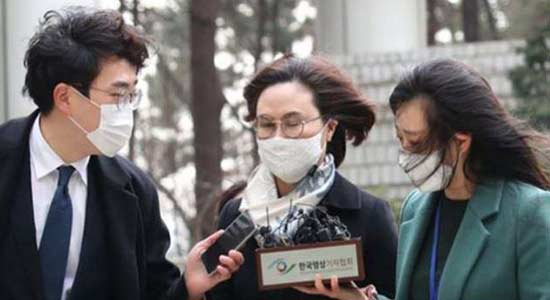
Former Justice Minister Cho Kuk’s wife was sentenced by a Seoul court on Wednesday to a four-year jail term for academic fraud and other charges.
The Seoul Central District Court handed down the jail term, together with a fine of 500 million won (US$451,000) and a forfeit of 140 million won, to Chung Kyung-sim, the wife of the former presidential secretary for civil affairs and a close aide to President Moon Jae-in.
The court also ordered the immediate imprisonment of Chung.
Chung, a 58-year-old professor of Dongyang University, was indicted in November last year on a 15-count charge related to her daughter’s college admission and her dubious investment in a Private Equity Fund (PEF).
Chung is accused of being involved in fabricating documentation from 2013-2014, including a college presidential citation, in order to get her daughter admitted to medical school
She was also charged with investing in the PEF using somebody else’s name to bypass the code of ethics for public officials and embezzling around 150 million won (US$135,000) through a bogus consulting contract.
The court said Chung colluded with her husband to forge an internship certificate for their daughter, falsely claiming she participated in an international academic conference held at Seoul National University (SNU) Law School in May 2009.
Cho also participated in the forgery of a certificate about his daughter’s internship at a Busan-based hotel, which was used for her university admission.
The court also said it is sufficiently recognized that Chung forged a Dongyang University presidential citation for her daughter’s college admission and her daughter had never done award-winning volunteer work at the private university.
It ruled that Chung obstructed the admission procedures of the SNU medical school by submitting fabricated qualifications and documents.
Chung was also suspected of having been involved in the destruction of evidence by instructing her asset manager to conceal her office PC and delete PEF-related documents.
But the court said she cannot be punished for charges related to the destruction of evidence and embezzlement of PEF money.
Throughout court hearings, Chung denied all allegations against her, arguing that academic records of her daughter were just overstated instead of being fabricated and her PEF deal was not an investment but a simple loan.
Chung was released from nearly seven months of detention in May after the Seoul court decided not to extend her arrest.
In the previous hearing on Nov. 5, prosecutors demanded a prison term of seven years, a fine of 900 million won and a forfeiture of 160 million won for Chung.
Cho, who resigned as justice minister in October last year after just one month in office, was also indicted later on a dozen charges, including bribery, in connection with his daughter’s academic credentials and school scholarship, as well as his family’s suspicious private equity investments.
A Federal High Court in Abuja has sentenced two fake land agents, Adebayo O. Falade and Apata Francis, to three years imprisonment for N3.5million fraud.
Justice Taiwo Taiwo convicted the duo of obtaining the sum from the complainant, Mrs Tosin Ajisafe Aluko, by false pretence.
The defendants, in May 2015, falsely presented themselves as owners and persons capable of selling a property at the stadium area of Ado Ekiti, but they had already sold the property in question to someone else.
The judge observed that the “defendants went on a spending spree as soon as they received alerts. They bought vehicles and completed building that was yet to be completed before the payments into their accounts.”
He held that the Police successfully proved the two counts of conspiracy and fraud against the duo beyond reasonable doubt.
Justice Taiwo held: “The defendants are therefore sentenced to three years each without option of fine with regards to Count 1. The defendants are also sentenced to three years each with regards to Count 2 without option of fine.
“The three years are to run concurrently. I also order restitution as stated earlier in favour of the victim of the crime. All monies in the account of the defendants shall be applied to offset the said sum of N3.5million. If money is inadequate, the movable and immovable assets of the defendants shall be jointly and/or severally sold to offset the total amount fraudulently collected from the victim. This is the judgement of the court.”
The judgment followed a nearly four-year proceedings and was delayed by the Coronavirus pandemic.
The charge was formerly read to both defendants on the 5th day of February 2016, to which they pleaded not guilty. Bail was granted to the defendants on the 8th of February 2016 and trial commenced on 26th January 2016.
The prosecution closed it’s case on the 3rd of May 2017. The 1st defendant closed his case on the 23rd of April, 2018, while the 2nd defendant closed his case on 27th May 2019.
The court adjourned for judgment till January 15, 2020 “but due to pressure of work by the judex in Abuja, the court had to defer to another day.”
The court then fixed February 20, 2020, for judgment, but it could also not do so on this date.
Explaining why, Justice Taiwo said: “Due to the Covid-19 pandemic, the whole judicial system all over the country had to shut down like other arms of government and the society at large. When there was partial resumption and the courts were conducting cases virtually, criminal matters and indeed judgements pursuant to them could not be done virtually and the reason is obvious.
“The security situation in the country also contributed to the delay in delivering this judgment especially with the spate of abductions and kidnappings.
“Hence, a more auspicious time had to be created for judgment to be delivered in this matter, since the judex now sits in Abuja
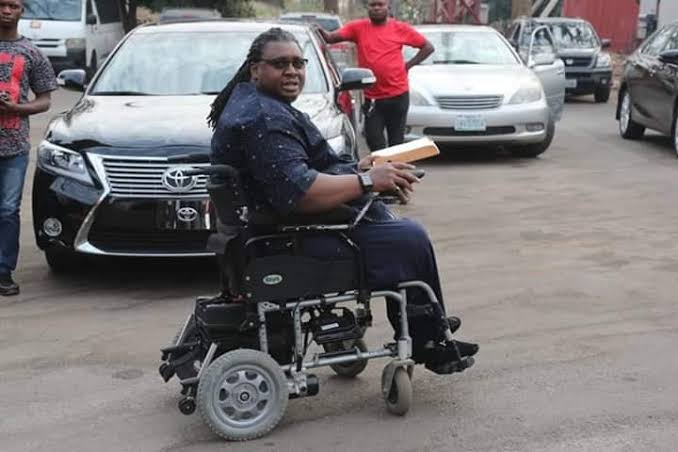
The Association of lawyers with Disabilities in Nigeria (ALDIN) is horrified by the discriminatory conduct of DANA Air against a member of their community, in the person of Dr. Chike Okogwu.
The facts and evidence available to ALDIN is that Dr. Chike Okogwu had boarded a 7:20pm flight from Abuja to Lagos on December 20, 2020 which was rescheduled by Dana Air to 9:05pm. At the time of Boarding, Dr. Chike Okogwu was told that he could not travel along with the others because he was a wheelchair user. Note that there was no previous warning to this shocking turn of event. It was Dana Air that rescheduled the flight of Dr. Chike Okogwu to night and then again turned around to say they cannot fly him at night because he was a special person – the airline is precluded from approbating and reprobating at the same time. The intentional discriminatory measures and breach of contract against passengers with disabilities by DANA Air is manifestly reprehensible.
Dr. Chike Okogwu is not alone in the quagmire of this sort of inhuman treatment meted by Dana Air against passengers with disabilities. The ALDIN is in receipt of complaints from other members of the disability community about how the airline metes discriminatory guidelines, policies and treatment against them.
We condemn in strongest terms the deliberate abuse of the rights of Dr. Chike Okogwu and other persons with disabilities, by Dana Air. We submit that the conduct of Dana Air is unlawful, inhuman and culpable. Dana Air’s penchant for discriminatory policies against passengers with disabilities is against the relevant provisions of the “Discrimination Against Persons with Disabilities (Prohibition) Act of 2018, specifically,
Section 1(1) states that; A person with disability shall not be discriminated against on the ground of his disability by any person or institution in any manner or circumstance. (2) A person who contravenes subsection (1), commits an offence and is liable on conviction to, if the person is – (a) a body corporate, a fine of N1,000,000.00; and (b) an individual, a fine of N100,000.00 or six months imprisonment or both (3) Notwithstanding the prosecution, conviction or otherwise of any person for any offence under this Act, the person against whom the crime or wrong is committed may maintain a civil action against the person committing the offence or causing the injury, without prejudice to any conviction or acquittal.
Also relevant in this case, is Section 14 which is to the effect that;
All airlines operating in Nigeria shall – (a) ensue the accessibility of their aircraft to persons with disabilities; (b) make available presentable and functional wheelchairs for the conveyance of persons with disabilities who need them to and from the aircraft; (c) ensure that persons with disabilities are assisted to get on and off board in safety and reasonable comfort; and (d) ensure that persons with disabilities are accorded priority while boarding and disembarking from the aircraft. (2) All airports shall make available for the conveyance of persons with disabilities who need presentable and functional assistive and protective devices to and from the aircraft.
It is clear that DANA Air’s repugnant and careless policy to the effect that a passenger with disabilities cannot fly alone but in company of an aide, and also that he cannot fly at night is against the spirit and letter of the law cited above. A passenger with disabilities only possesses infirmity and not disease or sickness. Passengers with disabilities are able to travel at any time they so desire and are by law entitled to assistive and protective devices to do so, not preclusion.
We will not stop short of being moved emotionally by the harrowing and abusive treatment of Dana Air on our people but are resolved to do anything possible within the ambit of the law to seek justice for our members. Accordingly, we call on Dana Air to immediately tender an apology to Dr. Chike Okogwu and all other persons with disabilities they have wronged; make appropriate reparation for their wrongdoing, and change forthwith, all discriminatory policies against persons with disabilities.
ALDIN is determined to pursue a legal cause of action should DANA Air fails to redress all the wrong and conduct its business in a lawful and non-discriminatory manner. (Newwirelawandevents)
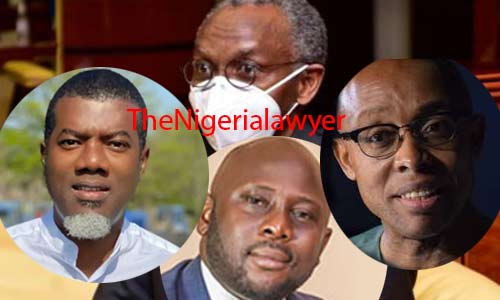
A human rights lawyer, Mr. Silas Joseph Onu, has asked the FCT High Court, Abuja, to dismiss the defamation suit filed by the Governor of Kaduna State, Mallam Nasir El-Rufai.
The Kaduna State Governor had in suit no: CV/3133/2020, instituted suit against Joseph Onu and Auta Nyada over his dis-invitation to speak at the 2020 Annual General Conference of the Nigerian Bar Association, alleging defamation.
In his statement of defense filed by Edwin INEGEDU, Esq. of Pitcher & Courts LP sighted by TheNigeriaLawyer, Onu said the Suit is “frivolous, baseless, vexatious and amounts to a vindictive exercise” and urged the court to dismiss same and award substantial cost in his favour.
Onu denied all the averments of Governor El-Rufai and said he (Onu) did not publish any malicious, unlawful, unjustified, false and unwarranted defamatory statement against the Claimant, and puts him to strict proof of his assertions.
Relying on the defense of justification, Onu said the Claimant is not a peace loving and law-abiding citizen as it is on record that he threatened foreign election observers with death, and being carried back home in body bags.
He said the Claimant is not a strong believer in press freedom and freedom of expression. “He is reputed as the Governor with highest level of intolerance for press freedom in Nigeria and the Courts have held that he had violated the human rights of his critics and persons who hold opposing views.
“He has, through his utterances, shown that he directly and indirectly instigates Security agencies to unlawfully arrest and detain his critics and persons who hold contrary opinion to his own.
“The Claimant has used the power of the state to persecute and intimidate his opponents and critics alike.” Onu stated
According to Onu, the over 17 civil cases instituted in Courts do not show that the Claimant is committed to the rule of law. “Rather it exposes a penchant for intolerance of criticisms as a public officer, and a bid to use the law as a tool of intimidation, and also as a means of evading the law.
“The Claimant’s several utterances do not show that he detest and abhors violence or that he has a deep-rooted belief in the sanctity of every human life. The 1st Defendant shall at the trial rely and found upon the Reports of his utterances on carrying foreign election observers back in body bags; the Southern Kaduna Crisis and debts owed to the Fulanis.”
Onu accused the Claimant of belonging to a powerful group of Nigerian State Governors who use security agents to arrest and intimidate journalists and activists.
He listed the victims of the Claimant to include Dadiyata Abubakar Idris and Stephen Kefason who were mentioned as being held on the orders of the Claimant; Dr. John Danfulani; Stephen Kefason, Luka Binniyat and Segun Onibiyo who were all charged to Court on charges of injurious falsehood after critiquing the Claimant or writing stories or opinions which the Claimant found offensive; Ms. Gloria Ballason who the Courts held, on two occasions, that the Claimant had violated her rights and the United Nations Basic Principles on the role of Lawyers; and Mr. Audu Maikori who was abducted from Lagos.
He averred, “From the literature, particularly newspaper reports, opinions, and published statements read by the 1st Defendant, the Claimant is intolerant to opposing views and criticisms. The opinion of Open Bar Initiative that members of the NBA may be subjected to such intolerance emanated from the documents researched, and the Claimant’s much publicized tendencies.
“The Claimant, as a Governor and Public Officer, has not shown any regard for the rule of law. He was also reported to have a penchant for disregarding Court Orders…
“The Claimant, as a Governor and Public Officer, has not shown any regard for the fundamental rights of others. The Courts have held him liable for breaching the rights of Ms. Gloria Ballason and Mr. Audu Maikori, both lawyers…
“The Claimant, as a Governor and Public Officer, has not shown any regard for human beings. The reports about the killings in Southern Kaduna, and his other utterances exposed him as lacking in such regard…
“The Claimant has been reckless in his utterances, hubristic in outlook and irresponsible with power. He threatened to arrest Pastor Paul Enenche in Abuja and prosecute him in Kaduna for holding a view that he – the Claimant – was uncomfortable with….”
Onu also relied on defense of absolute privilege and said, “the Correspondence of 19 August 2020 from the Open Bar Initiative to the NBA was written on occasions of absolute privilege.
According to him, the object of the Open Bar Initiative is to ensure the adherence to the motto of the NBA, which is “promoting the Rule of Law.” and “that Open Bar Initiative has a duty to inform the NBA of the tendencies of persons to whom the NBA’s platform are given at its annual conference.”
He added that, “the Open Bar Initiative has a duty to bring to the attention of the NBA, its findings about the incongruity of persons who seek its platform, with its motto of ‘promoting the rule of law.’
“The NBA is a closed association and the Claimant is not a member, and therefore not entitled to any privilege.
“The National Executive Committee of the NBA met and reviewed the contents of the correspondence dated 19 August 2020, and in agreement with the content, voted to de-platform the Claimant.
“The contents of the correspondence to the NBA, were derived from Newspaper reports, opinions, statements, the Claimant and his Children’s tweets, which are all in the public domain, and accessible to all members of the NBA, and the public at large.
“The statements detailed in the correspondence of 19 August 2020 are fair comments by the Open Bar Initiative in its contribution to the planning and organization of the NBA Conference 2020.”
Onu said Statements contained in the Correspondence of 19 August 2020 to the NBA, did not cause irreparable injury and damage to the Claimant’s reputation and puts him to strict proof. He said, “the Claimant lost his reputation and goodwill long before the correspondence of 19 August 2020 was delivered to the NBA by the Open Bar Initiative. He has been branded a liar by those who he worked with and knew him personally.
“The Claimant had alleged that while serving as the Minister of the Federal Capital Territory, he had made payments to the High Court of the FCT and saw that injunctions were not given against the FCTA. The Chief Justice of Nigeria was reported to have queried the then Chief Judge of the High Court of the Federal Capital Territory over the Claimant’s assertions in his book the ‘Accidental Public Servant’.
“The NBA’s platform during its annual conference is not a right of the Claimant, and its withdrawal, after the NBA reviewed the petition against his participation, is not an injury in any manner to his reputation.”
He also said “The Claimant has been held to be a serial liar by two former Presidents of the Federal Republic of Nigeria; His Excellency, President Olusegun Obasanjo, and His Excellency, President Goodluck Jonathan. The 1st Defendant shall at the trial rely and found upon the Newspaper Reports of same.
“The Claimant has also been held to have lied in his utterances as a public Office holder by National Emergency Management Agency (‘NEMA’ ) and the Christian Association of Nigeria (‘CAN’)….
“No aspersions of any sort were cast on the Claimant by the reportage of his tendencies as a Public Officer.”
Our site uses cookies. By clicking “Accept All Cookies”, you direct Law and Society Magazine to store cookies on your device and disclose information in accordance with our Cookie Statement: cookie policyACCEPTREJECT
Privacy & Cookies Policy
Privacy Overview
This website uses cookies to improve your experience while you navigate through the website. Out of these cookies, the cookies that are categorized as necessary are stored on your browser as they are essential for the working of basic functionalities of the website. We also use third-party cookies that help us analyze and understand how you use this website. These cookies will be stored in your browser only with your consent. You also have the option to opt-out of these cookies. But opting out of some of these cookies may have an effect on your browsing experience.
Necessary cookies are absolutely essential for the website to function properly. This category only includes cookies that ensures basic functionalities and security features of the website. These cookies do not store any personal information.
Any cookies that may not be particularly necessary for the website to function and is used specifically to collect user personal data via analytics, ads, other embedded contents are termed as non-necessary cookies. It is mandatory to procure user consent prior to running these cookies on your website.