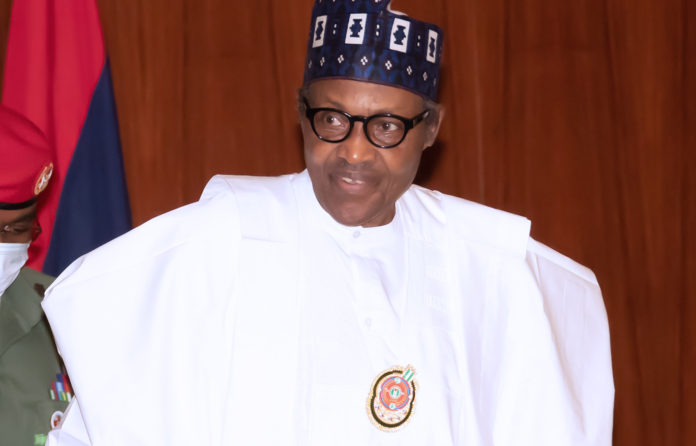
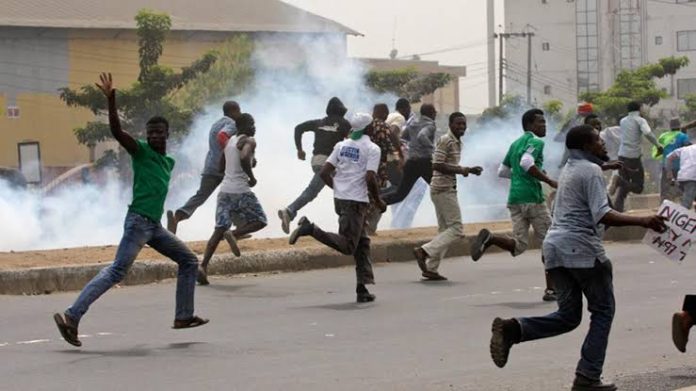
The Federal Executive Council has on Wednesday approved the engagement of a Civil Society Organisation (CSO) that will monitor the implementation of over $311million recovered in February 2020.
This is contained in a statement by Dr. Umar Jibrilu Gwandu, Special Assistant on Media and Public Relations, Office of the Attorney-General of the Federation and Minister of Justice in a statement made available to newsmen.
He said the purpose of the involvement of CSO was to increase transparency in the management of recovered funds.
The statement said the approval came after a presentation made by the Attorney-General of the Federation and Minister of Justice, Abubakar Malami, SAN on the competitive bidding process involving 17 Nigeria and international CSOs and Businesses.
The Federal Executive Council approved the award of the consultancy monitoring of the projects; 2nd Niger Bridge, Abuja to Kano Express Way and Lagos to Ibadan Expressway to CLEEN FOUNDATION, a Nigerian based CSO.
The selection process included the participation of the other two countries that signed the Tripartite Agreement for the return of the Abacha three stolen assets; United States of America and the Bailiwick of Jersey.
This engagement is in line with President Buhari’s commitment to Open Government and the principles of The Global Forum on Asset Recovery (GFAR) as well as the UN Convention Against Corruption provisions on Asset Recovery.
An Ile-Tuntun Customary Court sitting in Ibadan has dissolved the six-year marriage between one Monsuru Adebayo and his estranged wife, Nafisat, over defamation of character and attempted murder.
The President of the court, Chief Henry Agbaje, held that the court would not allow any situation that might lead to bloodshed, hence there need for dissolution of the union.
Agbaje consequently dissolved the union and granted custody of the only child in the marriage to Monsuru, since he had been the one catering for the girl.
He also advised the duo to maintain peace as the court would consider any form of molestation by either one of the couple as a criminal offence.
Monsuru had earlier told the court that he did not want to have any further relationship with Nafisat because she had constantly “exposed his life and image to risk and uncertainty”.
He further claimed that he was forced to seek refuge outside their home because his life was under threat by his wife’s nefarious activities.
“After Nafisat settled down in my home, she began to show her true colour and she has refused to take to people’s corrections and counsel to be of good behaviour.
“Only three weeks ago, Nafisat brandished a knife and was aiming at my stomach before I managed to escape from the room.
“That was the reason why I took refuge at a location unknown to her, and it was not the first time she had threatened my life.
“Before this time, Nafisat hacked into my Facebook account, posting series of defamatory messages that are capable of destroying me and sending me to jail.
“I closed that particular account, but she opened another one with my mobile phone number which she is still using till date to tarnish my image.
“Worse still, she has packed away all my property from the apartment to an unknown location,” Monsuru said.
Nafisat, who consented to the decision of the court, however, denied most of the allegations levelled against her.
She claimed that her husband derived pleasure in beating her always, adding;
“Monsuru is not a responsible man and I do not know why he does not stay at home.”
Olisa Metuh, former National Publicity Secretary of PDP has been released from Kuje Correctional Centre in Abuja.
Metuh was released today pursuant to an appeal court verdict nullifying his conviction.
TheNigeriaLawyer recalls that the Court of Appeal presided over by Hon. Justice Stephen Adah had earlier set aside the conviction of the Federal High Court, sentencing former Metuh to seven years imprisonment on alleged money laundering charges.
Hon. Justice Okoh Abang of the Federal High Court had on 25th February, 2020, convicted and sentenced Metuh to seven years’ imprisonment for money laundering charges involving alleged concealment and unlawful use of the N400m paid to him and his firm Destra Investments Limited, by Dasuki as the NSA in November 2014.
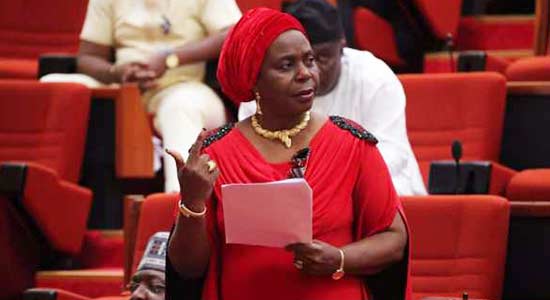
The lawmaker representing Ekiti South Constituency at the Senate, Biodun Olujimi, has kicked against the purported move to grant underaged married girls the right to vote.
The National Assembly Joint Committee on the Independent National Electoral Commission (INEC) had reportedly recommended that young girls who are married should be given voting rights.
Chairman of the Senate Committee on INEC, Kabiru Gaya, had said the recommendation is a unanimous decision by the joint panel.
Gaya had said, “The joint committee has proposed a review of the section of the Electoral Act that pegged the eligibility age of voters at 18 years.
“The joint committee has proposed that if a lady who is not up to 18 years is married, she should be considered to be mature enough and be eligible to vote.”
But in an interview with SaharaReporters on Thursday, Olujimi said it is better to stick to the minimum age (18 years) recognised by the Nigerian constitution rather than giving voting rights to underage married girls.
She said, “The fact that they are married does not make them adults. That is what I believe. Even if you get married at 13, you can’t be said to be an adult even though you have gone through some experiences for adults. We should stick to our minimum age which I believe is good for everyone.”
The Minority Leader at the Upper Chamber argued that maintaining the extant minimum voting age would discourage early marriage and prevent all the risks associated with it.
She said, “It will help us reduce Vesicovaginal fistula (VVF) and all the problems associated with early marriages. We all know how dangerous it is, we all know how we risk the lives of our young ones when we take them too early. So, if they know they won’t be able to vote until they are of a particular age, maybe they will be patient enough to wait before they get married.”
The Senator, however, explained that the issue had not been debated during plenary, saying, “It’s one of those side comments about the amendment of the constitution. It wasn’t debated, I was on the floor and I have not heard that. I also want to take it as one of those debates going on so that people can amend the constitution but right now, we have not deliberated on it.”
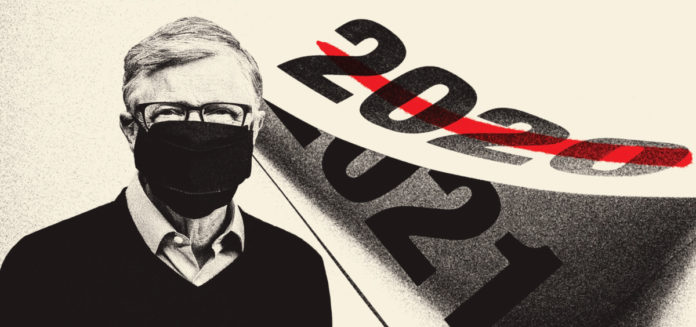
This has been a devastating year. More than 1.6 million people have died in the COVID-19 pandemic, with more than 75 million cases and tens of trillions of dollars in economic damages. Millions of people are out of work and struggling to pay their bills, and more than a billion children are missing out on crucial time in school. In the U.S., this year also saw the horrifying killings of George Floyd and Breonna Taylor, ruinous wildfires, and a presidential election unlike any other in modern times.
But there is good news coming in 2021.
I spent most of my time this year working with colleagues at the foundation and around the world on ways to test for, treat, and prevent COVID-19. When I think back on the pace of scientific advances in 2020, I am stunned. Humans have never made more progress on any disease in a year than the world did on COVID-19 this year. Under normal circumstances, creating a vaccine can take 10 years. This time, multiple vaccines were created in less than one year.
Unfortunately, we are not out of the woods quite yet. Computer models suggest that the pandemic could get even worse over the next month or so. We also need to learn more about a new variant of the virus that has appeared, which seems to spread faster but not to be more deadly.
Still there are two main reasons to be hopeful. One is that masks, social distancing, and other interventions can slow the spread of the virus and save lives while vaccines are being rolled out.
The other reason to be hopeful is that in the spring of 2021, the vaccines and treatments you’ve been reading about in the news will start reaching the scale where they’ll have a global impact. Although there will still need to be some restrictions (on big public gatherings, for example), the number of cases and deaths will start to go down a lot—at least in wealthy countries—and life will be much closer to normal than it is now.
In this post, I want to share where things stand on COVID-19 innovations as we wrap up this year and move into the next. I’ll start with vaccines, since they’ve been in the news so much and that’s the area I get asked about the most.
How COVID-19 vaccines work
You probably know that two vaccines—one developed by Moderna, the other by Pfizer and BioNTech—have received emergency approval in the U.S. The Pfizer/BioNTech vaccine has also been approved in the U.K. and other countries. And several other companies will probably be announcing results of clinical efficacy trials soon.
What you might not have read is that the success of the first two vaccines also bodes well for many of the other candidates. Virtually all of the vaccines now undergoing efficacy studies attack the same part of the novel coronavirus as the first two do. (It’s the protein that spikes out of the virus, giving the coronavirus its crown-like shape as well as its name.) Now that researchers know attacking that particular protein can work, they have reason to be optimistic about other vaccines that do the same thing.
Despite this basic similarity, the various vaccines use different approaches to attacking the virus. The ones developed by Moderna and Pfizer/BioNTech involve what’s called mRNA technology—an approach our foundation is intimately familiar with, because we’ve been funding research on it since 2014 as a way to create vaccines for malaria and HIV. It’s great that the technology is now allowing unprecedented progress on COVID-19.
It’s no accident that mRNA vaccines were the first out of the gate. By design, this type of vaccine can be created faster than conventional ones. It works by using messenger RNA to deliver instructions that cue your body to produce the distinctive spike protein. Then your immune system kicks in and attacks anything with that spike on it, including the COVID-19 virus.
Making mRNA vaccines is relatively fast because it’s much easier to produce large quantities of an RNA sequence that codes for the spike protein than it is to grow the spike protein itself. And there’s a bonus benefit: Unlike most conventional vaccines, mRNA vaccines don’t contain any virus at all, which means you can’t get COVID-19 from them.
Unfortunately, there aren’t yet many factories where mRNA products can be made. Some also need to be stored at temperatures as low as –70°C, which makes them particularly difficult to distribute in developing countries, though this is more of an engineering challenge than a scientific barrier.
An example of a different type of vaccine is the one made by AstraZeneca. Instead of using mRNA, it attaches the spike protein to an otherwise benign virus that causes the common cold in chimpanzees but is harmless for humans. Then your immune system learns to attack that spike, and you’re protected from COVID-19.
In its clinical efficacy trials, the AstraZeneca vaccine was on average around 70 percent effective, versus 94 to 95 percent for the Pfizer and Moderna vaccines. But 70 percent is still high enough to be effective at stopping the disease. And it’s reason to be hopeful about other vaccines that take a similar approach, such as Johnson & Johnson’s.
I don’t blame you if you have a hard time keeping track of all the companies working on vaccines. But it’s a nice problem to have! With so many companies pursuing different approaches, there was a much better chance that some would prove to be safe and effective. There are two already and more may be coming.
It’s unheard of to have so many companies working on vaccines for the same disease, because making a vaccine is inherently risky work. Not only can it take years to get a product to market, but it can cost billions of dollars and involve major scientific challenges—especially when the disease is as new to us as this one is.
Why were so many companies willing to take the risk this time? Judging from the conversations I’ve had with their leading scientists and executives, I think one reason is that they saw a chance to use their expertise to help end the pandemic. It also helped that others stepped up to bear some of the financial risk. In some cases, it was a national government, such as the U.S. or Germany. In others it was the group called CEPI, the Coalition for Epidemic Preparedness Innovation, which is funded by our foundation and several government and philanthropic partners.
Of course, developing the vaccines themselves is only part of the challenge. And it may not even be the hardest part.
How do you make 5 to 10 billion doses?
The world will have to manufacture around 5 billion doses if there’s a vaccine that requires only one dose, or 10 billion in the current scenario of two-dose vaccines. (This is assuming that 70 percent of the global population must be covered in order to break transmission of the disease.)
Is 5 to 10 billion doses a lot? Well, all the vaccine companies in the world typically produce a total of fewer than 6 billion doses a year. That includes flu shots, routine childhood immunizations, and so on. So to produce all the COVID-19 vaccines needed without cutting back on any others, the manufacturing capacity will at least need to almost double, and more likely almost triple.
To help ease the manufacturing burden, our foundation helped put together what’s called “second-source agreements.” We paired vaccine companies in rich countries with counterparts in developing countries that specialize in producing safe, high-quality, and affordable doses at a very high volume.
A second-source agreement is designed to make the most of both skill sets. A company that excels at production agrees to manufacture products designed by another company with a viable vaccine candidate. For example, the biggest vaccine manufacturer in the world, Serum Institute of India, is producing doses of AstraZeneca’s vaccine. They’ve already begun production, so there will be doses available for low- and middle-income countries if AZ’s vaccine is approved for use. And our foundation took on some of the financial risk, so if it doesn’t get approved, Serum won’t have to take a full loss.
It’s hard to overstate how unusual these second-source agreements are. Imagine Ford offering up one of its factories for Honda to build Accords. But given the scale of the problem and the urgency of solving it, many pharmaceutical companies are seeing the benefit of working together in new ways like this.
It’s similar to how, during World War II, the U.S. ramped up its manufacturing capacity at a mind-blowing rate by converting auto factories into tank and truck factories—only this time, the government isn’t involved. Companies are responding to the crisis by doing away with business as usual.
And how do you distribute 5 to 10 billion doses around the world?
In addition to manufacturing, there’s the challenge of making sure that COVID-19 vaccines will be distributed equitably. That’s both a logistical hurdle and a financial one.
Sixteen pharmaceutical companies have already committed with our foundation to ensuring that vaccines and other lifesaving tools will be made available in a fair way. The world’s top experts in shipping and delivery will need to figure out how to move all these vaccines around the planet while keeping them at the right temperature every step of the way. National governments will be responsible for in-country distribution of vaccines on a scale and level of complexity unlike any other public health campaign ever.
And rich countries will need to step up with new funding through organizations like GAVI, which has a phenomenal track record of helping immunize children in poor countries.
The issue of equity is one that both Melinda and I have been working on, not only as it relates to vaccines, but also the way the recovery needs to encompass everyone, including people of color in the U.S. and people in poor countries around the world. Melinda will cover this in detail in our Annual Letter, which we’ll release next month.
One other challenge will remain when vaccines are widely available: the sizable percentage of people who will hesitate to take them. Some are afraid of vaccines already. Others may worry that the COVID-19 vaccines were rushed and might be less safe than, say, the flu shot they get every year. And in some communities, people have an understandable historical mistrust of the government’s role in medical studies.
It doesn’t help that there are false conspiracy theories about vaccines, including some that involve Melinda and me. For our part, we will keep talking about the sole reason we fund vaccines: because we’re passionate about saving lives and making sure all children have a chance to grow into adulthood. We feel a responsibility to give our wealth back to society, and we believe that no outlet for our giving returns more value to the world than helping develop and distribute vaccines. They are a medical miracle that made it possible to cut the childhood death rate in half in the past two decades.
I hope credible leaders—politicians, community leaders, scientists, and family doctors especially—will help explain the safeguards in the system. The FDA is one of the most respected drug-regulating agencies in the world for a reason. Its approval process is second to none. No safety steps were skipped in approving COVID-19 vaccines. If enough people are willing to join the first wave of recipients, then hopefully others will see the benefits and want to take it too.
In the search for treatments, failure was a success
As I often tell the team at the foundation, we can’t be afraid of failing—and when we do fail, we should do it quickly and learn from it. Here’s an example of how we failed quickly with potential COVID-19 treatments, but in the most productive way possible.
In March, we joined Mastercard and Wellcome in creating the Therapeutics Accelerator. The idea was to use robots developed by the pharmaceutical industry to quickly screen thousands of existing chemical compounds in the hope that one of them might lead to a treatment for COVID-19. We wanted to know: Do any biotech or pharma companies already have something on the shelf that could be the solution to the pandemic?
The answer was no.
That was disappointing, but it was a useful disappointment. It spared the medical field millions of dollars and a year or two of laboriously going from one company to another, testing one compound after another. In that sense, it wasn’t a failure at all. Scientists knew within months where the dead ends were, so they didn’t waste time going down them.
One of the successful treatments you’ve probably heard about is a steroid called dexamethasone. The cool part of the story is how quickly scientists were able to figure out that it works for severe cases of COVID-19.
The dexamethasone trial was done through a network called RECOVERY, which was set up with various protocols that allowed it to run rapid trials of COVID-19 drugs. It took just four months for RECOVERY to demonstrate that the drug reduced mortality by 30 percent in severe cases—and they did this study amid a lot of confusion and misinformation about other putative therapies that didn’t work out. Dexamethasone has become a standard of care in severe cases, and the speed with which it was studied and approved is a good sign for the future.
Another approach to treatment you may have read about is called monoclonal antibodies. These are created by taking the antibodies in the blood of COVID-19 survivors and flowing them past a spike protein to see which ones stick the most. (The stickier they are, the better they are at attacking the virus.) Then you figure out the gene sequence that makes that antibody, use a factory to make billions of copies of it, and give them to patients.
Although you may not have heard about antibody treatments before the pandemic, there’s nothing new about them. Today they’re used in some of the most popular medicines in the world, including arthritis treatments.
The key question surrounding COVID-19 antibodies is whether manufacturers make enough of them so they can be delivered to the entire world? It depends partly on the size of the required dose. Some treatments have involved doses as large as 8 grams. If something substantially smaller—such as 0.5 grams—works well, then it will be possible to treat far more people. Scientists also need to see if it’s possible to replace the current IV infusion with a two-shot dose.
If researchers solve the dosage and infusion challenges, then the main limiting factor will be manufacturing capacity. To deal with that, our foundation underwrote a second-source agreement in which Fujifilm Diosynth will produce an antibody developed by Eli Lilly. These doses will be earmarked for low- and middle-income countries and priced accordingly, so that millions of affordable doses will be available within 90 days of regulatory approval.
That uncomfortable COVID-19 test is becoming obsolete
There’s a lot of confusion about testing for COVID-19, and it’s important to be clear about what’s working well and what isn’t.
There are three different instances that involve testing for the virus. One is if you’re severely symptomatic—sick enough to go to a clinic or hospital—and your doctor needs to know how to treat you. Early on, the U.S. health care system had trouble getting enough tests for these cases, but that problem has largely been solved.
The second instance is if you have only mild symptoms, or none at all but you might have been exposed to the virus. In this case, you need to know if you are infected, so you can isolate yourself and protect others. Even if you don’t have symptoms or haven’t developed them yet, you can still spread COVID-19, so you need to get your test results right away.
Unfortunately, the U.S. is lagging badly in this area; tests often take several days to deliver results, rendering them essentially useless. We need to invest in better tests and more efficient systems for processing them so people can act quickly to protect their loved ones and their communities. Just last week, there was some good news on this front when the FDA approved the first diagnostic that people can use at home, without sending a sample to a lab. It works a lot like an at-home pregnancy test.
Then there’s the third use for testing: disease surveillance. Despite what the name seems to imply, this has nothing to do with watching people. Instead, disease surveillance is what allows public health experts to estimate the number of cases in a location and the rate at which new infections are occurring. Armed with this information, government leaders can make informed decisions about the best ways to stop the virus from spreading.
If you have the first two testing instances covered, you should have the population-level data you need to do disease surveillance. But—as we’re seeing in the U.S.—if you don’t know who might be infected, you can’t do it well.
We’ve been funding a local effort in Seattle to fill this gap. Thousands of people in the area—some symptomatic, some not—have filled out a brief online survey, conducted a self-test by swabbing the tip of their nose, and sent the results in for processing. A similar effort is under way in the San Francisco area.
One cool innovation that’s making this work possible is the ability to let people collect their own samples by swabbing the tip of their nose. (A study that we funded was the first to show that this is just as accurate as the standard nasopharyngeal swab.) If you’ve ever had one of the nasopharyngeal tests, you know how uncomfortable they are—and how they can make you cough or sneeze, which is bad news with a respiratory virus like COVID-19 because it increases risks to healthcare workers. With any luck, the days of the jam-a-stick-to-the-back-of-your-throat COVID-19 test will soon be over.
What’s important about the Seattle and San Francisco projects is that they’re helping researchers see how the virus spreads. And in the future, the system for sending out and processing test kits will be useful for detecting other new pathogens that might arise.
The testing challenge is especially acute in sub-Saharan Africa. Many countries there can’t afford the most accurate tests. And they don’t have the infrastructure to conduct surveillance studies, so policymakers aren’t working with the most up-to-date information.
This is the kind of problem that innovation excels at solving. Several companies are working on rapid tests that could be produced by the tens of millions. One is the British company LumiraDx, which has created a device that’s roughly the size of a thick cell phone, with a card reader at one end. A health care worker takes a sample from a patient, inserts it into the machine, and gets results within 15 minutes. After removing any personal information that could identify the patient, the device uploads the results to a central server. Analysts then use the data to follow the disease in real time, giving policymakers up-to-the-minute information on where to focus prevention and treatment efforts.
Our foundation is part of an effort to deploy an initial supply of 5,000 readers in 55 countries throughout Africa. Although that’s a relatively small number for such a large area, it’s a good start. And the benefits may not be limited to COVID-19: In the future, the same machines could be used to test for HIV, tuberculosis, and other diseases.
Still other companies are working on ways to make the highly sensitive tests that are in use now faster and cheaper, and to expand the manufacturing of less-sensitive but cheaper tests from tens of thousands a day to many millions a day. The pace of innovation in this field really is impressive and is going to benefit everyone.
How are developing countries doing?
One thing I’m happy to have been wrong about—at least, I hope I was wrong—is my fear that COVID-19 would run rampant in low-income countries.
So far, this hasn’t been true. In most of sub-Saharan Africa, for example, case rates and death rates remain much lower than in the U.S. or Europe and on par with New Zealand, which has received so much attention for its handling of the virus. The hardest-hit country on the continent is South Africa—but even there, the case rate is 40 percent lower than in the U.S., and the death rate is nearly 50 percent lower.
We don’t have enough data yet to understand why the numbers aren’t as high as I worried they would get. It helped that some countries locked down early. In Africa, another reason may be that the population is young compared with the rest of the world’s, and young people are less susceptible to the virus. Another reason could be that its large rural population spends a lot of time outside, where it’s harder to spread the virus. It is also possible—though I hope this is not the case—that the true numbers are higher than they look because gaps in poor countries’ health care systems are making it hard to monitor the disease accurately.
One fear of mine has proven to be justified: COVID-19 is having a ripple effect with other diseases. Last month, I was surprised to learn that it was only the 31st most common cause of death in Africa. By comparison, it has ranked number four around the world, and number one in America.
Why does it rank so low in Africa? It’s not just the relatively low incidence of COVID-19 there. It’s also because shifting health workers to focus on the coronavirus disrupted efforts to detect and treat HIV/AIDS, malaria, tuberculosis, and other diseases. As a result, COVID-19 stayed low on the list of health threats, but other problems came roaring back.
Another reason is that patients are more reluctant to go to clinics for fear they might become infected—and that means more severe conditions are going undiagnosed. In India, for example, the diagnosis rate for tuberculosis has dropped by roughly a third. With more undetected cases, more people will probably die from the disease.
This is another reason why the world’s goal should be to make sure that lifesaving tools reach—and are practical for—every country, not just rich ones.
COVID, climate, and the year ahead
Last spring, when the extent of the COVID-19 pandemic was becoming clear, I wrote that “this is like a world war, except in this case, we’re all on the same side.”
I am glad to report that the optimistic view that the world would come together to fight COVID-19 has largely turned out to be right (with some notable exceptions). There’s no way we would be as far along as we are if governments, companies, and scientists around the world weren’t, more often than not, working closely together.
This global cooperation is one reason why I see promise in the year ahead—and not only the promise of getting the pandemic under control. I believe the world also has a chance to take concrete steps on one of the other great challenges of our time: climate change.
Next year, leaders from around the globe will meet in Glasgow, Scotland, for the first major United Nations summit on climate change since the Paris meetings in 2015. The U.S. is poised to resume a leading role developing and deploying the clean-energy innovations needed to eliminate greenhouse gases.
I hope to spend much of my time in 2021 talking with leaders around the world about both climate change and COVID-19. In Melinda’s and my Annual Letter next month, I’ll write about what the world’s experience with COVID-19 means for preparing for the next pandemic. And in February I’ll release my new book, How to Avoid a Climate Disaster, in which I share what I’ve learned from 15 years of studying the problem and investing in solutions for it. I hope the book will help drive the conversation in a productive direction.
A year from now, I do think we’ll be able to look back and say that 2021 was an improvement on 2020. The improvement may not be enormous, but it will be a noticeable, measurable step forward for people around the world.
I hope you have a safe and healthy 2021. (Gatesnotes)
I am yet to meet a Nigerian who did not heave a sigh of relief when the news broke last week that the boys abducted from Government Science Secondary School, Kankara, Katsina State were on their way home after spending six days with terrorists in the wild.
By Nigerian standards, it was a miracle. Six years after a similar fate befell 276 girls abducted on April 14, 2014 by Boko Haram terrorists from a secondary school in Chibok, Borno State, 112 of them are still in captivity.
Out of the 110 girls kidnapped by the same jihadists on February 19, 2018 from a secondary school in Dapchi, Yobe State, only 104 were released after the government paid huge ransom.
While five of them are believed to have died in captivity, Leah Sharibu, the only Christian in the group, remains unaccounted for. On May 14, 2020, she clocked 17, marking her third consecutive birthday in captivity, with any hope of her rescue fading by the day.
The mere thought of what was happening to those hapless boys in those harrowing six days was heartbreaking. Will they ever come back to their loved ones? Will their captors turn them into child soldiers, possibly suicide bombers? How long will the nightmare last? The questions were legion and benumbing.
For any parent in such a bind, what mattered was the safe return of the beleaguered kids. It did not matter how that was achieved. That should be the headache of those whose responsibility it is to protect the lives and properties of citizens – the government.
So, for the government to mistake the national euphoria over the safe return of the 344 Kankara schoolboys as a vote of confidence in its handling of insecurity is a gross misinterpretation of reality. It is infantile.
What is worse, for government officials to use the occasion not only for an undeserved victory dance but to attack perceived opponents who demand that President Muhammadu Buhari – who promised Nigerians heaven on earth – should walk his talk now that he is in the saddle, speaks to the fact of a leadership cadre that revels in alternate reality.
Presidential spokesman, Garba Shehu, seems to have become the chief priest on the altar of this incongruity. Shortly after the boys regained their freedom, he penned an article, “Five takeaways from the safe return of 344 Kankara schoolboys,” in which he hurled insults at Nigerians demanding accountability from their government, while pouring encomiums on his principal.
Shehu wrote: “The safe return of all 344 boys kidnapped from the Government Science Secondary School, Kankara, in Katsina State would be celebrated in any decent part of the world where empathy overrides cheap politics. And for a good cause.
“The outpouring of sighs, cries of relief and joy over the return of the boys reverberated beyond their immediate families. As the news spread far and wide, the global community is cheering the boys’ reunion with their families.”
That is true. It was also celebrated in Nigeria. But the entire global community can’t still understand how 344 boys could be abducted in one fell swoop from their school in the first place.
The release of the boys, could, indeed, be “a watershed for Nigeria,” as Shehu ululated, but how does it hold out “hope that Nigerian citizens can feel safe wherever they are?” How does the release of the boys prove that “the Buhari administration has the will and has demonstrated unquestionable capacity to protect Nigerians?”
To the contrary, the ease with which the boys were taken away without any challenge and kept for six days amplifies the security challenges in the country.
Given what Nigerians have been through in the past five and a half years of the Buhari presidency, how prudent is it to pontificate that “those who doubt this government’s resolve are mischievous,” as Shehu claimed?
While all are glad that the Kankara schoolboys have been reunited with their families, one pertinent question is yet to be answered. Were they rescued by security personnel or released by the terrorists after the government paid ransom?
These are two different things.
The Cambridge English Dictionary defines rescue thus: “to help someone or something out of a dangerous, harmful, or unpleasant situation.”
Were the boys freed from their forced confinement and therefore saved from a potentially dangerous situation by our gallant security forces as the United States Special Forces that included Navy SEALS did recently when they rescued one of their own, 27-year-old Philip Walton, who was kidnapped from his home in Niger Republic by armed men and brought to northern Nigeria?
The terrorists were eliminated in the swift rescue operation and mercurial U.S. President Donald Trump did a deserved victory dance. “Big win for our very elite U.S. Special Forces today,” he wrote on Twitter.
While Nigeria’s military high command creates the impression that the schoolboys were rescued, the body language of Katsina State Governor, Aminu Bello Masari, tells us that they were released.
DHQ spokesman, Major General John Enenche, insisted that the military had kept its promise of ensuring the rescue of the hostages.
“Keeping to its promise to ensure the safe return of all abducted students of Government Science Secondary School Kankara, Katsina State, troops of Operation Hadarin Daji rescued all 344 abducted students on Thursday, December 17, 2020,” Enenche said.
“The students were rescued on the heels of credible intelligence by our gallant troops, with high degree of professionalism to ensure they were all rescued alive.”
For the parents whose children were kidnapped and are safely back home, this does not matter. What is important is the fact that their sons are back. Parents of Leah Sharibu and the over 100 Chibok girls yet to be accountable for will not also bother whether their wards are rescued or released.
But that cannot be said for the government. No matter how hard the spin doctors try to wheedle the unwary with inane sophistry, the question must be asked – has Buhari got a handle on the precarious insecurity in the country beyond negotiating and paying ransom to bandits in exchange for the freedom of abducted citizens?
Those of us who have had the misfortune of having our loved ones kidnapped for ransom, did the same thing for which the government thinks it deserves accolades, because we had no choice. But the government that has a monopoly of instruments of coercion should have a choice when dealing with non-state actors.
So, what value is the government bringing to the table other than insulting Nigerians who demand accountability from those who allocate their collective values?
Shehu said the security forces often do not get the accolades they deserve. He ululated that once more, the Nigerian military has delivered on the big stage.
“They had a plan, kept to it, and got the job done without firing a single shot,” he claimed.
How?
Masari said his administration did not offer a penny to the abductors. Simply put, no ransom was paid.
So, no single shot was fired by the security forces and no ransom was paid, yet, miraculously, the terrorists had a change of mind and let the boys go. That must rank as the eighth wonder of the modern world.
So, why did the terrorists bother to kidnap the boys? What did members of the Miyetti Allah Cattle Breeders Association of Nigeria (MACBAN), who Masari said were instrumental to the release of the schoolboys, do?
In any case, assuming, without conceding that no ransom was paid, the terrorists just had their own “Damascus Road experience,” and set their captives free, does that atone for their crime?
The Buhari government must hold those responsible for the abduction of the Kankara schoolboys to the full extent of the law. It even becomes more imperative if ransom was paid.
Chest-thumping bravado can only make sense if the security forces can, now that the Kankara schoolboys are out of harm’s way, forcefully go after the terrorists and permanently neutralise them.
And Nigerians need a proof when that is done, just as the Americans did. Only then will Buhari deserve his victory dance.
The Presidency has issued a statement alleging that a smear campaign is in the works against President Muhammadu Buhari by persons it describes as disgruntled political elements . Mr. Femi Adesina, Presidential spokesman, alleges further that those behind the project have been shopping for pliant online media that will serve as accomplices.
Alluding to a recent editorial in the London Financial Times, Adesina disclosed that the “plan is to launch orchestrated campaign of calumny in the days ahead, in which President Muhammadu Buhari would be portrayed as not being in charge of the country, a narrative already started from a procured offshore medium by the instigators.”
In its editorial titled, Nigeria is at risk of becoming a failed state, the Financial Times wrote:
More than 300 Nigerian schoolboys were reunited with their families last weekend, days after they had been abducted by kidnappers from their dormitory in the country’s north-west. The kidnapping revived memories of the 276 Chibok schoolgirls abducted in Borno state in 2014. Just as then, Boko Haram, the militant Islamist group, claimed responsibility.
The government insists no ransom was paid. Scepticism is warranted. In a country going backwards economically, carjacking, kidnapping and banditry are among Nigeria’s rare growth industries. Just as the boys were going home, Nigerian pirates abducted six Ukrainian sailors off the coast.
The definition of a failed state is one where the government is no longer in control. By this yardstick, Africa’s most populous country is teetering on the brink.
President Muhammadu Buhari in 2015 pronounced Boko Haram “technically defeated”. That has proved fanciful. Boko Haram has remained an ever-present threat. If the latest kidnapping turns out to be its work, it would mark the spread of the terrorist group from its north-eastern base. Even if the mass abduction was carried out by “ordinary” bandits — as now looks possible — it underlines the fact of chronic criminality and violence. Deadly clashes between herders and settled farmers have spread to most parts of Nigeria. In the oil-rich, but impoverished, Delta region, extortion through the sabotage of pipelines is legendary.
Extortion is a potent symbol for a state whose modus operandi is the extraction of oil revenue from central coffers to pay for a bloated, ruinously inefficient, political elite. Security is not the only area where the state is failing. Nigeria has more poor people, defined as those living on less than $1.90 a day, than any other country, including India. In non-Covid-19 years, one of every five children in the world out of school lives in Nigeria, many of them girls.
The population, already above 200m, is growing at a breakneck 3.2 per cent a year. The economy has stalled since 2015 and real living standards are declining. This year, the economy will shrink 4 per cent after Covid-19 dealt a further blow to oil prices. In any case, as the world turns greener, the elite’s scramble for oil revenue will become a game of diminishing returns. The country desperately needs to put its finances, propped up by foreign borrowing, on a sounder footing.
In its three remaining years, the government of Mr Buhari must seek to draw a line in the sand. It must redouble efforts to get a grip on security. It also needs to restore trust in key institutions, among them the judiciary, the security services and the electoral commission, which will preside over the 2023 elections.
More than that, Nigeria needs a generational shift. The broad coalition that found political expression this year in the EndSARS movement against police brutality provides a shard of optimism. At least Nigeria has a relatively stable democracy. Now Nigeria’s youth — creative, entrepreneurial and less tainted by the politics of extraction — should use that system to reset the country’s narrative.
A new, slimmed-down state — ideally one with fewer, bankrupt regional assemblies — must concentrate on the basics: security, health, education, power and roads. With those public goods in place, Nigeria’s young people are more than capable of turning the country round. At the present trajectory, the population will double to 400m by 2050. If nothing is done, long before then, Nigeria will become a problem far too big for the world to ignore.
But according to the Presidential spokesman, “money and other attractive inducements are being dangled before the online media, and some of them are already complicit, cooking up stories with jejune and unsubstantiated allegations, all to sow seeds of discord and discontent in the country.
“Nigerians are urged to be wary and discerning in what they consume as news and special reports from such online media, as they are in cahoots with agents of destabilization, seeking ultimate political gains.
“President Buhari remains focused and single-minded in his determination to serve the country to the best of his ability, bringing change to different facets of our national life. This is already evident in infrastructure as seen in roads, rail, bridges, airports, and many other strides round the country. Agriculture is another worthy testimonial.
“The fight against corruption, insecurity, and retooling of the economy also proceed apace, and the Buhari Administration will not be distracted, and will continue to serve with heart and might, irrespective of all shenanigans.” (Everyday)
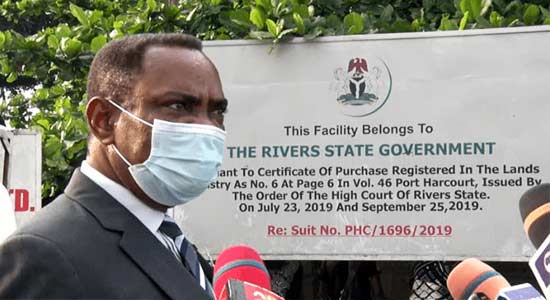
Rivers State Attorney General and Commissioner for Justice, Zaccheus Adangor, addressing government house journalists on Wednesday after sealing off Kidney Island in execution of the judgment of Rivers State High Court.
…action premature, unlawful due to pending appeals – Shell
The Rivers State Government says it has secured the enforcement of its interest in the acquisition of 45 percent equity stake in Oil Mining Lease (OML) 11 and Kidney Island in Port Harcourt owned by Shell.
Shell, however, said the action is premature and unlawful due to several appeals on the matter allegedly still pending in the courts.
The state government had moved Wednesday, December 23, 2020, and broke the keys and chains with which the gates of Kidney Island in Port Harcourt were locked.
Photos of court officials executing to action went viral soon after.
On this note, the state government issued a statement saying Kidney Island, which was once used as Shell Petroleum Development Company (SPDC) operational base in Port Harcourt, now belongs to the Rivers State Government.
The statement said the action is pursuant to a certificate of purchase registered in the Lands Registry as No. 6 on page 6 in Vol. 46, Port Harcourt.
The statement said, “The certificate of purchase was issued by the order of the High Court of Rivers State on July 23, 2019, and September 25, 2019, following the purchase of the facility.”
The state government recalled that the Supreme Court had on November 2020 reaffirmed Rivers State Government’s acquisition of SPDC interest in OML 11 and Kidney Island when it said the Supreme Court dismissed Shell’s suit which sought to set aside the judgment made against it in 2019 in favour of Ejama-Ebubu community.
The Rivers State Attorney General and Commissioner for Justice, the professor, Zaccheus Adangor (SAN), addressed Government House Reporters on Wednesday on the action of government said to be based on the judgment of Rivers State High Court.
The statement said: “You will recall that sometime in 2017, the people of Ejama-Ebubu secured a judgment against SPDC and its subsidiaries in the sum of N57.7Billion Naira for the damages done to their environment arising from the oil spill from the Trans-Niger pipeline.
“After that judgment, Shell refused to pay the judgment sum and thereafter proceeded to levy execution by attaching the moveable properties of SPDC. But those were found to be grossly insufficient to settle the judgment sum.
“Subsequently, they (Ejama-Ebubu community) approached the court to seek the leave of the court to attach the immovable properties of SPDC and the court granted them that order. Following the grant of that order, there was a court order for sell of some of the properties of SPDC including Kidney Island and the acquisition of Shell interest in OML 11.”
Adangor said after the court order, a public auction was held by the officers of the Rivers State Judiciary and the State Government bid successfully for the purchase of Kidney Island and Shell interest in OML 11.
The statement went on: “So we are here to execute the judgment of the High Court of Rivers State and secure the enforcement of the interest acquired by the Rivers State Government.”
The Attorney General stated that the Rivers State Government successfully executed the enforcement as Shell in all fairness did not resist the enforcement.
“It was lawfully purchased through public auction ordered by the court pursuant to a court judgment, hence everything went in accordance with the due process of the law.
“The Rivers State Government successfully executed the enforcement and in fairness to Shell, there was no resistance during the exercise.”
“I was on ground to ensure that everything was done smoothly and in accordance with the law.”
Also speaking, a representative of the office of the Deputy Sheriff, High Court, Port Harcourt, Livinus Akere, said the exercise was to take vacant possession of Kidney Island auctioned on the 13 August 2019 and OML 11 in Ejama Community of Eleme Local Government Area.
In September 2019, Rivers State Governor, Wike had announced the acquisition of SPDC 45 per cent interest in OML 11 oilfields and Kidney Island in the State.
The governor following a court order to auction SPDC assets in the suit against Ejama-Ebubu community had directed the Rivers State Ministry of Finance Incorporated to make a bid of USD 150,000,900 supported by a bank guarantee and cash payment to the Deputy Sheriff in the sum of N1Bn, the later payable to the judgment creditors while the former is put in an escrow account.
Shell reacts
In a swift response, SPDC said
The Shell Petroleum Development Company of Nigeria Limited (SPDC) has dismissed the purported takeover of Kidney Island asset of the SPDC Joint Venture in Port Harcourt by the Rivers State Government in the exercise of rights purportedly acquired through a court auction process that is still the subject of ongoing appeals at the Court of Appeal sitting in Port Harcourt.
According to SPDC, any purported exercise of rights allegedly acquired through that process including any attempt to take over or seal up the Kidney Island asset or other assets of the SPDC JV to satisfy claims in pending suits is premature and prejudicial to the ongoing court proceedings, and therefore not recognised.
Under the Nigerian Petroleum Act, any acquisition or assignment of interests in a license or lease would require the consent of the Minister of Petroleum. No such consent has been given in the case of the purported acquisition by the Rivers State Government.
In addition, the ruling of the Supreme Court on 27 November 2020 did not decide liability or the size of the award in the underlying suit of Chief Ogbara & Others Vs SPDC neither did the ruling affirm the purported sale of SPDC JV’s assets to the Rivers State Government as being claimed by the state.
Meanwhile, there is a pending litigation by SPDC in which the Federal High Court has issued an interim order restraining further enforcement of the underlying Agbara judgment pending the hearing of the motion on notice fixed for hearing on 14 January 2021.
SPDC therefore calls on the Rivers State Government and those claiming interest in the SPDC Kidney Island asset to stay further action to allow the due process of the law as enshrined in the Nigerian Constitution.
We remain of the view that until the pending appeals are heard and determined, any exercise of rights including any attempt to take over or seal up SPDC JV’s assets by the Rivers State Government is premature and unlawful.
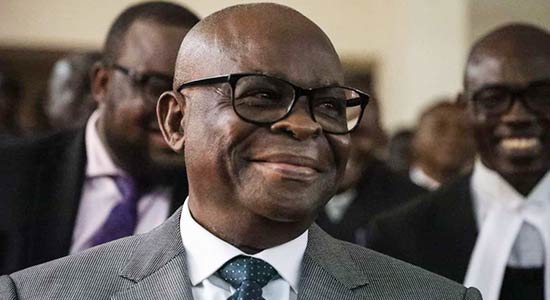
The immediate past Chief Justice of Nigeria, Hon. Justice Walter Onnoghen has expressed surprise over his sudden removal without being told of his wrong.
Onnoghen said this during his 70th birthday dinner in his home at Asokoro, Abuja.
“How can you just wake up one morning and they say you have been removed from office. Nobody is ready to tell you anything, all everybody was just saying is resign, resign.
“What have I done?” he queried
Onnoghen maintained that he lived an upright life throughout his career as a judicial officer.
He said, “You did not have to know my wife, my children or anybody close to me to get justice”.
He said within two years as Chief Justice of Nigeria, he brought a lot of innovations and reforms but all “have been abandoned”.
In the dinner were Onnoghen’s predecessor, Justice Mahmud Mohammed (retd); a former Justice of the Supreme Court, Justice Kumai Akaahs; the Chief Judge of Borno State, Justice Kashim Zannah; the President of the Nigerian Bar Association; Chief Adegboyega Awomolo (SAN); Chief Rafiu Lawal-Rabana (SAN) and many other dignitaries who paid glowing tributes to him at his 70th birthday dinner on Tuesday.
Recall that on 25 January 2019, President Muhammadu Buhari suspended Onnoghen as the Chief Justice of Nigeria and immediately swore in the most senior Supreme Court Justice, Justice Ibrahim Muhammed, as the Acting Chief Justice of Nigeria.
According to President Muhammodu Buhari, the act was his way of executing an order ‘ex-parte’ of the Code of Conduct Tribunal, which was granted on 23 January 2019.
The president explained that this became necessary as a result of corruption-related charges that were levied at the Code of Conduct Tribunal against the CJN by the Code of Conduct Bureau. The CJN was said to have grossly violated the provisions of the Code of Conduct for public officers, as stipulated in the Constitution of Nigeria. When confronted with the charges, the CJN had earlier stated in writing that he ‘forgot’ to declare some of his assets to the CCB. Alas, these ‘forgotten assets’ ran into more than a billion naira in various bank accounts, as well as some 55 houses.
Onnoghen never returned to office till his conviction by the CCT and his voluntary retirement in April 2019.
Our site uses cookies. By clicking “Accept All Cookies”, you direct Law and Society Magazine to store cookies on your device and disclose information in accordance with our Cookie Statement: cookie policyACCEPTREJECT
Privacy & Cookies Policy
Privacy Overview
This website uses cookies to improve your experience while you navigate through the website. Out of these cookies, the cookies that are categorized as necessary are stored on your browser as they are essential for the working of basic functionalities of the website. We also use third-party cookies that help us analyze and understand how you use this website. These cookies will be stored in your browser only with your consent. You also have the option to opt-out of these cookies. But opting out of some of these cookies may have an effect on your browsing experience.
Necessary cookies are absolutely essential for the website to function properly. This category only includes cookies that ensures basic functionalities and security features of the website. These cookies do not store any personal information.
Any cookies that may not be particularly necessary for the website to function and is used specifically to collect user personal data via analytics, ads, other embedded contents are termed as non-necessary cookies. It is mandatory to procure user consent prior to running these cookies on your website.