Home Blog Page 1121

Owners Liable for Offences Committed with NIN-linked SIMs, Says NIMC

The National Identity Management Commission (NIMC) has advised Nigerians to avoid sharing their National Identification Number with unauthorised persons.

In a statement issued on its official Twitter handle, NIMC said that the NIN when shared wrongly could be used to “perpetrate fraud” against the owner.

“Your NIN is your digital identity and you will be held liable for offences committed by individuals with sim cards linked to your NIN,” NIMC said.

The commission advised that persons engaged in such fraudulent acts should be reported to the National Identity Management Commission.

Understanding The Tax Legislations In Nigeria’s Finance Bill 2020

By Ebube Godwin Onyejekwulum

Introduction

On 8th October, 2020 President Muhammadu Buhari presented the 2021 budget to the joint Session of the National Assembly. Subsequently, the Federal Executive Council approved the Finance Bill 2020 on the 18th day of November, 2020. The Federal Ministry of Finance, Budget and National Planning had released the draft version of the 2020 Finance Bill (the Bill) to the public and stakeholders for consultation. On 1st December 2020 the President transmitted the Bill to the senate for consideration and passage into law in support of the 2021 Budget which was recently passed by the National Assembly on 21st December,2020. This affirms the Federal Government of Nigeria’s commitment to enact Finance Acts annually, alongside the passage of the budget into law (Appropriation Act). Furthermore, this strategy aligns with global best practices, especially as tax is a significant contributor to the Government’s revenue. Following the adoption of the report of Senate joint committee on Finance, Customs & Excise Tariff, Trade & Investment And Public Procurement at the committee of the whole on 15th December, 2020 the senate passed The Bill and transmitted same to the President for his assent. This article will highlight the objectives of the Finance Bill 2021 as well as examine the key provisions of the Bill that will affect taxes and tax legislations in Nigeria and the recommendations of the committee.

Objectives of the Finance Bill 2020

The Bill is set to amend the provisions of the Capital Gains Tax Act, Companies Income Tax Act (CITA), Industrial Development (Income Tax Relief) Act (IIDITRA), Personal Income Tax Act (PITA), Tertiary Education Trust Fund Act, Customs & Excise Tariff (Consolidation) Act, Value Added Tax Act (VATA), Federal Inland Revenue Service (Establishment) Act, the Fiscal Responsibility Act and the Public Procurement Act. The Finance Bill, 2020 seeks to support the implementation of the 2021 budget by proposing key reforms to specific taxation, customs, excise, fiscal and other laws and has the following strategic objectives as follows:

  • Adopt appropriate counter-cyclical fiscal policies to respond to the economic and revenue challenges precipitated by the decline in international oil prices, as well as the impact of the COVID-19 Pandemic on the Nigerian economy;
  • Reform extant fiscal policies to prioritize job creation, economic growth, socio-economic development, domestic revenue mobilization, as well as to foster closer coordination with Monetary and Trade Policies;
  • Provide fiscal relief for taxpayers by reducing the applicable minimum tax rate for two years consecutive years of assessment, as well as reforming the commencement and cessation rules for small businesses;
  • Propose measures to fund the Federal Government’s COVID-19 pandemic response and introduce provisions to enhance the recovery of corporate donations towards responses to the COVID-19 pandemic, as well as any similar crisis in the future;
  • Amend certain aspects of the Fiscal Responsibility Act, to align this Act with the 1999 Constitution (as amended), as well as to enhance fiscal efficiencies by controlling the cost-to-cost revenue ratios of key state and Government-owned Enterprises; and
  • Amend the Public Procurement Act to implement key procurement reforms previously proposed by the National Assembly, in 2019, to extend the scope of the Act to the Federal Judiciary and Legislature, accelerate procurement processes, increase mobilization fee thresholds and provide for essential e-procurement reforms.

Major Tax Law Amendments

  1. Capital Gains Tax Act(CGTA):
  • Compensation for loss of office – In order to clarify the amendments earlier made by the Finance Act 2019 (FA 2019) and improve the administration of CGT on compensation for loss of office, Section 1 of the Finance Bill 2020 substituted section 36(2) of CGTA with a new section 36(2). Thus, Capital gain tax on compensation for loss of office would be limited to an amount in excess of the NGN 10 million threshold provided under the FA 2019. The Bill also added a new section 36(3) which provides that any person who pays compensation for loss of office to an individual shall be required to, at the point of payment, deduct and remit the tax due to the relevant tax authority within the time specified under the Pay-as-you-earn Regulations.
  1. Companies Income Tax Act (CITA):
  • Agricultural Production– Section 2 of the Bill amended Section 11 of the CITA which provides for charge of tax on interest relating to foreign and agricultural loans and certain reliefs. Interest on loan granted to an agricultural trade or business was exempted from tax under the section. However, “Agricultural trade or business” has now been renamed as ‘Primary Agricultural Production’. ‘Primary Agricultural Production’ was defined to mean Primary crop production, Primary livestock production, Primary forestry production and Primary fishing production. This new definition clearly excludes processing and manufacturing of all forms of agricultural products. This amendment is to align the incentives in respect of interest on loan with the general policy direction of the Federal government targeted to encourage primary agricultural production.
  • Incidental Income for international shipping/air transport companies– Section 4 of the Bill inserted a new Section 14(5) of CITA. The provision clarifies that specific tax regime for shipping and air transport companies under section 14 of CITA will apply strictly to income from the carriage of passengers, mails, livestock or goods shipped or loaded into an aircraft in Nigeria while leasing, containers, Non-freight income, and other incidental income will be taxed under Section 9 of CITA.
  • COVID-19 Incentives- It is proposed pursuant to Section 5 of the Bill that the applicable minimum tax rate be reduced to 0.25% for tax returns prepared and filed with respect to tax returns filed in respect of financial years ending between 1st January 2020 and 31st December 2021. This reduction is an incentive meant to alleviate the burden of minimum tax on companies considering the economic challenges of Covid-19 pandemic. Furthermore, Section 7 of the Bill amended Section 25 of CITA to allow deduction of donations made by companies to the Covid-19 Crisis Intervention Fund or other similar fund by the Federal, state government or their agencies in respect of any future pandemics, natural disasters or other exigency. Deductibility is restricted to 25% of the assessable profits after deduction of other allowable donations. Allowable donations which have not been deducted may be carried forward for a maximum of two years.
  • Profits Exempted-Section 6 of the Bill amended Section 23 of CITA which provides for profits exempted from company income tax. Firstly, paragraph c of subsection 1B was substituted with a new a paragraph c to clarify any perceived ambiguity in the tax applicable to Real Estate Investment Companies. Thus a real estate investment company is certainly not exempted from tax on dividend and rental income if it fails to distribute at least 75% of the dividends or rental income within 12 months from the end of the financial year that the dividend or rental income was earned. Secondly, the incentives under section 23(1) c of CITA were deleted and transferred to the Industrial Development (Income Tax Relief) Act for ease of administration and better management. The said provision contained certain incentives for companies engaged in agricultural production.
  • Gas Utilization– Section 8 of the Bill amended Section 39 of CITA with the effect that Companies that claim the gas utilization incentive under CITA would not be entitled to similar incentives under the Petroleum Profits Tax Act or Industrial Development (Income Tax Relief) Act. The purpose of the amendment is to close the loophole which permits the abuse of the incentive by Petroleum companies in Nigeria.
  • Penalty for deliberate misstatement on self assessment forms– Section 9 of the Bill amended Section 53 of CITA. Thus where a tax payer deliberately and dishonestly fails to declare the true amount of profits or tax payable the company shall immediately become liable to pay any outstanding tax identified or assessment which shall be liable to the penalties and interest for default/late payment under the Act and shall accrue from the date the incorrect return was filed. This section is clearly meant to discourage deliberate misstatement of profits and taxes.
  • Non-resident companies filing- Section 10 of the Bill amended Section 55 of CITA. This clarifies the components of the income tax returns of non-resident companies who derive income from an activity attributable to their operations in Nigeria. The components includes; an audited financial statement for Nigerian operations, tax computation schedules, statement of profits from every source in Nigeria and duly completed companies income tax self- assessment form. The obligation to file tax returns will not apply to non-resident companies whose tax exposure in Nigeria is limited to withholding tax.
  • Service of notice of assessment/revised assessment- Section 11 and 12 of the Bill amended Sections 68 and 69 of CITA respectivelyThe effect is that service of notice of assessment and revised assessment in the case of an objection can be done by courier, email or other electronic means such as Whatsapp, Telegram etc. This provision is to promote ease of business and efficient tax administration. See Earth Moving International Ltd v. FIRS (Unreported Judgment delivered on September 17, 2019 in appeal no TAT/C2/CIT/030/2018) where TAT Lagos zone held that electronic service of taxpayer’s objection against a notice of assessment issued by the FIRS was valid.
  • Software acquisition- Section 15 of the Bill amended the 2nd schedule to CITA. Qualifying expenditure was defined to include capital expenditure incurred on the development and acquisition of software. This means that initial and annual capital allowances can be deducted for expenditure made towards acquisition and development of software. Many businesses spend huge sums of money to acquire software and/or engage the services of IT firms to set up different kinds of software for their business operations. This provision will come as a huge relief to such businesses.
  1. Industrial Development (Income Tax Relief) Act:
  • Primary agricultural Production – Section 16 of the Bill amended the Act by introducing “primary agricultural (i.e. crop, livestock, forestry and fisheries) production” as a pioneer industry. This means Companies involved in these activities are eligible for tax holiday incentives.
  1. Personal Income Tax Act:
  • Significant Economic Presence– Section 17 of the Bill amended Section 6 of PITA to introduce Significant Economic Presence rules to the taxation of certain categories of non-resident individuals, executors or trustees.. The provision is akin to the Significant economic presence rules introduced to the CITA by the FA 2019 for taxation of non-resident persons providing technical, management, professional or consultancy services to a person resident in Nigeria. Such non-resident persons shall be deemed to derive gains or profits from Nigeria and taxable in Nigeria to the extent that they have significant economic presence in Nigeria. The Minister of Finance will issue rules to define SEP under PITA. This provision aligns PITA with the Finance Act 2019 amendments to CITA relating to taxation of non-resident persons. It is also intended to close a loop hole and avoid tax leakages.
  • Commencement and cessation rules– Sections 19 and 20 of the Bill amended Section 24 and 25 of PITA respectively. The commencement and cessation tax rules were revised to prevent double taxation. Tax will be charged on the basis of the individual’s accounting year. This aligns with the prior amendment to CITA in this regard.
  • Gross Income definition– Section 21 of the Bill amended Section 33 of PITA by introducing a definition for “gross income”, which is the basis for calculating consolidated relief allowance. “Gross income” is defined to mean income from all sources, excluding non-taxable income, tax-exempt income, income on which no further tax is payable, allowable business expenses and capital allowances.
  1. Tertiary Education Tax(Establishment etc.) Act:
  • Exemption for small companies– Section 24 of the Bill amended Section 1 of TET Act thereby exempting Small companies from payment of tertiary education tax. This is in line with the Federal Government’s policy to exempt small companies from tax.
  1. Customs and Excise Tariff etc(Consolidation) Act:
  • Non-applicability of excise duty exemption– Section 27 of the Bill amended section 21 of the CETCA. The exemption from excise duties on imported goods and goods manufactured locally would no longer apply. This is to correct the contradiction observed in the amendments introduced by the Finance Act 2019.
  • Services are now subject to excise duties– Section 27 of the Bill amended section 21 of the CETCA and included a new subsection 2 with the effect that Services are now subject to excise duties based on the applicable rates in the Fifth schedule.
  1. Value Added Tax Act:
  • Time of supply of goods or services– Section 28 of the Bill introduced a new section 2A to the VATA. In line with global best practices, time of supply of goods or service is now defined to be the later of date of supply or date of issuance of a tax invoice for supply. The date of supply of goods where goods are to be removed is the date of delivery by the supplier or the date of collection of the goods by the customer or their agents respectively. The date of supply of services is the date the services are performed. More specific rules to clarify how to determine the date of supply were also introduced by the Bill.
  • The 7.5% increase in VAT commencement date– Section 29 of the Bill further amended section 4 of the VATA. The Bill clarifies that the commencement date of the 7.5% increase in VAT is 1st February 2020.
  • Expand list of basic food items– Section 30 of the Bill amended Section 46 the interpretation section of VATA to include “Animal Feed” as a basic food item which will be exempted from VAT.
  • New definition of goods and services– Section 30 of the Bill further amended Section 46 the interpretation section of VATA thereby excluding “any transfer of such interest in land, the assignment of any leasehold interest in land, the transfer of ownership of any interest in a license to produce or explore for solid minerals or petroleum or of a right to use water drawn from a river, dam or aquifer” from the meaning of taxable goods and services under the Act. Experts had recommended that, in order to promote certainty, there should be clarity on the meaning of taxable goods and services through a more detailed amendment of the VAT Act. It is believed that with this current amendment the knotty issue as to whether VAT is applicable to commercial lease transactions will be laid to rest. See Chief J.W. Ellah, Sons & Company Ltd v. Federal Inland Revenue Service (Ellah Case) Unreported Judgment in Appeal No: TAT/SSZ/001/2019, Ess-Ay Holdings Limited v. Federal Inland Revenue Service (Ess-ay case) Unreported judgment in Appeal No: TAT/LZ/VAT/029/2019, Federal Board of Inland Revenue v. Ibile Holdings (All NTC vol. 6 Page 1), CNOOC Exploration and Production Nigeria Limited and South Atlantic Petroleum Limited v Attorney General of the Federation & Ors (2013 1 NRLR 88) (The CNOOC Case)
  1. Federal Inland Revenue Service (Establishment) Act:
  • Deployment of Technology for efficient Administration of tax laws– Section 32 of the Bill amended Section 25 of the FIRSEA. The FIRS may appoint a payment processing company, a digital platform or operator of such platform as an agent to collect and remit taxes due on international transactions in the supply of digital services to and from a person in Nigeria, in the case of transactions carried out through remote, digital, electronic or other such platform. The legislation also empowers The Federal Inland Revenue Service (FIRS) to deploy technology to automate the tax administration process including tax assessment, collection and information gathering. This provision recognizes that technology is central to the effective administration of taxation systems. Across the globe, there has been a significant shift towards e-administration with increasing options for online filing of tax returns as well as online payments. The FIRS already has an active platform at FIRS.gov.ng where tax payers can carry out electronic tax transactions namely e-filing, e-tax payment, e-receipt, e-tcc (tax clearance certificate),e-stamp duties etc. However, the FIRS is yet to completely eliminate requirement of physical visits to their office for tax transactions. Tax Identification Number will be required to create an account on the portal and to access the electronic services. Payments can be done on the website using the following payment channels; Remitta, Interswitch, NIBSS, E-tranzact and infiniti. Thus the provision is in line with the existing policies of FIRS.
  • Information and documents to be confidential– Section 34 of the Bill amended Section 39 of the FIRSEA. The tax payer information gathered by the FIRS is to be kept confidential in line with the legal provisions on data privacy, data protection etc. The section inserted a punishment of One Million Naira or 3 years imprisonment on conviction as a deterrent for breach of confidentiality by tax officials.
  • Virtual Hearing by Tax Appeal Tribunal– Section 37 of the Act amended Paragraph 20(2) of the Fifth Schedule to FIRSEA empowering the TAT to conduct hearing remotely via virtual means using such technology as may be necessary to ensure fair hearing.

The Finance Bill 2020 also contains provisions with regards to:

  • Creation of the Covid 19 Crisis Intervention Fund at the tune of 500 Billion Naira;
  • Establishment of unclaimed dividends trust fund;
  • Amendments to the Fiscal Responsibility Act;
  • Amendments to the Public Procurement Act.

Recommendations by the Senate Committee

  • The inclusion of free duty and levy for commercial airline operators in line with presidential waivers and approval already granted by the President in the Customs and Excise Tariff Act (CETA).
  • Capital Gain Tax returns should be filed per year on the 30th of June and 31st December of every tax year.
  • Deductions provided for in the Company Income Tax should, among others, be based on the actual cost of the in-kind donation instead of the value which may be different from what the donor actually incurred.
  • Section 25(9) of CITA proposed be reduced from 25 per cent to 15 per cent of assessable profits to reduce the amount of deductions available for voluntary donations made to State or Local Government. And penalty or fine to be disallowed for deductions should be restricted to those imposed by legislation enacted by the National Assembly or States Houses of Assembly with the aim of removing the restriction that will be occasioned by the proposal in the Bill with the aim of ease of doing business.
  • Reduction in the Tax Relief periods under the Industrial Development Income Tax Relief Act, from initial five years to four years and additional three years to two years as this will enable the government to start taxing the relevant organization after a total period of 6 years of tax holiday.
  • Goods and services exempted under the Value Added Tax (VAT) should include commercial aircraft, engine, spare part, airline transportation ticket. Also hire, rental or lease of tractors, plough and other agricultural equipment or implements should be included as parts of goods and services exempted from VAT.
  • Under Stamp Duty Act, it was recommended that the Minister of finance subject to the approval of the National Assembly shall make regulation for the imposition, administration, collection and remittance of the electronic levy. The sharing formula of the electronic levy between States and Federal Government should be States Government taking 85% and Federal Government being the collecting agent on behalf of the States collects 15 per cent.

Conclusion

From a cursory reading of the Finance Bill 2020, it is distilled that the bill is an improvement to the Finance Act 2019. Certain ambiguities, errors, loopholes in the FA 2019 were clarified, corrected and eliminated by the Bill respectively. Tax is a significant contributor to the Government’s revenue and it is observed that the present regime is channeling its effort to improve tax generated revenue. However, The Bill also provided for incentives that will potentially enhance the growth of the agricultural sector, small companies as well companies that acquire software for business efficiency. The Bill also introduced Virtual hearing as a valid means of resolving tax disputes by the Tax Appeal Tribunal. These legislations are commendable. Generally, the Bill attempted to align Nigeria’s tax legislation with global best practices and it is hoped that similar results will be achieved in our tax system.

Ebube Godwin Onyejekwulum ACIArb(UK), LLM Taxation (in view) is an Associate Counsel at Synergy Attornies and can be reached via [email protected]

Boss Mustapha: My Four Children Tested Positive

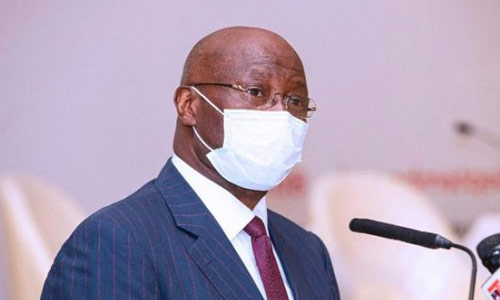
Secretary to the Government of the Federation (SGF) Boss Mustapha has said four of his children have tested positive for coronavirus.

Mustapha, who is the chairman of the Presidential Task Force on COVID-19, announced this during a media briefing in Abuja on Monday.

He also said a family member, who is one-year-old tested positive for the virus.

The SGF had gone into isolation last week after he was exposed to the virus.

He said while he and his wife tested negative for the virus, his children are currently receiving treatment.

“The first test we ran, the result came back with six members within my household testing positive. The second test confirmed another three. From the month of March to November, we are being confronted with a figure of nine. It was quite a traumatic experience,” he said.

“My wife and I consistently tested negative but members of the household were infected. The last one, it was a nightmare. I was not infected but the truth about it, the agony of having members of your household… I am a father of four. All my four kids were infected.

“A lot of you here are parents, so you need to do everything you can to ensure that you keep yourself and members of your family safe,” Mustapha added.

He added that the spike in coronavirus cases is as a result of the consequences of certain occurrences in the last few weeks such as an increase in social gatherings and disregard for health protocols.

“A lot of discussions is still going on around the calls for the restriction of international travels due to the discovery of new strains of the virus in certain countries.

“The PTF, aviation and health authorities, including the WHO, are assessing the situation closely and would take a position as soon as a cogent scientific basis are established,” he said.

Presidency Dismisses FT’s Claim of Nigeria Being Near Failed State

The presidency yesterday dismissed an editorial in Financial Times, an international daily newspaper based in Britain, which described Nigeria as a country that is gradually inching closer to becoming a failed state.

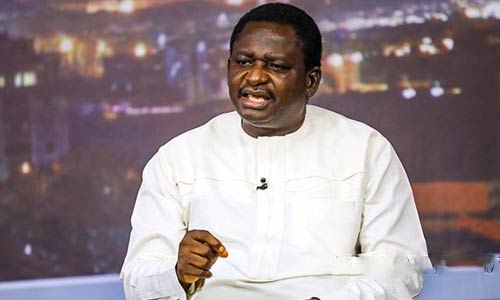
Reacting to the editorial following a THISDAY inquiry, Special Adviser on Media and Publicity to the President, Mr. Femi Adesina, said: “Who makes Financial Times a ruler and judge over us?”

In the editorial, The Financial Times said Nigeria is going backwards economically and plagued with terrorism, illiteracy, poverty, banditry, and kidnapping.

It advised that if things don’t take a drastic turn, the country risks becoming a failed state soon.

In the editorial yesterday titled, ‘Nigeria at Risk of Becoming a Failed State,’ the FT urged President Muhammadu Buhari to draw the line in the sand and strengthening his grip on the country’s security in order to be able to stem the tide of insecurity in Nigeria.

The newspaper, which said the abduction and subsequent rescue of over 300 schoolboys in Kankara, Katsina State, revived memories of the 276 Chibok schoolgirls abducted in Borno State in 2014, warned that Nigeria would become a problem far too big for the world to ignore if nothing is done to redress the country’s economic, security and population challenges.

According to the newspaper, while the government’s claim that no ransom was paid to the abductors of the schoolboys remains doubtful, other acts of criminality could not be overlooked.

The editorial read in part, “The government insists no ransom was paid. Scepticism is warranted. In a country going backwards economically, carjacking, kidnapping and banditry are among Nigeria’s rare growth industries. Just as the boys were going home, Nigerian pirates abducted six Ukrainian sailors off the coast.

“The definition of a failed state is one where the government is no longer in control. By this yardstick, Africa’s most populous country is teetering on the brink.”

The newspaper also questioned the claim by Buhari that Boko Haram had been technically defeated.

It said contrary to the government’s claim, Boko Haram remained an ever-present threat.

The Financial Times stated: “President Muhammadu Buhari in 2015 pronounced Boko Haram technically defeated’. That has proved fanciful. Boko Haram has remained an ever-present threat. If the latest kidnapping turns out to be its work, it would mark the spread of the terrorist group from its north-eastern base.

“Even if the mass abduction was carried out by ‘ordinary’ bandits — as now looks possible — it underlines the fact of chronic criminality and violence. Deadly clashes between herders and settled farmers have spread to most parts of Nigeria. In the oil-rich, but impoverished, Delta region, extortion through the sabotage of pipelines is legendary.”

The newspaper said security is not the only area where “the state is failing”.

The editorial also highlighted Nigeria’s standing as the country with the highest number of poor people in the world that live on less than $1.90 a day and the country’s fast growing population that is estimated to reach 400 million in 2050.

The newspaper stated that as oil continues to lose its value, Nigeria’s economy would worsen.

It said: “Extortion is a patent symbol for a state whose modus operandi is the extraction of oil revenue from central coffers to pay for bloated, ruinously inefficient political elite.

“The population, already above 200 million, is growing at a breakneck 3.2 per cent a year.

The economy has stalled since 2015 and real living standards are declining. This year, the economy will shrink 4 per cent after COVID-19 dealt a further blow to oil prices.

“In any case, as the world turns greener, the elite’s scramble for oil revenue will become a game of diminishing returns. The country desperately needs to put its finances, propped up by foreign borrowing, on a sounder footing.”

The newspaper said Buhari, who has less than three years left in office, must use the remainder of his term, to redouble efforts at improving security.

It advised the government to restore trust in key institutions, among them the judiciary, the security services and the electoral commission, which will preside over the 2023 elections.

The Financial Times said the #EndSARS protests led by Nigerian youths, signaled a glimmer of hope for Nigeria’s teeming youth population.

The newspaper also called for an urgent need for Nigeria to restructure its political system and concentrate on security, health, education, power and roads.

The Financial Times also warned that Nigeria is in a desperate need to put its finances, which are propped up by foreign borrowings, on a sounder footing.

The newspaper, however, observed that the country has an opportunity to achieve a generational shift in its leadership by exploiting the broad coalition that found political expression this year in the #EndSARS movement against police brutality.


Court Grants Dr. Chike Okogwu Bail For Allegedly Inciting Public Disturbance, Criminal Trespass & Mischief At Dana Air

Dr. Chike Okogwu has been granted bail following his arraignment by the Police before the Area Court, Grade One in Gwagalada Abuja for allegedly causing public disturbance at Dana Air on Monday.

He was arraigned through a First Information Report (FIR/CR/61/2020) on Tuesday before the Court.

The FIR which was made available to TheNigeriaLawyer states that the nature of the offence is that he allegedly incited public disturbance, criminal trespass, and caused a mischief contrary to sections 114, 342, and 327 of the Penal Code Law.

It was alleged that he was ‘to fly Dana-Lagos on flight’ and that “after you collected your boarding pass, there was a delay on the said flight which lead to your annoyance and you started constituting nuisance at the hall, by inciting disturbance of public peace and you as well trespassed across Dana check-in counter and destroyed their computers, monitors, UPS and other valuables valued at the sum of #342,500 only”.

Meanwhile, upon taking his plea the Area Court admitted him to bail on the sum of #500,000 only and a surety who must be a resident within the jurisdiction of the Court.

Therefore, having perfected his bail, he has been released and the matter has been adjourned till 21st January, 2021 for continuation of trial.

However, in a video made available to TheNigeriaLawyer after he was granted bail, he reiterated that he was only trying to protect his right from being discriminated against over his disability which contravenes Discrimination Against Persons With Disabilities (Prohibition) Act, 2019.

In addition, the Association of Lawyers with Disabilities who is representing Dr. Chike through Kassim Olalekan Lawal, Esq. stated that the real issue has not been addressed based on the FIR that was filed.

In a statement his Lawyer made available to TheNigeriaLawyer, he said “it will be recalled that in January of 2019, the Discrimination Against Persons with Disabilities (Prohibition) Act, 2018 became an Act of the National Assembly following the assent of Mr. President.

“The law proscribes any form of discrimination whatsoever against persons facing social and institutional barriers in Nigeria. Two years on however, the Association of Lawyers with Disabilities in Nigeria (ALDIN) has witnessed flagrant disregard of the sacred provisions of the legislation. ALDIN has received several complaints from within the association and the general community of persons with disabilities continuous abuse of their rights despite the law. Dana Air in particular has been the frequent culprit.”

“Within the space of two weeks, the social media has been replete with agonizing stories of passengers with disabilities; they have told their stories of abuse of their rights with airline operators. There must be a stop to it”, he added.

TheNigeriaLawyer recalls that on Monday, Dana Air allegedly discriminated against Dr. Chike Okogwu by preventing him from boarding a scheduled flight because of his disability, noting that he can not board a flight with a wheelchair. This later got out of control because Dr. Chike was enraged and he was later taken away by the security operatives.

Conversely, Dana Air has denied discriminating against Dr. Chike Okogwu, whom they prevented from boarding a scheduled flight because of his disability on December 20.

Dana Air noted that it was a matter of policy, comfort and safety of their passengers.

In response to the entire situation, Dr. Chike was arraigned based on the above charges on Tuesday.

Thenigerialawyer

Alleged ₦7.1 Billion Fraud: Court Fixes February 2 To Commence Uzor Kalu’s Retrial

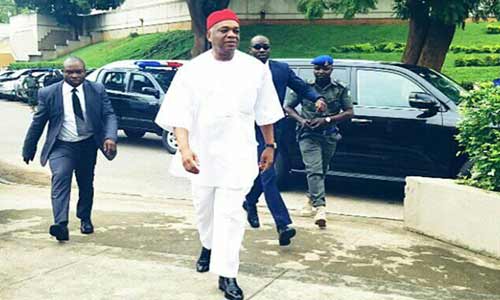
The Abuja Division of the Federal High Court has slated February 2, 2021, for the Economic and Financial Crimes Commission, EFCC, to arraign former governor of Abia State and Chief Whip of the Senate, Dr Orji Uzor Kalu, for the commencement of his retrial as ordered by the Supreme Court.

Chief Judge of the Court, Justice John Tsoho, has equally transferred Kalu’s case-file to Abuja.

It will be recalled that Kalu, who piloted affairs of Abia State from 1999 to 2007, was earlier found guilty and handed a 12-year jail term by the Lagos Division of the court.

The trial court convicted the former governor alongside his firm, Slok Nigeria Limited and a former Director of Finance in Abia State, Jones Udeogu, for allegedly stealing about N7.1 billion from the state treasury.

However, the Supreme Court, in its judgement on May 8, quashed the conviction and ordered a retrial of the defendants by the EFCC.

In a unanimous decision by a seven-man panel of Justices, the Supreme Court, nullified the entire proceedings that led to Kalu’s conviction, stressing that the trial judge, Justice Mohammed Idris, was already elevated to the Court of Appeal, as at the time he sat and delivered a judgement against the defendants.

It noted that Justice Idris was no longer a judge of the Federal High Court as at December 5, 2019, the day the former governor and his co-defendants were found guilty of the money laundering charge against them.

According to the Supreme Court, Justice Idris, having been elevated to the Court of Appeal before then, lacked the powers to return to sit as a High Court Judge.

It held that the Fiat that was issued to him by the Court of Appeal President pursuant to section 396(7) of the Administration of Criminal Justice Act, ACJA, 2015, was unconstitutional.

In its lead verdict that was delivered by Justice Ejembi Eko, the apex court held that President of the Court of Appeal acted beyond her powers when she authorized the trial Judge to return to the high court to deliver the pending judgement.

He held that the Court of Appeal President, by issuing a letter to Justice Idris to return to the Federal High Court to conclude the trial of Kalu and his co-defendants, usurped the power of President Muhammadu Buhari to appoint Judges for both superior courts, as well as the power of Chief Judge of the High Court to assign cases to Judges under him.

Consequently, the apex court held that since Justice Idris returned to the trial court based on an unconstitutional directive by the Court of Appeal President, the judgement and subsequent conviction of the defendants amounted to a nullity.

It, therefore, ordered that the charge in suit No. FHC/ABJ/CR/26/2017, which EFCC entered against Kalu and his co-defendants, should be remitted back to Chief Judge of the Federal High Court for re-assignment to any other judge for the trial to commence de-novo (afresh).

The judgement followed an appeal Kalu’s firm, Slok, lodged to challenge the jurisdiction of the high court that tried the matter and found the Defendants guilty.

Our correspondent learned on Tuesday that the Defendants will be arraigned before Justice Inyang Ekwo to whom the CJ has assigned their case-file.

FG, Shell, Agip Lose Bid To Stop Abacha’s Suit To Reclaim Malabu’s OPL 245

…Court dismisses their objections

A Federal High Court in Abuja has rejected moves by the Federal Government, Shell Nigeria Exploration, Nigeria Agip Exploration Company and others to prevent the hearing of a suit seeking to reclaim the Oil Prospecting License (OPL) 245 originally awarded to Malabu Oil and Gas Limited.

The suit, marked: FHC/ABJ/CS/201/2017 was filed in the name of Malabu Oil and Gas Ltd by Mohammed Sani Abacha, son of the late Head of State, Sani Abacha, who claimed to be the majority shareholder of the oil firm.

In a ruling on Tuesday, Justice Binta Nyako dismissed the preliminary objections filed by the defendants in the case and held that the court has jurisdiction to hear the case with relates to oil and gas.

As against the contention by the defendants, Justice Nyako also held that the suit was not caught by the Public Officers Protection Act and as such, was not statute-barred.

She further held that the plaintiff was right to have included the Minister of Petroleum as a defendant because the minister being a juristic personality could sue and be sued.

Justice Nyako held that, as against the contention by the defendants, the suit did not amount to an abuse of the process of the court, adding that the plaintiff rightly instituted by case, because no evidence exists that issues raised have not been determined by any other court.

After lawyers to parties, including Reuben Atabo (for the plaintiff), assured the court that they were ready to proceed to the hearing of the substantive suit, Justice Nyako adjourned till March 9, 2021, for hearing.

Defendants in the suit are the Federal Government of Nigeria, the Minister of Petroleum Resources, Shell Nigeria Ultra-Deep Ltd, Shell Nigeria Exploration and Production Company Ltd, Nigeria Agip Exploration Company Ltd and former Petroleum Minister, Dan Etete.

In its statement of claim, the plaintiff stated among others, that it was not part of the purported allocation of the OPL 245 to Shell and Agip and for which they allegedly paid $1.3billion to Etete, with the FG providing the account into which it was paid as its actual shareholders were excluded from the process.

The plaintiff added that it was also not part of the Block 245 Resolution Agreement of April 29, 2011 entered between the FG, Shell, Agip and Etete, purporting to represent Malabu Oil, adding that it “did not relinquish any or all of its rights and interests in OPL 245 to any person or persons.”

It added that the purported allocation of OPL245 to Shell and Agip in 2011 is in violation of its rights as the holder of the “OPL 245 to exclusively explore and prospect for petroleum with the area its licence, pursuant to Paragraph 5 of the First Schedule to the Petroleum Act, and is therefore null and of no effect.”

The plaintiff is praying the court for, among others, an order of perpetual injunction restraining the defendants from carrying out any exploration or prospecting activities in connection with or in relation to the area covered by OPL 245.

It wants the court to make an order compelling the defendants to restore to it, its right to the exclusive possession of OPL 245.

The plaintiff also wants a declaration that not being a party to the Block 245 Resolution Agreement dated April 29, 2011, any payment purportedly made by the defendants into any bank account purporting to be the plaintiff’s bank account and or made to the 7th defendant (Etete) purportedly in the name of the plaintiff, was not a payment made in pursuance of the said bloc 245 resolution agreement.

It wants a declaration that the allocation of OPL 245 by the 1st and 2nd defendants (FG and Petroleum Minister) to the 4th and 5th defendants (Shell and Agip), via a letter by the Petroleum Minister, on May 11, 2011, titled “Re: OPL 245 Resolution Agreement/Letter of Award”, while the plaintiff’s rights and the interests to OPL 245 was subsisting, is in violation of the plaintiff’s exclusive right under paragraph 5 of the First Schedule to the Petroleum Act, to explore and prospect for petroleum within the area covered by OPL 245 and is therefore invalid, wrongful, null and void and of no effect whatsoever.

Consumers Unlikely To Buy Expensive Items In Next 12 Months — CBN

Most consumers in Nigeria would unlikely buy big-ticket items in the next 12 months, a survey by the Central Bank of Nigeria has revealed.

These items are high-priced goods, such as a house, cars or products with selling prices and profit margins that are significantly high depending on the level of income of the buyer.

The Consumer Expectations Survey (CES) report for the last quarter of 2020, recently released by the Statistics Department of the apex bank was conducted during the period of November 16 -25, 2020, covering a sample size of 2,070 households drawn from 207 Enumeration Areas (EAs) across the country, with a response rate of 99.8 percent.

According to the report, the overall buying conditions index for big-ticket items in the current quarter stood at 21.6 points.

“This indicates that majority of consumers believed that the current quarter was not the ideal time to purchase big-ticket items like consumer durables, motor vehicles and houses & lots.

“The buying intention indices for consumer durables, motor vehicles and house & lot were below 50 points, which shows that respondents have no plans to make these purchases in the next twelve months”.

The consumers’ overall confidence outlook was pessimistic in the reviewed quarter, standing at -14.8 index points.

“Respondents attributed this unfavourable outlook to declining economic conditions, family financial situation and declining family income.

“The consumers were however optimistic in their outlook for the next quarter and next 12 months with indices of 10.5 and 28.9 points, respectively”.

This positive outlook was attributed to the expected increase in net household income, an anticipated improvement in

Nigeria’s economic conditions and expectations to save a bit and/or have plenty of savings in the next quarter and the next 12 months.

Also, most of the respondents expect prices of goods and services to rise in the next 12 months, with an index of 43.1 points.

“The major drivers are savings, food & other household needs, education, purchase of appliances/durables, purchase of car/motor vehicle, and purchase of houses.

On borrowing and exchange rates, consumers expect the borrowing rate to rise and anticipate the naira to appreciate in the next 12 months, with indices of 12.2 and 3.9 points, respectively.

The unemployment index for the next 12 months remained positive at 36.9 points in the reviewed quarter, indicating that consumers generally expect the unemployment rate to rise in the next one year.

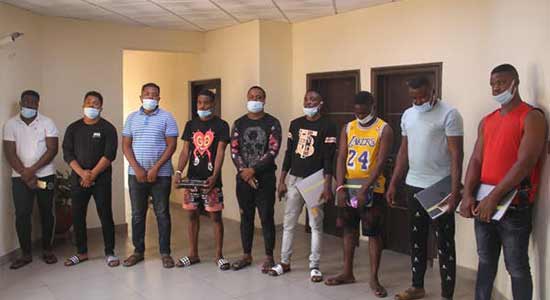
Full List: EFCC arrests 32 suspected Yahoo Boys, releases their names

Identities of 32 suspected internet fraudsters arrested by the operatives of the Economic and Financial Crimes Commission, EFCC, Lagos Zonal Office, have been released.

The suspects are;

1. Anthony Nicholas,
2. Obabire Adebayo,
3. Nwosu Ebuka,
4. Obiora Udenta,
5. Adeoye David,
6. Oni Oluwabunmi Olasunkanmi,
7. Oiseomaye Mike,
8. Ifeanyi Godwin
9. Obabire Tunde
10. Okafor Chibueze,
11. Damilare Moronfayo,
12. Micheal Makanjuola,
13. Samuel Oyindamola,
14. Haruna Mubarak Okiki,
15. Opeyemi Hassan,
16. Salami Junior,
17. Yusuf Quadri,
18. Adediran Waris,
19. Idoko Shedrack,
20. Andrew Agbai,
21. Mercy Adedoyin,
22. Olamide Mubarak,
23. Damilare Babalola,
24. Idris Mutairu,
25. Adebiye Michael,
26. Idris Adasofunjo,
27. Rasak Adasofunjo,
28. Olawaye Olayemi,
29. Amodu Idris,
30. Adeniyi Ahmed,
31. Shittu Usman
32. Oli Maduabuchi Charles.

They were arrested on Monday, December 21, 2020 during an early morning operation at Plot 12, Road 2, Goodnews Estate, Sangotedo, along Lekki-Ajah Way and Chevyview Estate, Chevron Drive, Lekki, Lagos, following credible intelligence received by the Commission about their alleged criminal activities.

The suspects had allegedly been defrauding unsuspecting members of the public of their hard-earned money before their arrest.

They will be charged to court as soon as investigations are concluded.

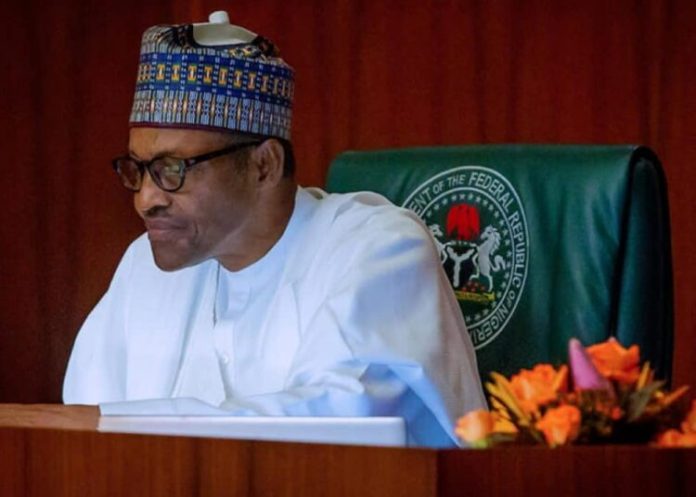
Buhari: Only God Can Effectively Supervise Nigeria-Niger Border

Only God can effectively supervise Nigeria’s border with Niger Republic, President Muhammadu Buhari said Tuesday.

The president painted the seemingly hopeless situation in the State House while hosting former Vice-President Namadi Sambo, who chairs ECOWAS Election Mission to Niger Republic.

A statement by the president’s media adviser, Mr. Femi Adesina, said the president applauded Nigerien President Mahamadou Issoufou, for not attempting to tamper with his country’s constitution to elongate his stay in power after serving for a maximum two terms.

Explaining why the border is difficult to police, the president disclosed that the border is large, spanning 1,400 kilometres in size adding that efforts should be made to stabilise the Sahel region in Nigeria’s interest.

“I come from Daura, few kilometers to Republic of Niger, so I should know a bit about that country. The President is quite decent, and we are regularly in touch. He is sticking to the maximum term prescribed by the Constitution of his country.

“Also, we share more than 1,400 kilometers of border with that country, which can only be effectively supervised by God. I will speak with the President, and offer his country our support. We need to do all we can to help stabilise the Sahel region, which is also in our own interest,” Buhari said.

The statement added that Nigeria would give a robust support to Republic of Niger, at its presidential and National Assembly elections later this month.

It also said Sambo congratulated Buhari on the successful return of abducted students of Government Science Secondary School, Kankara, in Katsina State, as well as his 78th birthday, last week.

According to Adesina, Sambo pledged that ECOWAS would ensure peaceful and fair elections in Republic of Niger, despite current political, legal and security issues, adding that meetings were already being held with relevant stakeholders.

TIPS