Home Blog Page 1112

The gift of encouragement

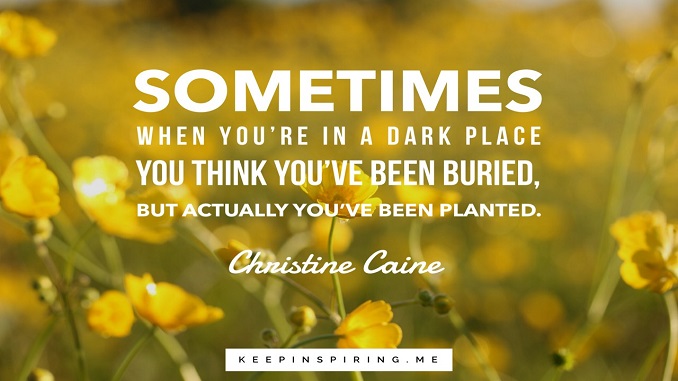
‘If your gift is…to encourage, then give encouragement.’
Romans 12:6, 8 NIV

Did you know that there’s such a thing as ‘the gift of encouragement’? There is! The Bible says, ‘We have different gifts, according to the grace given to each of us. If your gift is…to encourage, then give encouragement.’ And you don’t have to be talented or have a high IQ to demonstrate this gift. Every day you meet people in need of encouragement. They may not show it on the surface, but underneath they’re struggling to keep their head above water. Some of them are at the point of despair, and your words can lift them. Even a smile can do it. Job said, ‘When they were discouraged, I smiled at them. My look of approval was precious to them’ (Job 29:24 NLT). Solomon said, ‘Anxiety in the heart of man causes depression, but a good word makes it glad’ (Proverbs 12:25 NKJV). Don’t assume because people exhibit the trappings of status and success, that they don’t need encouragement. David was a best-selling author whose psalms are still read around the world. He was Israel’s most popular king. His victories in battle are the envy of every military academy strategist. But he had days when he felt so low that he was reaching up to touch the bottom: ‘I am on the verge of collapse, facing constant pain’ (Psalm 38:17 NLT). It’s not just average people who need encouragement – best-selling authors, kings, and generals need it too. Everybody does! And that’s good, because when you have the gift of encouragement you will never be without a job. So today be sensitive to God’s leading, and when He prompts you to encourage someone – do it!

Bible in a Year: Zechariah 9-10, Revelation 19

The Word for Today

Bye-bye to fuel scarcity?

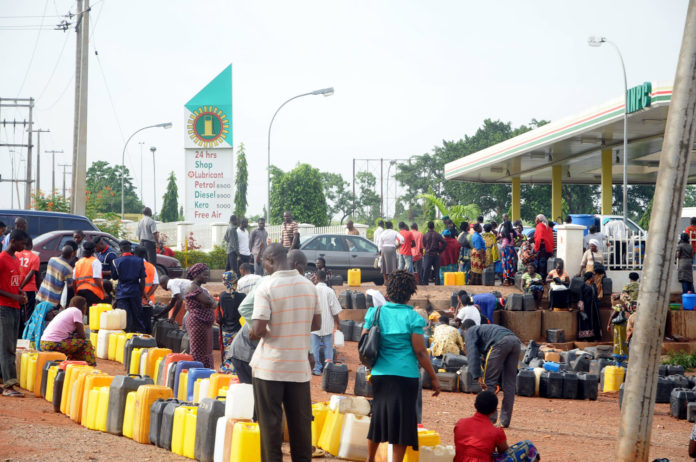
KEROSINE QUEUE/PRESS-2/MY DOCUMENT/MY DOCUMENT/JUNE 09 NIGERIANS STRUGGLING TO BUY KEROSINE AT NNPC MEGA STATION IN ABUJA ON WEDNESDAY (10/6/09). PHOTO; NAN

By Steve Nwosu

A friend, who is presently spending the Christmas and New Year holidays in the East, kept calling to update me on the progress of his trip, as he journeyed home last week.

He fed me with tales of unmotorable roads, and how they periodically had to detour into bush paths, either for a more bearable drive or to wait (sometimes for an hour) to allow bandits and robbers and kidnappers finish their business with other not-so-lucky travellers on the highway.

He regaled me with cheeky tales of how all the APC people from the South-East should be charged for ‘Anti-Party’, for stubbornly refusing to use their party’s ‘ready-to-be-commissioned Second Niger Bridge’, preferring instead, to inconvenience him on the old bridge.

It would be the third year in a row that my friend would be making that trip eastward, without dangerously trucking an extra jerry can of petrol in his car.

But, till he got to his Abia state village, there was no case of fuel queues, even though he topped his tank in Lagos, Benin and on the outskirts of Owerri.

Yes, the fuel queues used to herald, and hallmark, our Christmas has become a thing of the past.

So, in case some of you are not aware, it’s Christmas!!

It is probably at times like this that I remember we, at least, have one thing to thank President Muhammadu Buhari for. That residents of our major cities have long forgotten those long queues that frustratingly snaked into every filling station during similar seasons in times past. Gone too is the pandemonium that was the lot of every gas pump, the exchange – of hot words, saliva and sometimes, fisticuffs. How could we have coped, in this season of Covid-19 and social distancing? How could we have avoided the super-spreader that getting gasoline would have brought upon us?

Of course, we did not get to this point by chance.

Only last week in Abuja, I listened as Minister of Petroleum Resources,  Chief Timipre Sylva and his tag-team partner and NNPC GMD, Malam Mele Kyari, for the first time that I can remember, broke down the otherwise pedantic technicalities of fuel supply to my layman’s language.

And for the first time, I think, I have just understood what they’ve been talking about all this while.

Yes, sometimes they forget that we were not all in their post-graduate Soil Sciences class, and that, like Kyari jocularly put it, some of us understand it only when whatever they are doing with crude oil and gas under the ground is brought to the surface. Any other thing amounts to winking in the dark.

So, throwing some light on the otherwise crude darkness of Nigeria’s Crude business was what the duo of Sylva and Kyari did last Tuesday.

The team of oilmen had flown in straight from Benin, Edo state, where President Buhari had (albeit virtually) commissioned Oredo Integrated Gas Handling Facility (IGHF) and LPG Units built by the NPDC, a subsidiary of the NNPC. The project is another leg of the about $15 billion worth of gas projects planned in the Niger Delta region to tackle gas flaring,  create jobs, boost government revenue and address sundry environmental issues.

And, even though one left the NAF Centre still convinced that a lot needed to be done, one was still able to put one or two things in clearer perspective, and properly gauge the efforts made so far.

Now, we know that the determination to end the yearly ritual of perennial fuel scarcity is a cardinal objective of the PMB administration. And it would be outright dishonest t say it hasn’t succeeded with this. That is if we, for once, listen to the classic motor park admonition to “ignore whatever is written on the bus and just board”.

Of course, there will always be the question of, “at what cost?” But the fact remains that it’s Christmas and there’re no fuel queues.

According to Sylva, whose senior minister is the President himself, the other cardinal goal of the administration is to end smuggling of petroleum products out of our borders, revamp and increase local refining capacity, take the gas aspect of the business more seriously, boost local content in the industry, amongst others.

How much of these has been achieved is a story for another day, possibly requiring further dredging of the thick corruption silt that dogs the crude oil business in Nigeria.

For Kyari, it might not be for the thing that any mention of NNPC only brings images of monumental corruption to the subconscious of most Nigerians.

But he insists the curve has taken a different detour in the last few years.

He recalls how the present administration has been able to, after several decades, finally publish an audited account of the corporation – the 2018 and 2019 audited accounts.

According to him, it was even in that report that NNPC was able to discover it was pumping money into businesses that were yielding absolutely nothing. Remember the refineries?

It was also as a result of working with that audited report that he said NNPC was able to cut losses from over N800b to about N2b.

At the moment,  he said, the target is to achieve a unit technical cost per barrel of $10. Of course, he’s aware this target is even a wild shot away from the $2 per barrel cost that are posted in some other climes. But then, the Nigerian environment is particularly challenging for foreign investors and other contractors, who are compelled to charge a premium to work in Nigeria.

There are talks of modular refineries (one having been commissioned in Imo State recently) and massive projects and pipeline infrastructures currently going on. But there are also the murmurs over the desperation to support a new refinery in the neighbouring Niger Republic while abandoning our own much larger refineries in Nigeria. And even bigger murmurs as to regional lopsided appointments into the commanding heights of the corporation and the supervising ministry.

But, as Kyari said, it’s one step at a time – beginning with getting the old refineries back on stream within the lifetime of the PMB government, encouraging private refineries, like Dangote, to come aboard, and bullishly pursuing investments in a gas reserve that even makes crude oil a child’s play. For Nigeria stands to make from gas, thrice what has ever made, or can ever make, from crude oil.

Kyari, who argued that crude oil would not be going out of relevance for at least another decade, insists oil and gas should remain the engine “and foundation of our national growth”.

The NNPC GMD would go on to draw the convergence between declining global oil prices and Nigeria’s earnings from taxes and other revenue sources. According to him, even Customs duties from other imports, company taxes and other government earnings have a direct correlation with crude low oil prices. He, however, noted that gas demand travels a different curve – and indeed provides a respite for the economy whenever crude oil earnings go south. That was probably the only silver lining for Nigeria’s revenue earnings in the heat of the Covid-19 oil glut.

Incidentally, the modest achievements Petroleum sector under Buhari is actually being replicated in the Transport Ministry, where Rotimi Amaechi is scoring points with the rails – even as we remain apprehensive of the loan obligations that come with it. It is also a similar story with the handling of the Covid-19 pandemic, discounting the milky veil over its finances. Ministries of Power, Works, Housing, Labour and Employment and even Agriculture all have impressive blueprints, but everything seems entwined in the avoidable mesh of partisanship and misplaced priorities.

Ultimately, this bad politics – of cronyism, impunity, unfettered nepotism and lopsided patronage, appears to be pushing out the wrong narratives all the time. A situation that made Sylva confess that Nigerians sometimes find it difficult to believe government, and prefer to flow with the media, even when the information is not totally correct.

That is why, even though we now have fuel, there is still cynicism as to who might be fleecing us off this time, by way of dubious subsidy and scarce forex.

Added to that, many of us are still not bold enough to put our vehicles on the road? For there’s more to being on the road than having fuel in a roadworthy car. If you’re not undone by the bad roads, then the bandits and kidnappers (who now see every interstate commuter and motorist as mobile ATM) would likely have you for supper.

But, for once in a very long while, it is refreshing to point to one thing we can unreservedly give kudos to PMB for.

And another thumbs-up to the Sylva/Kyari team, for sparing us the embarrassment of ministerial in-fighting. It is a refreshing relief from Ibe Kachikwu/Makanti Baru undercurrents. And definitely better than what we’re periodically served from the ministries of Health, Power, Labour & Employment etc, where ego wars between ministers and heads of parastatals under them regularly derail progress.

Finally, there’s something less sleazy dripping out from Nigeria’s crude oil.

The Nigerian Xpress

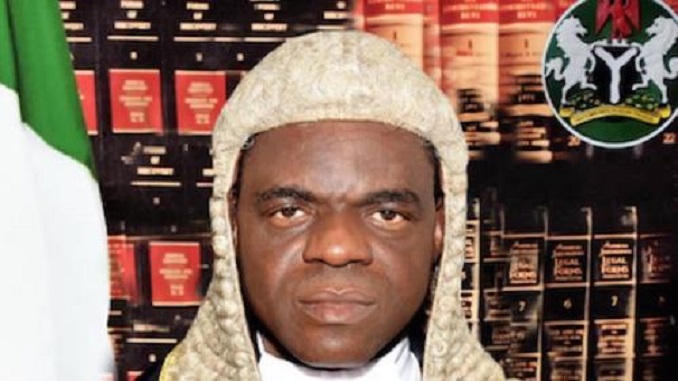
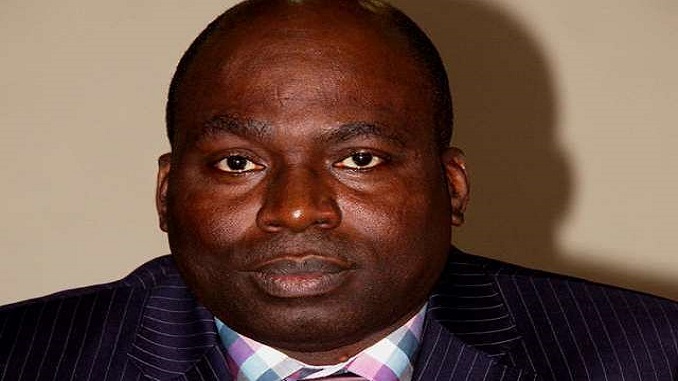
Justice Terhemba Tsoho: One year of illustrious service

By Adewole Kehinde

Monday, December 13, 2020, was exactly a year since the Chief Justice of Nigeria, the Justice Ibrahim Tanko Muhammad, swore in Justice John Terhemba Tsoho as Chief Judge of the Federal High Court of Nigeria, having earlier assumed office on July 26, in an acting capacity.

His appointment followed the retirement of Justice Adamu Abdu Kafarati, who attained the statutory retirement age of 65 years on July 25, 2019.

On 29 October, 2019, the President of the Federal Republic of Nigeria, Muhammadu Buhari, nominated Justice J.T. Tsoho as the substantive Chief Judge of the Federal High Court. The nomination was contained in a letter from the President, which was read on the floor of the Senate.

On November 5, 2019, the Senate of the Federal Republic of Nigeria confirmed his nomination as the Chief Judge of the Federal High Court.

The confirmation was sequel to presentation of the report of the Senate Committee on the Judiciary, Human Rights and Legal Matters. Since assumption of office, his cardinal point has been to fight against corruption, especially in the institution that he represents.

He, however, observed: “The judiciary cannot be singled out when talking about corruption, because corruption exists in every facet, and virtually in every society. So, it might be wrong to give the impression that, maybe, the corruption that exists in the judiciary is higher than elsewhere.”

Tsoho went on to state that corruption should not be encouraged. According to him, open campaigning doesn’t really solve corruption.

To fight corruption, the CJ said, one must be ready to lead by example.

“First and foremost, you try to lead by example. If, for instance, it shows that you are transparent, other people will be encouraged to be transparent too.”

Tsoho has strengthened the Federal High Court’s Anti-Corruption Committee by way of not openly propagating, but genuinely monitoring and advising, where necessary.

The CJ, who acknowledged that corruption cannot be eliminated completely, said it can however be controlled and drastically reduced.

Since his assumption of office, he has maintained an open-door policy by being very accommodating, this attribute of tolerance and openness has engaged the attention of all.

His success in the past one year can be attributed to his leadership style of cooperating with his colleagues. He has extended the hand of fellowship to the judges, which gesture, they have reciprocated. This co-operation has gone a long way in making the court a pride of place.

Tsoho has ensured that judges of the Federal High Court uphold the Constitution for the unity of the country and the enhancement of law and order. He has several times hailed the judges for their contributions to promotion of democracy, particularly their efficient handling of election cases.

It will be recalled that at the beginning of the 2019/2020 Legal Year, Justice Tsoho decried the heavy litigation workload handled by  High Court judges, and disclosed that a total of 116,623 cases were pending in all Judicial Divisions of the Court; 16,144 filed in that quarter, while 12,692 were disposed of.

His persistent efforts towards improved justice delivery have yielded fruits, as more judges will soon be appointed for the Federal High Court to tackle the high volume of pending cases.

He has also put in place measures that have improved the welfare of the court staff, thus yielding efficiency.

Justice Tsoho, who hails from Benue State in Nigeria’s North-central Geopolitical Zone, was sworn-in as Judge of the Federal High Court on November 12, 1998.

Born on June 24, 1959, at Mbaduku in the Vandeikya Local Government Area of Benue State, Tsoho, now aged 61, has about four years to retire from public service.

He attended St Anthony’s Primary School, Chenge-Mbaduku, between 1967 and 1972 and proceeded to secondary school.

He obtained his West African School Certificate from St Michael’s Secondary School, Aliade, Benue State, which he attended between 1973 and 1977.

For his Advanced Level, His lordship attended the Murtala College of Arts, Science and Technology, Makurdi, between 1978 and 1979.

In 1980, he enrolled at the University of Lagos, Akoka, where he obtained his Bachelor of Laws degree (LL.B Hons) in 1984.

He was called to the Nigerian Bar in 1985, after attending the Nigerian Law School, Victoria Island, Lagos.

On graduation, Mr Tsoho was posted to Delta Palm Limited, Port Harcourt, for his National Youth Service scheme.

On completion of his Youth Service programme in 1986, he engaged in brief private legal practice before taking up a job in the Benue State Judiciary.

Between January 1986 and December, 1987, Mr Tsoho served as an Inspector of Area Courts.

In January 1988, he was appointed a Magistrate in the Benue State Judiciary. By March 1996, he had risen through the ranks to become a Chief Magistrate.

In-between his role as a magistrate, Mr Tsoho served as an arbitrator in a contractual dispute during the period, February 1994 and June 1994.

At various intervals between 1996 and 1997, he served as acting chief registrar. On October 9, 1997, he was appointed substantive Chief Registrar of the Benue State High Court; a position he held until he was sworn-in as a Judge of the Federal High Court on November 12, 1998.

Justice Tsoho is married to Mrs Helen Tsoho, with children and grandchildren. He enjoys reading, jogging and listening to music.

News Express

Man dies during sex with married woman in Cross River

By Emma Una

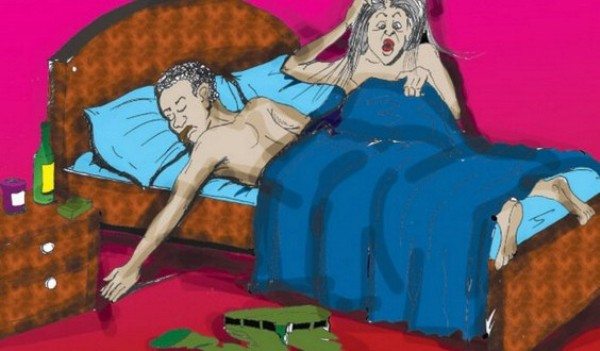
A married man simply identified as Eyom has reportedly died in Ekori, Yakkur Local Government Area at the weekend during a sex romp with a married woman known as Grace Odi.

Reports reaching Vanguard from the area say Grace and her husband Mr Odi left their community, Assiga to the neighbouring Ekori for wedding ceremony but midway into the wedding, Grace gave her husband a flimsy excuse and went straight to meet her lover in a prearranged guest house- the venue for their illicit sex activity.

Midway into the sex romp, Eyom allegedly started jerking and foaming in the mouth and eventually gave up the ghost. “He told some of his friends that he was going to give his girlfriend who is married a good time and so needed to increase his performance by taking some sex enhancing drugs”. A source in the area confided in Vanguard.

According to our source, the woman on noticing that the man had died dressed up and secretly left the place but the lifeless body of the man was later seen by the staff of the guest house who in turn alerted the owner of the guest house and the man’s identity revealed by community members who came to witness the scene.

“It was when his identity was revealed that some of his friends remembered what he told them and a search for his married girlfriend began and was eventually located at the wedding ceremony by staff of the guest house who booked them into the room” Our source revealed.

The police have since detained the woman for further investigation while the body of the man has been deposited at the Ugep General Hospital mortuary.

Ms Irene Ugbo, the Cross River State Police Command spokesman says she is yet to be briefed on the incident.

Vanguard

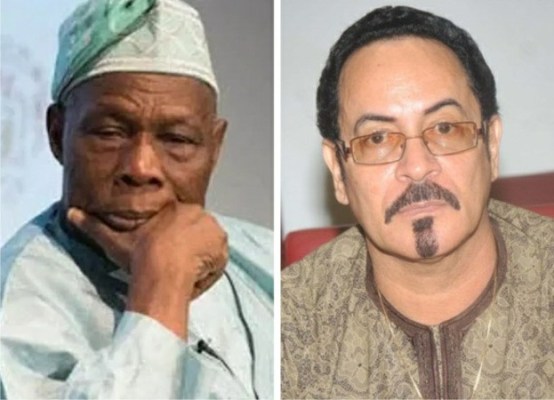
Dimka 1976 coup: Tee Mac counters Obasanjo, says retired General hid under businessman’s bed

By Sunny Okim

LAGOS – Veteran musician and businessman, Dr Omatshola Iseli (MFR), professionally known as Tee Mac, has picked holes in former President Olusegun Obasanjo’s account of how he escaped death during the military coup d’etat of February 13, 1976.

Speaking Sunday at Igbotako, Okitipupa Local Government Area of Ondo State, at the celebration of the 80th birthday of General Olu Bajowa (Retd), Sunday, Obasanjo said it was Bajowa that saved him from being killed by the coup leader, Lieutenant Colonel Buka Suka Dimka.

According to the former president, Bajowa had called to ask him (Obasanjo) to wait for him, that he Bajowa was coming to his house that fateful morning.

Obasanjo said it was this delay (of waiting for Bajowa) that saved him from being killed by the coup plotters on his way to the office that morning.

But reacting to the said story, Tee Mac said Obasanjo’s claims were “not precise”.

In a chat with News Express, Tee Mac said the man that saved Obasanjo was Chief Saliu Bolaji Bakare, an astute businessman, and not any delay caused by Bajowa as claimed by the former military Head of State who later became a two-term President of the country.

According to Tee Mac, that morning of Dimka’s coup which claimed the life of then Head of State, General Muritala Muhammed, he had gone to the house of Chief Bakare for a business transaction, and his host hinted that Obasanjo, then second-in-command to Muritala, was hiding under the bed in Bakare’s house to avoid being caught by the coupists.

“Dear Sunny, the Obasanjo story is not precise. I went in the morning to the house of Chief S.B. Bakare from whom I leased the land of the Surulere night club and found unusual security at the gate.

“I sent a message to Chief S.B. Bakare that I wanted to bring him some money. I was taken straight up to the first floor, his bedroom, where he sat on the balcony. He told me General Obasanjo was downstairs in the siting room hiding, that he will be most likely our next head of state.

“Chief Bakare said I should keep it to myself. I remember having heard on the radio that morning that there was a coup attempt. I also remember how I was checked by soldiers on the way to Queens Drive (in Ikoyi),” Tee Mac narrated.

The globally celebrated flutist disclosed further that after the coup, he mentioned the matter to the former President during an encounter.

“I mentioned this to OBJ a few years later when I met him at his farm,” he said.

News Express

Lawyers gave N9.4bn bribes to judges in 3 years –ICPC

A survey by the Independent Corrupt Practices and Other Related Offences has found that an estimated N9.4bn bribes exchanged hands in the judicial sector between 2018 and 2020.

The report said the level of corruption in the justice sector was heightened by the “stupendously high amounts of money offered as bribes to judges by lawyers handling high electoral and political cases.”

The 84-page survey titled, ‘Nigeria Corruption Index: Report of a pilot survey 2020’, disclosed that the private sector ranked next to the judicial sector in corruption levels, noting that the graft in private business sector contributed greatly to the national level of corruption.

It explained that the methodology was experienced-based rather than perception-related questions of corruption, as measured from a scale of 0 to 100, with 0 representing “Absolutely not corrupt and 100 indicating “Absolutely Corrupt.”

Of the 901 respondents in the justice sector, 638 making 70.81 per cent were lawyers. Judges were 124 judges or 13.76 per cent, and 25 respondents at 2.77 per cent were court staff (clerks and registers).

The report stated that 9.9 per cent of lawyers admitted paying N5.7b bribes in connection to mostly electoral cases they were handling.

The survey added that about 78 of the 901 justice sector respondents reported experiencing offers or payment of bribes to influence the judicial process.

It stated, “The money involved in the high-level corruption in this sector was categorised into money demanded, offered or paid. Demands are made by court officials, including judges, while bribery offers and payment are made by lawyers and litigants.

“The total amount of money reported by the justice sector respondents as corruptly demanded, offered and paid between 2018 and 2020 was N9.457b.”

The report also found that 55.2 per cent of private businesses experienced diversion of public contract funds to personal use, adding 8 per cent of businesses reported paying government dues into private accounts.

It disclosed that the executive and legislative sectors had overall corruption scores of 42 and 41 respectively, noting that in monetary terms, the executive with a score of 33 had a higher level of corruption than the legislative sector which had a score of 27.

Source

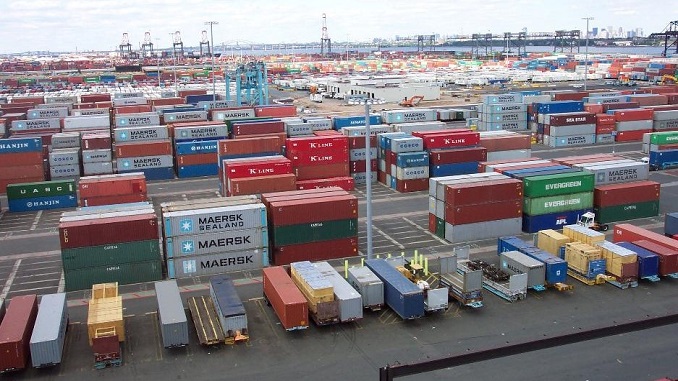
Transporting containers in Lagos equals shipping cost from China – Report

The congestion at the Apapa port in Lagos has become so bad that trucking a container from the port to the mainland which is just about 20km, now costs about $4,000 (N1.5m) which is almost the same cost as shipping one container from China to Nigeria.

This is according to a report by the Financial Times of London titled, ‘Nigeria’s port crisis: the $4,000 charge to carry goods across Lagos.’

The dysfunction in Lagos is allowing other West African ports, servicing far smaller markets, to eclipse Nigeria.

“Lome, in Togo, is now the region’s busiest port, and cargo destined for Nigeria is increasingly offloaded or shipped via smaller vessels from ports in Ghana, Ivory Coast, Cameroon and Congo-Brazzaville,” says the Financial Times.

The business newspaper stated that congestion, bribery and storage costs add to problems for importers in Nigeria.

Financial Times reports that Cargo ships often wait more than a month off the coast before they could offload their goods in the port.

“The congestion at the port in Lagos has become so bad that it can cost more than $4,000 to truck a container 20km to the Nigerian mainland these days, almost as much as it costs to ship one 12,000 nautical miles from China,” it said.

It added that In Lagos, the port area “is even more crowded at the busy year-end period, and the Seaport Terminal Operators Association estimates that the congestion costs the country $55m (N20.9bn) a day in lost economic activity.”

Jumoke Oduwole, who was appointed by the Federal Government to improve the ease of doing business, admitted that the development was bad for the economy.

According to FT, the port’s capacity has not increased since 1997, even as Lagos’s population has roughly tripled. Nigeria imports a lot of raw materials and almost all finished goods, and the congestion is causing production delays for multinationals.

“The average spot rate this year to ship a 20ft container from Shanghai to Lagos is about $3,000, according to Shanghai Containerized Freight Index data provided by Dutch shipping consultancy Dynamar, the equivalent of about $3,750 to $4,000 for a 40ft container.

“The current spot rate is $5,000. Cargo ships often wait more than a month off the coast before they can offload their goods in the port — roughly how long some spend in transit to Lagos from China.

“Increased congestion at the end of the year has pushed prices for the transport of goods to the mainland higher.

“Rather than pay lower rates for a truck that could take several weeks to enter the port, while accruing costly terminal container storage charges, most importers opt to pay spot prices to fleet operators, which charge N1.5m ($3,953) to drive a 40ft container from Tin Can to warehouses within Lagos, according to senior executives at logistics firms. Apapa is cheaper at the moment, with current rates up to N700,000, in part because it is thought to be a better run

“The port congestion is caused by ageing infrastructure, meagre rail transport that forces 90 per cent of cargo to go by road and an almost complete lack of automation, which means every container must be physically inspected by customs officials. It has been compounded by increased sea traffic since the closure of the country’s land borders to combat smuggling last year,” it stated.

Punch

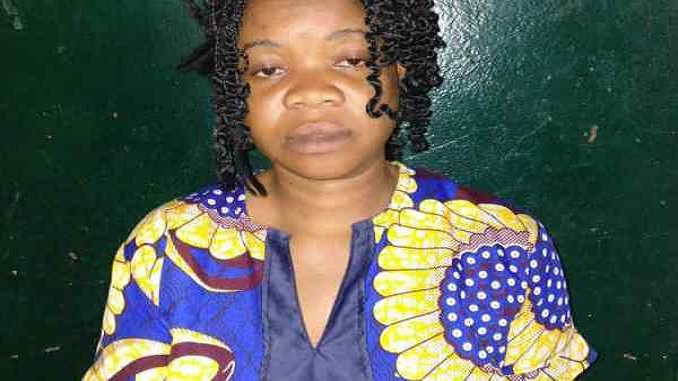
End of the road for Human trafficking baroness in Ogun

Her very ordinary and near fragile looks belie the stony heart within.

35 years old Comfort Innocent is a suspected big time trader in humans but Karma finally paid her a visit when she was apprehended by men of the Nigeria Police Force, Ogun State Command.

She was arrested last Thursday, over the abduction and trafficking of two under-aged girls.

It was gathered that her arrest followed a report by one Oluwaseun Aduratola and Sakirat Fasasi both residents of Siun Town in Obafemi Owode Local Government Area of the state who reported at Owode Egba Police station that the suspect abducted their daughters namely Blessing Aduratola 15 and Hasisat Fasasi 16.

They further explained that the suspect who is an alleged notorious human trafficker was about taking the two girls to Lybia where they will be forced into prostitution.

On the strength of the report, the Divisional Police Officer, Owode Egba Division, CSP Mathew Ediae quickly swung into action with his detectives, and through intelligence-driven investigation, they succeeded in arresting the suspect.

On interrogation, the suspect confessed been a human trafficker and that she had been into the business for a long time.

Also, she confessed further that her husband is based in Italy while she stays in Nigeria recruiting and sending young girls to her husband in Italy enroute to Lybia where they will be using them for prostitution.

Concerning both girls she recently abducted, she confessed that they had been taken to Kaduna State from where they will be transported to Lybia.

Both victims have since been rescued from Kaduna by the Police.

Meanwhile, the commissioner of Police CP Edward Awolowo Ajogun has ordered the immediate transfer of the suspect to the anti-human trafficking and child labour unit of the State Criminal Investigation and Intelligence Department for further investigation.

The CP also appealed to parents to always be mindful of their children’s well-being especially the female ones in order to save them from wolves in human skin.

The Ancient Rock Art of Chad

Deserts are special places but they are not for everybody. They are for those who love unpeopled places, whose hearts soar at the thought of lands that have been shaped only by nature and time, who don’t mind the vast distances, the privations, the daunting logistics that journeying through them entails. Deserts are for those who are touched by stark mountains, huge sand dunes, starlit skies and nomadic peoples. And for a true desert experience, it’s hard to beat the Sahara.

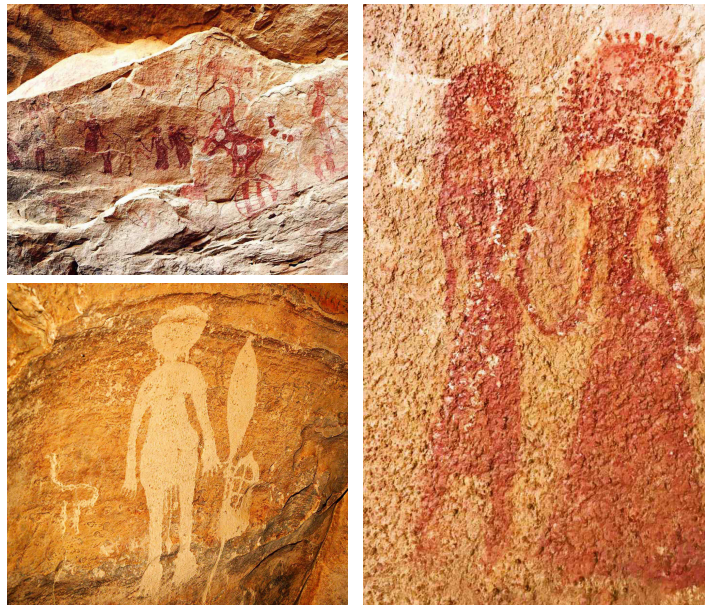
The Tibesti Mountains, Chad, are a treasure house of rock art, much of it still unrecorded and known only to the nomadic people who wander through it, and they’re as remote and far from what we call civilisation, as anywhere in the world. Some of the oldest rock art in the world is in Namibia and is about 30,000 years old. Here, in the Sahara, the oldest probably dates back more than 10,000 years, but much of it is from around 7,000 years ago. Sometimes the art was painted using red and yellow ochre and white pigments, while some was engraved using rocks fashioned as chisels.

 All constitutes a rich historical resource, connecting us to Africa’s ancient past. The art comes from a time before desertification set in and most of it is from the socalled pastoral period, which dates from the time domesticated animals entered the scene, around 5,000BC. In the caves and on the cliffs and boulders, there are paintings and engravings showing warriors, elephants, horses and the rituals of those longago days. The Tibesti Mountains, north- ern Chad, is a land of volcanic craters and spectacular rocks and dunes that contains the Sahara’s highest peak (over 3,300m). The rock paintings include – a huge life-size elephant engraved on the side of a rock, a vast panorama of 18 large cows and one bull across a magnificent rock.

There are paintings in a cave overlooking the ancient shores of the Paleolake Mega-Chad, now completely dried up; and also paintings of highly decorated peoples and proud warriors wearing headdresses. This region of the Sahara was once inhabited by a pastoral people with a great love of domestic animals; there are signs of boats that floated on lakes that are now arid sand. Everywhere are worked tools and shards of decorated pottery, all poignant reminders of a vanished civilisation.

 The Tibesti Mountains area, the desert around it is a hard, tough place, but magnificent. Its vast rocks, like giant cathedrals soaring out of the sand is spectacular. The ancient lake beds, the gorges, the dunes, the little oases, the tantalising glimpses of nomadic life – tur- baned men riding camels across the desert, younger ones gath- ered round wells in the oases, small groups of children shy- ly eyeing up explorers. The vast horizons, the airy caves, the grace of the paintings, the endlessly shifting landscapes. This desert is a strange, mysterious place where time has buried many things, where the sand has shifted and swallowed entire civilisations, erasing them from map and memory .

Courtesy: ft.com

What I said was my opinion based on evidence and what has happened in Nigeria – Kukah

  • Muslim Coalition condemns onslaught against Kukah

“Laws alone cannot secure freedom of expression. In order that every man present his views without penalty, there must be spirit of tolerance in the entire population.”
― Albert Einstein

Amidst the controversy generated by his Christmas day message, the Catholic Bishop of Sokoto diocese, Dr. Matthew Hassan Kukah, insists that his opinion is based on evidence and the situation in Nigeria.

Addressing journalists on Monday, Kukah who had accused President Muhammadu Buhari of nepotism in his Christmas message said he never called for a coup.

The Bishop had in his message also pointed out that there could have been a coup if a non-northern Muslim President did a fraction of what Buhari has done.

Already the Arewa Youth Consultative Forum (AYCF) has called for the prosecution of Kukah for allegedly demanding a coup. They described the bishop’s comments as “treasonable”.

In his address to reporters on Monday, Kukah said: “The loss of lives in the last ten years, even before the advent of this administration, calls for concern,” he said.

“The reactions are a reflection of every citizen that make ups Nigeria. It is sad that when you drop something in Nigeria, everybody goes back to their enclave and abandons the larger picture. I am someone who never takes offence to what people say about me.

“What I said was my opinion based on evidence and what has happened in Nigeria, and if you looked into the records, there is evidence that justifies that statement, and if anyone thinks I am wrong, they should come out with a superior position.

“It is unfair for a journalist or news medium to report that I called for a coup while expressing my personal view about Nigeria. To those calling him to drop his priesthood cassock and join the political fray, the outspoken cleric said if he was to join politics, it would have been during the time of late Aminu Kano and not now.”

Noting that he has no plans to indulge in partisan politics, the Bishop added: “I have no plan and will never play partisan politics for any reason. Those who link my message to partisan politics are only playing to the gallery,” he said.

“Take, for instance, brilliant Nigerian youths making comments about Chelsea or Arsenal and have never been to England, does that make them players of such club sides?

“So, why will someone think because Bishop Kukah is speaking therefore he is a politician? People who make this argument are totally ignorant of elementary politics and ignorant of the role of a Priest.

“The truth is that a lot of us have not seen a priest saying what I am saying. The truth of the matter is, we are all in politics, but party politics for me, no. I am not a member of any political party and I cannot be. If it comes to voting, I do my right.

“Whatever I said can please or displease anyone, but that is my own opinion and doesn’t stop others from saying their own opinion. If you think my motive is wrong, say yours.”

In the meantime, the coalition of Nigerian Muslim Professionals has called out those disparaging Bishop Kukah for speaking the truth to power.

While some other religious groups have reviled Kukah for his stance against misgovernance by the present administration the coalition urged President Buhari to take it as a wake-up call.

A statement signed by the group’s National Coordinator, Prof. Mohammed Inuwa, said Buhari may have meant well for the country but faulted the President in some actions taken by his administration which it said was not promoting unity.

The Muslim coalition condemned attacks trailing Kukah’s Christmas Day Message, where he bemoaned the state of the nation, warning that unless leaders sit up, Nigeria was heading towards a failed state.

Kukah had also accused President Buhari of piloting Nigeria into darkness in the message titled: “A Nation in Search of Vindication.”

The Bishop had emphasised the worsening state of insecurity in the country and berated the current administration of glaringly abandoning the nation’s extant federal character principles and rather promoting nepotism with impunity.

The development has been drawing criticisms from the President’s friends and political associates.

The Coalition said instead of vilifying the cleric, it would be to the President’s best interests to take Bishop’s message as a wake-up call to adjust for the good of Nigeria

It noted that promoting the interest of one region against others is not what a good leader is known for, adding that in as much as it loves the president, the coalition will want him to leave a legacy of a united Nigeria.

However, the coalition commended Kukah for what they described as “his boldness to speak truth to power”, faulting those vilifying him.

The Nigerian Muslim Professionals took a swipe at those trolling the Bishop, saying they were doing it for their pecuniary gains and not the interest of the country.

It warned against twisting the message to mean the Bishop endorses coup, saying contrary to those promoting that insinuation, the revered Bishop was too learned to support such ignoble path to installing leadership, saying Nigerians with a conscience would not fall to the antics of those twisting the Bishop’s message for selfish reasons.

The group said having followed Bishop Kukah’s activities and preachings since the days of the military, it was convinced that not too many Nigerians took the interest of the country at heart like Bishop Kukah.

“Even during the military era where people dreaded the powers that be at the time, Bishop Kukah, who was then a Catholic priest spoke truth to those at the helm of affairs without fear or favour. He has shown through his actions all the years that he is a true son of Nigeria in particular and Africa in general.

“We should support him for being bold enough to come out to speak what many Nigerians know is the truth but afraid to speak out for fear of the leadership.

“While we must admit that President Muhammad Buhari means well for the nation, we must say that most people in his government are grossly incompetent and don’t deserve to stay around power even in an uncivilized space,” the statement said.

The group said it would not shy away from the truth even though most of the president’s actions drawing criticisms were in favour of its region.

It flayed the glaring marginalisation of the Igbos in every facet of national life, saying the development was not promoting national cohesion which nationalists that laid down their lives for the country’s independence wanted.

“There’s nothing wrong with Bishop Kukah’s statement in the actual sense. Some regions particularly the South East has been marginalized in successive governments and the administration of President Muhammad Buhari came and amplified it with the worst,” it said in the statement.

It described those attacking Kukah as faceless individuals who were being promoted by selfish people in leadership to silence the truth.

The statement added: “We strongly condemn the wrong approach taken to respond to a message by a patriotic Nigerian by these incompetent people working to derail the president’s agenda.

“It is completely wrong to be attacking Bishop Kukah by some faceless sponsored groups. Bishop Kukah did not in any way call for a coup, he is too learned to do that.

“We stand completely with Bishop Kukah; this government must be fair to all Nigerians irrespective of tribe and religion.”

TIPS