Home Blog Page 1113

The quintessential senior advocate and his clan

Soft and steel, he never appears ruffled. A gentle, calm and almost indifferent exterior be- lie his strength of character and extreme drive. In regular conversations, his voice is gentle, rising gradually to an animated pitch as the discussion becomes more engaging. A former lecturer, research is his favourite game, so it is not surprising that he is a concise communicator. In the courtroom he would not back down until he makes his point. A formidable litigator, he does not hesitate to raise an objection during cross examination when he feels his client is being hounded or the lawyer on the other side is going off the tangent. Friends and foes agree that when Dr. Alex Izinyon, SAN, takes on a matter, he gets immersed, and achieves great results. Perseverance and determination has helped him forge through the most difficult cases and obtain positive result for his clients.

Dr. Alex Izinyon (SAN)

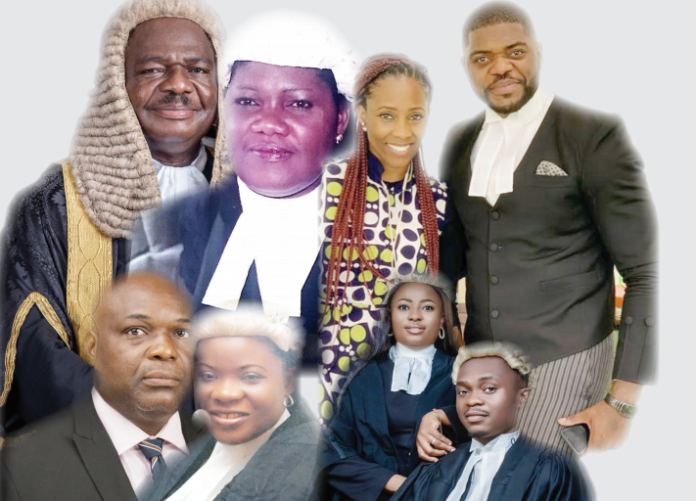
 There’s hardly any high profile case in Nigeria without his name on it. Over the years, election cases became Dr. Izinyon’s main forte. But many do not know abouthis very modest beginnings and the amazing fact that most of his family members are law- yers. Following in his stead; his- late wife, his son, son’s wife, his brother, brother’s wife and his niece all joined the legal profession. This niece later married a lawyer!

Growing up, Izinyon admired lawyers. He wanted to be like them. This fascination was further heightened by a legal TV drama series on the defunct Bendel State Television called –‘TheAssizes.’ It was a weekly programme made up ofactors that seemed like real lawyers and judges. “You won’t even know it’s not a real judge you’re watching,” said Izinyon. “The actors got the judge’s mien, his disposition, his comportment, and erudition; same with that of the lawyers. Indeed it had an attractive and solid cast of actors who delivered believable performances, breathing life into passionate and determined fictional characters. Their dressing, the arguments, were excellent. Most people in Bendel State at the time will remember that TV drama with very loaded episodes. People looked forward to the television programme every Saturday. It was scripted by the late Justice R.O.A Ogbobine, a fantastic, erudite judge. There were episode titles like – ‘No bail for the Per- manent Secretary,’ ‘Murder’and so on. The programme later developed into a book with many parts. I was always fascinated and hoped that one day I will be a lawyer. But I didn’t have the opportunity to gain admission to study law; instead I was admitted to study English at the University of Benin.”
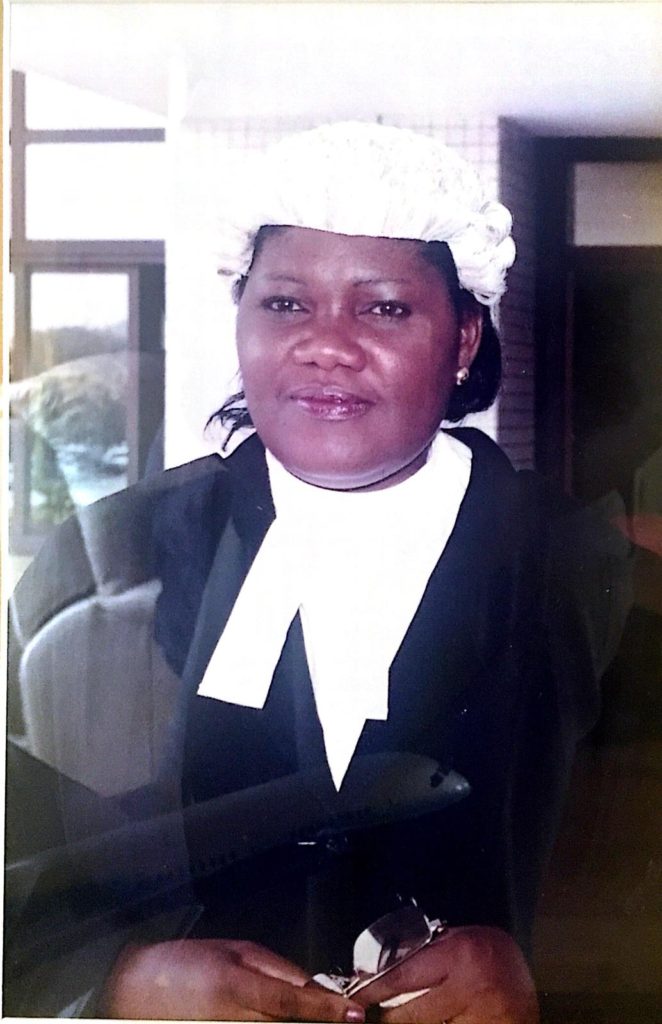
Late Mrs Grace Izinyon

After three years at Benin, an opening emerged at the University of Ibadan for a student- transfer into the law faculty. Notwithstanding that he had only one year left to graduate from the English dep a r t m e n t , Dr. Izinyon followed his dream and res u m e d as a first year undergraduate law student in the 1981/82 session. They were the second set of law students. “When I went back to my Eng- lish department at UniBen to gather my transcript, my Head of Department(HOD) could not understand it because I had written some commentaries in O’Level literature that was being used to teach in secondary schools back then. He wrote the foreword to that pamphlet. It was an analysis of African Poetry from West Af- rican Verse.”
 Of course, Alex Izinyon’s father was unaware of his son’s decision to leave the English department at University of Benin, to go start afresh, studying law at University of Ibadan. Being the first son, he was expected to graduate, get a job and assist in training his siblings. As if that was not bad enough, he got married immediately after graduation! “As soon as I finished my university course in July, we got married on August 3rd, 1985. We just had a simple wedding. By the time I got to the law school, I was already married. My wife was always coming to visit me. I was called to the bar the following year; 1986.” Alarmed, on being informed of the marriage plans, Dr. Izinyon’s father blurted: “You’re the first born and you’re putting a woman forward? You have seven siblings!” Undaunted though, Izinyon threw himself into the legal practice and made the best of it.

His career started with a rural practice in Kabba, then Kwara State. He was the only lawyer in the entire local government. “When I got to Kabba, there was only one Magistrates’ Court presided by a lay magistrate who was a retired school teacher, by name Pa Iluromi; an unforgettable man. He didn’t like technicalities; he liked to see justice. In the course of my work at Kabba, a lawyer was brought in as magistrate, then a High Court was established which saw an influx of lawyers. That was where I met Wole Olanikpekun, Awomolo, Yusuf Ali and others.” In 1991, Dr. Izinyon started pur- suing a Masters’ programme at University of Ife, now Obafemi Awolowo University and eventually added a PhD. Following an outstanding performance, his Dean,Prof. Owoade, now Hon. Justice M. A. Owoade of the Court of Appeal, who had left Ife to set up the Faculty of Law in University of Abuja, invited him to join the Faculty in 1992.
“Prof. Owoade took me by hand to Professor Isah Mohammed, who was at that time, the Vice Chancellor of University of Abuja. Whenhe saw in my transcript that I made a distinction in Jurisprudence, he said something funny and remarkable to me, ‘me too, I’m mathematical Jurisprudence,’ and we laughed. Prof. Mohammed interviewed me and said I won’t stay at the university. But Prof. Owoade assured him of my commitment, telling him I was a good hand at legal practice. That was how I came in as Lecturer 2, Faculty of Law, University of Abuja. Lecturing, was what brought me to Abuja. We were staying at an unpleasant place in the area called Giri. I was already a local champion at Kabba, had built a big house, bought cars and then now coming tolive in two bedrooms. That was what my status as Lecturer 2 was entitled to. My two older kids; my daughter and son would ask, ‘Dad, why don’t we leave here, can’t you see it is bushy? There is no electricity.’ But I would tell them to calm down.”

 Not losing sight of legal practice, he opened his chambers where he retires after lectures. Then, he observed that Abuja lawyers were more interested in properties, and quietly established himself as a litigation lawyer. Dividends soon followed. In 1999 he became the first resident Abuja lawyer to be conferred with the rank of Senior Advocate of Nigeria (SAN). “The other lawyers were shocked,” he recalled. “They said, ‘How can this guy come from nowhere to become an SAN here?’ It took two years for the next set of SANs to come from Abuja. That’s the hallmark and benefit of hard work; of being focused and committed. It paid off.”

“We were staying at an unpleasant place in the area called Giri. I was already a local champion at Kabba, had built a big house, bought cars and then now coming tolive in two bedrooms. That was what my status as Lecturer 2 was entitled to.”

Lawyers in the family

The late Mrs. Grace Izinyon had her first degree in Social Studies from the University of Ilorin and a Masters in Personal Psychology from the University of Ibadan. After much persuasion, she agreed to study law at University of Bucking- ham and was later called to the bar. Thereafter, she obtained an LLM from Oxford Brooks and anoth- er Masters from Cranfield. Izinyon recalls, “Oxford Brooks even of- fered her a Ph.D, but she said she just wanted to rest. I said to her, ‘Just finish up the PhD.’ She insisted she wanted to rest. But, she was interested in Transport Law. So, she went to Cranfield for an M.Sc in Transportation. She had just finished that; in fact, she was on her sick bed when the result came out and I brought her certificate to her. Before then, she also wrote the Solicitors exam in England and was called to the English bar as a Solicitor of the Supreme Court of England and Wales. She was called to the bar on the same day with my younger brother, Friday Izinyon.

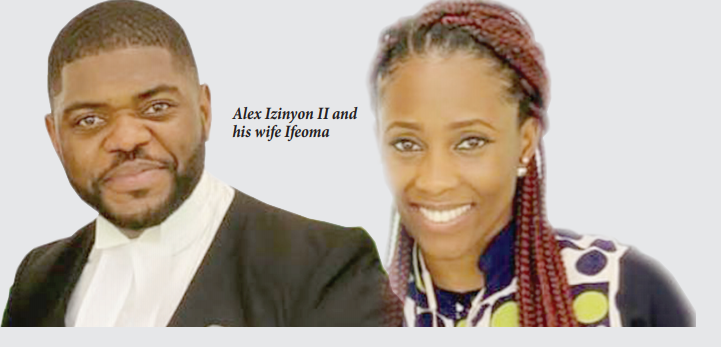
In order of seniority in legal practice, his son, Alex II is next to him. Alex II finished secondary school abroad, and did his A’Levels there. He then went to University of Buckingham, like his mother and was eventually called to the Nigeri- an bar. The younger Alex married Ifeoma, a lawyer and a graduate of University of Lagos. Thereafter, he returned to England with his wife where they both got their Masters atQueen Mary’s, University of London.He is currently working at the chambers of his father in Abuja, while Ifeoma, his wife, works with the Central Bank of Nigeria (CBN). Dr. Izinyon has three grandsons from them. A happy grandfather, his dream is to appear in court with his first grandson before leaving the planet.

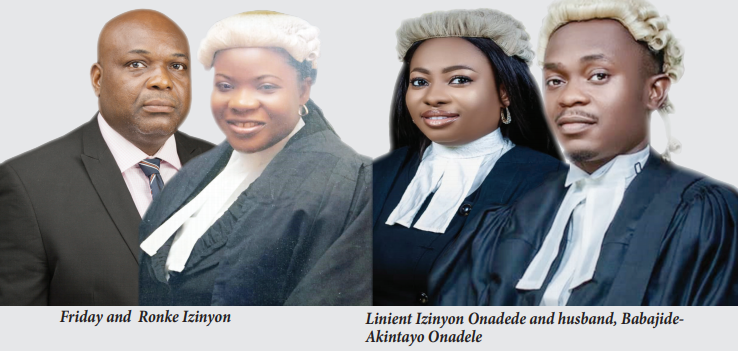
Dr. Izinyon’s brother Friday and his wife Ronke Izinyon are also lawyers. Friday gained admission into University of Abuja while Dr. Izinyon was lecturing there. His wife was also a student of the Senior Advocate.He jokingly asserts that he is sure his brother and the wife met while at UniAbuja, though she was his brother’s junior in class.

The Izinyon family continues to produce more lawyers as his niece, Linient Izinyon, trained by Dr. Iz- inyon himself qualified as a lawyer. Linient like her family members married a lawyer. Shegraduated from University of Benin; madea 2:1 at the Law School, Abuja; won the best prize in Criminal Law and practiced with Mike Igbokwe, a friend of Dr. Alex Izinyon. Then, the last in the series at present is another brother’s daughter. She is a year two Law student at Nasarawa State University.

The younger Alex married Ifeoma, a lawyer and a graduate of University of Lagos. Thereafter, he returned to England with his wife where they both got their Masters atQueen Mary’s, University of London.He is currently working at the chambers of his father in Abuja, while Ifeoma, his wife, works with the Central Bank of Nigeria (CBN).

 Being in a family of lawyers must be an incredible experience. The best part for members of Dr. Alex Izinyon’s family would be seeing the impact of their patriarch’s life and dedication to the legal service, watching the respect and admiration he gets amongst members of the legal profession, and the society

When justice flees the judiciary, the country dies a little

By Owei Lakemfa

THE immediate-past Chief Justice of Nigeria, CJN, Justice Walter Samuel Nkanu Onnoghen, on December 22, 2020, turned 70. It was less an occasion for celebration and more of lamentation. On this date that should have marked his retirement, his thoughts were fixated on that January 26, 2019 date he was yanked from the bench and replaced by an uninspiring Justice Ibrahim Tanko Muhammad. The former CJN said of those events: “How can you just wake up one morning and they say you have been removed from office. Nobody is ready to tell you anything, all everybody was just saying is resign, resign. What have I done?” Onnoghen laments that nobody told him his offence.

But why would he expect anybody tell him his offence when he had not committed any? He knew he had committed no offence; those who removed him also knew that, as did discerning Nigerians, and of course, the international community. There were various reasons necessitating his removal. First, he was one of those judges the Executive tried to intimidate by raiding their homes in the dead of night in October, 2016. This was read as an attempt to harass, intimidate and brow beat the judiciary to submission. So naturally he might have been angry. Secondly, the Presidency appeared to have tried to stall his appoint as CJN. Thirdly, his suspension came a day before he was scheduled to swear in members of election tribunals in readiness for the general elections that were less than three weeks away.

In fact, the international community seemed convinced that the pending election was the immediate trigger. That was why the United States pointed out that Onnoghen’s removal was: “without the support of the legislative branch on the eve of national and state elections”. Britain said yanking off the CJN: “risks affecting both domestic and international perceptions on the credibility of the forthcoming elections.” The European Union said the removal did not follow due process.

Rather than due process, a media trial was conducted which found Onnoghen ‘guilty.’ Then lots of pressure was mounted on him to resign. When he insisted on knowing his crimes and be allowed his day in court, there was a cacophony of rehearsed voices who campaigned that he must resign to ‘save the judiciary.” If after his unconstitutional suspension, Onnoghen had refused to resign, the Executive would have in accordance with Section 292 of the constitution, required two thirds of the Senate to remove him. This might have been a near-impossible task in a Senate presided over by Dr. Bukola Saraki which was striving for independence from an overbearing Presidency. Hence the trick to get him to resign.

So being told his offence(s) would have meant placing on the shoulders of his traducers, the enormous task of citing the constitutional provisions that can justify their unconstitutional actions. It would have meant giving Onnoghen the basis to put up his defence. There was also the possibility of the judicial executioners losing in court; that was a risk they were not willing to take. I must not forget to mention that the services of a pliant Code of Conduct Tribunal were secured. But a proper trial at the Tribunal would have dragged into the general elections which would have defeated a main purpose of the attack on the CJN, and by extension, on the judiciary.

Yes, some feeble resistance including by an infiltrated Nigeria Bar Association was put up, but the coup against the judiciary could not be stopped. In a sense, Onnoghen should count himself lucky that all that was done to him was removal and forced resignation, not dismissal and imprisonment. He can still fall back on his pension. But for me, he owes the country a duty to press for justice to be done. However, this is not the struggle of an individual; it should be a collective one to save the country.

If the Chief Justice of the Federation is denied justice and has no hope that justice will be done in his case, how can the judiciary be touted as the hope of the common man; how can an hopeless judiciary give hope? The fact that the courts continue to run with a full paraphernalia of wigged judges and robed lawyers does not mean the wheel of justice is grinding, not even slowly. We have a conquered judiciary that at crucial points in our ‘democracy’ will do the bidding of the master. As the general principle goes, justice should not just be done, but must be seen to be done.

Once a serving CJN who is the head of the judiciary and symbol of that arm of government can be removed unconstitutionally and without him being given the basic right to defend himself, whether successfully or unsuccessfully, the justice system cannot but be on life support. The ultimate cowardice exhibited is that the National Judicial Commission, NJC, has two years later, not summoned the courage to release its own findings. I am not sure this is because it is not courageous enough to pronounce Onnoghen guilty were he was found to be wanting; it is more because it lacks the courage to pronounce him innocent as this will anger the Executive. So rather than advance the cause of justice, it prefers to let sleeping dogs lie.

The Court of Appeal gave the country a glimmer of hope when on December 16, 2020, it upturned the conviction and seven years jail term imposed on the former National Publicity Secretary of the Peoples Democratic Party, PDP, Olisa Metuh, by Justice Okon Abang of the Federal High Court, Abuja. Everybody and organ of the judiciary knew that Metuh in the court of Justice Abang was like lamb taken to the slaughter. But for years, nothing was done to stop this parody of justice as it played out in a court room built and run with public funds. I had drawn attention to this travesty in my May 28, 2018 column titled “Bang on, Justice Abang, bang on!” That was 23 months before he finally sentenced Metuh.

Now that the Metuh trial is to start all over, who bears the costs? As for Justice Abang, like we say in the Niger Delta ‘nothing concern am.’ He will not be surcharged and I can bet that he would in no way be held accountable for his work on the bench which the Appeal Court in a 2016 judgement had described as “ridiculous” as it found that Justice Abang had “raped democracy”. If anything, as long as he continues in his old ways, he has bright prospects and chances of heading the judiciary at one point or stage, and then going into blissful retirement. The court shall rise!

TNG

MY THOUGHT THIS MORNING Re: Did Bishop Kukah Say That Islam is a violent religion in his Christmas Message?

By Yusuf Shehu Usman

It would be recalled that the MURIC in a reaction to the message delivered by Bishop Kukah on Christmas day, accused the Bishop of describing Islam as a violent religion among other allegations contained in the press release issued by MURIC
As I expected, many Muslims including my humble self took up the matter on the social media, in defence of Islam
While not out rightly condemning the Bishop, I sought to know whether the Bishop actually made that damning statement
I heard and saw the Bishop on television on Christmas day delivering the message but the television stations did not transmit the whole of the message delivered by the Bishop
I however caught a substantial part of it and based on what I heard and saw of what the Bishop said, I made a post which though critical of the contents of some parts of the speech, I expressed my disagreement and dissatisfaction with some parts
It is important to point out that I agreed with some of the observations made by the Bishop especially with regard to the matter of the moment – the increasing spate of Insecurity across the nation and the inability of the Government to tackle it to the day of the citizens
That post elicited various responses both negative and positive
Then, later, MURIc came up with a press release in which they accused the Bishop of referring to Islam as a violent religion and castigated him on other various issues
I reacted to the MURIC press release through another post as stated earlier
In this reaction, I made it clear that I didn’t hear the Bishop saying that in the speech I watched on the television and sought to know whether he actually said so, in the speech
As expected, this post also drew a robust discussion with comments in various forms
Let me put the records straight for the purpose of clarity and to avoid misconception
I have not accused the Bishop of saying that Islam is a violent religion
I have not heard him say so in the part of his speech I watched on various television channels
But I said that if it is true that the Bishop said so, he deserved the kind of responses he would get from the Muslims as a reaction to the attack on our faith
In the course of the discourse, I asked from the discussants that if any person has the full and unedited message of the Bishop, he should kindly post it on the page to dispel rumours and speculations
The full message was posted on my wall and in my inbox by at least three people
I have read it over and over again and wish to state that from all I read line by line, there was no where in the message where the Bishop referred to Islam as a violent religion
I did not see it in the body, context and text of the Bishop’s message delivered on Christmas day
I am convinced that the Bishop did not make that statement in his Christmas Message
He said a lot of things critical of the Government but even if not a Bishop, he is fully entitled as a Nigerian, to express his views on the state of the nation and that is what every Nigerian who wishes to do so, have been doing since Insecurity became a matter of national discourse
It is now become imperative to challenge MURIC to substantiate it’s allegations against the Bishop, especially on the part where it claimed that the Bishop had referred to Islam as a violent religion
To me, this is the most important issue which if not handled with caution and the truth, is capable of setting the nation on the dangerous path of religious crisis
The MURIC should either substantiate it’s claim on this or apologise to the Bishop and Nigerians for making a false statement capable of causing religious tension and division among Nigerians
I refrain from discussion on other issues raised by the Bishop in his Homily as they are not directly in issue in the post under discourse
My candid opinion is that we need to be more tolerant of each other especially on the delicate and hyper sensitive issue of religion
We must learn to accord mutual respect and understanding to each other on issues of religion for peace to reign in our nation
In truth, it is we, the elites that are fanning the embers of religious acrimony in Nigeria for our selfish and ulterior motives
The ordinary Nigerian Muslim and Christian, he is more focused on the the practice of his faith
His main objective is to make heaven through obedience to the fundamentals of faith as expressed in the Holy Books
He is less concerned let alone disturbed by the way the other person practices his religion
The seed of religious discord is planted by the elites who manipulate it to gain Political or other gains of power
That is sad as it is unfortunate for nation

Yusuf Shehu Usman is Nasarawa State Immediate Past Attorney-General and Commissioner for Justice

Adejumo, a profile in resilience

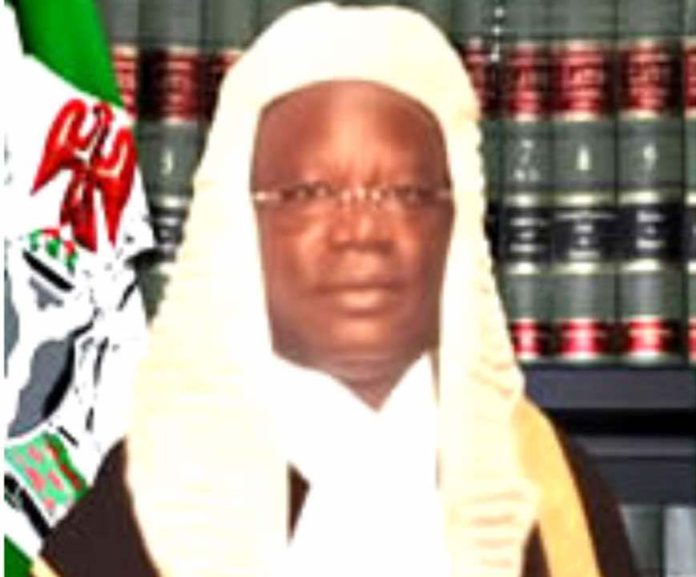
As he heaved the head-pan of wet concrete on his head, climbing up and down the stairs of the new hotel under construction, little did the young labourer know that in a matter of years he would head a court adjudicating over matters concerning people like himself and more. It never crossed his mind that in 34 years with so much pomp, he would be ushered into a luxurious room in this very hotel where he was one of the many unknown manual hands that constructed it.

His father died three months before his birth. And so he was named Babatunde which in Yoruba language means the fa- ther has come back. Olaniyan Adejumo a driver was from Akunnu – Akoko, North East Local Government of Ondo State was brought up in Lokoja, old Kwara state and capital of present day Kogi state. The younger Adejumo, Babatunde Adeniran was born October Ist 1954. When his father died, his pregnant mum, Madam Awawu Giwa relocated back to her town, Ikaramu – Akoko, Akoko in North West Local government Area of Ondo State. He was eventually brought up by his mother’s relations. Though a very bright child, he was not opportune to attend secondary school. He went to live with his father’s childhood friend, Magistrate O.O. Saw- yer in his final year at primary school. Magistrate Sawyer enrolled him at St. Patrick’s Primary School, Ijebu Owo in the old Western Region, now Owo, Ondo State. On competing primary school, he was billed to attend Aju- wa Grammer School, Okeagbe, in Akoko, Ondo State. Unfortunately, the Magistrate’s wife opposed the Idea.

The Bricklayer

 With the hopes of going to secondary school dashed, he saw no reason to remain with the Sawyers and so Young Babatunde went home. A glimmer of hope came when a cousin who lived in Lagos visited their home- town in 1969 and took him to Lagos. This cousin tried registering him at Government Trade Centre, Yaba but that too failed. Since education appeared not to be his lot, a relation that worked at Federal Palace Hotel in Vic- toria Island informed him that an annex of the hotel was under construction and that young men were earn- ing money carrying concrete and working as bricklayers. He didn’t hesitate. Every morning this relation, who worked as a Maintenance Officer at the hotel, rode with him on his motorbike from their Mushin abode to Victoria Island for the labourer work. “When they were building the annex of Federal Palace Ho- tel, I was one of those who did labourer there”, Justice.

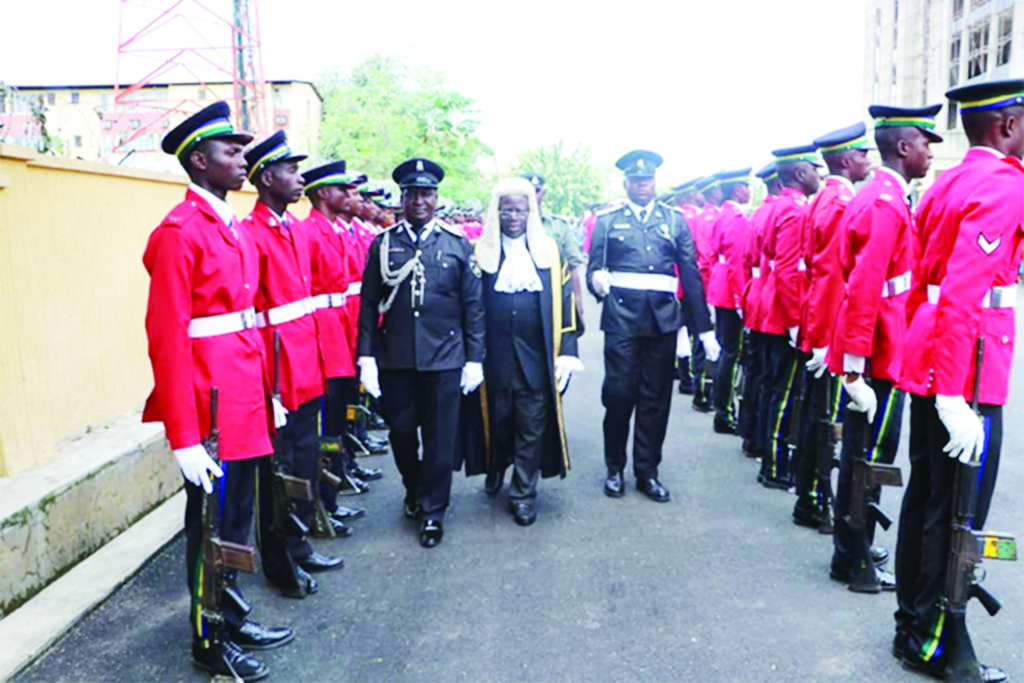
Hon. Justice Adejumo inspecting a guard of honour at his valedictory session

Adejumo recalled. “One of my cousins was a Maintenance Officer there and he had a Suzuki. He would carry me on his motorcycle to the hotel where I joined other labourers to do bricklayer job. I carried sand, cement and did the general bricklayer’s work. When I became President of the National Industrial Court I went and booked that place for one week. I told those who went to book the hotel for me that I was one of the bricklayers that built that place and now I want to enjoy it.”

Life was so tough that young Adejumo traversed the most distant parts of Lagos on foot, eat eba with moi-moi (beans pudding) bits and peeped through a neighbour’s window to watch television. It was a struggle for survival. “In those days, they used only leaves to wrap moi-moi. When you begin to unwrap it, some moi-moi usually stick on the folds of the leaves. Those ones are very soft so we pick it out gently and use it to eat eba. Then the Cotonou people that sell ewa agoyin (mashed beans) will put pepper sauce in the middle of the ewa agoyin. You can use that sauce to eat eba. Some people sell soup without eba. It may be with kponmo (edible cow hide), thick round ones, not like the ones they sell these days. There will be pepper inside the folds of the kponmo so when you buy it with the soup, already you have garri, so you make eba and eat. “Those days you trek from Mushin to Race Course, Mushin to Bar Beach. Then you trek from Mushin to Ikeja, to Agege. There was no money. In a whole street there may be only one television. All of you will gather on the window. The day you offend the television owner’s child, he’ll pull down the curtain so you don’t watch.”

The Shoemaker

The future Hon. Justice Babatunde Adeniran Adejumo continued with his bricklaying job until an opportunity came for him to be an apprentice shoemaker near his residence at Mushin. After three years of learning, he completed his appren- ticeship in 1972 and went to Owo to ply his trade. He was at Owo from 1972 to 1975 when the Pris- on Service needed warder tradesmen. As a result, he went back to Lagos to enlist. In 1977 he was sent to the Prisons Training School, Ogbete Enugu, former East Central State for six months train- ing. Clinching the overall best student position out of 313 students, he received the baton of honour and overall best student award. Overwhelmed by his own success, he asked himself, “does it mean I can read?”

Another Attempt

His success at the Prison Training School buoyed up the desire to give education another attempt. On returning to his station in Abeokuta in 1978, he enrolled into the Teachers’ College where he met a senior, Mr. Azeez, now a chartered accountant. Azeez was always reading at night after light out, so Adejumo approached him and expressed his desire to learn. Sadly, when he started read- ing the books Azeez recommended, he couldn’t understand anything. Yet, the senior encouraged him to continue reading. In 1979, he wrote the external GCE and made had 4 credits and 2 passes including English and Mathematics. Friends ad- vised him to leave the College of Education since he’s obtained the O’Levels but he was determined to complete the Teacher Training. On acquiring his Teacher’s Grade II Certificate in 1981, Adejumo was posted to Olugbo Comprehensive High School, Odeda, Ogun State where he taught Economics, Government and Commerce. He was also preparing for A ‘Levels exams. In 1982, when the result was out he passed with distinction.

 Favour

 Thereafter, he applied for direct entry and was given admission to study Law in 1982 for 3 years  at University of Ife, now Obafemi Awolowo University. He was 27 years old. All through the 3 years, he had only a pair of Jeans, one T-shirt, a Safari Suit, and one other outfit. His shoes were only two. A passed down stiletto and a pair of sandals Graduating in 1985, he proceeded to the Law School in Lagos. He was 30 years old after the LLB so he could not go for the mandatory National Youth Service. “When I graduated, I went to Law school in Lagos and joined the Law firm of Osuo- lala Ojo & Co., 208 Exam Success House Ikorodu Road, Palmgrove, Lagos thereafter, but they were not paying me. I’ll trek from Mushin to the office daily. I was there for 10 months and while my col- leagues were on Youth Service I got a car”, recalled Justice Adejumo. He revealed that an impressed client who initially urged him to buy his fairly new 504 SR at a discounted eventually gave him at no charge. As he was reeling over his good fortune, a friend he learnt shoemaking with gave him a four bedroom flat to live in at an extremely low rate. “He had built many houses in Lagos. I didn’t have anything. I bought a mat on the first day. He asked how much I wanted to pay for a year and I said N200 naira but that I will not pay rent for the first one year. He agreed. I hung my lawyer signboard so when the land owners saw it, they approached me. I sold half of the land in Ikotun Egbe, I made money and had two or three plots of land,” he recounted.

Politics

In 1991, Adejumo ran for election under the SDP for Ondo State House of Assembly. The party purchased his nomination form six weeks to the elec- tions and printed his posters without any financial contribution from him. He won the election and was further elected Chairman of the House Committee on judiciary, Human Rights and Public Petition. He served until 1993 when the Abacha regime displaced them.

Back to Law

Having worked closely with the judiciary, his Chief Judge persuaded him not to return to Lagos. In time, he was appointed Chief Magistrate. “After 13 months someone told me to apply to the Supreme Court as Deputy Chief Registrar (DCR). I applied. For one year I heard nothing. In between before I became a Chief Magistrate, Obasanjo called for a meeting at Ota. Buhari was there, I was there, the late Joe Garba, late Rimi and oth- ers were there. We were discussing June 12 and there I met with Buhari in 1993. I got his number and we started talking. “When this opportunity came, I got in touch and told him I applied to be DCR at the Supreme Court. He said I should bring a copy of my application to him in Lagos. When I gave him the application, he said he will give the copy to Justice Mohammed Bello who was the Chief Justice of Nigeria. We went for the interview. Two of us scaled through. I came first and Ishaq Bello the Chief Judge of the FCT came second. I was DCR 1, he was DCR II. He worked for two years and became a high court judge. I worked for three years and became a high court judge. I was a High Court judge for five and half years in Ondo State Judiciary.

“When the opening for President of the National Industrial Court came, I approached my CJN, Justice Uwais but he discouraged me and said that place was a dead end. I said someone must make a dead end a living end and he said ok. I informed my Chief Judge in Ondo State and he recommended me. When my appointment was announced, Kanyip phoned me. He was my classmate at the law school. He said ‘congratulations. The President has appointed you as President of NIC and I too showed interest but now you’ve been appointed, I pledge my loyalty to you…” That was the bond.

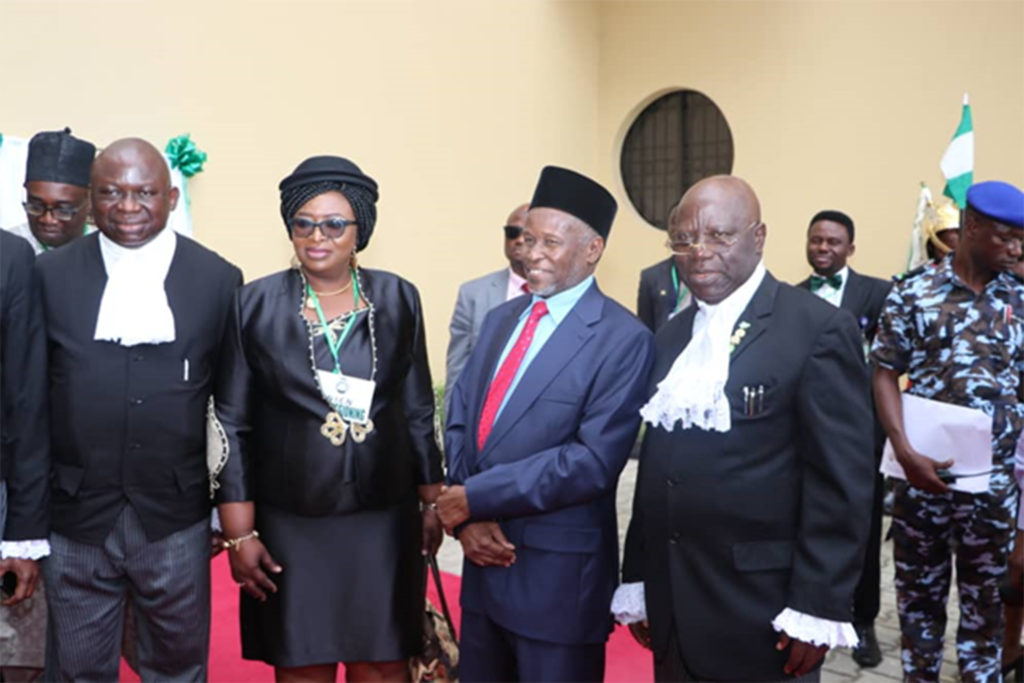
L-R: President of NICN, Hon. Justice B. Kanyip, Justice of the Court of Appeal
and wife of Justice Adejumo, Hon. Justice Abimbola O. Obaseki-Adejumo,
Chief Justice of Nigeria, Dr. Justice Tanko Mohammed and Hon. Justice B. A.
Adejumo

As President of the National Industrial Court from 2003 to 2019, Hon Justice Adejumo will be will remembered for his invaluable contributions to the court. “During my tenure the Constitution of The Federal Republic of Nigeria was amended by The Third Alteration to give birth to NICN as Su- perior Court of Record in Nigeria and the number 4 Court of Record under our Constitution today. Alhamdullilahi. The rest is a story.” His lordship concludes that much as he been extremely lucky in life, hard work and destiny cannot be ruled out.

FIDA, others secure release of 15 inmates

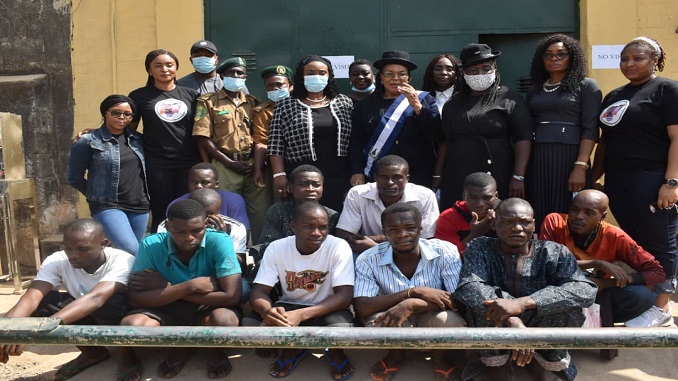
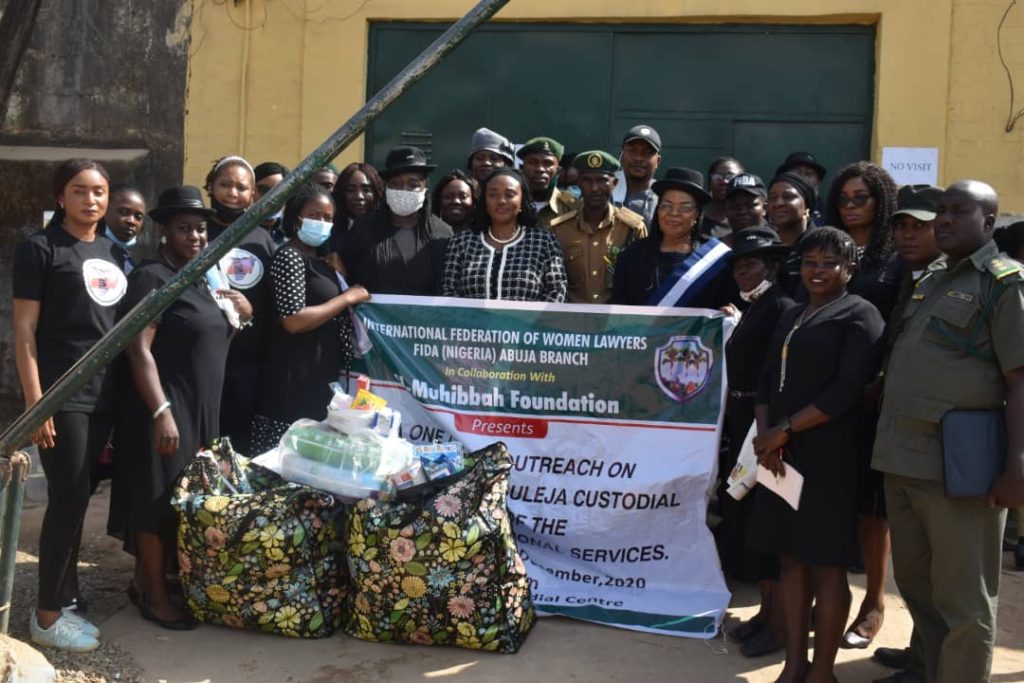
It was a surprise Christmas package for 15 inmates of Suleja Correctional Service Centre when a team of female lawyers in collaboration with other like-minded organisations facilitated their celebrating the yuletide with their families a few weeks ago.

The Correctional Centres Visitation Committee of International Federation of Women Lawyers (FIDA) Abuja branch in partnership with the Al Muhibbah Foundation, the NBA Abuja, Human Rights Committee, and La Chapelle Centre for Rights of Children and Victims of Sexual and Gender-Based Crimes, secured the inmates’ release.

The 15 inmates were held for their inability to pay fines of various amounts despite having been discharged by the courts. The team also made provision for food and essential welfare items for female inmates, amongst who were two nursing mothers and their babies (four and nine months old respectively).

Authorities at the Correctional Centre said one of the biggest challenges they face is decongestion.  A senior official who addressed the contingent disclosed that they often have difficulties getting judges and magistrates to sign off on the Release Order which would secure the release of inmates that have had their fines paid but have compensation amounts outstanding against them. He explained that in spite of the recent directive of the Chief Judge(CJ) that the claims of such outstanding compensation be pursued in civil suits, most Judges remain unwilling to sign off the Release Order until such compensations are fully offset thereby lengthening the amount of time such inmates spend in custody.

In her comments, the Chairperson of the Correctional Services Centres Committee of FIDA Abuja, Lady Ngozi Okogbue, expressing her gratitude to the collaborators both old and new, explained that a major mandate of her Committee was the regular visitation to these Correctional Services Centres where it interacts with the inmates through the mounting of legal clinics in order to determine their current areas of need, whether it be the payment of fines, payment of compensation where possible, or to determine what legal aid necessary to be provided the inmates especially in the case of pending appeals. The Committee, she added also provides some necessaries especially for the female inmates. She therefore encouraged as much collaboration as possible with willing and interested collaborators.

In her response, Chairperson of FIDA Abuja, Mrs. Rachael Adejo-Andrew pledged to draw the Chief Judge’s attention to the matter during their next interaction with him on Prison Decongestion issues.

Prison congestion is one challenge that has for long bedeviled the country. A former Chairman of the National Human Rights Commission (NHRC), Prof. Anselm Chidi Odinkalu recently disclosed that the courts are congested: with about 117,000 pending cases at the Federal High Court alone, estimated tens of thousands at the Appeal court, and over 30,000 at the Supreme Court. Court cases, including commercial disputes can last for decades.

As the population balloons, it is expected that the number of pending cases under the current system will continue to multiply. The prisons are overcrowded. Odinkalu estimates, using case study of federal prisons in Imo state that the congestion rate is 170% and with 86% of prison inmates awaiting trial. Most prisoners end up serving terms higher than would have been the case if convicted.

Meanwhile, judges in Nigeria are grossly overworked and underpaid. According to the former Rights Commission’s Chair, “Nigeria’s Supreme Court is probably the only one in the world where the justices sit every day, and yet pending cases keep mounting in thousands.  As the saying goes, justice delayed is justice denied.”

HURIWA flays Lai Mohammed over remark on Kukah’s essay

  • Shehu Sani to FG – Flog Sultan, Sheikh Gumi like you did Kukah for criticising Buhari

Amidst the furore generated by the 2020 Christmas Day essay of the fiery Catholic Bishop of Sokoto Diocese, Dr Mathew Hassan Kukah wherein he condemned the flagrant nepotism of President Muhammadu Buhari’s regime, Human Rights Writers Association of Nigeria (HURIWA) has asked the Minister of Information and Culture, Lai Mohammed, to refrain from speaking if he found Bishop Kukah’s essay difficult to comprehend.

The organisation in a statement signed by its National Coordinator, Emmanuel Onwubiko, and the National Media Affairs Director, Zainab Yusuf, HURIWA said Kukah’s Christmas Day essay,merely highlighted the nepotism which characterised the present administration of President Muhammadu Buhari.

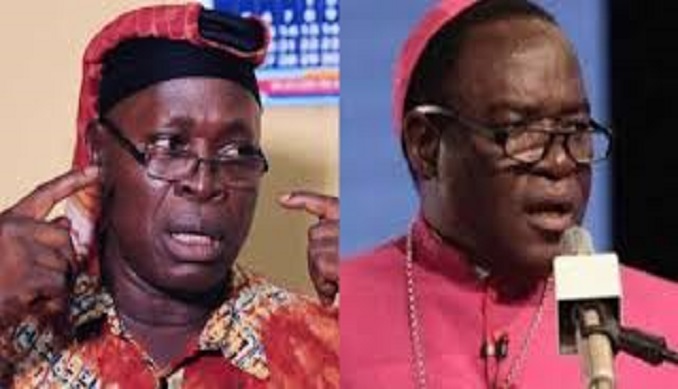
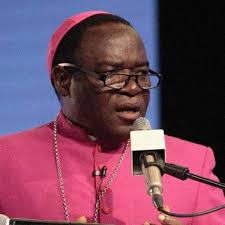
Bishop Mathew Hassan Kukah

Meanwhile, Former Senator and President of the Civil Rights Congress of Nigeria, Shehu Sani, has said the Sultan of Sokoto, Sa’ad Muhammad, and Sheikh Ahmed Gumi should equally be flogged for criticising President Muhammadu Buhari.

Sani, in a tweet on his Twitter handle, spoke against the backdrop of the criticism of the Bishop of Catholic Diocese of Sokoto, Rt. Rev. Hassan Matthew Kukah, by the Federal Government through the Minister of Information and Culture, Alhaji Lai Mohammed, for his Christmas Day message.

In the message, Kukah called for a better handling of the country by Buhari.

Reacting to the criticism, the former representative of Kaduna Central Senatorial District said: “Kukah threw stones, the Sultan threw stones, Sheikh Gumi threw stones, if you want to flog them flog them equally.

“Dazzol.”

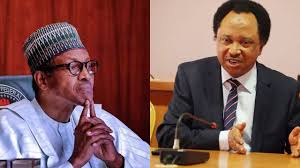
L-R: President Buhari and Senator Shehu Sani

HURIWA on its part described Kukah as one of the lovers of constitutional democracy, noting that the minister was, as usual, very economical with the truth and went on the voyage of discovery when he misinterpreted the essay written in simple English language by the highly cerebral and globally celebrated intellectual.

The group explained that Kukah had never in any way advocated violent overthrow of a democratically constituted government in Nigeria or anywhere else in any of his over 10,000 published essays.

The bishop had stated last week that there could be coup or war in the country if a non-Muslim becomes a president and does a fraction of what Buhari did.

HURIWA wrote: “Kukah only pointed out the obvious that President Buhari has consistently and continuously unleashed divisive and scotch-earth apartheid policies of divide-and-rule, nepotism and religious-cum-ethnic chauvinism and bigotry in all his appointments, especially to top internal security architecture, including the recent promotions in the Nigerian Police Force (NPF) in which the North got the significant percentage of all the promoted senior police officers, even as the South East was allotted just one top position.”

According to HURIWA, the entire internal security architecture, dominated by persons from one section of the country to the exclusion of all others, offends the Federal Character principle as provided for in the constitution and Section 42(1), which speaks to the issue of discrimination on the bases of tribe, religion or political affiliations.

The current administration, since 2015, has maintained the divisive posture of appointing only Moslem Northerners to head the police, Department of State Services (DSS), Immigration, Customs, Civil Defence, and especially all the strong defence positions in the military that command and control the largest number of troops and equipment, the group noted.

It added that some outspoken Northerners, including House of Representatives member in the Second Republic, Alhaji Junaid Mohammed, had condemned Buhari for nepotistic appointments into strategic national offices.

Kukah accused President Buhari of deliberately sacrificing the dreams of Nigerians to institutionalise northern hegemony on Friday in his Christmas message, titled: “A Nation in Search of Vindication.”

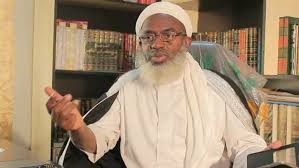
Sheikh Ahmad Gumi

He said the spilling of blood in the country must be related to a more sinister plot.

The clergyman noted that under Buhari’s government, Nigeria appeared to be heading for darkness with the citizens travelling in a rudderless ship without any destination in sight.

Sultan Abubakar had before then described the abduction of hundreds of Government Science Secondary School, Kankara, Katsina State as a slap on President Buhari’s face.

Sheikh Ahmad Gumi has been consistent in criticizing the government of President Buhari and it’s failure to address security challenges, improve the economy and rampant cases of corruption.

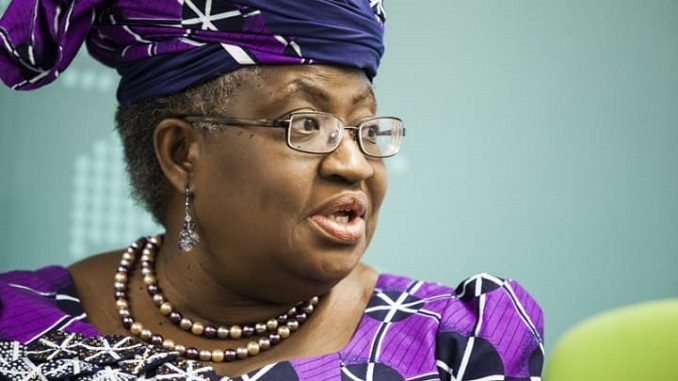
Power Play: How Christine Lagarde and I were locked out of Aso Villa – Ngozi Okonjo-Iweala

More stories about the power play, deception and high level graft in Nigeria unfolded recently at Washington DC, when former Minister of Finance, Ngozi Okonjo-Iweala related how she was humiliated, and locked out of the Presidential Villa, Abuja.

Dr. Okonjo-Iweala also recalled how she was further ridiculed when she fixed a meeting between then President Goodluck Jonathan, and the head of the International Monetary Fund (IMF), Christine Lagarde at the Villa.

Speaking at an event ahead of signing of the book, ‘Fighting Corruption is Dangerous: The Story Behind the Headlines’ in Washington DC, the former finance minister said her sad experiences commenced when she refused to restore a policy she scraped. The said policy was being used to embezzle government funds.

She said, ”About six weeks into the implementation in early December 2011, I received a message that a top ranking presidential aide wanted me to stop by his office any time I was in the Villa. The Villa is the equivalent of the White House.

“This official was one of the important aides in the Villa. So, I went to his office the next day.

“The presidential aide told me that he wanted to convey a message to me that there were people not happy with the port reforms especially the abolishment of the Cargo Tracking Note.

“And he asked me, indeed advised me to reinstate it. I was dismayed because the fact that the matter has been brought to his attention meant that whoever the unhappy people were, they were influential. I explained the genesis of the port reforms, the situation of the presidential task force and the approvals for action given by the president.

“By implementing the reforms measures we were just carrying out the presidential approvals. He said he understood but that I should nevertheless find a way to reinstate the Cargo Tracking Note.

“I left his office very troubled. Being on the wrong side of people who had this kind of top level influence made me uneasy. I knew there could be consequences but I also knew that there was no going back on these important reforms.

“Clearly the $6 million from the Nigerian Ports Authority from the Cargo Tracking Note not being remitted to the treasury must be going into some influential pockets.

“The morning after meeting with the presidential aide, the consequences began to become clear. I was privileged that part of my daily routine was to join the president and his family and his few close friends in Christian fellowship and morning prayers in the residential complex of the Villa.

“It was a way to gain strength for each difficult day. The prayer normally began at 6am so by 5:45am every day, I arrived at the Villa gate I was routinely waved in.

“That morning the gates remained firmly shot as I drove up and I was told I could not go in. Taken back I asked why, all I could get as a response was that the gate keepers had received instructions not to let me in for morning prayers. I began to argue but realizing that it was fruitless, I returned home. At that point I felt a mistake had occurred and thought no more about it.

“But for the next three days I was blocked from entering for the early morning prayers at the Villa.

“By the third day, the security officers at the gate all of whom knew me well told me, ‘Honourable Minister Ma, I think you need to talk to the presidential aide, ‘they gave me the name of the aide and it was the same person who had asked me to restore the Cargo Tracking Note.

“Then I understood.

“When I called one of my prayer fellowship friends on phone, Mr. John Kenny Opara and told him about the situation, he said he would discuss this with the villa pastor and they will intercede on my behalf.

“After going to the gate and not allowed in for the fourth time, I pushed the situation to the back of my mind and turned to the preparations for the upcoming visit to Nigeria of the Managing Director of the International Monetary Fund, Madame Christian Lagarde, on December 18-20, 2011.

“My biggest preoccupation was to ensure that in the raging national debate about the phase out of oil subsidies, Madame Lagarde’s visit was not miscast by the media or anti-government forces as the IMF telling the government what to do on energy subsidies. Madame Lagarde, was equally concerned that her objectives be clearly understood as reviewing our macroeconomic and growth reform and offering encouragement and support.

“The visit proceeded smoothly as Madame Lagarde met with members of the Economic Management Team, the Central Bank and other important bank officials. She was scheduled to meet with the president on the final day of her visit December 20.

“There are usually many protocols and conventions to observe on high level visits especially when the visitor is accorded head of state’s status as Christine Lagarde was. One of these is for such dignitaries to enter the Villa for a meeting with the president through a gate designated for Heads of State only.

“Because Madame Lagarde was to use this gate, I had asked my staff to double check and ensure all was in order and I was reassured that this was the case.

“But when the motorcade reached this gate it was denied entry. Embarrassed, I tried to find out from the security guards what was going on; they said they had no instructions for her to use that gate. And we should proceed to the entrance reserved for state governors, certain designated ministers I was one of them and other dignitaries. We were already running late.

“So I apologised to Madame Lagarde and told her there must be a mix up and asked the drivers to proceed to the other gate. When we got there we were again denied entry. By this time it was clear to me that there was no misunderstanding but that this was deliberate.

“We were told to go back to the regular entrance used by everybody, park our car there and we will have to walk, five minutes down the villa corridors which were long and leading to the president’s meeting room.

“Such treatment of such dignitary at the level of head of state was unheard of.

“Christine, clever as she is had figured out something was wrong but she didn’t know what. She handled it all with gaits and elegance telling me she didn’t really care which gate she went through or how far she had to walk as long as we met with the president.

“By this time we were about 10 minutes late. We eventually made it to the meeting. When the president enquired if everything was alright, she replied wittily, Mr. President there was a bit of a mix up about gates and we had to walk here. But it gave me the chance to see your beautiful Villa and its lovely gardens.

“The President looked puzzled but smiled and started the meeting. I never shared with him or with Christine Lagarde what I thought had happened that day….”

Boko Haram At Cele?

As told by Mr Five

I never actually planned for what happened. I left my residence at Ejigbo that very morning with only five hundred naira (for those who don’t know, Ejigbo’s in Lagos).

It’s the only island surrounded by bad roads in this part of the world ….No good road, no light, everybody there is quick to anger. I, Mr. Five, have always said it that, whoever that can survive Ejigbo, can survive hell fire …..

Deliverance is done with koboko there, the demons are as stubborn as crazy donkeys. Yet our local govt. chairman regularly wins the best performing chairman awards in Lagos.

The bus I took from Ejigbo needed almost two hours to get to Cele area, bcos of the usual hold up. When I got down at Cele express, I walked quickly to take another bus going to Mile But suddenly, I remembered that the conductor of the bus that just brought me from Ejigbo did not give me my balance (change).

I looked back at a distance and saw the bus going back to Ejigbo. Quickly, I jumped out of the Mile 2 bus and ran after the Ejigbo bus with all my energy….. Apparently because I jumped out from the Mile 2 bus like a rat that hot water was poured into its hole (that uncollected change was the last money I had), a man dressed in a suit, like a lawyer that specialises in adjournment of rape cases, holding a brief case, saw me running and joined me immediately in the race.

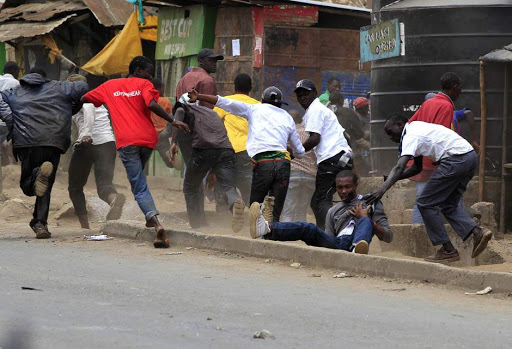
 I actually thought he was helping me to get the bus, even though I never told anyone why I was running, but I noticed that he was more forceful in his race than me, like someone running from a lunatic holding matchet. Honestly not every body wearing a suit is normal! Another man saw us running and joined the race, before I could turn back to see what was happening, the whole of Cele was in complete disarray as people were running helter skelter in great panic; it was like a mad people’s Olympic! I still didn’t give a damn, because that five hun- dred was all I had both home and abroad. So I desperatelty chased after the bus for my change. And the man in suit was also still running after me with all his strength! Unfortunately, the chaos behind me over took me; people behind me were running towards me,

those in front of me started running ahead of me without even knowing why they were running. Some people living around that area were running out of the way like goats that sensed dangerously, and instead of running into their houses, some people were running out of their houses. Vehicles were reversing and driving back to where they come from. I later saw the bus I was chasing, parked at a distance, when I got to the it, all the doors were wide open, nobody was inside. The driver and conductor had vanished and abandoned the bus.

To my surprise even the LASTMA and the police men that were at Cele when I started running to get my change, suddenly overtook me and were running without looking back. One of the policemen removed his shirt as he ran, he even forgot to remove the beret on his head. Traders hawking things threw away their goods, as they ran.

 A cripple I use to see at Cele, who was always assisted by a little child to beg for alms, suddenly got up and ran more than the child helping him … It was a great miracle, he took steps of faith …. nothing built by faith like Osundu. One can jump the widest gutter without knowing! All I was hearing behind me was, “fire fire, fire.” When I saw a fat woman shouting “fire, fire !”I asked her, “madam did you say fire? Where? where? madam tell me na!” The woman shouted, “common leave the road if you don’t like your life. Must you see the fire first before you run? This is Lagos o!! Boko Haram don come Cele o!!” As I heard “fire! fire!” I doubled my efforts. (After all a living private is better than a dead general). I saw a man park his car and run on foot.

 As he was running, I thought his tummy would fall down, bcos it was big (I believe his flat buttocks was running differently while his large tummy was running differently (the consequences of excessive Gulder and nkwobi)! He was shouting on his phone in Igbo language, “Mama Nkechi, Mama Nkechi, are you hearing me? Gather the children, there is fire at Cele, it seems Ndi Boko have landed in town o! Pack the things you can carry; stop asking me questions. What do you mean if I saw them? Some- thing that is happening in my presence, many have died in my presence! I am coming.” At that moment I saw the conductor that I was looking for! I asked him to give me my change there before I change my mind.

 The conductor said, “Ahh Oga, don’t you go to church ni!! So you still have the heart to ask for change, upon say Boko Haram don come Cele.” But when he looked at my eyes he knew that a hungry man is an angry man. He said, “take your change make you no kill me for night. No be only your grand mama be witch.”

As I collected my change and relaxed from the race, the first man, in a suit, who ran after me got to me and was breathing like somebody that’d had marathon sex after taking Viagra. He said: “bros gist me, gist me what happened? Why where you running? I had to follow you when I suspected that you sensed danger, you know say Warri no dey carry last.” I asked “which danger? I was running after the conductor that wants to eat my change … thank God I caught him just now.”

The man shouted, “Jesus Christ! Oga, you mean you caused these pandamonium bcos of ordinary change? Did you see what you caused in Cele bcos of how much change? I feel like slapping myself for following you…” I asked him, “Are you mad? You mean you saw someone running, you never asked why, you joined to run. My brother you need help. Get well soon.” He said, “But oga see the chaos na. Is it fair?” I told him to stay away from me or else I will abuse his sister; what nonsense! I left him before he could say I caused it.

It was later I heard that when we were running a ve- hicle mistakenly drove over an empty pure water sachet and it made a loud sound that aggra- vated things. And That was what generated the story that Boko Haram came to Cele. The following day, I saw a guy at Conoil filling station telling people how everything happened in his presence; that he saw twenty people killed by Boko Haram.

Who is a Hoodlum?

A hoodlum is someone born in abject poverty in a rural or urban setting, who could never afford a 3 square meal. At age 5, was already hawking on the streets and trying to earn his keep. A hoodlum was probably abused and exposed to constant threats in his neighbourhood. A hoodlum saw violence earlier than probably anyone would hope to. A hoodlum attended a public school once in a while when not on the streets hawking but had no teacher to teach him or was flogged for coming late to school. A Hoodlum had no books in school and his home and school looked very much alike. A hoodlum hardly saw the walls of a secondary school and if he did probably dropped out without getting anything from it. He became your house girl house boy, gate man driver. Or the children became Hoodlums because of the poor salary you pay that one can not properly raise a child with.

 A hoodlum had no mentors, got no words of encouragement, had no dreams and was unable to aspire to become a doctor, Lawyer or Banker. A hoodlum has had to be his own father and mother from a young age and fend for himself, resulting from time to time to crime sometimes as a means of survival.

A hoodlum is the son of a hoodlum and his greatest fear is that his children too will be hoodlums. A hoodlum is either in prison or his brother, father or son is in prison.

A hoodlum is Yoruba, Ibo, Hausa, Fulani, and every tribe in Nigeria you can think of.

A hoodlum is Muslim, Christian or without a religion. A hoodlum is a product of an uncaring society that watches children roam around disenfranchised and without hope but refuse to accept that they will grow up to become hoodlums.

A hoodlum is a creation of bad, uncaring and ungodly leadership. A hoodlum is a Nigerian. When you see a hoodlum today, show him some love. You may have contributed to making him/ he who he/she is. Especially those of us paying below subsistence salaries, Politicians, (local, state and federal), lawyers , judges,( courts) police, banks and other financial institutions etc. amongst others we have been the conduit pipe housing and facilitating corruption.

The Hoodlums are societal creation.

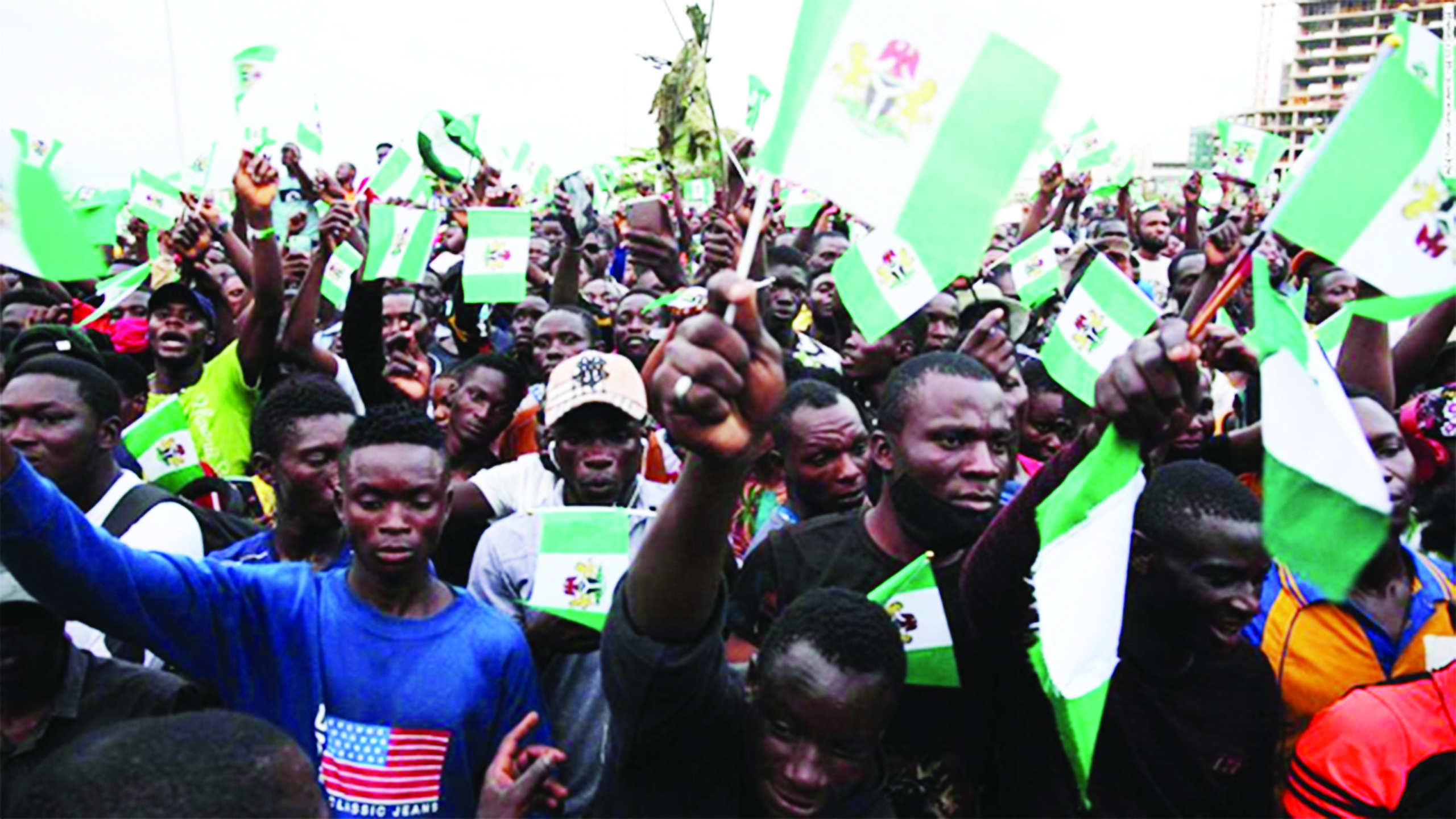
#ENDSARS Protests:What do the probe panels hope to achieve?

By Ladidi Sabo

When the International passport of ModupeOdele, a US-trained Nigerian attorney and co-lead of ENDSARS Legal, an initiative which provided free legal aid to peaceful #ENDSARS protesters was confiscated by agents of Nigeria’s federal government to stop her from travelling abroad, the fears of many sceptics who questioned the good will in the famous “your voice has been heard loud and clear” speech made by President Muhammadu Buhari while urging Nigerian youths to halt the protests became palpable.

Public affairs analysts posit that the current development where leaders of the protests are being harassed by law enforcement agents demonstrate that the initial entreaties for the protests to stop and assurances that errant policeman will be sanctioned were mere platitudes.

The avalanche of harassments on leaders of the protesters, with bank accounts of some leaders frozen and even a company assumed to be linked with the protests deregistered by the Corporate Affairs Commission (CAC) accentuate this position.

Condemnations have since trailed the freezing of #EndSARS campaigners’ accounts. Recently, an Abu Dhabi Federal Court of Appeal in the United Arab Emirates (UAE) upheld the imprisonment of six Nigerian citizens found guilty of funding the Boko Haram terrorist group operating in the North East of Nigeria. Allegations are rife that some top Nigerians are funding the insurgents who have held sway for more than a decade in the North Eastern of Nigeria.

Following the swiftness in freezing the campaigners’ accounts, many marvel that till date, the Nigerian government Following the swiftness in freezing the campaigners’ accounts, many marvel that till date, the Nigerian government has neither traced nor frozen any bank account linked with sponsors the terrorist group. Receivers of the funds also remain unknown. “ “ has neither traced nor frozen any bank account linked with sponsors the terrorist group. Receivers of the funds also remain unknown.

“Following the swiftness in freezing the campaigners’ accounts, many marvel that till date, the Nigerian government has neither traced nor frozen any bank account linked with sponsors the terrorist group. Receivers of the funds also remain unknown.”

Besides, an acclaimed human rights activist allegedly sponsored by the Nigerian Government, has sued 50 Nigerian celebrities including musicians David Adeleke also known as Davido, Tiwa Savage, Folarin Falana known more popularly as Falz and Aisha Yesufu for allegedly promoting the protest. Interestingly both President Buhari and Vice President Osibanjo’s daughters supported the protests. While Zahra Buhari shared an image on her insta-story that says “#EndPoliceBrutality, Kiki Osinbajo shared a post on her Instagram page saying “Police brutality must end now” using the hash tags #endpolicebrutality and #endsars. Whether their actions will be challenged in court like those of the 50 charged for endorsing the protest remains to be seen.

Meanwhile, a Chief Magistrate Court in Abuja has ordered the Commissioner of Police in charge of the Federal Capital Territory (FCT) to investigate the alleged 50 promoters of the #EndSARS movement. Already, hundreds of the protesters across the country have been arrested and held in prison custody, nay correctional centres.

“Following the swiftness in freezing the campaigners’ accounts, many marvel that till date, the Nigerian government has neither traced nor frozen any bank account linked with sponsors the terrorist group. Receivers of the funds also remain unknown.”

This is in spite of the main object of the protest being to end police brutality, amongst other ills in the country. The agitating questions are – Is it legal for citizens to stage peaceful protests about disturbing situations in the country? Does complaints against the government amount to being disloyal and unpatriotic? Does it also suggest attempts to subvert the government? Does the government really want to end police brutality? Sadly, military brutality has been added to the list.

“While Zahra Buhari shared an image on her insta-story that says “#EndPoliceBrutality, Kiki Osinbajo shared a post on her Instagram page saying “Police brutality must end now” using the hash tags #endpolicebrutality and #endsars. Whether their actions will be challenged in court like those of the 50 charged for endorsing the protest remains to be seen”

 In the heat of the protests, the Federal Government dissolved the Federal Special Anti-Robbery Squad (FSARS) with the Inspector General of Police (IGP), emphasising that the dissolution was in response to the yearnings of the Nigerian people. Federal government then said it was embarking on massive police reforms and asked each state governor to set up a judicial panel of inquiry to look into police brutality in its jurisdiction. The current turn of events challenges government’s sincerity on the entire enterprise.

While Nigerians are still reeling with shock over the Lekki toll gate shootings in peace time by Nigerian soldiers, the Attorney General of the Federation (AGF), Abubakar Malami (SAN) made some revelations. He said the shooting was done by hoodlums in military uniforms. His exposé came even before the judicial panels of inquiry across the 36 states and Federal Capital Territory have barely begun sitting. How did he arrive at his conclusions?

 Then his office added that there is no sufficient evidence to prosecute the 33 operatives of the disbanded SARS indicted in last year’s report of a Presidential Investigative Panel. Consequently, the Attorney General has directed the Inspector-General of Police, Mr Mohammed Adamu, to set up “a special investigation team” to conduct “thorough investigation” into the cases. A damning investigative video by the Cable News Network (CNN) has punctured the denials of Nigerian government and its agencies over the killings.

The cable network said: “CNN has examined bullet casings found at the scene and confirmed with current and former Nigerian military sources that the bullet casings match those used by the army. Two ballistics experts have also confirmed with CNN that the shape of the bullet casings indicate they used live rounds, which contradicts the army’s claim they fired blanks. “And working with the Balkan Investigative Reporting Network, CNN has established that several of the bullets from the Lekki toll gate originated from Serbia. Export documents CNN has seen show that Nigeria purchased weaponry from Serbia almost every year between 2005 and 2016.

“After the army withdrew from the scene, members of the police, including the SARS police unit — disbanded by authorities on 11 October — moved in, according to multiple eyewitnesses CNN spoke with. “In a video obtained by CNN and geolocated to Lekki toll gate at 2:36 a.m., one eyewitness, Legend, whose second name we’re not publishing for his safety, can be seen with the Nigerian flag around his head saying, “…my hand is broken, my leg is broken, and police are still shooting at us…”

Expressing little faith when the judicial probe panels were about to be set up, Prof. Chidi Anselm Odinkalu wrote: “There is a lot of glibness on #Police Reform. “In 2005, the Justice Ejiwunmi Presidential Commission on Reform of Administration of Justice reported with substantial recommendations on Police Reform.

 “In 2006, the Muhammadu Danmadami, Presidential Commission on Police Reform made extensive recommendations. Danmadami was a retired Deputy Inspector General of Police (DIG) and President of the Association of Retired Police Officers in Nigeria. In 2008 when the MD Yusuf Presidential Committee on Police Reform submitted its report, it described the workforce of the Nigeria Police Force as largely “undesirable” and complained that many of the police men were “criminals.” MD Yusuf was then Inspector General and founder of the special branch, which later became SSS (State Security Service).

“In 2012, the Parry Osayande Presidential Commission on Police Reform reported similar conclusions and recommendations. Osayande was DIG and former chairman of Police Service Commission (PSC). In 2019, you had the Tony Ojukwu Presidential Committee on SARS. All these reports are lying fallow. I have read all the reports. The Danmadami, MD Yusuf and Parry Osayande reports were all similar in diagnoses and recommendations. No one has implemented their recommendations or even tried them out. Now we want another merry-go-round?”

Pundits hold that more worrisome is the fact that the entire process has been given ethnic coloration thereby conveying the impression that some sections of the country are trying the run down the government of President Buhari a northerner. This has also prompted a reawakening of calls for restructuring so that every region could choose what works best for it.

 Prior to the Lekki killings was the sudden appearance of ProSARS demonstrators who turned against the peaceful protesters. Across some northern states ProSARS demonstrators brandished placards. Thereafter, hoodlums stormed Lagos State Government House, Alausa and attacked #EndSARS pro- testers. Meanwhile, a disturbing video went viral on social media where a government official was caught on camera coordinating thugs to attack peaceful protesters in Abuja. Yet another video showed an armed police officer and others in mufti smashing a packed Toyota Camry in Benin City, Edo state, a day after Governor Godwin Obaseki declared a curfew following the protests in Edo. Nobody has been apprehended.

Enraged leaders of thought like those in the Na- tional Consultative Front, NCFront, have accused both the federal and state governments of colluding with thugs and hoodlums to discredit and scuttle a popular Youths action.

A cross section of Nigerians including rights ac- tivist Ebun-Oluwa Adegboruwa, SAN, maintain that people must be allowed to protest without police harassment. Another constitutional lawyer and rights activist, Mike Ozekhome, SAN, posit that the stance of some prominent leaders on the dis- bandment of SARS validates the need to urgently restructure the country.

Against the backdrop of the numerous panels of inquiry set up in the past, and plethora of recom- mendations, never implemented, including that of Human Rights Violations Investigation Commis- sion (HRVIC) popularly called Oputa Panel, that sat for nearly a whole year, there is a groundswell of opinion that the recommendations by the current judicial panels on police brutality would similarly be swept under the carpet. Not a few worry that if that happens, the grossly strained national unity could snap completely and irretrievably.  In all, it does not seem like any lesson has been learnt from the #EndSARS protest nor does it seem like the demands being pressed for were un- derstood by the authorities concerned.

TIPS