Rights activist and Amnesty International designated Prisoner of Conscience, Omoyele Sowore, and other activists in Abuja who were carrying out a peaceful procession to mark the New Year have been arrested by Nigerian security forces, according to Sowore’s portal, SAHARA REPORTERS.
“Eyewitnesses say policemen suspected to be with the Rapid Response Squad stormed Gudu junction in Abuja, wounding Sowore before carting him away with other activists at the location,” the portal said in a short report in the wee hours of the New Year, January 1, 2021.
No other details were available and the security agencies were yet to comment on the said arrest as at the time of this report.
An estimated 21,439 babies will be born in Nigeria on New Year’s Day, according to UNICEF.
As the calendar turns to 2021, UNICEF is again celebrating the new lives being brought into the world on 1 January. Globally, over half of these births are estimated to take place in 10 countries, with Nigeria having the third highest number of births, as follows:
India: 59,995 China: 35,615 Nigeria: 21,439 Pakistan: 14,161 Indonesia: 12,336 Ethiopia: 12,006 United States: 10,312 Egypt: 9,455 Bangladesh: 9,236 Democratic Republic of the Congo: 8,640
Nigerian babies, UNICEF said in a statement sent to Sundiata Post, will account for nearly six per cent of the estimated 371,504 babies born globally on New Year’s Day. Their average life expectancy is expected to be 62.8 years – compared to a global average of 84 years.
New years’ babies born in Ghana and neighbouring Niger have life expectancies of 73 and 71.4 years, respectively. Babies born in Central African Republic and Chad will have a similar life expectancy to those born in Nigeria – only 1.4 years less, at 61.4. This is the lowest life expectancy in the world.
The highest life expectancy, at 116.4, is for children born in Switzerland
“These figures, while difficult to contemplate, are estimates and not predetermined – there are many things we can do to improve the fate of those children born today in Nigeria. We can and must work to change the underlying factors that can improve the life expectancy of Nigerian children,” said Renu Wadhwa, acting UNICEF Nigeria Representative.
“This has been a difficult year, and there is perhaps no better way to turn the page than to welcome new young lives into the world. There are many opportunities before us in 2021, and now is the time to begin to build a better society for our children. Children born today will inherit the Nigeria we begin to build for them.”
More than 14 million Nigerian children are chronically malnourished children and 2.7 million acutely malnourished. Cross-sectoral solutions to strengthen the health, food, water, sanitation and social protection systems can reverse these high numbers and keep children alive.
As much as 43 per cent of Nigerian children do not receive all their recommended vaccinations at the right time – a critical step towards ensuring survival and good health.
Birth registration of Nigerian children under one year is still only 4.0 per cent and 54 per cent for children under 5 years. Achieving universal birth registration is an important platform for allowing children to access health care and other critical services throughout their lives.
One in three Nigerian children do not complete primary school. Education is known to improve health and life outcomes throughout a child’s life.
Only 1 in every 8 babies born will make it to their fifth birthday. Those who do survive will face other challenges as young Nigerians – especially girls. For example, an estimated one in every four Nigerian girls will experience sexual violence, if nothing is done to reverse the trend and stop violence against women and girls.
“We can make Nigeria a better place for children to survive and thrive. This new year offers a new slate with opportunities to reimagine, respond, recover and indeed build a more equitable and safer Nigeria for children, especially the girl child,” said Renu Wadhwa. P “As we navigate a second wave of the COVID-19 pandemic, with the economic and other challenges it may bring, UNICEF reaffirms its commitment to working together with the Nigerian government and people to promote and protect the rights and welfare of Nigerian children – to ensure that from this day of their birth onwards, they have a future they can look forward to.”
The National Identity Management Commission (NIMC) said that the ongoing enrollment for the National Identification Number (NIN) was free across the country.In a tweet on Thursday, NIMC, however, warned that “those who extort applicants risk a seven-year jail term if found guilty of the offence.”It cited Sections 14, 20 and 21 of the Independent Corrupt Practices Commission (ICPC) Act and Sections 10 and 12 of the Code of Conduct Bureau and Tribunal Act.NIMC said the offence was punishable in accordance with the extant laws.The commission also urged Nigerians to report such cases of extortion for diligent prosecution to serve as a deterrent.“The punishment for extortion if convicted is seven years of imprisonment as stipulated in Sections 14, 20 and 21 of the Independent Corrupt Practices Commission (ICPC) Act and Sections 10 and 12 of the Code of Conduct Bureau and Tribunal Act.“Report extortion via [email protected] or call 08157691214 or 08157691071,” the National Identity Management Commission said.
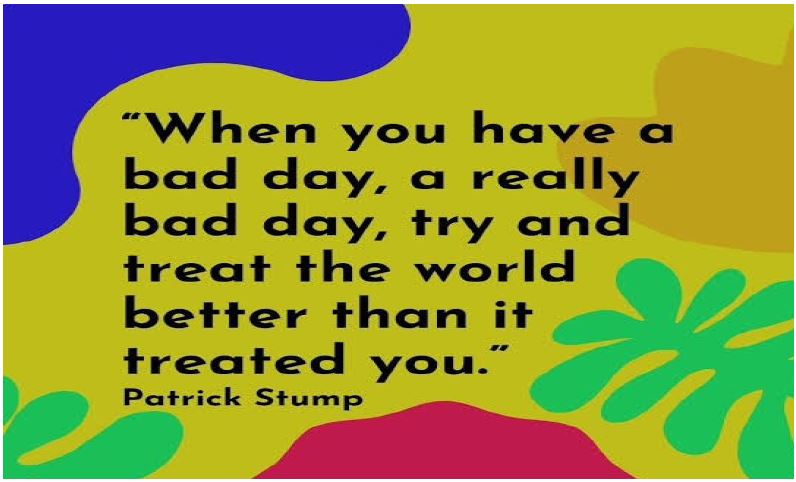
You got to try a little kindness Yes show a little kindness Just shine your light for everyone to see and if you try a little kindness Then you’ll overlook the blindness of narrow-minded people on the narrow-minded streets.
Some of us remember this old hit song by American country music singer, Glen Campbell. The lyrics ring true today in our Covid-19 world where some are isolating, more are staying safe while some are being less empathetic (we no longer say, ‘bless you’ when someone sneezes around us!). We ought to daily inspire ourselves on practicing kind acts for people in our world. An HR consultant, Denise Corcoran once said, “In the darkest moments of my life, a wise mentor told me that the greatest antidote to fear, anxiety or frustration was to go help someone else. After a rough year on a personal level, I found this sage advice to be a game-changer.”
Imagine waking up most mornings wondering, What simple act of kindness can I do today? Whose life can I help? How can I be kind to myself?
In a digitally driven world, it’s easy to forget that we all need connection as human beings to thrive in this world. All the texts, Facebook likes or tweets will never substitute for one real human moment where, even if only for seconds, we matter in someone else’s eyes. It doesn’t take a lot to be kind, yet the effect it can have on another can be far-reaching.
Here are some simple ways to brighten someone’s day – and your own.
•Send a bottle of wine, a box of teabags, or a bottle of fruit smoothie to a friend in need of some loving care, with a note inviting him or her to take some relaxing time out. Your kind action is now causing another good action – your friend can now be kind to him or herself.
•Tell a parent they’re doing a good job. (They probably rarely hear that!) You are almost guaranteed to be rewarded with a shy but bright smile in return. Sometimes the simplest things mean the most.
•Whenever you see someone taking a family photo, offer to snap the shot so every one can be included in the moment. You never know – that photo could become a treasured memento. And people almost always offer to return the favour!
•Be kind to the earth! Turn off the tap while you brush your teeth, recycle, use energy-efficient light bulbs, use a refillable water bottle, and bring cloth bags to the supermarket. We only have one planet, we need to keep it clean and protected.
•Take the time to learn the name of someone who regularly helps you out – whether it’s a security guard, a cleaner, or a cashier at the supermarket. Greet them by name. This seemingly small gesture will demonstrate how greatly you value your local service people and your interactions with them.
•Do you want an easy way to pay it forward? When you have finished reading a newspaper or magazine in a taxi, or restaurant, leave it in the seat pocket or table, so the next person can read it for free. What an easy way to put a smile on someone’s face and cure commuter boredom with free entertainment! Better still, it won’t be cluttering up your own home.
•Collect old clothes and make parcels to distribute to the needy.
•Help an elderly neighbour do some household chores or errands.
•Read a story at a children’s ward in a hospital.
Donate gifts to children in orphanages.
•Donate the excess food in your pantry.
•Donate used books to schools and libraries.
•Write positive affirmations and quotes on paper and hand them out to colleagues or strangers.
•Share some online love by giving a review to a random business or author.
•Dedicate a few hours to only saying something kind or encouraging to family members or colleagues.
•Spend time with a lonely family member.
•Offer to tutor a struggling student.
•Join a mentoring program for troubled children.
•Make contact with a friend, just to say Hi
•Hand your family members each a list of things you love about them.
•Instead of birthday gifts, request donations to a chosen charity.
•Spread positivity – for a whole day, refrain from saying anything negative.WW
•Listen to stories the elderly have to tell. Even if you’ve listened to them before.
•Help someone declutter their home.
Practice patience by refraining from road rage.
•Help someone find a job.
•Cook a meal for a family with a new baby.
•Have a “social media detox” day — focus on genuine relationships with people around you.
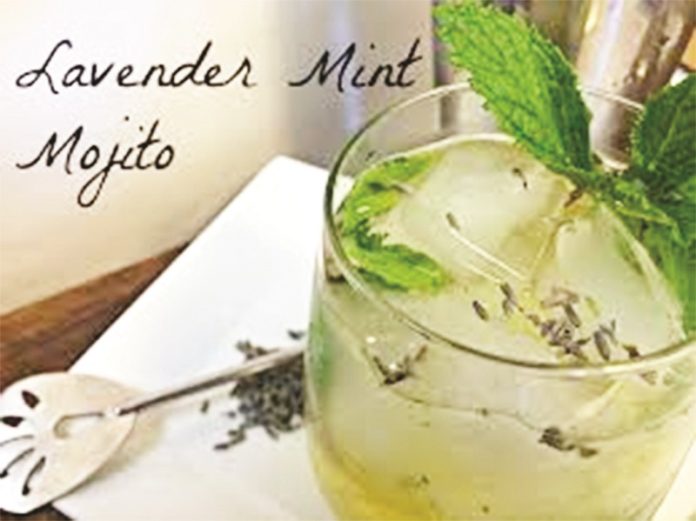
A delightfully light and refreshing mocktail made with lavender, mint, and lime to cool you down on a hot day.
Ingredients Servings: 4
• 3 cups fresh lime juice
• 1 cup lavender mint simple syrup (Click link above
for recipe)
• 1 cup sparkling water
• 1 1/2 cups water
Directions
Step 1
For Sparkling Lavender Mint Limeade Mocktail, combine lime juice, water and simple syrup in a large pitcher. Stir to combine. If your limes are very tart (sour), you can add extra syrup.
Step 2
Add in lime slices and mint leaves and refrigerate for 1-2 hours before serving.
Step 3
When ready to serve, fill pitcher with ice, top with sparkling water and lavender sprigs if desired. Stir to combine. Pour into individual glasses. Garnish with lime slices, mint leaves, and lavender sprigs.
Lavender Mint Simple Syrup
Description
This flavourful simple syrup goes into our refreshing Sparkling Lavender-Mint Limeade, but of course you can also use it to craft your own mocktail or cocktail!
Ingredients Servings: 4
• 1 cup sugar
• 1 cup water
• 4 sprigs lavender
• 4 leaves fresh mint
Directions
Step 1
Combine sugar and water in a small saucepan over medium heat. Bring to a boil. Take off heat. Add in lavender sprigs and mint leaves and let steep for 12-15 minutes.
Step 2
Let cool completely.
Step 3
Strain mixture through fine mesh sieve to remove any pieces.
The Coronavirus disease, Covid-19 pandemic is expected to accelerate momentum around dietary supplements as we prioritise our health and immunity. Even before the pandemic, there had been an uptick in health and wellbeing claims in food supplement products. The focus of supplements is shifting from catch-all multivitamins to specific wellness claims, targeting benefits such as immunity, sleep or stress relief. The numerous supplements available address everything from immune support to mental focus, whole-body inflammation, stress, the skin, hair, nails, heart, vision and bones. Suppliers sell them in different forms, including tablets, capsules, powders, and liquids. When buying supplements, it is important to read labels and get information about the manufacturer.
Though dietary supplements should not replace complete mealswhich are essential to nurturing the body, taking supplements lead to an increased level of total nutrient intake. Common dietary supplements include calcium, fish oil, vitamins,minerals, herbs, amino acids, and enzymes.Herbal supplements, sometimes referred to as “botanicals,” have been used for medicinal pur poses for many centuries and they continue to gain popularity among consumers today. Examples of some of the most common herbal supplements include flaxseed, ginseng, ginkgo, St John’s wort, evening primrose,turmeric, ginger, and garlic.
“Talking to healthcare providers before making the decision about whether to take supplements is a good practice. Doctors can help people achieve a balance between nutrients from food and supplements. Many supplements also contain active ingredients that may have strong biological effects.”
Some herbs — including herbal supplement products labeled as “natural” — can have medication-like effects. An example is the flaxseed. Due to their estrogen-like effect when consumed by women, flaxseeds can induce menstrual cycles. So it is not recommended for expectant mothers because these seeds can induce periods and harm the baby and the mother in an unexpected way. Researchers say that any herb strong enough to produce a positive effect, such as lowered cholesterol can be rightly called medicine, therefore to be used with foresight.
Talking to healthcare providers before making the decision about whether to take supplements is a good practice. Doctors can help people achieve a balance between nutrients from food and supplements.Many supplements also contain active ingredients that may have strong biological effects. Any of the following actions could be harmful or even life-threatening: combining supplements, mixing supplements with medicines, or taking too much of some supplements, especially vitamin A, vitamin D, and iron.
Vitamin and mineral supplements such as vitamin D and calcium remain the most popular types. However, the use of herbals and botanicals — especially turmeric and garlic — have significantly increased during the past few years.
The main reason people take dietary supplements is overall health and wellness. Although many people use dietary supplements, studies have found that multivitamins, vitamin D, calcium, and vitamin C showed no advantage or added risk in the prevention of cardiovascular disease or premature death.However, folic acid alone and B vitamins with folic acid may reduce the risk of heart disease.
Supplements aren’t intended to substitute for food. They can’t replicate all of the nutrients and benefits of whole foods, such as fruits and vegetables. Whole foods offer three main benefits over dietary supplements:
Greater nutrition:Whole foods are complex, containing a variety of the micronutrients your body needs.
Essential fiber:Whole foods, such as whole grains, fruits, vegetables and legumes, provide dietary fiber. As part of a healthy diet, fiber can help prevent certain diseases, such as type 2 diabetes and heart disease, and it can also help manage constipation.
Protective substances:Many whole foods are also good sources of antioxidants — substances that slow down a natural process leading to cell and tissue damage. It isn’t clear that antioxidant supplements offer the same benefits as antioxidants in food. Some high-dose antioxidant supplements have been associated with health risks.
We need a variety of nutrients each day to stay healthy, including calcium and vitamin D to protect our bones, folic acid to produce and maintain new cells, and vitamin A to preserve a healthy immune system and vision.Yet the source of these nutrients is important. It is best to try to get these vitamins, minerals and nutrients from food as opposed to supplements. Fruits, vegetables, fish, and other healthy foods contain nutrients and other substances not found in a pill, which work together to keep us healthy. We can’t get the same synergistic effect from a supplement. Taking certain vitamins or minerals in higher-than-recommended doses may even interfere with nutrient absorption or cause side effects.
Who needs supplements?
If you’re generally healthy and eat a wide variety of foods, including fruits, vegetables, whole grains, legumes, low-fat dairy products, lean meats and fish, you likely don’t need supplements.
But supplements — or fortified foods — might be appropriate in some situations:
•Women who may become pregnant should get 400 micrograms a day of folic acid from fortified foods or supplements, in addition to eating foods that naturally contain folate.
•Women who are pregnant should take a prenatal vitamin that includes iron or a separate iron supplement.
•Adults age 50 or older should eat foods fortified with vitamin B-12, such as fortified cereals, or take a multivitamin that contains B-12 or a separate B-12 supplement.
•Adults age 65 and older should take 800 international units of vitamin D daily to reduce the risk of falls.
Dietary supplements also may be appropriate if you:
– Don’t eat well or consume fewer calories than needed
– Are a vegan or a vegetarian who eats a limited variety of foods
– Follow any other type of diet that restricts an entire category of foods.
The Zambian High Commissioner to Nigeria, Dr Solomom Jere in this interview reveals how popular Nigerian movies are all over the world but counsels that the content should be with an aim to create a positive image for the country. He spoke with our Editors.
Nigerian movies are very popular in your country. Has it in any way affected the perception of your nationals have about Nigeria and Nigerians?
You know Nigeria is a very popular country in terms of the arts and the music. In other words, we can say that Nigeria has colonized Africa musically and traditionally in terms of attire, in terms of movies. When you go to countries like Zambia, South Africa, Botswana, and not only Southern Africa, but other parts of Africa where I have been to like Rwanda, Ethiopia, you would see people glued to channels watching Nollywood movies. Unfortunately most of the images that are shown, for instance, are things that portray voodooism and too much blood. Sometimes, it is evil versus light, and by the time light becomes successful, much harm has been done. The first cut is the deepest. They would show the evil and the real evil, such that as you go towards the end, the impression that has been embedded in the mind, that which remains is a negative one.
I had never been to Nigeria, because there were various stories about Nigeria. For example, for me and my niece as we were coming to Nigeria, the first picture that I was looking out for was what I was watching in movies. You want to see Nigeria? Just watch the movies. So, that is the picture that exits out there. Nigeria can do a lot to change the perception.
What was the picture you had in mind when you were coming to Nigeria?
In movies, we were watching that the police men to be very corrupt. We were watching Nigerians to be very crooked through the movies. They were showing Nigerians to be advanced in evil; voodooism. But at the same time they were showing some Nigerians to be very spiritual. So, in movies, we see two sides of Nigeria; two extremes of evil and godliness. That was the picture that came to my mind. And for me, I was expecting that once I’m face-to-face with the police officers, I’ll witness all I’d seen in the movies. For you to see how any country is, you see from the officers at the airport. That is one of the indicators. How they treat you, how they welcome you. You see it from the personnel at the airport. So, as we landed, I could see that, first of all, there were no crowds of people. I went inside and when we came out, the police officers that I saw when I came out, were so welcoming. I was amazed. They did not ask for coins or any change whatsoever. As we went down in the hall, a lady was shouting, ‘Foreigners this way, Nigerian citizens this way.’ A good signage was there. Everything was orderly. But I said to myself, I had heard a lot about Nigerians at the airports and in terms of corruption. We have watched in the movies that just to stamp a passport, you have to give something. And we went before the immigration and people were presenting passports there was nothing. They were very professional. This means that what we are watching in movies is not true.
How did you feel when you were told that you were being sent to Nigeria?
When my president said, ‘Jere, you are going to Nigeria.’ I said, what did you say, and kept quiet. The immediate thought that came to my mind was why Lord? What wrong have I done? Of all countries, Nigeria! Because when I was in Australia doing my studies, the Australians asked what country I come from and I said Zambia. They said, ‘Oh, we thought you’re a Nigerian. But have you seen any Nigerian nearby?’ I said not yet but I have one in class. They said, ‘Please, don’t allow that Nigerian in your class into your flat.’ Why? I asked. They said, ‘Nigerians are crooks and dangerous people.’ The same thing happened in New Zealand at Christchurch at Oakland.
In Sidney, I found Australians watching Nollywood movies and they (whites) were addicted watching them. They’re very popular. That’s why I’m saying that Nigerians are undermining the power of Nollywood. Nollywood should be maximized to its fullest potential but one thing which has not been fully controlled is the content. It needs to have a direction and purpose. It should not just be to make money or to excite the public. It can be used to propagate the values of the nation. When I was coming here my president said: ‘Go and liaise with those people in the film industry in Nigeria. We want them to come to Zambia.’
Nigeria has already created a platform for herself. It’s just a question of saying let’s talk about this, let’s talk about that. Once you do it, everybody will listen. You already have millions of followers. The East Africans are trying to imitate Nigerian movies and the beauty of Nigerian movies is that even when it’s done in the indigenous languages, it is subtitled. Government can give it more vigour by funding it and those actors will do amazing things if that happens. Those guys Aki and Pawpaw, Ukwa/Osuofia, they’ve done amazing things. Mr. Ibu. Those are untapped resources. They can do a lot more for your country. I know what my country can achieve if we have something like Nollywood.
I also noticed that the letter ‘I’ on your NTA stands for international. So, I begin to wonder why they don’t utilize the international station to propagate the positive image of Nigeria. My two children for instance refused to accompany me to Nigeria. They said, ‘No, no. There is Boko Haram in Nigeria. Those people also do voodoo. We can’t go there.’ I tried to convince them but to no avail. I told them that when I get to Nigeria, I will get a picture of Nigeria and send it. I had to do a live video for them to watch. I kept on showing them the beautiful things around and now they are more than ready to come and see what Nigeria looks like.
Look at the Nigerian attire that I wear. My children kept saying, ‘Wow, wow, when they see me wearing it during our live videos. You know there’s a wow factor; the agbada, the kaftan, and so on.
“It’s important to show the positive culture of the people. The voodoo movies sometimes would show the light defeating darkness but usually at the end; just a few clips. So, so much evil would have been done before it’s defeated.”
NTA is a government-owned television station, are you suggesting that the government can utilize the station to show more positive programmes about Nigeria?
Tell us a bit about yourself
I’m the firstborn in the family. We were eight; four males and four females. But three passed away. My mum is still there, but my dad died two years ago. I’m a father of two wonderful children. My firstborn, a girl is a medical doctor. The last is a boy; an engineer. They are working in Zambia. Their mother is in Zambia. She’s an inspector of schools.
My background is that of a police officer. I joined the police as a cadet officer. I was just from secondary school. I joined the police in 1984. Then I upgraded myself, went to school, studied, and became a lawyer.
How did you upgrade yourself?
After my first degree, I went for my practicing certificate at the Law Practicing Institute (LPI). That’s the school that grants one a certificate to practice law. After that, I went for my Masters at the University of Technology in Sidney, Australia. I came back thereafter. Then I was invited to come and do my Ph.D. I didn’t even apply. When I was doing my Ph.D., they had a shortage of lecturers. They gave me another course so I could train to be a university lecturer. So, I was doing my Ph.D. and at the same time doing a university lecturers course. Because of that, they asked if I could help as a lecturer. It was a good way of raising money, so I taught for about four to five years. When I wanted to come back, they offered me residency and citizenship but I refused. Then they said, ‘Don’t you know that Africa is poor? You come from a poor country.’ I still refused. I went back to Zambia, put on my uniform, and rose to be Deputy Inspector General of police. From the Deputy Inspector General of police in 2016, I started this assignment of wearing the suits.
The Nigerian film industry, also known as Nollywood, is a flourishing space that not only provides an avenue for entertainment but also generates a sizeable amount of revenue for the country’s economy. In 2018, the arts, entertainment, and recreation industry represented 0.21% of Nigeria’s GDP at a value of nearly N270 billion. In the first quarter of 2019, the industry harvested about N87 billion which accounted for 0.27% of the country’s GDP. The Nigerian box office also contributes significant value. In 2017 for instance, N4.3 billion was realized and is expected to grow to an estimated N6.4 billion by 2022.
Yet, despite dwindling oil resources and the need to diversify the economy, industry watchers marvel that this thriving industry remains untapped by the government.
Omotala Jalade Ekeinde
Nollywood produces about 50 movies per week, second only to India’s Bollywood—more than Hollywood in the United States. Although its revenues are not at par with Bollywood’s and Hollywood’s, it still generates an impressive $590 million annually. But beyond the economic benefits of Nollywood, analysts are of the opinion that the content of the movies should be more intentional and strategic. They contend that having a focus, an aim, or a specific target, driving the production of these movies will yield better fruits. The Zambian High Commissioner to Nigeria, Dr. Solomon Jere, points out that as popular as Nigerian movies are all over the world, “one thing which has not been fully controlled is the content of the film industry.”
Notably, the Nigerian movie industry is supported by different personalities, who bring cultural diversity; creativity, and panache that have led to its growth and evolution. The impact and reach of Nigeria’s entertainment industry were brought nearer home to this reporter in 2017. As we went sightseeing downtown Freeport, Grand Bahamas, that warm November afternoon in 2017, nothing prepared my colleague and I for the reception we were about to receive in some of the places we visited.
It was the triennial conference of the International Federation of Women Lawyers (FIDA) and female lawyers from around the world had ‘occupied’ the city. Nigerians as in many international events outnumbered all the participants. It is doubtful that the city had ever been besieged by that number of visitors at a time, particularly women; women lawyers. About eight hundred were in attendance. As you walk into a shop, the first question after the hellos, is —“where about are you from?” In a number of places we visited, the mention of Nigeria created some excitement. “Oh! Nigeria! You must be so many. Some of your colleagues were here earlier.”
And to our shock, they even proceed to initiate conversations about Nollywood, mentioning names of their favourite Nollywood actors and actresses. That is just a fleck of how far Nollywood and Nigeria’s music industry have travelled. But that is on the positive side. Stories abound of the negative perception Nollywood has created about Nigerians. But should Nollywood be blamed over some of the negative ways the world see Nigerians? Can they do the opposite and shape a fully dimensional image of Nigerians? Is painting a more realistic picture feasible? People’s lives are shaped by their culture and this culture has reflected in Nigeria’s movie industry, Nollywood.
It’s not in doubt that what stands the industry out is its resilience in the face of a harsh economy, inadequate and sometimes non-existent infrastructure. However, the industry has grown and has consistently told the story of the Nigerian state, society and its people. The Nigerian film industry has been able to portray an image of the Nigerian society or in other terms the image of the Nigerian people and state, which is the reason why the Nigerian motion picture industry has been a beehive of activities, research, investments, and visits, and so on. Over the years, the industry has promoted certain identities and images about the country which has either boosted or flawed the country’s reputation. The Nigerian motion picture industry is an -image-maker for the Nigerian State.
As a BBC World Report once mentioned, the Nigerian film industry “has turned the lights on Africa cinema.” Reports abound that Nollywood is what is on air in Kenya, Tanzania, Ghana, Zambia and many countries in Africa. In the Caribbeans, the Pacific, as far as New Zealand and Australia, Nollywood is popular. This was corroborated by Jonathan Haynes, in his paper titled “Nollywood: What is in a name?” where he said Nigerian films are everywhere. “Invariably, many want to copy the Nigerian example. This is mainly because the industry has helped the nation to grow, and it is the trailblazer in third world cinema,” he concluded.
The export of Nigerian films has been remarkable, even if most of the profits do not end up
in the right hands. They are what is on television in Namibia and on sale on the streets in Kenya. In Congo, they are broadcast with the sound track turned down while an interpreter tells the story in Lingala or other languages. In New York, their biggest consumers are now immigrants from the Caribbean and African Americans; not only Africans. And Chinese people are buying them too. So, like Hollywood held sway in Africa years ago, Nollywood burns bright and threatens to use up all the oxygen that the Ghanaians and others across Africa need to sustain their own film cultures. Once colonized by Hollywood and Bollywood, Nigeria now may seem to others to be a cultural imperial power. Through stories, narrative and the power of Nollywood, Nigeria can show it is above the negative press being generated.
While many Nollywood movies have themes that deal with the moral dilemmas facing modern Africans, the emphasis on voodoo and criminality has shaped the perception of other nations about Nigeria. And that is the danger of a single story. In the 2009 TED Talk by Chimamanda Adichie, titled “Danger of a Single Story”, the author, in her twenty minute video, described the powerful impression the many British stories she read as a child made on her while growing up in Nigeria. She reasoned that inherent in the power of stories, is a danger—the danger of only knowing one story about a group.
On a micro-level, the danger of a single story is that it prevents people from authentically connecting with people as individuals. On a macro-level, the issue is really about power. Almost by definition, there are many stories about the dominant culture so the single-story threatens to create stereotypes that stick to groups that are already disempowered. Adichie’s video raises posers that fit directly with the challenges created by focusing on particular storylines instead of diversifying and showcasing the rich culture, way of life and the ‘can do spirit’ of the average Nigerian.
It has been said that defining oneself and the groups to which one belongs often means distinguishing “us” from “them.” Consequently, analysts contend that beyond churning out numerous movies and raking in loads of revenue, Nollywood and its stakeholders might need to begin a re-examination of their focus with questions like:- “Who am I?” “To what extent am I able to define myself?” “How do people see me?” “What labels do others place on me?” “What do I hope to achieve?”
Industry watchers insist that Nollywood cannot continuously write one-dimensional character; the wicked mother-in-law, lazy gateman, driver or seductive house-girl from a certain part of the country; witchdoctors and witchcraft; Pastors or Imams being the solution to all problems with less emphasis on hardworking, enduring and many other flattering aspects of the Nigerian life in spite of harsh realities. The story of Aba where nothing is impossible, where every conceivable product could be manufactured with little support has made several international headlines. Young techy Nigerians in different phone and computer villages have continued to amaze. Mike Zukerberg was amazed when he saw what young techy Nigerians are doing. These young Nigerians have produced amazing appliances, and have gone ahead to win trophies in international competitions covering sundry fields. Surely, there are more than enough stories that could be intentionally curated to entertain and educate viewers about Nigeria. Nollywood has the capacity.
Today the South Korean movie industry is among the richest and sought after in the world. The government invests so much in the industry that there’s presently a lot of incentives for Seoul to bolster their soft power and attract more foreign tourists to South Korea. The movies have attracted attention to their fashion, style and culture all over the world. Korean movies successfully create emotional connections with viewers. Characters are developed and brought through trials and tribulations in such a way that the audience relates to the characters and feels the same emotions.
Statista.com’s Willem Roper wrote that in February 2019, the South Korean film “Parasite” took home multiple Academy Awards on, including the first-ever “Best Picture” award received by a foreign film. That according to him highlighted a rapidly growing film industry in South Korea that is gaining more worldwide recognition. “Box office revenue for films made in South Korea has skyrocketed over the last decade and a half. In 2004, the country produced a total domestic film revenue of 239 billion South Korean won. Roughly $203 million in U.S. dollars. For 2019, the total revenue of Korean films was 971 billion South Korean won – or roughly $823 million U.S. dollars. While that is still short of the $11.3 billion U.S. film industry, it is certainly a significant portion of the global $42.5 billion film industry.
“Over half of the total box office revenue in Korea was collected by domestic films, with 1.91 trillion South Korean won – or $1.62 billion U.S. dollars – coming from both domestic and foreign films in South Korea for 2019. Government and culture initiatives in South Korea have played a large role in amplifying cinema in the country, with more [consciously produced] films being released globally than ever before. The country now has one of the five largest film industries in the world, trailing the U.S. and China and at par with Japan and the U.K,” said Roper.
Presently, South Korea is the biggest cultural exporters in the world, using their movie/entertainment industry. Their movie industry is now learned in schools. It is equally one of the first non-American shows to come on Netflix. Through a concerted effort of the government and movie/entertainment industry, they became a a powerhouse, going on to win an Oscar in 2019. In conclusion, it is expedient that reference be made to excerpts from our interview with Dr. Solomon Jere, Zambia’s High Commissioner to Nigeria.
Plea Bargain is an interesting invention by the law for the benefit of a person accused of committing an offence, the prosecutor and the society in general. Contrary to the assumption by many at inception in Nigeria particularly, a plea bargain does not operate to set a criminal free absolutely. Rather, a criminal defendant can use a plea bargain to secure some form of soft landing when faced with certain allegation(s) of crime. Black’s Law Dictionary defines a plea bargain as:
A negotiated agreement between a prosecutor and a criminal defendant whereby the defendant pleads guilty or no contest to a lesser offence or to one of multiple charges in exchange for some concession by the prosecutor, usually a more lenient sentence or a dismissal of the other charges.
Clearly, the essence of a plea bargain is an agreement to plead guilty, and quickly too, in order to save time and resources that would have been wasted on a full trial. The reward given to the defendant for pleading guilty comes in different forms. The defendant may receive a lighter punishment or a dismissal of other charges (where there are multiple charges). Other terms of the bargain might include forfeiture by the defendant of the proceeds of the crime.
The first criminal law statute in Nigeria to recognize plea bargain is the Administration of Criminal Justice Law of Lagos State, 2011. Plea bargain is now provided for in the Administration of Criminal Justice Act, 2015 (ACJA). The prosecutor is empowered to consider the nature of the offence, public interest and the interest of justice in deciding whether to enter into a plea bargain arrangement.
The law requires that a plea bargain agreement must be reduced into writing and duly executed. Once executed, it becomes binding as a legal contract. The prosecutor has a duty to bring the plea bargain agreement to the attention of the court. Generally, the court is to abide by the terms of the agreement. For instance, if by the agreement, the defendant agrees to plead guilty in order to receive a one month sentence upon conviction, the court is expected to hand the defendant a one month sentence and nothing more.
However, the law provides an exception and gives the court power to examine the plea bargain agreement before acting on it. For instance, Section 270 of the ACJA contains elaborate provisions. Thus, the court has the discretion to award a heavier sentence where the court is of the view that it is necessary to do so. Also, the court has the power to examine the agreement to ensure there is a provision for restitution, for the benefit of the victim of a crime.
Before a court can overlook the light sentence agreed in the plea bargain to award a heavier one, the law provides for a special procedure in the interest of justice and fair hearing. This procedure requires that the court must inform the defendant of the much heavier sentence the court considers more appropriate and thereby give the defendant the opportunity to change his plea or back out of the plea bargain agreement, in order to set the stage for full trial. Where the court fails to do so, any award of a heavier sentence without prior notice to the defendant would be invalid and the lighter sentence agreed in the plea bargain would be upheld.
In the case of Olumide Agbi v. Federal Republic of Nigeria [2020] 15 NWLR (Pt. 1748) 416, the trial Court failed to follow due process in awarding a heavier sentence. The Court of Appeal struck it down. The story is quite interesting.
The Case of the Fraudster, Olumide Agbi (AKA William Streak and James Brown)
The Appellant, Olumide Agbi (pretending to be William Streak and James Brown) fraudulently obtained the sum of $1,000 from three US citizens. He was eventually apprehended by the Economic and Financial Crimes Commission (EFCC). He executed a plea bargain agreement that saw him arraigned at the High Court of the Federal Capital Territory on a one-count charge of the offence of cheating. A plea bargain agreement accompanied the Charge. In the agreement, the Appellant admitted committing the offence and agreed to return all the proceeds of the crime. He was said to have been remorseful too. In return, it was agreed that the Appellant shall upon conviction be sentenced to one-month imprisonment or given an option of fine.
The plea bargain agreement was brought to the attention of the Court. The Appellant pleaded guilty to the Charge and was convicted. While his ears looked forward to hear a sentencing of one-month imprisonment or an option of fine in line with the agreement, the learned trial Judge, Hon. Justice Idris, played a different tune, an unpleasant one at that. The Judge sentenced him to three years imprisonment on the ground that cybercrimes dent the image and affect the integrity of Nigeria. The Judge did this without any prior notification to the Appellant to enable him decide whether or not to opt out of the plea bargain agreement entirely and prepare for full trial before another judge.
Aggrieved, the Appellant appealed to the Court of Appeal. The EFCC honourably backed the Appellant by admitting that the learned trial Judge erred in law. The Court of Appeal rightly held that the decision of the trial Court to award a heavier sentence contrary to the plea bargain agreement without prior notification to the Appellant or his counsel was a breach of the Appellant’s right to fair hearing. The duty of the Court to so inform the Appellant is a constitutional and a statutory duty as contained under Section 270(11)(c) of ACJA. Ige, JCA clearly explained that “The provision is not enacted for the fun of it.” His Lordship had earlier stressed:
It is however important to stress that no matter the enormity of disturbance or concern a court may feel concerning sentence agreed to be imposed upon plea of guilty and conviction as contained in the plea bargain agreement, the Presiding Judge or Magistrate must act at all times within the confines of the Administration of Criminal Justice Act, 2015 particularly the procedure laid down and pre-condition put in place to the effect that a defendant must be informed before a heavier punishment or sentence could be meted upon the defendant.
The above decision of the Court of Appeal emphasizes the level of importance attached to plea bargain arrangements as provided for by the ACJA. The decision further shows that the rule of law is supreme. The Court upheld the principle that where a statute prescribes the method of doing anything, it must be done accordingly. Thus, any overzealousness in enforcing the law that runs contrary to the law itself must be struck down.
Our site uses cookies. By clicking “Accept All Cookies”, you direct Law and Society Magazine to store cookies on your device and disclose information in accordance with our Cookie Statement: cookie policyACCEPTREJECT
Privacy & Cookies Policy
Privacy Overview
This website uses cookies to improve your experience while you navigate through the website. Out of these cookies, the cookies that are categorized as necessary are stored on your browser as they are essential for the working of basic functionalities of the website. We also use third-party cookies that help us analyze and understand how you use this website. These cookies will be stored in your browser only with your consent. You also have the option to opt-out of these cookies. But opting out of some of these cookies may have an effect on your browsing experience.
Necessary cookies are absolutely essential for the website to function properly. This category only includes cookies that ensures basic functionalities and security features of the website. These cookies do not store any personal information.
Any cookies that may not be particularly necessary for the website to function and is used specifically to collect user personal data via analytics, ads, other embedded contents are termed as non-necessary cookies. It is mandatory to procure user consent prior to running these cookies on your website.