Home Blog Page 110

Nestoil cries injustice after Appeal court disqualifies its lawyers in debt dispute

Two Nigerian energy companies, Nestoil Limited and Neconde Energy Limited, have accused the judiciary of grave injustice following a ruling by the Court of Appeal that disqualified their chosen legal counsel in an ongoing debt recovery dispute—an outcome they say amounts to a denial of their constitutional right to fair hearing and legal representation.

In a strongly worded statement released after the ruling, the companies said the decision effectively strips them of the right to appoint lawyers of their choice to defend claims brought against them by FBNQuest Merchant Bank Limited and First Trustees Limited.

“This is a glaring case of injustice, denial of hearing and denial of the right to defend oneself,” the statement said.

Origins of the Dispute

The case began as an alleged debt recovery action filed at the Federal High Court, Lagos, by FBNQuest Merchant Bank Limited and First Trustees Limited against Nestoil, Neconde, and individual defendants Ernest Azudialu-Obiejesi and Nnenna Obiejesi, in Suit No. FHC/L/CS/2127/2025.

According to the defendants, the originating processes were served at their Lagos office alongside far-reaching ex parte orders issued on October 22, 2025—orders they say were obtained without notice and without allowing them to be heard.

Upon being served, the defendants said they promptly engaged senior and reputable legal practitioners, including M.A. Banire & Associates, Wole Olanipekun & Co., Afe Babalola & Co., and Chief Chino Obiagu, SAN.

Their lawyers immediately moved to challenge the ex parte orders and sought to have the substantive matter heard on notice. The Federal High Court subsequently set aside the ex parte orders and fixed the case for hearing on December 12, 2025.

Fresh Ex Parte Orders—and a Turn at the Appeal Court

Days after that ruling, the plaintiffs allegedly filed another ex parte application—this time at the Court of Appeal—and obtained fresh orders within 24 hours. The defendants say they were again not heard before the orders were granted.

They further allege that the plaintiffs had earlier filed a motion on notice at the Court of Appeal but withdrew it without their knowledge, allegedly to clear the way for the ex parte application.

The dispute escalated when the plaintiffs, acting through a person described as a court-appointed receiver, filed an application seeking the Court of Appeal’s disqualification of the lawyers representing Nestoil and Neconde, and authorising the receiver to appoint new lawyers on their behalf.

The companies insist that no valid receivership exists and that the matter before the court remains a straightforward debt recovery action.

‘Plaintiffs Appointing Defendants’ Lawyers’

According to the statement, the Court of Appeal ruled that Nestoil and Neconde had no right to appoint lawyers of their choosing and that legal representation could instead be selected by the receiver allegedly appointed at the instance of the plaintiffs themselves.

“The implication,” the companies said, “is that the same plaintiffs who sued us will now appoint the lawyers meant to defend us against their own claims.”

They described the ruling as baffling and unprecedented, arguing that it violates fundamental principles of justice, fairness and the right to counsel.

“How a plaintiff can appoint lawyers to defend the defendants he has sued defies imagination,” the statement said, adding that the issue has now been left to the “court of public opinion.”

Allegations of Smear Campaign

The companies also accused the plaintiffs of sponsoring what they described as a campaign of false and malicious media reports, including unsubstantiated allegations of bribery against their lawyers and conflicting claims about the size of the alleged debt.

They denied all allegations of wrongdoing and said the figures being circulated were fictitious.

‘We Will Not Allow This to Stand’

Despite the ruling, Nestoil and Neconde said they remain determined to challenge what they view as a dangerous precedent.

“We will not allow this injustice to slip by,” the statement said. “Failure to fight injustice is to assist in perpetuating it.”

Legal analysts say the controversy raises far-reaching questions about due process, the limits of ex parte orders, and whether a court can compel defendants to accept legal representation chosen by parties with adverse interests—issues likely to provoke further legal and public scrutiny in the weeks ahead.

The full text of the statement reads:

SETTING THE RECORD STRAIGHT ON THE DISQUALIFICATION OF NESTOIL’S LAWYERS.

A GLARING CASE OF INJUSTICE, DENIAL OF HEARING AND DENIAL OF RIGHT TO DEFEND ONESELF.

Following the recent ruling of the Court of Appeal disqualifying the lawyers appointed by the respective organisations, NESTOIL LIMITED and NECONDE ENERGY LIMITED in the alleged debt recovery litigation instituted by the duo of FBNQuest Merchant Bank Limited and First Trustees Limited, it has become necessary for us to clarify the facts for the public and set the record straight.

This matter began as an alleged debt recovery action instituted by First Merchant Bank Limited and and First Trustees Limited against our organisations NESTOIL, NECONDE and Ernest Azudialu-Obiejesi and Nnenna Obiejesi in Suit No.: FHC/L/CS/2127/2025. We were served with the originating processes filed in the matter at the office address at 41/42 Akin Adesola Street, Victoria Island, Lagos, together with an ex parte order dated 22 October 2025 issued by the Federal High Court.

Upon being served, each of us (the Defendants) promptly engaged reputable legal practitioners to represent us, including M. A. Banire & Associates ( for NESTOIL); Wole Olanipekun & Co. (for NECONDE); Afe Babalola & Co. (for Ernest Azudialu-Obiejesi); and Chief Chino Obiagu, SAN (for Nnenna Obiejesi). However, far-reaching ex parte orders were obtained behind us and without affording us the benefit of being heard. When we became aware of these developments, our lawyers immediately challenged the ex parte orders and applied for them to be set aside. They also took steps to ensure that the substantive suit filed against us was fixed for hearing on 12 December 2025.

Within days after the ruling of the Federal High Court setting aside the ex parte orders and fixing the substantive matter for December 12, 2025, the Plaintiffs (FBNQuest) filed another Motion , ex parte again, at the Court of Appeal, and obtained, within 24 hours of filing the said Motion Ex Parte, fresh ex parte orders against us in a manner we still find incomprehensible till date. Our respective lawyers immediately challenged the validity of these ex parte orders. Interestingly, the lawyers to the Plaintiffs had earlier filed and served a Motion on Notice against us at the Court of Appeal which they withdrew behind us to pave way for their Motion Ex Parte. However, the Plaintiffs, acting through the person they purportedly appointed as receiver, filed another Motion at the Court of Appeal claiming that our lawyers (for NESTOIL and NECONDE) should be disqualified from representing us and that they, through their appointed receiver, should be the ones to appoint lawyers for us in an alleged debt recovery matter they instituted against us. We must note that as far as we are concerned, this alleged receivership is not in existence. The matter before the Court, as we have been made to understand by our lawyers, both internally and externally, is purely an alleged debt recovery action.

Our lawyers duly contested the application seeking to disqualify them from representing us in this alleged debt recovery matter and supplant their representation with lawyers appointed by the appointee of the alleged creditors. Bewilderingly, our lawyers informed us that the Court of Appeal delivered its ruling yesterday wherein the Court of Appeal said that WE HAVE NO RIGHT to appoint lawyers that will defend the case against us. The implication of the Court of Appeal ruling is that the Plaintiffs (FirstBank Merchant Bank Limited and First Trustees Limited) who appointed the so called receiver, are the same persons that will (through their appointed receiver) appoint lawyers to defend the case on our behalf against the Plaintiffs. How the plaintiff will be the one to appoint lawyers to defend the defendants he has sued baffles the imagination. The fairness and justice in this we just must leave to the court of public opinion for now.

Hitherto, these same Plaintiffs have been strenuously trying to smear our lawyers and our respective companies by falsely alleging bribery which never existed and quoting different fictitious alleged bank debt figures.

The avalanche of malicious and false stories being sponsored and circulated on online media is unprecedented.

It is however our firm resolve that this injustice that we have no right to defend ourselves, shall not be allowed to slip by ,because failure to fight against injustice is assisting to perpetuate same.

She Refused Sex. He Killed Her. Zambia’s horror and Africa’s gender violence reckoning

A suspected domestic homicide in Zambia and a viral account from Nigeria have reignited debate across Africa about gender-based violence, silence within families, and the growing refusal—especially among women—to endure abuse in the name of marriage.

In Zambia’s Western Province, police say a woman’s death initially reported as suicide has now been confirmed as murder. The case, which unfolded on New Year’s Day in Kaoma District, has drawn attention to the lethal consequences of domestic violence—and the lengths some perpetrators allegedly go to conceal it.

Zambia: Death Disguised as Suicide

Western Province Police Commanding Officer Rae Hamoonga identified the victim as Kashiba Kahinda, who police say was beaten to death by her husband, Michael Kahyata, 44, after she refused his demand for conjugal rights.

According to police, the incident occurred around 5:00 p.m. in Folkland Township shortly after Kahinda returned home from a crossover church service with her children. Investigators say an argument followed, culminating in a violent assault inside the family home.

“Preliminary investigations and statements from the children indicate that the deceased was murdered and later hanged,” Hamoonga said.

Police allege that after killing his wife, Kahyata staged the scene to resemble a suicide, instructing the children to enter the bedroom, where they found their mother hanging. He then reportedly cut the cloth used in the hanging, causing the body to fall onto the bed, before alerting neighbours that his wife had taken her own life.

Suspicious residents attempted to restrain him, but he fled. He was apprehended the following day by a relative of the deceased and handed over to the police. Kahyata is now in custody and has been charged with murder.

Nigeria: A Wedding Called Off—and a Reckoning Begins

Thousands of kilometres away, a Nigerian woman has sparked a fierce national conversation after publicly explaining why she abruptly ended her engagement—less than 24 hours after visiting her fiancé’s family home for a formal introduction.

In a deeply personal account that went viral on social media, the woman said a single night in the household exposed what she described as a deeply entrenched culture of domestic abuse—and collective silence.

Late that night, she said, she heard disturbing noises and realised her fiancé’s father was violently assaulting his wife. What unsettled her most, she wrote, was not only the severity of the violence but the response—or lack thereof—from the rest of the family.

Despite the presence of five adult children in the house, no one intervened. Her fiancé, she said, remained passive and later warned her not to interfere, dismissing the abuse as his mother’s fault and describing it as routine.

That night, she said, her prospective mother-in-law was forced to sleep outside while the rest of the household treated the episode as normal.

“If a man can justify abuse against his own mother,” she wrote, “what would stop him from doing the same to his wife?”

By morning, she left and formally called off the engagement, choosing what she described as safety, dignity and peace of mind over societal pressure to proceed with the marriage.

The story has triggered intense online debate, with many praising her decisiveness while others accused her of overreacting—an exchange that has exposed how deeply normalised domestic violence remains in parts of Nigerian society.

A Wider Pattern—and a Legal Shift

Advocates say both cases reflect a broader regional pattern in which abuse is often minimised, justified or hidden until it turns fatal.

In Nigeria, that pattern has increasingly been challenged—most notably in a landmark ruling delivered in September 2025 by an Upper Customary Court in Kafanchan, Kaduna State.

In the case of Talatu Williams v. Williams Sunday, the court ruled that leaving a violent marriage is not only acceptable but necessary when life is at risk. The judgment affirmed that parental support for a married child facing abuse does not amount to interference when the marriage has become dangerous.

“If a woman is killed in marriage, the husband will remarry,” the presiding judge, Emmanuel Samaila, said. “But a mother will lose her child forever.”

The court also rejected religious and cultural justifications for silence, stressing that bride price does not confer ownership and that faith cannot be used to excuse abuse.

“The token paid as bride price is not a purchase price,” the ruling stated. “Marriage is not a licence to treat another adult like a child or a slave.”

Choosing Life Over Silence

Taken together, the Zambia killing, the Nigerian viral account and the court’s ruling point to a gradual but significant shift—particularly among women—toward redefining marriage not as endurance at all costs, but as a partnership that must be safe, dignified and humane.

For advocates, the message is increasingly clear: silence protects abusers, while survival often begins with the courage to walk away.

As governments across the region struggle to curb gender-based violence, these stories underscore a hard truth long ignored—leaving alive is not failure. It is, increasingly, an act of resistance.

Unacceptable Betrayal’: Legal, rights leaders slam Nigeria over Kaduna kidnappings

The abduction of more than 170 Christian worshippers in Kaduna State has thrust Nigeria back under international and domestic scrutiny, with rights advocates accusing authorities of denial, failed accountability and enabling the growing confidence of armed groups.

Prominent human rights lawyer and Senior Advocate of Nigeria (SAN), and a six-year United Nations Special Rapporteur on Trafficking Persons in Africa,  Prof. Joy Ezeilo, has joined a chorus of voices condemning the initial response of Nigerian authorities, particularly the police, who first denied that any mass abduction had taken place despite eyewitness accounts and community reports.

“The attempt to conceal the abduction of more than 150 Christian worshippers represents an unacceptable betrayal of public trust and a blatant disregard for accountability,” Ezeilo said. “This persistent denial cannot be tolerated.”

Ezeilo called on Nigeria’s National Assembly to invoke its constitutional oversight powers and launch a full investigation into the incident, warning that failure to hold state actors accountable would further embolden criminal groups and deepen insecurity nationwide.

“Without genuine accountability,” she said, “state actors risk enabling criminals to continue their reign of terror and impunity across our communities.”

From Denial to Confirmation

The abductions, which occurred during church services in Kaduna State, were initially dismissed by both the Kaduna State Government and the Nigeria Police Force. Authorities later confirmed the incident after public pressure mounted and lists of victims’ names circulated widely on social media.

According to sources familiar with negotiations, the kidnappers are demanding the return of 17 motorcycles—valued at approximately ₦28.9 million—allegedly seized during recent military operations. Security analysts say the demand reflects the increasing boldness and operational confidence of armed groups in northern Nigeria.

 U.S. Raises Alarm

The Kaduna abductions featured prominently during a high-level United States–Nigeria Working Group meeting in Abuja, where U.S. Under Secretary for Political Affairs Allison Hooker warned that persistent attacks on religious communities threaten Nigeria’s security gains and public confidence.

“Persistent attacks on religious communities undermine security gains and public confidence,” Hooker said. “We are here to discuss how we can work together to deter violence against Christian communities, investigate attacks, hold perpetrators accountable, and reduce killings, forced displacements and abductions, particularly in the North Central states.”

While noting recent releases of abducted Christians, including 38 worshippers kidnapped in Kwara State and 265 students from St. Mary’s Catholic School, Hooker said the Kaduna incident raised serious concerns about the adequacy of Nigeria’s security response and the protection of religious freedom.

She added that progress on religious liberty and civilian safety would strengthen bilateral relations, affecting trade, health cooperation, counterterrorism efforts and the return of internally displaced persons.

 Government Assurances Meet Public Scepticism

Nigeria’s National Security Adviser, Mallam Nuhu Ribadu, acknowledged the scale of the crisis and pledged intensified military and law-enforcement operations. He described religiously motivated violence as “unacceptable” and vowed that such attacks would be treated as assaults on the Nigerian state.

“Nigeria is a deeply plural society, and the protection of all citizens—Christians, Muslims and others—is non-negotiable,” Ribadu said.

He disclosed that President Bola Ahmed Tinubu had authorised expanded security deployments, improved intelligence coordination and comprehensive investigations into attacks on religious communities.

Yet civil society leaders and rights advocates say these assurances contrast sharply with realities on the ground.

Allegations of Systemic Failure

In a widely circulated statement, human rights lawyer and former chairman of Nigeria’s National Human Rights Commission, Prof. Chidi Odinkalu, described the Kaduna abductions as evidence of systemic failure—and possibly official complicity.

“Kaduna is the most garrisoned state in Nigeria,” Odinkalu wrote. “It takes some form of official complicity for this level of mass abduction to happen without resistance.”

Odinkalu criticised the police for denying the incident for more than 48 hours without investigation, arguing that the delay squandered critical time in locating the abductees. He also linked the denial to what he described as an effort to counter international allegations of targeted violence against Christians through narrative management rather than accountability.

Local lists compiled after the attack indicate that entire families were abducted, including 13 members of one household and more than 10 from several others.

“These were citizens—human beings who went for routine worship,” Odinkalu said. “They had a right to expect better from their government and the police.”

 A Defining Test

As pressure mounts from Washington and international human rights groups, the Kaduna abductions have become a defining test of Nigeria’s commitment to transparency, civilian protection and the rule of law, highlighting the widening gulf between official rhetoric and the lived reality of communities trapped in the country’s deepening security crisis.

FULL LIST OF 177 KIDNAPPED PERSONS

                1.            Samson Naallah

                2.            Edisid Naallah

                3.            Christopher Naallah

                4.            Martin Samson

                5.            Moses Samson

                6.            Clever Godwin

                7.            Jerusalem Chindo

                8.            Markus Makudi

                9.            Benjamin Markus

                10.          Albert Markus

                11.          Olelana Markus

                12.          Linus Markus

                13.          Hassana Linus

                14.          Ojo Bamboya

                15.          Esther Ojo

                16.          Mary Jonathan

                17.          George Jonathan

                18.          Careful Jonathan

                19.          EF James

                20.          Morin Boniface

                21.          Junior James

                22.          Happiness Jonathan

                23.          Honest Jonathan

                24.          Honesty Jonathan

                25.          Faith Luka

                26.          Beauty Luka

                27.          Junior Luka

                28.          Rosemary Luka

                29.          Dorothy Musa

                30.          Selina Nwankwo

                31.          Alice Bamboya

                32.          Magdalena Godwin

                33.          Hassan Ishaya

                34.          Lazarus Ishaya

                35.          Marta Ishaya

                36.          Zummunta Ishaya

                37.          Salvation Ishaya

                38.          Susana Linus

                39.          Jummai Linus

                40.          Peace Joshua

                41.          Zahaya Joshua

                42.          Nabilah Makudi

                43.          Hajara Makudi

                44.          Rebecca Hosea

                45.          Ahmad Ahmad

                46.          Liyu Ezekiel

                47.          Vivian Ezekiel

                48.          Goodluck Ezekiel

                49.          Beauty Ezekiel

                50.          Matina Maiyashi

                51.          Bridget Maiyashi

                52.          Vivian Linus

                53.          Mary Amos

                54.          Hamid Amos

                55.          Patricia Amos

                56.          Hamisu Amos

                57.          Luka Amos

                58.          Tacy Amos

                59.          Cynthia Amos (guessed)

                60.          Mercy Isaac

                61.          Augustine Makudi

                62.          Matthew Samaila

                63.          Adam Musa

                64.          Malika Sule

                65.          Abu Ahmad

                66.          Hussein Lucky (guessed)

                67.          Akinyi Sadiu

                68.          Dangata Amos

                69.          Helen Jonathan

                70.          Asinwa Jonathan

                71.          Faith Joseph

                72.          Gloria Kennet

                73.          Happiness Danisa

                74.          Fidelis Jacob

                75.          Tobias Markus

                76.          Istu Paul

                77.          Hassana Paul

                78.          Charity Chindo

                79.          Christiana Danisa

                80.          Everest Danima

                81.          Thomas Philip

                82.          Catrina Danbosi

                83.          Halima Hassan

                84.          Hassan Lukumi

                85.          Mary Sadiu

                86.          Franca John

                87.          Henry Danbiyi

                88.          Genesis Lawal

                89.          Ayuba Lawal

                90.          Solomon Ayuba

                91.          Theophilus Danlami (guessed)

                92.          Charles Sambo

                93.          Rahila Charles

                94.          Gambo Danisa

                95.          Talent Danisa

                96.          Nehemiah Danjuma

                97.          Maijima Shekarau

                98.          Matina Maijima

                99.          Laraba Maijima

                100.        Musa Danjuma

                101.        Ishaya Danima

                102.        Lulu Danisa

                103.        Clement Ahmad

                104.        Destiny Ahmad

                105.        Nehemiah Ishaya

                106.        Simon Ishaya

                107.        Nasty Muku

                108.        Helena Joseph

                109.        Joseph Bawa

                110.        Sarah Joseph

                111.        Bulus Mariya

                112.        Musa Samaila

                113.        Bulus Bawa

                114.        Halima Bawa

                115.        Beture Hosea

                116.        Sati Hosea

                117.        Titus John

                118.        Dogara Bawa

                119.        Lories Bawa

                120.        Adamu Aminu

                121.        Ezekiel Adamu

                122.        Tenah Markus

                123.        Tina Danbosi

                124.        Patricio Bawa

                125.        Janet Tsuda

                126.        Amina Danjuma

                127.        Sandra Danbosi

                128.        Bridget Sunday

                129.        Saphat Innocent (guessed)

                130.        Alex Sunday

                131.        Beauty Peter

                132.        Samisa Paul

                133.        Joy Joseph

                134.        Methole Johanna

                135.        Genesis Johanna

                136.        Maria Johanna

                137.        Merozdu Adonu

                138.        Karimi Jangbe

                139.        Sunday Martela

                140.        Santina Hershinga

                141.        Keuna Michael

                142.        Hassan Bulus

                143.        Marzeta Maisoni

                144.        Mainwa Dominic

                145.        Godwin Karimi

                146.        Amos Akijo

                147.        Nathan Amos

                148.        Joseph Chindo

                149.        Lydia Godwin

                150.        Hamna Maiyangi

                151.        Toletu Maiyangi

                152.        Esther Godday

                153.        Godswill Godday

                154.        Godlive Samson

                155.        Goodluck Aliga

                156.        Madaki Tabawa

                157.        Tabawa Abba

                158.        Tabawa Iyamye

                159.        Samuel Amos

                160.        Daniel Amos

                161.        Deborah Amos

                162.        Ruth Amos

                163.        Emmanuel Danjuma

                164.        Joshua Danjuma

                165.        Rejoice Danisa

                166.        Blessing Danisa

                167.        Ibrahim Lawal

                168.        Zainab Lawal

                169.        Sadiq Ahmad

                170.        Aisha Ahmad

                171.        Yakubu Musa

                172.        Suleiman Musa

                173.        Rahama Musa

                174.        Daniel Jonathan

                175.        Samuel Jonathan

                176.        Peter Jonathan

                177.        Grace Jonathan

Anne Hathaway, Donatella Versace and Tom Ford lead fashion world in final farewell to Valentino Garavani in Rome

Anne Hathaway, Donatella Versace and Tom Ford cut sombre figures as they led the mourners paying tribute to Valentino Garavani at his funeral in Rome on Friday. 

The iconic fashion designer died on Monday, aged ​93 ​, surrounded by his loved ones, at his home in the Italian capital. 

Taking place at the Basilica of Saint Mary of the Angels and Martyrs in Rome, celebrities set out to pay tribute to the much-loved designer. 

Amongst the first to arrive was Anne, 43, who met Valentino on the set of her hit film The Devil Wears Prada. He famously made a cameo as himself in the 2006 comedy during a Paris Fashion Week scene. 

Click here to continue reading.

NBA suspends Garki Chairman over ‘award’ to convicted pension thief, as ethics storm erupts

Nigeria’s legal profession has been thrown into turmoil after the Nigerian Bar Association (NBA) moved swiftly to disown and discipline officials of its Garki Branch over a controversial event allegedly honouring Abdulrasheed Maina, a former public official convicted of stealing more than ₦2 billion in pension funds.

    The crisis erupted after a viral video surfaced online purporting to show a press conference and award ceremony in which Maina was named “Grand Patron” of the NBA Garki Branch. The footage sparked widespread outrage, with critics accusing the Bar of legitimising corruption and undermining public confidence in the justice system.

    In a strongly worded statement, the Executive Committee of the NBA Garki Branch categorically denied authorising or sanctioning any such event, describing the video as a complete surprise to its leadership.

    “The purported news conference and award presentation ceremony was never discussed, approved, or sanctioned,” the branch said, stressing that neither its executive officers nor its general membership had prior knowledge of the event.

    The branch warned that honouring an individual whose criminal conviction remains the subject of ongoing appellate proceedings would amount to prejudging a matter that is sub judice—a violation of both legal ethics and the Bar’s commitment to the rule of law.

    Chairman Suspended, Probe Launched

    Following an emergency meeting held on January 23, the branch suspended its Chairman, Anthony Bamidele Ojo, pending a formal investigation into the incident. An ad hoc committee, headed by senior member Barnabas Oswald Kwamkur, was constituted to probe the circumstances surrounding the alleged conference and award.

    Vice-Chairman Lydia Izan has since assumed leadership of the branch in an acting capacity.

    The NBA Garki Branch urged members of the legal community and the public to disregard the event entirely, emphasising that it had no institutional backing and did not reflect the values of the Association.

    National NBA Condemns ‘Putrid Actions’

    The controversy escalated when the national leadership of the Nigerian Bar Association weighed in, issuing a blistering condemnation of the purported appointment of Maina as “Grand Patron.”

    NBA President, Mazi Afam Osigwe, SAN, described the action as “reprehensible” and damaging to the integrity of the legal profession.

    “The Bar will not, under any guise, lend its platform, name, or institutional credibility to influence public opinion or judicial proceedings,” Osigwe said. “Any attempt to do so constitutes a grave violation of professional ethics and a direct affront to the rule of law.”

    The NBA directed Ojo to immediately withdraw any purported appointment of Maina and to cease issuing statements or representations in support of any litigant with cases pending before the courts.

    The Association announced that disciplinary proceedings would be initiated against the Garki Branch Chairman, citing breaches of the NBA Constitution, the Rules of Professional Conduct, and core professional values.

    Chairman Defends Actions, Later Distances Branch

    In his own statement, Ojo sought to justify the engagement, saying representatives of Maina had approached the branch offering support for criminal justice reform initiatives. He claimed the recognition was a limited patronage acknowledgement tied solely to reform advocacy and not an endorsement of Maina’s past conduct or legal battles.

    However, Ojo acknowledged that he was not fully aware of the procedural status of Maina’s criminal case at the time and conceded that greater caution should have been exercised.

    Facing mounting backlash and institutional pushback, the branch ultimately distanced itself from both the award and any association with Maina, reaffirming its commitment to ethical clarity and judicial integrity.

    “The integrity of the Branch and the legal profession remains non-negotiable,” the statement said, pledging corrective measures.

    A Broader Credibility Test

    The episode has become a flashpoint in Nigeria’s ongoing struggle with corruption, accountability, and public trust in institutions meant to uphold justice. Legal analysts say the incident underscores the heightened scrutiny facing professional bodies—and the reputational cost of even perceived alignment with convicted figures.

    For the Nigerian Bar Association, the fallout represents not just an internal disciplinary matter, but a public test of its stated mission to defend the rule of law in a country where that principle is increasingly under strain.

    ‘Entire Families Vanished’: U.S. urges Nigeria to act after mass church abduction in Kaduna

    ”It takes some form of #OfficialComplicity for this level of #MassAbduction to happen in Kaduna with no resistance or incident.” – Prof. Chidi Anselm Odinkalu

    The United States has urged Nigeria to intensify efforts to protect Christian communities following the abduction of more than 170 worshippers in Kaduna State. This incident has reignited international concern over persistently religiously linked violence, mass kidnappings, and the Nigerian government’s repeated failure to protect civilians.

    The abductions reportedly occurred on January 18 in the Kurmin Wali community, Kajuru Local Government Area, during church services at Evangelical Church Winning All (ECWA) and Cherubim and Seraphim congregations. Entire families were taken as gunmen stormed the churches in what residents described as a coordinated operation.

    Despite multiple eyewitness accounts and community reports, both the Kaduna State Government and the Nigeria Police Force initially denied that any mass abduction had taken place. Authorities later reversed course and confirmed the incident, following growing public pressure and the circulation of victims’ names online.

    Sources familiar with the negotiations said the abductors are demanding the return of 17 motorcycles, valued at approximately ₦28.9 million, allegedly seized during recent military operations, as a condition for releasing the captives. Security analysts say the demand underscores the growing confidence and brazenness of armed groups operating in the region.

    The U.S. warning was delivered during a high-level United States–Nigeria Working Group meeting in Abuja. Speaking at the session, U.S. Under Secretary for Political Affairs Allison Hooker said continued attacks on religious communities risk undermining Nigeria’s security gains and eroding public trust.

    “Persistent attacks on religious communities undermine security gains and public confidence,” Hooker said. “We are here to discuss how we can work together to deter violence against Christian communities, prioritise counterterrorism, investigate attacks and hold perpetrators accountable, and reduce killings, forced displacements and abductions—particularly in the North Central states.”

    Hooker referenced recent releases of abducted Christians, including 38 worshippers kidnapped in Kwara State and 265 students taken from St. Mary’s Catholic School, attributing the developments to sustained U.S. engagement with Nigerian authorities. However, she said the Kaduna abduction raised serious concerns about the adequacy of current security measures and the protection of religious freedom.

    She added that progress on religious liberty and civilian security would strengthen U.S.–Nigeria relations, with implications for trade, health cooperation, counterterrorism and the return of internally displaced persons.

    Nigeria’s National Security Adviser, Mallam Nuhu Ribadu, acknowledged the scale of the crisis and pledged intensified military and law-enforcement operations in affected areas. He described religiously motivated violence as “unacceptable” and said it would be treated as an attack on the Nigerian state.

    “Nigeria is a deeply plural society, and the protection of all citizens—Christians, Muslims and those of other beliefs—is non-negotiable,” Ribadu said. “Our response integrates security operations, the rule of law, humanitarian safeguards and strategic communication to ensure that operational successes translate into public confidence.”

    Ribadu said President Bola Ahmed Tinubu had authorised expanded security deployments, enhanced intelligence coordination and comprehensive investigations into attacks targeting religious communities, promising that those responsible would be brought to justice.

    However, civil society leaders and human rights advocates say official assurances contrast sharply with realities on the ground.

    In a widely circulated statement, human rights lawyer and former chairman of Nigeria’s National Human Rights Commission, Prof. Chidi Odinkalu, described the Kaduna abductions as evidence of systemic failure and possible official complicity.

    “Kaduna is the most garrisoned state in Nigeria,” Odinkalu wrote. “It takes some form of official complicity for this level of mass abduction to happen without resistance.”

    He criticised the police for denying the incident for more than 48 hours without investigation, arguing that the delay cost valuable time and initiative in locating the abductees. Odinkalu also linked the denial to what he described as a broader effort by Nigerian authorities to counter international allegations of targeted violence against Christians through narrative management rather than accountability.

    According to lists compiled by local sources, entire households were taken during the attack, including 13 members of one family and more than 10 from several others.

    “These were citizens. Human beings who went for routine worship,” Odinkalu said. “They had a right to expect better from their government and the police.”

    As Nigeria faces mounting pressure from Washington and international human rights groups, the Kaduna abductions have become a stark symbol of the widening gap between official statements and the lived reality of communities caught in the country’s protracted security crisis.

    FULL LIST OF 177 KIDNAPPED PERSONS

                    1.            Samson Naallah

                    2.            Edisid Naallah

                    3.            Christopher Naallah

                    4.            Martin Samson

                    5.            Moses Samson

                    6.            Clever Godwin

                    7.            Jerusalem Chindo

                    8.            Markus Makudi

                    9.            Benjamin Markus

                    10.          Albert Markus

                    11.          Olelana Markus

                    12.          Linus Markus

                    13.          Hassana Linus

                    14.          Ojo Bamboya

                    15.          Esther Ojo

                    16.          Mary Jonathan

                    17.          George Jonathan

                    18.          Careful Jonathan

                    19.          EF James

                    20.          Morin Boniface

                    21.          Junior James

                    22.          Happiness Jonathan

                    23.          Honest Jonathan

                    24.          Honesty Jonathan

                    25.          Faith Luka

                    26.          Beauty Luka

                    27.          Junior Luka

                    28.          Rosemary Luka

                    29.          Dorothy Musa

                    30.          Selina Nwankwo

                    31.          Alice Bamboya

                    32.          Magdalena Godwin

                    33.          Hassan Ishaya

                    34.          Lazarus Ishaya

                    35.          Marta Ishaya

                    36.          Zummunta Ishaya

                    37.          Salvation Ishaya

                    38.          Susana Linus

                    39.          Jummai Linus

                    40.          Peace Joshua

                    41.          Zahaya Joshua

                    42.          Nabilah Makudi

                    43.          Hajara Makudi

                    44.          Rebecca Hosea

                    45.          Ahmad Ahmad

                    46.          Liyu Ezekiel

                    47.          Vivian Ezekiel

                    48.          Goodluck Ezekiel

                    49.          Beauty Ezekiel

                    50.          Matina Maiyashi

                    51.          Bridget Maiyashi

                    52.          Vivian Linus

                    53.          Mary Amos

                    54.          Hamid Amos

                    55.          Patricia Amos

                    56.          Hamisu Amos

                    57.          Luka Amos

                    58.          Tacy Amos

                    59.          Cynthia Amos (guessed)

                    60.          Mercy Isaac

                    61.          Augustine Makudi

                    62.          Matthew Samaila

                    63.          Adam Musa

                    64.          Malika Sule

                    65.          Abu Ahmad

                    66.          Hussein Lucky (guessed)

                    67.          Akinyi Sadiu

                    68.          Dangata Amos

                    69.          Helen Jonathan

                    70.          Asinwa Jonathan

                    71.          Faith Joseph

                    72.          Gloria Kennet

                    73.          Happiness Danisa

                    74.          Fidelis Jacob

                    75.          Tobias Markus

                    76.          Istu Paul

                    77.          Hassana Paul

                    78.          Charity Chindo

                    79.          Christiana Danisa

                    80.          Everest Danima

                    81.          Thomas Philip

                    82.          Catrina Danbosi

                    83.          Halima Hassan

                    84.          Hassan Lukumi

                    85.          Mary Sadiu

                    86.          Franca John

                    87.          Henry Danbiyi

                    88.          Genesis Lawal

                    89.          Ayuba Lawal

                    90.          Solomon Ayuba

                    91.          Theophilus Danlami (guessed)

                    92.          Charles Sambo

                    93.          Rahila Charles

                    94.          Gambo Danisa

                    95.          Talent Danisa

                    96.          Nehemiah Danjuma

                    97.          Maijima Shekarau

                    98.          Matina Maijima

                    99.          Laraba Maijima

                    100.        Musa Danjuma

                    101.        Ishaya Danima

                    102.        Lulu Danisa

                    103.        Clement Ahmad

                    104.        Destiny Ahmad

                    105.        Nehemiah Ishaya

                    106.        Simon Ishaya

                    107.        Nasty Muku

                    108.        Helena Joseph

                    109.        Joseph Bawa

                    110.        Sarah Joseph

                    111.        Bulus Mariya

                    112.        Musa Samaila

                    113.        Bulus Bawa

                    114.        Halima Bawa

                    115.        Beture Hosea

                    116.        Sati Hosea

                    117.        Titus John

                    118.        Dogara Bawa

                    119.        Lories Bawa

                    120.        Adamu Aminu

                    121.        Ezekiel Adamu

                    122.        Tenah Markus

                    123.        Tina Danbosi

                    124.        Patricio Bawa

                    125.        Janet Tsuda

                    126.        Amina Danjuma

                    127.        Sandra Danbosi

                    128.        Bridget Sunday

                    129.        Saphat Innocent (guessed)

                    130.        Alex Sunday

                    131.        Beauty Peter

                    132.        Samisa Paul

                    133.        Joy Joseph

                    134.        Methole Johanna

                    135.        Genesis Johanna

                    136.        Maria Johanna

                    137.        Merozdu Adonu

                    138.        Karimi Jangbe

                    139.        Sunday Martela

                    140.        Santina Hershinga

                    141.        Keuna Michael

                    142.        Hassan Bulus

                    143.        Marzeta Maisoni

                    144.        Mainwa Dominic

                    145.        Godwin Karimi

                    146.        Amos Akijo

                    147.        Nathan Amos

                    148.        Joseph Chindo

                    149.        Lydia Godwin

                    150.        Hamna Maiyangi

                    151.        Toletu Maiyangi

                    152.        Esther Godday

                    153.        Godswill Godday

                    154.        Godlive Samson

                    155.        Goodluck Aliga

                    156.        Madaki Tabawa

                    157.        Tabawa Abba

                    158.        Tabawa Iyamye

                    159.        Samuel Amos

                    160.        Daniel Amos

                    161.        Deborah Amos

                    162.        Ruth Amos

                    163.        Emmanuel Danjuma

                    164.        Joshua Danjuma

                    165.        Rejoice Danisa

                    166.        Blessing Danisa

                    167.        Ibrahim Lawal

                    168.        Zainab Lawal

                    169.        Sadiq Ahmad

                    170.        Aisha Ahmad

                    171.        Yakubu Musa

                    172.        Suleiman Musa

                    173.        Rahama Musa

                    174.        Daniel Jonathan

                    175.        Samuel Jonathan

                    176.        Peter Jonathan

                    177.        Grace Jonathan

    BREAKING! NJC recommends Federal High Court Chief Registrar, 13 others to President Tinubu as judges

    The National Judicial Council has finally recommended 14 lawyers to President Bola Ahmed Tinubu for appointment as Judges of the Federal High Court.

    The Council had at its 110th Meeting held on 13 and 14 January 2026, presided over by the Chief Justice of Nigeria, CJN, Justice Kudirat Motonmori Olatokunbo Kekere-Ekun, resolved to recommend to President Tinubu 14 names of successful candidates for appointment as Judges of the Federal High Court.

    A statement on Thursday evening by the Deputy Director of Information of the NJC, Mrs Kemi Babalola- Ogedengbe said that at the time of the Council Meeting, the security report on the candidates was not available.

    Council, therefore, resolved to await the submission of the security report before forwarding the names of the candidates to the President.

    Having received the security report, with no adverse comments on any of the recommended candidates, the Council on Thursday, 22nd day of January 2026, forwarded the names of the candidates to the President.

    The 14 successful candidates recommended to the President comprised the incumbent Chief Registrar of the Federal High Court, Suleiman Amida Hassan.

    Others are Muhammad Barau Saidu, Igboko Chinelo Conchita, Onuegbu Chioma Angela,
    Galumje Edingah, Ibrahim Vera Eneabo, Abubakar Musa Usman and Salihu Aisha Yunusa.

    The rest are Ikpeme Joy Bassey, Shehu Umaru Adamu, Mohammed Ibrahim Buba, Eigege-Binjin Nendelmum Judith, Usoro Kuyik Uduak, and Nwoye Osinachi Donatus.

    Supreme Court ends Hamza Al-Mustapha trial in Kudirat Abiola murder

    The Supreme Court has dismissed the trial of Major Hamza Al-Mustapha (rtd), the former Chief Security Officer (CSO) to the late Military Head of State, General Sani Abacha in the murder of late politician, Alhaja Kudirat Abiola.

    Kudirat Abiola was the wife of the late businessman cum politician, Chief MKO Abiola, the presumed winner of the June 12, 1993, Presidential Election that was annulled by former President Ibrahim Babangida.

    Mrs Kudirat Abiola was murdered in Lagos in the nationwide crisis that followed the annulment and in the course of her persistent struggle to get the annulment reversed by the military.

    The trial of Al-Mustapha in the murder charge brought against him by the Lagos State government was, however, put to rest on Thursday by a 5-man panel of Justices of the Supreme Court headed by Justice Uwani Aba-Aji.

    At the proceedings where the Lagos State was slated to re-open the trial, no legal representation was made, while no process was filed since 2014 when an order to re-open the case was granted in its favour.

    When the matter was called, Paul Daudu, a Senior Advocate of Nigeria, stood for Al-Mustapha and informed the Justices that Lagos had not taken any step to implement the order granted it in 2014 to reopen the trial.

    He said that not even a notice of appeal was filed by Lagos as the appellant to demonstrate its seriousness to prosecute the trial.

    The senior lawyer informed the Apex Court that in 2014, when the order to re-open the trial was granted, Lagos was issued a 30-day ultimatum to file its notice of appeal.

    Daudu explained that more than nine years later, nothing had been done to comply with the order.

    He therefore urged the Court to hold that the appellant has abandoned the case and should be dismissed in its entirety.

    Justice Uwani Aba-Aji, who presided over the matter, sought to know if Lagos was served with a hearing notice. The question was answered in the affirmative by the Registrar of the Court.

    In a brief ruling, the Supreme Court, in a unanimous decision, agreed that Lagos has lost interest in the matter and consequently abandoned it.

    Justice Aba-Aji held that nine years was long enough for the appellant to have filed notice of appeal and the brief of appeal in the matter.

    Besides, the Court expressed disgust that no legal representation was made by the state government, while no information was made available to the Court and the respondent, despite being served with a hearing notice since 2020.

    Consequently, the matter marked SC/CR/45/2014 was dismissed.

    Another matter by the Lagos governor marked SC/CR/6/2014 on the same trial was also dismissed on the same ground.

    The Supreme Court, in a 2014 ruling on the application by Lagos State for permission to re-open the case out of time, granted the request for Lagos to challenge the Court of Appeal decision of July 12, 2013 that discharged and acquitted Al-Mustapha from the murder case.

    The then Acting Chief Justice of Nigeria (CJN), Justice Walter Samuel Nkanu Onnoghen, in the ruling of a panel of seven Justices, ordered Lagos State to file its notice of appeal within 30 days.

    The decision of Justice Onnoghen on the Lagos application, argued by Osunsanya Oluwayemisi, a Senior State Counsel in the Lagos Ministry of Justice, followed the consent of Al-Mustapha’s lawyer, Mr Joseph Daudu SAN, not to oppose the application.

    The acting CJN had said that by the decision of the apex court, the time for Lagos to appeal against the findings of the Court of Appeal on the high-profile murder case has been extended from July 12, 2013, when the Court of Appeal judgment was delivered till January 7, 2014.

    By the granted permission in 2014, the coast became cleared for Lagos to challenge the not guilty verdict granted in favour of the military officer by the Court of Appeal in 2013

    In the then move to re-open the case, the Lagos State government had sought to file a notice of appeal out of time at the Supreme Court, asking for the permission of the court to allow it to challenge the Appeal Court findings of Justices Amina Adamu Augie, Rita Nosakhare Pemu and Fatimo Omoro Akinbami on ground of miscarriage of Justice in the matter.

    The state had in the application prayed the apex court to allow it to exercise its constitutional right to test the validity and correctness of the decision of the Appeal Court.

    It claimed that it wanted to raise its ground of appeal on arguable legal and factual issues, especially the question of whether there is any direct or circumstantial evidence establishing the guilt passed on Al-Mustapha in the murder case.

    It had justified its lateness in filing the appeal on the ground that it set up two legal teams to review the circumstances of the case and the verdict of the Court of Appeal.

    The government said that it took a long time for the two legal teams to present their findings and recommended that an appeal case be filed and sustained.

    The Lagos State Government said that it will ask the Supreme Court to set aside the judgment of the Court of Appeal, which on July 12, 2013, discharged and acquitted Major Hamza Al-Mustapha, in the murder case of late Alhaja Kudirat Abiola.

    In place of the Appeal Court decision, the state government said that it will plead with the apex court to uphold and restore the death sentence by hanging placed on the former Chief Security Officer (CSO) to the former dictator and late Head of State, General Sani Abacha by a Lagos High Court on January 30, 2012.

    Al-Mustapha, Mohammed Abacha and one Lateef Shofolahan were arraigned before a Lagos high court on a two-count criminal charge of conspiracy to commit murder and the murder of the late Alhaja Kudirat Abiola on June 4, 199,6 in Lagos State.

    In the judgment of the high court delivered on January 30, 2012, by Justice Moji Dada, the accused persons were found culpable as charged and sentenced to death by hanging.

    However at the Court of Appeal approached by Al-Mustapha on April 27, 2012 for the review of the trial and the conviction, the 3-member appellate court Justices in a unanimous judgment of July 12, 2013 voided the decision of the high court, set it aside and discharged and acquitted the accused on the ground that the evidence against them was not strong enough to warrant the death sentence.

    Regulatory Failure: How FIFA and CAF orchestrated the AFCON final chaos

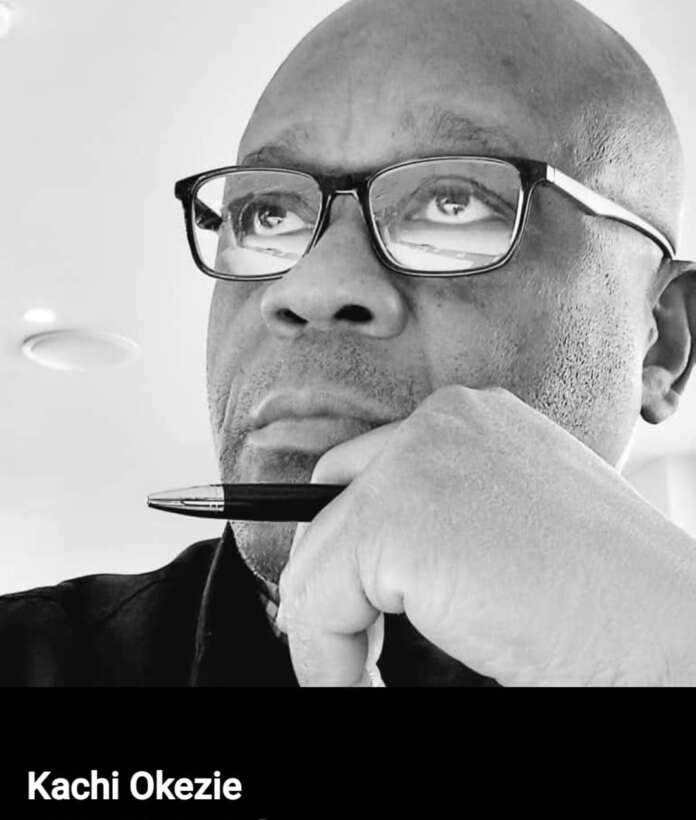
    By Kachi Okezie, Esq.

    “Mané provided the leadership missing from the VIP boxes. His actions act as a powerful mitigating factor that, under any fair assessment, should nullify calls for harsh punitive action.”

    The stadium lights of an AFCON final are meant to illuminate the pinnacle of continental excellence. Instead, the final between Senegal and Morocco cast a harsh glare on a crumbling foundation of sportsmanship and the systemic paralysis of football’s governing bodies. While the post-match discourse has fixated on Senegal’s dramatic decision to walk off the pitch, this narrow focus is a convenient distraction. To obsess over the protest while ignoring the provocation is to mistake the smoke for the fire. The chaos witnessed by millions was not an organic eruption; it was the predictable, slow-motion car crash of institutional negligence. As FIFA and CAF deliberate on disciplinary sanctions, they are not merely judging two nations—they are sitting in judgment of their own failure to govern.

    Morocco’s conduct throughout the tournament did not emerge from a vacuum. It was a cultivated atmosphere of gamesmanship that bordered on the pathological, escalating with every match that passed without a whistle from the regulators. We saw repeated, blatant intrusions onto the field of play and the systematic harassment of opposing goalkeepers—including the calculated snatching of towels during matches against Nigeria and others. These were not “passion-fuelled” incidents; they were clear violations of the FIFA Disciplinary Code. Yet, CAF and FIFA remained silent. By failing to issue sanctions in the early rounds, the governing bodies signalled that the rules were optional. This regulatory vacuum created a sense of impunity. When a child is never told “no,” their tantrums inevitably grow more destructive. In this context, the silence of the authorities transformed the pitch from a theatre of sport into a gladiator pit where the boundaries of acceptable behaviour had been erased.

    In legal terms, CAF and FIFA bear a form of vicarious liability. When an organising body neglects to enforce its own statutes, it assumes responsibility for the resulting disorder. Senegal’s walk-off must be understood as a reaction to contributory negligence. The hostile reception of the Senegalese team and the deafening boos at the post-match press conference were the harvest of seeds planted by CAF’s own inaction. Furthermore, the narrative of “Senegalese indiscipline” is dismantled by the conduct of their leadership. Captain Sadio Mané’s intervention—his calm, measured effort to bring his teammates back to the pitch—saved the final from total collapse. Mané provided the leadership missing from the VIP boxes. His actions act as a powerful mitigating factor that, under any fair assessment, should nullify calls for harsh punitive action.

    The history of football discipline is littered with moments where a rigid application of the rules would have resulted in a “manifest injustice.” It’s trite law to suggest that the environment of a match can fundamentally alter the culpability of the players, a principle seen clearly in the case of Zinédine Zidane in 2006. While Zidane was sent off for his headbutt in the World Cup Final, FIFA took the unprecedented step of sanctioning Marco Materazzi for the verbal provocation. This established that the initiator of hostility shares the legal burden of the reaction.

    Morocco’s unpunished misconduct throughout the tournament served as the spiritual equivalent of that slur, making a reaction from the Senegalese camp almost inevitable. Similarly, the 2007 Euro qualifier between Denmark and Sweden highlighted the “Duty of Care” organisers owe to players. When a fan attacked a referee, the ensuing legal battle emphasised that if the host or organiser fails to provide a secure environment, they lose the moral authority to punish those who feel unprotected.

    When CAF failed to stop interference with Senegal’s warm-ups and staff, they breached this duty of care. This mirrors the 2014 Serbia vs. Albania case, where the Court of Arbitration for Sport (CAS) eventually ruled that a security failure and a hostile environment were the primary causes of a match abandonment. In all these instances, the courts recognised that the “Primary Violation”—the walk-off or the physical act—could not be separated from the “Institutional Negligence” that preceded it.

    Under modern sports law, efforts to restore order—like those of Sadio Mané—are viewed as Active Mitigation. In the same way that Alan Mullery’s 1968 dismissal led to a broader discussion on refereeing failures, Mané’s role as a “stabiliser” highlights that the players were doing the job the officials abandoned.

    FIFA enters this debate with a heavy burden of history, marked by past corruption and accusations of selective enforcement. A ruling that disproportionately hammers Senegal while giving Morocco a pass would confirm the worst suspicions: that rules are a sword for the powerful rather than a shield for the fair.

    Fortunately, Articles 7 §2 and 8 §2 of the FIFA Disciplinary Code contain “manifest injustice” clauses. These exist precisely to prevent the robotic application of rules when doing so would produce a patently unfair result. They allow the committee to acknowledge that the sustained provocation and the failure of officials to protect the players are more significant than the technical breach of a walk-off.

    The AFCON final fallout should not end with a cheque written to a treasury in Zurich. It should end with a new standard of accountability. If CAF and FIFA wish to preserve the integrity of the African game-or of any other for that matter-they must realise that they are the primary defendants in the court of public opinion. Sanctioning Senegal in a vacuum would be a misdiagnosis of a terminal illness. The disorder was not caused by a team leaving the pitch; it was caused by the referees and administrators who left their posts long before the opening whistle.

    Finally, attempting to spin this unfortunate episode as a blight on African football as a whole is simply disingenuous. It is not. Rather, it is the direct consequence of a gross dereliction of duty by the two governing bodies, which they alone must put right. That will require an unambiguous acknowledgement of their failings, followed by prompt action to restore order, and demonstrate a willingness henceforth to enforce their own rules—consistently, and without favour.

    Kachi Okezie, Esq., is a sports lawyer.

    The views expressed by contributors are strictly personal and not of Law & Society Magazine.

    22-year-old Afghan woman to die by stoning for secretly teaching girls taekwondo

    A young woman who secretly trained girls in taekwondo in Afghanistan may be stoned to death for her actions. 

    Khadija Ahmadzada, 22, was arrested on January 10 in Herat for defying the Taliban’s ban on women playing sport. 

    Authorities discovered she was teaching students the martial art in a hidden courtyard at her home. 
     

    Afghan woman, 22, ?faces de@th by stoning for secretly teaching girls taekwondo?


    Her detention has prompted fears from activists that she has already been sentenced to death for the illicit activity. 

    The campaigners are desperately trying to raise awareness of the Taliban crackdown in hopes that her killing can be averted. 

    British-Afghan activist Shabnam Nasimi said on Instagram: “She refused to accept that being female is a crime. 

    “That quiet act of defiance has come at a price, when the Taliban’s morality police out, witnesses said they raided her home and detained her. 

    “There are rumours from people around Khadija that the court has ruled on an extreme de@th sentence  – stoning – for the crime of practicing and playing sport. 

    “For anyone who doesn’t know what stoning is, it’s when stones are thrown at a living human being until they bleed, collapse and d!e.”
    Nasimi added that witnesses claim Ahmadzada and her father were dragged out of their home before being held for more than a week. 

    She said that Ahmadzada’s family have reportedly heard nothing from the 22-year-old for longer than a week. 

    The activist called on her followers to “draw attention to ‘flood the internet’ with Ahmadzada’s name in an effort to ‘save her life”. 

    Nasimi said: “When the international spotlight lands on a regime like this, they hesitate. 

    “Not because they grow a conscience, but because they fear consequences, pressure, exposure and intervention. 

    “If Khadija becomes famous enough, they may back off.” 

    An entire generation of Afghan women and girls lost their freedom when the Taliban took control of the country in 2021. 

    Girls have been turned away from school, forced to veil their faces and bodies at all times in public, and are not allowed to look at men they aren’t related to or married to, or even be seen in their own homes from neighbouring properties. 

    Even the sound of women singing or simply speaking to and hearing each other has been banned, as part of the Taliban’s “vice prevention strategy”.

    Linda Ikeji

    TIPS