Home Blog Page 109

Nigeria Customs Collected ₦7.28 Trillion in 2025. Ordinary Nigerians are still waiting to see the benefit

By Lillian Okenwa

Nigeria’s revenue story is improving. Its governance story is not.

The Nigeria Customs Service (NCS) says it collected a record ₦7.281 trillion ($4.7 billion) in 2025, one of the highest non-oil revenue performances in the country’s history. The figure exceeds the agency’s target by more than 10 percent and marks a 19 percent increase from the previous year.

Yet for most Nigerians, the announcement has raised a familiar and uncomfortable question: what happens to the money?

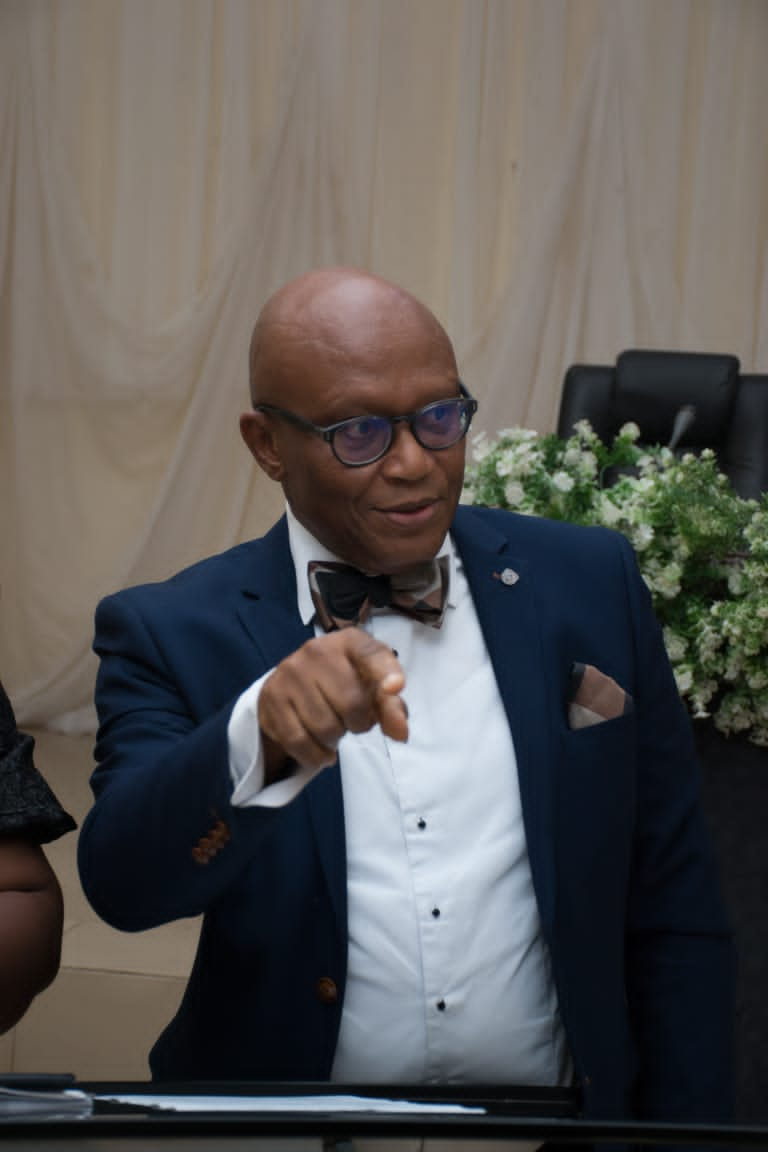
The revenue milestone was disclosed in Abuja by Comptroller-General of Customs Bashir Adeniyi during the 2026 World Customs Day celebration. Adeniyi credited reforms, digital tools, and improved compliance, insisting the gains were achieved without stifling legitimate trade.

“These figures are not for self-congratulation,” Adeniyi said. “They demonstrate that reform is producing tangible outcomes.”

But Nigeria’s recent history suggests that strong revenue performance rarely translates into improved living conditions.

Despite decades of oil wealth, rising tax receipts, and repeated revenue windfalls, Nigeria remains mired in failing infrastructure, chronic power shortages, overstretched hospitals, and deepening poverty. More than 133 million Nigerians—over half the population—are classified as multidimensionally poor, according to official figures.

The credibility gap is widened by the country’s long record of corruption and mismanagement. Since its independence, Nigeria is estimated to have lost over $582 billion to corruption and illicit financial flows. Even recovered stolen assets have not escaped controversy. Billions of dollars looted by former military ruler Sani Abacha were returned to Nigeria over the past two decades, yet citizens struggle to point to any visible, transformative public projects funded by the recovered money.

In a further blow to public trust, former Attorney General Abubakar Malami is currently facing prosecution over allegations linked to the mismanagement of recovered funds, fuelling concerns that looted money is simply recycled through new hands.

Nigeria’s oil sector remains a major drain. Despite being Africa’s largest crude producer, theft and smuggling have reportedly cost the country billions of dollars annually. Outside oil, systemic leakages persist through inflated contracts, opaque procurement, and so-called “ghost workers” embedded across public institutions.

Transparency International continues to rank Nigeria among the world’s most corrupt countries. In its latest Corruption Perceptions Index, Nigeria scored 26 out of 100—well below the global average.

Meanwhile, the social consequences are stark. Youth unemployment remains among the highest globally. Public investment in health and education is weak.

And despite allocating over ₦17 trillion to security between 2021 and 2025, violence, banditry, and kidnappings continue to spread across large parts of the country.

Customs revenue growth, analysts say, highlights a deeper paradox: Nigeria’s problem is not revenue generation—it is governance.

Without transparent tracking of public funds, independent oversight of revenue agencies, and credible prosecution of financial crimes, record collections risk becoming accounting achievements with little impact on real lives.

For international observers, the Customs announcement underscores a troubling reality: Africa’s largest economy is generating more money, yet delivering less for its people.

Kano braces for baby boom as health system strains under population surge

Kano State is preparing for a demographic surge that could see between 600,000 and 700,000 babies born in 2026 alone, a projection that underscores mounting pressure on an already overstretched healthcare system amid Nigeria’s deepening economic and infrastructure crisis.

The estimate, based on a 3.5 percent population growth rate projected from the 2006 census, was disclosed over the weekend by Dr. Mansur Mudi Nagoda, Executive Secretary of the Kano State Hospitals Management Board, during the maiden convocation ceremony of the Sardauna College of Health Sciences and Technology, a private health institution in the state.

While the figures reflect Kano’s youthful and fast-growing population, Nagoda warned that the scale of expected births presents a daunting public health challenge, particularly in a state grappling with shortages of skilled personnel, inadequate facilities and uneven access to basic services.

“Kano is facing a serious manpower crisis,” Nagoda said, noting that the state currently has a deficit of about 4,000 professional health workers. “Our population growth is outpacing the capacity of our health system.”

Health experts say the warning highlights a broader national dilemma: rapid population growth colliding with fragile infrastructure and limited public investment, especially in northern Nigeria, where poverty rates remain among the highest in the country.

Nagoda urged training institutions to prioritise practical, community-oriented medical education, stressing that graduates must be equipped to deliver frontline services, particularly in rural and underserved areas. He disclosed that the state government plans to recruit additional health workers and deploy them to hard-to-reach local government areas such as Doguwa, Rogo and Sumaila.

Yet analysts caution that recruitment alone may not be enough. Nigeria’s public health sector continues to suffer from chronic underfunding, uneven distribution of resources and weak primary healthcare infrastructure, problems that have persisted despite repeated policy announcements and reform pledges.

The situation in Kano mirrors a national demographic shift of historic proportions. Nigeria currently records between 7.5 million and 9.2 million births annually, a figure that now exceeds the combined number of births across Europe and Russia, estimated at about 6.3 million per year.

With a fertility rate of roughly 4.7 to 5.3 children per woman, Nigeria stands in sharp contrast to Europe’s aging societies, where birth rates have fallen below replacement levels. As of early 2025, Nigeria’s population is estimated at over 235 million, making it the sixth most populous country in the world.

United Nations projections suggest that by 2050, Nigeria could become the third most populous country globally, with more than 400 million people, and by 2100, its population may exceed 700 million, potentially surpassing the entire population of Europe.

Nigeria’s population is also strikingly young, with an estimated 120 million people under the age of 15, a demographic profile that could deliver a powerful economic dividend—if matched with education, jobs and infrastructure.

For now, however, the reality remains stark. Unemployment exceeded 40 percent in 2023, inflation continues to erode household incomes, and access to basic services such as healthcare, clean water and electricity remains uneven, particularly in northern states.

Critics argue that the country’s demographic momentum is being squandered by poor governance and mismanagement of resources, in a nation widely regarded as wealthy enough to meet its citizens’ basic needs.

As Kano braces for hundreds of thousands of new births in a single year, the warning from health officials is clear: without urgent investment in healthcare infrastructure, workforce expansion and economic stability, Nigeria’s population boom risks deepening inequality rather than driving development.

The question facing policymakers is no longer whether Nigeria’s population will grow, but whether the state can keep pace with the lives it is bringing into the world.

Court paves way for AGF to review ICPC’s fraud case against Ozekhome

The Attorney-General of the Federation and Minister of Justice (AGF), Prince Lateef Fagbemi SAN, has secured the approval of the High Court of the Federal Capital Territory FCT to review the case file of the fraud charges brought against Professor Mike Ozekhome SAN by the Independent Corrupt Practices and Other Offences Related Commission ICPC.

Consequently, the arraignment of the legal luminary and Constitutional lawyer, slated for Monday, has been shifted to February 24.

The AGF, who took over prosecution of the charges on Monday, said that he needed time to thoroughly review the case file and take a well-informed decision.

At the Monday’s proceedings, the Head of High Profile Prosecution Department of ICPC, Dr Osuebeni Akpomesingha Akpos, had announced appearance for the prosecution.

A former AGF and Minister of Justice, Kanu Agabi SAN and 15 other SANs announced their appearance for the defendant.

At this point, the Director, Public Prosecution of the Federation DPPF, Mr Rotimi Oyedepo SAN, announced his appearance on behalf of the AGF and informed Justice Peter Kekemeke of the decision of the AGF to take over the case from ICPC

He said that the decision was pursuant to Section 174 of the 1999 Constitution and to collaborate with the ICPC to ensure that the prosecution meets the highest standard of effectiveness, efficiency, diligence and compliance with due process of law.

The DPPF further told the court that the decision was also guided by public interest and to instil confidence, fairness and competence in the criminal justice.

He assured the court that the right of the defendant will be protected and that no party will be made to suffer any adverse consequences, adding that inter-agency cooperation to fight corruption was also considered by the OAGF.

He therefore asked the court to take judicial notice of the takeover of the trial by the AGF Office.

The AGF therefore sought adjournment to enable his office retrieve the case file from the ICPC to thoroughly review it and take the next line of action.

Counsel to the ICPC did not object to the takeover and promised that the commission would cooperate fully with the AGF office, being the agency that investigated the matter.

By consensus of lawyers, Justice Peter Kekemeke fixed February 24 for arraignment.

Airtel in copyright storm as court orders ₦210 million payout over ‘Nigeria go survive’

The Federal High Court, Ikoyi, has ordered Airtel Nigeria to pay Two Hundred and Ten Million Naira (N210 million) to Veno Marioghae Mbanefo for copyright infringement.

Presiding Judge Honourable Justice Ibrahim Kala handed down the judgment after finding that Airtel Nigeria unlawfully used Mbanefo’s song, “Nigeria Go Survive,” without her authorisation.

The ruling marks a significant legal victory for the artist and underscores the enforcement of intellectual property rights in Nigeria’s entertainment industry.

In September 2022, the singer sued the telecommunications company, Airtel Network Limited for “unauthorised use” of her musical work.

In a statement sent to SaharaReporters at the time, the veteran singer said she “found out a few months ago, that Airtel had been using my song, ‘Nigeria Go Survive,’ to market their products, using their telemarketing numbers, without my permission.

“Following the discovery, I contacted my lawyer, Rockson Igelige of Felix, Igelige and Associates, who promptly wrote to them. Rather than look into our authentic claim, they responded by not only denying all culpability, but also defamed me and threatened criminal charges against me.

“We then took our case, backed by our witnesses, IT & Evaluation Specialist and evidence, to the Nigeria Copyright Commission which began an investigation into our claim.

“While the criminal investigation into our claim is still on, my lawyers and I are, however, filing a civil suit against Airtel on 23/9/22 at the Federal High Court, Ikoyi, Lagos to show how they have flagrantly not only infringed on my copyright by using my song without permission, but have also brazenly denied all responsibility, despite all evidence.”

The veteran artiste earlier in a letter to the Chief Executive Officer of Airtel Network Limited, Ikoyi, Lagos, accused the telecoms company of using her song, ‘Nigeria Go Survive’ to promote its TV app and ‘The Voice Nigeria’, without her permission.

The letter signed by her lawyer, R. A. Igelige Esq asked the telecoms company to “cease and desist forthwith from further infringing on the copyright of our Client to the aforementioned musical work”.

It also asked Airtel to “pay to our client the sum of N50,000,000 (Fifty Million Naira) for the unauthorised commercial and also derogatory use of her musical work”.

“Take notice that if we do not receive an adequate response within 21 days of receipt of this letter, we shall take all proper steps to seek legal remedy for our Client, including legal action for injunctive relief, criminal charges and damages, without further notice to you.

“We look forward, however, to your prompt response towards an amicable resolution of this matter,” it added.

The letter read in part, “We are solicitors to Veno Marioghae Mbanefo (our Client), a musician and entertainer residing in Lagos and we write this letter on her behalf.

“Our Client is the author and copyright owner of the musical work entitled ‘Nigeria Go Survive’ being used by your Mobile Network Company (Airtel) to promote your TV app, and also to promote ‘The Voice Nigeria.’

“Our Client’s attention has been drawn to your use, without permission or licence, of her aforementioned musical work. Specifically, you have appropriated the work to promote your TV app and also used it to advertise ‘The Voice Nigeria.’”

“By not obtaining our Client’s prior permission or licence before engaging repeatedly in this act or acts, your company’s conduct is a flagrant and deliberate infringement of her copyright. It also amounts to stealing and wilful deprivation with the intent to unjustly enrich your company and deny our Client of the legitimate fruits of her labour, thereby inflicting hardship on her,” her lawyer added.

SaharaReporters

‘Assurances Without Action’: New abductions in Kaduna expose deepening security and constitutional failure

Barely hours after Christian leaders in Kaduna State gathered in prayer for the safe return of 177 worshippers abducted in Kajuru Local Government Area, suspected bandits struck again, kidnapping six residents in a late-night raid that has further underscored Nigeria’s deepening security crisis.

The latest abduction occurred on Saturday night in Unguwar Barkono, Mararaban Kajuru, Kufana Ward, an area residents stress is not a remote settlement but part of Kajuru’s populated core. Armed men reportedly stormed several homes, forcibly dragging victims away to an unknown location.

Steven Kefas, a resident, said the attack took place around 1:00 a.m., disputing narratives that violence is confined to isolated rural communities. “This happened right inside Kajuru,” he said, highlighting growing fears that no area remains safe.

The Christian Association of Nigeria (CAN) confirmed the incident. Rev. Enoch Kaura, CAN Chairman in Kajuru, said the kidnappings occurred around 11:00 p.m., adding that the attackers fled with six residents despite neighbours raising an alarm.

The assault came just hours after a special prayer service held at Tawaliu Baptist Church for the return of 177 Christian worshippers abducted last week in Kurmin Wali, Kajuru LGA. The prayer session was attended by Kaduna State CAN Chairman, Rev. Caleb Ma’aji Bawa, alongside clergy from multiple denominations.

Addressing the gathering, Rev. Joseph John Hayab, CAN Chairman for the 19 Northern States and the Federal Capital Territory, warned that churches and communities had become increasingly vulnerable due to persistent security lapses. He urged congregations to strengthen internal safety measures, cautioning that unrestricted access to worship spaces now carries grave risks in Nigeria’s volatile security environment.

Rev. Kaura condemned the latest abductions and criticised what he described as a pattern of official denial following major security incidents. He called on authorities to urgently intensify military and police operations in Kajuru, stressing that repeated attacks have eroded public confidence in the state’s ability to protect lives.

The fresh kidnappings deepen anxieties already gripping Kaduna and neighbouring states, where mass abductions, killings and forced displacement have become routine. Just days earlier, bandits abducted a Baptist Church pastor, Daniel Bagama, and his three daughters in Chikun Local Government Area, while travellers were seized along the Maro–Kajuru axis in a separate attack.

Beyond Kaduna, similar patterns of violence persist across north-western Nigeria. In Katsina State, residents of Southern Maska in Funtua Local Government Area report ongoing attacks, killings and levies imposed by armed groups despite repeated peace agreements brokered by local authorities. Entire villages, residents say, are being emptied as families flee for safety.

Human rights observers warn that the continuing wave of kidnappings reflects not merely criminal activity but a broader failure of constitutional governance. Nigeria’s constitution places the protection of life and property at the core of the state’s responsibilities—an obligation critics argue is increasingly unmet as armed groups operate with near-impunity.

While the Defence Headquarters (DHQ) has repeatedly assured Nigerians that intelligence-driven operations are underway to rescue abducted victims and dismantle criminal networks, many residents describe a widening gap between official statements and realities on the ground.

Security analysts note that the timing of the latest Kajuru abductions—coming immediately after public prayers and renewed appeals for protection—has intensified perceptions of state incapacity and raised concerns among international partners monitoring Nigeria’s human-rights record.

For families of the abducted, however, the crisis is not abstract. It is immediate, personal and ongoing—marked by fear, uncertainty and a growing sense that official assurances have yet to translate into meaningful protection or accountability.

Fela’s Wizkid

By Lasisi Olagunju

The Cambridge English dictionary defines ‘Wizkid’ as “a young person who is very clever and successful.” Collins Dictionary defines it as “a person who is outstandingly successful for his or her age.” Wisdom Library says “’Wiz’ is a shortened form of ‘wizard,’ connoting skill, talent, and expertise, while ‘kid’ implies youthfulness or being junior. When combined, ‘Wizkid’ suggests a young, talented, and skilled individual, particularly in a specific field.”

Fela and Wizkid? The space between the nose and the forehead is not as short as it appears. A noisy digital skirmish: a torrent of online exchanges; an endless war of words. All between Seun Kuti and Afrobeat super star, Wizkid, with his fans, over a reported off-hand tweet that super-rich Wizkid had surpassed Fela Anikulapo Kuti in music and social stature.

Seun Kuti is reported to have remarked that “it’s an insult to Fela to call Wizkid the new Fela.” Apparently in frustration with the back and forth over the inanity on the Internet, the living star is reported to have retorted: “Ok. I big pass your Papa!!! Wetin u wan do? Fool at 40.” That “igán” was the spark that caused the conflagration.

It is a needless quarrel. Wizkid is not Fela. He is Fela’s wizkid. The fight is stupid because the truth is self-evident. A child may own as many garments as an elder, but he cannot possess the same number of rags. Time, not tailoring, produces experience. But, there is nothing that the Internet and its warriors cannot weaponise. And, the undiscerning is easily conscripted into the raucous army. Wizkid himself understands the distance involved. So, let no one summon tension where harmony is the musical key.

The younger wizard knows the source of his tumultuous river; he has never denied where it flows from. In a May 3, 2017 interview with English DJ and author, Semtex, Wizkid traced the arc of his musical influences with disarming candour. “So I was influenced by rap, reggae, Bob Marley, Fela… like good music, some big names,” he said. Yet he admitted that Fela’s music did not immediately appeal to him. His parents played Fela and King Sunny Ade at home, but the young Wizkid, by his own account, was “not old enough to understand or enjoy the music.” He wasn’t alone with that judgment. Even Fela’s mother, at the experimental beginning of his career, told him: “Start playing music your people understand, not jazz.”

Time, however, has a way of teaching the tentative how to stand firm and take their share of what life offers. Wizkid, the young man who once declared that he did not want to be “just an African star” grew into a global figure by climbing the ladder of destiny mounted on the shoulders of global giants. He mentions them in that Semtex interview: Bob Marley of Reggae, and unmistakably, Fela Anikulapo Kuti of Afrobeat.

Another old interview is unearthed by the present noise. In it, Wizkid speaks to the Fela matter with humility and clarity: “We can’t compare, let’s not use that word because it is like disrespect when you’re mentioning Wizkid and Fela in the same sentence. You can’t compare. Fela is someone that inspires me. I have him tattooed on me. Fela’s face is all over my body. Everything he did with his music, his legacy, inspires me to be great and to want to do more.”

Wizkid is big because he is wise. Reading him, hearing him, tells that the young man enjoys the benefit of good upbringing. There is his ‘Ojuelegba’ line:

“Ti isu eni ba dele

A f’owo bo je…”

And he remembers to tell his interviewer that underneath that line is the timeless advice he got from his mother: “When I was like younger my Mama told me, you when God blesses you, you should be smart enough to know that you should be more cautious. That’s when you should get more cautious of what you say, what you do and how you move.” To be cautious is to act with care, with prudence. The synonym is wisdom. What Wizkid says his mother told him is the same as what Kahlil Gibran tells us: “Travel and tell no one, live a true love story and tell no one, live happily and tell no one, people ruin beautiful things.”

The young wizard is wise. Wizkid is lucky he has a mother who prays. He sings:

“See eh, e kira fun mummy mi o,

Ojojumo lo n s’adura…”

He is as lucky as Abraham Lincoln who said the same: “I remember my mother’s prayers and they have always followed me. They have clung to me all my life.”

Now, if there is a positive gain for me in the ‘childish’ fight over which is bigger and deeper between the Atlantic and the Lagos Lagoon, it is the opportunity to read and know more about the music of the youth, and the chance to throw long-owed libation at the king of waters. In celebrating Fela, therefore, we celebrate a king of songs whose insistence is that art must not be for art’s sake; that music must matter, that it must speak when politics lies, and that it must disturb the comfort of the powerful.

The difference between fire and light is in what is done with them. Some music is not meant to entertain alone, but to awaken. The music of Fela is fire and light combined; it is a force that moves more than bodies; it moves minds. He created Afrobeat; he made music, and with it, made life and living into sound and resistance. His everything is a fine blend, whether of assonance or of alliteration; he made sense out of nonsense. His ‘Zombie’, for instance, has not stopped teaching us that when power stops thinking, rhythm must do the thinking for it.

Fela sang the outrage of today and the rage of tomorrow yesterday. Like NASA’s Perseverance Rover on Mars, the Afrobeat king orbited power with defiance. He was at once coarse and smooth, abrasive and balmy in the same breath.

The Yoruba know that when you sing wahala softly, you can get an entire city dancing. Call it iboosi if you like, trouble turned into tune. Fela sang “Palaver” and made it sound sweet; even his “Yeepa” sounds so sweet that it pirouetted the sonics of chaos into pleasure. Where there is “Sorrow, Tears and Blood”, Fela trained his voice and drum not to keep quiet; and they never did; they still are not quiet. In the moral urgency of African chant, Fela’s music sings and dances; and as it dances, it indicts. When he winks his wings make meaning. His clenched fist circles the earth; his art is an eraser that continually cleans off the boundary between stage and street, between rhythm and revolt. You listen to his ‘Alagbon Close’ lyrics, you hear his sax speak the language of condemnation, while his drum sings defiance to state captors.

The Gen Z fighting on X over which star is the biggest in the cosmos should know this: Fela was one spirit who stretched tradition until it screamed. He was the potter who scooped mounds of Yoruba earth and, from it, moulded an impossible steed for the battlefield of the world. In his sax, step and sup, music became the language of war and peace. His truth is dense, his anger repetitive, his chant hypnotic. In his dance steps are disclaimers that deprecate the chaos of Nigeria’s politics. In 1975, he flung defiantly rebellious “Expensive Shit” at power and its police; the steel-hearted swooned in pain. Fela’s truth is eternally too heavy for weak stomachs.

He acted alone in his rebellion. “Solitude sometimes is best society,” says John Milton. Fela’s choice of road to tread almost obeys that Milton poetry. He was not a gentleman, and he sang it into our skulls: “A no be gentleman at all o.” His songs, like his life, wear no borrowed manners. Every Fela song is a sermon rudely delivered; every performance a trial of societal evils; every arrest a verse added to an unfinished composition on power and freedom. His eclecticism, with his synthesis, and his defiance, give his music oxygen. They are what make Fela endure.

In Fela’s biological musical children, “heirs of fame,” and in the wizard kids who sing his legacy, he lives. The Abami Eda spirit pulses through Femi and Seun Kuti; their blazing saxophones and militant energy carry forward the torch of political Afrobeat. This paragraph is a product of reading and asking. In reading and exploring, I got to know so much about this subject: Fela’s legendary drummer, Tony Allen, was right here, modifying the rhythms, making the music irresistible. Beyond his fecund loins, Fela’s immortality is heard in the sounds of contemporary stars: Burna Boy, Wizkid, Davido, Tiwa Savage, Yemi Alade, Rema, Joeboy, and Olamide. In these stars, Afrobeat’s pulse blends seamlessly with the aplomb of Afropop, hip-hop, and global pop. Singly or in pairs, they speak to new audiences, while across the world, fans feel Fela in the music of Benin’s Angélique Kidjo, UK-based Afro B, and even Major Lazer. And, writing and reading this paragraph again, I realize I have convinced myself that decades after death yanked Fela’s fingers from the pot of world music, his creation, Afrobeat, still walks the streets loud, stubborn, and unbowed

A thoroughly studied phenomenon; in one text, Academy Award winner, Joseph Patel, says “Fela Kuti is the truth.” In another line, American writer, Knox Robinson, describes him as “the original Afronaut.” Music scholar and historian, Peter Guralnick and Douglas Wolk, published a survey of turn-of-the-millennium music in 2002. In it, they make the bio of “irreducible” Fela read like a political chant. Now, read them and chant along:

“Fela Kuti: 77 albums, 27 wives, over 200 court appearances. Harassed, beaten, tortured, jailed. Twice-born father of Afrobeat. spiritualist, pan-Africanist. Commune King. Composer, saxophonist, keyboardist, dancer… There will never be another like him.”

The views expressed by contributors are strictly personal and not of Law & Society Magazine.

Nigeria’s crisis of judicial pensions is not about the law of Karma

By Chidi Anselm Odinkalu

“The term of office of judges, their independence, security, adequate remuneration, conditions of service, pensions and the age of retirement shall be adequately secured by law.”

Principle 11, United Nations Basic Principles on the Independence of the Judiciary, (1985)

Babajide Candide-Johnson became a judge of the High Court of Lagos State at 45. The son of the third Chief Judge of Lagos State, he is a polyglot, fluent in several languages, including French. When his judicial tenure came to an end on 27 June 2021, 20 years after he became a judge, Babajide Candide-Johnson was the head of the family court in the High Court of Lagos State.

At his retirement, the Chief Judge of Lagos State, Kazeem Alogba, described Babajide Candide-Johnson as “a brilliant, hardworking, meticulous and fearless judge, an intellectual who delivered judgments without fear or favour.”

Those words describe a model judge. Yet, nine months later, in March 2022, he was back in court, this time to sue the government of Lagos State, whom he had served without blemish in judicial office for two decades, for “his pension, severance gratuity, and other entitlements.” 

The government of Lagos State initially demurred, disingenuously arguing that  responsibility for judicial pensions under the Pension Right of Lagos State Judicial Officers Law of 2015, lay with the state Judicial Service Commission. The state government later saved itself from a public unravelling of an embarrassing position, and the parties agreed to an amicable settlement.

In 2022 alone, at least five other former judges of the High Court of Lagos also sued the State government over the same issue.

The year before the retirement of Babajide Candide-Johnson in Lagos, 22 retired judges of the High Court of Abia, the self-described “God’s own State” in south-east Nigeria, had similarly sued before the National Industrial Court of Nigeria, (NICN), claiming to have been shafted by a succession of three governors going back nearly a decade and a half, who claimed mandates from God to ruin the state. It appears that in response to the case, the then state government “reportedly promised to pay N10 million to the retired judges every month, but only did so for one month.”

Three years after this case began, it was still stuck in the NICN, with little progress. Meanwhile, five of the retired judges had died in penury while waiting for the case to rescue them. In May 2023, Abia State installed a newly elected governor. Two months later, he and the retired judges reached an agreement to clear the back-log of 16 years of judicial pensions liability.

Around the country, retired judges are increasingly resorting to judicial proceedings to call attention to a crippling and chronic crisis of judicial pensions for judges who retired before June 2023. In Ondo State, retired judges sued in April 2016 for similar issues. Their peers in Imo, Ogun, and Oyo have as well.

For long, the constitution provided for how to compute judicial pensions but not necessarily for how to finance or administer them effectively. Effective from June 2023, a new constitutional amendment transferred to the National Judicial Council (NJC), responsibility for the administration of judicial pensions. This has not, however, alleviated or addressed the crisis of judicial pension obligations arising from before then and may, indeed, have surfaced new problems of its own.

In Kogi, eight retired judges of the state High Court have recently served notice on the state government of their intention to return to court as litigants to enforce their pension rights. They include a former Chief Judge of the State, John Bayo Olowosegun; a former President, Customary Court of Appeal, Hon. Justice Yunusa Musa; and a former senior judge, Professor Andrew Alaba-Ajileye. 

The NJC has to accept some responsibility for the historical liabilities. It has been an indifferent and perfunctory advocate for retired judges. On his way out of office as then chairman of the NJC and Chief Justice of Nigeria, and after much hand-wringing, Olukayode Ariwoola, in January 2023, finally tabled the issue before the Council at its 100th meeting.

In a statement at the end of the meeting, the Council described as “worrisome, the situation whereby many Judicial Officers of the States are being owed their retirement benefits, including severance pay/gratuity and pensions”, and warned that this undermined the rule of law without clearly saying how so.

Even worse, the Council failed to disclose which states were involved, for how long or by how much. Instead, the NJC directed State Chief Judges from across the country to report on compliance with this resolution without indicating what it had previously done to compute the quantum of liabilities involved.

On the whole, the NJC lost an opportunity to show that it cared about the subject matter; that it had indeed bothered to do its homework; or that this was an issue on which it desired to enlist any support or reinforcement for the affected retired judges. Since then, the Council does not appear to have seriously monitored or re-engaged with this issue.

The consequences of the chronic accumulation of pension debts in the public service are quite corrosive of both the morale of existing personnel and the effectiveness of service delivery. Serving officers just need to behold that situation in order to appreciate the urgency of the need to take their own destinies into their own hands while they still have the opportunity to do so.

The judiciary presents a somewhat special case because the average age of intake into the bench of the superior courts of record is higher than in any other branch of pensionable service in Nigeria. The consequences of the deliberate neglect to fulfil pension obligations can, therefore, be quite dire. In States like Taraba in the north-east, for instance, many judges who retired before 2023 have died waiting endlessly for their pensions and terminal benefits.

The uncertainties about judicial benefits have also created other problems of their own, with crooks cashing in on the vulnerabilities of retired judges. In March 2024, the NJC went public with the complaint that “fraudsters had been bombarding retired judges with phone calls demanding various sums of money to help them fast-track the payment of their retirement benefits.” It vowed that the Council “would never demand money from any judicial officer to fast-track the payment of his retirement benefits.” The jury, at best, is still out on this.

The problem remains that this crisis of judicial pensions and terminal benefits fosters a system of perverse incentives conducive to bartering judicial outcomes for material benefit.

Some may view as uncharitable a strand of public opinion that suggests that there is a Law of Karma at work and that the destitution of retired judges in this way is the natural consequence of a deepening crisis of judicial integrity and politicization of the judiciary. Others have gone as far as to accuse judges indiscriminately of feeding upfront while in service the political lion with the menu of their pensions.

Even if the conduct of some judges in service could conceivably deserve the attentions of a hypothetical Karma, there remain many judges who do their best not to fall into that category. Such points of view should, however, demonstrate for all involved the urgency of addressing this issue with finality.

For the judiciary, it is existential at both personal and institutional levels. For the citizens and court users, it is the only way to guarantee the possibility of minimal credibility to the work of the courts. For the country, it should ensure that the promise of an independent judiciary stands a chance of not disintegrating into a constitutional hoax. The distinction between judges who retired before June 2023 and those retiring thereafter is artificial and unnecessary. The NJC can work constructively with government at the federal and state levels to close it.

A lawyer and a teacher, Odinkalu can be reached at [email protected]

The views expressed by contributors are strictly personal and not of Law & Society Magazine.
Snapchat pays to escape explosive social media addiction trial

Snapchat on Wednesday confirmed it made a deal to avoid a US civil trial accusing it, along with Meta, TikTok, and YouTube, of addicting young people to social media.

A jury trial is set to begin in Los Angeles next week in what is being called a “bellwether” proceeding, as its outcome could set the tone for a wave of similar litigation across the United States.

Many of those cases are being coordinated by the Social Media Victims Law Centre, a legal organisation dedicated to holding social media companies accountable for harms caused to young people online.

“The parties are pleased to have been able to resolve this matter in an amicable manner,” parent company Snap and the Social Media Victims Law Centre said, disclosing no details regarding the settlement in the case playing out in Los Angeles.

Internet titans have argued that they are shielded by US law that frees them of responsibility for what social media users post, but these cases argue they are culpable due to business models designed to hold people’s attention and promote content that winds up harming their mental health.

Social media firms are accused in suits of addicting young users to content that has led to depression, eating disorders, psychiatric hospitalisation, and even suicide.

Snap chief executive Evan Spiegel was slated to testify at the trial along with other social media firm executives, including Meta boss Mark Zuckerberg.

“Unfortunately, there are many potential dangers in using online social media, and the owners of these platforms bear responsibility for its proper use,” a law centre spokesperson contended in a posted video.

The suit heading for jury trial in Los Angeles accuses social media algorithms of addicting a 19-year-old woman, causing severe mental health problems.

The trial before Judge Carolyn Kuhl in state court is expected to start the first week of February, after a jury is selected.

Lawsuits accusing social media platforms of practices endangering young users are also making their way through federal court in Northern California and state courts across the country.

AFP

Lagos bus driver questions official explanation after twin infants die

Promise Samuel’s twin boys were healthy when he carried them into a government primary health centre in Ajangbadi, Lagos, on the morning of December 24, 2025.

By the next morning, both children were dead.

The nine-month-old twins, Samuel said, had shown no signs of illness before receiving routine immunisation injections at the facility. But moments after the shots were administered, the babies began to weaken, their bodies burning with fever.

“They were perfectly fine when we arrived,” Samuel told reporters. “After the injections, everything changed.”

According to Samuel, nurses administered injections to both infants and instructed the parents to immediately give them portions of a tablet medication. Shortly after, the twins developed dangerously high temperatures before the family had even left the clinic.

When concerns were raised, Samuel said the nurse advised fever medication at home and warm baths if the temperature worsened. The family paid ₦2,500 in fees and left with a mosquito net given as a Christmas gift.

Within hours, the twins were vomiting.

By nightfall, they were stooling uncontrollably and growing weaker by the minute. By morning, they were no longer breathing.

“When I reached the hospital, they were already gone,” Samuel said. “Their colour had changed. Their teeth were clenched. I couldn’t believe it.”

In shock, Samuel took the babies to multiple hospitals, all of which confirmed their deaths. Still refusing to accept reality, he carried their bodies to a church, hoping for a miracle.

“I only accepted it was over when I noticed the smell,” he said.

Government officials later suggested food contamination as a possible cause, an explanation Samuel rejects outright.

“They didn’t eat after the immunisation,” he said. “All their food is still in my house—untouched. How can the same food kill two babies at the same time, on the same day?”

Initially asked to pay nearly ₦1 million for an autopsy, Samuel said he could not afford it. Authorities later conducted the autopsy themselves. The results remain pending.

Fearing a cover-up, Samuel took the case to the police. The investigation has moved from FESTAC to Okokomaiko and now to the State CID in Yaba.

“I don’t want the truth buried,” he said. “If negligence killed my children, the government must admit it.”

The tragedy has shattered the family emotionally and financially. Already facing eviction, Samuel says his savings are gone, and his wife—now staying with her mother—has been unable to cope.

“I loved them deeply,” he said. “Their food is still there. Every time I see it, I break down.”

His regret is stark and unresolved.

“I regret taking my children to a government health centre,” he said. “Nigeria happened to me.”

Now, in a small Lagos home, two untouched feeding bottles sit where laughter once lived, and a father wakes each morning to the silence of a double grave. The clinic has moved on. The officials are “awaiting results.” But for Promise Samuel, justice is already overdue—because whatever the autopsy says, his children did not die of statistics or bureaucracy. They died in a system that asked for trust, gave injections, and returned him two lifeless bodies by Christmas morning.

Food for Officials, Dry Taps for Residents: Nasarawa’s budget exposed

As residents queue for water and children learn in overcrowded classrooms, Nasarawa State’s budget tells a stark story of misplaced priorities—one in which comfort for the political class appears to outweigh investment in survival and opportunity for ordinary citizens. For communities navigating thirst, illness and poverty, the figures raise an unsettling question: in a state with scarce resources and deep social needs, who exactly is the government spending for?

A review of Nasarawa State’s third-quarter 2025 budget performance by SaharaReporters shows that the state government spent ₦707 million on refreshments and meals between January and September 2025, even as funding for critical public services lagged far behind.

During the same nine-month period, capital expenditure for the Rural Water Supply and Sanitation Agency stood at just ₦300.5 million, underscoring a stark imbalance between administrative spending and investment in essential infrastructure.

The spending pattern has drawn sharp criticism from residents; many of whom say access to clean and potable water remains a daily struggle across large parts of the state.

“We barely get clean water. Even the people who sell water in jerrycans complain that it has become difficult to find water,” a resident of the Masaka area told SaharaReporters.
“The government promises to us have failed,” the resident added.

In Karu, another resident described water scarcity as both alarming and exhausting.
“When you find any place with water, it feels like you have found gold. It is very frustrating,” the resident said.

The findings align with earlier budget reviews by SaharaReporters that raised questions about the state’s spending priorities. An analysis of the Nasarawa State Government’s approved 2025 budget revealed that ₦2 billion was allocated for the extension and renovation of the State House of Assembly complex in Lafia.

Budget documents show that ₦1 billion was earmarked for extending the Assembly office building, while another ₦1 billion was allocated for renovation. By comparison, constituency projects—including borehole repairs, primary healthcare centres (PHCs), and road works—received ₦960 million, less than half the amount set aside for the Assembly complex.

Further analysis indicates that while ₦2 billion was committed to legislative infrastructure, the construction of three-block classroom buildings across the state was budgeted at ₦665 million. This suggests that the funds allocated to the Assembly project could have financed at least three similar classroom blocks, potentially expanding access to education.

According to data from the National Bureau of Statistics (NBS) Multidimensional Poverty Index, 39 percent of school-age children in Nasarawa State lack access to education, highlighting the scale of the state’s education deficit.

Healthcare spending also reflects similar contrasts. While ₦2 billion was budgeted for the Assembly complex, only ₦1.5 billion was allocated for the construction of primary healthcare centres statewide. An additional ₦1.3 billion was set aside for the renovation of existing PHCs, while ₦400 million was earmarked for the Basic Healthcare Provision Fund (BHCPF).

For residents grappling with water shortages, limited healthcare access, and overcrowded classrooms, the figures have reinforced concerns that public funds are being diverted toward administrative comforts at the expense of basic needs.

TIPS