Home Blog Page 1084

The nature and blessings of forgiveness

“Forgive us the wrongs we have done, as we forgive the wrongs that others have done to us” (Matt. 6:12, GNB)


By Sam Kputu

Ever heard of this popular saying – “to err is human, to forgive is divine”? We all desire forgiveness, even when we don’t deserve it. On the other hand, we all struggle to forgive, even people that desire it of us.

What exactly does God’s divine forgiveness mean, how far does it reach?

¶ It means REMITTANCE of the penalty for sin or wrong

¶ It means REMOVAL of the guilt and shame the goes with the wrong

¶ It means RESTORATION of broken relationship and fellowship with the offender. That is what it means to forgive and forget.

Forgiveness comes from two words: FORE and GIVE. It is something you give ahead of the offence. Before man ever sinned, the lamb was slained (1Peter 1:19-20)

If that is what forgiveness means to God, it must not mean less to us who are His children.

▪︎ Kputu, a staff of Calvary Ministries (CAPRO), lives in Lagos, and sent this via WhatsApp

KADUNA ‘SEX PARTY’: IS ATTEMPTED ADULTERY A CRIME?

By Stephen Azubuike

We are well acquainted with the news of a Sex Party proposed to hold at an undisclosed location in Kaduna State. The alleged promoters of the event have since been under the net of the authorities and the alleged hotel building (Asher Hotel) for the ‘big occasion’ has seen the teeth of excavators. The demolition of the hotel building has been received with mixed reactions especially after learning of the version of the story by Aisha Yakubu (the owner of Asher Hotel/Restaurant) where she denied knowledge of any such proposed event. We have considered the legal exposure of the Kaduna State Government (KASG) here, and concluded that it appears the Government has opened its lap against the law by the demolition act.

Meanwhile, it has been reported that the KASG has arraigned some persons including Abraham Alberah, the Publicity Secretary of the Peoples Democratic Party (PDP) in the State and the husband of Aisha Yakubu, for “Violation of partial lockdown order of the Kaduna State Government 2020, criminal conspiracy and attempt to commit an offence to wit public nuisance, obscene or indecent act, gross indecency and adultery.”

The question

The question on the lips of an average Nigerian, especially from the South, is whether the KASG is obsessed with sex and/or sexual offences. This is more so as he or she does not contemplate that adultery and/or attempted adultery is a crime. It is important to clarify that there are two main legal regimes of criminal codification in Nigeria: The Criminal Code which operates in the Southern part of Nigeria (and adapted by States) and the Penal Code which operates in the North. This is not to say that these two legal regimes are the only pieces of criminal legislations. We have various statutes in Nigeria containing criminal offences and their penalties. This is in keeping with the provisions of Section 36(12) of the Constitution of the Federal Republic of Nigeria 1999 (as amended) which states that no person shall be prosecuted for a crime in Nigeria unless the offence is contained in a written law and the penalty for the commission of the offence specified.

Under the Penal Code, attempted adultery is an offence. Adultery itself, standing alone, is an offence. This is unlike the Criminal Code which has no such provisions. Sections 387 and 388 of the Penal Code criminalize adultery by both a man and a woman respectively. The punishment is imprisonment for a term which may extend to two years or with fine or with both.

The meaning of adultery is neither in dispute nor subject of any ambiguity. The court has defined adultery as:

Consensual sexual intercourse between a married person and a person of the opposite sex, not the other spouse during the subsistence of the marriage.

See Atansuyi v Gbadamosi (1969) All NLR 66; Ibeabuchi v. Ibeabuchi (2016) LPELR-41268(CA).

The Penal Code defines the offence of adultery basically along the above line but with all its inelegance.

Attempt itself is a crime. Put in another way, the attempt to commit an offence is a crime on its own, both under the Criminal Code and the Penal Code. Attempt is known as an inchoate offence. Another example of an inchoate offence is the offence of conspiracy. Conspiracy is committed once there is a proof that two or more people agreed to commit an offence. It is immaterial that the offence they agreed to commit was not committed ultimately. The law simply punishes the act of reaching the agreement. In the same way, the law moves against the attempt to commit an offence, even if the offence attempted was not committed eventually.

Under Section 95 of the Penal Code, an attempt to commit an offence is an offence. By a joint reading of Section 387 (or 388), and Section 95, a person may be charged with the offence of an attempt to commit adultery. There are other provisions on attempt such as Sections 229, 230 and 231 which provides for attempt to commit homicide and suicide. The underlining point is that before you can be charged for attempt, the act you have been accused of attempting must be a crime. Thus, since adultery is not a crime under the Criminal Code, one cannot be charged with an attempt to commit adultery under the Criminal Code. Importantly, we must note that one does not need to hail from the North or South before the person can be charged accordingly under both Codes.

The task

Without prejudice to the authority of the Court to determine the pending charges brought before the named persons in connection with the alleged Sex Party, it is safe to state that the KASG has a huge task ahead to establish the ingredients of the alleged offences, especially the alleged attempts, in a fair trial. The inconsistent narrative by the Kaduna State Urban Planning and Development Agency (KASUPDA) is worrisome. In one breath, the Agency claimed that the hotel was demolished due to the alleged violation of Covid-19 protocol. In another, it claimed immorality; and in yet another, it stated that the demolition of the hotel was because the building had no approval. What is apparent is that the KASG was bent on justifying its rash decisions at all cost.

Conclusion

The quest of the KASG to nail the persons accused with offences relating to the alleged Sex Party at all cost raises the question as to whether the KASG has expressed the same level of “Executive Activism” against other more disturbing criminal activities such as kidnapping, and insecurity issues ravaging the State and its environs.

This post was first published on Stephenlegal.ng January 8, 2021 by Stephen Azubike, legal practitioner, consultant and social entrepreneur.

Do you know about the woman on the 20 naira note?

By Adaobi Onyeakagbu

Ladi Kwali left behind a legacy of creativity and artworks that blended traditional African and Western pottery.

Dr. Hadiza Ladi Kwali was born in 1925, in the village of Kwali in the Gwari region of Northern Nigeria. There, pottery was a common occupation among women so she learnt the art from her aunty using the traditional method of coiling. During her first professional years, the traditional cultural environment moved her to produced pottery pieces that were influenced by the Gbagyi tradition and accentuated with personal idioms. She made large pots for use as water jars and cooking pots from coils of clay, beaten from the inside with a flat wooden paddle, decorated with incised geometric and stylised figurative patterns.

Several of her pots were acquired by notable figures for decorative purposes, including the Emir of Abuja, Alhaji Suleiman Barau. In his care, the pots were spotted in 1950 by Michael Cardew, the Pottery Officer in the Department of Commerce and Industry in the colonial Nigerian Government.

This made Cardew interested in her and in 1954, she joined Cardew’s pottery training centre in Abuja. She was the centre’s only female potter. She learnt the western techniques of pottery, like wheel throwing and glazing, and made dishes, bowls and beakers. However, she also continued to produce pots using her traditional hand building and decorating techniques.

Through her contact with Cardew, she became known all around the world and became Nigeria’s best known potter. In the late 1950s and early 1960s, Ladi’s work was shown to great acclaim in London at the Berkeley Galleries. In 1962, she was awarded a Member of the Order of the British Empire (MBE), an honorary doctoral degree from Ahmadu Bello University in Zaria in 1977, the Nigerian National Order of Merit Award in 1980 and the national honour of the Officer of the Order of the Niger (OON) in 1981.

She is the only woman on the Nigerian naira note — the Twenty Naira Note (₦20).

Dr. Kwali died in Minna on 12th August, 1984 at the age of 59, but left behind a great legacy.

The Cardew Pottery in Abuja was renamed the Ladi Kwali Pottery and a major street is called Ladi Kwali Road in Abuja.

Source: Pulse.ng

How an 18-year-old incinerated her boyfriend in Benue

The Benue State Police Command is currently trying to unravel why an 18-year-old lady identified as Esther Alex, allegedly burnt her boyfriend to death in the early hours of Monday.

The incident happened at Zaki Biam in Wadata area of Makurdi, the capital city of Benue State.

A neighbour to the boyfriend who did not want his name in print explained that the two love birds had been together for over two years and had planned to get married.

The neighbour added that the boyfriend who he identified as Chidimma Omah was having a misunderstanding with the girl before the incident.

According to the neighbour: “The two love birds have been having misunderstanding.

“But around 2am today (Monday), we heard a loud noise which woke people up and we later discovered that a house was burning.

“It was later we gathered that a girl who had misunderstanding with her boyfriend decided to punish him.

“As of now, we cannot say specifically what the misunderstanding was but by the time we got to the scene of the incident, the young man was severely burnt and had to be rushed to the hospital.”

Our correspondent learnt that neighbours later rescued the young man and took him to the Federal Medical Center in Makurdi for treatment.

The Public Relations Officer for Benue State Police Command, DSP Catherine Anene, confirmed the incident.

Anene said the 18-year-old girl poured petrol around the victim’s one-room apartment before setting it on fire.

Anene said the girl has been arrested and brought into the police custody at the time of sending this report.

She added: “We don’t know yet why she did that.

“We are yet to question her but I can confirm that she has been arrested and brought to our custody.

“The incident happened about 2am today (Monday) at ZakiBiam Street in Wadata.

“We will let you know further details.”

Islam forbids breaking the ‘law of the land’ – Justice Haddon-Cave

For attempting to blow up a packed tube train at Parsons Green in West London, 21 year old Ahmed Hassan, was jailed to life imprisonment, with a recommendation that he serve a minimum of 34 years.

Also Hassan and another convicted terrorist, 23 year old Hashem Abedi, have been charged with attacking a prison officer at their maximum security jail.

While Hassan Hassan tried to blow up a packed tube train, injuring 51 passengers in west London in 2017, Manchester Arena killer Hashem Abedi, was found guilty of the murder of 22 people — including an eight-year-old girl — after his brother Salman, 22, blew himself up at an Ariana Grande concert in May 2017.

In his sentencing remarks, Mr Justice Haddon-Cave, made the following observations:

“Finally, Ahmed Hassan, let me say this to you. You will have plenty of time to study the Qur’an in prison in the years to come. You should understand that the Qur’an is a book of peace; Islam is a religion of peace. The Qur’an and Islam forbid anything extreme, including extremism in religion. Islam forbids breaking the ‘law of the land’ where one is living or is a guest. Islam forbids terrorism [hiraba]. The Qur’an and the Sunna provide that the Crime of perpetrating terror to “cause corruption in the land” is one of the most severe Crimes in Islam. So it is in the law of the United Kingdom. You have, therefore, received the most severe of sentences under the law of this land. You have violated the Qur’an and Islam by your actions, as well as the law of all Civilized people. It is to be hoped that you will come to realise this one day.”

Applauding the sentence, Nigeria’s Association of Muslim Lawyers (AML) in a statement said they: Ünequivocally support and applaud the Learned Judge’s insightful and accurate analysis. The despicable act of planning to kill, injure and maim innocent Civilians must not go unpunished. The disassociation of any and all acts of terror from the peaceful religion of Islam is vital in redressing the skewed misportrayal perpetrated on a daily basis and is crucial to building the trust lost within our Communities.”

At his Old Bailey trial, judge Justice Haddon-Cave said that Hassan ‘quietly went about planning and executing this terrorist bomb attack with ruthless determination and almost military efficiency, whilst pretending to be a model asylum-seeker.’

A third man, Muhammed Saeed, 21, was also charged with assaulting the guard, the Met police said.

Saeed, from Manchester, was convicted of terrorism offences in November last year, and is in custody waiting to be sentenced.

Abedi is also charged with assaulting another prison officer during the same incident at Belmarsh.

The trio are due to appear at Bromley magistrates court on April 7.

Additional report from Metro

They deserve better, give them pens…!

By Kirsten Okenwa

It gathered momentum and silently died out. The catch phrase: “please give the girls pens instead of penis.” Yet, there’s no better time than now to scream it from the rooftops.  

Living in Northern Nigeria has made me somewhat thick skinned to girl-child brides. I do not cringe anymore when I pass them on the streets, or in the markets or malls. I am sure many citizens are like me. We have grown callous to this evil, and often look the other way. I used to be very vocal about my displeasure in child marriage and the resultant health and psychological problems. Now, I just try.

Recently, the Katsina Governor, Aminu Masari, assented to the Child Protection Bill. The State House of Assembly had earlier passed the bill which it said will protect children from abuse. It, however, disclosed that the legislation will not control the age of marriage for Muslim children.

This implies that though the Child Right Protection Bill defines a child as a person below the age of 18 and seeks to protect them from abuse, it will still not protect certain underaged persons from being married off. Previously, the House Committee chairman on the Child Protection Bill, Musa Nuhu, said passage of the bill will end the prevalence of child rape, child labour ”and forced and underage marriage in the state.”

Section 29 (4) of the Constitution for instance defines “full age” to mean age eighteen and above. Section (4) (b) further reveals that: “a woman who is married shall be deemed to be of full age,” this section according to public affairs analysts  has generated arguments in some quarters to the effect that once a child is married, she is deemed to have become an adult.

Katsina State which is the home state of President Muhammadu Buhari is one of the northern states affected by child marriages and street children (Almajiri) menace. Child marriage continues to be one of the greatest barriers that prevent girls from realising their full potential. It curtails their education, exposes them and their children to increased risks in childbirth, and limits their opportunities for the future. 

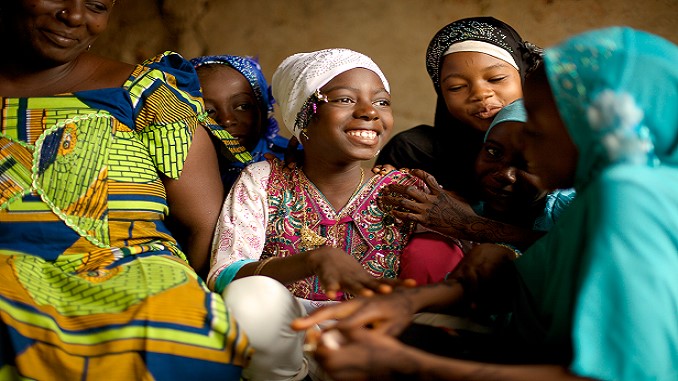
Many young people in Africa are however at the forefront of ending this practice. Below, is the remarkable mission of a young lady, Maryam from Northern Nigeria where only 4% of girls complete secondary education. She is campaigning to end child marriage and sexual abuse, and to ensure girls have access to education and reproductive rights. Writer, singer, reporter and leader, Maryam uses her voice to hold governments accountable.

Maryam from the Save the Children Foundation:

 “I am campaigning to end to child marriage and sexual abuse, and to ensure girls have access to education and reproductive rights. For the past four years, I have worked with various organisations and the media to promote the well-being of girls. I organise discussions with adolescent girls where they talk about issues they face. I use my voice to hold government accountable. I produce songs and speak at forums on girls’ health and education. I am a youth reporter and the leader of the Chibok girl’s ambassadors, where I organized marches demanding the release of the Chibok girls.

I would like my community to change the mind set about educating girls because educating and empowering girls is one of the best ways to eradicate poverty. I would also like my community to change their views on child marriage, because it leads to many health challenges for girls. 

I am calling on our leaders to include us when making decisions that affect our lives. I urge them to set up programs that will remove social barriers that limit us or hurt us, and to establish laws and policies that protect our rights. 

I will be 30 when the Sustainable Development Goals will end. This means my generation is responsible for holding leaders accountable for delivering these goals. By investing in my health, my education and my decision making capacity, the cycle of poverty can be broken and all of the sustainable development goals can be achieved simply by empowering me to reach my full potential.” 

Conversely, the Saudi Ministry of Justice has banned marriage of persons under 18 years. It also set 18 years as the minimum age for marriage. The Minister of Justice and Chairman of the Supreme Judicial Council, Sheikh Walid Al-Samaani, issued the new directive in a circular sent to all the courts in The Kingdom of Saudi Arabia.

It is noteworthy that Islam originated from Saudi Arabia and twice in a year Nigerian Muslims particularly the wealthy and politicians visit the country for Hajj and Umrah pilgrimages. Also the Saudi government is notable for its strict compliance with welfare of citizens. The country’s oils revenue is well utilized for the benefit of Saudi Arabians.

Furthermore, unlike Nigeria where girl child education is still a struggle in the North, young Saudi women are among the most educated in the Muslim world. Despite laws that require women to have a male guardian – a restriction that generally hampers their social mobility and access to jobs – young Saudi women are more educated than their male counterparts. As of 2010, about a third (35%) of Saudi women ages 25 to 34 held at least postsecondary degrees, compared with 28% of men, according to a Pew Research Center report

In December 2018, Nigerian media reported that a man in his 70s had married a 15-year-old girl in Niger State. Photos of the couple – posted on social media – sparked outrage across the country, and inspired a group of three teenage girls to start fighting back.

Kudirat Abiola, 15, Temitayo Asuni, 15 and Susan Ubogu, 16 set up a non-profit organisation called It’s Never Your Fault and chose the issue of child marriage as their first campaign: #raisetheage. Through an online petition, #raisetheage is calling for the Nigerian government to increase the age of marriage in all states to eighteen years old and for this law to be fully enforced. The petition has already amassed more than 115,000 signatures and continues to gain momentum.

Speaking in support of the campaign and petition, Hussaini Abdu – Plan International’s Country Director in Nigeria – said: “Child marriage has a devastating impact on children’s lives – particularly on the lives of girls. It not only robs them of their rights, but also of their childhoods.

“In Nigeria, 43% of girls are married off before their 18th birthday and 17% are married before they turn 15. A girl who is married before the age of 18 is more likely to drop out of school, to become a child mother, to die during pregnancy or childbirth, and to be trapped in a lifetime of poverty. She is also more likely to be psychologically and economically dependent on her husband and in-laws, and therefore unlikely to realise her true potential.”

There are many other voices calling for an end to child brides.

The late Kwegyir Aggrey’s quote: “If you educate a man, you educate an individual but if you educate a woman, you educate a whole nation,” still rings true.

Hopefully Nigeria will get it right someday.

200 rape, 37 sodomy cases recorded in Gombe

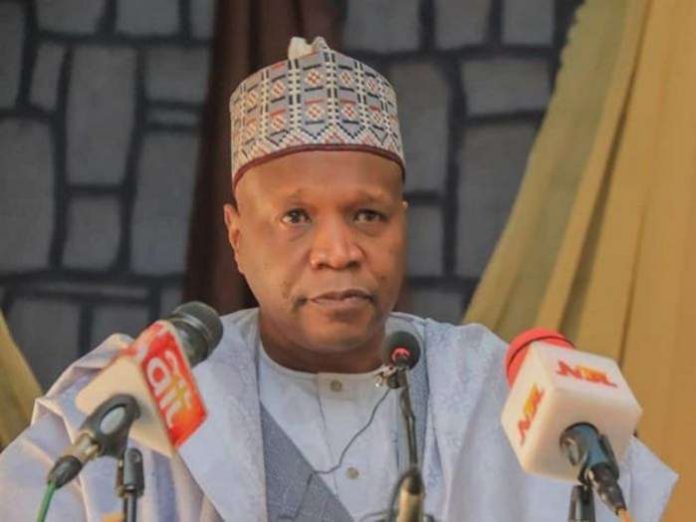
Gombe State’s Commissioner for internal security and Ethical Orientation, Dauda Zambuk, at the weekend said the state recorded 200 rape, 37 sodomy and 10 kidnap cases in 2020 with five recorded in January of the new year 2021 alone.

Speaking to a group of journalists in his office in Gombe Zambuk said 61 persons were also arrested for an act of gross indecency while three children were reported abandoned.

“In all the total number of 314 suspects were arrested and all were charged to court,” he said.

The commissioner said the state government after the investigation was a shock to find out that all kidnappings were perpetrated by criminals from the neighbouring Adamawa and Taraba States.

According to Zambuk, 40 rape cases were lodged in Gombe alone while 39 attempted rape were reported in the entire state.

He lamented that the cases were often between father’s and female children and all the victims are underaged.

“37 were arrested for unnatural (gay and lesbianism) offences, 61 for act of gross indecency and three cases of abandoned children were recorded in 2020.”

The break down of rape and other unnatural offences in all the 11 Local government areas of the state showed that Gombe leads with 40 reported cases followed by Akko 28 and Billiri 22.

Others are Funakaye 17, Balanga 15, Nafada 15, Yamatu Deba 13, Dukku 13, Kwami 12, Kaltungo 12 and Shongom 2.

He noted that gender-based violence had been recognised as a Human Rights abuse “that leads to high rates of mortality including gynaecological.”

Zambuk, a security expert explained that the state government has set up the state security strategic plan to consider, “what should be done to ensure that Gombe is secured.

“We have also sent the bill for the establishment of the state security and environmental corp to the state Assembly for ratification.

“On approval, it will be domesticated at every one of the 114 wards in the state,” he hinted, adding that leadership in the ministry had set up a 24-hour toll-free Security Information Centre (SIC) attending to emergency criminal cases.

Should you keep using WhatsApp? Plus five tips to start the year with your digital privacy intact

We spoke to convicted hacker turned security consultant Kevin Mitnick to find out how to maintain your security online

If you use the popular messaging service WhatsApp you may have noticed a pop-up message in recent days asking you to accept the service’s new terms and conditions by 8 February in order to continue using it.

The update has prompted calls for users to leave the popular messaging service in favour of alternatives such as Signal and Telegram. And on Friday a legal challenge on privacy grounds was filed against WhatsApp in India, the service’s biggest market. Telegram CEO Pavel Durov has reported an influx of 25 million global users to the rival service since the announcement was made.

But what do the new terms and conditions mean for you? We asked former most-wanted hacker turned security consultant Kevin Mitnick which messaging app he prefers – and to share his tips to set yourself up for a cyber-safe 2021.

“I prefer Signal because I know the developer behind the original project, and I know that Signal has been tested in the security community,” Mitnick says. “I believe Telegram has too, and I use Telegram, but not for secure messages.”

You can read WhatsApp’s Q&A about the changes here, but the main thing to know is that messages remain end-to-end encrypted and WhatsApp maintains that neither it, nor anyone else, has access to the content of messages between friends, family and groups. WhatsApp also says it doesn’t keep records of your call logs, share your contacts with Facebook and can’t see your shared location.

Continue reading

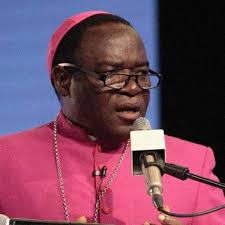
Bishop Kukah must come to no harm– CAN warns

  • Bishop accepts to apologise if…

The Christian Association of Nigeria (CAN) has warned persons plotting to harm the Catholic Bishop of Sokoto, Dr Matthew Hassan Kukah to stop their unlawful actions while urging the security agencies to ensure the safety and security of the clergy man.

The association’s stance comes as Kukah has declared his willingness to apologise if the Secretary-general of the Jamatu Nasril Islam, Dr. Aliyu, shows him where he insulted Islam in his Christmas Homily.

The General Secretary of CAN, Barrister Joseph Bade Daramola in a statement said: “We have been watching the unfolding scenario since Bishop Kukah spoke his mind on the State of the Nation in his Christmas homily and how some groups of people have been threatening him with fire and brimstone while all relevant security agencies are pretending as if nothing unusual is happening. We wonder if those threatening the Catholic Bishop of Sokoto are above the law or if they are sacred cows in the country.

“We have studied the whole Christmas message of Dr Kukah and we are yet to see any incitement against Islam or non- Christians. We see nothing wrong in his message to the nation that has been under the siege of terrorists, herdsmen killers, bandits and kidnappers as if there was no government in place. We see nothing wrong in telling a government whose lopsided appointments are against Christians the whole truth. If criticism against a Muslim President today, is an incitement to violence against Islam, it then means those who were criticising the duo of former Presidents Olusegun Obasanjo and Goodluck Jonathan when they were in power were actually attacking Christianity.

“When has it become an offence to speak the truth to power? When has it become a crime to criticise a government in the country? When did the lawful fundamental of human rights suspend in the country? When did some sections of the Constitution suspended without the awareness of the public? When did the Police and the Directorate of the State Security Services lose their power to miscreants and lawless people who are making boast of their lawlessness without a challenge? We wonder if those Muslim groups who are threatening to deal with Kukah got equal response from their Christian counterparts, are we not setting up the country on fire?

“Bishop Kukah was posted to serve in Sokoto by the Papacy and threatening him to leave is a global threat to Christianity. In this same country, we have a Catholic Priest whose name is synonymous with President Muhammadu Buhari yet the Catholic Church has not deemed it fit to sanction him because Freedom of Speech and Association is not only a constitutional matter but godly.

“We call on President Muhammadu Buhari and all the security agencies to ensure that no harm befall the Catholic Bishop of the Sokoto Diocese, Dr Matthew Hassan Kukah. As far as the Christian Association of Nigeria (CAN) is concerned, what he said in his Christmas Homily was still within the ambience of the law. It is high time those hiding under religious sentiments to promote violence and crises stopped doing so if we want this country to progress. We have had enough of bloodshed in the country and we call on the security agencies to rise up to their constitutional responsibilities. Nothing must happen to Bishop Matthew Hassan Kukah.

“ENOUGH IS ENOUGH!”

Meanwhile, Bishop Kukah has since said he would readily apologise if his attention was adverted to any specific or particular area of his Christmas sermon where he insulted the Islamic religion as claimed by the Jama’atu Nasril Islam (JNI).

Kukah was reacting to a statement by the Islamic groups JNI, which alleged that he bit the finger that fed him by si doing despite being accepted and tolerated in Sokoto State.

The Bishop asked the Islamic groups to show to him where and how in all his sermons he insulted Islam or Muslims.

In his response to the JNI’s statement, Kukah stated that the JNI Secretary focused more on politics rather than humanity to have accused him of firing an arrow at the heart of Islam and Muslims in Nigeria.

According to him: “Dr Aliyu has accused me of being an enemy of his religion, Islam. He accused me of what he calls, ‘firing an arrow at the heart of Islam and Muslims in Nigeria’.”

Kukah said that the statement claimed that he had been accorded respect and accommodated in Sokoto and had turned around to bite the finger that has fed him.

Read him (Kukah) “He (Aliyu) poses a question: How can Muslims continue to be hospitable to one who proves to be an ingrate many times over? How can Muslims be comfortable in associating with a bitterly vindictive person disguised in the garb of a religious cleric?”

Kukah said that his area of research was religion, politics and society, pointing out that he was concerned about how religion could help to form good citizens and also how the state could create an environment that enabled citizens to achieve this.

“In all of my writings over the last forty or more years, I have never written a single paper or article on Islam as a religion. If there is any scholar anywhere who knows, let him or her say so.

“I have written about religion focusing on how both citizens and the state deal with it, with a focus on politicians. My concerns are summarised in what the late Professor Bala Usman loosely referred to as the manipulation of religion. This manipulation is what has turned religion into a weapon of war in Nigeria,” he posited.

Kukah appealed to Dr Aliyu to, as a matter of honour and based on the text of his Christmas sermon, formally identify where in the sermon he attacked Islam or all Muslims in Nigeria.

He assured Aliyu that if he was able to point out any infractions, he (Kukah)would be more than happy and ready to apologise for the offensive part(s) of the sermon.

According to him: “The relevant paragraphs in my sermon focused on the two painful themes of nepotism and the haemorrhaging of lives in our country, a fact that as I said, most religious leaders and statesmen and women have alluded to.

“How a critique of government policies suddenly becomes hater of Islam and the north, beggars belief.”

He called on Aliyu to clarify and validate his accusations against him and advance the reasons why he should incite violence against him.

“I am unaware of anyone in Sokoto who has accused me of any misdemeanour or actions aimed at undermining the state or anyone, no least the faith of Islam,” he said, even as he expressed the belief “that today, nepotism poses a serious threat to our country.”

He added that the issue of insecurity and how the north has become so affected remained a notorious fact, stressing: “My belief was to add my voice to the voices of millions of Nigerians, Muslims, Christians, Traditional rulers, Statesmen and all who have shown genuine concerns.”

He said it would be a great pity and a disservice to their efforts at national cohesion if they resorted to the kind of diversionary threats that Aliyu had embarked on.

He stated: “It only makes the job of insurgents easier if we become enemies to one another”.

Coronavirus Recovery: Breathing Exercises

The coronavirus that causes COVID-19 attacks the lungs and respiratory system, sometimes resulting in significant damage. COVID-19 often leads to pneumonia and even acute respiratory distress syndrome (ARDS), a severe lung injury. Recovering lung function is possible but can require therapy and exercises for months after the infection is treated.

“Working toward recovery starts simple: with a focus on breathing,” says Johns Hopkins physical therapist Peiting Lien. She offers a series of breathing exercises to aid in recovery for those who had COVID-19 or another serious illness.

Benefits of Breathing Exercises

“Deep breathing can help restore diaphragm function and increase lung capacity. The goal is to build up the ability to breathe deeply during any activity, not just while at rest,” notes Lien.

Deep breathing exercises can also lessen feelings of anxiety and stress, which are common for someone who experienced severe symptoms or was admitted to a hospital. Sleep quality may also improve with these breathing exercises.

Anyone can benefit from deep breathing techniques, but they play an especially important role in the COVID-19 recovery process. The exercises can be started at home during self-isolation and easily incorporated into your daily routine.

Precautions

Do not begin exercises, and contact your doctor, if:

  • You have a fever
  • You have any shortness of breath or difficulty breathing while resting
  • You have any chest pain or palpitations (“fluttering” of the heart in the chest)
  • You have new swelling in your legs

STOP exercise immediately if you develop any of the following symptoms:

  • Dizziness
  • Shortness of breath more than normal
  • Chest pain
  • Cool, clammy skin
  • Excessive fatigue
  • Irregular heartbeat
  • Any symptoms you consider an emergency

Call 911 immediately if these symptoms don’t stop with rest or if you experience any change in mental status from your normal capacity.

Diaphragmatic Breathing (Belly Breathing)

Deep breathing restores lung function by using the diaphragm. Breathing through the nose strengthens the diaphragm and encourages the nervous system to relax and restore itself.

When recovering from a respiratory illness like COVID-19, it’s important not to rush recovery. This deep breathing exercise is broken up into phases to take into account individual ability. Start with Phase 1, and only increase repetitions or move to the next phase when you can complete the exercise without feeling too out of breath.

Phase 1: Deep Breathing While On Your Back

  1. Lie on your back and bend your knees so that the bottom of your feet are resting on the bed.
  2. Place your hands on top of your stomach or wrap them around the sides of your stomach.
  3. Close your lips and place your tongue on the roof of your mouth.
  4. Breathe in through the nose and pull air down into your stomach where your hands are. Try to spread your fingers apart with your breath.
  5. Slowly exhale your breath through the nose.
  6. Repeat deep breaths for one minute.
a woman deep breathing while laying on her back

Phase 2: Deep Breathing While on Your Stomach

  1. Lie on your stomach and rest your head on your hands to allow room to breathe.
  2. Close your lips and place your tongue on the roof of your mouth.
  3. Breathe in through your nose and pull air down into your stomach. Try to focus on your stomach pushing into the mattress as you breathe.
  4. Slowly exhale your breath through your nose.
  5. Repeat deep breaths for one minute.
a woman deep breathing while laying on her stomach

Phase 3: Deep Breathing While Sitting

  1. Sit upright on the edge of a bed or in a sturdy chair.
  2. Place your hands around the sides of your stomach.
  3. Close lips and place your tongue on the roof of your mouth.
  4. Breathe in through your nose and pull air down into your stomach where your hands are. Try to spread your fingers apart with your breath.
  5. Slowly exhale your breath through your nose.
  6. Repeat deep breaths for one minute.
a woman deep breathing while sitting in a chair

Phase 4: Deep Breathing While Standing

  1. Stand upright and place your hands around the sides of your stomach.
  2. Close your lips and place your tongue on the roof of your mouth.
  3. Breathe in through your nose and pull air down into your stomach where your hands are. Try to spread your fingers apart with your breath.
  4. Slowly exhale your breath* through your nose.
  5. Repeat deep breaths for one minute.

*You may practice humming exhalation here if desired.

Exercises to Facilitate Movement

https://www.youtube.com/embed/2Jq8jZnoQ8E?rel=0&showinfo=0In this video, physical therapist Peiting Lien from the Johns Hopkins Rehabilitation Network demonstrates proper diaphragmatic breathing techniques, and goes on to show a few exercises to ease into movement.

Yawn to a Smile

This exercise incorporates motion with deep breathing, which helps increase coordination and build strength in the arms and shoulders. It also opens up the muscles in your chest to give the diaphragm space to expand.

  1. Sit upright on the edge of your bed or in a sturdy chair.
  2. Reach arms overhead and create a big stretching yawn.
  3. Bring your arms down and finish by smiling for three seconds.
  4. Repeat for one minute.
a woman deep breathing while raising her arms above her head

Humming

Humming while exhaling helps increase nitric oxide production in the body. Nitric oxide helps with neural plasticity (building and repair of the nervous system) and it dilates blood vessels, enabling more oxygen to be delivered throughout the body. Humming is also calming and soothing, it reduces stress and it can help the patient remain in restoration mode.

  1. Sit upright on the edge of your bed or in a sturdy chair.
  2. Place your hands around the sides of your stomach.
  3. With your lips closed and your tongue on the roof of your mouth, breathe in through your nose and pull air down into your stomach where your hands are. Try to spread your fingers apart with your breath.
  4. Once your lungs are full, keep your lips closed and exhale while humming, making the “hmmmmmm” sound. Notice how your hands lower back down.
  5. Again, inhale through your nose, then exhale through your nose while humming.
  6. Repeat for one minute.

Hopkinsmedicine

TIPS