Home Blog Page 1085

Remembering Nigeria’s Biafra war that many prefer to forget

The deaths of more than a million people in Nigeria as a result of the brutal civil war which ended exactly 50 years ago are a scar on the nation’s history.

For most Nigerians, the war over the breakaway state of Biafra is generally regarded as an unfortunate episode best forgotten, but for the Igbo people who fought for secession, it remains a life-defining event.

In 1967, following two coups and turmoil which led to about a million Igbos returning to the south-east of Nigeria, the Republic of Biafra seceded with 33-year-old military officer Emeka Odumegwu Ojukwu at the helm.

The Nigerian government declared war and after 30 months of fighting, Biafra surrendered. On 15 January 1970, the conflict officially ended.

The government’s policy of “no victor, no vanquished” may have led to a lack of official reflection, but many Nigerians of Igbo origin grew up on stories from people who lived through the war.

Three of those who were involved in the secessionist campaign have been sharing their memories.

Short presentational grey line

‘We thought we were magicians’

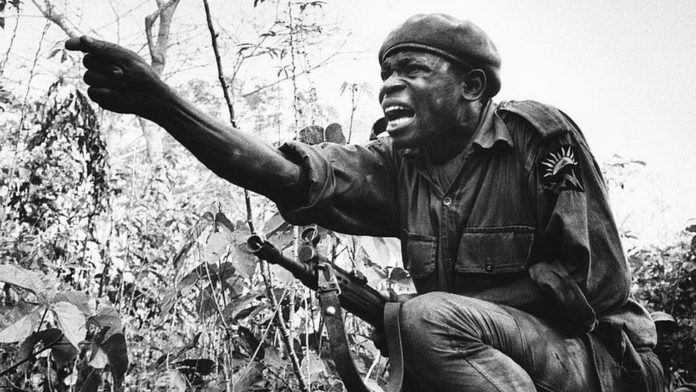
Christopher Ejike Ago, soldier

He had just finished grammar school and started training as a veterinary assistant at the University of Nigeria, Nsukka (UNN), in south-eastern Nigeria, when the civil war began.

Almost every student he knew became part of the war effort.

He joined the Biafran army and was assigned to the signal unit, whose responsibilities included “active intelligence and eavesdropping on the Nigerian military”.Christopher Ejike AgoChristopher Ejike AgoThe Nigerians who were pursuing us were trained soldiers… We were drafted into the war, given two days’ training.”Christopher Ejike Ago
Soldier in the Biafran war

“We thought we were magicians,” said 76-year-old Mr Ago.

“The Nigerians who were pursuing us were trained soldiers. We were not. We were drafted into the war, given two days’ training.

“Plus the fact that we were hungry. Some of us, our skin was getting rotten. Nobody can fight a war like that.”

In January 1966, some senior Nigerian army officers, mostly of the Igbo ethnic group, assassinated key politicians during a coup in the West African state.

Those killed included Ahmadu Bello, a revered leader in the north.

This led to months of massacres against the Igbo living in the north. Tens of thousands were killed while about a million fled to what was then known as the Eastern Region.
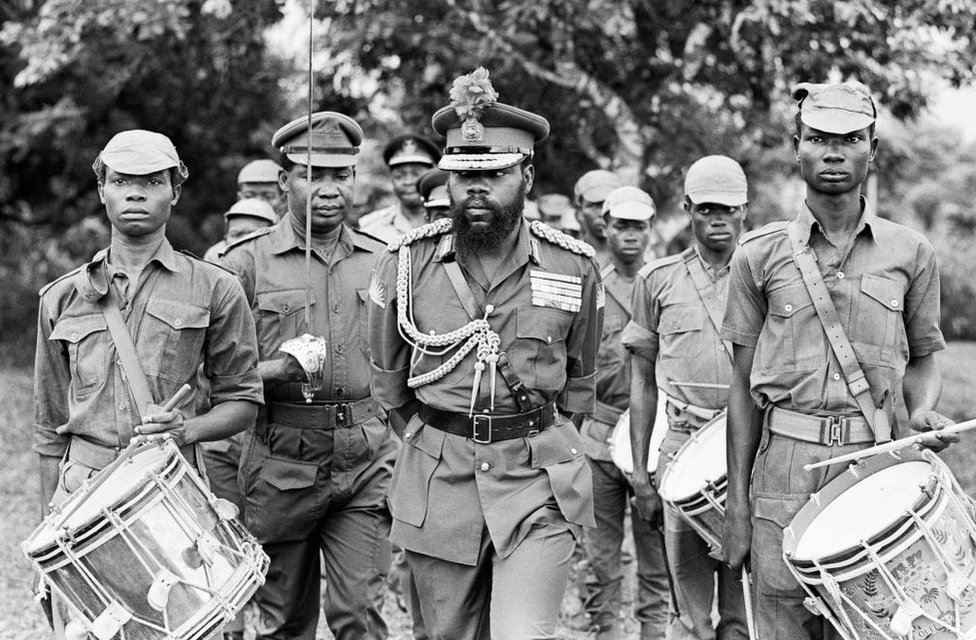
Colonel Odumegwu Ojukwu, the Military Governor of Biafra in Nigeria inspecting some of his troops, 11th June 1968.
image captionEmeka Odumegwu Ojukwu, pictured here in June 1968, was a charismatic figure

These events sparked the decision to secede, spearheaded by Ojukwu, who was then the military governor of the Eastern Region.

In the months preceding the war, Ojukwu often visited UNN, the only university in south-eastern Nigeria at the time, to meet with students and prepare them for secession.

Mr Ago looked forward to these visits, and joined the crowd who gathered at the university’s Freedom Square.

“Once his helicopter touched down, everybody went there and, practically, school shut down.

“He had this incredible sense of humour. He spiked everybody up and we formed songs and were singing and enjoying ourselves.”

In the first year of the war, the Nigerian government captured the coastal city of Port Harcourt and imposed a blockade, which cut food supplies to Biafra.
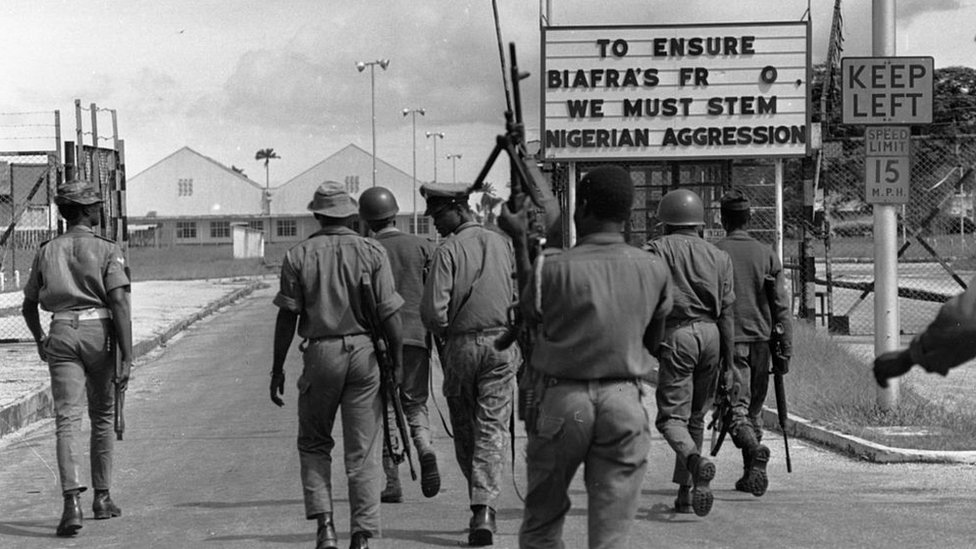
Nigerian troops entering Port Harcourt, after routing Biafran troops during the Biafran War.
image captionNigerian troops seen in one of Biafra’s main cities, Port Harcourt, in 1968 after fierce fighting

Mr Ago remembers the overpowering hunger that often forced Biafran soldiers to catch and eat mice. He also remembers the last year of the war when his unit was continuously on the move, fleeing the advancing Nigerian army.

“Somewhere in the middle of the war,” he said, “the Biafrans made some dramatic successes that gave us hope that we might hold the Nigerians until at least some help from outside came.”

By late 1969, all hope was lost.

Presentational grey line

Biafra timeline

  • January 1966 – Nigerian government overthrown in what was seen as an “Igbo coup” led by junior army officers
  • January 1966 – Lt Col Odumegwu-Ojukwu appointed military governor of Eastern Region
  • July 1966 – Second coup masterminded by Murtala Muhammed, Lt Col Yakubu Gowon becomes head of state
  • June to October 1966 – Riots in northern Nigeria targeted at Igbos, killing many and forcing up to a million to return to south-eastern Nigeria
  • May 1967 – Ojukwu declares independence of the Republic of Biafra
  • July 1967 – War begins
  • October 1967 – Biafran capital Enugu falls
  • May 1968 – Nigeria captures oil-rich Port Harcourt
  • April 1969 – Umuahia, new Biafran capital falls to Nigerian forces
  • January 1970 – Ojukwu flees Nigeria
  • January 1970 – Biafra surrenders
Presentational grey line

Mr Ago left the army and went in search of his family, whom he had not heard from in more than two years.

He collected his portion from an allocation of raw rice to his unit, then set off towards the village of a relative, where he suspected his parents and siblings would be holed up.

“I had to carry the rice while starving myself, carrying it across rivers and forests until I found them,” he said.
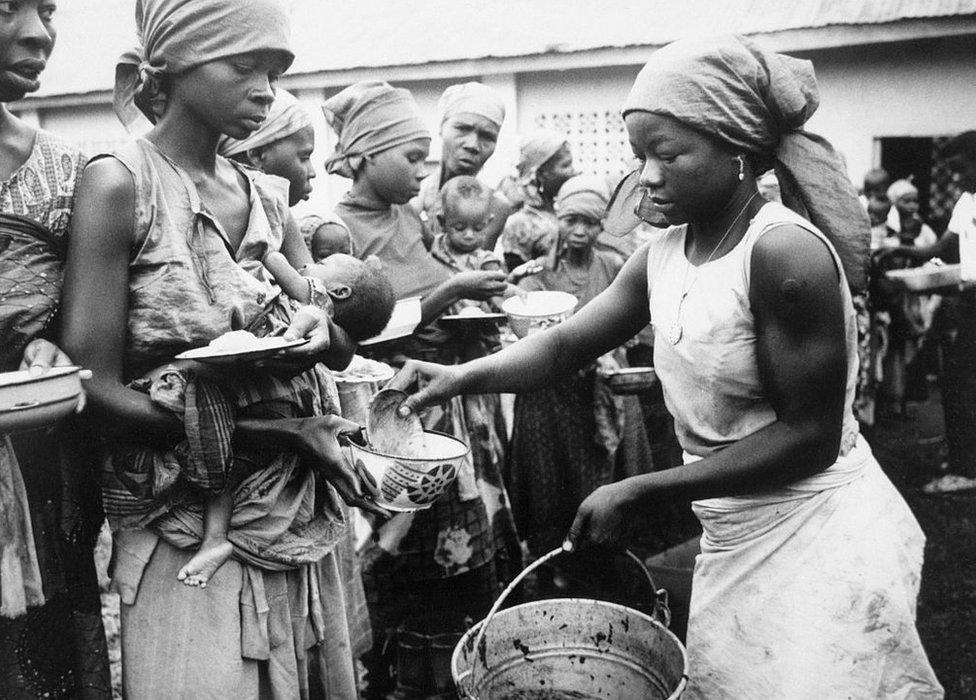
BIAFRA- By all military odds, Biafra should have lost its war with federal Nigeria long ago. It has not lost, but in the next few months it might--vanquished by starvation. Here, women and children receive their meager rations at a refugee camp.
image captionHunger caused the deaths of many people during the conflict

Many of his friends and classmates had died at the battlefront. But his family was delighted to see that the son and brother they assumed dead was alive. And they were glad that he had turned up with food.

Hunger killed more Biafrans than bullets and bombs.

When the university was reopened a few months after the war ended, Mr Ago returned to UNN, eventually graduating with a degree in plant and soil science.

“I think we would have done better if we had handled it with a little bit more intelligence,” said Mr Ago. “I think now that Ojukwu… thought he was Jesus Christ.

“He thought he could do magic. If he had slowed down and allowed some people who were with him to advise him properly, we would have come out better than we did.”

‘They only had knives and cutlasses’

Felix Nwankwo Oragwu, scientist

He was a physics lecturer at UNN when the civil war began.

For the next 30 months, he headed the Research and Production (RAP) group comprising Igbo scientists from various fields.

Its primary responsibility was to provide technological support to the Biafran army, which was poorly equipped.Felix Nwankwo OragwuFelix Nwankwo OragwuWhen the war started, there was not a single weapon… anywhere throughout Biafra. No gun, no bomb, no nothing.”Felix Nwankwo Oragwu
Weapons developer for Biafra

The RAP’s most notable product was the “ogbunigwe”, a weapons launcher of remarkable and devastating effect which influenced the outcome of many battles in Biafra’s favour, according to historical reports.

“Without us, the war would have lasted only about 30 hours,” said the 85-year-old.

“When the war started, there was not a single weapon either in a store or anywhere throughout Biafra. They only had knives and cutlasses. No gun, no bomb, no nothing.”

In the aftermath of the war, the Nigerian government did not want to impose any form of collective punishment.
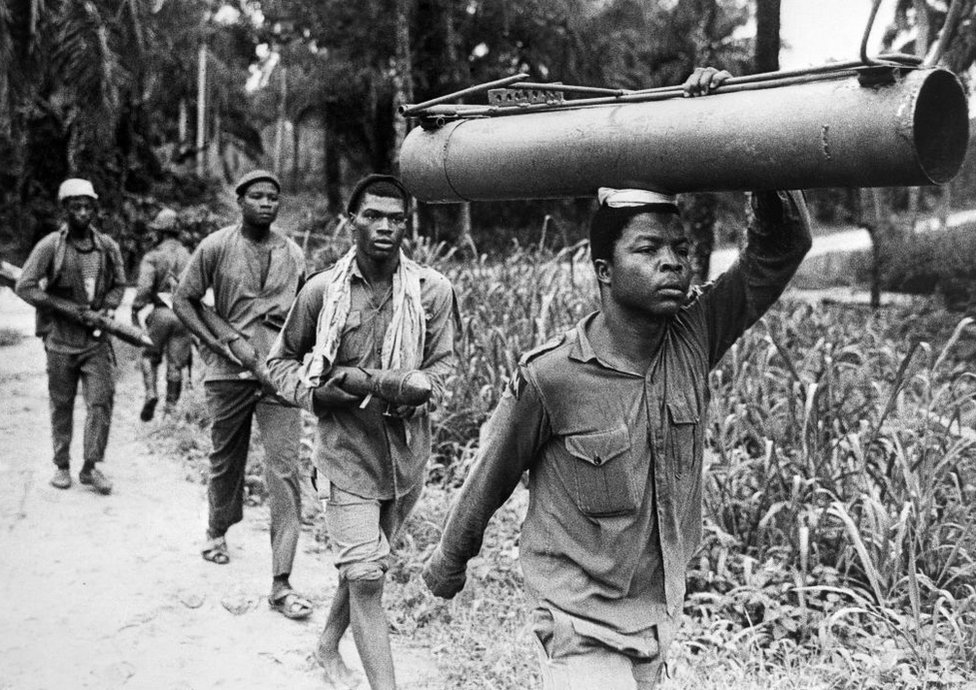
Men carrying a weapon
image captionFelix Nwankwo Oragwu and others helped develop some of the weapons that Biafran soldiers used

Nevertheless, the Igbo faced some devastating consequences, particularly economically as the Biafran currency that people had accumulated became worthless.

Many Igbo still feel sidelined in Nigerian politics, as since the civil war no-one from the ethnic group has become president.

Increasing cries of marginalisation have led in recent years to the emergence of Igbo groups agitating once again for secession, particularly the Indigenous People of Biafra (Ipob), formed by UK-based British-Nigerian Nnamdi Kanu.https://emp.bbc.com/emp/SMPj/2.36.7/iframe.htmlmedia captionBiafran conflict: A grandmother’s perspective on the war

Mr Oragwu wishes that the Igbo had paid less attention to the scramble for power at the centre, and instead distinguished their region by advancing the technological gains of the war.

“Biafra would have been a technological nation and would have been able to compete with anybody,” he said, anger in his voice.

“That is what makes me sad. By this time, we would have been competing with at least South Korea.”

The scientist’s wartime accomplishments had caught the attention of the Nigerian authorities and he was invited by the government to pioneer a special science and technology programme for the country.
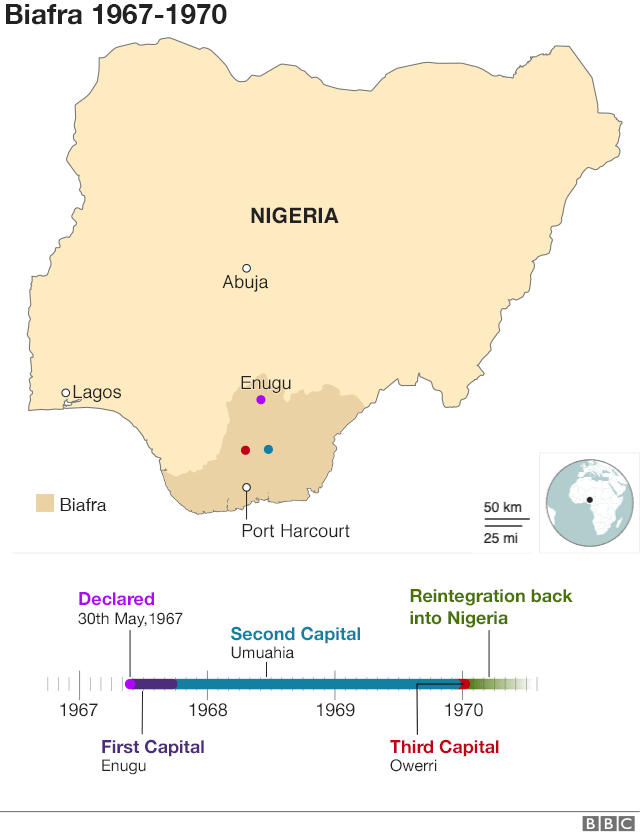
Map showing Biafra

He was behind the setting up of four universities of science and technology in different regions of Nigeria and after retirement he published Scientific and Technological Innovations in Biafra, a book he hoped would inspire young Nigerians.

“Nigeria was programmed by the British colonial authorities not to participate in production and manufacture of global technologies,” he wrote in the book.

“The war gave the opportunity to… reject the colonial design.”

‘An incredible period’

Edna Nwanunobi, teacher

She was teaching English and French in a secondary school in Port Harcourt in southern Nigeria when the civil war began.

While the UK backed Nigeria, France was the most prominent supporter of Biafra.

But English was more widely spoken in Biafra, so translators were needed whenever French officials visited Ojukwu.Edna Nwanunobi”You were forced to fraternise with your people more than any time before”Edna Nwanunobi
Translator for the Biafran government

Ms Nwanunobi joined the Biafran ministry of foreign affairs as part of a handful of translators who worked directly with Ojukwu.

“The war was an incredible period,” said 82-year-old Mrs Nwanunobi. “Everybody was forced to go home so you were forced to fraternise with your people more than any time before.

“And people who worked in every Biafra office were high level people. These were people who were doing all sorts of things and the war forced them out of their positions.”

She enjoyed working directly with the Biafran leader, whom she and her colleagues fondly referred to as “Brother OJ”.https://emp.bbc.com/emp/SMPj/2.36.7/iframe.htmlmedia captionBiafran War veterans remember the conflict 50 years on

“He was a gorgeous person,” she said again and again. “And he was disciplined. If any meeting lasted more than two hours, he wouldn’t be party to it.”

Her most memorable assignment occurred after the Biafran military captured six Italian oil workers employed by the Nigerian government.

Officials from different European countries travelled to meet Ojukwu to appeal for their release.

“That was the largest assembly we had,” she recalled. “Even the Vatican sent representatives.”

During the meeting, Mrs Nwanunobi conveyed to Ojukwu that he stood the risk of losing European support.

He promised to consider the matter, and the Italians were subsequently released.
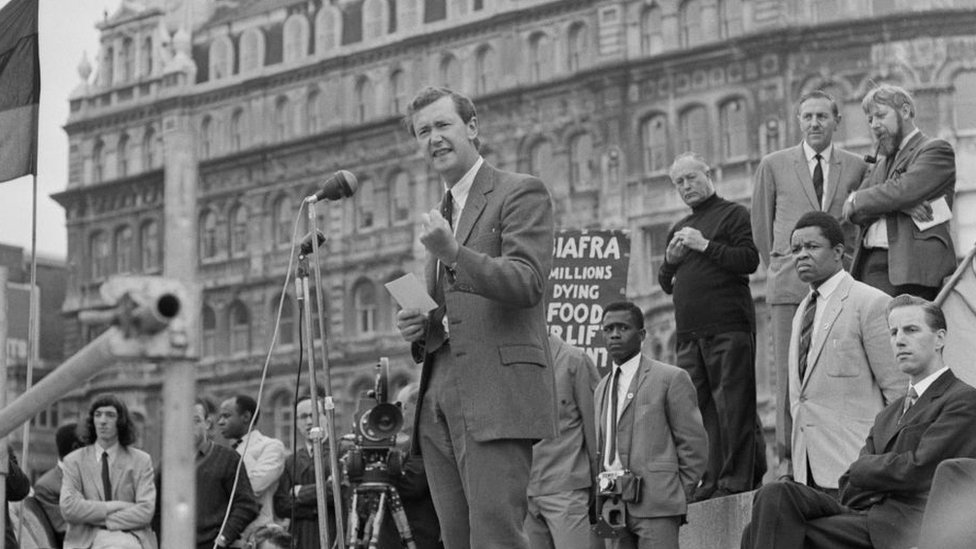
British Labour Party politician Michael Barnes speaking at a rally organised by the 'Biafra Committee', London, UK, 7th July 1968.
image captionThe plight of Biafrans gained support among activists around the world, including in London, where this protest was held in 1968

Mrs Nwanunobi met Ojukwu for the last time on 23 December 1969, when she lined up outside his office with her colleagues, to receive a Christmas gift and a handshake from him.

A few days later, she left the country for the Biafran office in Paris. During a stopover of several days in Lisbon, she heard that Biafra had surrendered.

Her first concern was for Ojukwu.

“I was worried that he would come to harm,” she said softly. “I didn’t want anybody to disgrace him.”

Her worry lifted when she learned that her boss had escaped in his private jet, and was granted asylum by Ivory Coast, a francophone country.

Mrs Nwanunobi spent much of the 1970s in Canada before returning to Nigeria in 1977, where she resumed work as a secondary school teacher.
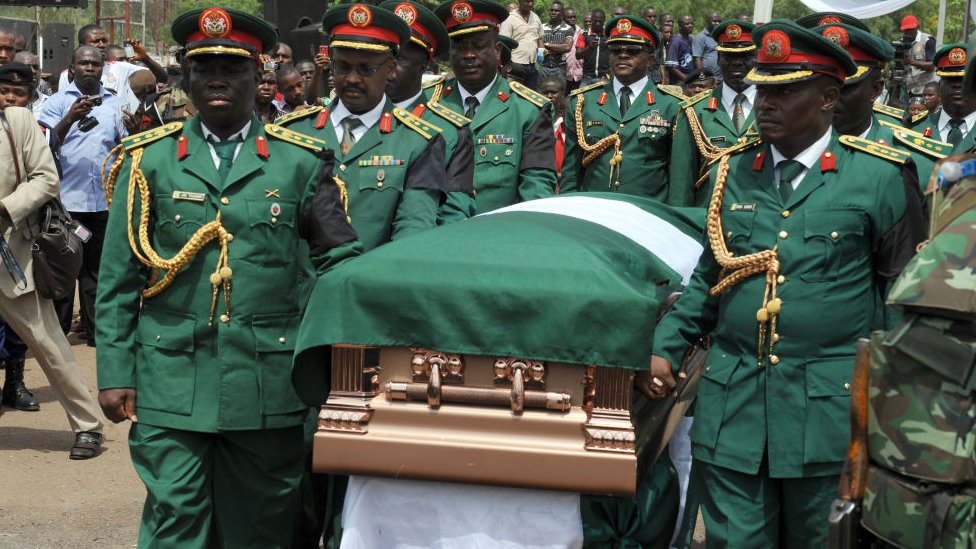
The bronze plated casket with the body of Odumegwu Ojukwu is being carried to his native Nnewi home by army pall bearers after a national inter-denominational funeral rites
image captionOjukwu was given a full Nigerian military burial in March 2012

Ojukwu himself remained in exile for 13 years. After he was officially pardoned by the Nigerian government, he returned in 1982, with multitudes pouring onto the streets of his home state of Anambra to welcome him.

He died in November 2011 and was given a full military burial in a ceremony attended by then Nigerian President Goodluck Jonathan, some other African leaders and members of the diplomatic corps.

Fifty years after the Biafran conflict, Nigeria is still battling to maintain its unity, with various groups, not just the Igbo, calling for the restructuring of Africa’s most populous state.

It is probably for this reason that the war is barely mentioned.

The government has nothing to gain by reminding Nigerians that secession happened before and can be attempted again.

First published January 15, 2020.

BBC

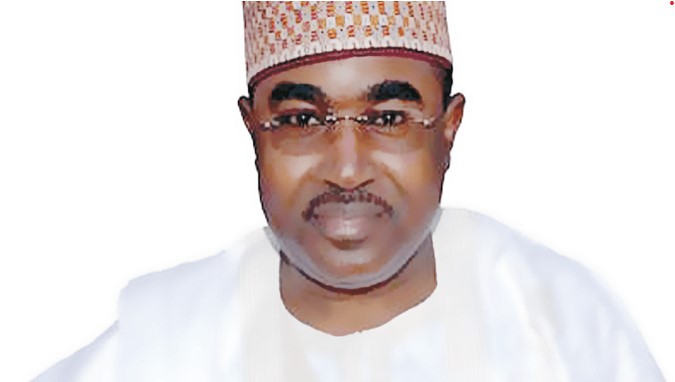
Buba Marwa appointed new NDLEA boss

President Muhammadu Buhari has approved the appointment of former Military Administrator of Lagos State and Borno States, Brigadier General Mohammed Buba Marwa (rtd), as the Chief Executive Officer and Chairman of the National Drug Law Enforcement Agency (NDLEA).

The appointment is with immediate effect.

Marwa, a former military attaché at Nigerian Embassy, Washington DC, USA, and defence attaché, United Nations, New York, as well as former ambassador to South Africa and the Kingdoms of Lesotho and Swaziland takes over from Alhaji  Mohammed Mustapha Abdallah, who was appointed NDLEA Chairman by President Buhari on January 11, 2016.

The new NDLEA boss, who is a member of the ruling All Progressives Congress (APC) and staunch supporter of Buhari, had earlier served as Chairman of the Presidential Advisory Committee for the Elimination of Drug Abuse (PACEDA) between January 2018 and December 2020.

The 67 year old retired one-star general, served as governor of Borno State, and later Lagos State during the military administrations of General Ibrahim Babangida, late Gen Sani Abacha and  Gen Abdulsalami Abubakar.

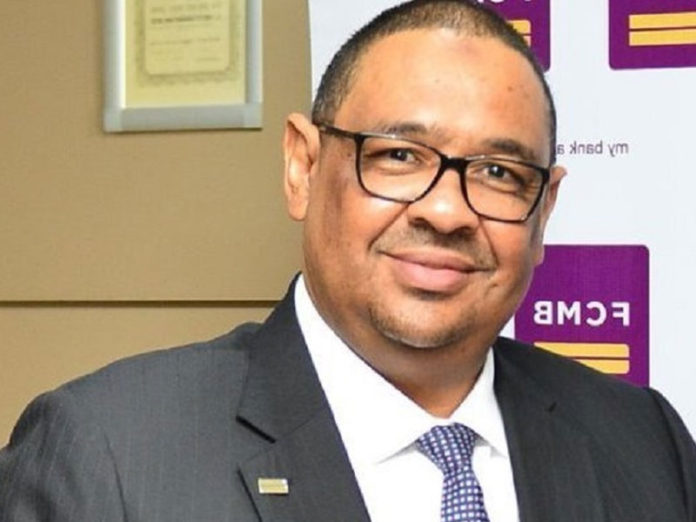
FCMB: Adam Nuru’s Wife Speaks, Says Her Marriage Still Intact

Hauwa, the wife of the Managing Director of First City Monument Bank, Adam Nuru (now on leave) yesterday debunked reports about her purported divorce bid over allegations of infidelity and paternity scandal against her husband, and a former staff of the bank, Moyo Thomas.

In her response to series of publications alleging that she had decided to move out of her matrimonial home in reaction to the scandal, Hauwa said there was no reason for her to seek for divorce or to pack out of her matrimonial home.

In the statement titled, “I’m still with my Beloved Husband”, which was made available to THISDAY, Hauwa described the publication as “malicious and a deliberate falsehood,” asserting that she is still very much with her husband.

She stated: “Following several calls from well-meaning family members and friends over a malicious publication and deliberate falsehood that I have packed out of my matrimonial home, I want to clarify for the avoidance of doubt that I am still very much with my husband.

“This fake news was published by an online newspaper in a calculated attempt to further demonise my beloved husband and a loving father.

“Let me reiterate that at no time did I contemplate leaving my matrimonial home or filing for divorce as no grounds exist for such. I really have no idea where this is coming from.”

She cautioned the media against pushing out unsubstantiated stories, saying, “while I owe a debt of gratitude to all those who have genuinely expressed concern about the fabricated story of moving out of my matrimonial home, let me appeal to the media to abide by the ethics of their profession and avoid the pitfall of rumour mongering and sensational reporting.”

She vowed not to make further comments on the issue which is currently being investigated by her husband’s employers: “There is no truth to the tale whatsoever. I will not be responding to any further comments made by persons who obviously have an agenda whatever it may be.”

For some weeks now, the social media have been awash with allegations that Nuru had an affair with Moyo, a former FCMB employee, fathering two children with her.

It was also said that the alleged paternity fraud resulted in the death of Tunde Thomas, Moyo’s husband.

But Moyo has since denied that Nuru fathered her kids.

Nuru volunteered to go on leave to enable the bank investigate the allegations against him.

Moyo, who recently broke her silence on the matter, denied allegations of paternity fraud levelled against her.

In her statement, she also denied ever telling her late husband that he was not the father of her children.

The statement read, “I write in reference to all the allegations and accusations that have recently been making the rounds on the internet and various social media platforms. I have refrained from responding to this matter for various reasons, one of which is to preserve the memories of Tunde who departed to be with his maker on December 16, 2020. Memories, not only to me, but to his children, who are still young, and to everybody who had a relationship with him.

“Just like any marriage, Tunde and I had a lot of differences in our marriage, some of which even led to police intervention. But I remain committed to keeping only positive memories of him. No one can ever understand what transpired between us or what each of us experienced in the marriage; like they say, it is he who wears the shoes that knows where it pinches. In all of it, I never for once wished him bad. His untimely and sudden death is still a shock to me as it is to many others.

“On no occasion did I ever tell him he was not the father of our two children. It is therefore deliberate falsehood and certainly malicious to allege and insinuate that I informed him that the children are not his. The children still bear his name. Only God knows why he died in an untimely period. It is not in my place, or anyone’s place to play God and talk with certainty as to the cause of his death, without proven medical facts.

“Despite our separation, we never allowed our differences to affect the relationships we respectively have with the children. He still had conversations with the children like any father will, up until his sudden and unfortunate death. It is quite sad and disheartening to see the pictures of these innocent children splashed all over the internet with very disparaging and weird comments.”

Thisdaylive

Adam Nuhu: A case for suspended MD of FCMB

By Vincent Akanmode

Poor Adam Nuhu. The moment the news filtered in a few weeks ago that the erstwhile managing director of First City Monument Bank (FCMB) was accused of eating the forbidden fruit of one of his female underlings, my instincts told me that he was in for a long night.  For more than two decades, he had studiously avoided scandal or controversy as he preoccupied himself strictly with banking activities, pledging unwavering loyalty to the marriage with Hauwa, his beautiful wife.

But if there is one thing that cannot be disputed about life, it is its unpredictable nature. Like biscuit, no one knows when or where it would crack, especially when one is surrounded by detractors as seems to be the case with the erstwhile MD of FCMB.

As the story goes, the suspended MD was allegedly engrossed in an amorous relationship with a former female employee of the bank named Moyo, who reportedly bore him two children while she was married to another man. Moyo’s husband was said to have been so shocked at the discovery of the romance between his wife and her boss and the realization that their two children belonged to Nuhu and not he, the authentic husband, that he developed a stroke and later died of heart failure a few days to his proposed wedding with another lady.

In a society of hypocrites where infidelity is considered a sin smaller only than murder, emotions were bound to run wild with loss of life and paternity fraud involved. That became the basis for the outrage that greeted the news and the pressure mounted on the Central Bank of Nigeria and the authorities of FCMB to investigate the matter and sanction Nuhu. It did not take long before the board of FCMB yielded to pressure and ordered Nuhu’s suspension as the MD, appointing Mrs Yemisi Edun as the acting MD.

But just when everyone thought that the former MD had seen the worst, the news filtered out that his wife of many years had deserted him. The ugly prospect of Nuhu losing his exotic and dignifying job as the chief executive officer of the prestigious bank was thus compounded with the threat of a desolate life for the once hearty and bubbly family man. His fate of seeming abandonment by the home front contrasts sharply with the show of solidarity the members of Moyo’s family exhibited for their daughter.

For the alleged love birds, it has been a case of different strokes for different folks. While members of Moyo’s family are rallying round her, defending her desperately and declaring her clean as a hound’s tooth in the allegation of marital infidelity leveled against her, members of Nuhu’s family appear less enthusiastic about sticking their necks out for him even while the result of the investigation ordered by the authorities of FCMB was yet to be made public. It once again provokes the question as to why the male partner is almost always the one at the receiving end in such matters.

But Nuhu must not be left to bear this cross alone, if only for the sake of humanity. Even if he was guilty of the alleged act of misdemeanor, it still will be too much a punishment that a man who once boasted a beautiful wife and another beautiful side chick would suddenly be turned into an absolute recluse. Everyone with any measure of influence on Madam Hauwa must do everything they can to persuade her to return to her matrimonial home immediately. To err, they say, is human and to forgive divine.

As a first step, I recommend that a committee be constituted to look into ways of eliminating the threats to the marriage of the embattled chief executive. Their terms of reference will include establishing the veracity or otherwise of the claim that the erstwhile managing director was in the habit of philandering with female underlings while giving Hauwa the impression that he was working very hard in the office. They would also have to find out from Hauwa if Nuhu has a record of winking at other chicks whenever they were together on social outings.

The committee must of necessity summon Moyo from her base in the US for a physical assessment of her looks, figure and shape with a view to establishing or dismissing the likelihood of Nuhu being attracted by them. While the authorities of FCMB must be commended for insight and thoughtfulness with their decision to opt for a woman as a replacement for the suspended MD, it is important to know what features of a woman can constitute banana peels for future male MDs.

Not the least, the committee will have to find out what lessons other male bosses in the habit of seducing female subordinates can learn from Nuhu’s experience.

Thenationonlineng

Marriage Not To Be Conducted At Night

#OBSCURELEGALFACTS BY AROME ABU

In Nigeria, wedding ceremonies must be conducted between the hours of 8am and 6pm.

EXCEPTIONS
1. Traditional marriage
2. Islamic marriage

SEE: Combined reading of Sections 21 and 27 of the Marriage Act.

Arome Abu is the Principal Partner of TCLP.

CAVEAT: Note that this information is provided for general enlightenment purposes and is not intended to be any form of legal advice.

Obscure Legal Facts is an exclusive daily publication of THE COUNSEL L-P.
Plot 108 Idris Gidado Way, Wuye, Abuja.
abuarome@[email protected]
+234 803 262 2359
+234 708 1156 539.
Twitter: @TheCounselLP

Ending Former Governors’ Official Swindle-Bulama Bukarti

All humans are selfish. Politicians everywhere appear more so than most. But when it comes to greed, Nigerian politicians are in a class of their own. And in that class, former governors occupy the front row.

Nothing demonstrates this better than the Pension Rights of Governor and Deputy Governor laws. This legislation, midwifed and signed into law by many governors towards the end of their terms, pays them and their deputies humongous sums and benefits for life. Such laws, so nakedly self-serving, were passed by 25 states of the federation from 2001 onwards. To save you the trouble of looking them up elsewhere, they are: Abia, Akwa Ibom, Bauchi, Anambra, Borno, Delta, Ebonyi, Edo, Gombe, Jigawa, Sokoto, Kano, Kebbi, Kogi, Kwara, Imo, Lagos, Niger, Ondo, Osun, Plateau, Ondo, Rivers, Yobe and Zamfara. In most cases, the very same persons that orchestrated and oversaw its promulgation just before leaving office became the first beneficiaries.

Such shamelessly self-serving legislation compounds the illicit rewards of politicians, who spent their terms luxuriating and enriching themselves and cronies.

Take the Kano State version for example. It gives former governors and deputies sums equal to the emolument of their incumbent counterparts. Further, a former governor is entitled to a furnished six-bedroom house and an office each in a location of their choice, all bills and utilities to be paid from public funds. It further awards ex-governors two administrative staff and two drivers to be chosen by him and paid by the state government. The law gifts past governors two cars that should be replaced every four years, 30-day annual ‘leave’ (not that the payment is conditional on doing any work) and medical treatment for themselves and their immediate family at home or abroad at the expense of the taxpayer. Former deputy governors get a four-bedroom house, an office, a car replaceable every quadrennially, two administrative staff and a driver, in addition to payment of bills, annual leave and medical treatment. All this will continue for life.

Some states’ version makes even more outrageous provisions. In Lagos State, the law provides ex-governors and deputies two houses, in Lagos and Abuja, six cars replaceable every three years, biannual furniture allowance at 300% of annual salary, a housing allowance at 10 per cent of the annual salary, a utility allowance at 20 per cent, a car allowance at 30 per cent (on top of the six cars already provided for) and an entertainment allowance worth 10 per cent of their annual salary. On top of this, they are given a personal assistant, paid 25 per cent of the governor’s basic salary. In Sokoto and Gombe, the enactment estimated the salary of incumbent governors and made the pension in monetary terms. In addition to all the other benefits like houses, cars and staff, former Sokoto and Gombe governors are doled out N200m every four years and their deputies N180 and N100m respectively.

With N50m as the estimated annual emolument of incumbent governors, all past governors go home with the same amount annually, beside other benefits, while their former deputies bank about half that amount or more. Today, every state has at least four former governors and deputies; some have up to 10. Thus, taxpayers are paying vast bills, which will only grow with each election. As State Houses of Assembly leaders in states like Kano scramble to add themselves to this list of free money receivers, those in states like Zamfara are already on it as the speaker and deputy speaker are also beneficiaries.

To ensure that they get paid before anyone else, the architects of the law, who are also its beneficiaries, made the payments chargeable to the Consolidated Revenue Fund meaning they would be deducted even before the money leaves Abuja. This legalised bare-faced thievery is committed at a time states are complaining of being unable to pay a minimum wage of N30,000 and when aged pensioners, who have served us for the best part of their productive lives are paid peanuts in months-long arrears. It is happening when schools lack basic materials, primary healthcare centres lack functional first aid kits and most communities lack potable drinking water.

The beneficiaries of this official rip-off argue that as the constitution provides for pension for ex-presidents and vice-presidents, they should be awarded pensions too, but that doesn’t even come close to justifying their behaviour. Even if the constitution did give the legal authority, it provides only for pension payments, not assorted expenses and benefits. And while the law envisages pensioners as senior citizens that don’t earn money elsewhere, many former governors receive these payments while at the same time receiving a salary from the same taxpayers! Fifteen former governors are currently being paid as serving senators and over 10 former governors and deputies are ministers. From 2015 – 2019, a former governor of my state was paid as a senator and as a former governor while his wife, who had been a member of the House of Representatives for eight years, was being paid as a minister having been appointed by President Buhari. This sounds like Nigeria works only for a tiny few.

Thankfully, some governors have recently started seeing this colossal legal swindle for what it is. The governor of Lagos State told the state legislature in his 2021 Budget presentation that he wants them to repeal the law from this year to “cut the cost of governance” while Imo State has already abolished it. Similarly, the Zamfara State Assembly scrapped it in November 2019 in the wake of a controversy generated by his predecessor who wrote to request his N10m ‘unpaid monthly upkeep.’ Some say this step was taken by the current governors to settle a political score against their predecessors. If this is the case, I pray that the relationship between every governor and his predecessor may deteriorate. Any association that diverts Nigerians’ scarce resources to the pockets of a few is a conspiracy that should be disrupted, if not by humans, by divine intervention.

Doling former governors and deputies humungous sums and other benefits in the name of pension in a poverty-stricken country like ours is beyond reprehensible. It is bare-faced thievery in legal disguise; it’s robbery without arms: a fraud on the taxpayer that must be stopped. Every single Nigerian has a moral duty to call for an end to this massive scam. I so do.

Benefits of more women in governance


Twenty-Five Years after the adoption of the Beijing Declaration and Platform for Action – a progressive roadmap for gender equality – and five years into his tenure, the pledge by President Muhammadu Buhari to exceed 35 per cent target for appointing women into key positions is too little, too late. This is a shame because government’s inaction not only disregards the Nigerian National Gender Policy (NGP), it exemplifies official waste of human and material resources, which undoubtedly slows down the pace of national development. The President should stop rhetoric on women inclusion in governance, and simply walk his talk.

While playing host to a women group led by the Minister of Women Affairs, Mrs. Pauline Tallen, in Abuja, Buhari said his administration was committed to having more women in governance. He had spoken in a similar vein at the UN Assembly in 2018 when he drummed support for the inclusion of women in politics. In addition, he has acknowledged several times how women mobilised voters to ensure his victory during the 2015 presidential election, a pointer that he is a beneficiary of the strong support of Nigerian women.x

However, till date the story of women in governace in Nigeria under his administration has not changed, as the proportion of women elected and appointed into political office is well below the 30% approved by Beijing Declaration and Platform for Action target and the 35% endorsed by Nigerian NGP.

In 2019, women representation in Nigerian parliament was 3.05 per cent and 6.42 per cent in the Lower House and Upper House respectively; while it was 3.38 for the two houses combined. This, among others, reduces the support that can be garnered from the bicameral legislature, for issues that affect women. In contrast, women representation in the parliament of Rwanda accounts for 61.3% and 38.5% in the Lower House and Upper House respectively. This makes Rwanda the country with the highest representation of women in the parliament out of 192 countries presented on the global database.

Under-representation of women in parliament is a violation of the NGP, which recognises women as a constituency; and a marginalisation of a section of the country. If the President can not implement NGP developed by the excutive arm of government, who can?

Government’s attitude does not reflect its ratification of the Convention on the Elimination of All Forms of Discrimination Against Women (CEDAW) in 1985, which establishes international legal obligations to take all appropriate measures to eliminate discrimination against women with regard to political participation. It is also noteworthy that Nigeria ratified the Protocol to the African Charter on Human and Peoples Rights (Article 9:1) on the Rights of Women, which requires states and political parties to take specific positive action to promote participative governance and equal participation of women in the political life of their countries through affirmative action, enabling national legislation and other measures.

Besides, Millennium Development Goal (MDG) N0.3 and Sustainable Development Goal (SDG) N0.5 are on achieving gender equality and empowerment of women and girls, aimed at gender equitable development. Obviously, women’s roles in the process of development have been increasingly recognised and their contributions undisputable. Government’s non-compliance with these instruments probably prompted some civil society organisations to seek court intervention over the 35 per cent appointment of women in governance; insisting that the overwhelming predominant appointment of the men into decision making positions of the federation was wrong, unlawful and unconstitutional.

The continued under-representation of women in governance in Nigeria has been established as one of the major setbacks for her socio-economic development; because it denies the nation the opportunity of drawing on the full range of human resources available for its progress and make the needs of women and girls invisible’ in policies. Having more women in governance will not only help to promote gender equality, but bring about humane policies that will affect the lives of Nigerians positively.

This is in tandem with Nigerian National Gender Policy (NGP) ultimate goal, which is to build a just society devoid of discrimination, harness the full potentials of all social groups regardless of sex or circumstance, promote the enjoyment of fundamental human rights and protect the health, social, economic and political well-being of all citizens to achieve equitable rapid economic growth; evolve an evidence-based planning and governance system where human, social, financial and technological resources are efficiently and effectively deployed for sustainable development.x

It is important for the relevant Ministries, Departments and Agencies (MDAs), community and religious leaders, the organised private sector, media and NGOs in collaboration with international development agencies to rise to the occasion, work with government – to accelerate the implementation of Nigeria NGP aimed at improved representation of women in governance. 

It is equally imperative of women organising for improved representation in the public sphere to use their latent power and numbers as resources for addressing the factors worsening their marginalisation. They should constitute themselves into pressure groups, and draw on the Nigeria NGP, which recommends 35 per cent affirmative action and seeks an inclusive representation of women with at least 35 per cent of both elective political and appointive public service positions respectively. They can mobilise to promote women’s participation in politics – as voters, candidates, politicians, civil society activists and in other roles.

In addition, women groups and NGOs should latch on the ongoing constitutional review processes at all levels to institutionalise accountability mechanisms and frameworks in the implementation of the National Gender Policy and the use of gender-disaggregated data for planning.

Buhari can still redeem his promise of exceeding 35 per cent involvement of women in governance, by appointing women into positions of leadership and write his name in gold. This is long overdue but achievable.

guardian

ElectHer… prepping women ahead of 2023

Ibijoke Faborode and Abosede George-Ogan are the founders of ElectHER. A non-partisan end-to-end women’s political advancement group, the organisation is focused on bridging inequality gaps in Nigerian politics by addressing the under-representation of Nigerian women in elective offices. With an end-goal of enabling capable women to competitively Decide, Run and Win elections, the group is determined to support 1000 women run for office in 2023, and wish to see, at least, half of this number win across state and federal positions. In this interview with TOBI AWODIPE at their Lagos-based office, the promoters outlined their agenda, hopes and dreams of seeing women hold their own comfortably in politics and eliminating violence against women.

What is ElectHer her all about, how did you come about the initiative?
ElectHer is a non-partisan body focused on supporting women’s political advancement for the socio-economic progression of the country. We are end to end in the sense that we have identified the barriers women are facing, helping them raise their hands to decide, getting them ready and enabling them win. We came together a year ago to identify the gaps keeping women away from this space and see how we can fill them.

It has been a year since we launched with the sole goal of bridging inequality gaps in Nigerian politics by addressing the underrepresentation of Nigerian women in elective office through behavioural change communication, skills development, human and financial capital mobilisation using an end-to-end approach. Nation building and socio-economic progression cannot be attained without equal representation, especially in a country such as Nigeria that has an underwhelming number of women in elective and political office. Without greater representation, our policy outcomes will remain poor and ineffective. As the biggest economy in Africa, we must do better for the country, the continent and the world at large, by advancing political leadership for 49.3 per cent of the population.

You mentioned gaps, what are some of these gaps you’ve identified?
There is a huge gap in the political space and we need converts to support us and all other organisations fighting to increase women’s political representation. Many studies have shown that when women are elected, they have a more redistributive agenda, which benefits everyone. Women think of healthcare, access to education, economic opportunities, people living with disabilities and issues that affect women and children. When we say we need more women, we are saying we need progress and development in Nigeria.

The political system of any society should be reflective of people living in that society, but that is not reflective in our entire governance system. What has changed for our women since the 1995 Beijing Conference we were a part of? We have a national gender policy that recommends 35 per cent women representation in elective and appointive offices, but nobody talks about this not to talk of implementing it. Thankfully, people are now aware; they are asking questions and seeking for better leadership.

If there’s one thing that stood out during the #ENDSARS protests, it is that women like you and I drove that campaign and no one is questioning the competence of women again because, that was an expose; it showed us that women can lead. It also highlighted the issues of systemic discrimination we see against women.x

When we talk of women’s political advancement, it’s not a revolt against men, but a movement for equal and greater representation and nation building. To formulate policies and implement them effectively, if they’re not reflective of who we are as a nation, we are going to see the deficiencies over time. This is why ElectHer was created; to identify these issues we are facing and the dismal representation of women across all political spaces and redress them.

In our parliament today, we have just 4.1 women representation and we keep wondering why the Child Rights’ Act hasn’t been domesticated in 11 Northern states, why most women-led bills proposed on the floor of the national assembly meet resistance? It is a game of numbers and we are in the minority to put it simply. We have to ensure our policies are inclusive, our laws are diverse and a true representation of the people.

The theme of your first year celebration was A New Agender, what does this mean and how will it benefit women?
Agender was coined from agenda and gender; two words that perfectly depict our focus and plan to address the under-representation of women in elective offices in Nigeria. We have a four ‘E’ approach we want to use with the first being ‘Engage.’ Women are not participating in politics due to socio-cultural and religious issues; these are deep systemic issues we are battling as a result of patriarchy. If I ask you to close your eyes and imagine a president, a man comes to mind because, that’s the only type of leadership we’ve ever known — male leadership. We equate leadership with men and it would take behavioral change and seeing more women involved to alter this. We want to engage more women to participate in politics, stakeholders, religious leaders, husbands and even the political parties themselves.

The second E is ‘Encourage.’ There are so many barriers that prevent women from getting into this space with violence being top of the list. However, we still need to encourage women to decide to participate. We have launched a national recruitment platform known as Decide To Run, where you can simply raise your hand and decide to be part of our community and we’ll hold your hand. With the deficit we have presently, it means we inevitably have more experienced male politicians, which limits the level of mentorship women have.x

Based on this, we launched ElectHER Academy solely focused on building and driving the capacity of women that have decided to run to help them navigate the political terrain, increase their understanding of the space, grow skills they can apply to their campaign, election and personal growth, and would prepare them for the journey ahead. Under the academy, we have three major components, the first being our facilitated sessions which are live sessions with experts. We will be launching this month and hold monthly trainings that will give them practical skills needed to run. We want it to be that when you leave the sessions, you are completely empowered, motivated and with a clear sense of direction as well.

The second part is the online learning management software. As we all know, the tech ecosystem is opening and creating access, so with the introduction of advanced technology, we can all access information from anywhere. This software is like taking an online course and you can access information and skill sets at your own pace. We will be launching this year as well and the essence of this is to help women across the public sector that are interested in politics to grow practical electoral skills.

Our goal is to expand this into the biggest pan-African online management systems for women working or interested in working in the public sector to understand how to build products that will appeal to different sets of people. Finally, we have the ElectHer Future lawmakers programme. If there’s anything we have been hammering on, it’s the deficit we have in policies and how this has impacted in the growth of our nation. We need to empower the next generation of female lawmakers; we need female lawmakers that understand their gender, the political process and are willing to seek more knowledge. The idea of the programme is to incubate these women, women between 25-45 and we’ll be targeting the house of Assemblies, House of Representatives and Senatorial seats. We will empower them to fill these categories and the way it would work, any career woman can participate.

We all know politics is localised; you can’t want to run for office and not be in touch with your constituency. Many women have been criticised that they do not do impact grassroots politics well and so this will give them practical, hands-on experiences on policy formulation, law making, bill proposing, speaking with confidence, understanding and having issue-based discussions, engaging the citizens, understanding the critical importance of data and using that to make informed decisions. To graduate from this programme, you’ll have to come up with a constituency project, which means you’ll have to go back and consult extensively with your constituency. In executing this project, you’ll have to conduct a survey to understand some of the critical issues your constituency is facing before coming up with your project, which you must deliver in a year.x

The Impact Fund will assist with 50 per cent funds, but they must fundraise the other 50 per cent. So, while trying to make impact, you’re building your fundraising skills because you will need it during elections as well. You’re connecting with the grassroots, building your social capital, financial capital and human capital. We believe this could be a real game changer in this space when people start seeing ElectHer as a repository of bold, strong, confident lawmakers. Our goal is that 50-100 per cent of women would run and win their elections. We are purpose-driven in outlining these steps and working towards it.

The final E is ‘Enable’ because we know without a strong enabling component, nothing would happen and political parties would still see women as liabilities. We need to realise what the issues are so we can tackle them headlong and be practical about our approach. Nigeria has one of the most expensive elections in the world and the current Electoral Act for 2023 being proposed says to run for presidency, a candidate would need N5 billion, N1 billion for governorship, N100 million for senate and so on and so forth. Across board, women are already financially incapacitated and with this act, the average woman is already defeated financially.

Ibijoke Faborode

Most women do not have the financial might to run a political campaign and most political parties tend to exclude women because, they don’t have money. However, we are now seeing more women rising to board level positions in the private sector so we need to ask ourselves how we can mobilise these women, harness steps to crowd fund and build financial capital for women that want to run. We want to give these women access to financial, human and social capital. Human capital here being that we are building a network of volunteers and for every woman that wants to run, you have access to these network of volunteers. These volunteers boast a pool of skilled people who are passionate about developing this nation and can help. We also want to set up election campaign funds because it is clear that women need money to run. We just don’t want to talk, we want to match our words with actions and our goal towards 2023 is to create a fund that would directly support these women’s campaign, leverage crowd funding and citizen engagement to fund people.x

By social capital, we mean providing access and visibility for women that are running. For women that have put themselves out there, your audience might be grassroots, but what media helps you do is create curiosity about you. People want to know more about you, listen to you and even fund your campaign if they believe in you. We want to bring all these elements together to show you the support infrastructure that ElectHer intends to provide for these women.

In terms of next steps, what can we expect from ElectHer ahead 2023?
We have realised that there is no need reinventing the wheel and doing what others have done, so we intend to partner with them and fill some gaps in the space. We intend to provide products and solutions that can tackle some of these systemic issues that we are facing.

People want to know how we’re going to get women ready, how we are going to increase sensitisation, engage the government and ensure we are not here again, discussing these same issues post-2023. We want people to look at us and say, ‘yes, you said you were going to do it and you did it,’ that’s our goal towards 2023. Moving forward, we’ll continue to innovate our approach to solving women’s political leadership in Nigeria using creative, technological solutions and policy advocacy amongst other.

A few of the projects that everyone should anticipate include the ElectHER Academy, which is a hybrid learning program developed to build the capacity of and equip women with the requisite skills and knowledge they require to run for office; impact story telling through a documentary that will highlight critical issues facing women who are interested in politics and an art symposium that will seek to combine the love for art with conscious messaging around women empowerment and tell the stories of our women. Also, the integrated mobile app will help with evidence and data, which we believe will inform government’s decision and spur international development space to channel support to the appropriate places.

With evidence and data, the private sector would also understand why they must get involved. We will support women running by building a platform and to this end, we’re working on a mobile application next year and our goal is that for every woman that will enroll and raise their hands that they are embedded in that software.x

In addition, we launched When She Leads, a virtual talk show that addresses misinformation and underrepresentation of women by the media and curates the journey of women who are currently in elective office and those that have been elected. We have also gone ahead to engage stakeholders and citizens in our first ever-consultative forum and town hall meeting respectively. We want the media to partner with us because the media can change mindsets and shape opinions. We believe the campaign financing will change everything for women that want to run in 2023 because, we would grow an army of women that would support you if you decide to run through the Decide To Run Network; ensure citizens are engaged, access to visibility and media and fund your campaign so that you are not depending on godfathers.

Most importantly, one of the things we are going to do post-election is accountability. Now, you have been supported, we have to take scores and ensure you remain accountable. We are going to judge and rate you against your electoral promises and how you performed so that when you come out next time to run, you wouldn’t be voted in again if you don’t perform well in your first term.

You mentioned violence against women as a major barrier, why do you think this is so?
Violence against women during elections is a real issue, but nobody is documenting it. It is usually her word against the accused and since nobody usually records it, nothing is done. With our incident reporting, when going for litigation, you have had evidence and you don’t have to pay anyone to tell your story because, the evidence is already there. While we’re empowering these women financially, we want to ensure they have the critical infrastructure they need to drive their campaigns and protect themselves adequately from electoral violence.

guardian

‘Afia attack’ as a challenge to Nigerian women in politics

•File photo: Need to sustain life drove Afia Attack

By Nnedinso Ogaziechi

Fifty years after the Nigerian-Biafran war ended in 1970, the covid-19 pandemic has presented almost the same scenario of dire socio-economic needs as the war times. Economic activities are almost as restricted as they are almost fraught with extreme dangers. In the average African society, women are often the real economic engines of their communities. They are the ones that putting foods on the table falls into their core responsibilities as the act of nurture involves providing nutrition and other socio-cultural needs of families.

During the Nigeria-Biafran civil war as in all war situations, the normal socio-economic routines were disrupted as opposing camps tried to inflict as much human and material damages to the enemy camp as possible. However, human needs do not seize during wars. The demand for basic needs for survival is always as potent during wars as they are at peace times. Basic food items like flour, grains, toiletries, proteins etc., were all very scarce and children and adults were dying of diseases and malnutrition.

On the Biafran side, the needs were dire and so the women organized themselves to brave the odds and begin many  economic activities with the Nigerian side of the war at the time despite all the risks even of death, rape and abductions. They organized themselves for the arduous task that entailed travelling for hours and even days to the enemy side to get essential commodities like salt, fish and flour which they took back to their refugee camps to feed both their children and men.

The very famous ‘Afia Attack’ literally translates to ‘trading behind enemy lines’ and was expectedly fraught with grim dangers but as they say, the battle for survival eschews any form of fear. The hallmarks of the Afia Attack were the exposition of the leadership skills of the women, their courage, sense of duty and commitment to group good and survival on one hand and the tales of lost hopes, pains, deaths, rapes (by both sides) and abductions. But the diamond in the rubble was the brave women who in a way fought the worst battles. Going to war as a soldier means going to kill enemies and trying to survive. The Afia Attack women had battles on all fronts, they faced the multiple risks of being killed, raped, abducted, losing families, miscarriages and other physical loses.

The Round Table had a conversation with Ujuaku Akukwe Nwakalor, the award-winning Producer/Director whose ‘Afia Attack’ film won the best documentary at the Silicon Valley African Film Festival and was screened in many cities across the world. The Roundtable was curious to find out why she delved into such a controversial part of Nigerian history.

Why Afia Attack?  It’s my opinion that Nigerian Civil War should not be swept under the carpet rather we should learn from it and find ways to come together, accept our differences, find solutions, play on our strengths and build a nation. The reason for Afia Attack is to let everyone one know, especially the younger generation that war can and must be avoided. I believe that dialogue rules. The reason being that women and children bear the brunt of war more than any other party therefore they should be protected at all cost by shunning war or rumours of it.

Beyond the lessons of the war, there is a need to awaken women about the undeniable need to rein in on their men who are often the initiators of conflicts and wars. At the end, it’s the women who are left to cater for the dead, the wounded and the children. The need to sustain life drove the women to Affia Attack. On a good day, you run away from your enemies but these brave women ran towards the enemies with deft strategies to survive and sustain other lives.

What were their tools of trade? The women chose service over the vanity of material possessions. They sold their clothes, jewelries, cooking utensils and everything they had just do they could access the Nigerian legal tender with which to buy life’s necessities. They gave up all their valuable items to sustain lives. Their core intention was to nurture and sustain lives. They walked long distances from six to twenty four hours to and from the venues of transactions.

They encountered untold hardships along the line, some died of exhaustion because they walked a lot given that there were no organized transportation systems in place, some were raped by both sides by the warring soldiers, some were abducted totally and dislocated. But the living continued to fight for survival not only for themselves but for the larger communities. Their bravery is a lesson in service and the example of the leadership they had.

They had women leaders who strategized the best way to operate under the very dire circumstances presented by the devastation of war. They were as selfless as they were courageous in the face of war crimes against them. Afia Attack (trading behind enemy lines) was a catalyst for survival during the Nigeria-Biafra Civil War. A story of lost hopes, pains, betrayals, sufferings, resilience and bravery. The battle for survival that is usually borne silently by women in wartime.

The RoundTable has tabled the Affia Attack model of service side by side the attitude of modern Nigerian women in politics and found a sharp departure and a somewhat neutral sense of service and commitment for the womenfolk and the challenges of fellow girls and women by most of them in the Nigerian socio-political space. There is a benumbing aloofishness by most female politicians that pervades the landscape from East to West, North to South that has not really added value to women and their plight in Nigeria. Only a handful are truly committed to sacrificial  leadership.

The Affia Attack was an idea rooted in leadership and service by women leaders in the refugee camps in the South East at the time of war. Their bravery and marketing strategies are today subjects of academic studies globally. The choices they made – giving up their prized material possessions in exchange for more valuable everyday needs stands on a direct parallel with the attitude of most modern women in politics in the country.

Nigeria might seem at peace today but there are wars women are still fighting, child-bride is keeping women from fully developing their potentials especially in the North. Rape, incest and a cocktail of domestic abuses are still burdens on the women. Maternal and child mortality is one of the global highest. For the Northern women in politics, what are they doing for the IDPs and we  don’t mean the occasional tokens given  in-front- of camera handouts? What are they doing about child-brides? What are they saying about Almajiriai?

For all women in the political space, beyond tagging along male politicians whose wrong policies often endanger women and other groups, what has been their vision? What is the value of the ‘woman leader’ and other token posts from the male politicians?

How many of the female politicians can selflessly serve their communities amidst the dangers of existence? It is a choice.

The Affia Attack women has become a metaphor for the capacity of women to defy the socio-religious cliché of ‘weaker sex’ because their documented exploits during the war evidently shows that besides carrying guns, the women fought many wars and triumphed despite the hardships. The charge from The RoundTable is for the emergence of more women with the fiery and determined spirit of the Affia Attack Amazons. The war had ended but the story of their bravery and leadership reverberates across the globe. As we celebrate Fifty years of the end of the war that pushed women into prominence even against all odds, we urge women to rise up and prove that they are made of sterner stuff and take the political leadership roles that can add value to humanity

A salute to all the women across Nigeria that defied the odds, the dead, the raped, the maimed, the abducted, those who died with their babies in search of sustenance. May their courage be a pillar for any woman in a position to lead.

Georgia state senators who backed attempts to overturn presidential election stripped of committee assignments

Georgia state senators who backed attempts to overturn presidential election stripped of committee assignments

Three Republican Georgia state senators who supported President Trump’s efforts to overturn the 2020 election results were demoted Wednesday, the Atlanta Journal-Constitution reports.

Two days into the state legislature’s winter session, Lt. Gov. Geoff Duncan (R) took action against state Sens. Brandon Beach of Alpharetta, Matt Brass of Newnan and Burt Jones of Jackson.

The demotions mean that Beach will no longer chair the state’s Transportation Committee, and Jones will be replaced as chair on the Insurance and Labor Committee. Brass will now oversee a banking committee – a lesser position than he previously held, according to Journal-Constitution.

While the demotions were somewhat expected, not all members of the assembly who supported the president’s efforts faced penalties, the Journal-Constitution wrote.

The changes come as Georgia has experienced significant recent political upheaval.

Georgia became a major target of election fraud claims after the traditionally red state voted in favor of President-elect Joe Biden in November, with President Trump reportedly calling a Georgia elections investigator in December to request that he “find the fraud.”

No fraud was found in Georgia’s presidential race or Senate runoff races by state election officials, which resulted in victories for both Democrats who ran, Sen.-elect Jon Ossoff and Sen.-elect Raphael Warnock.

Biden’s, Ossoff’s and Warnock’s wins turned Georgia blue for the first time since 1992 and gave Democrats majority in the Senate.

A recent Hill-HarrisX poll found that 56 percent of Georgia voters are happy with the way the state’s election panned out.

msn

TIPS