Home Blog Page 1064

Buhari sacks senior aide accused of leaking story on Gambari son to Peoples Gazette

But the reprisal over the story was not limited to Mr. Yahaya’s dismissal. Since January 26, Peoples Gazette’s website has been rendered inaccessible.

President Muhammadu Buhari fired a crucial policy adviser earlier this month over allegations of providing internal State House information to Peoples Gazette.

Lai Yahaya was dismissed after efforts to pressure him into lying against himself as the central source of our story on Bolaji Gambari failed, according to two Aso Rock officials familiar with the matter. He has since left Nigeria for Europe amidst fears of further retribution, sources said.

Mr. Yahaya, a lawyer and sustainable energy consultant, was the adviser to the Nigerian presidency on electric power initiatives. He previously worked at the State House until 2017 under late chief of staff Abba Kyari, following which he served as an adviser to Raila Odinga at the African Union.

Shortly after he was appointed as the chief of staff by Mr. Buhari in May 2020, Ibrahim Gambari recalled Mr. Yahaya to the State House as the top adviser on power infrastructure, serving only a few months on the job before being sacked on false allegations.

“They said he leaked a story to your newspaper and they cannot work with him in confidence,” a presidency official told the Gazette. “They tried over and again to get him to confess, saying that some details that were revealed in the story could only have been divulged by him.”

Presidential spokespersons declined comments about the controversial sacking of Mr. Yahaya, who could not be reached for comments Thursday morning. Mr. Yahaya, a graduate of Oxford University’s Balliol College, was not our source for the story.

Following Mr. Yahaya’s exit, some overzealous officials in the presidency suggested that there should be a way to descend on the Gazette as well for running the story, another source said.

“They want to send a clear signal that there would be consequences for publishing internal matters in and around the presidency,” an official said.https://googleads.g.doubleclick.net/pagead/ads?guci=2.2.0.0.2.2.0.0&client=ca-pub-7675530425486834&output=html&h=180&slotname=1253569477&adk=1725290469&adf=2859834138&pi=t.ma~as.1253569477&w=720&fwrn=4&lmt=1611917179&rafmt=11&psa=0&format=720×180&url=https%3A%2F%2Fpeoples-gazette.com%2Fbuhari-sacks-senior-aide-accused-of-leaking-story-on-gambari-son-to-peoples-gazette%2F&flash=0&wgl=1&uach=WyJBbmRyb2lkIiwiOC4xLjAiLCIiLCJTTS1QNTg1IiwiODcuMC40MjgwLjEwMSIsW11d&dt=1611917179721&bpp=17&bdt=564&idt=166&shv=r20210127&cbv=r20190131&ptt=9&saldr=aa&abxe=1&cookie=ID%3D3800961bbee393e1-22459376ceb900e8%3AT%3D1611916896%3ART%3D1611916896%3AS%3DALNI_MY-OzTIZsB__kGz9Sk7rBuYzq17sg&correlator=3813149684722&frm=20&pv=2&ga_vid=74188183.1611916895&ga_sid=1611917180&ga_hid=1080468322&ga_fc=0&rplot=4&u_tz=60&u_his=2&u_java=0&u_h=1280&u_w=800&u_ah=1280&u_aw=800&u_cd=24&u_nplug=0&u_nmime=0&adx=40&ady=1856&biw=800&bih=1160&scr_x=0&scr_y=288&eid=42530671%2C21068769%2C21068893%2C21066819%2C21066973&oid=3&pvsid=1548614537938985&pem=833&rx=0&eae=0&fc=640&brdim=0%2C0%2C0%2C0%2C800%2C0%2C800%2C1160%2C800%2C1160&vis=1&rsz=%7C%7CeEbr%7C&abl=CS&pfx=0&fu=8320&bc=31&ifi=1&uci=a!1&btvi=1&fsb=1&xpc=zJ0y9Ywrp6&p=https%3A//peoples-gazette.com&dtd=221

At issue was an October 2020 story that cast a spotlight on Bolaji Gambari as the new head of a budding cabal of administration associates inside the Presidential Villa. Our report also detailed the exit of Farouk Gumel, another Aso Rock policy adviser and an influential part of the cabal that held sway under Mr. Kyari.

The Gazette came under severe security pressure shortly after the story was published, as well as financial offers for the story to be pulled down. But the harassments were rebuffed since the Gazette does not entertain discussion about deleting an already published story.

At no time did the president’s chief of staff and other administration officials who called in to express displeasure about our report indicate any interest in rebutting any elements of it.

But Mr. Gambari, a retired diplomat with steep imprints at the United Nations, felt that our report exposed him as being too fragile and lacking the necessary rigour to function as the chief of staff, a role that is central to administrative exertions and policy making in the Nigerian presidential system.

“The chief of staff felt the story exposed him as lazy and his son as a political jobber,” an official said under anonymity to avoid being victimised. “He feels that he has a serious name to protect and the report appeared to drive a check on his reputation, especially before the diplomatic and international community.”

But the reprisal over the story was not limited to Mr. Yahaya’s dismissal. Since January 26, Peoples Gazette’s website has been rendered inaccessible to a majority of Internet users in Nigeria, after mobile network providers implemented a Nigerian government directive to block its web address.

Only Nigerians with technical knowledge of how to deploy Virtual Private Networks (VPNs) can successfully open the website. The telecom firms that implemented the illegal restrictions were MTN, Airtel, 9mobile and Glo Mobile. They have all declined to speak on the record on the reason for implementing the government’s orders in violation of Section 39 of the Nigerian Constitution.

Rights groups including Gatefield and Reporters Without Borders have condemned the restrictions, as well as opposition leader Atiku Abubakar, who termed it as a stark throwback to the dark days of military fascism in Nigeria. (Peoplesgazatte)

INDIGENOUS OIL OPERATORS KEEN ON EXPANSION AMID DOWNTURN

Despite the current downturn in the global oil and gas sector, some indigenous operators in Nigeria are stepping up efforts to snap up more assets as part of their expansion plans, ’FEMI ASU writes

While they are still smarting from the impact of the COVID-19-induced collapse in oil prices and demand, indigenous firms in the country are poised to increase their participation in the nation’s oil and gas industry.

The Nigerian oil and gas industry has in the past two decades seen a surge in the number of indigenous players, buoyed by the Federal Government’s initiatives and divestment of assets by International Oil Companies operating in the country.

A number of indigenous operators have emerged as key players in the industry, with more access to oil and gas assets on the back of the government’s marginal field programme and recent divestments by the IOCs.

In a bid to boost local participation, the Federal Government encouraged the IOCs to surrender their marginal fields for assignment to indigenous concession holders.

A marginal field is any field that has been discovered and has been left unattended for a period of not less than 10 years, from the date of first discovery, or such field as the President may, from time to time, identify as a marginal field, according to the Department of Petroleum Resources.

In 2003, 24 marginal fields were awarded to 31 indigenous firms. This brought about the emergence of a new generation of smaller Nigerian producers, with one of them, Waltersmith Group, inaugurating a 5,000-barrels-per-day modular refinery in Imo State in November last year.

“As it is today, I think probably about half of us are currently in production. If we have about 50 per cent rate of success, I think it is positive. I think it is just for the government to leverage that because those who successfully developed these fields are not going to remain one-field companies,” the Chairman of Waltersmith, Mr Abdulrazaq Isa, told our correspondent in a recent interview.

He said his company took an asset that was abandoned for over 20 years, with reserves of about 17 million barrels, and went ahead to do some exploratory work to ramp up overall reserves to about 24 million barrels.

“We have produced about 12 to 13 million barrels out of it. We then took the risk to build a refinery that has its feedstock on the outstanding level of reserves,” he added.

Niger Delta Exploration & Production Plc said recently that it had recovered over 19 million barrels and over 90 billion standard cubic feet of gas since the first production from its Ogbele marginal field in 2005.

In June 2020, the Department of Petroleum Resources launched the second marginal field bid round for indigenous companies and investors interested in participating in the exploration and production business in the country.

The DPR said in July that over 600 companies had applied to bid for the 57 marginal oil fields made available by the Federal Government.

Earlier this month, the regulator said 161 successful companies had been shortlisted to advance to the next and final stage of the bid round.

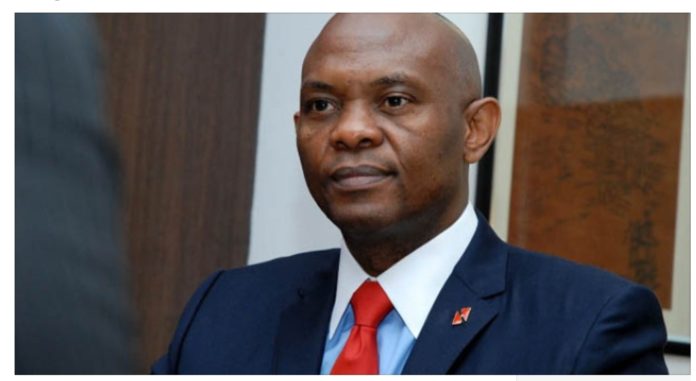
In what is the latest divestment in the nation’s oil industry, three IOCs sold their combined 45 per cent interest in Oil Mining Lease 17 and related assets in the Eastern Niger Delta to TNOG Oil and Gas Limited, an integrated energy company founded by Mr Tony Elumelu.

Shell Petroleum Development Company of Nigeria Limited, Total E&P Nigeria Limited and Nigerian Agip Oil Company Limited assigned their interests of 30 per cent, 10 per cent and five per cent respectively in the lease to TNOG Oil and Gas.

TNOG Oil and Gas is a related company of Heirs Holdings Limited and Transnational Corporation of Nigeria Plc, both of which have Elumelu as their chairman.

The deal, which was announced last Friday, was described by Heirs Holdings as one of the largest oil and gas financings in Africa in more than a decade, with a financing component of $1.1bn provided by a consortium of global and regional banks and investors.

The company said in a statement that TNOG Oil and Gas would have sole operatorship of the asset.

OML 17 has a current production capacity of 27,000 barrels of oil equivalent per day and, 2P reserves of 1.2 billion barrels of oil equivalent, with an additional one billion barrels of oil equivalent resources of further exploration potential, according to the statement.

“The acquisition of such a high-quality asset, with significant potential for further growth, is a strong statement of our confidence in Nigeria, the Nigerian oil and gas sector and a tribute to the extremely high-quality management team that we have assembled,” Elumelu said.

An energy expert and a former board member of the Nigerian National Petroleum Corporation, Alhaji Abdullahi Bukar, told our correspondent that the local operators could increase their contribution to total oil and gas production in the country if given access to more reserves.

“We have sufficient technical knowledge to do anything. In fact, the tragedy is that because we have not allowed our people to develop that much, we see other countries going to Europe and other places for people to develop them when they could come to Nigeria, where we will be able to do it cheaper and then we start to produce all the equipment and other things we needed,” he said.

He described the divestment as a good development, saying, “I think Heirs Holdings and Transcorp should move very fast, and turn those reserves into economic benefits for the country as quickly as possible.

“I hope they will also be able to not just do it as a commodity but also refine it in-country. Nigeria should not just produce raw materials and export them as raw materials; we should add value to them.”

While the marginal field programme has put more assets in the hands of local players, the recent divestments by the IOCs are largely responsible for the increase in oil production from them.

Indigenous operators that have acquired divested assets include Frontier Oil Limited, Seplat Petroleum Development Company Plc, First Hydrocarbon Nigeria Company Limited, Neconde Energy Limited, ND Western Limited, Oando Plc, Aiteo Eastern E&P Company, Eroton Exploration & Production Company and First Exploration & Petroleum Development Company Limited.

In November last year, First E&P announced the commencement of oil production from the Anyala West field in OML 83 and 85. The company had in June 2015 acquired Chevron’s 40 per cent stake in the two oil blocks.

ND Western said in July last year that it had a very ambitious growth plan to take its gas production to above 510 million standard cubic feet per day in the next few years, and grow oil production to above 60,000 barrels per day in our medium-term plan.

“Our plan is to build robust midstream and downstream businesses and certainly, we will acquire more assets as the opportunity become available,” its Managing Director/Chief Executive Officer, Mr Eberechukwu Oji, said in an interview with our correspondent. (Thecapital)

My Abductors Sold me to herdsmen— Edo Immigration PRO Edo

THE kidnapped Public Relations Officer of Edo state Command of Nigerian Immigration Service, Mrs Bridget Esene who was released on Tuesday after spending two days with her kidnappers said she was sold to suspected Fulani herdsmen after she was kidnapped on Sunday in her church.

Esene however expressed happiness over her release but said she suffered in the hands of her abductors and that she was freed by police and vigilante groups.

She stated: “The armed men numbering five trailed me to my church at Ikhueniro near Benin city where I was kidnapped.

“I was forced into their car and driven out of the church premises by my abductors who later sold me to another set of kidnappers who are suspected herdsmen.

I saw hell and l don’t wish my enemy such”.
She said that upon sighting the kidnapper, she had attempted to escape but was intercepted at gun point by the hoodlums.

Esene stated that the armed men later took her into the forest and some other hardened kidnappers were on ground to receive her.

She added: “I was later sold to another set of gunmen who then took me deep into the forest.”
Although said no ransom was paid, family source had confided in the Vanguard that the family had to discreetly negotiate with the abductors to prevent her from being harmed as a result of the publicity had abduction got in both conventional and social media when she was kidnapped last Sunday. (Mediagangnetwork)

Lagos Restricts Trucks, Trailers to Night Movements

The Lagos State Government has banned trucks and trailers from plying roads in the state during day time.

The state Commissioner for Transportation, Frederic Oladeinde, announced this when he met with various truck owners in the state in Ikeja on Wednesday, January 27.

Oladeinde announced that trucks and trailers were now restricted to night operations on dedicated routes between the hours of 9pm to 6am daily in order to avert rising carnage’s on roads during daytime.

He said the move was necessary as the Apapa area of the state has been rendered less profitable for investors in all sectors due to the gridlock and activities of truck drivers along the axis, appealing further to Stakeholders to cooperate with the State Government to remedy the situation.

Also speaking at the meeting, the Special Adviser to the state Governor on Transportation, Oluwatoyin Fayinka, declared that none compliance from truck drivers would be met with stiff penalties on defaulters. He advised the truck owners to utilize the grace period to get their act together and conform with the directives issued out.

Fayinka further advised operators to secure parks outside Apapa to curb the gridlock and work hand in hand with the State Vehicle Inspection Services, (VIS) and the Federal Road Safety Corps (FRSC) by ensuring their vehicles are Road Worthy with the warning that rickety vehicles will be impounded.

In the trucks restricted routes analysis, Director, Transport Operations, Engr. Abdulhafis Toriola, clarified the routes to be followed and vehicle specifications. According to him, any vehicle above 6ft with three sets of number plates is considered a Trailer and an Articulated Vehicle, explaining that Ikorodu road, Maryland, Costain and Funsho Williams avenue will be restricted.

Responding to the new directive, the union representatives of Council Of Maritime Transport Union and Association (COMTUA), National Association of Road Transport Owners (NARTO), Association of Maritime Transport Owners (AMATO), Allied Truck Transporter Association of Nigeria (ATTAN) and National Union of Road Transport Workers (NURTW) appealed to the State Government to support them with necessary infrastructure and further review the directive, especially with respect to restriction to night time. (Thepodium)

How God killed lecturer demanding sex from my daughter — Bishop Wale Oke + Video

The founder of Christ Life Church, Bishop Francis Wale Oke, has revealed how “God killed” a lecturer of the University of Lagos demanding sex from one of his daughters in the faith before passing her.

Oke, whose ministry, The Sword of The Spirit Ministries, has its headquarters in Ibadan, Oyo State, said this during a church service.

The video of the ministration was posted on the Facebook page of the Ministry on Tuesday.

Oke said “One of my daughters was being harassed.

“It was the University of Lagos.

“The lecturer was on her.

“He said he would manage to sleep with her before she would pass the course.

“A man old enough to be her father.

“Very wicked evil man.

“And the girl said: ‘I’m a child of God. I’m born again.’

“And he said: ‘Okay, stay there. You, you know how many of you I’ve dealt with? You won’t leave my Department. I will make sure you fail that course.’

“And the course is compulsory.

“If you don’t pass, you can’t move on.

“She failed the first time.

“Not that she failed, he failed her.

“She just grumbled.

theeagleonline

Police arrest Anambra prophet who filmed naked ritualists

Onyeze Jesus, a controversial Anambra-based pastor who filmed his followers naked in money rituals, has been brought into the custody of the state’s police over fraud allegations levelled against him.

Haruna Mohammed, the spokesperson of the Anambra police, told TheCable Lifestyle on Thursday morning that the clergyman was invited for questioning on Wednesday.

When contacted, Abang John, the state commissioner of police, said Onyeze is currently detained in their custody and will be there for the next 24 hours.

“Why do you think he was arrested? You’re aware that the Nigerian police don’t take people for more than 24 hours. So, if he is in custody, then it’s within 24 hours. He was picked up yesterday,” the commissioner said.

The state government had earlier begun an investigation into the fraud allegations levelled against him by some of his ex-followers.

“Onyeze Jesus promotes superstition and strife in society. By telling his gullible and brainwashed followers that their misfortune is caused by family members, relatives, friends, and business associates,” it had stated.

“Through magical powers, he is fomenting serious troubles and instigating eternal enmity in various places and businesses. Some of these troubles can lead to physical fights, bodily injuries, and even deaths.

“By throwing naira notes into the river as part of his sacrifice to the river goddess, filming it, and distributing the film to the whole world, he has brought Anambra state into global ridicule and committed a criminal offence.

“Burning or destroying the naira through any means is an offence criminalized by the Central Bank of Nigeria Act of 2007, and the offender is liable to imprisonment.

“By forcing his disciples to bathe naked in a river, then film the naked adults and distributing the videos across the globe, Onyeze Jesus is guilty of denying his followers the right to self-dignity and of promoting indecent exposure.”

Onyeze’s arrest comes after the controversial pastor was spotted in a now-viral clip spraying his ritual clients with a wad of N50 notes while filming them bathing naked in a local stream. (Thexpressng)

Pamela Anderson Marries Her Bodyguard After Falling in Love With Him During Lockdown

Baywatch actress Pamela Anderson, 52, is married for the 6th time, though she insists her last wedding was a ‘mock’ wedding and this is her 5th.

On Jan. 27, 2021, Anderson told The Daily Mail she’d married her bodyguard Dan Hayhurst on Christmas Eve in an intimate ceremony on the grounds of her Canadian home.

In an exclusive interview Anderson told DailyMailTV: “I’m exactly where I need to be – in the arms of a man who truly loves me.”Pamela Anderson marries her bodyguard after falling in love with him during lockdown

The star has also shared her stunning wedding photos and video.

The Baywatch star has been married multiple times.Pamela Anderson marries her bodyguard after falling in love with him during lockdown

Anderson with her current husband 

Her last wedding, the 5th, was in 2020. She married Hollywood mogul Jon Peters, 74, and it lasted for only 12 days.

She was previously married to Tommy Lee, with whom she shares sons Brandon, 23, and Dylan, 22.

The two were married from 1995 to 1998.

The actress later married and divorced Kid Rock in 2006.Pamela Anderson marries her bodyguard after falling in love with him during lockdown

Then she married producer Rick Solomon twice — in 2007 and 2013. The first ended in annulment. 

It was widely reported that Anderson married Jon Peters, 74, on January 20, 2020 at Shutters Hotel in Santa Monica, California.Pamela Anderson marries her bodyguard after falling in love with him during lockdown

But according to Anderson they only had a mock ceremony, not an official wedding.

She told DailyMailTV: “We were never married. He is a movie maker and… I guess he just needed a little attention?”Pamela Anderson marries her bodyguard after falling in love with him during lockdown

A tweet about the 12-day union from her official account read: “Pamela Anderson was never legally married to Jon Peters (lifelong family friend) no hard feelings — no Marriage, no Divorce… just a bizarre theatrical lunch — Pamela has a good sense of humor about it.”

Thepodium

Nigeria now second most corrupt West African country on corruption index

By Chibuike Nwabuko

Nigeria has dropped to 149 on Transparency International’s 2020 Corruption Perception Index to become the second most corrupt country in West Africa, scoring 25 out of 100 points.

This indicates that corruption in the country has worsened as it is the worst ranking Nigeria has received in two years.

Nigeria follows Guinea Bissau who finished on 165 as the most corrupt nation in the sub-region scoring 19 points.

Fellow African countries Somalia and South Sudan are perceived as the most corrupt nations on earth.

Of the 49 countries assessed in Sub-Saharan Africa, only 12 are more corrupt than Nigeria. They are Zimbabwe, Chad, Eritrea, Burundi, Congo, Guinea Bissau, Democratic Republic of Congo, Libya, Equatorial Guinea, Sudan, Somalia and South Sudan. Both Somalia and South Sudan.

The report explains that the COVID-19 pandemic created structural gaps in national health care systems, corruption risks associated with public procurement and the misappropriation of emergency funds.

Sundiatapost

Hunter Kills Wife, Son, Self In Anambra Community

A 65-year-old hunter identified as Uchechukwu Nweke from Amanuke community of Awka North Local Government Area of Anambra State has allegedly killed his wife and son, while also setting their house ablaze.

The hunter also killed himself afterwards, just as the reason for his actions was yet to be ascertained.

The spokesperson of the Anambra State police command, CSP Haruna Mohammed, who disclosed this, said the incident occured around 3: AM yesterday in the community.

Mohammed said, “On 28/1/2021 there was a report from the vigilante chairman of Amanuke community in Awka North LGA of Anambra State that on the same date at about 3:am, a hunter, one Uchechukwu Nweke ‘m’ aged 65 years of same address allegedly shot his wife, Patricia Nweke ‘f’ aged 55 years with a single barrel gun.

“He also burnt his house along with his son, named Obinna Nweke, aged 29 years in a circumstance yet to be ascertained.

The suspect equally shot himself using the same gun.

“Meanwhile, police detectives attached to Achalla police station visited the scene and rushed the victims to Uche hospital, Isuanocha for medical attention where all the three victims were certified dead by a medical doctor on arrival.”

Mohammed said the corpses of the victims have been deposited at the hospital’s morgue for autopsy, while the command has commenced investigation.

Dailyasset

Indian court rules that groping without removing clothes is not sexual assault

A court in India has ruled that groping a child through their clothing does not constitute sexual assault, drawing outrage across the country and frustrating campaigners battling to address widespread sexual abuse against women and children.In a judgment last week, Bombay High Court judge Pushpa Ganediwala found that a 39-year-old man was not guilty of sexually assaulting a 12-year-old girl as he had not removed her clothes, meaning there was no skin-on-skin contact.According to court documents, the man brought the child to his house on the pretext of giving her guava in December 2016. While there, he touched her chest and tried to remove her underwear, according to the judgment.He was found guilty of sexual assault and sentenced to three years in prison in a lower court, but then appealed to the High Court.In her judgment on January 19, Justice Ganediwala found that his act “would not fall in the definition of ‘sexual assault,'” which carries a minimum three year prison term which can be extended to five years.”Considering the stringent nature of punishment provided for the offense, in the opinion of this court, stricter proof and serious allegations are required,” she wrote. India’s Protection of Children From Sexual Offenses Act 2012 does not explicitly state that skin-on-skin contact is needed to constitute the crime of sexual assault.Justice Ganediwala acquitted the accused of sexual assault but convicted him on the lesser charge of molestation and sentenced him to one year in prison.”It is the basic principle of criminal jurisprudence that the punishment for an offense shall be proportionate to the seriousness of the crime,” she said.

India’s sexual assault problem

Under Indian law, other high courts and lower courts around the country would need to follow the Bombay High Court’s decision.Following the judgment, India’s attorney general raised the case with the country’s top court, arguing that the ruling set “a dangerous precedent.”On Wednesday, the Supreme Court ordered a stay of acquittal and gave the attorney general two weeks to file a proper petition challenging the Bombay High Court judgment.Earlier in the week, the National Commission for Women said the judgment would have a “cascading effect on various provisions involving safety and security of women.”Karuna Nundy, a lawyer at the Supreme Court of India, the country’s top court, called for judges who passed judgments that were “completely contrary to established law” and basic rights to be retrained.

“Judgments like this contribute to impunity in crimes against girls,” she tweeted.Ranjana Kumari, the director of non-profit Centre for Social Research, which advocates for women’s rights in India, said the judgment is “shameful, outrageous, shocking and devoid of judicial prudence.”Sexual assault is huge issue in India, where sexual crimes are often brutal and widespread, but are often poorly dealt with under the country’s justice system. Based on official figures from 2018, the rape of a woman is reported every 16 minutes.Following a high-profile case in 2012 when a 23-year-old student was raped and murdered on a New Delhi bus, legal reforms and more severe penalties were introduced.Those included fast track courts to move rape cases through the justice system swiftly, an amended definition of rape to include anal and oral penetration, and the publication of new government guidelines intended to do away with the two-finger test which purportedly assessed whether a woman had sexual intercourse recently.But high-profile rape cases have continued to hit headlines. Last year, number of cases sparked outrage, including the case of a 13-year-old girl who was raped and found strangled to death in a field, and an 86-year-old woman who was allegedly raped while she waited for the milkman.Activists have pointed to ongoing issues in the justice system. Under India’s legal system, for instance, sexually abusing a transgender person carries a maximum sentence of two years in prison.

CNN

TIPS