‘A prudent person foresees danger and takes precautions.’ Proverbs 22:3 NLT
Here are three things realistic thinking will do for you: 1) It will give you a sense of security. When you have thought through the worst that can happen and developed contingency plans to meet it, you become more confident and secure. It’s reassuring to know that you are unlikely to be surprised. Disappointment is the difference between expectations and reality. Thinking realistically minimises the difference between the two. 2) It will give you credibility. Leaders who are continually surprised by the unexpected soon lose credibility in the eyes of their followers. On the other hand, leaders who think realistically and plan accordingly position themselves to win. That gives their followers confidence in them. So before you invite anyone else to be part of your vision or your project, ask yourself: a) Is it possible? b) Have I identified and explained the pros and cons of achieving it? c) Do I have a solid foundation to build on? Thomas Edison observed, ‘The value of a good idea is in using it.’ 3) It will help you to make an idea useable by taking away the ‘wish factor’. Most ideas and efforts don’t accomplish their intended results because they rely too much on what we wish, rather than what is. You can’t build a house in mid-air; it needs a solid foundation. Ideas and plans are the same. They need something concrete on which to build, and thinking realistically provides that solid foundation. Solomon put it this way: ‘A prudent person foresees danger and takes precautions. The simpleton goes blindly on and suffers the consequences.’ So the word for today is – think realistically.
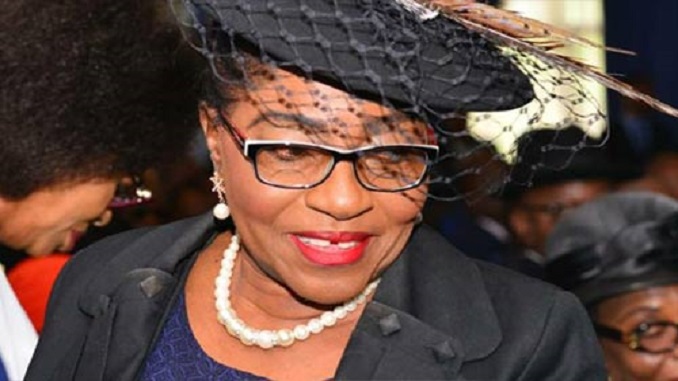
A lawmaker in the state says the assembly acted in error when it failed to approve Justice Akon Ikpeme’s appointment.
The Cross River State House of Assembly on Thursday backtracked and confirmed Justice Akon Ikpeme as the substantive chief judge of the state.
Hope Obeten, the spokesperson to the Speaker of the Assembly, Eteng Jones, broke the news about Justice Ikpeme’s confirmation in a Facebook post, Thursday morning.
Efa Esua, the member representing Calabar Municipality State Constituency, confirmed the development to PREMIUM TIMES.
“It was a unanimous decision, we didn’t give room for voting,” Mr Esua said, Thursday afternoon.
When asked why the House made a u-turn on the matter, the lawmaker simply said, “It means that the first time we didn’t do it right. So, having seen that there was an error, we needed to correct it”.
Cross River State had been without a substantive chief judge since early 2020 after Mrs Ikpeme, the most senior judge in the state who ought to have been appointed into the position, in accordance with the Nigerian Constitution and legal tradition, was disqualified by the assembly allegedly because of her family ties with neighbouring Akwa Ibom State.
Mrs Ikpeme is of Akwa Ibom parentage. She was born in Calabar, Cross River, when Akwa Ibom was a part of Cross River. She is married to a man from Cross River, and has been working for decades as a judicial officer, including being a director of public prosecution, and a judge in Cross River.
Akwa Ibom was created out of Cross River on September 23, 1987, by the military regime of Ibrahim Babangida.
A previous confirmation hearing by the House was reportedly manipulated by the state governor, Ben Ayade, against Justice Ikpeme.
But the Commissioner for Information in the state, Asu Okang, told PREMIUM TIMES, last year, that “people were unnecessarily attacking the state government and Governor Ayade over Justice Ikpeme’s matter”.
Mr Okang said the state assembly had the constitutional right to reject Justice Ikpeme.
“A potential chief judge of the state shut down all the court, shut down the entire judiciary, mobilised thugs to the assembly, members of the assembly scampered for their safety, just to ensure that she was cleared (by the assembly).
“Are you aware that Justice Akon (Ikpeme) was asked as part of the screening exercise, ‘In case there was an issue between Cross River and Akwa Ibom State Your Lordship, who would you stand for?’ You know her response? She said, ‘I would stand down on the case and reassign it to someone else.’ A chief judge of the state?”
The commissioner said Cross River has “the highest number of political appointees who are not indigenes of the state in Nigeria.
“There are over 200 of them who are non-Cross Riverians, very recently the appointment of special advisers Muslim affairs, first in the entire South-south.
“Cross River has two commissioners in the state executive council who have no ‘fatherly’ lineage to Cross River origin, members of Cross River State Executive Council, the apex body of decision-making and policy-making in Cross River State Government.
“The governor was the same governor who swore in Justice Akon (Ikpeme) as acting chief judge…. In this case, the NJC recommended, the governor forwarded to the assembly, and the assembly declined consent with a simple majority of 15 to eight.
“We are in a democracy. Fifteen members voted no to the confirmation, eight members voted yes to the confirmation. A clear democratic process! Are we saying that the House of Assembly has no such legislative powers?” the commissioner said.
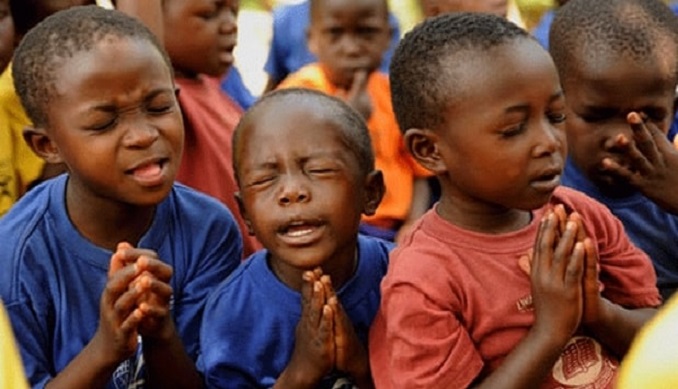
School children in Zimbabwe will no longer have to salute the flag and thank “Almighty God’, the country’s apex court has ruled.
Strangely, it was not an atheist who launched the constitutional application seeking to stop the daily ritual but a God-fearing father who objected to his children having to “worship a graven image”.
Mathew Sogolani said this infringed his parental right to determine the upbringing of his children according to his religious beliefs.
The Constitutional Court agreed with him and ruled, further, that the pledge infringed on the rights to freedom of religion of children who belong to faiths that do not embrace the belief in the existence of God, or God at all.
And, while the saluting of the national flag and saying of religious words in the pledge were not per se unconstitutional, they were made so by the fact that education authorities had deemed them to be compulsory, the court said.
The ritual first began in 2016 when all schoolchildren were compelled to memorise and recite the pledge at assemblies every day. The avowed purpose was to “inculcate” feelings of patriotism and other ethical precepts such as honesty and dignity and hard work.
There was no provision for any exemption.
Sogolani, a member of the Apostolic Faith Mission, argued that a precept of his and his children’s faith was that a secular object “must not be saluted” and that worship must be reserved for God only.
While he had no desire to show disrespect for the national flag and his country, the fact that his children were being forced to do this was tormenting him, he argued.
His application was opposed by education authorities in the country. They argued that his objections were misplaced because the pledge was not a prayer and was part of “appropriate education”.
“They argue that it is simply a creed which testifies to the religious, cultural and historical beliefs of the people of Zimbabwe,” the judges said.
“They say it is necessary for nation-building and is a way of inculcating feelings of patriotism.
“The words ‘Almighty God’, they say, did not constitute an attempt to officially promote a particular religious belief,” the judges said.
In considering both sides of the argument, the judges said the State must adopt a position of “neutrality” in matters of religion while a parent was entitled to decide how a child should be brought up.
“The court does not have to involve itself with the question whether the compulsory recitation of the pledge amounts to worshipping the national flag. The question is whether the applicant sincerely believes it.
“The respondents did not proffer evidence to contradict that it is his genuine belief.
“The State cannot compel a person to perform acts which are forbidden by the religion he or she belongs to.
“The pledge also offends the schoolchildren who do not hold belief in the existence of a supernatural power,” the court said.
“The education authorities ought to have guaranteed the dissenting pupils’ rights to decide freely not to recite the pledge.”
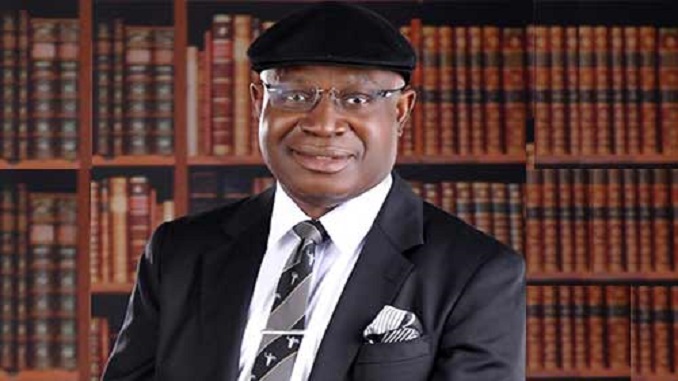
For exercising his fundamental rights to appeal a court’s judgment, Chief Emeka Ngige, Senior Advocate of Nigeria (SAN) and Chairman, Council of Legal Education, almost found himself cooling off in jail.
Ngige who was instructed alongside the late Mr. Fidelis Nwadialo, SAN to appear for the Federal Government during the Failed Banks Tribunal saga, incurred the ire of the trial judge for appealing his judgment and asking for a stay of execution.
Chief Ngige made this disclosure in his tribute to the late leading Senior Advocate of Nigeria, Alhaji Abdullahi Ibrahim, SAN. Part of the statement reads:
“In 1998 when he was the Attorney-General of the Federation under Gen. Abdulsalam Abubakar regime he instructed Mr. Fidelis Nwadialo, SAN (now of blessed memory) and my humble self to appear for the Federal Government of Nigeria and defend several cases instituted by some accused bank chief executives undergoing trial for financial malpractices in their banks.
“In one of the cases, the trial judge attempted to send Mr. Nwadialo and myself to prison for appealing against his judgment and asking for stay of execution. Alhaji Ibrahim stood firmly behind us and gave us all the support needed to stave off the intimidation by the said judge.”
… His death is a big loss, shocking and sad – Galadima
… He gave purposeful, courageous and effective leadership – Awomolo
… lived a life of honour and integrity – Okocha
… a quintessential bar man – Agbakoba
… a colossus – Bayo Ojo
… very instrumental in bringing up the young ones – Izinyon
… a trail blazer – Ngige
… a man of unbridled exploits and excellence – Onoja
By Lillian Okenwa
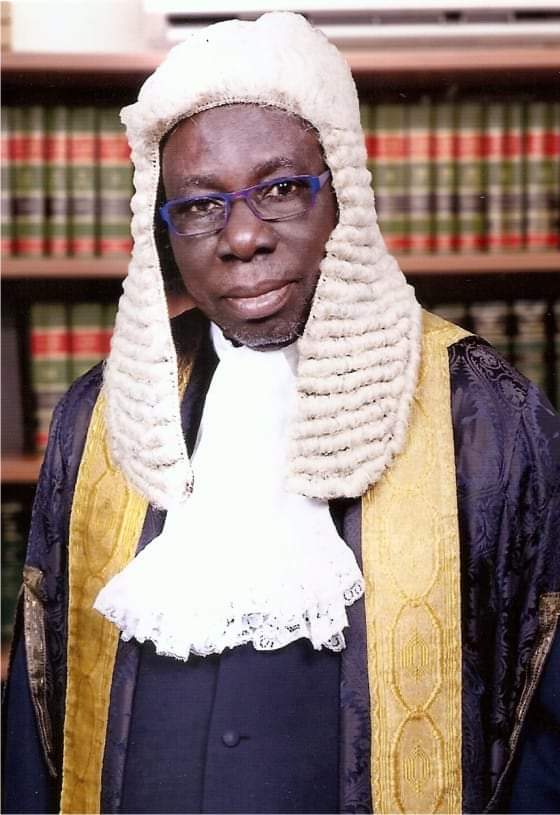
For the several lives he impacted. For the many lawyers whose growth and establishment he saw to, the death of Alhaji Abdullahi Ibrahim, first Senior Advocate of Nigeria of Northern extraction, a former Attorney General of the Federation, ex-Chairman, Body of Benchers, among other caps, came as shock. It was barely two weeks after his 82nd birthday.
Described as inspiration and a major stabilising force, he was one of those who quietly worked to get the Nigerian Bar Association (NBA) back on track after the Port Harcourt crisis in 1992. Tributes have continued to pour in following his passage on Sunday, 24th January, 2021.
“A true mentor. Humble. A Perfect gentleman.” Those were the words retired Supreme Court Justice Suleiman Galadima used to define Alhaji Ibrahim, SAN. Galadima who met him through former Chief Justice Muhammadu Lawal Uwais, recalled that the late Silk played a vital role in his appointment as the first Chief Judge of Nasarawa State.
“My appointment as the first Chief Judge of Nasarawa State became controversial,” Galadima recalled. “Somebody wanted to be there but he was in the Customary Court of Appeal and also my senior. So Uwais who was CJN at that time intervened and said he couldn’t cross over from the Customary Court of Appeal to be Chief Judge. His argument was that those in the High Court handle more cases and encounter a mix of more complex matters than those at the Customary Court of Appeal. Abdullahi who was then the Attorney General of the Federation also waded into the matter and it was eventually resolved in my favour.
“That’s how I came to know him personally. Another encounter was when the CJN (Uwais) called me and said there’s a vacancy at the Court of Appeal and the slot is for Nasarawa state. Alhaji Abdullahi as I later found out was in the CJN’s office when that call was being made. That’s how I knew they were very close. Even when I became a Justice of the Supreme Court, he’ll pay me surprise visits. He’ll always reach out and kept in touch. I can never forget him.
Alhaji Abdullahi Ibrahim, SAN
“He was a perfect gentleman. Humble. A true mentor. About five senior Advocates of Nigeria emerged from his chambers and about the same number of judges also came from his chambers. Anyone who went through his chambers is sure of thorough mentoring and being properly established. Some of them came through the National Youth Service Corps (NYSC) and he just retained them. His death is a big loss, shocking and sad.”
“He was a forthright and very consistent mentor to most junior legal practitioners in Nigeria,” Asiwaju Adegboyega Awomolo, SAN, reminisced.
Expressing deep sadness over the demise, Awomolo in his tribute further stated thus: “Alhaji Abdullahi SAN, OFR, CON, was known as the Doyen of the Legal profession in Abuja. He gave purposeful, courageous and effective leadership to the Body of Senior Advocates of Nigeria. He was a legal icon who lived a very dignified and fulfilled career. His life of service to the Nation was unequalled; he was uncompromising on issues of ethics. He abhorred corruption and abuse of office in whatever form or shape. He was concerned by the state of the judiciary and was always eager to speak for the welfare and respect for the rule of law. He approached public issues with maturity and the desire to ensure unity in the diversity of the Federal Republic of Nigeria.
“I personally enjoyed his mature mentorship, his strong leadership quality in the Body of Senior Advocate of Nigeria, and counselling on professional challenges that was never taught at the Law school.
“He adopted my wife as a daughter and he played significant role in her professional growth. He was perhaps one of the last of the British trained and seasoned legal practitioners in Nigeria.”
Speaking with Law & Society over the telephone, Chairman, Body of Benchers Chief OCJ Okocha, SAN, extolled Alhaji Abdullahi Ibrahim as “one of the institutions we can point at in our legal profession in Nigeria.”
Additionally, the former NBA President in his tribute remarked that: “He has been everything in the profession including AGF and Chairman of the Body of Benchers which is perhaps the highest position any legal practitioner can attain in the profession. But he lived a good life; a life of honour and integrity in every position in which he served. He served with patriotism and zeal. He loved Nigeria and I believe he dedicated his life to ensuring that all will be well with our country. Many of us who knew him closely will miss him. I pray that almighty God will grant his soul eternal rest in peace and also grant comfort and consolation to his loved ones.”
Likewise, another onetime NBA President, Dr. Olisa Agbakoba, SAN, described him in glowing terms.
“The late Alhaji Abdlullahi Ibrahim CON SAN, was very well known to me as an elder senior. He was held in very high esteem in both legal and judicial circles. He was a quintessential bar man having accomplished many distinguished honours and positions. He was named as Attorney General of the Federation; no surprise to the legal and judicial community. A position with which he became not unsurprisingly most distinguished. May the memory of Alhaji Ibrahim be a blessing and may his soul rest in perfect peace.”
Meanwhile, another erstwhile President of the Bar and former Attorney General of the Federation, Chief Bayo Ojo, SAN, said he received the news with shock.
“I was shocked when I received the news of the demise of Alhaji Abdullahi Ibrahim, SAN. He was not only a mentor but someone whom we all looked up to in the legal profession and sought his advice even on non-legal issues all the time. He was always there for us. He was a colossus in the legal firmament who made unquantifiable contributions to the legal profession, and our jurisprudence. He will be sorely missed. May the Almighty God comfort his family. May his soul rest in peace.”
Dr. Alex Izinyon, SAN,on his part insists that: “Alhaji Abdullahi Ibrahim, SAN was one of the foremost legal minds Nigeria ever had.”
“One thing that stood clear about him and his personality is his humility,” the popular Abuja lawyer recollected. “Despite all these laurels, these achievements, here is a man who was extremely humble. You’ll never get a foul language from him or any aggression or any countenance that shows anger. A purely urbane man and even when he feels annoyed, there a way he puts it calmly. And in terms of reaching out, he will be the one checking up on juniors. He’ll ask of your family, your welfare. He was a good father and role model. We’ll really miss him a great lot. He was so detribalised, apolitical, not a religious bigot.
“He stepped into very good areas of achievement and was very instrumental in bringing up the young ones. You can imagine how many senior advocates that have been produced in his chambers over the years. The first was A.T Ajala, SAN of the blessed memory; one of these foremost men from Oyo state and a fantastic gentleman. I had the privilege of appearing with him on the other side in those days. Then Tunji Oyeyipo, SAN, one of my alumni from the University of Ibadan. He was with Alhaji Ibrahim as far back as 1992. We have Rotimi Ogunweso, Bisi Soyebo, and others. These are not people from his own place and I’m not even talking about people who were not in his chambers that he enabled to improve.
“He was a simple man, not given to greed, avarice or ostentatious living. He embodied simplicity and we’ll really miss him.”
Chairman, Council of Legal Education, Chief Emeka Ngige, SAN said the death was another huge loss to the bar and the country. Ngige in a statement made available to Law & Society described him as a trail blazer and a distinguished legal practitioner. The statement reads:
“The death of Alhaji Abdullahi Ibrahim, SAN, CON marks yet another sad depletion from the ranks of those elders at the Bar, who qualified in the sixties and who greatly helped to shape the course of our legal system. Alhaji’s death is not only a big loss to the Nigerian nation but to the legal profession in particular. Alhaji was a trail blazer and a distinguished legal practitioner. He was a Barman per excellence.
“He was the first Northerner to be admitted to the Inner Bar in 1982. He was the Attorney-General of the Federation who midwifed the transition to civil rule culminating in the promulgation of the 1999 Constitution of the Federal Republic of Nigeria.
“Alhaji was interested and active in the affairs of the Nigerian Bar Association and it was no surprise that he was appointed one of the registered trustees of the Association. He also held the same position in the Body of Senior Advocates of Nigeria (BOSAN). He also served as Chairman of Body of Benchers Disciplinary Committee and later became the Chairman of the esteemed Body.
“On a personal note, I interacted closely with Alhaji on several occasions which made lasting impressions on me that he was a detribalised, generous, humble, humane, accessible and quintessential lawyer. In 1998 when he was the Attorney-General of the Federation under Gen. Abdulsalam Abubakar regime he instructed Mr. Fidelis Nwadialo, SAN (now of blessed memory) and my humble self to appear for the Federal Government of Nigeria and defend several cases instituted by some accused bank chief executives undergoing trial for financial malpractices in their banks. In one of the cases, the trial judge attempted to send Mr Nwadialo and myself to prison for appealing against his judgment and asking for stay of execution. Alhaji Ibrahim stood firmly behind us and gave us all the support needed to stave off the intimidation by the said judge.
“Again when I ran for the NBA presidency in 2012, Alhaji Ibrahim based on my programme and manifesto, blessed my candidature despite pressures mounted on him by certain persons to backtrack. Though my ambition did not eventually succeed, my relationship with Alhaji continued to grow from strength to strength. Indeed, I hearkened to his advice not to litigate the outcome of that flawed election in the law courts.
“Alhaji Ibrahim was among the first to congratulate me when I was appointed the Chairman, Council of Legal Education in May 2019. He was generous in offering his candid opinion and advice on various challenges facing legal education in Nigeria. His counsel on several issues affecting the legal profession generally in Nigeria will be greatly missed.
“Alhaji Ibrahim prepared well for his exit from this planet. As a first step towards his retirement from active legal practice, he wrote his memoirs -‘A Life Shared’ which was published in 2013. Thereafter he exited from his law firm, Abdullahi Ibrahim & Co and handed over to a team of talented and hardworking legal practitioners comprising of Tunji Oyeyipo, SAN, Bisi Soyebo, SAN, Rotimi Oguneso, SAN, Abiodun Olatunji, SAN, Dipo Tolani, Esq and a host of others. “The law firm continues to grow from strength based on the solid foundation laid by its founder.
“Finally I commiserate with members of his family, his colleagues in Abdullahi Ibrahim and Co, members of Body of Benchers and to the legal community in Nigeria. May Allah in His Infinite Mercies forgive him his transgressions and grant his soul eternal rest.”
“We have indeed lost a legal colossus and a humanitarian of incomparable pedigree”, grieved Chief Ogwu James Onoja, SAN.
The Publisher/Editor in Chief of Bar and Bench Publishers Limited, in his tribute titled: TRIBUTE TO A LEGAL LORD AND NOBLE GENTLEMAN, wrote:
“It is with great sadness that I make tribute this day in honour of late Alhaji Abdullahi Ibrahim, SAN. I am sad not because he was too young to die but because he died at a time the nation is going through a lot of infantile challenges that needed patriotic, selfless and devoted Nigerians like him to deploy his wealth of experience in nation building and leadership in aid of these challenges.
“Late Alhaji Abdullahi Ibrahim, SAN was a father, role model, detribalized Nigerian and national hero. He had while alive distinguished himself in various stages of human endeavour both as a public servant and a private Legal Practitioner. He was a lawyers’ lawyer who had mentored younger lawyers that have today become phenomenon themselves and risen to the highest echelon in the legal profession.
“He was a man of unbridled exploits and excellence. He was an epitome of intellectualism and accomplishment. He served the nation in many capacities and was a four time Minister of the Federal Republic of Nigeria to wit; Minister of Education, Minister of Science and Technology, Minister of Transport and Aviation and as Attorney General and Minister of Justice.
“Late Alhaji Abdullahi Ibrahim, SAN was privileged to be the first Senior Advocate of Nigeria of Northern origin. His demise is not just a loss to the Igala Nation of Kogi State from where he originated but the nation Nigeria as a whole. We have indeed lost a legal colossus and a humanitarian of incomparable pedigree.
“In the words of William Shakespeare in one of his literary works Julius Caesar he said: ‘Death is a necessary end, will come when it will come.’
“It has thus pleased God Almighty to call our father and hero home. We are consoled by the fact that he died a fulfilled man and at a ripe age. His legacies and giant strides in all facets of human live, remain enviable and indelible.
“It is my prayer that God in his infinite mercy grant him eternal rest. Adieu my hero, my pride!”
The Body of Senior Advocates, BOSAN had earlier released a statement on the incident. The statement signed by its secretary, Seyi Sowemimo, SAN reads:
“The BOSAN Secretariat wishes to announce the demise of one of our trustees: Alhaji Abdullahi Ibrahim OFR, CON, SAN who died today, Sunday, 24th of January, 2021.
“The late Alhaji Abdullahi Ibrahim was born on the 14th day of January, 1939 (82 years old), called to the English Bar in 1963 and the following year was called to the Nigerian Bar. He was at different times legal adviser at the then Ministry of Finance, Northern region and New Nigeria Development Company; a one-time Senior State Counsel and head of prosecutions at the Ministry of Justice, Kano State.
“He was elevated to the prestigious rank of Senior Advocate of Nigeria in 1982 and served as member, Privileges Committee of the Bar from 1987 to 1991. He also served as the Chairman, Legal Aid Council from 1990 to 1994. He was a Notary Public, a Life member of the Body of Benchers and its Vice Chairman and Chairman between 1999 and 2001. He thereafter served as Chairman, Legal Practitioners’ Disciplinary Committee between 2001 and 2006 and a member of the National Judicial Council (NJC) between 2004 and 2008.
“He was a Fellow of the Chartered Institute of Arbitrators, Nigeria (FCIArb) and Member of the Chartered Institute of Arbitrators (UK) (MCIArb); also a Fellow of the Institute of Advanced Legal Studies, Nigeria (FINALS).
“Alhaji Abdullahi Ibrahim served the nation at various times in several capacities as Commissioner for Education in the old Kwara State, Nigeria (1973) in the cabinet of Brigadier General David Bamigboye; Federal Minister of Education, Science and Technology; Minister of Transport and Aviation (1984-1985) in the cabinet of General Muhammadu Buhari and as the Attorney-General of the Federation and Minister of Justice (1997-1999) in the cabinet of General Abdulsalami Abubakar.
“He was a Commissioner, International Boundary, National Boundary Commission from 2000 to 2006. He was a member of the Nigerian team that successfully negotiated the Maritime Boundary Treaty between Nigeria and the Republic of Equatorial Guinea and also the Unitization Agreement of the Zafiro/Ekanga oil fields. He was Nigeria’s Agent and later Co-Agent in the dispute between the Federal Republic of Nigeria and Cameroon at the International Court of Justice, the Hague Netherlands. Alhaji Abdullahi Ibrahim also led the Nigerian delegation to the United Nations conference on the establishment of the International Criminal Court.
“In acknowledgement of his contribution to the Nation, he was conferred with the National Honour/Award of Officer of the Federal Republic (OFR) and later Commander of the Order of Niger (CON). Alhaji Abdullahi Ibrahim was Chairman, Nigerian Stock Exchange, Kaduna Branch and the first Vice President of the Nigerian Stock Exchange in 1989. He was Chairman, Nigerian Institute of International Affairs from 1988 to 1994 and also Chairman of New Nigeria Development Company between 1992 and 1998.
“He was conferred with honorary Doctorate Degree in Law (LLD, Honoris Causa) by the University of Kogi State, Nigeria in 2008. Alhaji Abdullahi Ibrahim was a seasoned Arbitrator and a member of the Permanent Court of Arbitration at The Hague, Netherlands.
“Alhaji Abdullahi Ibrahim OFR, CON, SAN is survived by his wife, children and grandchildren. Alhaji Abdullahi Ibrahim SAN will be buried in Kogi State tomorrow (Monday 25th) in accordance to Muslim rites. May the soul of Alhaji Abdullahi Ibrahim OFR, CON, SAN and the souls of other faithful departed Rest in Peace. Amen.”
Speaker and Seminar Leader, Byron R. Pulsifer sums it all up: “Character is not something that you buy; it is not a commodity that can be bartered for; it is not a quality suited for only the rich and famous; rather, character is built upon the foundational commitment of love, honesty, and compassion for others.”
That is the testimony of Alhaji Abdullahi Ibrahim, Senior Advocate of Nigeria.
There is palpable fear and trepidation across many towns and villages in Ogun State over the influx of throngs of Fulani herdsmen ostensibly fleeing from the Ibarapa axis of Oyo State following last Friday’s onslaught launched by Yoruba freedom fighter, Chief Sunday Adeyemo, popularly called Sunday Igboho.
The Ogun territory particularly locations in and around Abeokuta, Obada, Adigbe, Akinale, Ewekoro and Ogere are currently flooded with some suspected Fulani herders, alongside several hundreds of cows grazing around farmlands and bushes, to the deep consternation of residents.
Although, the Ogun State Governor, Prince Dapo Abiodun’s deafening silence on the ongoing trend, has been a big surprise, not a few traditional rulers and prominent personalities have openly raised alarm that Ogun might soon become the new battleground of Herders/Farmers clashes.
However, late on Wednesday evening, the residents widespread apprehension and fear over the ubiquitous presence of herdsmen in the state have given way to excitement and jubilation with information flying round that activist Sunday Igboho might storm Abeokuta this weekend to flush out unwanted strangers.
In a video which has already gone viral, Igboho has vowed to repeat last Friday’s exploit at Igangan, during which the popular Seriki Fulani of Oyo State, Alhaji Saliu Abdulkadir was challenged and dislodged from the Ibarapa forests with his teeming supporters
Igboho said in the video: “By the special grace of God, I am storming Ogun State. Ogun is where I am coming next. I want all the Fulani herdsmen that have fled for refuge in the state to get ready for me because I am coming to flush them out immediately. They should leave Yoruba territory.”
Earlier this morning, notable monarch and erstwhile veteran journalist, the Towulade of Akinale of Owu Kingdom, near Abeokuta, Oba Femi Ogunleye has cried out that herdsmen in their hundreds have invaded his community.
The development has compelled the monarch to promptly despatched letters to the Governor as well as the Commissioner of Police over the shocking development, in view of the ongoing crisis arising from alleged kidnapping, maiming and killings of innocent indigenes of Ibarapa in Oyo State, a neighbouring of Ogun State.
Oba Olufemi Ogunleye
Oba Ogunleye, while calling for police protection in his community and environs narrated his experience on sighting the strange faces in his domain, tasked the security agencies to do something concrete before things get out of hands
The monarch expressed sadness and lamented that Nigeria can get to such a retrogressive state that a horde of wanderers could invade peaceful settlements, with several heads of cattle, and become fully resident in someone else’s farm with the cattle harvesting other peoples sweat.
Ogun Governor, Prince Dapo Abiodun
Oba Ogunleye stressed: ‘It is sad and wicked. Every effort made by our farmers to drive the Fulanis away is being rebuffed with threats of death.
“My report to the CP is aimed at seeking urgent attention to help dislodge these strange elements from our domain and evolve a check and balance strategy to prevent crime in our community.”
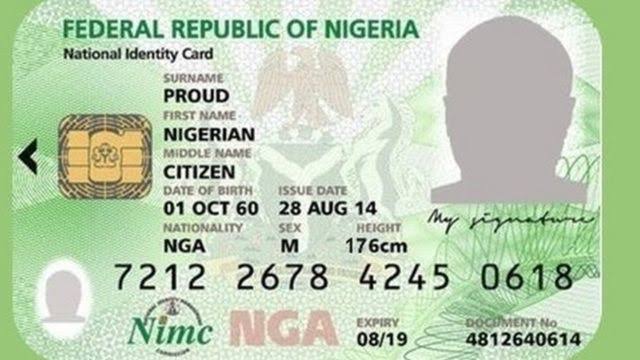
To manage the identity and particulars of persons in Nigeria, the federal government of Nigeria enacted a federal law for the National Identity Management Commission (NIMC). The federal law was made in 2007 but became popular only in 2020, when federal government threatened to cut-off mobile phone numbers that were without National Identification Numbers (NIN).
The Offence of No National Identification Number:
Nigeria is a democratic state that runs on written laws. Criminal offences are created by laws in Nigeria. Nothing is a crime in Nigeria, unless there is a written federal or state law (including bye-laws by local government areas) that has declared the thing a crime. The National Identity Management Commission (NIMC) Act mandates every person in Nigeria (whether a Nigerian or a foreigner, so far as the foreigner will stay in Nigeria for about 2 years or more) to obtain a National Identification Number (NIN).
The National Identity Management Commission Act has also criminalized the failure to obtain National Identity Numbers (NIN). So, failure to have a NIN is a criminal offence in all parts of Nigeria. It is an offence punishable with fine of not less than N100,000 or imprisonment for term of not less than 6 months or both.
Conclusion:
There is no exemption or an excuse that allows a Nigerian not to have a National Identification Number (NIN). All Nigerians (including Children) whether in Nigeria or outside Nigeria, are mandated by law to register and obtain National Identification Numbers (NIN). A Nigerian that works or lives in any part of Nigeria or the world must have a National Identification Number. Failure to have a NIN is a criminal offence in all parts of Nigeria.
My authorities, are:
Sections 1, 2, 3, 4, 5, 6, 11, 13, 14, 15, 16, 17, 18, 19, 37, 38, 39, 44, 45, 318 and 319 of the Constitution of the Federal Republic of Nigeria, 1999.
Sections 1, 14, 15, 16, 17, 18, 19, 21, 27, 29, 30, 31, 33 and 34 of the National Identity Management Commission (NIMC) Act, 2007.
Regulations 1, 2, 3 and 5 of the Mandatory Use of the NIN Regulations 2015.
Regulations 1, 4, 7, 8 and 9 of the Mandatory Use of the National Identification Number Regulations, 2017.
I am a Commander (rtd) of the Nigerian Navy. I am a Senator. I am a Fulani herdsman. I am, therefore, many things in one person.
I was given a cow for every milestone in my life. I was given cows at birth. I was given cows when I completed my Quranic studies. I was given cows when I got married. My father gave me a herd of cows about 20 years ago when I became a ‘full adult’ in his eyes.
I, therefore, became a herdsman by virtue of inheritance. The cows in my family have been with us for over a century. We know the lineage of each cow. Some of the cows recognise us. I have never killed any person. The narrative that I am a killer is, therefore, wrong.
I have been told recently to leave Oyo and Ondo States by people who eat ‘kpomo, shaki, round-about, bokotor and beef. They are being supported by people who wear leather belts and shoes along with those that use anti-aging creams, pharmaceuticals, cosmetics etc. All by-products of cows.
The irony is that the persons who do not want to see herdsmen in their states did not start by first banning ‘kpomo, shaki, round-about, bokotor’ and beef from their cooking pots at home. They want to eat these things and drink milk/milk products yet they do not want to see cows. They want to eat their cake and have it. This could only happen where there is a special arrangement for manna from heaven – I doubt if this is possible since I doubt if these people are as righteous as the Prophet Moses (Upon Whom be Peace)!
The more serious issue before us is how do we secure our animal protein food security needs as a country that is moving towards a projected population of 400 million by 2050! This is what I want to hear politicians and leaders talking about and not ethnicity and religion. I want to hear them talking about how herdsmen and farmers could coexist for their mutual benefit and ours.
Today, we no longer have the habitat to sustain wildlife that used to be consumed by some as bushmeat. We are dependent on imported fish and poultry. We are, however, able to provide cheap beef for ourselves as a nation because of herdsmen like me. People like me, therefore, are an important component of Nigeria’s food security architecture.
Now the question is this: Do I like the current open grazing/pastoral grazing undertaken by herdsmen? My answer is NO. Do I think that we should address this challenge? My answer is YES. Could there be a solution? My answer is YES and I have humbly proffered some possible solutions in some of my previous posts.
Now… enter the politicians. (The most unpatriotic Nigerians that I have ever come across!) — unfortunately I have found myself in their midst! Coming from a military background it has been tough for me!
Do I think that the negative utterances by certain politicians are useful? My answer is NO. How does telling any ethnic group to leave a locality whether in Owerri (Imo), Gusau, Ilejemeje (Ekiti) Aramoko (Ekiti), Ogoni (Rivers), Kano, Gboko ( Benue) help any Nigerian at a time like this? This could only be done for their selfish political gains and not for the good of their people and Nigeria at large.
People like these foment crises for all and then shift the blame to security agencies. They never solve our problems through sound leadership but ride on our backs (sentiments) to attain their selfish political goals. This is wrong and it should not be condoned by any person.
The true test is that they should tell us how we would eat ‘kpomo, shaki, round-about, bokotor’ and beef without cows? Cows that are herded by herdsmen like me! A simple question requiring a simple answer! They should SHUT UP if they have no answer!
As Nigerians, we are grappling with a lot of welfare and security issues. We do not need you Mr Politician to add fuel to the embers of insecurity that we are managing. We have enough on our plates!
Sen. Abdulaziz Nyako represented Adamawa Central Senatorial District in the 8th Assembly
Access Bank Plc at the weekend said it had filed a notice of appeal at the Supreme Court to challenge the decision by the Lagos Division of Court of Appeal to upturn the suspension of the interim order made by a Federal High Court in Lagos sealing the corporate offices of Seplat Petroleum Development Company (SPDC) and freezing its accounts, in respect of loan obtained by Cardinal Drilling Services Limited.
The loan, according to the bank, was utilised by Seplat.
The bank, through its solicitors, Mr. Kunle Ogunba and Associates, approached the highest court after it expressed its dissatisfaction with the decision delivered by the Appeal Court, indicating that the learned justices of the court erred in law when they suspended the interlocutory orders made by the trial judge at the Federal High Court, thereby treating the substantive appeal at an interlocutory stage.
Justice Joseph Shagbaor Ikyegh, who led the three-man panel, while delivering a ruling on an application by Seplat Petroleum Development Company (SPDC) for an order suspending the interim order made by Justice Rilwan Aikawa of Federal High Court, pending the determination of the appeal filed by Seplat, held that the balance of convenience favoured the petroleum company.
Justice Ikyegh also held that Access Bank had nothing to lose if Seplat continued to discharge its obligation to its numerous clients, even as it lifted the order stopping banks from fulfilling their obligations to Seplat under bank-customer relationship.
But Access Bank in an affidavit in support of the application before Supreme Court, stated that “by discharging the said interlocutory orders, the Appeal Court judges, wittingly (via a motion) determined the main appeal which seeks to also discharge the interlocutory orders made by the trial court”.
The bank also stated that the learned justices of the Court of Appeal erred in law when they failed to dismiss the said application, same being an abuse of court process filed to interfere with administration of justice. It is therefore seeking an order setting aside the Appeal Court’s ruling delivered on January 22, 2021, as well as reinstating the interlocutory orders made by Justice Rilwan Aikawa of the Federal High Court on December 24, 2020.
The bank has also filed a motion on notice for an order of injunction pending appeal at the Court of Appeal, for an order restraining the Seplat and others in the suit, which includes; Cardinal Drilling Services Limited; Mr. Orjiako Ambrose Bryant, Kalu Nwosu, the baliffs, sheriffs and/or any other person acting through them from taking further step towards enforcing, executing or giving any effect to the ruling/order of the Court of Appeal delivered on January 22, 2021, pending the hearing and final determination of the appeal it has filed at the Supreme Court.
Justice Aikawa had granted the Mareva injunction following the bank’s argument canvassed by its counsel, Kunle Ogunba (SAN).
The judge also ordered the Assistant Inspector-General of Police, Zone 2, Lagos, the Commissioner of Police, Lagos State and their Deputies and Assistants to assist the Receiver/ Manager in his lawful duties over the assets of Seplat pending the hearing and final determination of the suit.
Ogunba had told the court, among others, that the order was necessary to preserve the res from being disposed of before the hearing and determination of the motion on notice.
The assets affected by the Mareva order included; 25, Lugard Avenue, Ikoyi, Lagos, 6, Agodogba Avenue, Parkview, Ikoyi, Lagos and the one at 11, Oba Adeyinka Oyekan Street, Ikoyi, Lagos. (Thenigerialawyer)
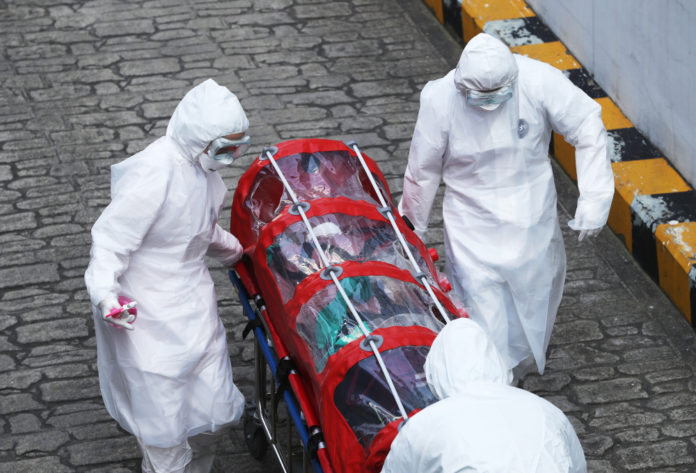
Medical staff members wearing protective gear carry a patient infected with the COVID-19 coronavirus at a hospital in Seoul on March 8, 2020. - South Korea has the highest number of confirmed COVID-19 cases in the world outside China, taking its total to 7,134. (Photo by - / YONHAP / AFP) / - South Korea OUT / REPUBLIC OF KOREA OUT NO ARCHIVES RESTRICTED TO SUBSCRIPTION USE
Some male victims of COVID-19 who have fully recovered from the disease are struggling to have penis erection for sexual pleasure, the Ghana Medical Association (GMA) has disclosed.
According to the Vice President of the Association, Dr. Frank Serebour, a number of complaints have come to the attention of physicians across the country for response and treatment.
Speaking on Abusua 96.5 FM, Dr Serebour said, a lot of people who have recovered from COVID-19 infection are developing other health abnormalities while others have no other complications.
“The after effect of COVID-19 is becoming serious people are suffering here and there, even some studies which suggest some men who have fully recovered from the virus infection are not experiencing penis erection for sexual pleasure,’’ he disclosed.
He added, “these are things we have to let the general public know and understand the need to adhere to all the COVID-19 safety protocols including hand washing, wearing of face mask and strict adherence to physical social distancing,” he stressed.
Dr. Frank Serebour, however, urged the general public to note that the after effect of COVID-19 after fully recovering are becoming many.
Responding to the revelation from the GMA Vice President, Ashanti regional director of the Ghana Health Service Dr. Emmanuel Tenkorang who was very diplomatic in his response also said, he is not surprised about the disclosure from the GMA Vice president.
He said the Ghana health service will soon collect data on the development for a full-scale research on the development therefore refusing to confirm or deny the revelation from the Medical Superintendent of the Asante Bekwai government hospital.
He cautioned the general public to take the COVID-19 protocols serious because the virus keeps changing its nature which is becoming very difficult to deal with by scientists.
He added that the after effect of the virus will soon be many therefore urging stakeholders to intensify education on the disease.
Our site uses cookies. By clicking “Accept All Cookies”, you direct Law and Society Magazine to store cookies on your device and disclose information in accordance with our Cookie Statement: cookie policyACCEPTREJECT
Privacy & Cookies Policy
Privacy Overview
This website uses cookies to improve your experience while you navigate through the website. Out of these cookies, the cookies that are categorized as necessary are stored on your browser as they are essential for the working of basic functionalities of the website. We also use third-party cookies that help us analyze and understand how you use this website. These cookies will be stored in your browser only with your consent. You also have the option to opt-out of these cookies. But opting out of some of these cookies may have an effect on your browsing experience.
Necessary cookies are absolutely essential for the website to function properly. This category only includes cookies that ensures basic functionalities and security features of the website. These cookies do not store any personal information.
Any cookies that may not be particularly necessary for the website to function and is used specifically to collect user personal data via analytics, ads, other embedded contents are termed as non-necessary cookies. It is mandatory to procure user consent prior to running these cookies on your website.