Home Blog Page 1060

Lady Writes Gov Yahaya Bello, Asks Why He Pays Teachers 35% Salary

Miss Mariam Aliyu, a Kogi indigene who perhaps could no longer hold her grievances about the state of things in her state, has written Governor Yahaya Bello on several matters, especially the paltry inconsistent salary of primary school teachers in the state.

Miss Aliyu vented her concerns on Facebook, also alleging that people of the state are dying of cholera and other diseases because of lack of basic amenities.

Particularly, she queried the recent commendation of the Governor by the United Nations Women, as well as his 2023 Presidential ambition.

Read post:

People are dying of hunger in kogi state. People are dying of cholera and other diseases as a result of lack of basic amenities like suitable water and standard health care system.

Teachers get paid 35% of their salaries, a level 15 officer doesn’t even earn up to 50,000 monthly in kogi state.

The recently appointed female councilor’s salary is 295k now take 35% that’s what they are currently getting monthly. So what is there to be commended for by the UN Women ,absolutely nothing!!

I’m not trying to defame anyone here but this statements are from credible sources. This same Governor who can’t do the needful for his state, wants to campaign for presidential seat.

Fellow Nigerians please help me ask Alhaji Yahaya Bello to please explain to us all why he pays 35% to workers monthly ?

Please explain to us sir, what plans you have for kogi youths ? You covered up and tolerated the atrocities of commissioner Danga who raped and abused a mother in front of her son, you harassed, abused and attacked Natasha, destroying her properties for daring to challenge you.

You reserved the best elective position for the men, you attack and seize the voice of anybody who tries to question your authority? WHY?

You humiliate women and have absolutely no respect for human right and therefore undeserving of any commendation especially from the UN women.

On behalf of women who have been victims of your terror reign in kogi state, I write this open letter to ask you to have a rethink and an adjustment in your rule as every tenure has an end. Posterity never forgets!!! Remember!!

Mariam Aliyu

For the voiceless women in Kogi state!

CSOs, NGOs and private sector!

observerstimes

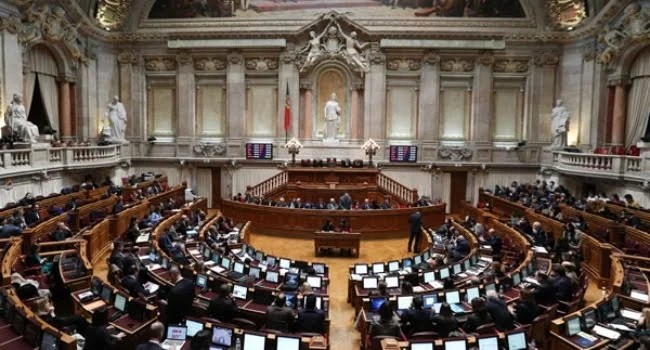
Portugal Parliament votes to legalise mercy killing

Portugal’s parliament on Friday passed a law allowing medically assisted dying, putting the Catholic-majority country on course to become the fourth in Europe to legalise euthanasia.

Before coming into force the bill must first be signed into law by President Marcelo Rebelo de Sousa, a staunch Catholic and conservative who was re-elected only last weekend.

The president — who has yet to make public his position on the issue — could also either use his veto against the legislation, or refer it to the country’s constitutional court for further study.

The bill was adopted in parliament by 136 votes to 78 with four abstentions — thanks largely to a majority of votes from the ruling Socialist Party which had allowed its MPs to vote freely.

If the president did decide to exercise his veto, a second vote by lawmakers would override it.

Lawmakers had approved proposals aimed at changing the law in February, setting up the vote despite a campaign by the Church for a national referendum on the issue.

Socialist MP Isabel Moreira, a constitutional law expert who helped draft the law, said that it would respect “free choice and every individual’s independence”.

▪︎– ‘Right to choose’ –

The bill legalises access to assisted suicide for adult patients in a situation of “extreme suffering and irreversible damage”.

Several doctors must green-light the procedure, while a psychiatrist would be called in if there are doubts about the patient’s ability to make a “free and informed” choice.

Euthanasia is legal in three European countries — Belgium, The Netherlands and Luxembourg — while others allow terminally ill people to refuse life-maintaining treatment or to have help to die.

“People deserve the right to be able to choose,” retired oncologist Jorge Espirito Santo, who has campaigned for years to make euthanasia legal in Portugal, said before the vote.

He said he was expecting a “historic day”.

The Catholic Church, which predominates in Portugal, campaigned against the bill both among its own faithful and those of other denominations.

Its bishops’ conference immediately expressed outrage at parliament’s approval of the legislation, calling the law an “unprecedented step backwards”.

The Portuguese Catholic Doctors’  Association called on the president to veto the legislation, saying in a statement that “doctors are not the agents of death!”
In neighbouring Spain, the parliament voted by a wide margin in December to approve a bill that will allow euthanasia under strict conditions, despite fierce opposition from the Catholic church and conservative parties. (AFP)

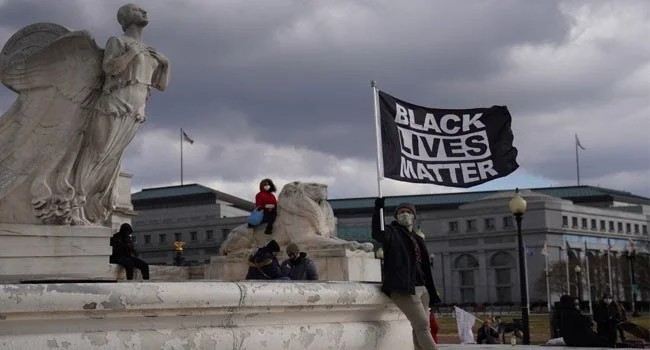
Black Lives Matter proposed for Nobel Peace Prize

Black Lives Matter, a movement which became a rallying cry after the killing by US police of an unarmed black man, has been proposed for the Nobel Peace Prize, a Norwegian MP said Saturday.

Founded in the United States in 2013, the movement received an impetus in May after George Floyd died.

A white policeman had knelt on Floyd’s neck for eight minutes ignoring Floyd’s pleas that he couldn’t breathe.

The incident fuelled protests in the United States that sped across the world.

“This movement has become one of the strongest global movements for working with racial injustice,” Petter Eide, a socialist lawmaker who proposed BLM for the Peace Prize, told AFP.

“They have also been spread to many many countries, building up… awareness on the importance of fighting racial injustice,” he said.

Tens of thousands of people, including MPs and ministers from all countries, former Nobel laureates, and distinguished academics, can propose candidates for the various Nobel prizes.

The deadline ends on Sunday.

Several other names have been mooted for the Peace Prize including controversial Wikileaks founder and whistleblower Julian Assange, former US President Donald Trump, media rights group RSF, and a trio of Belarusian opposition leaders led by Svetlana Tikhanovskaya.

The Nobel prizes will be announced at the start of October.

This year’s prize went to the World Food Programme, the UN food agency. (AFP)

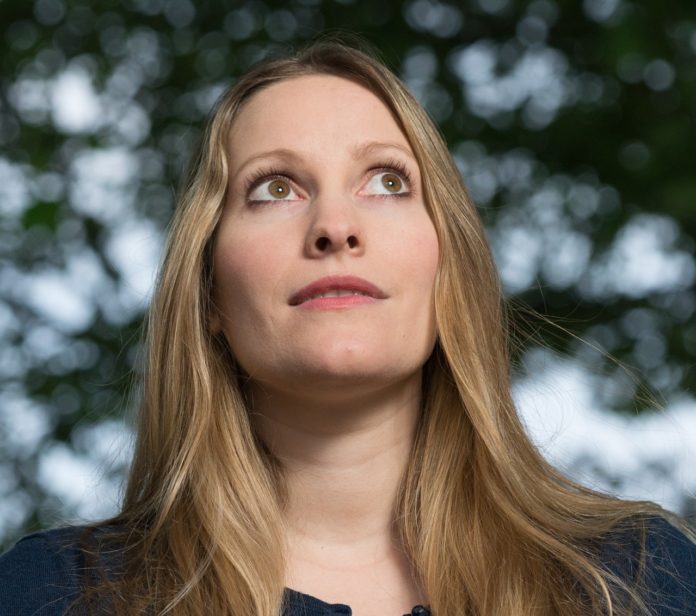
Laura Bates Braved The Darkest Corners Of The Internet To Lift The Lid On Toxic Misogyny

© Roberto Ricciuti

BY SUSAN DEVANEY

“I’d had a really bad week where in the space of just a few days I was sexually assaulted by a man on the bus, I was followed home by another man refusing to leave me or take no for an answer, and I had a bad experience of catcalling and street harassment,” Laura Bates, the author and founder of the Everyday Sexism Project, tells British Vogue. “By the end of the week, I was thinking about these three incidents that had happened so close together, and it struck me that if they hadn’t happened in such a short period of time, I never would’ve thought twice about any one of them individually because they were so normal.” This was in 2012, and shortly afterwards Bates, then 25, was inspired to start the Everyday Sexism Project. An online platform where people of any gender share their stories of daily gender inequality, eight years on it’s home to more than 80,000 stories from people all over the world. 

“I didn’t think that I could solve sexism overnight, but I thought that maybe I could make it less invisible, and if other people could see it too then we’d be well on our way to starting to tackle it,” Bates, who published her first book, Everyday Sexism, in 2014, recalls. “The stories were from people across such a wide spectrum of experiences: from a woman in the City who was told to sit on her boss’s lap if she wanted her Christmas bonus; to a woman working in a shop who found that every time she went up the ladder to get new stock her boss would spank her; to a dad being congratulated for babysitting his own children; to a Reverend in the Church of England being constantly asked if there was a man available instead.” 

Collectively, these stories added up to “the largest data set of its kind that had ever existed”. It allowed Bates to draw out “pretty clear data” on the problem, and to identify connections between sexism and other forms of prejudice, too. While Bates’s personal experience was the seed for the project, it’s not about her. One thing is very clear: her work is about creating change for the collective good – and it’s happening. This September, after taking young people’s stories about sexual harassment and sexual assault to cabinet ministers who were deliberating over whether aspects of sex and relationship education should be compulsory in schools, issues like consent are now (finally) part of the curriculum.

If anyone should be advising on topics schools need to cover in relation to sex, gender and relationships, it’s Bates. Over the past few years she’s been visiting schools across the country, to speak to young people about “knowing what their right is to their own body”. Many of us – Bates included – were never taught about topics like sexual consent, assault or harassment. “I was never taught about feminism or gender inequality at school or university [Bates studied English literature at Cambridge University], so for me it wasn’t until I was in my early twenties that this lightbulb moment of joining the dots happened,” she says.

That’s not to say she wasn’t seeing gender inequality up close. “I had been at a university where there was a supervisor who wore a black armband every year on the day that women were first admitted to the college. I had experienced extreme sexual harassment throughout my life, but I hadn’t had the language or the permission to call it what it was. I often think about the fact that by my early twenties I had experienced several sexual assaults that I never would’ve used that language to describe.”

Bates’s brilliant work in schools is what led to her eye-opening new book, Men Who Hate Women. Entering the “manosphere”, she spent just under two years conducting undercover work in toxic online communities. Her findings were chilling, and make for a fiercely important, if difficult read. “I think it’s a book for reading in small pieces,” Bates concurs. In it, she discusses incels, or “involuntary celibates”, who fantasise about murdering women who won’t have sex with them. Many incels worship the mass murderer Elliot Rodger, who killed several women in 2014 after being sexually rejected. Then there’s the still-growing million-dollar pick-up artist industry, most famously attributed to Neil Strauss’s The Game. And the Men Going Their Own Way (MGTOW) movement, made up of men who believe all women are liars and cheats. Plus much more. 

“With this particular book, the more I researched it the more I felt I was uncovering something absolutely terrifying,” says Bates. “It’s quite hard to believe that these communities exist, [that they] are genuinely and deliberately advocating that women should be massacred, and are going out and committing those massacres, and that we still aren’t talking about it.” The more Bates, posing as “Alex” online, found, the more necessary the book felt, she says. “The more I uncovered, particularly around grooming and radicalisation, and realising the extent to which they were infiltrating young men’s networks online, the more it felt like there was a sense of huge urgency. I had to keep going, I had to write this book. There’s this huge threat to our society really, and particularly to women, that nobody even knew existed. That kind of kept me going.” She’s right, most people who read her book will learn about communities – online and off – that they never knew existed.

While Bates kept going, it was by no means easy. The abuse women encounter on a daily basis online far outweighs what comes men’s way – but the scale of the hate was on another level for her. “There’s been a spike in rape threats, death threats, attempts to hack into my email and my computer, people trying to track me down,” says Bates, who has been getting threats for years now. “I was very well prepared for it and I have spent the last 10 years very clearly protecting myself and my personal information, so I was at least braced, but it’s been pretty horrific nonetheless.” 

Bates has delved into the darkest corners of the internet in order to shed light on the very real dangers to women that lurk there. As tempting as it is to look away, she’s determined that the world should “recognise that these people and communities exist. At the moment the simple fact is most people haven’t heard of them.” (vogue)

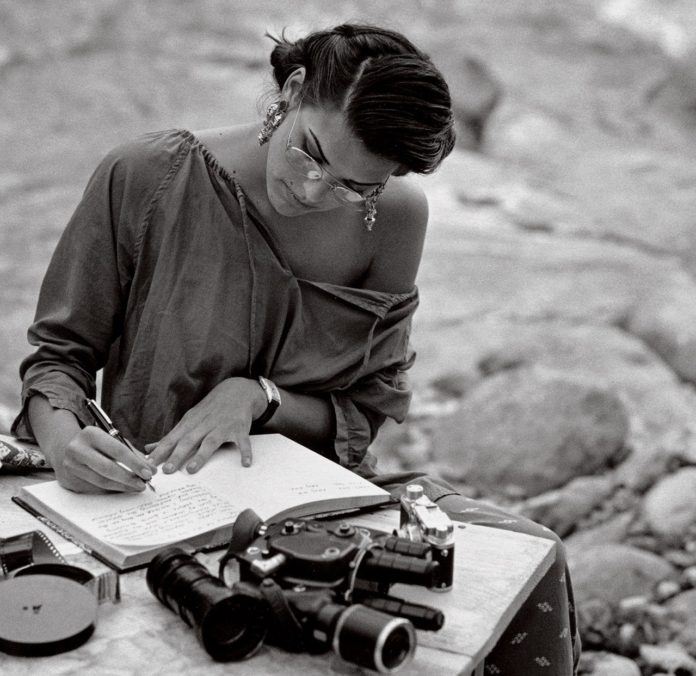
This Activist Was Annoyed By The Sexist Dictionary Definition Of “Woman”. So She Got It Changed

© Peter Lindbergh

“I’ve been an activist since I was around 20-years-old,” Maria Beatrice Giovanardi, now head of marketing at a non-profit foundation, tells British Vogue. “It’s going to sound cliché but… I’d gone from living in Miami for five years to then living in India, and I was shocked to see the lack of women’s and human rights. I was also shocked by my own level of privilege. I didn’t realise how privileged I was, because I was always around people like me.”

Now living in London, Italian-born Giovanardi has been putting her passion for activism and equality to very good use. “I was doing some online research at the start of 2019, looking up synonyms for the word ‘woman’,” she recalls. “That’s when I first read the list of synonyms, like ‘piece’, ‘bint’, ‘baggage’ and ‘bitch’. Basically, around 80 per cent of them were extremely derogatory.” For Giovanardi, the word bitch was the one that irked her most. “I was mad at bitch because I think it can be a trigger for women,” she explains. (Cast your mind back to the Taylor Swift and Kanye West feud, and the pointed, “I made that bitch famous” lyric on his track “Famous”.) “But the other words, I thought: why are they there? A lot of the listed examples of how to use the synonym in a sentence were very sexist, too. I sent it to some friends and fellow activists, and they were also shocked by it.” Oxford Dictionaries’ examples included: “Ms September will embody the professional yet sexy career woman”, and “male fisherfolk who take their catch home for the little woman to gut”.

Image may contain: Human, Person, Clothing, Apparel, Female, Text, and Woman
Maria Beatrice Giovanardi.

Deciding to take matters into her own hands, Giovanardi wrote letters questioning the dictionary entry, but says no one got back to her. In June 2019, she wrote an essay for Medium explaining why it was imperative that the current dictionary definition for “woman” be changed. By the end of the month, she had launched a petition that caught the attention of the Guardian. “I’m so grateful to the Guardian,” says Giovanardi. “By the third day we had like 150 signatures, but they published a double-page spread in print. It gave so much authority to the campaign and really explained the issue.” The petition called for all definitions and phrases that “discriminate and patronise” or “connote men’s ownership” of women to be removed. It also demanded that examples included lesbian and transgender women, too.

By August, the petition had tens of thousands of signatures and the campaign had really “picked up pace”, says Giovanardi. A critical moment for the campaign came on International Women’s Day in March 2020, when an open letter was published with Women’s Aid and the leaders of the Women’s Equality party on board, too. “Bitch is not a synonym for woman. It is dehumanising to call a woman a bitch. It is but one sad, albeit extremely damaging, example of everyday sexism. And that should be explained clearly in the dictionary entry used to describe us,” it read. The next day, the Oxford University Press committed to changing the definition.

But then Covid-19 hit, and the world came to a halt. Regardless, Giovanardi, who had been promised a meeting, did not give up. Instead she hounded them. By September she’d “got angry”, she says, and once again demanded that the definition be changed. With over 30,000 signatures on the petition, come November, it happened. The amendments included the acknowledgement that a woman can be “a person’s wife, girlfriend, or female lover”, rather than only a man’s. The same gender-neutral terminology has now been applied to the definition of the word “man”, too. The words “bint” and “bitch” are still listed as synonyms for “woman”, but labels have now been applied to terms considered “offensive”, “derogatory”, or “dated”. As an OUP spokesperson explained, their dictionaries “reflect, rather than dictate, how language is used. This is driven solely by evidence of how real people use English in their daily lives.”

The victory left Giovanardi feeling “so happy”, she says. During the campaign, men told her she was crazy for demanding change, but Giovanardi likens the naysaying to “dogs barking”. “The world has always been like this and we’re [women] trying to change it,” she says. “By them [men] doing that, they actually just proved exactly what the campaign was fighting to get changed.” Now, she’s launched a similar campaign in her home country. “Gender discrimination is still not considered as hate speech,”  she says.  “I think it was important to prove with this campaign that it’s not okay, and for men to actually be told that it’s not okay. It’s symbolic.” (vogue)

How to Avert Another Civil War in Nigeria

By Dele Momodu

Fellow Nigerians, I know how easy it is for men and women in politics, particularly those in the hallowed corridors of power, to readily dismiss important warnings by well-meaning citizens as rantings of enemies of government, but I’m the last person anyone could ever label as such. Without being immodest, my credentials as a patriotic Nigerian are definitely unassailable. Even if I am labelled as one of such Nigerians, I know my duty as a responsible, proudly Nigerian patriot, and I will never be deterred by such negativity. It is for this reason that I am sending out another warning this week borne out of my love and concern for the wellbeing of our dear beloved country. I don’t really mind if this selfless service is ignored like many before it. This is a duty that I must discharge, otherwise I will not be true to myself.

But let me start on a happy note. I do not know if President Muhammadu Buhari was pressured into dropping his former military chieftains this week by events that played out in the forests of Ibarapa spearheaded by Sunday Igboho, and the advice and admonition of truly non-partisan nationalistic Nigerians, but I’m happy that for whatever reasons, he eventually succumbed and did what was long overdue. I had only last week described the erstwhile military chiefs as being an incompetent security team, and that was putting it mildly. The Nigerian military that was once the toast and darling of the United Nations peacekeepers everywhere has been virtually reduced to a ragtag force in the last five years. Yet the big Generals in the Army, Navy and Air Force carried on in a business-as-usual manner, as if everything was well. They appeared more interested in other activities like operation python dance or crocodile dance, jumping against innocent, defenceless civilians than the primary tasks they were assigned to do of providing security against external and domestic insurgency and terrorists.

I hope that the President realises that his job is not done. Our security, safety and protection are not merely in the hands of the military. There are internal law enforcement agencies like the Police, Department of State Security, Civil Defence Corps and similar domestic organisations that need a similar severe and drastic shake up. We are being ceaselessly attacked from both without and within and our security apparatus and architecture needs complete overhauling and remodelling.

I pray the new Service Chiefs will learn from the mistakes of their predecessors and restore glory to our armed forces. This can be achieved if they resist the temptations of getting deeply involved and too enmeshed in the murky waters of Nigerian politics. Their loyalty should always be to the country and not to any leader or individual. We all witnessed what happened recently in America, how the military stood firm in defence of democracy. In this clime, the story would have been different. I wish them the best of luck.

I do not know how many of our young impetuous, temerarious friends are aware of the theory that no country can survive two civil wars, but it seems that’s what we are toying with and inviting unto ourselves, so recklessly. Let me inform my young and old friends beating the tamtam drums of war, that war is not a tea party. It is not disco or clubbing. War is a serious business. The Civil war of 1967-1970 will pale into insignificance in comparison with any war that may occur now. This is not a war that will be fought with mere guns or even machine guns. We will have more sophisticated armoured tanks and shells, but of more concern is that there will be bombings, missiles and such similar arsenal deployed. I don’t even want to think of chemical warfare which is the norm in those countries foolish enough to bringing war into their land. Unlike the civil war of 1967, millions, not hundreds of thousands will perish in no time! Nobody will be spared. The destruction and devastation will be complete and this doomsday scenario is scary and eerie. Perish the thought, there will be no Yoruba nation or Biafra, just some balkanised desertified and desecrated entities. The only beneficiaries will be the warmongers and their agents as they will profit from the sales of arms and ammunitions. If that is what is desired, very unfortunate, but I have sounded the alarm and speak the language of peace because I know the horrendous price of war.

Why is it so difficult for us to know what we need to do but refuse to do it so stubbornly and stoically? I will now go ahead to give a breakdown of what we urgently need to do in order to avert what seems like an impending war to me.

The ball is in the President’s court. And this is not a tough game at all. Let the President free his heart and soul and love every Nigerian the way I’m sure he loves his own family. The President should see himself as the father of the nation. That is essentially what he claimed he would be when he delivered his maiden Presidential speech to the nation on 29 May 2015. We’ve virtually wasted close to six years fighting a fractious war of attrition. Our nation has never been this divided since the last civil war and it is absolutely unnecessary.

Why do I think war is impending? No one needs the gift of clairvoyance to see what’s ahead. The temperature of bitterness in Nigeria at the moment can boil a stone into pulp. It is sad that a country as endowed as Nigeria has been reduced to a nation of cows. The beautiful Fulani race has also been demoted and is now synonymous with herdsmen. That’s so disgraceful and unfortunate. I have a lot of well-educated, cultured and hardworking Fulani friends. I’ve been asking some of them how come they mismanaged their brand to the extent that cows and livestock now define everything they represent?

President Buhari’s emergence is believed to have energised the herdsmen who now feel adequately protected and untouchable. Until the President disowns the criminals and bandits and encourage and empower our security agents to treat them like the irritants and nuisance that they are, the present crisis will persist and escalate for the worse. The President needs to be told without mincing words that cattle rearing is a private business. It is none of government’s business. And certainly none of our own business. The cattle rearers should register their businesses like other Nigerians, buy land or rent their own farmlands and keep their herds within the confines of their own ranches or farms. No businessperson has the right or freedom to destroy the farm or premises of another person, eat up, burn or destroy his crops, defile and rape the other person’s family, in short literally and figuratively defecate shamelessly everywhere. As if that is not bad enough, they now brandish unregistered and extremely dangerous weapons, so confidently. In which abnormal country is that allowed and condoned except Buhari’s Nigeria!

If the cattle rearers have been allowed to roam the streets and our forests for decades and centuries, the time has now come to put a stop and an end to such backwardness. The world has since moved on. We are in the 21stcentury and not in the Stone Age. Farming and livestock breeding are now more industrialised and revolutionised. Technology has taken over. Let us upgrade how we breed and rear our cattle and other livestock. Can chicken farmers go to different parts of Nigeria and just erect their poultry on people’s private properties, even peacefully, not to talk of carrying AK-47s to browbeat and assault their generous landlords. I don’t even want to mention Piggeries and Fisheries.

I wish to say emphatically that the Governors of the States affected by this cow conundrum should never allow any form of wandering again. Those who want to continue to do the business should go and buy huge tracts of farmland and build modern farms under strict and stringent regulations! If the Governors succumb to pressure and allow this madness, of a dangerous misadventure to continue, they will have the spilled blood of their people in their hands, and they will never be able to wash them off like the Biblical Pontius Pilate. There is nothing so special about cattle rearing that should warrant this over-pampering and preferential treatment. And if the herdsmen insist that this is their culture and the only way they know how to ply their trade, they should then be restrained, restricted and banished to their Fulani territories. They cannot supplant their culture and custom on those gracious enough to welcome them to their farmlands and homes.

If care is not taking, this controversial cow business may easily trigger the civil war, most especially, if the Federal Government decides to acquire people’s land by force. I’m certain the South East and South West people have virtually declared the herdsmen persona non grata and they should respect the wishes of the people. The heated tension this is generating is totally reprehensible.

I hope the President remembers that most Southerners rejected him repeatedly between 2003 and 2011 because of the widespread belief that he’s a religious zealot and Fulani irredentist until he somehow managed to persuade Asiwaju Bola Ahmed Tinubu, Rt. Hon. Chibuike Rotimi Amaechi, Dr Abubakar Bukola Saraki and others that he’s a reformed and born-again Democrat. I vividly recollect how many Nigerians warned us fervently not to make the mistake of bringing Buhari back to power. It is not true that we hated President Goodluck Jonathan. No. Most people were simply tired of the 16 years of PDP in power and the obvious profligacy and rape of our commonwealth.

Many Nigerians wanted a disciplined and simple leader who would not steal our treasury and treasures dry. No doubt, Buhari looked like that near-perfect candidate. No one ever envisaged the level of suppression, repression and unprecedented oppression that would soon engulf the whole country.

President Buhari should please spare a moment to remember and pity all the innocent people who vouched for him and not let them regret that they ever did. Nigeria is just too close to the precipice and anything can happen. He should encourage the cattle men to take strategic positions in the Northern forests. I understand that Sambisa forest is so massive that we can create many new cities and towns out of it. Let them go to the banks and raise funds to start industrial parks dedicated to livestock breeding and its offshoots and since they already possess their own guns, these might be the solution and deterrent to the Boko Haram menace as well. They will keep the bushes and forests occupied and make it difficult for terrorists to stroll in and out of the country like they currently do.

The second time bomb in Nigeria is the issue of religion. The President must know and understand that Nigeria is a secular country, and he must totally downplay religion and allow everyone to deal directly with his/her God. It is again not the business of government to intervene or be involved in religion. If we can curb religious bigotry and intolerance, a lot of our problems would have been resolved and eliminated. The government will save the huge sums of money we spend on sending pilgrims to Mecca and Jerusalem. A country as broke and impoverished as Nigeria can no longer afford that kind of reckless spending. No religion is superior or inferior to the other. Every Nigerian should be free to practice his religion anywhere without any fear of harassment.

I have said it many times. The Nigerian police should be very well equipped and upgraded. We do not need soldiers on the streets in peace time. All we need is identify very bright officers like the Commissioner of Police in Lagos State, Hakeem Odumosu, who has demonstrated professionalism all the way and has reduced crime to the barest minimum in Lagos State. This achievement is possible because he is conversant with the territory and he is a hands-on officer. I read about how he goes out every night to personally monitor what’s going on and he does not suffer fools gladly. I remember a friend who wanted to influence a matter, but everyone told him not to bother because “Odumosu will not bend the rules!” He desisted. I’m sure, the force can identify other competent officers and replicate what he is doing in Lagos in other States. It is all about putting those who understand certain terrains in places they understand very well. Police officers are like journalists and we are as good as the sources and resources available to us.

The third issue that can ignite trouble is the attempt to completely marginalize the Igbo people 51 years after the supposed end of the Civil War. Despite coming out of the ruins and ashes of the civil war, the Igbo have amply demonstrated their uncommon brilliance and resilience. They’ve been performing spectacular feats locally and globally. There is no country in the world you won’t meet Igbo people doing great things. Why can’t we then take advantage of their mega talents to create our own Silicon Valley in the South East, for example? Given the necessary support, the Igbo will compete favourably against the Chinese, Indians, Koreans, Japanese and others, if not surpass them. The Igbo have become so tired of the country called Nigeria and any sincere person cannot fault them. It is the reason Mazi Nnamdi Kanu has become a folk hero and cult figure. Any little provocation may trigger an explosion in the South East which may snowball into the South West and become a veritable unquenchable fireball! I will plead with President Buhari to do everything possible not to let this happen and that instead he will do everything to bring all Nigerians together.

However, if the President insists and decides that he can use bullying tactics, intimidation and force to suppress the visible, palpable agitations in Yorubaland and Igboland, may God help and rescue us all…


Comment: Depressing end to Weinstein gagging order narrative means closure for none

The whimpering conclusion to the three-year saga that dragged City law into the middle of #MeToo could hardly have been more frustrating for everyone concerned.

The Solicitors Disciplinary Tribunal (SDT) said on Thursday (14 January) it had decided to stay proceedings against Allen & Overy employment veteran Mark Mansell (aka Solicitor Z) relating to a non-disclosure agreement drawn up for disgraced Hollywood producer Harvey Weinstein in 1998. The grounds – Mansell’s ill health meant that continuing with a trial posed a significant risk to his life. 

The high-profile case began in October 2017, with disclosures by British producer Zelda Perkins (pictured) about the questionable gagging order she had signed following sexual harassment claims against Weinstein.

What followed made it much more than a cause célèbre. Mansell became an unwilling poster boy for ethics concerns around NDAs as details of the contract came to light during a grilling by the Women and Equalities select committee.

In brief, the questionable clauses, according to the SRA: ‘In the context of a serious allegation of sexual assault, a solicitor acting for an employer was guilty of misconduct because the settlement agreement, on the SRA’s interpretation of the relevant clauses, purported to restrict the complainants’ ability to report the alleged crime to the police, co-operate fully with criminal proceedings and obtain medical treatment.’

The select committee’s condemnation of the SRA for its relationship with City law firms as being ‘like some sort of cosy old boys’ network kind of thing, where they’re scratching each other’s backs and not really taking anything seriously,’ was crucial. It played no small part in the regulator being forced to not only issue strict guidance on the drafting of NDAs but also launch an investigation and ultimately recommending Mansell to the SDT for prosecution.

It is sad that, with so many reputations at stake, it is unlikely now that all concerned will not have the opportunity to publicly argue their corner and clear the air.

However John Gould, senior partner of Russell Cooke, did issue a statement on behalf of his client, Mansell: ‘Our client is a senior and highly respected solicitor with an unblemished thirty year professional career. Our client is and remains of the view that the proceedings are misconceived and should never have been brought.

‘It is not disputed that our client did not propose the now-controversial wording; his position is that it came from A and B’s lawyers. The SRA decided not to take action against A and B’s solicitors and none of the other lawyers involved have been subjected to disciplinary action by their regulators.’Related  Letter from… Frankfurt: Where political deadlock is fine for business… but not all lawyers

Although closure is doubtless lacking, the reason for the case being stayed could not be more justified. A health crisis has sprung from the pandemic and any situation that adds to that is not to be recommended.

But for Perkins, a lot of answers remain frustratingly out of reach:  ‘This ruling effectively highlights that the disparity of arms that I suffered 23 years ago is still in place…both the SRA and SDT agree on the fact that there is a serious case to be answered.’

Richard Moorhead, professor of law and professional ethics at the University of Exeter and a former director of UCL’s Centre for Ethics and Law, argues that this could still be seen as a victory of sorts for the SRA in that the SDT has conceded that there is a case to answer.

‘What matters now is what happens going forward and whether law firms will take seriously how they are drafting NDAs. The recommendations for regulation around NDAs has gone quiet and the Law Society’s guidance still hasn’t been reviewed. But it’s not necessarily all bad news. The SRA has reinforced its warning notice on the drafting of NDAs so it clearly hasn’t let go of this issue. It has caused people to take notice.’

Perkins echoes the point: ‘I have always maintained that the only way of solving the issue with NDAs is tightening and clarifying regulation and making tougher legislation, but it is clear that the white-collar establishment is not prepared to lose this useful tool.’

For the SRA’s part, an uncharacteristically outspoken statement strikes a bullish note – the battle is not over: ‘In 2018, the SRA issued a warning notice on the use of non-disclosure agreements and continues to investigate a number of solicitors in respect of allegations related to breaches of that warning notice. The SRA expects that those it regulates will have careful regard to that notice and to their professional obligations when dealing with such matters.’

Let’s hope that, once this case fades out of the public eye, employment lawyers and law firms alike will be just as minded to tread with such care on the drafting of NDAs as when the shockwaves of the Weinstein drama first shook the profession.

legalbusiness

Supreme Court lowers the bar

On 11 December, in a long-awaited judgment (and in perhaps unique circumstances), the Supreme Court dismissed Mastercard’s appeal in the ‘gargantuan’ collective action brought by Walter Merricks CBE. In doing so, the court has markedly lowered the bar to be applied at the certification stage for competition collective actions. This judgment will have a significant impact on collective actions – which are still in their relative infancy – for years to come. Merricks’ claim will now return to the Competition Appeal Tribunal (CAT), which will decide again (now with clear guidance from the Supreme Court) whether to certify the claim by granting a collective proceedings order (CPO). 

The judgment also means that other collective action claims, which had either been stayed or are waiting in the wings pending Merricks – including those related to trucks, railway tickets and FX – will now also be able to proceed.

Background

Merricks, the former head of the Financial Ombudsman Service, is the proposed class representative for 46.2 million people who, between 22 May 1992 and 21 June 2008, purchased goods and/or services from businesses in the UK that accepted Mastercard. Merricks has valued that claim in excess of £14bn (this sum will likely now be even greater, with interest having continued to run since the claim was filed in September 2016).

Outcome

To certify a claim, the CAT must be satisfied that the two main criteria have been met: that it is just and reasonable for Merricks to act as the class representative (section 47B(5)(a) of the Competition Act 1998 as amended (the act)); and that the claims are eligible for inclusion in collective proceedings (section 47B(5)(b) of the Act). The CAT refused to certify the claim on the ground that the claims failed this second requirement, because they were not suitable for an aggregate award of damages, and Merricks’ proposed distribution of any award did not satisfy the compensatory principle in common law.  

Following a successful appeal by Merricks to the Court of Appeal, the Supreme Court dismissed Mastercard’s further appeal, agreeing with the Court of Appeal that the CAT made errors of law.

With a particular focus on the policy considerations underpinning the English and Welsh collective action regime, the Supreme Court held that collective proceedings are a special form of civil procedure designed to provide access to justice and ensure private rights can be enforced where an ordinary individual claim would be inadequate.  

When considering whether claims are ‘suitable’ to be brought in collective proceedings or for an aggregate award of damages, the Supreme Court held that the CAT should have asked itself whether the claims are more suitable to be brought in collective proceedings, as opposed to individual proceedings, and more suitable for an award of aggregate damages, as opposed to individual damages. This substantially lowers the bar, since it will be more challenging to argue that it would be better for a claim to be brought by each individual consumer than on a collective basis (as opposed to not being suitable for other reasons).  

The Supreme Court also issued firm guidance that the compensatory principle (that is, ensuring that each claimant is compensated for the loss that they individually suffered) is not an element of the test for granting a CPO, and that consideration of distribution methods at the certification stage will often be premature (although not in every case). It was also critical of the CAT’s failure to work with the data available to accept that it would be able to assess damages, by application of the ‘broad axe’ principle.  

Consideration of the merits of the case, however, was said to be for a strike-out or summary-judgment application, and not the CPO hearing. 

Unique procedural issue

Another interesting challenge arose for the Supreme Court in this case. Handing down of the judgment was delayed following the unfortunate passing of the former Supreme Court justice, Lord Kerr, who had presided at the hearing.

The judgment was going to be a 3:2 majority decision dismissing the appeal.  However, following Lord Kerr’s death, the four judges would have been split 2:2 (Lord Kerr having been part of the majority). The dissenting judges (Lords Sales and Leggatt) agreed to change their position from dissenting to dismissing the appeal, such that the 3:2 majority outcome could be given effect, in accordance with Lord Kerr’s views, and to avoid the cost and delay of a further hearing. 

What next?

Although Merricks’ case lives to fight another day, it has not yet been given the go-ahead as a collective claim. The case will now return to the CAT for a second attempt by Merricks at obtaining a CPO, but this time with clearer guidance as to the threshold. As that threshold has been lowered by the Supreme Court, it seems more likely that CPOs may be made going forward.  

This judgment breathes new life into the class action regime, under which no classes have been certified since it was introduced in 2015. The many cases waiting in the wings can now move forward to their own CPO hearings, with more certainty as to the threshold the claimants must meet.  The CAT will now need to consider each of these cases in turn, with the benefit of the Supreme Court’s guidance. 

Louise Freeman is a partner and co-chair of Covington’s European dispute resolution practice; Harry Denlegh-Maxwell is an associate at the firm

lawgazette

The role of mediation in family disputes

Mediation has an important role within civil justice, particularly within family disputes. In family law, mediation does not create an inequality of arms between parties, as is the case in some areas of law, such as housing. In family disputes, it is an opportunity to remove the animosity that can naturally arise during court proceedings and enable participants to make their own decisions based on what will work for them and their families.

Mediation is often not well understood by the family law community but it can be one of the most cost-effective and quickest ways to deal with the issues surrounding relationship breakdown. Mediation and non-court dispute resolution measures will always be most effective alongside advice from an expert family law solicitor.

Mediation, in the context of family issues, works because it is a choice: people come voluntarily to sort things out and this element of self-determination is a strength of the process. It is confidential – subject to the usual caveats regarding abuse – and it provides a private space where participants can think about how they can resolve issues.

The mediator will help participants to reach decisions by acting to keep a balance between them so that they can discuss things calmly.

In fact, judges sitting in the family courts encourage people to settle their differences away from the court and they support the use of mediation to do so. Part 3 of The Family Procedure Rules states that ‘the court must consider, at every stage in proceedings, whether non-court dispute resolution is appropriate’.

I am a Law Society accredited mediator as well as a practising family solicitor and have found that the two skillsets complement each other. As a mediator, I can share my experience as an experienced family solicitor and as a solicitor, I fully understand the benefits mediation and non-court dispute resolution can offer my clients.

Since the first lockdown in March 2020, mediators have been offering their services online and the benefits experienced include a rapid response time, no travel time and associated travel costs with location being no obstacle. Mediators are now working with participants across the country and they have adapted their services and risen to the challenges of the pandemic in a flexible way.

Compare and contrast this to the inevitable backlogs now faced by the court system and it is easy to see why this form of non-court dispute resolution is an attractive choice for many separating couples, particularly since legal aid is available for family mediation.

According to the recently published Family Solutions Group Report, of the annual 280,000 children of separating parents, around one third may be turning to the family court – which could contribute a huge amount of cases to the family courts.

Mediation is appropriate in most family relationship breakdowns. Often, the situation will involve a separating couple wishing to resolve the arrangements for their children, their finances and their divorce proceedings. The creativity and flexibility of the process includes mediation participants being able to sit together with the mediator or in separate rooms during the meetings.

Solicitors can be involved in the mediation process and a suitably qualified mediator can meet with children independently of their parents if this is agreed.

Mediation often involves a single mediator, although two mediators can work together in co-mediation in cases which are particularly complex or tense.

There are many options to custom build the mediation process. For example, independent financial advisors can assist in a neutral capacity and the participants can work with a family therapist or a divorce coach.

The mediation process can be planned to make participants feel as comfortable as possible in the mediation meetings, and the mediator will provide reassurance if participants are worried about meeting with the former partner.

My experience of virtual family mediation during the pandemic has been largely positive as my client base has increased from local to countrywide – distance is no longer an object! Clients have benefitted from the swift, flexible and cost-effective response which online meetings provide in the comfort of their own environments. It has, however been a steep learning curve on the technology front!

The need to promote the benefits of family mediation has never been greater.

If you would like to get involved or find out more about family mediation week, please visit http://www.familymediationweek.org.uk/.

Elaine Richardson is co-chair of the Law Society family law committee

lawgazette

Skin Care On Lockdown By Dr. Vivian Oputa

By Dr. Vivian Oputa

To keep your skin looking its best:

1. Get enough sleep and Meditate

Photo: Pexels

2. Exercise

Photo: Pexels

3. Drink lots of water

Photo: Pexels

4.Eat antioxidant rich foods like Fruits and Veggies

Photo: Pexels

*Now that Many of us have run out of our Skincare Products, our Pantries may hold the key to keeping our skin looking great!*

Here are ingredients you can find in your pantry:
1. You can make your own Toner by Mixing 3 parts Apple CiderVinegar with one part water. Dab on with Cotton Round or ball and let sit for 10 to 20 seconds then rinse off with water. Gently pat your Skin dry after rinsing

2. You can make treatment masks for your face and body using ingredients like
• Honey and Cinnamon
• Oatmeal and Milk
• Green Tea
• Tomatoes
• Papaya
• Aloe Vera
• Banana

*For breakouts you can use*
• Tea tree Oil
• Aspirin contains acetylsalicylic Acid which rids the skin of excess oils and exfoliates dead skin
• Tomatoes help calm acne
• Milk contains Lactic Acid which exfoliates and draws out excess sebum
• Honey applied to the skin can treat breakouts and fade acne scars and hyperpigmentation

*You can make your own scrubs using*

Milk and Oatmeal

Coffee grounds
Sugar – white or brown
Essential Oils
Coconut Oil
Olive oil
Vanilla extract
Cocoa powder
Honey
Lemon
Various fruit and veggies
Baking Soda

*There are loads of recipes to choose from Online*

I hope these tips help!

genevievemagazine.

TIPS