Home Blog Page 1059

Groups Ask Buhari To Release Panel Report On Magu

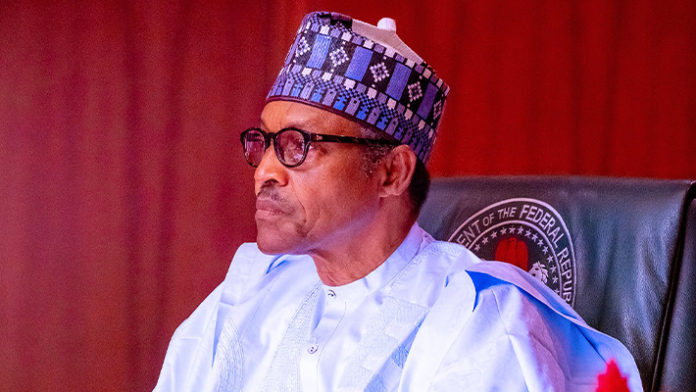
President Muhammadu Buhari has been asked to release the report of the judicial panel on the former Acting Chairman, Economic and Financial Crimes Commission, (EFCC), Ibrahim Magu.

In a letter addressed to the president, the world’s leading anti-corruption coalition expressed deep concern that the political interference in the operation of EFCC and inability of the Nigerian authorities to release the report was partly responsible for the recent drop in Nigeria’s anti-corruption rating by Transparency International.

The groups, HEDA Resource Centre, Global Witness, Re:Common and The Corner House, said the failure of the federal government to release the report suggested that the whole exercise was witch hunting.

The petition was signed respectively by Olanrewaju Suraju, Simon Taylor, Luca Manes and Nicholas Hildyard.

The groups said over seven months since the judicial panel chaired by a retired justice, Ayo Salami, was established to investigate the allegations made by the Attorney General Abubakar Malami that Mr Magu had abused his office, more than four months after the panel ended its sitting, the outcome has been kept secret amidst suspicion that Mr Malami tinkered with the report.

The coalition said suspicion has been deepened that the whole exercise was aimed at halting the good work of Mr Magu who has been acclaimed world-wide as placing Nigeria on a glorious footing.

The group regretted that no charges have yet been brought against Mr Magu, whose tenure at the EFCC continues to be viewed within the international anti-corruption movement as an exemplary period that restored confidence in Nigeria’s commitment to fighting graft, nor have the findings of the Salami report been made public.

The coalition said in collaboration with other international groups, they have devoted time and energy to supporting Nigeria in its efforts to fight corrupt but have been left in despair.

“As the legal maxim goes, “Justice delayed, is justice denied”. If Magu has a case to answer, then let him be charged before a court and given the opportunity to defend himself in public. If there is no case to answer, then justice demands that he be reinstated. Indeed, every day that passes without a decision being made on his fate chips another block off Nigeria’s reputation for upholding the rule of law. This not only raises questions about Nigeria’s anti-corruption fight, but has strongly suggested to the international community that Nigeria’s fight is not, in the end, serious – that instead, progress can only be made against small targets, and that once the “important” begins to be held to account, the lackies of the corrupt will be permitted to sabotage due process, absent even the semblance of any subtlety,” the coalition stated.

The group reminded President Buhari that the world anticipate that the administration of President Joe Biden will take a renewed interest in the international fight against corruption now that the dark days of Donald Trump are over, adding that given the U.S.’s own recent experience of a serving law enforcement officer removed from office because he was unwilling to drop an investigation (in this instance into allegations of Russian meddling in the 2016 US elections), “we fully expect that law makers on Capitol Hill will be eager to ensure that similar abuses of power do not hamper anticorruption efforts elsewhere.”

The coalition said it has no doubt that, unless swiftly resolved, the vendetta that the Attorney General of the Federation, Abubakar Malami, has waged against Mr Magu will likely be a focus of interest. Nigeria has a reputation to protect now more than ever before.

“For the sake of Nigeria and the reputation of your presidency, we again unequivocally urge you to weigh in and see that justice is not only done but, seen to be done in this matter” the group stated. (Thenigerialawyer)

We Treated Many Gunshot Victims From Lekki Toll Gate – Reddington Hospital

Reddington Hospital has told the Lagos State Judicial Panel of Enquiry and Restitution for Victims of SARS related abuses and other matters that it treated an overwhelming number of persons with gunshots or other wounds from the Lekki Toll Gate on the night of last October 20.

It said the number of persons brought to the facility that night were so many that staff at the hospital’s Lekki and Victoria Island branches were overwhelmed by the crowd.

One of the hospital’s trauma and orthopedic surgeons, Babajide Lawson, told the panel that he attended to the patients that night.

He described the situation as “a mass gathering”.

According to him, the medical facility may not have been able to keep complete records because of the number.

The Nigerian Army has been accused of opening fire with live bullets on peaceful protesters at the Lekki Toll Gate demanding an end to police brutality using the hash tag #EndSARS.

The protesters have submitted petitions to the panel alleging that men of the Army’s 81 Division shot at and killed several #EndSARS protesters that night, a claim the Army denied.

The Army has, however, shunned further appearance at the panel, without giving any reason.

Lawson, who answered a summons to the hospital following application by #EndSARS protesters’ lawyer, Mr Adesina Ogunlana, testified he personally treated six of the patients that night.

He said from the next day, the number of patients tripled.

He said he had to keep shuttling between the hospital’s Victoria Island branch where he was stationed and its Lekki facility to help out.

The hospital had earlier appeared before the panel on January 6, to represent medical reports of about 20 patients brought to the hospital on the night of the Lekki shooting.

Giving his evidence Lawson testified that the number of victims of the shooting who visited the hospital increased after the first night.

He said: “Being in charge of trauma means anybody that is involved in any form of traumatic injury, accident, gunshot and others will have to go through me first.

“I saw a couple of them, the ones that needed admission, I admitted and the ones that did not were taken care of.

“The thing is on that October 20, a lot of patients presented at the Lekki office, that’s the Lekki Hospital. I was shuttling between there and the VI office, which I represent.

“Later on the night of 20th, I also went to the Lekki office to assess and determine what amount of assistance they would require from me. I transferred some of the patients from the Lekki Hospital to the VI office.

“On the first night, there were about six patients that I saw, subsequently, other patients came, trickled in, as days continued.”

The surgeon said the patients had varying degrees of injuries and were treated.

During cross-examination by a lawyer to some of the victims of the shooting, Adeyinka Olumide Fusika, SAN, the surgeon faced questions on whether he authored any of the medical reports tendered to the panel, among others.

Olumide-Fusika said: “You will agree that there is none for Samuel Asola, who is a petitioner before this panel and my own client.

“This client of mine says he was treated of gunshot wounds at your facility. He has pictorial proof of being actually treated. If that were to be true, it means your evidence before this panel is not comprehensive, it is not exhaustive of the people you treated of gunshot of wounds.”

Responding, Lawson explained that there was likelihood that the hospital did not capture the records of all the patients due to the crowd.

He said he did not author any of the medical reports as it was the duty of doctors handling the patients.

Lawson said: “On the night of this event, in the Lekki facility, when patients were brought in, it was a mass gathering situation in which case you have a large number of people presenting at the same time, literarily overwhelming the facility.

“In that kind of situation, there are lots of cases that might be compromised. If this patient says he was treated at the hospital, he can present at the hospital and get a medical report.”

The lawyer further asked whether the hospital extracted pellets from the patients as there were many cases of gunshots, especially in the case of Nnaji Mabel who had a pellet in her abdomen.

Dr Lawson: “As indicated in the report, we did not extract the pellet. I admitted the responsibility, we reviewed her CT and records, we determined that she did not need anything extensive, and she was treated and allowed to go.”

Olumide-Fusika: “It is normal to have pellets in your body and just go home?”

Dr Lawson: “Yes, it is possible. If there is a gunshot injury and the bullet does not in any way endanger the body, the pellet can remain.”

The surgeon explained that some pellets were removed and they would be handed to the police in accordance with medical protocols.

Some other patients, he added, sustained “entry” and “exit” bullet wounds.

The surgeon said: “In normal process, protocol is that if there is a gunshot injury and extracted the bullet, the police will have to come and the bullet be handed over.

“For the patients I treated, I did not extract any bullet; the patient that had pellet did not require a removal.”

Seeking clarification, the lawyer representing the Lagos State Government, Olukayode Enitan, said many of the medical reports presented by Reddington Hospital did not add up.

Enitan said: “We applied to Reddington Hospital; we requested the hospital to produce the case notes of the patients whose reports have been presented.

‘’The reason for this is that when we went through the reports, too many of them do not add up, some are outrightly contradictory.

“We believe that the case notes will more than likely shed light on whatever it is. If it is a summation of actual events, the case notes will show that, that is why we made that application.

“It is very necessary that we have the case notes before the doctors are presented for cross-examination,” Enitan said.

Responding, the panel’s lawyer, Jonathan Ogunsanya, said the hospital had been served to present the case notes.

The hospital’s lawyer admitted they were served on Friday.

“We didn’t have enough time to go through the necessary process as required. However, we were able to prepare one or two, because there were different batches of patients that were treated.”

Panel chairman, Judge emeritus Dorris Okuwobi, ruled that case notes should not stop the presentation of evidence of the doctors and another date could be given for cross-examination.

Justice Okuwobi adjourned till February 12 to allow the state government’s lawyer cross-examine Dr Lawson.

Thenigerialawyer

How To Get A Divorce In Nigeria

By Nnnoma Ekwegh

On February 21st, 2020, Twitter user, @AnnebrafaEsq, declared that since the year began there had been 4000 divorce applications in Abuja, Nigeria, alone. And although her viral report was discredited by an Abuja-based lawyer who specialises in family law, the alarming report still prompted a conversation on Twitter, as many people tried to grasp why it seemed like more marriages were failing. Considering the theme of many conversations on Twitter, many seemed to, unsurprisingly, blame: feminism, immaturity, the woke generation, and an unwillingness to “work things out”. All rather general and vague and inaccurate. And one question still remains, has anyone bothered asking the people filing for divorce, what may have caused them to make that decision? We did.

or Miriam* who is separated from her husband of eight years, her reason has nothing to do with either feminism or being part of the woke generation. It was a choice to step out of an environment that was becoming hostile. She says, “There was infidelity, bullying, and soon threats of physical harm followed”. When it comes to divorce, there are a plethora of reasons why it happens, but for Lesley Agams, a lawyer who has been handling divorce cases for 30 years, the most common grounds for women filing for divorce remains domestic violence or other forms of abusive behaviour.

According to a national demographic and health survey cited by Guardian, a third of all Nigerian women have experienced physical violence, which encompasses battery, marital rape, and murder at the hands of intimate partners. Miriam has been separated from her husband for almost two years – a grounds for divorce under the 1970 Matrimonial Causes Act – and is intending to seek divorce after crossing the two-year mark.

Speaking of her time away from her husband she says: “It has been difficult living alone, after sharing a space with someone for eight years and having a lot of the decision-making done by [them]. But if I am to be honest, it has been a time of clarity for me. I was very timid in my marriage. I rarely spoke up, out of fear. Now I feel like this is the Me I was always meant to be: Confident, strong, outspoken. As women we are told by society and family, that to become a wife you must be quiet; seen and not heard, agreeable. Letting him lead means letting him have his way, so you do whatever, take whatever, because his happiness is the priority. That is what you are taught.”

“The reality of shame, and being ostracised by family and peers are experiences that any woman considering divorce must be prepared to face and though Miriam was cautioned about this repeatedly by family members and friends, the consequences did not matter.”

Living in a patriarchal and religious society like Nigeria, when a woman divorces her spouse, she becomes persona non grata. Maureen Mennor Nwaezeigwe, the founder of Singlemomhood Support Initiative, and a divorcee herself, says, “When the marriage ends the first thing people think is that maybe she didn’t ‘submit enough’, maybe she wasn’t a ‘good girl’, maybe she didn’t have ‘good home training’, to prepare for marriage. It’s just one of the plights of women in Nigeria. A narrative we hope will change.”

The reality of shame, and the fear of being ostracised by family and friends are experiences that any woman considering divorce must be prepared to face, and though Miriam was cautioned about this repeatedly by family members and friends, the consequences did not matter. “I did not care anymore. I had reached a place where I needed to do what was best for me.”

Speaking on the fear-mongering and its impact on women who are considering divorce, Agams says, “While most of this is true. it is also exaggerated to keep women in line. Women should learn to recognise that that is not love.” Miriam adds, “Staying in a marriage or leaving a marriage is a personal choice. People will give you reasons to stay, but is it your reason? Whatever you choose, do it for you. Know why you left, why it did not work for you.”

When marriage is discussed, you can always expect someone to bring up how marriages today are failing to live up to marriages of the older generation, and this is usually accompanied by a profuse lament on the loss of values today. But Agams has a different understanding regarding the spike in divorce, she says, “Women are less willing to stay in an unhealthy relationship.

[Also] more women are getting married under statutory law than they did 30 or even 20 years ago; customary divorce (which includes Muslim marriages) are fairly easy to get. With the increase in statutory marriages we should expect an increase in divorce filings.” However, Agams notes that the economic impact of divorce on women and children remains a major issue, she goes on to advise that, “Women should try to be financially independent before marriage and keep their property separate from their husbands.

A lot of men try to punish their ex-wives by withholding or limiting necessary financial support. There are also men who deliberately marry women and make them financially dependent, thus making it harder for the woman to leave or survive when she is bold enough to leave.” Maureen has come across hundreds of women through her NGO and she agrees that there is a financial burden that divorced or separated women carry.

“[These] women go through a lot financially. Most of the women who come are struggling because the income is not enough. She is taking care of house rent, bills, medicals, socials, food, school fees, and in Nigeria I can tell you categorically there is no help for her. You go to the police, they will make the man write an undertaking [to give financial support] at the end of the day he doesn’t do it, they say give him time. After sometime they say take him to court. When you go to child protective services in Alausa, they take your story as well as his, then they instruct him to fulfil his obligation, the man does not heed to it and Alausa tells you to take him to court, and the circle just keeps going round.”

Patriarchy, religion and gender inequality are the three-fold chords that bind many women in abusive and toxic marriages. Together, these three elements excuse the abuser and shame the abused, Miriam says, “I remember one of the times my husband and I went for counselling with our pastor and his wife.

The first thing the pastor’s wife said even before I spoke was, if he doesn’t beat you I don’t see a problem here. I immediately shut-down because I knew nothing I said would matter, nothing he had done to me would matter until he carried his threat to beat me. I have played that scenario countless times and it cuts me up afresh each time. I felt so small, so ashamed, I began to second guess myself; maybe the abuse was not so bad, maybe the name calling was not so bad, maybe becoming a sexual object was not so bad.”

According to the Holms-Rahe stress scale, divorce is the second most stressful life event a person can experience, second only to the death of a spouse. Divorce is about navigating a new path, and developing a new life and identity separate from marriage, and as psychologist Elisabet Kvarnstrom points out, this is not always easy, “Feelings of shame, anxiety, fear and confusion can become your emotional makeup permanently; this can be the case even if you were the one who chose to leave the marriage”.

Kvarnstrom advises women who are struggling emotionally to consider therapy as a tool to help them better understand their emotions and navigate their new life.Looking ahead at what the future holds for her, Miriam is uncertain but unafraid, “I am in a better place, some days I doubt this because of all the stresses that come with being in this situation, but the fact that there are days I can see it, and feel it gives me confidence to keep walking.”

*Some names have been changed to protect the identity of some subjects in this article.

Credit: Genevieve Magazine

I Promptly Signed NOUN Amended Law To Resolve Lingering Non-recognition Of Its Graduates — Buhari

President Muhammadu Buhari (Credit: Twitter)

PRESIDENT Muhammadu Buhari has disclosed that his prompt signature on the amended law of the National Open University of Nigeria (NOUN) has resolved the lingering issue of non-recognition of its graduates in the country.

He stated this on Saturday during the university’s combined 9th and 10th Convocation Ceremony, which was held virtually, a statement by the Director, Media and Publicity of the University, Mr Ibrahim Sheme, said in Abuja. 

The President, represented via a virtual connection by the National Universities Commission (NUC) Deputy Executive Secretary, Ramon Yusuf, stated: “NOUN is delivering on its mandate by taking education to the doorstep of Nigerians.”

Buhari, who is the university visitor, added that his administration has placed a great premium to education, especially in ensuring a lifelong learning via the Open and Distance Learning (ODL) mode.

While commending the efforts of the university’s management in continuing to expand access to higher education, the president acknowledged that NOUN has remained the only single-mode ODL institution in Nigeria.

On his part, the Vice-Chancellor, Professor Abdalla Uba Adamu, said the combined ceremony has seen the graduation of a total of 32,725 students from various courses of study in undergraduate and postgraduate studies.

Adamu, who is rounding off his five-year tenure on February 10, 2021, disclosed that a total of 24,300 graduands were drawn from the year 2020, the convocation ceremony of which was shelved due to the enforced lockdown necessitated by the Covid-19 pandemic.

He said the year 2021 has a total of 8,425 graduands,  making it a cumulative 80,418 students who graduated within his five-year stint at the university.

The Vice-Chancellor added, “It became necessary to hold a combined convocation due to inability to hold the 9th convocation in March 2020 due to Covid-19 pandemic.

“The virtual convocation is not the first in the country due to Covid-19 restriction, but it is the most significant in leading way to the largest single event mass graduation of students in the history of higher education in the country.”

Adamu, who took time off to explain his achievements, said the recorded strides were a culmination of “dedication and singular focus in moving the university from a static provider of ODL to dynamic process of transformation of higher education delivery models in Africa.”

The Chancellor of the university, His Royal Highness, Amb. (Dr) Lawrence O.C. Agubuzu, thanked the federal government for its support to the university.

On his part, the chairman, Governing Council, Professor Peter Okebukola, said the combined convocation conducted virtually was unique in many ways, as it will set standard for other universities in Nigeria.

He said, “This is the last convocation under the leadership of Professor Abdalla Uba Adamu, whose five years go down as the best in the annals of the university.”

Goodwill messages were received from other universities as thousands of students, families and friends hooked on via the various streaming platforms. (thenigerialawyer)

Comment: Depressing end to Weinstein gagging order narrative means closure for none

© Roberto Ricciuti

The whimpering conclusion to the three-year saga that dragged City law into the middle of #MeToo could hardly have been more frustrating for everyone concerned.

The Solicitors Disciplinary Tribunal (SDT) said on Thursday (14 January) it had decided to stay proceedings against Allen & Overy employment veteran Mark Mansell (aka Solicitor Z) relating to a non-disclosure agreement drawn up for disgraced Hollywood producer Harvey Weinstein in 1998. The grounds – Mansell’s ill health meant that continuing with a trial posed a significant risk to his life. 

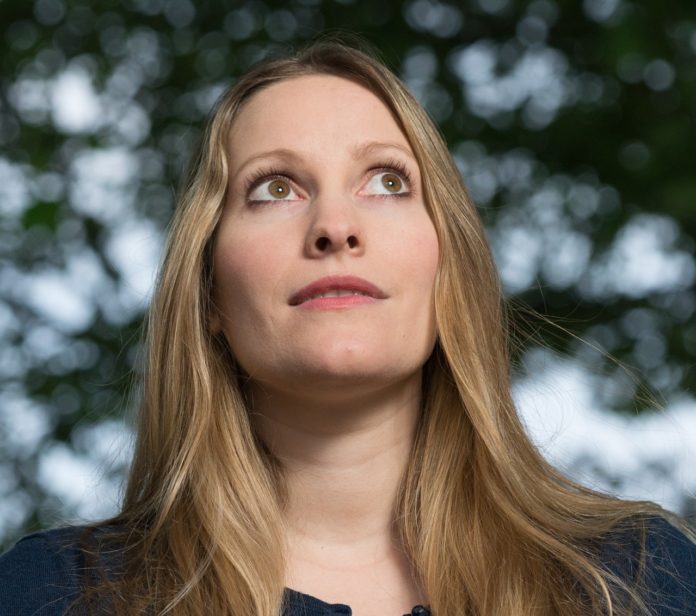
The high-profile case began in October 2017, with disclosures by British producer Zelda Perkins (pictured) about the questionable gagging order she had signed following sexual harassment claims against Weinstein.

What followed made it much more than a cause célèbre. Mansell became an unwilling poster boy for ethics concerns around NDAs as details of the contract came to light during a grilling by the Women and Equalities select committee.

In brief, the questionable clauses, according to the SRA: ‘In the context of a serious allegation of sexual assault, a solicitor acting for an employer was guilty of misconduct because the settlement agreement, on the SRA’s interpretation of the relevant clauses, purported to restrict the complainants’ ability to report the alleged crime to the police, co-operate fully with criminal proceedings and obtain medical treatment.’

The select committee’s condemnation of the SRA for its relationship with City law firms as being ‘like some sort of cosy old boys’ network kind of thing, where they’re scratching each other’s backs and not really taking anything seriously,’ was crucial. It played no small part in the regulator being forced to not only issue strict guidance on the drafting of NDAs but also launch an investigation and ultimately recommending Mansell to the SDT for prosecution.

It is sad that, with so many reputations at stake, it is unlikely now that all concerned will not have the opportunity to publicly argue their corner and clear the air.

However John Gould, senior partner of Russell Cooke, did issue a statement on behalf of his client, Mansell: ‘Our client is a senior and highly respected solicitor with an unblemished thirty year professional career. Our client is and remains of the view that the proceedings are misconceived and should never have been brought.

‘It is not disputed that our client did not propose the now-controversial wording; his position is that it came from A and B’s lawyers. The SRA decided not to take action against A and B’s solicitors and none of the other lawyers involved have been subjected to disciplinary action by their regulators.’

Although closure is doubtless lacking, the reason for the case being stayed could not be more justified. A health crisis has sprung from the pandemic and any situation that adds to that is not to be recommended.

But for Perkins, a lot of answers remain frustratingly out of reach:  ‘This ruling effectively highlights that the disparity of arms that I suffered 23 years ago is still in place…both the SRA and SDT agree on the fact that there is a serious case to be answered.’

Richard Moorhead, professor of law and professional ethics at the University of Exeter and a former director of UCL’s Centre for Ethics and Law, argues that this could still be seen as a victory of sorts for the SRA in that the SDT has conceded that there is a case to answer.

‘What matters now is what happens going forward and whether law firms will take seriously how they are drafting NDAs. The recommendations for regulation around NDAs has gone quiet and the Law Society’s guidance still hasn’t been reviewed. But it’s not necessarily all bad news. The SRA has reinforced its warning notice on the drafting of NDAs so it clearly hasn’t let go of this issue. It has caused people to take notice.’

Perkins echoes the point: ‘I have always maintained that the only way of solving the issue with NDAs is tightening and clarifying regulation and making tougher legislation, but it is clear that the white-collar establishment is not prepared to lose this useful tool.’

For the SRA’s part, an uncharacteristically outspoken statement strikes a bullish note – the battle is not over: ‘In 2018, the SRA issued a warning notice on the use of non-disclosure agreements and continues to investigate a number of solicitors in respect of allegations related to breaches of that warning notice. The SRA expects that those it regulates will have careful regard to that notice and to their professional obligations when dealing with such matters.’

Let’s hope that, once this case fades out of the public eye, employment lawyers and law firms alike will be just as minded to tread with such care on the drafting of NDAs as when the shockwaves of the Weinstein drama first shook the profession. (legalbusiness)

NDLEA Seizes Cocaine Worth N30b at Lagos Airport

The National Drug Law Enforcement Agency (NDLEA) has made huge seizures of cocaine and heroines with a street value of over N30billion at the Murtala Muhammed International Airport, Ikeja, Lagos.

This comes barely a week after the new Chairman/Chief Executive of the NDLEA, Brig Gen. Buba Marwa, vowed to dismantle drug trafficking cartels across Nigeria.

One of the seizures, 26.840 kilograms of cocaine is the biggest single seizure from an individual in the past 15 years.

According to a top official of the agency in Abuja: “On the 27th of January 2021, at about 1320hours, during the inward clearance of Ethiopian Airline passengers at the E- arrival hall of Murtala Muhammed International Airport, Ikeja, Lagos, a female passenger by name Onyejegbu Ifesinachi Jennifer, 33 years, who arrived Nigeria from Sao Paulo, Brazil via Addis Ababa, was intercepted by NDLEA operatives.

“As a standard operating procedure, all passengers to and from high-risk countries are always profiled using passengers’ manifest.

“It happened that the above-named suspect was targeted. Consequently, she was taken to the NDLEA office at the airport, where her bags were searched thoroughly, and in the process, whitish powdery substances were found concealed inside 16 pieces of duvet contained in her two travel bags.

“Field test was conducted on the recovered substances and proved positive to cocaine and weighed 26.850kilograms. The suspect who is a hairstylist and based in Brazil was interviewed and she confessed to having agreed to smuggle the hard drug for N2m.

“Although she refused to disclose the names of her associates, she mentioned that she was asked to hand over the drugs to another person. The street value of this singular seizure is put at over N21billion.”

The official further disclosed the development came on the heels of a similar one recorded two days earlier when a red left-over luggage was declared to the NDLEA operatives at the E-arrival hall after the inward clearance of passengers on Ethiopian Airline.

“Based on information on the luggage tag, the luggage arrived Nigeria from Sao Paulo, Brazil, a destination classified as a high-risk country going by records and trends of arrest and seizures.

“Subsequently, the bag was transferred to the NDLEA ‘Legal Seat’ being the administrative office at the passenger terminal of the Murtala Muhammed International Airport, for detention. While this was going on, the NDLEA Commander at the MMIA, Ahmadu Garba received an intelligence report of a purported plan to clear a consignment containing hard drug through the Lagos airport. Coincidentally, the details sent matched the bag earlier detained by the operatives at the Lagos airport.

“In a coordinated operation, on January 27, 2021, an NDLEA undercover agent was contacted by one Abubakar Aliyu. Guided by the operation and investigation unit, the undercover agent successfully lured the said Abubakar Aliyu into the cargo terminal of the airport where he was arrested.

“The suspect revealed to NDLEA operatives that another person was on his way to receive the bag based of the instruction of his sender who he gave his name as Ikechukwu Eze.

“As a result, one Emmanuel Iyke Aniebonam, who was to receive the bag, was also arrested at NAHCO. During a preliminary interview by a team of investigators, Emmanuel confessed that he was instructed by one Ikechukwu to receive the consignment. Emmanuel was again set up to lure in Ikechukwu Eze but rather than showing up to get the consignment from Emmanuel, he sent another who said he was mandated to receive the consignment from him, and they agreed to meet at Ibis Royal Hotel, a few miles away from the airport.

“A follow-up operation was quickly organised to the hotel, where one Onwurah Kelvin was arrested and brought to the office. The suspect confessed during the interview that he was sent by one Ikechukwu to receive the consignment.

“Thereafter, the detained bag was opened in the presence of all the three suspects, whitish powdery substances were discovered neatly concealed and sewn inside five children duvets. The field test was carried out on the exhibits proved they are cocaine weighed to be 8.400 Kilograms, with a street value of over N7billion.”

It was further learnt that on January 24, 2021, at about 12 noon, one Edosa Christopher was arrested at the passengers screening point of the Murtala Muhammed International Airport, Lagos, and subjected to a body scan, which proved positive for hard drugs ingestion.

According to the official: “The suspect was immediately transferred to NDLEA/JBTF office and placed on excretion observation. Subsequently, he excreted a total of 68 wraps of substance, which was tested and proved positive to heroin. It was also weighed 950 grams.

“During an interview, Edosa Christopher confessed to having bought the illicit substance at the cost of N800, 000 from someone he referred to as ‘Paddy’.

“According to the suspect, he met the said PADDY at Eagle Rock hotel around Ago Palace way in Lagos, where he lodged for a brief stay. Further investigation however revealed that the hotel does not exist anywhere in Lagos.” (thepodium)

You Can Officiate Your Friends’ Weddings!

Did you know you can officiate your friends’ and family members’ marriage ceremonies in Alberta? For a long time, only appointed civil marriage commissioners could officiate weddings in Alberta. The provincial government recently changed its policies to allow members of the public to perform these ceremonies. The new rules allow any Canadian permanent resident over the age of 18 to perform a non-religious ceremony in Alberta for one day free of cost by becoming a temporary marriage commissioner.

Who can officiate a marriage in Alberta?

Civil marriage commissioners appointed by the provincial government, registered clergy and temporary marriage commissioners can all perform in-person marriage ceremonies in Alberta. “Zoom” weddings and other teleconferencing arrangements where the officiant is not physically present to perform the marriage are not allowed in Alberta.

What is a temporary marriage commissioner? Who can become one?

Temporary marriage commissioners can perform one non-religious marriage ceremony on one specified day as long as they do not charge a fee. Any Canadian permanent resident over the age of 18 is eligible to apply. The application is free of charge.

The temporary marriage commissioner program has been around for a long time, but until very recently only certain categories of people could apply. These people included Members of Parliament, judges and lawyers. The general public could only apply to the program if they could prove no civil marriage commissioner was available on the marriage ceremony date. This was difficult to prove considering the large number of appointed commissioners. Because of these difficulties, the government opened these categories to include the general public.

How do you apply for a temporary marriage commissioner license? What materials will you receive?

You need to fill out a temporary marriage commissioner application. This application asks for your personal information, including your legal name, birth date and mailing address, as well as personal information for the people who want to be married. You will also need to give information about where and on what date the marriage ceremony will take place. You, as well as the to-be-married couple, must sign the application.

The application can take up to a week to process, but it is often faster than that. To account for potential delays, give yourself at least a week between the submission of your application and the proposed marriage ceremony date.

Once they have approved your application, the Alberta Vital Statistics office will email you a marriage commissioner license allowing you to perform the marriage ceremony on the date you stated on your application. You will also receive:

  • a suggested script for what to say during the marriage ceremony
  • guidelines to follow before, during and after the marriage ceremony
  • guides for filling out the Registration of Marriage and detaching it from the marriage license, and
  • a blank Certificate of Marriage for you to fill out and print before the ceremony.

What is the difference between the Registration of Marriage, a marriage license and the Certificate of Marriage?

The couple whose ceremony you are officiating must get a two-page document from an Alberta registry sometime in the 3 months before the ceremony. The top part of this document is the Registration of Marriage, and the bottom half is the marriage license. The couple must give this document to you, the marriage commissioner.

Before performing the ceremony, you will fill in the witnesses’ information and other parts of the document you are responsible for filling out. But no one may sign the document until after the ceremony. The people who will sign the document following the ceremony are the people who have just been married, both witnesses, and you.

After the ceremony, you must detach the marriage license from the Registration of Marriage. Then you have to mail the Registration of Marriage to Vital Statistics in Alberta as legal proof of the marriage within 48 hours of the ceremony. You must keep the marriage license for your own records.

The Certificate of Marriage is a separate document prepared by you as the marriage commissioner. You must sign this document immediately after the ceremony and give it to the married couple. Vital Statistics does not get a copy of the Certificate of Marriage.

What do you need to do to prepare?

Preparing for a marriage ceremony as a temporary marriage commissioner is simple. You should:

  • print the Certificate of Marriage in colour on stiffer paper, and
  • figure out what you would like to say during the marriage ceremony.

Although Vital Statistics gives you a suggested script of what to say during the ceremony, you do not need to follow it word for word. You must ensure each person getting married says both of the following legally binding statements in their vows:

  • “I do solemnly declare that I do not know of any lawful impediment why I, (name) may not be joined in matrimony to (name).”
  • “I call on those persons present to witness that I, (name), do take you, (name) to be my lawful wedded (wife/husband/spouse).”

However, beyond these statements, you are not required to say any particular passages. You must ensure that the couple is fluent in the languages spoken during the ceremony in order for the marriage to be valid.

As a temporary marriage commissioner, you cannot say any religious statements, including blessings and prayers, during the marriage ceremony. Locate a member of the clergy if the couple would like these kinds of statements made during the ceremony.

Additionally, ensure there are two credible adult witnesses available for the marriage ceremony. These individuals will also need to be fluent in the languages spoken at the marriage ceremony. They cannot be cognitively impaired and must fully understand the forms they will sign related to the marriage.

You should fill in the names of the witnesses on the Certificate of Marriage and Registration of Marriage (without signatures) before the ceremony. All relevant parties will sign the Registration of Marriage after the ceremony is finished.

What do you need to do after the ceremony?

After the ceremony, the newly married couple and their witnesses must sign the Registration of Marriage. As the marriage commissioner, you must also fill out a portion of the Registration of Marriage certifying that you performed the ceremony.

Once the Registration of Marriage is complete, detach the marriage license portion at the bottom of the document. Keep the marriage license for your own records. You must forward the Registration of Marriage portion of the document to Vital Statistics within 48 hours of the marriage ceremony. You typically do this through regular mail.

You can correct errors with an amendment through Vital Statistics. Vital Statistics will ask for evidence to support the correction and prepare an affidavit for you to sign.

Of course, you cannot marry people who are not eligible to be married in Alberta.

What do couples need to get married?

As previously mentioned, to get married in Alberta, you need a valid marriage license. This license costs $40, plus a service fee based on your registry agent. A couple can apply for a marriage license together at the registry agent office. Each person getting married will have to provide acceptable identification, swear one or more affidavits, and provide required personal information. You cannot be heavily medicated or under the influence of other drugs or alcohol.

Marriage licenses are immediately valid once they are issued—meaning you can have a marriage ceremony on the same day the license is issued. Marriage licenses stay valid for three months from the day they are issued. A couple can be married at any date within that three-month period as long as the marriage ceremony takes place in Alberta.

Who can get married in Alberta?

To get married without anyone else’s consent, both people getting married must be at least 18 years old. If you are older than 16 but younger than 18, you can get a marriage license if both your parents or legal guardians give their consent to the marriage. Both people must be currently unmarried. Both people cannot be related to one another as grandparent, parent, child, sibling or grandchild, by whole blood, half blood or adoption. There are no citizen or residency requirements—neither person is required to be an Albertan or Canadian, but the marriage itself must take place in Alberta.

If either of you are divorced, you must have proof of divorce to apply for a marriage license. This proof of divorce must be the final document (such as a Certificate of Divorce), and the document must be in English. If either of you are widowed or have never been married, no additional documents are required.

lawnow

Stop telling junior lawyers to work hard and keep their heads down

This common piece of career advice misunderstands what it truly takes to succeed in law

When I started working as a lawyer, more than one well-meaning person told me to approach my legal career the same way I might approach a healthy lifestyle: work hard, try my best and “go with the flow.” I shouldn’t worry about all the problems that might arise, they said, because I could simply deal with them as they came.

This is popular advice for young lawyers. And, on a certain level, it makes sense. When we first start practising, we are often overwhelmed and out of our depth. So we have no choice but to keep our heads down, focus on the task at hand and concentrate on conquering the steep learning curve.

Following this advice made me a solid lawyer. But, in many ways, it also held me back. Not long ago, I made the leap from mid-level to senior lawyer. I’d just received a good performance evaluation, and I was excited to take some meaningful steps forward. Yet, to my disappointment, I found myself sitting in my office one afternoon and realizing that my next year on the job as a senior lawyer would look just like the last. I wouldn’t reap any of the benefits that I thought would come with this upward shift, namely an increase in status and compensation. It was not an easy pill to swallow. I was angry and frustrated. I honestly felt that things were not playing out fairly. Despite all the great work I thought I was doing, I was not advancing in the way I’d hoped.

After a period of (perhaps too much) self-loathing, I decided to step back and look at my situation objectively. The more I thought about it, the more it became clear to me that I wasn’t moving forward in my career because, as advised, I had adopted a head-down attitude that never allowed me to look forward to see where I was going.

Though I knew how to work hard and pay attention to detail, I had not thought carefully enough about the direction of my career. I had become too fixated on the next assignment. I didn’t take the proverbial “bull by the horns” like I should have.

The good news is that it wasn’t too late to correct course. Once I realized my mistake, I stopped focusing solely on my immediate work and started spending more time writing, marketing and networking. I started writing down my goals, not just a list of tasks to complete. That new way of thinking helped me take the next steps in my career path.

It’s always a good idea to take time to think about where you are in your journey as a lawyer. If you’ve already learned the ropes, it may be time to adopt a more forward-thinking approach. For instance, if you work at a firm and have your sights set on partnership, figure out what you need to do to get there. Don’t think of it as a promotion that may be granted if you do good work. Instead, build your profile, become more active in your firm outside of billable work and seek the advice of existing partners on how to advance.

Don’t get me wrong — there is no substitute for good work, and you should never lose sight of that. But it will only take you so far. Once you get over the learning curve, you have to make your own opportunities. You need to do more than go with the flow. (Lawandstyle)

An inside look at how Toronto lawyers have moved their practices onto Zoom

Once the coronavirus pandemic forced the world into lockdown, lawyers across the city started to conduct team meetings and client consultations over Zoom. The transition was not so simple. Video calls would descend into chaos as children (or pets) screamed in the background. Technical problems caused constant delays. And the profession’s dress code was tossed aside, since it’s clearly absurd to wear a full suit in the kitchen. To capture this bizarre moment in time, we spoke to four lawyers about how they’re doing, what they’ve been wearing and how they’ve decorated their Zoom-ready “offices.”

Peter Aprile is a tax litigator, meaning he likes order. A few days into the lockdown, he started to play the Star Wars theme at 8:50 a.m. each weekday to summon his eight-year-old daughter and seven-year-old son to their homeschool lessons. Aprile did the morning shift, and his wife took the afternoon. In mid-June, help arrived. The parents brought a family friend (who’s also in teachers’ college) into their bubble, so she could watch the kids during the day.

Aprile was well prepared to take his practice onto Zoom. “Our work has always been some portion remote and Zoom-based,” says the founder of Counter Tax Lawyers. “So we’re closer to business as usual than most.” His work-at-home outfit has been consistent. “I wear the same thing every day: a black T-shirt, black sweat top and a black pair of jeans.”

His children have enjoyed appearing on video calls. His son, for instance, told one of Aprile’s colleagues a particularly embarrassing story. “In Japan, my wife and I had got ramen at this hole in the wall,” says Aprile. After leaving the restaurant, they were sick to their stomachs. “My kid finds this story hilarious! And the person on the other side is having a great time, so what do you do?”

continue reading

FROM WOOING TO SUING: HOW SEXUAL HARASSMENT COULD LAND YOUR LAW FIRM IN HOT WATER

Sexual harassment has been the one topic consistently plastered over the papers and social media platforms in recent months. It seems that everyone has either had their own unpleasant brush with it or at least knows someone who has. But what has become apparent is that many wholly misunderstand what actually constitutes sexual harassment. What some thought of as harmless flirtation or banterous behaviour can in fact be a lot more serious, especially in the office. Below Lawyer Monthly hears from Frank Ryan, Head of Employment at Vardags, on the need-to-know of sexual harassment in the workplace.

A type of discrimination that can take many forms and affect any person, sexual harassment is oblivious to gender, sexuality and age. Instead, it feeds off power imbalances, where one employee sees themselves as superior to another and enjoys making it known. Law firms, with strict hierarchical structures, are unfortunately particularly prone to over-stepping the line in this way. Younger team members such as graduates with hard-earned training contracts may be placed in a particularly sticky situation if they start to feel put upon by a more senior lawyer. Working long hours at the office exacerbates the problem and may make people feel more entitled to take liberties, particularly given the reputation of law firms being something of an ‘old boy’s club’. While firms are far less male-orientated than they used to be, women might still be somewhat under represented at senior level, a fact that’s unlikely to fill young female lawyers with confidence when it comes to speaking out about their discomfort.

But not only does sexual harassment appear in a multitude of guises in the office, it is also defined in broad terms in law. Technically, sexual harassment is the unwanted conduct of a sexual nature which violates a person’s dignity, or creates an intimidating, hostile, degrading, humiliating or offensive environment for that person. So, as you can imagine, this accommodates for a whole spectrum of bad behaviour.

If you’re the CEO or MD of a law firm, it’s crucial that you are clued up on these many misdeeds. If an employee has complained about sexual harassment from another employee (or a third party in an employment context), the employer can be liable if they didn’t take appropriate steps to prevent it happening in the first place or failed to take steps to stop it from happening again. So get to grips with the risks now because if you slip up, you could land yourself, your team and your firm in hot water.

So, what should you watch out for?

Unwanted physical contact is perhaps the most obvious kind of sexual harassment, but it can be subtle too. One of your lawyers may feel belittled by a squeeze of the knee in an important meeting, an arm about the waist or a lingering hand on the back. Despite being the least ambiguous reason to cry foul, without witnesses it can be hard to prove. It is important to remember that previous consent to a sexual relationship does not undermine future harassment claims- just because two of your team hit it off at last year’s Christmas drinks doesn’t mean the feeling is mutual now.

Words are also powerful tools in the hands of the office pest. Demeaning or sexualised comments on a colleague’s appearance or abilities, unfair teasing and sexist jokes all count as harassment. Intrusive questions about personal life, including relationship status, sexual preferences and family planning, can be used to embarrass employees too.

Equally, verbal sexual harassment doesn’t have to be face-to-face: it can be overheard. If a lawyer has to endure their colleagues guffawing about their recent conquests while they try to draft a consent order, this can be a cause for complaint. And, unsurprisingly, the words don’t have to be spoken. Victims of sexual harassment should be sure to save any offensive emails, texts or tweets for when they lodge a complaint. With concrete evidence such as this, it’s easier for you to take swift action – and take swift action you must.

But inappropriate behaviour doesn’t stop at unwelcome touching or teasing. You must take care that employees’ data is only being used for official purposes and won’t be commandeered by those who wish to invade another’s privacy. Should a colleague call another’s personal mobile without a valid reason or send letters or gifts to their house, this can certainly set off alarm bells.

Bandying about indecent images in the office, too, can be a form of sexual harassment. And of course, if an employee catches another taking secretive snaps of them there should certainly be consequences, especially if any of these photos end up on a website without the subject’s consent. When it comes to sexual harassment like this, social media is a minefield. An employee is absolutely within their rights to flag up a colleague’s intrusive liking of their Facebook photos or tagging in sexually explicit posts.

This list of scenarios may seem overwhelming to employers trying to do the best for their team, but not all law firms are breeding grounds for sexual harassment. To avoid any of these nasty situations, set clear boundaries in firm policy so employees know what’s what. If this doesn’t nip the problem in the bud, be sure that you take every complaint seriously: not only can sexual harassment create a hostile and unhappy office, if you dismiss a report, the spotlight could turn on you. Once firms have become better at self-policing in this way, perhaps at last our newsfeeds will have a new tale to tell.

Lawyermonthly

TIPS