Home Blog Page 1061

COVID-19: Dubai airport restricts Nigerian passengers

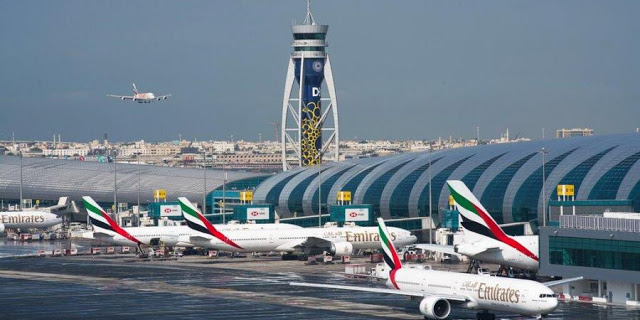
Dubai International Airport

Dubai Airports, operators of Dubai International Airport in the United Arab Emirates, has released fresh travel conditions for Nigerian passengers.The airport restricted Nigerian passengers from transiting through other airports.
The move comes as the United Kingdom on Friday suspended direct flights between the UAE and the UK as part of measures to curb the spread of the raging coronavirus disease.
Subsequently, in a statement sent to travel partners, Dubai Airports said amongst other things, passengers from Nigeria can no longer travel through other countries or airports to Dubai.
The notice was titled, ‘Dubai Travel Protocol Update –Travel From Nigeria’.
It read, “Kindly be advised that effective from 01 February 2021, the following conditions must be met for travel from Nigeria:
“All passengers are required to obtain negative COVID-19 certificate. The PCR should be conducted within 72 hours of the date of departure.
“All passengers are required to conduct a rapid COVID-19 test and obtain a negative result within four hours of their departure time.
“Passengers must travel directly from Nigeria to Dubai. No passenger may enter Dubai from any other country/station if they have visited or transited from Nigeria in the last 14 days.”
A travel expert, Ikechi Uko, said the implication of the measure is that other airlines won’t be able to commute Nigerian passengers aside Emirates Airlines which has its major hub at the Dubai International Airport.
Other airlines fly into Sharjah, UAE from Nigeria but none flies directly to Dubai.
The expert said, “UK banned them yesterday (Friday), so, they decided that instead of Emirates to collapse, let’s ban every other airline. You cannot fly through any other airport to Dubai.
“In most cases, there are no direct flights from Nigeria to Dubai, so that is their only way of eliminating every other airlines. They’ve eliminated Egyptair, Turkish Air, Qatar, Ethiopian, Kenya Airways, RwandAir, Air Peace, everybody wiped out.”
Uko also said the monopolistic development would increase the cost of travel.
“It is going to increase flight tickets because everybody is going to fly Emirates and they will increase their fares and bring in bigger planes to fly people,” he said.

~Punch

Nigerian politicians laundering loot as UK school fees: Report

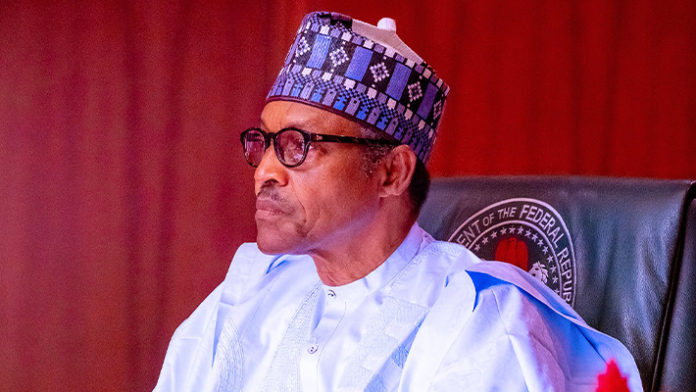
President Muhammadu Buhari (Credit: Twitter)

Politically exposed persons in West Africa, mostly Nigerians, reportedly spend in excess of £30 million annually on tuition fees in the United Kingdom.

Politically exposed persons in West Africa reportedly spend in excess of £30 million annually on tuition fees in the United Kingdom, the Carnegie Endowment for International Peace (CEIP) has said in a report.

The report released on January 28, suggests that Nigerian political elites, including those convicted of corruption-related crimes, contribute a larger proportion of the estimated yearly tuition traced to the subregion.

The report by the Washington-based foreign-policy think tank revealed that UK law enforcement has continually failed to scrutinise the enrolment of children of West African politicians in British schools, despite the modest legitimate earnings of the public officials.

“This relative lack of review has allowed some West African politically exposed persons (PEPs) to channel unexplained wealth into the UK education sector,” the report authored by erstwhile U.S. intelligence community’s top Nigeria expert, Matthew Page, said.

“It is less clear, however, how West African political elites can afford to send their children to schools or universities in the United Kingdom given their far more modest salaries, yet many continue to do so, no questions asked,” it added.

Citing implications of the unrestrained trend on emerging economies such as Nigeria, the report stated that “the recruitment of more wealthy students from corruption-prone, highly impoverished countries like Nigeria could handicap these countries’ socioeconomic development by enabling capital flight, amplifying foreign exchange and currency pressures” amongst others.

In an apparent indictment of the British education system, the CEIP report disclosed that independent schools in the UK view Nigeria as an increasingly attractive market — an ideology it said, had peaked the number of Nigerians being enrolled in schools in the European powerhouse.

Indicted Nigerian politicians

Former Plateau Governor Joshua Dariye and his counterpart from Delta, James Ibori, who were both convicted for various forms of corruption ranging from fraud to money laundering, were listed amongst political elites who had reportedly spent a chunk of ill-gotten gains on tuition in British schools.

The report revealed that Mr. Dariye spent an estimated £240,000 on fees for his children in UK boarding schools and universities despite facing corruption charges.

It also noted that Mr. Ibori, the former Delta governor who was convicted by a British court in 2012, allegedly spent an estimated £286,000 on UK tuition for his kids.

The names of other Nigerian politicians who had spent estimated sums ranging from £343,000 to £861,000 were withheld by the report.

Buhari, others spending heavily on UK education

The CEIP report found that President Muhammadu Buhari and all of Nigeria’s presidents and vice presidents from 1999 had sent one or more of their children to an exorbitant British school.

It added that no fewer than 40 percent of both past and present state governors in Nigeria have equally educated their children in the United Kingdom.

The report, sponsored by the UK government, underscored how many Nigerian politicians devise various methods such as contract fraud, fraudulent allowances, bribes or kickbacks, amongst others, to mingle their loot. (Gazettengr)

Withdraw Ill-advised Commendation Letter Sent To Yahaya Bello, CSO Tells UN Women

A Civil Society Organisation, Emerge Women, has kicked against a commendation letter that was written to Governor Yahaya Bello of Kogi State in Northern Nigeria.

The United Nations Entity for Gender Equality and the Empowerment of Women (UN Women) had presented the commendation letter and demanded a courtesy visit to Bello to celebrate his zeal in appointing women into political offices.

However, in a statement on Friday, Emerge Women said the appointment of 21 women as deputy chairpersons of all the 21 Local Government Areas (LGAs) in Kogi State was not enough reason to commend the governor.

The organisation noted that Nigerian laws provide that Local Government Chairmen and their deputies are elected and not appointed.

Emerge Women stated that the action of UN women negates the work being done to ensure that elections at the LG level are credible.

“This is one of the issues we have with the UN Women’s letter – we cannot be advocating for credible elections at the LG level and be simultaneously commending a governor who is stifling that process,” the statement signed by the organisation’s President, Mary Ikoku; National Coordinator, Hajia Rukaiya Bello, and eight other executives said.

“For us, the act is illegal and therefore the UN Women’s letter is an endorsement of an illegality. The appointment of deputy LG Chairpersons rather than supporting them in running successfully in free and fair elections weakens the agenda on gender mainstreaming into leadership and decision-making positions. It also subverts democracy. We ask the UN Women, is expediency now better than insistence on the rule of law?

“Albeit, the commendation is premised on the need to encourage the governor on his appointments of women into political office, this cannot be done in disregard of the larger context of the governor’s actions and inactions.

“Moreover, if that is the compelling reason for the commendation of the governor, it is on record that Rivers State has a woman as her Deputy Governor, female Commissioners, female state assembly member, female Senator, Female Appointees, 1 LGA Chairperson and 22 LGA Vice Chairpersons. To be clear, these women appointments have been in place for many years in Rivers State yet we have not read that UN Women commended the Governor of that state.”

The CSO, which noted that other organisations working hard to promote women political participation are yet to receive commendation, accused UN Women of bias.

“We are now left deeply concerned as to why the recent appointment of Kogi women as LG Vice Chairpersons will attract such a commendation,” it said.

“We have many organizations and women working extremely hard in the country to promote women political participation from institutional perspective, but none is yet to receive commendation from UN Women. Under these curious circumstance, It will be difficult to see the UN Women in Nigeria as unbiased.”

Emerge Women also wondered why the UN group would honour a governor whose election led to the death of Mrs. Salome Abuh, a woman leader of the People’s Democratic Party (PDP). Mrs. Abuh was burnt to death after the 2019 governorship election in the state.

The CSO also cited the case of a governorship candidate, Natasha Akpoti, who was harassed during the electioneering process.

“To be clear, the Kogi Governor’s election took the life of a Woman- Mrs. Salome Acheju Abuh, a PDP Woman Leader who was burnt alive to death in her house after elections in Kogi State,” the organisation said.

“Another woman in the person of Natasha Akpoti was viciously attacked and violated for seeking election as Governor of Kogi State.

“The Kogi Governor’s Commissioner allegedly raped a young woman in the presence of her 3-year-old son without the Governor reprimanding him. In fact he is still a commissioner in Kogi State! There are many other human rights infringements on women in that State which we cannot recount here.”

Emerge Women further alleged that the UN Women office did not issue any statement to condemn the incidents or seek justice for the affected women.

“In all these, the UN Women office in Nigeria never issued a press release to condemn these sad events nor offered a statement seeking justice for the women,” it said.

“We believe the UN Women’s commendation is faulty, questionable and unfortunate given the atrocities committed against women under the watch of the incumbent Governor of Kogi State.

“So long as activists set the bar low, nothing substantive will be accomplished. We cannot say we stand for gender rights and then go out to praise those who brazenly and publicly violate the rights and lives of women.”

The CSO stated that commending people like Bello does significant and irreparable damage to the struggle for gender equality, equity and justice.

Emerge Women, therefore, demanded that the UN Women office withdraw the “ill-advised” commendation letter to the governor.

“We therefore, expect the UN Women office in Nigeria to reconsider this ill-advised idea of commending the Kogi State Governor,” the organisation said.

“We call on all women and right groups in the country and globally to join us in calling on Mrs. Comfort Lamptey, the UN Women Representative in Nigeria to kindly consider withdrawing the Letter of Commendation to Kogi State Governor and a cancellation of the planned visit as a mark of respect for all the women who were victims of political violence and injustice in the last Kogi State Governorship Elections. An injustice to one woman, should be seen as injustice to all.” (aledeh)

AUDIO: Governor Umahi threatens to kill Peoples Gazette reporters over Ebonyi corruption story

practices in public service, Ebonyi Governor, David Umahi, has threatened to exterminate the Gazette’s reporters for beaming a spotlight on his sordid financial activities.

The Gazette had in an exclusive report on Friday exposed how Mr. Umahi transferred billions to his private firm from Ebonyi treasury, in brazen disregard for extant code of conduct regulations precluding senior public officials from conducting private businesses, except subsistence agriculture, while in office.

Citing recently obtained financial records of Ebonyi State’s, the Gazette reported a sustained trend of illicit financial flows from the state’s purse to Brass Engineering & Construction Nig. Ltd., a company founded and chaired by Mr. Umahi since 1993.

Brass Engineering, documents showed, had received more than N3.6 billion from Ebonyi coffers between 2011 and 2019.

The Gazette found that Mr. Umahi, who started transferring state funds into Brass Engineering shortly after becoming deputy governor to Martin Elechi in 2011, continued the suspicious transaction with his firm when he assumed governor himself in 2015.

The Gazette’s reporters came under severe security pressure from Mr. Umahi’s aides shortly after the story was published, with attendant requests for the report to be retracted or deleted entirely from our website and servers.

The governor’s aides, however, ramped up their forceful attempts to pull down the story by threatening to eliminate the Gazette’s reporters, should the newspaper persevere in its longstanding principle of keeping faith with its factual investigative reports, even in the face of intimidation and offers for inducement.

https://youtube.com/watch?v=3gil9TsJL_U%3Fenablejsapi%3D1%26autoplay%3D0%26cc_load_policy%3D0%26cc_lang_pref%3D%26iv_load_policy%3D1%26loop%3D0%26modestbranding%3D1%26rel%3D0%26fs%3D1%26playsinline%3D0%26autohide%3D2%26theme%3Ddark%26color%3Dred%26controls%3D1%26

“You’ve just done harm to the image of Ebonyi State, and I can assure you that if you don’t retract it, we might fall out with you,” an aide to Governor Umahi, who called in to express displeasure about the Gazette’s report said Saturday afternoon. “It’s not in terms of going to sue you, we know how to do it,” he threatened.

Mr. Umahi’s henchman added: “This thing can cause people’s lives, this particular thing you did can cause people’s lives, and I know what I’m saying. I’m close to you. I can see you. Quote me anywhere.”

“You just have to retract it because this is a serious image laundering you have done to Ebonyi State and you cannot just go like that. You just have to retract that information you published about the governor before things go bad.”

The governor’s aide, who indicated no interest to contest the Gazette’s findings, boasted that Mr. Umahi had made money before embarking into politics, hence had no reason to loot public resources.

“He (Umahi) has been in money before he became the governor. I’m not talking as though or because I’m an appointee, but if you come to Ebonyi State and see the unprecedented development going on in the state, you won’t be able to publish that (Gazette’s report),” he asserted.

A reverse lookup of the telephone number 08072844980 showed that it belonged to an office in Ebonyi State.

The governor is not a stranger to attacks on reporters. Barely last year, he sent out reporters from the Vanguard and Sun over critical reports of his handling of coronavirus pandemic in the state. The reporters were brutalised and humiliated.

When reached for comments prior to our publication of his suspicious use of state funds on Friday, Mr. Umahi had initially declined to challenge the accuracy of the Gazette’s findings. Instead, he sent a barrage of insults and threatened legal consequences in messages to the Gazette.

“What is ur f**kin business about who transacts govt business?” the governor said in a message to the Gazette. “Go to hell and die.”

Gazettengr

Coca Cola Demands Diversity For Its Law Firms Or Risk Getting Canned

Law firm diversity scorecards, committees, summits and action plans aren’t working, according to Coca-Cola general counsel Bradley M. Gayton.

In a Jan. 28 letter to outside counsels, Gayton said the legal profession is “too quick to celebrate stagnant progress and reward intention.” Rather than celebrating action plans, he said, it’s time to demand results.

Toward that end, Coca-Cola’s legal department told outside law firms:

• They must commit that at least 30% of associate and partner time on new matters will be billed by diverse lawyers. Of that amount, at least half of the billable hours should go to Black lawyers.

• If firms can’t meet diversity commitments internally, they can work with other firms to assemble teams that qualify.

• If firms fail to meet their commitment over two quarterly reviews for new matters, their fees will be reduced by 30% for the matters going forward until the commitment is met.

• Firms that don’t meet the goals over time won’t be considered for new work.

• Coca-Cola will create a list of preferred outside law firms in the next 18 months, and ability to meet the new standards will be considered a significant factor to get on the list.

• The minimum diversity commitment will be adjusted upward over time, with the ultimate goal being that at least half of billed time will be by diverse lawyers.

Bloomberg Law described Coca-Cola’s program as “one of the legal industry’s most rigorous outside counsel diversity programs yet.”

Other companies that monitor law firm diversity have withheld only about 10% of fees for failing to meet requirements, and firms get a chance to earn back the fees, Gayton told Bloomberg Law.

Gayton told Law.com that Coca-Cola has already started to preview the program with law firms.

“There’s really broad support for what we’re doing,” he said.

Thenigerialawyer

5 Things To Do Differently About Your Finances

In setting our goals or resolutions for 2019, many of us have asked ourselves this question – “What can I do differently about my finances this year?” One of the many likely answers to this “not-so-rhetorical” question is to set financial goals for the year. Setting financial goals is important when working towards achieving financial success.

Financial goals help you achieve the big vision you have for your life. These visions can range from going on that dream vacation to buying the house of your dreams. The dreams and desires you have are usually only achievable if you have the financial capacity to do so and having that capacity entails setting “smart” financial goals.

Setting “SMART” financial goals

Many of us think of setting “SMART” goals only in the workplace or when dealing with large projects. This goal setting principle, which is commonly attributed to Peter Drucker’s Management by Objectives can also be applied to setting our personal financial goals.

Be Specific

Lewis Carroll once said “If you don’t know where you’re going, any road will get you there”. This is true even when setting financial goals. Where you are going to could be the dreams and desires that you have set out for the year. This could be to get that long-postponed second degree or get junior into the school of your dreams. It could even be
a capital project such as moving house or buying one. Whatever that goal is, it needs to be clearly defined!

Set measurable targets

Being measurable helps you know when you have achieved the set goal. To stand a chance of meeting your financial goals in 2019, you need to clearly state how much is needed and how much you need to invest at the end of every week or every month in order to meet the goal. You should devise a means that would enable you to conveniently track your progress in order to ensure that you stay focused and achieve the goal.

Set achievable goals

Your goals should be challenging and outside your comfort zone but they should not be ridiculous or unattainable. If saving N5,000,000.00 a year is easy for you, then why not make your goal N6,000,000.00? But setting a goal
to save N1,000,000.00 when saving N10,000.00 is already a stretch, would be almost impossible.

Be Realistic

Be true to yourself, let your financial goal be a reflection of your financial status and your current priorities. Don’t set your financial goals just to keep up with the Joneses.

Set a time frame

According to Parkinson’s law “work expands to fill the time available for its completion”. The same applies to setting your financial goals. If you do not clearly set a deadline to achieve the goal, you probably will never achieve it, as you will probably always “shift the goal post”. The above tips would guide you in setting your “SMART” financial goals
in 2019. For instance, if your goal is to save an extra N2,000,000.00 over the next 24 months. Well, since you already know that money isn’t just going to fall on your laps, a realistic plan would be to invest about N76,000 every
month over 24 months. At the end of this period, you would have saved a little over N1,800,000 and have earned income of about N200,000.00 . There you are with your desired Two Million Naira!

Welcome to the start of your journey to financial freedom!

genevievemagazine

EXCLUSIVE: Nigerian lawmakers jettison key recommendations from draft Electoral Bill 2021

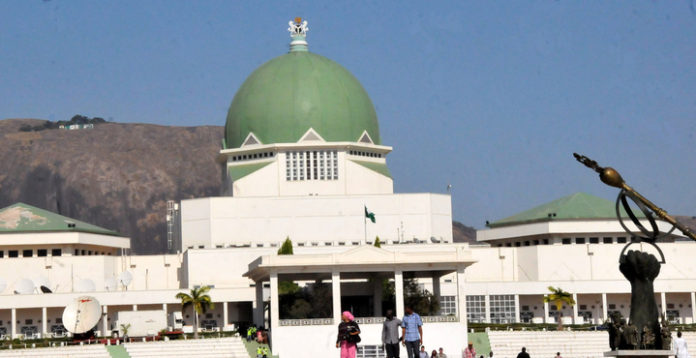
National Assembly Complex

Some of the recommendations dropped by the lawmakers include provisions to enhance the participation of women and people with disabilities in the election processes and also regulate campaign finances.

Nigerian lawmakers, currently working on the draft of a new electoral bill to guide the management of future elections in the nation have dropped key recommendations that would enhance future elections.

The lawmakers are currently brainstorming at the Transcorp Hilton Hotel in Abuja to design a new template for the proposed electoral act.

The new law, when passed, will repeal the Electoral Act No. 6, 2010 and enact the Electoral Act 2021, to regulate the conduct of elections at the Federal, State levels and Area Councils in the Federal Capital Territory.

Crippling extractions

However, sources with insight on the new draft worry that the review panel has already built in crippling clauses and eliminated key proposals that would have strengthened the democratic credentials of the new law.

PREMIUM TIMES understands that the National Assembly Joint Committee on Independent National Electoral Commission (INEC) and Electoral Matters, at its review stage, threw out recommendations to encourage the participation of women and people with disabilities in election processes as well as “prudent language in the bill to constrain the excessive influence of money in future elections”.

For instance, in an attempt to guarantee the accessibility of Persons Living with Disabilities (PWDs) to the polling unit, civil society organisations had proposed a mandatory clause that would compel INEC to provide access for people with disabilities during elections with the ‘strong verb’ of ‘shall’ in in Section 56 (2) of the Electoral Act, 2020 which the review committee has now been watered down to ‘may’.

“This attempt to mandate INEC to make adequate provision for persons with disability in the voting process was thrown out,” a source familiar with the workings of the review committee told PREMIUM TIMES.

The source said once the bill is passed, “it means PWDs will only be attended to at the mercy of the INEC officials rather than the law”.

Women, youth participation

With an eye to also mandate parties to include provision that could enable women, youths and people with disability to sponsor in an election, an additional subsection to Section 31(1) of the Electoral Act, 2010 was proposed “but thrown out by the review team”, sources added.

Considering the widespread impunity in the spending culture of politicians during elections, provisions to bridge the gaps in laws guiding parties’ campaign finance were also proposed but ignored by the committee.

For instance, a recommendation to limit the amount a party can generate from sales form and campaign funding was also thrown out, PREMIUM TIMES learnt from sources.

There was exclusion of many recommendations aggregated, mostly from memos received from many sectors of the nation’s life and particularly from civic groups.

Source said the current bill which would have enriched the country’s democratic process represent, as one commentator put it, “a lost opportunity missing priorities from Nigerian populace”.

PREMIUM TIMES had reported in March 2020, how INEC had said it was proposing about 34 amendments to the Electoral Act 2010 Amendment Bill that will include punishments for electoral violators.

The Commission also said the bill will make provisions for the security of lives and property during elections.

The INEC chairman, Mahmood Yakubu, said this in Lagos at a retreat on the review of the electoral legal framework. (premiumtimesng)

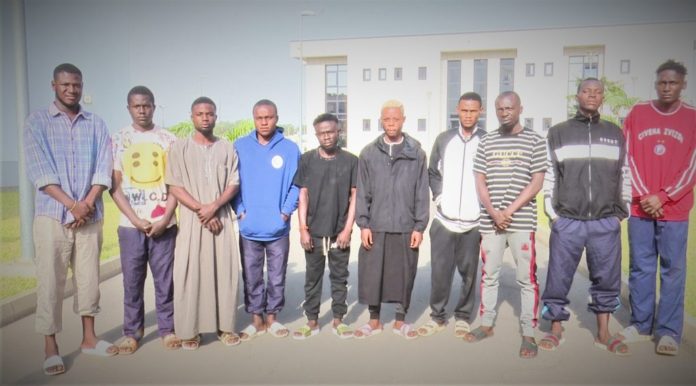
EFCC burst Yahoo-Yahoo academy in Abuja, arrests 10 students; (photo)

The Economic and Financial Crimes Commission on Friday, January 29, arrested 10 suspects over computer-related fraud known as ‘Yahoo-Yahoo’

A statement released by the antigraft agency states that the suspects were arrested at their Academy in Bwari axis of Abuja where they were said to be learning the trade of cyber trickery.

The suspects aged between 20 and 30 years, were identified as Sixtus Jude, Moses Samuel, Isalan Johnny, Dapet Nimshak, Samuel Ogboche, Victor Samuel, Victor Asuquo, Ibrahim Yunusa, Yahaya Usman and Chijoke Ikwuoha.

They were arrested with different incriminating items such as mobile phones and computers.The promoter of the Academy is however on the run,

Investigations showed that the sponsor recruits and train young individuals who show interest in internet fraud.

The sponsor gets his percentage of their earnings based on an agreement between him and the recruits. He also serves as a conduit for laundering the money gotten from internet fraud by some of the suspects.

The suspects will be prosecuted when investigation is completed.

Newspotng

Of Kidnappers and Their Tribesmen

Steve Nwosu

For the first time in recent memory, I found myself agreeing with the position of Information Minister Lai Mohammed on a burning national issue.

I agree with Alhaji on the fact that much of what is currently going on about ‘quit notices’ and ‘Fulani kidnappers’ is the result of the politicization of a purely security matter.

Hear him:

“Yes, we have challenges in the South-West, but I can assure you it is being taken very good care of …(but) please, lower the temperature… We should stop politicizing security matters. We should stop reading ethnicity or religion to purely security issues.”

I can’t agree more. Stripped of politics, there is absolutely nothing to the crimes and the South West response to them that should cause either the presidency, its agents in the South West, or any sincere Nigerian anywhere, a sleepless night.

My point of divergence, with the Honourable Minister, however, is this insinuation that it is the opposition that is behind this politicization. It is not. At least, not entirely.

I’ve long realized that a major leadership style of our governments in this country is state-sponsored distraction.

Because we inevitably elect, or have imposed on us, some of the most clueless set of human beings on God’s earth as leaders, we end up with governments that haven’t the foggiest idea about running a country – outside of commandeering the nation’s resources and squandering same.

Everything else they do is directly geared towards protecting that national pot of soup they have appropriated to themselves.

They then create all manner of distractions to keep the rest of us busy and divert our attention from what they’re really doing with our treasure pot.

Who, for instance  still remembers that our government still has no clear-cut plan on how to procure Covid-19 vaccine for us, let alone think of local production? Who amongst us still remembers to ask what became of all the funds raised by the private sector to support the fight against Covid-19? And the palliatives? The cash transfers? To lockdown or not to lockdown? Low testing rate? The new strains of the Pandemic? The refineries? The high-profile corruption cases which case files were allegedly recalled by the office of the attorney-general?

They play up religion and ethnicity – which they know are always a hit with us.

If Bishop Matthew Kukah tells truth to power, it is the federal government that would remind unsuspecting Muslim clerics that what the bishop said could be interpreted along ethnic and religious lines. Those ones then begin to reason along the lines of the Presidency script. And trust them, by the time a few cleric-for-hire faithful take up the gauntlet, threats and outright felony begin to freely fly about.

Of course, the original message is deliberately lost in the cacophony – which was the deliberate design of government to avoid addressing the issues raised. That is why we’re today asking Kukah to apologise for insulting religious sensibilities. The issues he raised have since been swept under the carpet, unaddressed.

When Benue, Ondo, Ekiti or Rivers enact any laws to regulate open grazing, it is often the Presidency that blindly leads the campaign to frustrate such laws. Yes, the same presidency that stubbornly insists that the annihilation of farming communities by armed bandits and mercenaries is just mere skirmishes between herders and crop farmers – and refuses to do anything to seriously address the situation. How can you fail to protect your citizen and then still forbid him from protecting himself? It beats my imagination!

If you raise the issue of police brutality or question the (mis)handling of both the war against insurgency and the general security challenge in the country today, we reduce it to the usually unrelated question of what ethnic group dominates the police, and who would lose job, or control, if we attempt to fix the system. Rather than address the problem, it then becomes a case of fighting to stave off reform, so our tribesmen can keep their jobs. Of course this creates the false impression that the present occupants of such key positions do not merit their positions, or may never get there if the slightest consideration is given for merit. But this may not be true.

When we go after criminals, we first profile them along ethnic lines before we decide what level of force we can bring to bear on them.

And when we catch them, the Presidency then hand-picks the ones who can face trial where they were arrested and those who should be flown to Abuja, to have their cases deliberately bungled.

Of course, we wouldn’t be telling ourselves the whole truth if we say we do not suspect that many Fulani are running kidnap rings in the South west, nor that those calling for total vacation of the forest reserves do not, mischievously, have these Fulanis at the back of their mind. Even if there were any doubts, the recent actions and utterances of the famed Sunday Igboho, have laid everything bare.

However, the questions to ask are: Is it within the powers of Ondo State government to seek to take control of its Forest Reserves, which it never gave out to anybody in the first place? The answer is yes. Are there criminals using the forests as hideouts? The answer again is yes.

How then would the state government achieve this without first asking those illegally occupying the forests to leave peaceably and have their status regularized?

How did we come to the conclusion that it’s only Fulanis camping in those forests?

Most kidnappers – whether they’re Igbo, Yoruba, Ijaw, Ikwerre, Hausa or Fulani, use one forest hideout or the other, how come the presidency is particularly touchy about these ones in Ondo and Oyo?

Why wasn’t there so much noise when we unleashed Python Dance and Crocodile Smile into the forests and swamps of Ikorodu, Arepo, Abia, Imo and the Niger Delta to flush out kidnappers, pipeline vandals, illegal refineries and even pro-Biafra agitators?

Where was the presidency when many governors in the South were enacting all manner of harsh legislations against kidnapping and pulling down private buildings used to warehouse kidnap victims? Or maybe the governors were allowed to do so for as long as there was no chance of a Fulani being among the criminals?

The real problem is that, for some inexplicable reason, we are bent on living in denial of the fact that kidnapping has recently gained currency among our Fulani brothers. So, the establishment is doing everything to suppress reportage of this development.

And, like the proverbial old woman who feels uneasy every time dry bones are mentioned  in a proverb, we jump to defend the indefensible and respond to even the issues nobody has raised.

But that doesn’t change the fact that the menace of kidnapping has virtually gone round the country. It was once in the Niger Delta, where foreigners and oil workers were targeted. Then, my Igbo brothers took over, and turned it into a huge moneymaker. They took it to the south east, brought it to Lagos, where they were joined by the Yoruba, especially from the Ikorodu and Ondo areas. Then, Boko Haram took over. We immediately rechristened it abduction. But we still paid ransom. And as things got muddled up, the nomenclature kept changing. Now, it’s all over the North West, North Central, South West and of course, the South East and South South zones. Almost every ethnic group is represented in that evil club. And, I should know.

In the last six years, yours truly, has had to negotiate ransom on three occasions with kidnappers. Either for my wife, daughter or friend’s wife. And I can, without fear of contradiction, confirm that none of the groups was Fulani. Even when one of the hoodlums boasted that I would have to come to his Sokoto base for my wife, I knew he had no links with Sokoto. If he did,  he wouldn’t be calling it “Shokoto”, as his accent gave away.

One of the groups, I learnt, was co-ordinated by the late Ossy Ibori, who would later be killed by security operatives in some Delta State village. The group had Ijaws, Ilajes, Igbos etc.

The other gang, said to have had links with the now equally late TK, also had Ilajes, a handful of Ikorodu boys etc. Even, one notorious neighbourhood royalty was mentioned among them. The only Hausa person linked to any of the groups is the still-at-large Okada rider on my street, who was suspected to be their informant. It was his foiled arrest that almost cost the life of a senior police officer. Ironically, the other Okada riders, in blind solidarity with someone they thought was one of their own, attacked the police team, severally stabbed the police chief, and thus paviled the way for the felon to escape. Many of them thought it was actually the usual police extortion case. They never knew they had a snake amongst them.

Till this day, the celebrated billionaire kidnap kingpin of Lagos, Evans, is still in prison, battling to ward off a punishment worse than imprisonment. Evans is Igbo.

In many of the kidnappings before now, ethnicity was never really an issue, eventhough we always knew the tribes of the criminals, and always reported it. But there was never undue mention of ethnicity as is the case now with the Fulani new kids on the block.

In fact, the only time ethnicity became an issue was when Engineer Joe Igbokwe, an Igbo man who has made his mark as a Lagos politician, Tinubu loyalists, APC chieftain and official of the Lagos State government, alleged that Igbos were behind armed robberies and kidnappings in Lagos. Of course, he was roundly, and rightly, bashed for it.

However, if ethnicity was not attached to kidnappers before now, it was probably because, we didn’t have this coincidence of the same kind of people turning up so regularly. If the kidnappers speak in a certain way, it is only natural that freed victims remember what their captors looked like. And what language they spoke.

Secondly, it is coming up at a time when there is so much influx of undesirable elements of the Fulani stock into the country from across our northerly borders. And they are becoming a recurring decimal in just about every of these crimes,  as they stroll almost unmolested across the Nigerian landscape – from abduction of school children to cattle rustling, banditry, armed robbery, kidnapping and, of course, the mother of all; Boko Haram insurgency.

And finally, the ethnic characterization seems to be gaining traction because there is this misplaced desperation to stop the narrative. Unfortunately,  those of us who left secondary  school with uncomplimentary nicknames would recall that it was often the names we resisted the most that ended up sticking to us.

While we condemn the stereotyping, truth remains that some of them are not worth the huge price we pay fighting them. They, on their own, will fizzle away with time.

In the ’70s, despite the presence of such monsters as “Dr. Oyenusi”, many of the robberies of the time were blamed on Igbos desperate to bounce back after the civil war. I don’t think the story is the same today. Armed robbery has since been “democratized”.

What ethnic group’s names inevitably come up when drug trafficking, or even manufacture of substandard drugs, is on the issue?

Why wouldn’t many Yoruba landlords rent out their houses to Igbo tenants?

Today, what do we think when we hear Edo girls going to Italy? Prostitution, right? But is it only prostitution they do there? Is it only Edo girls? Is it only in Italy that Nigerians engage in prostitution? What do Yoruba girls and single mothers do in the UK? What do Igbo boys do in South Africa? Which Nigerian tribes lead in cybercrime in US, Dubai, Uk etc. Aren’t there Nigerian prostitutes in Saudi and the Arab world? What ethnic groups dominate the trade there?

Some of these characterizations will stick, but most of them will fizzle away. And even when they don’t, they would just serve to enrich the rich repertoire of jokes with which we have always been known to laugh at ourselves. Happiest people on earth!

So, I think we should just ignore the itch (ethnicity and politicization)and treat the leprosy (kidnapping and banditry).

Unfortunately, since we are more concerned with muzzling the reportage than addressing the malaise, we end up with foggy and ineffective political prescriptions, as opposed to dispassionate professional antidotes, to a clearly security problem. We end up deodorizing the rot and running in circles. And whoever points our attention to this deliberate systemic goof is then branded enemy of state, Fulani hater, wailer, and accused of politicising security. We forget that we started the politicization by deliberately shutting out robust contributions to our security template,  simply because we’ve reduced national security to regime security. And to make matters worse, we further narrowed even that regime security to a clanish band of self-serving cronies.

I stand to be corrected that since we began this our current romance with democracy in 1999, Dr. Umaru Yar’Adua, a Fulani like President Muhammadu Buhari, remains our most loved president. And it was neither because he died in office nor that he didn’t preside long enough to make enemies. PMB did not need all of three years to make all the ‘enemies’ he has today. President Obasanjo needed even less.

With his education, exposure and world view, there could have been no pigeonholing Yar’Adua into a Fulani cast. This is also true of most Fulanis I have interacted with, either in my seven years at Federal Government College,  Ilorin (the best UNITY SCHOOL of all time), or in my nearly 30 years of journalism practice.

We only become conscious of these differences when dubious politicians,  magnify, and exploit, the faintest of faultlines for their narrow interests. They hoist a system that pitches us against one another. Religion and region soon take centre stage, as they awaken that innate, desire of every human being to get ahead of his peers. We’re soon sucked into the rat race. Those of us who stand our ground are either, blackmailed, ostracized or even brought into direct physical harm. They turn round to accuse of bringing politics into everything.

But it is the PMB system that actually politicizes things when it is seen as treating the criminality of one set of people with kid gloves, while unleashing disproportionate state force on the misdemeanours of others.

If a presidency that turns a deaf ear to cries of Fulani banditry in the South West suddenly wakes up, after the victims take constitutional steps to address the situation, and begins to quote a Kamuzu-Banda-type constitution on how nobody can quit herders from a state government’s forest reserve, then that’s politicization on all fours.

Eventhough we are quick to point to the fact that the future of livestock production is ranching (in fact it is a future that is already 100 years old), we should not lose sight of the fact that we need to bend over backwards to help our local herders get the hang of it. America, Australia, Brazil and the major global livestock producers did not just transit from open grazing to ranching overnight. It usually takes years of deliberate, but sincere, governmental support. However, the operative word here is ‘sincerity’. Everybody has to be on the same page, convinced that there isn’t more to this unbridled quest for land. That this all-important land cannot be procured in the North, which has less pressure on land than the South. That the forests of the south, which used to harbour tsetse fly and other cattle-killing pests are now truly a haven for livestock. That there cannot be a more mutually acceptable way of acquiring land for a purely private livestock business. That communities in the South cannot be a little more receptive, and less finicky about land. That cassava and yam farms cannot survive side by side, down South, with livestock production, in the same way rice, beans, corn, ground nut and vegetable farms are surviving up North.

And finally, that there is no hidden agenda of artificial demographic reengineering. We may also need to know where these Fulani who have suddenly found themselves landless and in urgent need of resettlement, been staying before Buhari came to power. If they had been roaming the wild with their cattle, these past hundreds of years, why the sudden need to settle down permanently? And, before we finally say YES, there are two more harmless questions: where are the cows? How come we are seeing more guns and herders than cattle?

Yes, there would be questions as to what support, and protection, we have given to those engaged in other forms of agriculture, and why we should lavish so much on herders and their cattle, but that would be foolhardy at this point of this national security emergency. For we need to do all we can to douse the current tensions, and the bloodletting across the country.

….FINALLY

If truth must be said, this government is actually doing the Fulani more harm than good with its Fulanization of just every national discourse. It is unwittingly setting up this otherwise peaceful people for national hatred and opprobrium. The PMB government is daily incurring huge IOUs of hatred for the present and unborn generation of the Fulani, from virtually every corner of the country. Unfortunately, not many of the key drivers of this divisive agenda of today would be around by payback time.

  • Steve Nwosu is MD/Editor-in-chief, The Xpress newspapers

Infection of COVID-19 May Reduce Sperm Quality in Men— Report

COVID-19 may damage sperm quality and reduce fertility in men, according to a new study based on experimental evidence.

The viral disease — which has swept the globe, claiming nearly 2.2 million lives — can cause increased sperm cell death, inflammation and so-called oxidative stress, researchers reported Friday in the journal Reproduction.

“These findings provide the first direct experimental evidence that the male reproductive system could be targeted and damaged by Covid-19,” the authors concluded.

Experts commenting on the research, however, said the capacity of the virus to compromise fertility in men remains unproven.

COVID-19 causes respiratory illness, especially in older people and those with underlying medical problems.

The world has seen more than 100 million confirmed cases since the disease emerged in central China at the end of 2019.

Transmitted through respiratory droplets, the disease attacks the lungs, kidneys, intestines and heart.

It can also infect male reproductive organs, impairing sperm cell development and disrupting reproductive hormones, earlier studies have shown. The same receptors the virus uses to access lung tissue are also found in the testicles.

But the effects of the virus on the ability of men to reproduce remained unclear.

Behzad Hajizadeh Maleki and Bakhtyar Tartibian from Justus-Liebig-University in Germany searched for biological markers that might indicate a negative impact on fertility.

Analysis done at 10-day intervals for 60 days in 84 men with Covid-19 was compared to data for 105 healthy men.

In the Covid-19 patients, sperm cells showed a significant increase in markers of inflammation and oxidative stress, a chemical imbalance that can damage DNA and proteins in the body.

 ‘Strong note of caution’

“These effects on sperm cells are associated with lower sperm quality and reduced fertility potential,” said Maleki in a statement.

“Although these effects tended to improve over time, they remained significantly and abnormally higher in the Covid-19 patients.”

The more severe the disease, the bigger the changes, he added.

The male reproductive system “should be considered a vulnerable route of Covid-19 infection and declared a high-risk organ by the World Health Organisation,” Maleki said.

Experts not involved in the study welcomed the research but cautioned that more was needed before drawing hard and fast conclusions.

“Men should not be unduly alarmed,” noted Alison Campbell, director of embryology of the CARE Fertility Group in Britain.

“There is currently no definitive evidence of long-lasting damage caused by Covid-19, to sperm or male reproductive potential,” she told the London-based Science Media Centre.

The results could have been skewed, she added, by the fact that men recovering from Covid were treated with corticosteroids and antiviral therapies, while the control group was not.

Allan Pacey, a specialist in male reproductive medicine at the University of Sheffield, raised a “strong note of caution” on how the data was interpreted.

Some of the indicators of decreased sperm quality could be due to factors besides Covid-19, he said, noting that more men in the Covid-19 group were overweight.

The simple fact that only one group was very sick — no matter the cause — also needed to be taken into account, he added.

“We already know that a febrile illness can impact on sperm production, regardless of what caused it.” (thecrestng)

TIPS