Home Blog Page 1058

‘Behold, More Writings On The Wall’ By Martins Oloja

Inside Stuff With MARTINS OLOJA

On September 13, 2020, on this page, I looked into the seeds of time again and reported some revelations from an oracle that I should recast my (February 16, 2020) message to the authorities here. There was a revelation then, for instance, that the constituted authorities were failing to read ‘the writings on the walls’ all over the place.

Accordingly, the oracle had then noted that they should get cracking to read the writings, which had become more visible on the walls, lest the nation would be in a crisis of some sort. The conclusion then was that before it would be too late, “the one who has authority over the most populous black nation on earth should put on some magnifying lens to read the writings on the walls…”

It will be recalled too that the concern raised here in February, 2020 centred on the consequences of ‘the writing on the wall’ that our leader and his men and women might not have bothered to read at that time. It was revealed then that, “He (our leader) doesn’t seem to like anyone raising any alarms around him, even if they are of national security dimension.”

As often clarified in all the articles on this, the expression ‘the writing is on the wall’ is often used whenever an imminent danger has become apparent.

What’s the origin of the phrase ‘The writing is on the wall’? The classical expression is also sometimes expressed as ‘the handwriting is on the wall’ or as ‘mene mene’. The first of those variations is an obvious synonym but what does ‘mene mene’ mean? This is a shortening of ‘mene mene tekel upharsin’, which is of Aramaic origin. Read details via ‘Buhari and ‘the writing on the wall’ (2)/ https://guardian.ng/opinion/buhari-and-the-writing-on-the-wall-part-2/

Barely a month after the September 13, 2020 caveat, specifically on Sunday October 18, 2020, the oracle sent warning signals through #EndSARS: ‘Writings, cracks on the wall’ ignored/https://guardian.ng/opinion/endsars-writings-cracks-on-the-wall-ignored/

That was the time the authorities in the country failed to read the sound of an augury of anger of the youth who had for years been warning about police atrocities. So, when the #EndSARS protesters struck then, it was written here: ‘Now, the arrogant powers in Abuja would have by now felt the power of the young people they once derided as lazy and unthinking. The ones they once claimed are too young to rule are firmly in charge. And they have come up with a powerful idea whose time has really come. And some oracles are already talking about ‘revolt of the youth, at last’. Just as others are talking about ‘#ENDSARS, a revolution foretold’. Now the defiant powers that have specialised in denigrating even suggestions of restructuring in good faith, are now aware that the young ones are ready to say ‘enough is enough’ of their oppression, after all…

But it now seems that after the deadly #EndSARS storm, no lesson has been learnt as the god of systemic impunity in the country has regained power. The police formations in Lagos, for instance, can’t remember what their failure caused the nation: They are everywhere extorting and harassing again. The authorities have since launched a curious community policing mechanism within a federal police system – to spend some N13 billion naira procured for the special purpose – instead of decentralising police operations as part of restructuring of the federation.

As I had asked here several times, how many editorials will the country’s newspapers write about the country’s challenges before the authorities would listen? How many protests from the civil society organisations would make Nigerian leaders at all levels change their minds about how Nigeria can lead the black race? How many people are supposed to die in regions ruled by insurgents and bandits before the security and defence and security chiefs could be changed? How many critical interviews would a First Lady grant against the presidency before the president would listen to the voice of reason of his wife? How many articles will columnists write about presidential inertia and procrastinations before the president would do things right and do the right thing? How many reports can be submitted to the presidency on police reforms and modern policing before the authorities in a country can realise that it is expedient to reform the police service? How many proposals can a country’s non-governmental organisations submit before its leader will spot the danger in borrowing and borrowing for consumption?

I ask again too: How many protests by regional leaders will a national leader needs to receive before he/she can respect the federal character provisions in the organic law of the land? How many insults do a country’s university teachers need to absorb before a country’s leader can recognise them as the intellectual power base without which there will be no development? How many articles do the oracles in the media need to write before a country’s leader realises the danger in using nominees the Senate has rejected? How many protests do the non-governmental organisations and opposition elements need to stage before a developing country’s leader can note that the country’s legislators are overpaid even in a time of recession? How many acidic messages does a leader need to receive before realising that it is a reproach that no teaching hospital is worth its name in a country of about 200 million people? How many times will NGOs and indeed the media remind a country’s leader in a year about a constitutional provision that, ‘welfare and security of the people shall be the primary purpose of government’ – before he can act?

‘New Writings On The Wall’

Again, the oracle is at work trying to draw attention to so many ‘writings on the wall’ the constituted authorities are ignoring about welfare and security of the people, which the organic law of the land warns constantly about as the primary purpose of government. Now there is a ‘writing on the wall’ of Transparency International, which reads:
‘Nigeria gets its worst corruption perception rating since 2015’

In the 2020 index released last Thursday, the country scored 25 out of 100 points — with zero signifying the worst performing countries and 100, the best-ranked. It also dropped to 149 out of the 180 countries surveyed, making it the second most corrupt country in West Africa. The 2020 rating is one point below that of 2019 when the country scored 26 points, and two points below its ranking in 2018 and 2017 when it got 27 points. It is also the worst ranking the country has got in five years. It scored 26 points in 2015 and 28 points in 2016.A subtext on the wall reads: Nigeria’s rating is below Africa’s average.
On a sub-regional basis, Nigeria is among the worst performing countries in West Africa, only second to Guinea-Bissau, which was ranked 165. This is a ‘writing on the wall’ for both government and the people. For the authorities in Abuja and 36 state capitals, the verdict has landed again that five years of waging war on corruption have not produced any tangible result beyond meretricious victory awarded self on the social media and pages of some not-so-independent newspapers. We don’t need a Daniel to read this writing. Even on the wall of the most prominent anti-graft agency, the EFCC, you can understand the perception index better: The Chairman of the anti-graft agency, who has been acting since November, 2015 is facing corruption charges at the moment. The Senate twice rejected the president’s nominee since 2017 but the president has kept him in power until July 7, 2020 when he was suspended. The EFCC hasn’t got any substantive Chairman since 2015.
What is more, in December, 2020, there was a damning official report by another anti-graft agency, the Independent Corrupt Practices and Other Related Offences Commission (ICPC), which confirms Nigeria’s kingship when it comes to corruption indices.

The report entitled, ‘Nigeria Corruption Index: Report of a Pilot Survey’, measured the activities of corruption in four sectors, including the executive, legislature, the judiciary, and the private business enterprise.
The methodology was experienced-based rather than perception-related questions of corruption, as measured from a scale of 0 to 100, with 0 representing “Absolutely not corrupt and 100 indicating “Absolutely Corrupt”. The ICPC index also featured data collection on corrupt practices based on monetary and non-monetary offers from personnel of government Ministries Department and Agencies MDA’s who took part in the survey.

Specifically, the report says ‘lawyers were mostly responsible for offering bribes for favourable judgments mostly in electoral and political matters’.
According to the report published by the ICPC, an estimated N9.4 billion was exchanged in a bribe-for-judgment scheme in Nigeria’s judicial sector between 2018 and 2020, the ICPC said in the new report.

The report revealed that lawyers were mostly responsible for offering bribes for favourable judgments mostly in electoral and political matters. What else do we need to confirm our emblem of shame that the ruling party hasn’t tackled despite noises and promises since 2015?

‘PIB’s Writing On The Wall’

  • Have you also seen the other ‘writing on the wall’ of the Niger Deltans? Last Thursday, Niger Delta stakeholders defended their opposition to the current Petroleum Industry (PIB), which government officials generally believe is the solution to the complex challenges confronting the volatile region. The Niger Delta representatives spoke just as some community leaders from the region threw caution to the wind when they engaged in fisticuffs during a public hearing on the 15-year-old oil bill. Trouble began inside a National Assembly chamber when Host Communities of Nigeria Producing Oil and Gas (HOSTCOM) was called to the podium to present their position. There was disagreement amongst the members, leading to exchange of blows until security operatives intervened. Here is a clear ‘writing on the wall’ containing the oldest bill in Nigeria’s federal legislature: At the hearing, some oil companies, including Shell and Chevron adopted the position of the Oil Producing Trade Section (OPTS), which held that the PIB could not encourage competition and investment in the oil sector. Meanwhile, let’s find out from some ‘writings on the walls’ of the international oil companies (IOCs) and Nigeria’s Petroleum Resources Minister, sorry the President if they are truly committed to the passage of the PIB to save Nigeria’s vital oil and gas industry. (newspotng)

Police arrest 5 for abduction and abuse of women, 2 others for Intl child pornograhy

The action plan being implemented by the Force to curb Sexual and Gender Based Violence, particularly all forms of abuse on women and children in the country, is yielding positive results, the Inspector General of Police, M.A Adamu, has said.

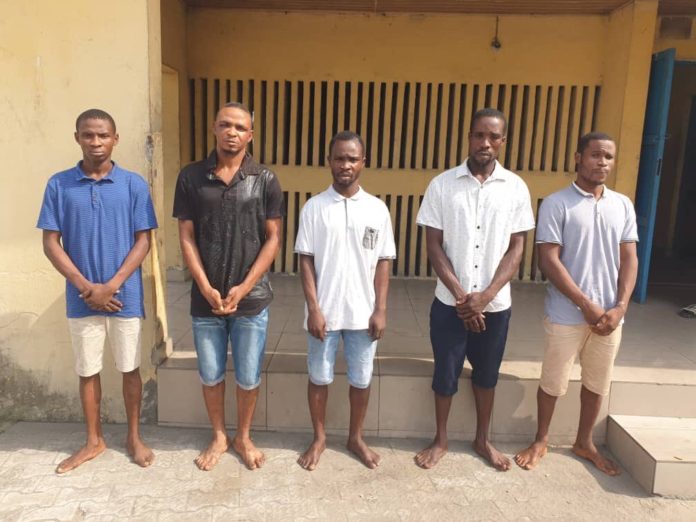
The IGP made the affirmation on the heels of the arrest of five members of a kidnap for ransom gang which specializes in the abduction of women and the girl child, sexually abusing them and obtaining ransom from their families before their release.

The five (5) suspects were arrested by operatives of the Intelligence Response Team following massive manhunt by the Force for the perpetrators of the recent trend of abduction of women in some States in the South-South part of the country, especially Port Harcourt and its environs.

The victims are subjected to series of sexual abuses and ransom demanded from their families before their release.

The suspects are Osinachi Ngwakwe ‘m’ 22yrs from Ubaka Community in Umahia South LGA, Abia State. Sammy Junior Inordee ‘alias T-Boy ‘m’ 27yrs, from Gwarra Community in Khana LGA, Rivers State, Epo-Bari Nwolu ‘m’ 26yrs from Ogale Community in Eleme, LGA, Rivers State, Yabari Gbarale ‘m’ 29yrs from Gwara community, Khana LGA, Rivers State and Barine Yilda ‘m’ 30yrs (alias Albino or Yellow) from Gwara community, Khana LGA, Rivers State.

Investigations reveal that the suspects target lone female drivers of Porsche cars as they drive out of offices, shopping malls or any vulnerable places.

They thereafter, trail them to lonely roads, abduct and take them to their criminal hideouts, sexually abuse them and demand ransom from their families before their release. They also sell off their exotic cars.

Similarly, Operatives of the Nigeria Police INTERPOL National Central Bureau (NCB) Abuja have arrested two Kano based suspects: Ibrahim Muazzam Mohammad Aminu and Mohammad Tahir Umar.

Investigations reveal that the suspects are members of a trans-border/international child porn syndicate which sexually abuse and take undue advantage of underage girls and disseminate the video recordings of the illicit sexual act on an international social media Whatsapp group chat known as “Pervertidos”, owned and managed by a Brazilian called Adriana. Their arrest followed intelligence received from the INTERPOL NCB, Brasilia.

Exhibits recovered from the suspects include: three (3) mobile phones and a Laptop computer. Forensic investigations/analysis carried out by the Police team on the gadgets revealed the series of pornographic/erotic videos with underage girls which the suspects shared on the internet for a fee denominated in US Dollars.

Meanwhile, the IGP notes that a total of two thousand, seven hundred and ninety-two (2,792) suspects were arrested by the Police for Sexual and Gender Based Violence and other sexual related offences in the year 2020.

The arrests are linked to the two thousand, five hundred and seventy-three (2,573) cases currently being prosecuted under the Force Gender Unit in various courts across the country. Others are still under active investigations.

The IGP enjoins parents and guardians to keep a close watch on their children and wards and report any incidents of abuse against women and children.

He expresses his displeasure with the prevailing culture of silence in concealing crimes against women and children and calls for improved collaboration with the Police, assuring that the Force is well repositioned to protect women and children and confront violent crimes in the country.

All the suspects will be arraigned in court on completion of investigations. (cityvoiceng)

How India calculates the value of women’s housework

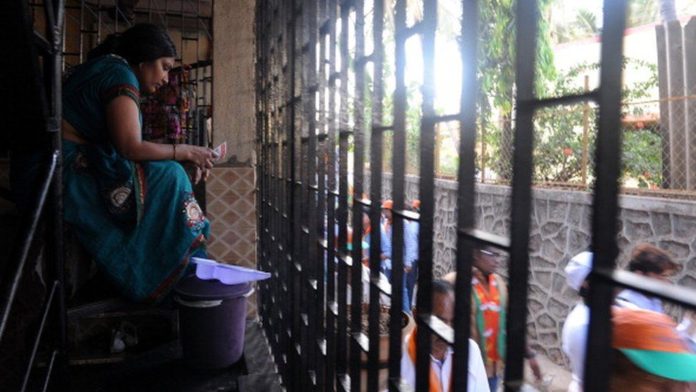
A newly formed political party in India, launched by a film star, has promised salaries to housewives if voted to power. A prominent MP welcomed the idea, saying it will “monetise the services of women homemakers, enhance their power and autonomy” and create a near-universal basic income.

This is a compelling debate, especially at a time when women are losing ground in paid work. All around the world, women spend time in unpaid work – ranging from a maximum of 345 minutes per day in Iraq to 168 minutes per day in Taiwan, according to International Labour Organisation. On average, men spent 83 minutes in unpaid care work while women spent three times more at 265 minutes.

So should housewives be paid wages for doing largely thankless household chores?

India’s 160 million homemakers, like many of their counterparts in the rest of the world, clean, tidy, cook, wash up and manage family finances. They fetch food, water and firewood, and give care to children and their in-laws. They spend 297 minutes a day doing domestic work, compared to 31 minutes by men. A quarter of men are engaged in unpaid chores, compared to four-fifths of women.

Legal scholar Gautam Bhatia has argued that unpaid housework is “forced labour”. Arpan Tulsiyan, a research scholar at Delhi University, says it is “important to recognise the value of unpaid domestic work“.

What is not well known is that for more than half-a-century, Indian courts have actually been awarding compensation for unpaid work done by homemakers. But only after their death.

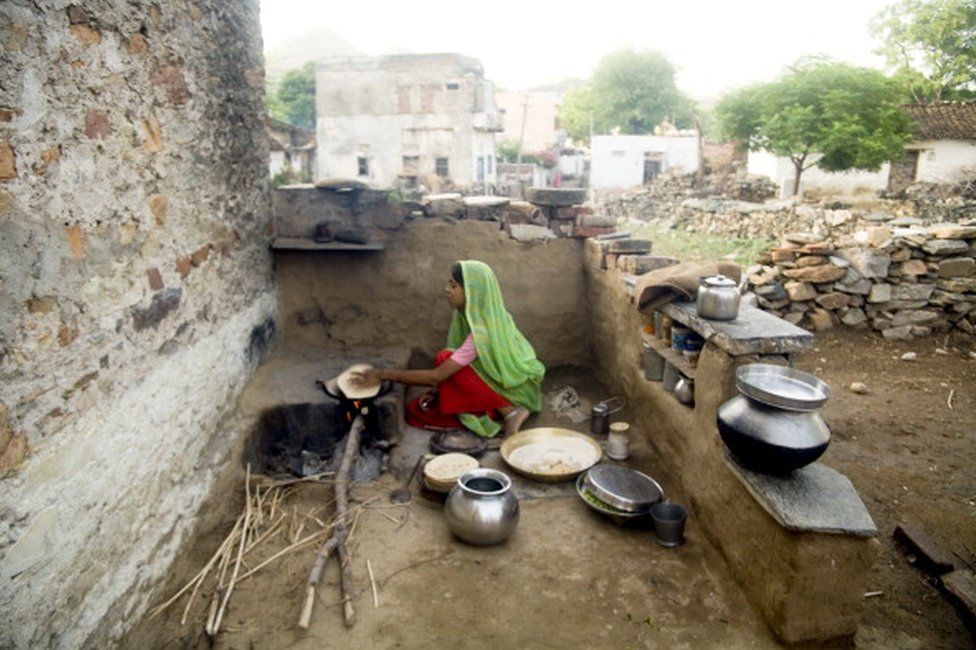
A Housewife Making Chapatti In an Open Kitchen in Village Delwara, Udaipur, Rajasthan, India.
image captionHousework has traditionally been treated as a woman’s responsibility in India

Prabha Kotiswaran, a professor of law and justice at King’s College London, has looked at about 200 cases between 1968 and 2021 filed under an Indian law that regulates all road transport vehicles and imposes penalties for rash driving, among other things.

She found that the country’s courts had developed a “path-breaking” legal framework concerning “robust wages for housework”: judges have put a value on unpaid work of women who have died in road accidents and awarded compensation to their dependants.

In calculating the value of housework, judges have looked at opportunity cost – which is something that is given up in order to do something else – of a woman’s decision to work at home, considered minimum wages for skilled and unskilled workers, taken into account educational qualifications of the deceased woman, and adjusted compensations after accounting for age and considering whether she had children or not.

In December, a court awarded a compensation of 1.7 million rupees ($23,263; £17,019) to the family of a 33-year-old homemaker who died in a road accident, after fixing her notional salary at 5,000 rupees a month.

The Supreme Court has awarded lump sum amounts up to 9,000 rupees a month as a notional income for a deceased housewife aged between 34-59 years with a lower amount for elderly women, aged between 62-72. Compensation decreased with age as courts believed she would be doing less childcare work as children grew up.

Wherever possible, the judges have tried to keep pace with inflation. In one judgement, the judges viewed marriage as an “equal economic partnership” so that the homemaker’s salary would be half of the husband’s salary.

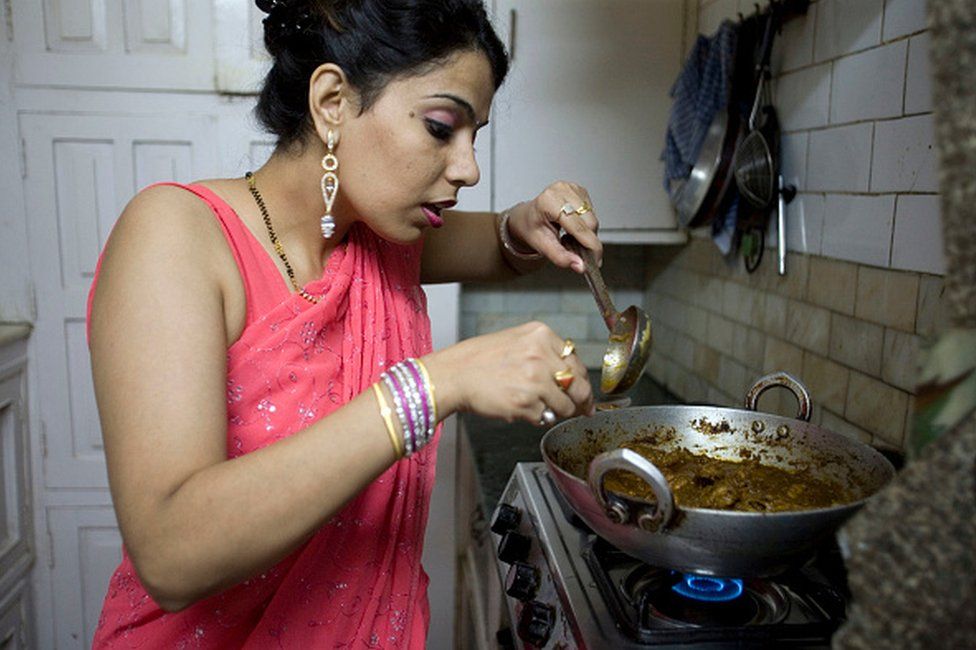
An Indian housewife at home in New Delhi cooks her favourite dish in her kitchen
image captionJudges in India have viewed marriage as an “equal economic partnership”

The earliest case of such compensation found by Prof Kotiswaran was a ruling from 1966. In that case, the court ruled that the cost to the husband of “maintaining” his wife would have been equal to her imagined salary, so no compensation was awarded to him.

Some of the compensation payments calculated by the courts have been “paltry”, Prof Kotiswaran says, but “the principle itself of the recognition of unpaid work on par with an occupation is quite noteworthy”.

It begs the question: if a family can be compensated for unpaid work done by a woman after she has died, why not pay women when they are alive?

Lawyers may be able to use these judgments to “trigger developments in constitutional law and family laws to recognise the unpaid work of housewives in normal times, rather than only at times of disruption”, Prof Kotiswaran says. Paying wages to women doing unpaid work at home would also boost India’s declining female labour participation rate.

“I am not arguing only for salaries for housewives, but for a broader wages-for-housework movement. Organisations like UN Women are too focused on how unpaid work is an obstacle to paid work,” Prof Kotiswaran says. “The focus seems to be on how to get more women into paid work. The Indian women’s movement is focused on many laudable issues but is not asking the big question here about labour performed within marriage.”

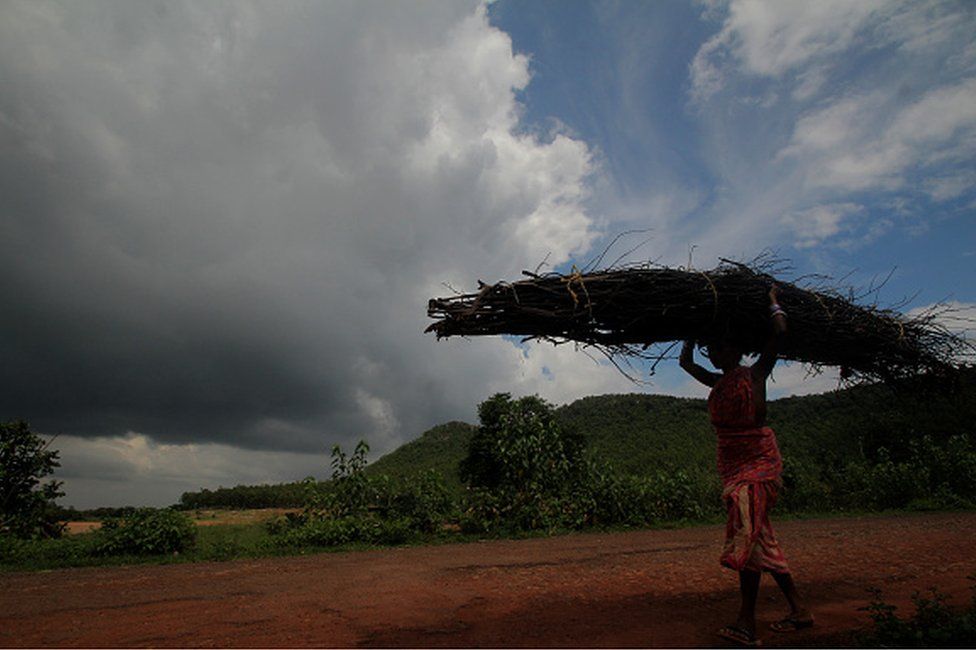
A village woman carries fire wood as she returns home after collecting it at a nearby forest to use it as cooking fuel on the outskirts of the eastern Indian city of Bhubaneswar, on June 30, 2020
image captionIn rural India, housewives fetch firewood for home

There’s also no mass mobilisation of housewives over the issue, she says. “Most elites think that salaries for housewives is unworkable at best and regressive at worst, but there is a case for a broader political argument about recognition of housework. I do think that women in millions of Indian households, subject to the drudgery of maintaining home, will welcome a proposal for salaries.”

There are a lot of questions about how this can be achieved.

Should the money for the wages come from cash transfers, state subsidies or a universal basic income? Should family laws be changed to recognise women’s unpaid work? Should men performing housework also be remunerated? Should transgender women be included in these payment schemes? What could be the unintended consequences of salaries for housewives?

“We need a more sustained conversation on all of these aspects before mobilising for salaries for housewives,” says Prof Kotiswaran.

BBC

Lawyer caught on Zoom stripping naked and having sex during hearing is slammed by judge

Hector Paredes Robles was the defence lawyer in a land trafficking, fraud and extortion case when he was spotted have sex with a woman on a live video call.

A lawyer was caught stripping naked and having sex during a Zoom court hearing.

Hector Paredes Robles was branded a disgrace to his profession by the judge presiding over the virtual hearing after launching into his X-rated performance while his camera was on.

Extraordinary footage showed him stripping off and sitting on his chair so a naked woman could straddle him as astonished court officials and other lawyers looked on in Peru.

Judge John Chahua Torres summonsed a police officer as a female aide tried to alert Paredes Robles his sex session was being watched and recorded on a public live feed.

The surreal sequence of events occurred on Tuesday during a virtual remand hearing organised by a court in Pichanaki in the central Peruvian region of Junin.

Continue reading

COVID-19: Buhari Violates Nigerian Law, Shuns Face Covering, Physical Distancing

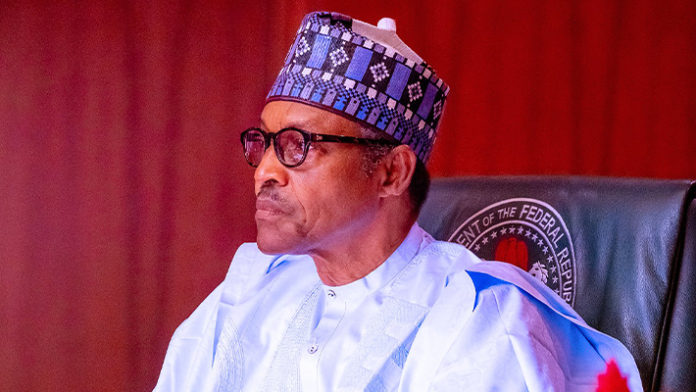
President Muhammadu Buhari has violated the executive order on mandatory use of face masks and maintenance of physical distance to curb the spread of COVID-19, days after signing it.

Recall that Mr. Buhari, on Tuesday, signed the regulation in exercise of his powers under Section 4 of the Quarantine Act.

Part of the document states that “a physical distance of at least two metres must be maintained at all times between persons” and nobody should be in a public premise except “he is wearing a face mask covering the nose and mouth”.

However, the president failed to adhere to the order, which prescribes six months in prison upon conviction, on Saturday in Daura, Katsina.

Mr. Buhari had travelled to his hometown where he revalidated his membership of the All Progressives Congress (APC) at his Sarkin Yara polling unit in Daura.

Even though he wore the mask at some point, he was spotted amidst scores of people while holding his facemask rather than have it on, just as the physical distance of two metres was ignored.

The president, who was accompanied by some APC governors like Aminu Masari of Katsina and Abdullahi Ganduje of Kano, was spotted amidst others, as they discussed without maintaining a physical distance.

Similarly, one of the president’s aides Bashir Ahmad was spotted at a friend’s wedding in Bauchi on the same day, without a face mask or maintaining social distancing.

In some of the photos shared online, Mr. Ahmad, who did not initially wear a face mask, only did that at the point of taking photographs.

In his reaction, after lawyer Abdul Mahmud and other Twitter users attacked him for not practising what he preaches, the presidential aide said he is not a law enforcement officer.

”First, I am not a law enforcement officer, so there is a limit to what one can do. Secondly, I can’t love them more than they love themselves, ours is to encourage, advise and also tell them the consequence of their actions. Keep advising people to always wear their masks, please,” he said.

Nigerian officials have regularly disregarded regulations against the spread of coronavirus since the first case was confirmed in the country in February 2020.

Asides disregarding directives to wear nose masks and keep a sensible distance, some officials who returned from foreign trips have also failed to isolate themselves for seven days as recommended by the disease control office NCDC.

Yet, when the Nigerian government published a list of those who allegedly violated COVID-19 guidelines, no recognisable government official was on the list, indicating that the enforcement has only been targeted at ordinary citizens.

Currently, Nigeria has been battling the second wave of COVID-19, and, unlike the first phase, the country now records over a thousand daily cases.

Nigeria has a total 130,557 recorded cases with 103,712 recoveries and 1,578 deaths. (Thenigerialawyer)

#EndSARS: Nigerian Army Disbands Legal Team, Pulls Out of Lagos Panel Investigating Lekki Shooting

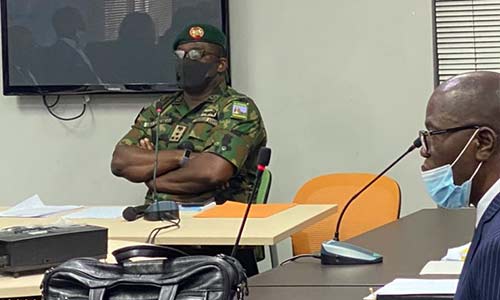
The Nigerian Army has disbanded its legal team for the Lagos State Judicial Panel, effectively pulling out of the investigative hearing as more evidence resurfaces confirming that Nigerian soldiers shot at peaceful protesters last October.

S.N. Agwhe, a member of army counsel to the panel made the development known to the Judicial Panel on Saturday,

Agwhe had appeared before the panel on behalf of the army legal team, but revealed that the job of the army counsel finished on November 21.

“We do not have any further mandate to represent the army in any subsequent proceedings,” Agwhe told the panel.

He reminded the panel that Akinlolu Kehinde, head of the army legal team, had earlier submitted a memo notifying the panel of the decision.

The last hearing on January 23 was the third time in a row that the army and its counsel failed to appear before the panel.

The panel chairman Doris Okuwobi, a retired judge, however, warned that the army would not claim denial of fair hearing when the panel submits its findings to the government.

The Army’s withdrawal from the panel comes after Reddington Hospital testified to treating victims from the #EndSARS protest with bullet wounds on October 20, 21 and 22.

Petitioners had alleged that soldiers opened fire at peaceful protesters, killing and injuring several protesters, which led to the Army being summoned before the judicial panel of inquiry.

The Nigerian Army had reluctantly admitted being at the scene of the Lekki shootings after initial denials. still, it denied opening fire on the protesters, many of whom sat on the floor and were singing the national anthem.

The army however claims that officers were sent out to enforce a curfew that was imposed by the Lagos State Government but didn’t open fire on peaceful protesters. (Thenigerialawyer)

Donald Trump’s entire legal team quits week before impeachment trial – Sources

All five of the impeachment lawyers who were expected to represent former President Donald Trump have called it quits, sources told ABC News.

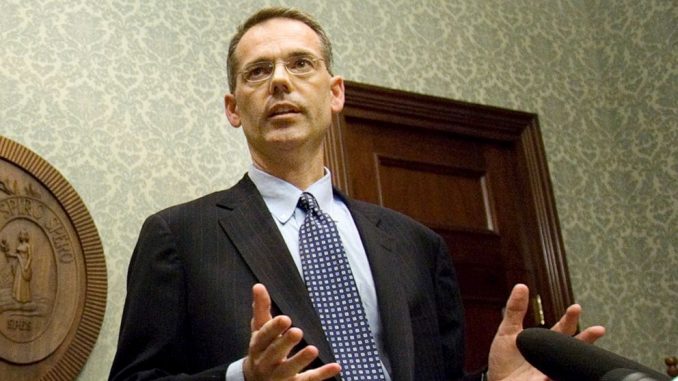
The team, led by South Carolina lawyer Butch Bowers, resigned in part because of disagreements over how to mount Trump’s defense, the sources said. The lawyers had planned to argue the constitutionality of holding a trial given Trump is now a former president.

The disagreements over strategy varied, sources told ABC News, but Trump wanted his team to argue there was election fraud, while the lawyers and some top advisers to the former president wanted the focus to remain on the constitutionality of a trial with the president no longer in office.

A source close to the former president described the change as a “mutual decision” between the parties.

Trump was impeached by the House on Jan. 13 on a single article for “incitement of insurrection” following the violent siege at the U.S. Capitol that left one police officer and four others dead and left members of Congress and their staffs fearing for their lives. The insurrection, which took place Jan. 6, was preceded by a Trump rally when he told his followers to head to the Capitol and repeatedly said they should fight for him.

“The Democrats’ efforts to impeach a president who has already left office is totally unconstitutional and so bad for our country. In fact, 45 Senators have already voted that it is unconstitutional. We have done much work, but have not made a final decision on our legal team, which will be made shortly,” Jason Miller, a spokesperson for Trump, told ABC News Saturday.

The Senate trial is scheduled to begin on the week of Feb. 8. Two-thirds of the Senate — or 67 senators — would need to vote to convict Trump to be successful. That means 17 GOP senators would need to come to the Democrats’ side.

Sources believe there will be another round of additions to the team in the coming days though the process is nowhere near finalized with just over a week to go. Many attorneys who worked with or represented Trump during the last impeachment trial are declining to defend him in the Senate.

Trump’s former top lawyer, Jay Sekulow, who represented him at his first impeachment trial, will not be taking part in this trial. Rudy Giuliani, Trump’s personal lawyer, also said he will not be representing the former president after appearing at the same rally that preceded the siege on the Capitol on Jan. 6.

The attorneys in addition to Bowers who will no longer be representing Trump are Deborah Barbier, Josh Howard, Johnny Gasser and Greg Harris.

Sen. Lindsey Graham, R-S.C., who urged Bowers to take the case, told his Senate GOP colleagues on Jan. 21 that Bowers would be representing Trump.

Senate Republicans had asked for a delay in the trial, agreed to by Democrats, following the delivery of the impeachment article in order for Trump to work with his still-forming legal team. (sundiatapost)

Why NIN-SIM sync is imperative, by govt

By Lucas Ajanaku

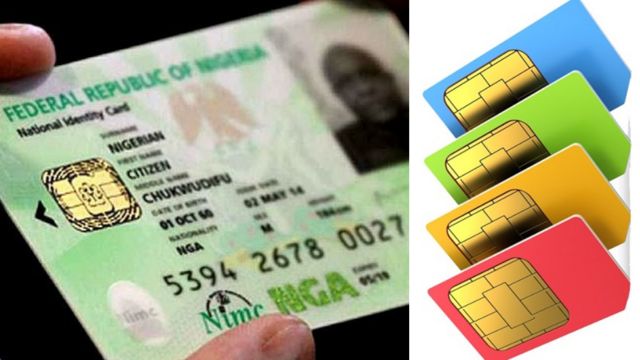
THE Federal Government on Thursday said it directed the linkage of all subscriber identity module (SIM) cards with the National Identity Number (NIN) to  check and curb the rising insecurity in the country.

Speaking during the handover of the staff of Ecosystem Coordination Strategic Unit (ECSU), Digital Identification for Development (ID4D) Project, Office of the Secretary to the Government of the Federation (OSGF) to the Ministry of Communications and Digital Economy, its Permanent Secretary, Engr. Festus Daudu said the handover would further enable the government to coordinate its activities.

He said every household has one form of contact or the other with communication equipment which uses SIM. He said the NIN-SIM linkage will make it easy to track down any criminal activities from any household or from any group or individuals.

The Federal Ministry of Communications and Digital Economy in a low keyed handover ceremony took over the Ecosystem Coordination Strategic Unit (ECSU)

The Permanent Secretary, Political and Economic Affairs, Mr. Andrew David Adejo during the ceremony that took place at the conference room of the Political and Economy Affairs Office of OSGF, Shagari HouseAbuja, said the transfer of the National Identity Management Commission (NIMC) to the Federal Ministry of Communications and Digital Economy by the Federal Government was designed to improve service delivery and reduce the issue of insecurity.

Daudu said the public service has the same objective everywhere which is to provide quality service to humanity and make life better for the people. “We should have it at the back of our mind that we are in the public service to render services to humanity,” Daudu stressed.

winnaijatv

UAE Opens Citizenship To Select Foreigners to Boost Economy

*Investors, Professionals to get UAE citizenship

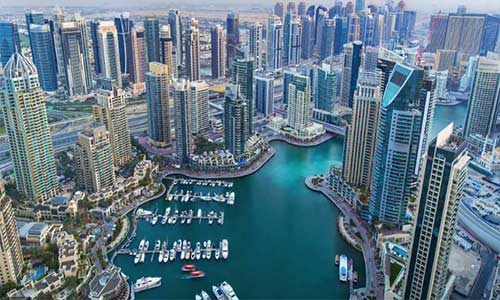
THE United Arab Emirates has adopted laws that will grant citizenship to a select group of foreigners, including investors and property owners. ‎

A category of foreigners that could be granted citizenship, as announced by ‎Mohammed bin Rashid Al Maktoum, vice president and prime minister of the UAE and ruler of Dubai, in a tweet on January 30, 2021, are professionals such as doctors, scientists, engineers, artists, authors and their families.

The development followed the amendment of the executive regulation of the federal law concerning nationality and passports.

To secure the citizenship, investors must own a property in the UAE, according to a statement on UAE state news agency, WAM.

Scientists eligible for citizenship must obtain one or more patents that are approved by the UAE Ministry of Economy or any other reputable international body, in addition to a recommendation letter from the ministry.

Also, to obtain UAE citizenship, doctors and specialists must‎ be specialised in a unique scientific discipline or any other scientific principles that are highly required in the Gulf state.

Eligible scientists are required to be active researchers in universities or research centres or in the private sector, with practical experience of not less than 10 years in the same field.

In the same vein, individuals with creative talents, such as intellectuals and artists, should be pioneers in the culture and art fields, and winners of one or more international awards. A recommendation from related government agencies is also mandatory for the citizenship offer.

The UAE cabinet, local courts and executive councils will nominate the foreigners eligible for the citizenship under criteria set for each category.

However, the amended law will allow foreigners who received the UAE passport to keep their existing citizenship, meaning that Nigerians and citizens of other countries who become citizens of the UAE under the arrangement will now have dual citizenship.

The citizenship can be withdrawn upon breach of certain conditions, according to the statement.

While it is not immediately clear whether the foreigners who will be bestowed citizenship would have the full rights and benefits of the Emirati, as natives of the UAE are known, Bloomberg, in an analysis, noted that the amendment, which it described as a ‘major policy shift,’ was aimed at attracting talents in a way that will boost economic growth in the UAE, home to the Middle East’s finance and travel hubs – Dubai and Abu Dhabi.

Although foreign residents make up more than 80 percent of the population of the UAE’s seven sheikhdoms and have been the mainstay of the UAE economy for decades, they have lacked a clear path to citizenship, even for those born and raised in the country.

Hitherto citizenship was reserved for foreigners only in special cases, particularly for service to the UAE. ‎

Bloomberg further observed that governments of the Gulf states, including the UAE, have long resisted offering permanent residency to their millions of foreign workers in a bid to protect generous privileges enjoyed by their citizens. However, the 2014 oil-price slump is forcing them to prepare their economies for a post-fossil fuel world and they are now seeking to entice wealthy people to stay.

According to Bloomberg, the UAE in 2020 abolished companies having Emirati shareholders in a major shake-up of foreign ownership laws aimed at attracting investment into the economy, which has been hit by the coronavirus pandemic and decline in oil prices.

Before coming up with the amended laws that allow granting citizenship to select foreigners, the UAE had announced a plan to grant ‎visas of five to 10 years to wealthy property investors and entrepreneurs, as well specialised researchers.

‎Checks by The ICIR show that several wealthy Nigerian politicians could qualify for UAE citizenship, under the amended laws, by virtue of their ownership of choice, luxurious property in Dubai, the financial and travel centre of the UAE. ‎

A report titled ‘Dubai Property: An Oasis for Nigeria’s Corrupt Political Elites,’ authored by Mathew T. Page and published by the Carnegie Endowment for International Peace on March ‎19, 2020, noted that no fewer than 800 Dubai property were linked to Nigerian politicians.

According to the report, information on property owned by Nigerian politicians in Dubai ‎came to light after the Center for Advanced Defense Studies (now known as C4ADS), in 2016, acquired the data of a private database of Dubai real estate information (dubbed the ‘Sandcastles’ data).

“At least 800 properties were found to have links to Nigerian politically exposed persons‎ or their family members, associates, and suspected proxies,” the report said.

Politically exposed persons are individuals who are or have been entrusted with a prominent public function. The report observed that for those of them with ill-gotten wealth, Dubai is an alluring destination for investing their gains.

“Although certainly not the only place to stash money, Dubai – dubbed the commercial capital of the Middle East – exercises minimal oversight and has few legal or logistical obstacles to transferring large amounts of cash or purchasing property.”

Highlighting the scale and significance of Nigerian PEPs Dubai property holdings, the report stated, “The 800 Dubai properties linked to Nigerian PEPs are estimated to be worth well over 146 billion naira (N) ($400 million). ‎This equals roughly two-thirds of the Nigerian Army’s annual budget and over three times the annual budget of the country’s Independent National Electoral Commission.”

It added that Dubai property ownership is an indicator – not definitive proof – that a particular politically exposed Nigerian possesses unexplained wealth.

“Although many PEPs’ property purchases exceed what their official salaries should permit, some politically exposed Nigerians have complicated personal financial portfolios combining marital and family assets, business holdings, charitable foundations, and other offshore wealth,” the report noted, adding that “‎Nigerian elites face few obstacles transferring large quantities of cash to Dubai as banks or other money transfer agents in both Nigeria and the UAE do not appear to be reporting large or otherwise suspicious transactions by PEPs to national authorities.”‎‎

Going by the Sandcastles data, ‎politically exposed Nigerians that were linked to Dubai property include state governors; state governors’ allies; heads of federal government ministries, departments, and agencies (MDAs); individuals already investigated or convicted by anti-corruption agencies; petroleum sector officials; security sector figures; legislators; and suspected proxies. A judge and a handful of traditional leaders were also linked to Dubai property in Sandcastles data.

‎Dubai is a very attractive destination for Nigerians due to its accessibility as a major transportation hub and the home of Emirates Airlines, ‎and the fact that it is easier for a Nigerian to get a UAE visa than it is for them to get a visa for the United States or United Kingdom.‎

‎The number of Nigerians traveling to Dubai has continued to rise. According to the report, the number of Nigerians arriving in Dubai increased by 28 percent in the first half of 2019 (compared to the same period in 2018).
As a result, according to the report, Nigeria has become one of the top 20 countries from where visitors arrive in Dubai.‎ (thenigerialawyer)

Trump Impeachment Defense Lawyers Leave Team Days Before Trial

Several of former US President Donald Trump’s impeachment lawyers have left his team a little over a week before his trial, US media reported Saturday.

CNN cited unnamed sources as saying that five lawyers — including two who were thought to be leading the team — had parted ways with the Republican billionaire after disagreeing over his legal strategy.

Trump had wanted the lawyers to continue his baseless claims of mass election fraud rather than focus on the legality of convicting a president after he has left office, CNN said, adding that he was “not receptive” to discussion.

The lawyers included Butch Bowers and Deborah Barbier, expected to lead Trump’s defense, CNN and other outlets reported, saying it had been a “mutual decision.”

“We have done much work, but have not made a final decision on our legal team, which will be made shortly,” tweeted Trump advisor Jason Miller in response to the reports.

The development leaves Trump, who has reportedly been struggling to form a defense ahead of his historic second impeachment trial over the ransacking of the US Capitol this month, facing new hurdles with just days to go.

However, even with his legal team in chaos he looks increasingly likely to dodge conviction.

Nearly all senators from his party have signaled opposition to his trial and fueled efforts to censure him instead.

The trial — in which Trump faces a charge of “incitement of insurrection” — will begin on February 9.

But with just five Republicans joining all 50 Democrats this week in agreeing that the trial should go forward, it appears unlikely that 17 Republicans would vote against Trump, the minimum number needed to reach the two-thirds threshold for conviction.

A censure would be less severe than expulsion but is a formal statement of disapproval.

It would still need 10 Republicans to go along in order to overcome any blocking tactics set out by Trump loyalists.

While a conviction would lead to a simple-majority vote on whether to bar Trump from holding any future public office, a censure resolution carries no such trigger.

That would leave the door open for Trump to run again in 2024, a prospect that a significant portion of Republicans now support, despite the deadly storming of the Capitol on January 6 by a mob of pro-Trump extremists in an effort to overturn the results of the election.

AFP

TIPS