Home Blog Page 1055

South-East governors ban open grazing, want criminals flushed out of forests

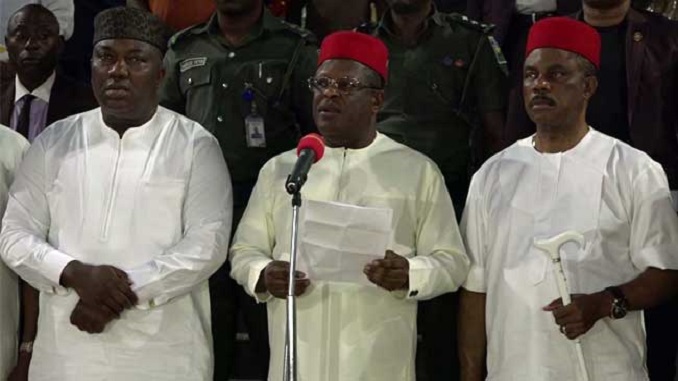
The Governor of Ebonyi State and Chairman Southeast Governors’ Forum, Engr. David Umahi, yesterday said the zone had before now banned open grazing of cattles within the region. The governor announced this during an APC stakeholders meeting at the Christian Ecumenical Centre, Abakaliki.

The governor who said the Southeast Governors’ Forum had also banned the movement of cows by foot enjoined leaders to exhibit patriotism in their conduct to guarantee the unity of the country.

“We are living in a dangerous time. Without patriotism to our nation Nigeria, it is very difficult to have a peaceful time” He called on leaders and stakeholders of the zone to speak  up  and desist from playing politics with the security of the zone and nation.

“Governors of South East have been  calling on our leaders to speak out on the security of the zone and unity of Nigeria. I read on paper where someone said he was giving governors of South East 7-days to ban open  grazing. The governors of southeast had banned open grazing and movement of cows by foot into South East in each of states of the zone. We are managing ourselves well. What we discuss with the herdsmen is the system in place for a long time”

The chairman of the southeast Governors’ Forum cautioned people of the zone against instigating crises in the country through the dissemination of fake videos alleging killing of Fulanis by IPOB in the South East. “What our people must know is that security is not  political. What is demanded of the leaders is to put up programmess that favour the people and foster national unity”.

Umahi also announced his support for the  call to flush out criminal elements from forests across the nation to boost the security of the country.

“In our forests today, we have the kidnappers, herdsmen, cultists, all sorts of criminals. Anybody staying in the forest is taking a risk when we say that people should move out of the forests. It is for their safety and security. So, I support that kidnappers, herdsmen, cultists, and bandits should be flushed out of our forests”.

We fully support the decision of S-East govs —MBF

Meanwhile, the Middle Belt Forum, MBF, has declared support for the decisions of the South East Governors to ban open grazing in region. National President of MBF, Dr. Pogu Bitrus who made the position of the forum known yesterday in Makurdi said it was time for Nigeria to adopt ranching as the best form of animal husbandry adding that it would help check the spate of farmers/herders conflicts in the country.

According to him, “the decision of the governors is a welcome development. Open grazing is archaic and abhors modern developmental trends which supports ranching all over the globe. “Open grazing does not improve the quality of meat neither does it improve the life span of the livestock. So it is creating unnecessary conflicts in Nigeria and in other parts where this practice is still on.

“Now, what we need in Nigeria is ranching which is a modern way of animal husbandry and we support the South East Governors fully because within the Middle Belt we have continued to advocate ranching as the best and acceptable way of animal husbandry.

“This is not only for stopping the raging conflicts but it will improve the economic well-being of the people including even that of the Fulanis.

“But one fact we pointed out is that we cannot ranch the cattle of foreign Fulani herders. That is our grouse. We said every community in Nigeria know their local Fulanis and those are the Fulanis that are supposed to be ranched in our communities.

“The West African free movement policy that allows foreign herders into our communities has to be checked because it is causing problems in Nigeria. And if we are adopting ranching, our neighbours will also have to, otherwise it is going to be more conflicts,” he added.

Vanguard News Nigeria

Lagos Assembly passes law prescribing 21-year jail term for cultists

The Lagos State House of Assembly has passed a bill banning the activities of cultists and related illegal societies across the state into a law.

The new law stipulates a 21-year imprisonment for anyone found guilty of engaging in cult activities. It also stipulates a 15-year jail term for anyone convicted of abetting cultists or who allows his premises to be used by cultists as a meeting place.

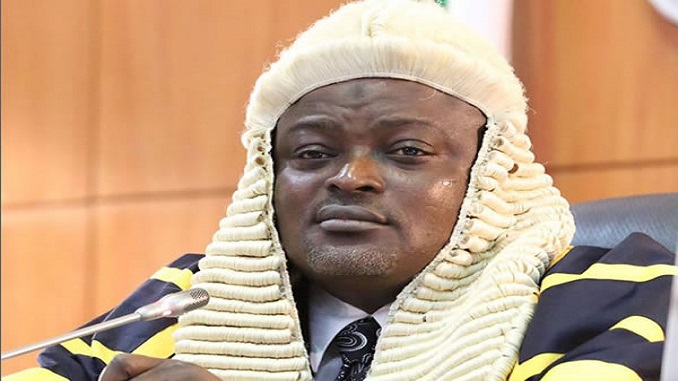
Speaker of the Lagos State Assembly, Mudashiru Obasa, directed the clerk of the House, Olalekan Onafeko, to transmit the law to Governor Babajide Sanwo-Olu for assent.

The proposed legislation titled ‘A law to provide for the prohibition of unlawful societies and cultism in Lagos state and for other connected purposes’, it says a society shall be regarded as unlawful if its members carry out illegal, destructive activities contrary to public policy, safety and peace of members of the public.

Section 3 of the law states that “Any person who is a member of an unlawful society or cult, identifies as a member or solicits for members of an unlawful society or cult, attends a meeting of an unlawful society or cult whether as a member or an intending member of the unlawful society or cult commits an offence and is liable on conviction to a term of 21 years imprisonment.”

The jail term also concerns anyone who attends such meetings or does any illegal act which may probably cause a breach of peace, disturb public peace or conducts activities in such a manner a to pose a threat to life and property.

It said “Anyone who forms, organises or combines and agrees with anyone to form or organise an unlawful society or cult, manages and assists in the management of an unlawful society or cult or knowingly allows a meeting of members of an unlawful society or cult to be held in any property under his control commits an offence and is liable on conviction to a term of 15 years imprisonment.”

The 15-year jail term further applies to anyone who intimidates or compels people to join a cult group.

“Any person who injures or uses violence on a person to compel the person to join an unlawful society or cult, commits an offence and liable on conviction to a term of 21 years imprisonment,” the bill said.

“Any person who administers or is present at and consents to the administering of any unlawful oath that appears to bind the person who takes it to become a member of an unlawful society or cult under this law, commits an offence and is liable on conviction to seven years.”

It also stipulates 21 years for any member of a cult group who sets fire on anything or uses firearm or deadly objects including acid and other chemicals in any manner as to cause harm to anyone.

The law which prohibits campus cultism says anyone of them who is convicted would face a jail term of two years.
The Guardian Nigeria

FG promises to provide enabling environment for Telcos to thrive

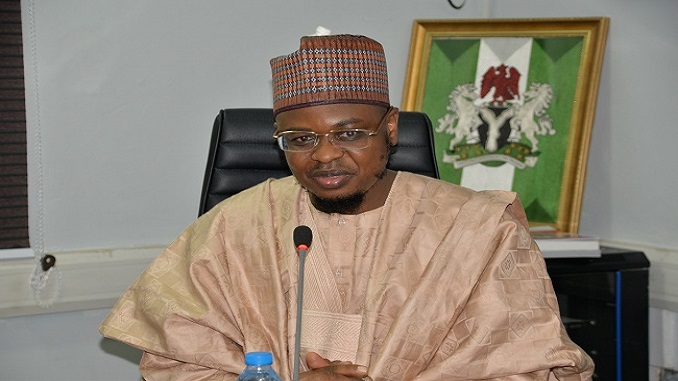
Minister of Communications and Digital Economy, Dr Isa Ali Ibrahim Pantami has promised to provide Telecommunications sector the enabling environment to thrive.

He made the promise when he received in audience, the top management of MTN Nigeria, led by the Chairman, Board of Directors, Dr Ernest C. Ndukwe.

He assured the sector that government would not come up with policies that would stiffle development in the sector.

Ndukwe had told the minister that the main aim of the working visit was to introduce the CEO Designate of MTN Nigeria, Mr Karl Toriola to him and also to pledge commitment to the MTN Nigerianization Agenda.

In his remarks, the MTN CEO designate commended the minister for the leadership he is providing in the sector which has already led to the development of the National Broadband Plan 2020 – 2025 and the ongoing NIN-SIM Linkage Exercise.

The Conclave

NIN-SIM linkage: FG extends deadline to April 6, says 56.18m NINs already collected by telcos

The Federal Government has extended the National Identification Number (NIN) and Subscriber Identity Module (SIM) linkage exercise by eight weeks. This is the second extension of the exercise. The first extended deadline was 9 February 2021. Under the latest extension the exercise will now end on 6 April 2021.
Dr. Ikechukwu Adinde, director, public affairs, Nigerian Communication Commission (NCC) and Kayode Adegoke, head of corporate communications, National Identity Management Commission (NIMC) made this known in a joint statement posted on the NCC media WhatsApp platform early this morning (Tuesday).

According to them, the message was conveyed by Dr Isa Ali Ibrahim (Pantami), Minister of Communication and Digital Economy during a meeting of the Ministerial Taskforce on NIN-SIM registration held on Monday.

The full statement reads:

“The ongoing National Identification Number (NIN) and Subscriber Identity Module (SIM) integration exercise has been extended by 8 weeks, with a new deadline of April 6, 2021.  This message was conveyed by the Honourable Minister of Communications and Digital Economy, Dr. Isa Ali Ibrahim (Pantami), FNCS, FBCS, FIIM during the meeting of the Ministerial Taskforce on NIN-SIM registration which held on the 1st of February, 2021.  Dr Pantami stated that the extension is to give Nigerians and legal residents more time to integrate their NIN with the SIM.
“The meeting was chaired by the Honourable Minister and attended by key stakeholders, including the EVC/CEO of the Nigerian Communications Commission (NCC), DG/CEO of the National Identity Management Commission (NIMC), DG/CEO of the National Information Technology Development Agency (NITDA) and the Chairman of the Association of Licensed Telecommunications Operators of Nigeria (ALTON).  Others include the MD/CEOs of MTN, Airtel, 9Mobile, Ntel, Spectranet and SMILE, as well as the COO of Globacom.
“It was reported that a total of 56.18 million NINs have been collected by the mobile network operators. Each NIN is usually tied to an average of 3 to 4 SIMs and this infers that the current figure accounts for a significant portion of the existing SIMs.  This number of NINs collected represents a significant increase when compared with the 47.8 million reported by the Technical Committee on January 18, 2021.
“Furthermore, over 1060 registration centres for NIN have been activated and made operational by NIMC across the country, while Mobile Network Operators (MNOs) have opened hundreds of centres and are rapidly deploying resources to open thousands of other NIN enrolment centres across states of the country. This is in line with the policy of the administration of President Muhammadu Buhari to enhance security and make the process of obtaining NINs easier for Nigerians.
The CEOs of the Telcos and the Chairman of the Association of Licensed Telecommunications Organisation of Nigeria commended the Honourable Minister for his stellar leadership and commitment to the rapid development of the sector.
“Dr. Pantami reiterated the need for Nigerians and legal residents who are yet to register for the NIN to be diligent and take advantage of the extension to enroll for their NIN and link with their SIMs.  It would be recalled that the 4th of February, 2020 was the initial date of the commencement of the National NIN-SIM Registration Policy.
“The Federal Government of Nigeria applauds all Nigerians and persons of other nationalities for their understanding, cooperation and for enthusiastically participating in the exercise. The Honourable Minister also commended the efforts of NIMC, NCC, MNOs and all other relevant government and private sector organisations for their unflinching support towards the success of the exercise.
“President Muhammadu Buhari has expressed his satisfaction with the progress made regarding the NIN-SIM linkage and commended the Honourable Minister and all stakeholders for their roles.  He encouraged citizens to take advantage of the extension to fully participate in the process.
“The Honourable minister implores applicants to follow the safety guidelines at all the NIN enrolment centers and ensure compliance with the booking system in place.  This protocol is in line with the Executive Order on COVID-19 2020 signed by President Muhammadu Buhari on the 27th of January 2021, in keeping with the provisions of the Quarantine Act 2004.
“It is noteworthy that Sections 27 and 29 of the National Identity Management Commission Act 2007 provides for the mandatory use of National Identity Number for transactions, including application and issuance of a passport, opening of personal bank accounts, purchase of insurance policies, voter registration, obtaining credit, among others.”

Sundiata Post

Paternity tussle: Not my children, says Delta Judge

It sounds like fiction but His Lordship actually bared it all. Below is Hon. Justice Anthony Ezonfade Okorodas statement

.PRESS STATEMENT BY THE HON. JUSTICE ANTHONY EZONFADE OKORODAS, PhD.

REVEALED: Judge accused of bribery used irrelevant NJC letter to get freed

The NJC letter seen and analysed by PREMIUM TIMES only cleared Mr Yunusa of allegations levelled against him by a civil society group and not of the bribery charges filed by EFCC.

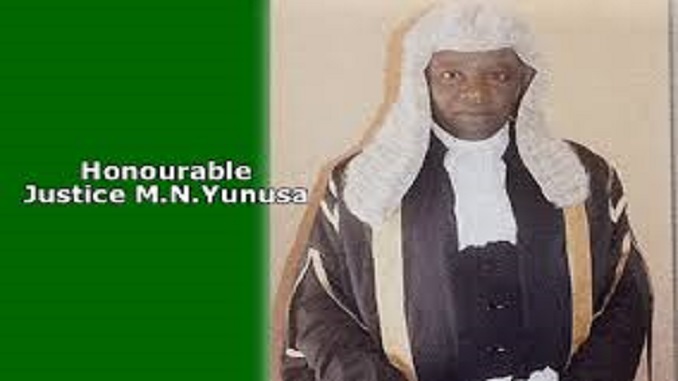
Mohammed Yunusa, a judge who was prosecuted for over four years for taking bribe from lawyers, used an irrelevant National Judicial Council (NJC)’s clearance to secure the termination of his trial, PREMIUM TIMES has found out.

The Special Offences Division of the Lagos State High Court in Ikeja, had on January 25, discharged Mr Yunusa of the bribery charges, citing the NJC’s December 23, 2020 letter which lifted the suspension slammed on him in July 2016.

Serifat Solebo, the trial judge, discharged Mr Yunusa, after overruling an objection raised by the lawyer prosecuting the case on behalf of the Economic and Financial Crimes Commission (EFCC), Wahab Shittu.

But a copy of the NJC’s letter seen and analysed by PREMIUM TIMES on Sunday showed that the allegations Mr Yunusa was cleared of were the ones levelled against him by the Civil Society Network Against Corruption (CSNAC), and not the bribery charges filed against him by the EFCC.

CSNAC’s petition which, in July 2016, led to the NJC recommending Mr Yunusa for compulsory retirement and placing him on an immediate suspension pending presidential approval of the recommendation, accused Mr Yunusa of arbitrarily restraining anti-corruption agencies from performing their statutory duties.

The EFCC, on the other hand, had charged Mr Yunusa with taking bribe from the law firm of a Senior Advocate of Nigeria, Rickey Tarfa.

Lanre Suraj, the executive director of CSNAC, confirmed to PREMIUM TIMES that his petition had nothing to do with the bribery allegation, and suggested that the Lagos High Court must have been misled in issuing the order discharging Mr Yunusa.

Mr Shittu, the prosecutor, also expressed shock about the court’s ruling and vowed to appeal against it.

The NJC’s letter obtained by PREMIUM TIMES confirmed that Mr Yunusa was only cleared of CSNAC’s allegation and not the bribery charges.

“Your Lordship is referred to letter No. NJC/F.3/FHC.49/II/989 dated July 15, 2016 suspending you from office pursuant to the outcome an investigation conducted by the NJC in response to a petition written against you by the Civil Society Against Corruption (CSNAC),” the NJC’s letter signed by its Deputy Chair, Olabode Rhodes-Vivour, who is the next most senior Justice of the Supreme Court, read in part.

The letter added that the NJC, at its meeting held in August 2020, set up a three-man panel to review the case against the judge following a letter of plea sent on his behalf by a SAN, Yemi Akinseye-George.

“In response to a letter of plea written on your lordship’s behalf by Professor Yemi Akinseye-George, SAN, requesting for a review of council’s decision, the National Judicial Council at its 92 meeting held on August 12, 2020, constituted a three-man Review Committee with the mandate to re-appraise the facts surrounding the petition and advise it on legality or otherwise of such a review,” the letter stated.

“The report of the review committee was considered and deliberated upon by council at its 93rd meeting held on December 17, 2020.

“At the end of deliberation, council accepted the findings and recommendations of the committee and decided to lift your suspension from office, while it awaits the decision of Mr President on the recommendation, please.”

NJC has not made any public statement concerning Mr Yunusa’s case after he was suspended in July 2016.

info graphics Yunusa 1

Judiciary faces public confidence crisis

Commenting on the outcome of the bribery charges and the NJC case against Mr Yunusa, a lawyer and activist, Inibehe Effiong, warned the judiciary and the NJC to be more serious with the issues of corruption and misconduct allegations involving judges in order not to destroy public confidence in the Nigerian courts.

“Head or tail, whichever way it is, the point I want to make is that the NJC and the judiciary as an arm of government, should take the issue of corruption and misconduct by judges more seriously.

“When people lose confidence in the courts, that will lead to the destruction of the Nigerian judiciary.

“At the moment, the confidence level in our courts is not very high. Successive Chief Justices of Nigeria (CJN) have publicly admitted that there is corruption in the judiciary.

“There  is also a report recently where, the judiciary was rated with the police as the most corrupt agencies in the country.

“This perception has been there, and some people think that the NJC is not very forceful on this matter. So, I am hoping that the NJC will be more sensitive to the perception of many Nigerians about corruption in the judiciary.”

The Executive Chair of Centre for Anti-Corruption and Open Leadership, Debo Adeniran, expressed similar view in a separate interview with PREMIUM TIMES.

Mr Adeniran said the episode of Mr Yunusa’s cases summarised “the problem with the Nigerian judicial system and that is why, many people have lost confidence in the capacity of the Nigerian judiciary to safeguard their interest.”

He also said the continual loss of public confidence in the Nigerian judiciary “is affecting our economy.”

“Foreign investors will always consider it – if there is any there is any dispute in the course of their transactions, who will they run to?

“Who do they rely on? You see the report of Transparency International. You can’t go to the police, you can’t go to the judiciary, you can’t go to the regulatory agencies. You are just on your own.

“That is the manifestation of a problematic political development that has been confronting on us, and it seems that Nigerians are not in a hurry to change the system.”

What next after reversal of sanction?

Mr Inibehe said the NJC’s reversal of Mr Yunusa’s sanction was in order since President Muhammadu Buhari had yet to act on the council’s recommendation for the judge’s compulsory retirement since July 2016.

“The recommendation cannot be pending ad infinitum,” Mr Inibehe said.

But, on his part, Mr Adeniran urged President Buhari “not to endorse the NJC’s recommendation lifting the suspension of the judge.”

Premium Times

How I overcame my dad abusing me and loaning me out for sex at a ‘paedophile brothel’

FOR years, Janet did not tell anyone about the vile sexual abuse she suffered during childhood. 

She felt alone in her own personal nightmare and tried to bury the memories of despicable sexual assaults carried out by her father, who also loaned her out to other adults at a “brothel for paedophiles”.

As a young girl, Janet was subjected to years of abuse at the hands of her father and other men (stock image)
As a young girl, Janet was subjected to years of abuse at the hands of her father and other men (stock image)Credit: Getty Images – Getty

As a young girl, she did poorly at school following the terrible experiences. In her twenties, with horrible flashbacks crowding her brain, she drank to excess and had frightening mood swings in which she would be angry one minute and then slump into grief and depression the next.

She once took an overdose of pills, not to kill herself but as a cry for help.

“Sexual abuse is isolating and the only way I could survive it, partly, was to just sort of disappear,” says Janet. “To try to ignore it and pretend it wasn’t happening, and that disbelief was one of the barriers that stopped me getting help for quite some time,”.

But Janet did finally get help and she is one of the brave survivors courageously sharing her story as part of our It Still Matters series.

Working in conjunction with the Ministry of Justice, we are shining a light on sexual abuse and the support available to victims, regardless of how long ago it happened. 

Now aged 62, Janet paints a vivid and ultimately hopeful portrait of how she was able to transform her broken life.

‘I felt uncomfortable but thought it was normal’

Janet, who lives in Warwickshire, recalls that the sexual abuse started when she was four or five.

“It started when I was small, with my father – touches, cuddles, tickles that started off feeling okay but gradually as he got to …” She breaks off, unwilling to describe the assaults in detail but says the most serious assaults started when she was about eight and the majority of them happened when she was aged 10 to 13.

“It’s tricky because whatever your childhood is, that’s your childhood. So, it’s sort of normal,” she says quietly. “Even though I felt uncomfortable, had painful experiences and felt scared, I wasn’t certain that wasn’t just what happened in a family.

“I didn’t have many friends at school and that was partly because I didn’t want other children coming into my house and experiencing what was happening to me.

“I wasn’t keen on going to other people’s houses in case what was happening to me was happening in their house. I had enough to deal with in my own house, thank you!

“I felt deep down that it was wrong, but I didn’t see what I could do about it. I was too young to leave home and there weren’t any organisations like Childline or Safeline that are there to help you. I was pretty much on my own, really.”

Janet was taken to a big house in Norwich where boys and girls were sexually abused
Janet was taken to a big house in Norwich where boys and girls were sexually abusedCredit: Alamy

Brothel for paedophiles

Her parents ran a large guest house where there were always strangers coming and going and her misery deepened after her father loaned his daughter out to other men.

“It was a big house in Norwich that I was taken to by various adults and other children were brought there from a children’s home nearby. It was basically a brothel for paedophiles,” she recalls. “They sexually assaulted boys and girls.”

This abuse happened for several years until the children’s home closed in 1971 and she was taken to other locations.

Repeatedly, the frightened and abused little girl was warned about what would happen if she told anyone.

“There was one man who used to drive me around and he said he could kill my dog quite easily,” she says. “And he’d say that you never know, when you’re crossing a road, when a vehicle might come and knock you over. He would tell me ‘we always know where you are’ and you believe that sort of thing.”

For years, Janet was scared to cross a road, even as an adult.

At 14, the family moved away from the guesthouse into a three-bedroom semi and the abuse lessened.

“There were fewer opportunities for other people to abuse me and maybe I started to get a bit old for my father. I was able to get out of the house, mostly to go to the pub and get drunk, surprise, surprise,” she recalls with a bitter laugh.

Janet was threatened that she'd be run over or that her dog would be killed if she told anyone about what was happening
Janet was threatened that she’d be run over or that her dog would be killed if she told anyone about what was happeningCredit: Getty Images – Getty

‘He was bigger than me. There were knives around’

The vulnerable schoolgirl missed a chance to be helped. At school, her teachers noticed something was off and one asked if she was having ‘problems’ with her father.

“For a moment,  I almost said ‘Actually, yes, help.’ But I was terrified of the consequences, and I couldn’t even admit it to myself, so I said something like ‘I don’t particularly like my father, but that’s the same as everybody, isn’t it?’”

Her concerned teachers arranged for her to see a psychiatrist and again, unwarranted feelings of shame and guilt surfaced, and Janet never disclosed what the real problem was. The doctor recommended she try yoga to help with anxiety and the opportunity was lost.

She went to university and came home for her 21st birthday where her father abused her for the last time.

“For many years, I blamed myself for that one because I was older – not a child,” she says. “But he was bigger than me. We were in the kitchen and there were knives around. There was nothing I could do, and it’s taken me a long time to realise that I wasn’t to blame.”

‘No malicious man is trying to control me’

Help finally arrived after she broke down and a trusted friend told her she needed professional advice. Janet says she found a “wonderful” therapist and saw her on and off for four or five years. Life became more settled.

Around 2005, she felt strong enough to report what had happened to her as a child. Through Safeline, she was put in touch with an Independent Sexual Violence Adviser (ISVA) who helped to guide Janet through the criminal justice system.

Another pleasant surprise came when police believed her.

“I didn’t think I would be believed because there were still things that I couldn’t believe myself, in some ways,” she explains. “The police made it clear from the outset that they believed me and took me seriously.”

In 2015, she went back to the police after she read a piece in the paper about prominent Labour politician, Greville Janner, who was alleged to have committed 22 counts of historic child sexual abuse and died that year.

For Janet, horrible and traumatic memories came flooding back.

She believed it was her duty to speak up and says it felt “healing” when police believed her. “They said ‘Janet, we know it all happened’ and that was another chip at the ice block of disbelief in myself. It was really important.”

On this occasion, she had not one but two IVSA counsellors to help her through the legal system.

Sadly, her evidence did not lead to convictions for the people she named, partly because decades had passed, but she remains proud that she spoke up.

When Janet read about Labour politician Greville Janner's allegations, it brought up traumatic memories of her own experiences
When Janet read about Labour politician Greville Janner’s allegations, it brought up traumatic memories of her own experiencesCredit: PA:Press Association

Janet says she wanted to share her story to show that recovery from child sex abuse is possible. Her last therapist told her about a concept called ‘post-traumatic growth.’

Nowadays, Janet laughs, she crosses roads confidently without looking over her shoulder because “no malicious man is trying to control me”.

“I feel calm and settled and I’ve found compassion for myself. And I want to show other people that recovery is possible,” she says.

The SUN UK

Covid-19 vaccine calculator works out when you could get first and second doses

Certain groups are being prioritised at this stage, but the government has vowed to have everyone vaccinated by autumn – an online calculator predicts when you could receive the vaccine

Britain began rolling out coronavirus vaccines late last year, with more than 9m people jabbed to date – and counting.

The vaccine is seen as the key battleground in the war against the deadly disease, offering a way to return to normal life.

Certain groups are being prioritised at this stage, but the Government has vowed to have everyone vaccinated by autumn.

Care home residents and their carers are top of the list, followed by all those over 80 and frontline health workers.

But, as the roll out progresses, more and more of the population will be in line for a vaccination.

You can now use our calculator to see when you could receive the first and second dose of the Covid vaccine.

Continue reading

Troops capture 17 Gana boys, rescue 19 kidnap victims

From Rose Ejembi, Makurdi

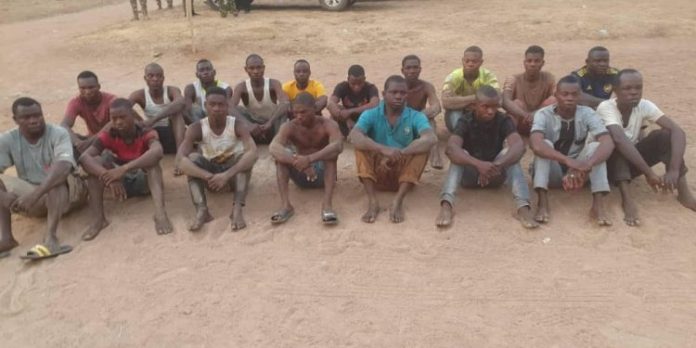
At least 17 suspected kidnappers reportedly loyal to late Benue militia warlord Terwase Akwaza, alias Gana, have been arrested by a combined team of Operation Whirl Stroke (OPWS) and other security agents.

The suspects, according to the Security Adviser to Benue State Governor, Samuel Ortom, Col Paul Hemba (retd), were responsible for the kidnap of some Taraba youths last week Wednesday.

Addressing newsmen on Monday, the Security Adviser said the security team was able to rescue 19 of the 23 kidnap victims from the suspects.

‘On 27 January 2021, some criminal elements linked to late Gana kidnapped 23 persons along Wukan-Takum road. Their aim was to trigger the inter-communal crisis between the Tiv and Jukum tribe in that axis so that they can have a respite from the pressure on them from the security forces.

‘Consequently, a combined team of troops of Operation Whirl Stroke, 72 Special Forces Battalion, 93 Battalion, and Mobile Policemen from Takum raided suspected hideouts where the victims were kept at Ajon, Igbudu and Tor Donga axis.

‘The team was able to rescue 19 out of the 23 abducted victims and are in search of the remaining four.

‘The troops arrested 17 bandits in connection with the kidnap incident during the raid operation in different parts of Katsina-Ala Local Government Area. They are currently being profiled by the DSS at 93 Battalion location in Takum Local Government Area,’ Hemba stated. Rescued victims

Some youths from Takum local government area of Taraba were on Wednesday abducted by gunmen along Wukari-Takum road.

Daily Sun learned that the youths, between 18 and 22, had been returning from a wedding in Wukari in a Toyota Hummer bus at about 8.30 am when they ran into a group of gunmen between Chechenji and Kofai Ahmadu villages.

The gunmen had reportedly hijacked the vehicle they were travelling in and drove the passengers, including the driver of the bus, to an unknown destination. The gunmen were said to have thereafter driven from Kofai Ahmadu village in Taraba and headed for Benue axis.

Sources from the area had pointed accusing fingers at the notorious Gana boys said to have been flushed out of Benue due to activities of operation Whirl- Stroke going on in Benue State.

Sunnewsonline

Law to ban cattle movement from North to South would be unconstitutional— Senate

*As Senators Olujimi, Bwacha agree with Ganduje

By Henry Umoru— ABUJA

THE Senate, on Monday, disagreed with Governor Abdullahi Ganduje of Kano State over his call on the Federal Government to come up with a law that will ban the movement of cattle from the North to other parts of the country, saying that if enacted such a law would not be constitutional.

Speaking with Vanguard on Monday, Chairman, Senate Committee on Media and Public Affairs, Senator Ajibola Basiru (APC, Osun Central), said if the law comes on board as being proposed by Ganduje, it will not only be unconstitutional but will go contrary to the part of the constitution that stipulates that Nigerians, irrespective of the state of birth or nativity, have right to freedom of movement.

The Senate spokesperson said: “I don’t think such a law will be constitutional. Nigerians have the right to freedom of movement irrespective of the state of birth or nativity.

“The challenge, largely, is law enforcement and security as well as a need for modernised animal husbandry system in the country.”

Olujimi, Bwacha back Ganduje However, former Senate Minority Leader, Senator Biodun Olujimi(PDP, Ekiti South) agreed with Kano State governor, saying that if such a law was enacted, it would nip in the bud the incessant incidences of clashes between farmers and herders, as well as resolve the many cases of rape of schoolgirls and women. Olujimi told Vanguard on Monday, said: “If enacted into law, it resolve what we are facing at the moment across the country. Though it may look discriminatory as it is not good enough for us as a country because we ought to live together as one, happenings at the moment are scary, frightening, disgusting, disheartening and damning. “Bad ones have infiltrated the good Fulani we used to have. They are committing serious havoc; women and girls are constantly raped. “There is fear and despondency in the land. Female students are afraid to travel to schools, others can no longer travel. If the proposal will solve the problem of armed banditry and kidnapping, it is a welcome development.” Also supporting Governor Ganduje, Senate Deputy Minority Leader, Senator Emmanuel Bwacha(PDP, Taraba South) who spoke with Vanguard, said: ” Very true; there is enough land in the North for grazing, for the herders to use. I agree with Governor Ganduje of Kano.”

Vanguard reported that Governor Ganduje of Kano State had called on the Federal Government to enact a law banning the movement of cattle from the North to other parts of the country, to resolve the incessant incidences of clashes between farmers and herders. According to him, banning the movement of herders would also address the challenge of cattle rustling in the country. Ganduje, who spoke while fielding questions on how far he had gone with the Ruga project in his state, had said: “We are building a Ruga settlement in Samsosua Forest, our border with Katsina, and we have succeeded in curtailing the effect of banditry in that area. “So, we are building many houses; we are constructing a dam; we are establishing a cattle artificial insemination centre; we are establishing veterinary clinic and already, we have started building houses for herdsmen.”

Vanguard News Nigeria

TIPS