Home Blog Page 1037

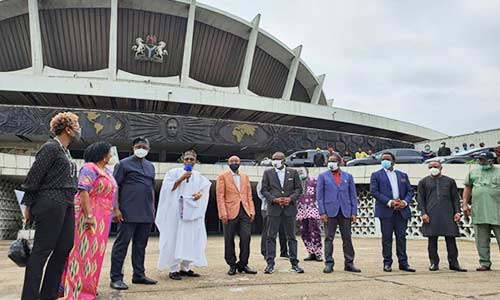
FEC Approves CBN’s Request To Renovate National Theatre For N21bn

The federal executive council (FEC) has approved a memorandum of understanding (MoU) between the Central Bank of Nigeria (CBN), and the ministry of information and culture for the renovation of the National Theatre in Iganmu, Lagos.

Lai Mohammed, minister of information and culture, said this on Wednesday, at the end the weekly FEC meeting held in Abuja.

The federal government, on July 12, 2020, handed over the national theatre to CBN and the bankers’ committee to signify the kick-start of the renovation process.

“This is a landmark approval because, it has paved the way for investment in the creative industry as part of the resolve of this government to create at least one million jobs in the next three years in the creative industry,” Mohammed said.

“The CBN and banker’s committee are willing to invest N21.894 billion to renovate, refurbish and commercialization (run it profitably) of the national theatre complex. The MoU has a life span of 21 years after which it will revert back to government.”

The minister assured that no job will be lost after the national theatre is renovated, adding that the “brand new national theatre, an event centre” will instead create more jobs.

Asides from this, FEC approved about N9.43 billion to complete the digital switch over (DSO) in broadcasting; N8.98 billion for a new national ICT park in the federal capital territory (FCT) to coordinate public and private ICT hubs in Nigeria.

The council also approved a new national policy on aging which would take care of the needs of the aged people across Nigeria; approved the ministry of water resources memo to construct Damaturu water supply project in Yobe state worth N8.43 billion. ( thenigerialawyer)

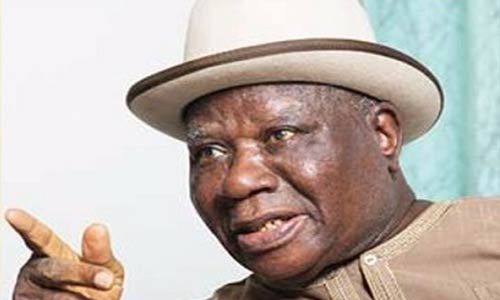
How I Recovered From COVID-19 Says E.K Clark, Calls On Buhari To Suspend NIN Registration

— Says Continuous NIN Registration Is Irresponsible And Death Sentence.
— Blast Kogi Governor, Yahaya Bello, For Describing Covid-19 As Hoax And Still Wishing To Run For President

Elder statesman, Chief Edwin Clark, has called for sanctions against Kogi Governor Yahaya Bello over his claims that coronavirus is not real.

He urged Nigerians to support efforts by government to stop the spread of the pandemic.

He said: “The governor of Kogi State, Yahaya Bello, should be ashamed of himself. He should be sanctioned.

“This is a man parading self that he wants to be President of Nigeria. It’s all nonsense. Some of them feel because they are very close to Mr. President, they can do anything.”

Clark, who has just recovered from COVID-19, spoke on Wednesday in Kiagbodo, Delta State.

He said the timing of the National Identification Number (NIN) was wrong and urged President Muhammadu Buhari to suspend the process due to rising COVID-19 cases.

According him: “First, let me say COVID-19 is real. The ongoing NIN is a very irresponsible action from Federal Government. You cannot be asking Nigerians to go and queue without social distancing and wearing face mask, and struggling to register. For what? Under this period, how many people are they going to register?

“The duty of every government is security and welfare but as at today, you have people fighting everywhere to register for National Identity Number (NIN). What is so urgent about it? Who’s losing money if you don’t register now?

“I appeal to FG to stop this irresponsible exercise and concentrate on COVID-19. They (political leaders must show example to others. If at 93, I’m wearing face mask in my house, nobody should be exempted including Mr President. They should show example to Nigerians. The regulations should be carried out.”

He said he recovered from COVID-19 two weeks after testing positive.

Clark said he contracted Covid-19 after his niece who visited his Abuja home became sick and later tested positive for the virus.

He also confirmed all nine of his staff and siblings who tested positive, have recovered.

Recounting his ordeals, the octogenarian said he was treated for 14 days before subsequent tests by the Nigeria Centre for Disease Control (NCDC) returned negative.

He said given his old age and underlying health challenges, he was worried, especially after having adhered to NCDC protocols since outbreak of the virus.

He said: “Sometime last month (January) I got a call from one of my nieces that she was just coming from Warri. I told her that you people in Warri don’t observe COVID-19 protocols very well and I said she should stay in the guest house.

“On the third day she became very ill. She was very weak, coughing, and that she has malaria. I directed that she should be taken to my clinic. Because she was coughing, the doctor said she should go for a COVID test.

“The following day (Friday) the Health Minister sent doctors and 24 of us in the house were tested and the Saturday of it the result came and nine of us tested positive. Number one on the list, was myself. I was terribly worried.

“He (Dr. Osagie Ehanire) contacted the FCT team and they said they want to evacuate me to a good isolation centre but I insisted on treatment from home. They said that was okay.

“They sent doctors to look after me and the rest who tested positive. I was worried because I have heard of people dying of the virus.”

He described his 14- day isolation and treatment period as “terrible experience”, adding that he was at a point scared of the virus.

Clark said aside from malaria, he did not develop other symptoms of the virus until he was confirmed positive.

The Ijaw leader commended the Minister of Health, Dr. Osagie Ehanire and officials of the Ministry of Health for prompt response that led to his quick recovery from the virus. (thenigerialawyer)

Matters arising from pension laws for former Governors, Deputy Governors and other political office holders in states

By Ivor Takor, mni Esq.

Some Governors, among them, those who failed in eight years to enact laws to take care of pension of workers of States and Local Governments they superintended over, were able to within a short period, with the help of members of their ever “cooperative” Houses of Assemblies to enact laws that guaranteed for them for life, bloated pension, allowances, which include houses, bullet proof vehicles, domestic helps and security personnel as well as provisions for medical tourism, in the name of Pension Rights for Political Officeholders or whatever names so called.

CRITICISMS OF THE ACTIONS OF THE FORMER GOVERNORS

It therefore did not come as a surprise when criticism of the actions of these former Governors became wide and diverse, coming from trade unions, pensioners, civil society Organisations, lawyers and the general public. The Socio-Economic Rights and Accountability Project (SERAP), did not stop at criticizing the actions of these former Governors and the States Pension Laws. The group challenged the matter in court and obtained a landmark judgement.

JUDICIAL PRONOUNCEMENTS

There have also been judicial pronouncements on the issue of pension for former Governors, their deputies and other Political Officeholders.

FEDERAL HIGH COURT LAGOS

It was widely report in the media that the Federal High Court in Lagos in a landmark judgment had ordered the Federal Government to “recover pensions collected by former governors now serving as ministers and members of the National Assembly, and directed the Attorney General of the Federation and Minister of Justice Mr Abubakar Malami, SAN to challenge the legality of states’ pension laws, permitting former governors and other ex-public officials to collect such pensions.”

The judgment by Justice Oluremi Oguntoyinbo followed an application for an order of mandamus in suit number FHC/L/CS/1497/2017 brought by SERAP.

NATIONAL INDUSTRIAL COURT

Another step taken that led to a judicial pronouncement on the matter, came from what would have been termed to be a very unlikely quarter, except that it came from a quarter that was clothed with a garment of greed. Garba Umar, a former acting governor of Taraba State from October 2012 to 2013, who was chosen by the late Governor Danbaba Suntai  as his Deputy after the impeachment of the then Deputy Governor , Sani Abubakar. Garba Umar was sacked by the Supreme Court in 2014 when the apex court ruled that Abubakar’s impeachment was illegal and ordered his reinstatement. Garba Umar had dragged the state government to the National Industrial court Jos, claiming that he was entitled to gratuity as a former governor of the state, 300 per cent of his salary as medical allowance and other benefits as provided in Taraba State Governor and Deputy Governor’s Pension Law, 2015.

Justice Kenneth Amadi of the Jos Division of the National Industrial Court (NICN), on December 9, 2019, nullified the Taraba State Governors’ Pension Law.

In its ruling, the court held that it appeared that there was a “contradiction by the provision of section 124(5) ‘of the 1999 Constitution’ which enabled the House of Assembly of a state to provide for pension or gratuity to governors and deputy governors which items are also placed under the exclusive legislative list under Part 1, of the Second Schedule to the 1999 Constitution.”

The court further ruled that: “The question then is how to reconcile these two provisions of the constitution. The answer is by adopting a purposeful approach by which the court is required to look at the constitution as a whole and construe its provisions in such a way as to give effect to the general and specific purposes for which it was enacted; that is good governance and the welfare of all Nigerians based on the principles of equality and justice.”

The court went further to hold that the state houses of assembly in Nigeria did not have the power to fix any amount in remuneration to its past governors and deputy governors as “pension or gratuity unless the Revenue Mobilisation Allocation and Fiscal Commission first of all determined an amount as pension and gratuity to past governors and deputy governors in which case such amount, so fixed, shall not exceed the amount as have been determined by the Revenue Mobilisation Allocation and Fiscal Commission.”

The court, therefore, held that since the commission had not fixed any amount as pension and gratuity for past Governors and Deputy Governors in Nigeria, any law made by any state house of assembly granting pension and gratuity to its past Governors andDeputy Governors was null and void.

Consequently, the court ruled that “the Taraba State governor and deputy governor’s pension law, 2015 is null and void.”

JUDGEMENT OF THE PRESIDENT OF THE NATIONAL INDUSTRIAL COURT, JUSTICE BENEDICT KANYIP

However, a judgment delivered by the President of the National Industrial Court, Justice Benedict Kanyip, in a suit which had 40 persons and civil society groups as claimants, validated and declared as constitutional the laws made by the various states stipulating pensions and gratuities for former governors and their deputies.

The claimants had sought the nullification of such pension laws which they said were sources of “waste of public funds”. They sued the Governors and the Houses of Assembly of the 36 states, the Attorney General of the Federation and the Revenue Mobilisation, Allocation and Fiscal Commission (RMAFC), as the first to the 74th defendants.

The claimants argued that only the 74th defendant, RMAFC, had the exclusive constitutional power to set the remuneration of such public officials as Governors and Deputy Governors, adding that their pension was part of the remuneration of public officials.

They, therefore, contended that any law stipulating pensions for such public officials already covered by the constitutional mandate of the RMAFC, ultra vires, null and void.

But in dismissing the suit, Justice Kanyip held that “the power of the RMAFC under Section 124(1) is one that relates to ‘salaries and allowances’,” adding that “pension is not mentioned at all; and the ‘salaries and allowances’ talked of are those ‘paid to the holders of the offices mentioned in this section’.”

He faulted the main grounds of the claimants’ suit to the effect that Houses of Assembly lacked the power to legislate on pensions or gratuities for former Governors and Deputy Governors.

He noted that contrary to the claim that the National Assembly and the RMAFC were the rightful bodies constitutionally charged with that responsibility of handling such matter, “the power of the RMAFC under section 124(1) relates to ‘salaries and allowances’, not pensions.”

“The word ‘remuneration’ used in paragraph 32(d) of Part I of the Third Schedule to the 1999 Constitution does not include pensions.

“While Section 124(l) donates the power to prescribe remuneration and the salaries of Governors and other public office holders subject to the amount as shall have been determined by the RMAFC, Section 124(5) did not subject the power of the House of Assembly to that of the RMAFC in granting pension or gratuity for former Governors and their deputies.”

He added that the court lacked the power to repeal a law validly passed by a legislative body.

COURT OF APPEAL PRONOUNCEMENT

The ruling of Justice Kanyip, contrasted the position of the Court of Appeal in Abuja which in its May 10, 2019 judgment described as “morally wrong” the payment of severance allowances to elected or appointed public office holders.

The court in Abuja on May 10, 2019, through its three-man panel led by Justice Abubakar Yahaya, expressed the non-binding opinion in a unanimous judgment delivered in a suit that had to do with a dispute between the Kogi State Government and some former members of the Kogi State Local Government Service Commission, who served from February 2013 to February 2017.

Justice Emmanuel Agim, who read the lead judgment of the court stated that such payment “cannot be justified in the context of our present social realities”.

He said, “The political appointees and elected public officeholders who do not work as long and as hard as career civil servants quickly get paid huge severance allowances upon leaving office, in addition to the huge wealth they acquired while holding such offices and without having been subjected to any contributory pension schemes.

“It is not morally right to pay an elected public officer or a political appointee pension and gratuity or severance allowance for holding such an office for three to eight years as the case may be. It cannot be justified in the context the present social realities; it amounts to gross social injustice.”

But while validating the ex-governors’ pension laws made by the various Houses of Assembly in his judgment of January 22, 2020, Justice Kanyip, described the Court of Appeal’s decision as an “admonition”.

He added that “the key reason for the decision of the Court of Appeal was that the letters of appointment of the political office holders in issue did not stipulate their entitlement to such payment; and that they did not produce any law or any document or instrument that entitles them to the payment they seek.”

Justice Kanyip, who awarded N400,000 cost against the 40 claimants, also ruled that Justice Amadi’s conclusion “was arrived at without a consideration of Section 4(3) of the Constitution itself.”

THE INJUSTICE GOVERNORS, DEPUTY GOVERNORS AND OTHER POLITICAL OFFICEHOLDERS PENSION LAWS ARE METING TO STATE WORKERS AND PENSIONERS.

It has been difficult for workers, pensioners and the general public to understand why Governors who served their states for eight (8) years, with most of them amassing stupendous wealth gotten through dubious means as the Economic and Financial Crimes Commission (EFCC) cases against some of them have shown, should believe that their services along with those of of their deputies as well as speakers and deputy speakers of their ever cooperative State Houses of Assemblies were more meritorious, thereby guaranteeing them better rest after “labour” than employees of the same State and Local Governments, who put in between twenty (20) to thirty five (35) years of services. Some of these Governors’ have turned Abuja the seat of the Federal Government, to their safe haven. They can be found in the hallow chamber of the Senate of the National Assembly or superintending as Ministers in Federal Ministries.

Justice Oguntoyinbo’s judgment read in part: “I have considered SERAP’s arguments that it is concerned about the attendant consequences that are manifesting on the public workers and pensioners of the states who have been refused salaries and pensions running into several months on the excuse of non-availability of state resources to pay them. SERAP has also argued that there is need to recover such public funds collected by former governors.”

WHO HAS THE RESPONSIBILITY TO REDRESS THE ISSUE?

Nothing so far exposes the greed, avarice, self-centeredness and negative oneness of our political ruling class as the issue of the pension rights of former Governors, Deputy Governors and other political office holders. There has been a conspiratorial silence on the part of state actors who have responsibility to redress the injustice the laws passed by the State Houses of Assembly are meting out to workers, pensioners and taxpayers.

AT THE FEDERAL LEVEL.

It was widely reported in the media that in the SERAP’s case, Justice Oguntoyinbo said: “The question that comes to mind is: who should approach the Court where a particular law is not in the best interest of Nigeria as a country or National interest? Who should approach the Court where a particular law is detrimental to the interest of the country? Who should institute actions in court for the purpose of recovering public funds collected?

In answering the questions, Justice Oguntoyinbo was also reported to have said: “In my humble view, the Attorney General should be interested in the legality or validity of any law in Nigeria and how such laws affect or will affect Nigerians, being the Chief Law Officer of the Federation.”

According to reports, Justice Oguntoyinbo adjourned the suit to the 3rd of February 2020 for hearing on report of compliance with the court orders/judgment by the Federal Government.

AT THE STATES LEVEL

The actions so far taken by the Zamfara and Kwara states Governors and State Houses of Assemblies clearly shows who have responsibly to redress the matter.

In 2019 Zamfara State House of Assembly invalidated the Pension law for former governors and other ex-public officers in Zamfara State, which provided for the upkeep of ex-governors to the tune of N700 million annually. The state has produced three former governors since 1999. While assenting to the new law prohibiting former Governors, Deputy Governors, Speakers and their deputies from taking mega pension and other allowances, Governor Mohammed Matawalle regretted that although the former Governor, Abdulaziz Yari had left behind pension liabilities of about N10 billion apart from other liabilities such as promotion benefits, and workers annual increments, he still had the guts to request the State Government to pay him N120 million annually. He further stated that the former Governor was seeking N10 million monthly as pension, two vehicles from the State Government, which are replaceable every four years, free medical treatment for the former Governor and his immediate family and 30 days vacation in and outside Nigeria as well as a five bedroom house in any place of the Governors choice. The law assented to by the Governor, ended similar largesse to former Deputy Governor, Speakers and deputy Speakers.

Governor AbdulRhaman AbdulRazag of Kwara State, on Tuesday January 26th 2021 signed into law a Bill cancelling payment of pension and other largess to former Governors and Deputy Governors of the State. The law was passed in 2011 under the administration of former Governor Bukola Saraki.

The Lagos State Governor, Babajide Sanwo-Olu said he was going to stop payment of pension to his predecessors and former Deputy Governors of the State. He was quoted to have said this while presenting his 2021 Appropriation Bill to the StateHouse of Assembly. Lagos State blazed the trail at the tail end of the eight (8) years tenure of former Governor Bola Ahmed Tinubu. It is important to state here, without any fear of contradictions that so far, Lagos State remains the flagship of the Contributory Pension Scheme (CPS) in Nigeria even doing better than the Federal Government. The State enacted a law on CPS IN 2007; amended the some sections of the Principal law in 2019; established Pension Bureau; registered employees with PFAs; regularly remitting 10% employer and 8% employee pension contributions; conducted actuarial valuation;  funding accrued pension rights. It recently opened retirement benefits bond redemption fund account with two Pension Fund Administration (PFA) for State and local government workers; and valid Group Life Insurance Policy for workers.

CONCLUSION

Nobody should be left in doubt that some former Governors have not been fair to workers, pensioners and taxpayers in the States they ruled as Governors. The laws they got enacted at the tail end of their tenures as Governors’ without addressing the issue of pension for workers of the state exposes them as being inconsiderate, selfish and lacking in fair play, equity and natural justice. Unfortunately, those who took over from them, whose responsibilities it is to redress the injustice by repealing the laws, either lack the courage/ political will or are looking at the other side because they are future beneficiaries. They should know that the matter is not rested. The eyes of workers, pensioners and taxpayers are on States that have the laws in place. The states include Lagos, Bauchi, Rivers, Awka Ibom, Sokoto, Gombe, Yobe, Abia, Osun, EDO, Oyo, Imo, Delta, Kano, Jigawa, Niger, Bayelsa, Katsina, IMO, Borno, Anambra, Plateau and Ebonyi.

There are states I refer to as Pension “Red States”. Sixteen years down the line of pension reforms in the country, these seven states have not moved beyond the Bill level in the implementation of pension reform in their states. They are Awka Ibom, Bauchi, Borno, Cross River, Katsina, Kwara,  Plateau and Yobe.

Ivor Takor, mni Esq.

Director, Centre For Pension Rights Advocacy

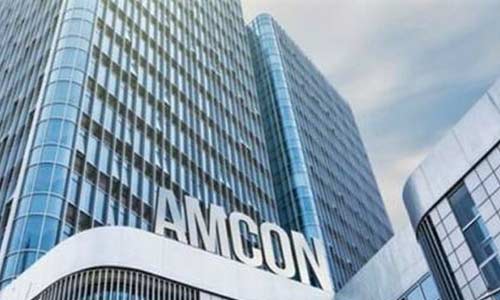
“AMCON Is Harassing Us In Violation Of Court Order,” Residents, Victory Park Estate, Lekki, Raise Alarm

Residence Implore Buhari, Sanwo-Olu Others To Intervene.
— Possible Social Unrest Imminent If….

The residents and landlords of Victory Park Estate, Lekki, Lagos State have raised alarm over alleged harassment and contempt of court by the Asset Management Corporation of Nigeria (AMCON) and its receiver-manager

The residents claimed that they bought plots of land, spanning almost 50 hectares, in the estate from Grant Properties Ltd, a company promoted by the late Rev Olajide Awosedo and his family.

According to them, checks were carried out to ascertain that there were no caveats in the Lands Registry or the Corporate Affairs Commission on the properties before making payments

They also claimed that as at the time of buying the plots of land, Knight Rook’s title to the estate was free from any encumbrance, as no mortgage, pledge or charge had been obtained against it by any financial institution or any other company.

However, they expressed surprise that in June 2019 they woke to a publication that Knight Rook, the owner of the global certificate of occupancy over Victory Park Estate, was in receivership with other companies over a loan Grant Properties Ltd allegedly took from Sterling Bank, Skye Bank (now Polaris bank), Wema Bank and FCMB and the said banks had allegedly sold the unpaid loan as eligible bank assets to AMCON.

The receiver/manager obtained an ex-parte order in a suit numbered FHC/AB/CS/69/16 granting him the power to dispose or take possession of several properties in the estate, pending the conclusion of the debt recovery proceedings against Knight Rook and Grant Properties.

The residents alleged that under the guise of performing his functions, the receiver/manager has continued to make life unbearable for them with residents being forced out with thugs and the police.

They said many of the plots targeted by AMCON were already sold to third parties before the take-over by the banks and the eventual transfer of the assets to AMCON

The residents, the Victory Park Homeowners and Residents Association met with both AMCON and the receiver/manager in a bid to amicably resolve the issue but all to no avail.

The residents accused Olaoluwa of employing “despicable methods” to dislodge people from their properties as some were forced to repurchase their properties and “regularise” their title at exorbitant prices or forfeit them.

Some were asked to revalidate their title to plots of land they legally acquired from Knight Rook for a sum far more than what they had bought the plots for.

The residents have instituted several actions in court for injunction and orders preventing AMCON, Olaoluwa and his agents from trespassing on the plots of land pending the court’s decision.

Two of such cases were filed by Mrs Bose Ubude and Mr Okechukwu Okoli and his wife against AMCON and its receiver-manager Mr Lanre Olaoluwa.

Ubude filed a suit numbered LD/9769LMW/2020 against AMCON, Olaoluwa and three others at the Lagos State High Court and obtained an order directing the parties to the suit to maintain status quo.

“In view of the pendency of this before this court, I am directing all counsel to impress it on their respective clients the consequences of doing anything on the subject-matter of this action as from today the 15th of December, 2020. I so hold.” the court held

Mr and Mrs Okoli, in suit numbered LD/8277LMW/19, challenged their forcible ejection and subsequent sale of their land to a third party by AMCON in disregard of a subsisting court order preventing AMCON from doing so.

They accused AMCON of disregarding the age-long principle of lis pendens which enjoins parties who have submitted their disputes to the court from attempting to render the eventual decision nugatory through self-help.

The residents called for the intervention of President Muhammadu Buhari, Governor Babajide Sanwo-Olu, AMCON Chairman Edward Lametek Adamu and its Managing Director, Lawan Kuru.

They also called on the Inspector-General of Police, Mohammed Adamu, to direct his men not to allow themselves to be used by AMCON and its receiver-manager to disturb the peace of the residents and property owners.

According to the residents, the issues could degenerate to social unrest if AMCON and its agents are not called to order, as the agency, they insisted, cannot willfully continue to trample on rights and disrespect the powers of the court by taking over the properties of Nigerians without legal backing.

AMCON on their part denied any liability. They said there is a subsisting decision of the Court of Appeal (Lagos Division) in Appeal No: CA/L/146/18 which specifically foreclosed the residents’ right to the assets of Knight Rook Limited comprised within Victory Park Estate, Lekki, Lagos, among other assets. They advised all persons affected by the judgment and enforcement to contact AMCON through its solicitors or receiver/manager. ( thenigerialawyer)

Onitsha Traders Protest Alleged Police Harassment, Extortion

Traders at the popular G.U.O Plaza, Niger Street phone market, Onitsha; Anambra state on Wednesday protested alleged incessant Police harassment, extortion and intimidation in the commercial city of the state.

Business activities were grounded along the main market route for hours as the protesters; mostly phone dealers proceeded to the Fegge Police Division, chanting war songs to register their displeasure.

The protesters alleged outright infringement of their rights by gun-wielding policemen who they noted have been milking them dry with fictitious allegations.

Speaking on behalf of the traders, the chief security officer of the market, Basil Udekwe accused policemen from the nearby Fegge Police division of turning their business premises into an extension office where they willfully arrest their fellow traders on alleged buying and selling of stolen phones.

He said, “Some of the policemen who engage in such unholy practice bring some people who just point accusing fingers on any unfortunate trader on sight and they whisk such persons away into detention where hundreds of thousands of naira are exchanged before such victim could breathe the air of freedom.

“One of our genuine members popularly known as Emeka Nnewi is presently in detention over such phony and unfounded allegation of buying stolen phones. Some of them us coughed out between N200, 000 to N500, 000 in the past before regaining freedom unknown to the Divisional Police Officer of the station.”

A legal practitioner, Margaret Wilcox Iwuchukwu who mediated on the plight of the phone dealers urged the police to address the challenge noting that the traders have become restive which could trigger another EndSARS protest.

The Divisional Crime Officer of Fegge Division, Stephen Odok who received the protesting traders on behalf of the DPO, Rabiu Garba assured professional handling of all complaints raised by the aggrieved traders.

While demanding for a full and detailed record of all their complaints, Odok warned that the division under Mr. Rabiu would never condone any corrupt act, urging the complainants to come forward with possible identities of any officer who might have compromised, for effective investigation and disciplinary action. ( thenigerialawyer)

Why the poor fine of N200.00 for not wearing face mask can’t change

Daily Law Tips (Tip 734) by Onyekachi Umah, Esq., LL.M, ACIArb(UK)

Introduction:
Laws are made with sanctions to ensure compliance. Wearing face mask is not comfortable, however, it is a key to survival in a world of Coronavirus. Hence, on 26 January 2021, the Federal Government of Nigeria made a regulation criminalizing the failure to wear face mask in public places. To ensure compliance, the federal regulation has sanctions/punishments. Many have argued that the fine for the offence is too poor. This work reveals the shameful fine of N200.00 for not wearing face mask and also explains why the fine cannot be changed by the President of Nigeria or by an executive order/regulation.

Fine for No Face Mask:
The National Assembly is the federal legislature that makes federal laws for the entire Nigeria. The federal legislature is free to also delegate some of its legislative powers to the President of Nigeria, a Federal Minister or any other presidential appointee, to make regulations (subordinate legislations). This means that the President of Nigeria can while relying on a federal law, make executive orders and regulations that will have the powers of a federal law, as if they were made by the federal legislature. However, such regulations can never contradict their parent legislatures (federal laws) made by the federal legislature.

It is on the above understanding, that the President of Nigeria made “the Coronavirus Disease [COVID-19] Health Protection Regulations 2021”. The President made the new federal regulation on Coronavirus, while relying on his powers donated by the legislatures via the Quarantine Act of 1926. Yes, the Quarantine Act is 95 years old, having been made on the 27 May 1926. Expectedly, the words, ideas and spirits of the Quarantine Act seem to be far from the realities of the present-day Nigeria.

Since the new regulation on COVID-19 is a regulation that draws its validity from a federal law, it cannot surpass the federal law. As such, the highest punishment that the federal regulation can sanction must not be above the highest punishment that its parent federal law can sanction. In this case, the highest punishments in the Quarantine Act of 1926 are fine of Two Hundred Naira (N200.00) and an imprisonment for six (6) months, either or both. So, the highest punishment that the federal regulation on COVID-19 can be is anything equal or less than the fine of Two Hundred Naira (N200.00) and an imprisonment for six (6) months.

Conclusion:
Democracy thrives on laws. By separation of power, only the federal legislatures can make federal laws for Nigeria. Laws once made by the legislature remains valid until amended by the legislature. The harshness or stupidity of a law does not affect the validity of the law, so far as the law does not contradict the constitution of Nigeria.

Any quasi-legislative powers enjoyed by the President of Nigeria must be exercised in total submission to the will and spirits of federal laws made by the federal legislature. Consequently, the President of Nigeria can make federal regulations on COVID-19 but cannot make a punishment higher than any punishment contained in the 95-year old Quarantine Act of 1926. The powers to increase the shameful fine of N200.00 for failure to wear face mask rests on the heavily paid National Assembly of Nigeria.

The federal legislature must be woken up to perform its statutory duties and save lives of Nigerians and persons in Nigeria. There will be little or no serious enforcement of the regulation on compulsory wearing of face mask where there is a negligible fine of N200.00. Also, the discretion of courts to award the poor fine or even lower sums in place of an imprisonment is lawful. By the way, no court in Nigeria can award a punishment that is higher than the maximum punishment created by the law in Nigeria for the offence tried. Courts, judges and magistrates are not law makers rather interpreters of laws, without powers to add or subtract.

My authorities, are:
1. Sections 1, 2, 3, 4, 5, 6, 318 and 319 of the Constitution of the Federal Republic of Nigeria, 1999.
2. Sections 1, 2, 3, 4, 5, 7 and 8 of the Quarantine Act of 1926.
3. Regulations 5, 6, 7, 8, 10, 15, 18, 24, 31, 32, 33, 34, 39, 40, 42 of the Coronavirus Disease [COVID-19] Health Protection Regulations 2021
4. Onyekachi Umah, “N200.00 is the Highest Fine for Not Wearing Face Mask.” (LearnNigerianLaws.com, 4 February 2021) <https://learnnigerianlaws.com/n200-00-is-the-highest-fine-for-not-wearing-face-mask/> accessed 10 February 2021.
5. Onyekachi Umah, “Not Wearing a Face Mask Is Now A Crime” (LearnNigerianLaws.com, 29 January 2021) <https://learnnigerianlaws.com/not-wearing-a-face-mask-is-now-a-crime/> accessed 2 February 2021.
6. Onyekachi Umah, “Failure To Wear Nose Mask Is Not An Offence In Nigeria.” (LearnNigerianLaws.com, 28 April 2020) <https://learnnigerianlaws.com/failure-to-wear-nose-mask-is-not-an-offence-in-nigeria-daily-law-tips-tip-557-by-onyekachi-umah-esq-llm-aciarbuk/> accessed 28 January 2021.
7. Onyekachi Umah, “Nigeria Has No Law Against Public Gathering During COVID-19 Era.” (LearnNigerianLaws.com, 14 April 2020) <https://learnnigerianlaws.com/nigeria-has-no-law-against-public-gathering-during-covid-19-era-daily-law-tips-tip-547-by-onyekachi-umah-esq-llm-aciarbuk/> accessed 28 January 2021.
8. Onyekachi Umah, “Is There a Quarantine Act Made in 2004, After That of 1926 in Nigeria?” (LearnNigerianLaws.com, 5 May 2020) <https://learnnigerianlaws.com/is-there-a-quarantine-act-made-in-2004-after-that-of-1926-in-nigeria-daily-law-tips-tip-562-by-onyekachi-umah-esq-llm-aciarbuk/> accessed 28 January 2021.
9. Onyekachi Umah, “Court That Can Try Cases On Quarantine And Lockdown In Nigeria.” (LearnNigerianLaws.com, 23 April 2020) <https://learnnigerianlaws.com/court-that-can-try-cases-on-quarantine-and-lockdown-in-nigeria-daily-law-tips-tip-554-by-onyekachi-umah-esq-llm-aciarbuk-2/> accessed 28 January 2021.
10. Onyekachi Umah, “Punishment For Violation Of The COVID-19 Regulations Or The Quarantine Act.” (LearnNigerianLaws.com, 6 April 2020) <https://learnnigerianlaws.com/punishment-for-violation-of-the-covid-19-regulations-or-the-quarantine-act-daily-law-tips-tip-541-by-onyekachi-umah-esq-llm-aciarbuk/> accessed 28 January 2021
11. Onyekachi Umah, “Illegality Of Covid-19 Regulations Of 2020 And The Toothless Quarantine Act Of 1926” (LearnNigerianLaws.com, 1 April 2020) <https://learnnigerianlaws.com/illegality-of-covid-19-regulations-of-2020-and-the-toothless-quarantine-act-of-1926-daily-law-tips-tip-538-by-onyekachi-umah-esq-llm-aciarbuk/> accessed 28 January 2021.
12. Onyekachi Umah, “How To Legally Declare State Of Emergency Over Covid-19 In Nigeria Or Any State.” (LearnNigerianLaws.com, 15 May 2020) <https://learnnigerianlaws.com/how-to-legally-declare-state-of-emergency-over-covid-19-in-nigeria-or-any-state-daily-law-tips-tip-570-by-onyekachi-umah-esq-llm-aciarbuk/> accessed 28 January 2021
13. Onyekachi Umah, “Can “NCDC” Make Regulations For Nigeria?” (LearnNigerianLaws.com, 29 April 2020) <https://learnnigerianlaws.com/can-ncdc-make-regulations-for-nigeria-daily-law-tips-tip-558-by-onyekachi-umah-esq-llm-aciarbuk/> accessed 28 January 2021.
14. Onyekachi Umah, “Management and Disposal of COVID-19 Corpses in Nigeria.” (LearnNigerianLaws.com, 27 April 2020) <https://learnnigerianlaws.com/management-and-disposal-of-covid-19-corpses-in-nigeria-daily-law-tips-tip-556-by-onyekachi-umah-esq-llm-aciarbuk/> access 28 January 2021.
15. Onyekachi Umah, “COVID-19 and Landlords: Can Government Force Landlords Not To Eject Tenants?” (LearnNigerianLaws.com, 15 April 2020) <https://learnnigerianlaws.com/covid-19-and-landlords-can-government-force-landlords-not-to-eject-tenants-daily-law-tips-tip-548-by-onyekachi-umah-esq-llm-aciarbuk/> accessed 28 January 2021.
16. Onyekachi Umah, “Punishment For Price Increment During COVID-19 Lockdown In Lagos State.” (LearnNigerianLaws.com, 13 April 2020) <https://learnnigerianlaws.com/punishment-for-price-increment-during-covid-19-lockdown-in-lagos-state-daily-law-tips-tip-546-by-onyekachi-umah-esq-llm-aciarbuk/> accessed 28 January 2021.
17. Onyekachi Umah, “Persons That Must Provide Medical Equipment For COVID-19.” (LarnNigerianLaws.com, 10 April 2020) <https://learnnigerianlaws.com/persons-that-must-provide-medical-equipment-for-covid-19-daily-law-tips-tip-545-by-onyekachi-umah-esq-llm-aciarbuk/> accessed 28 January 2021.
18. Onyekachi Umah, “Can An Offender Be Convicted Under The Lagos State Infectious Diseases Regulations Or Other States’ Regulations?” (LearnNigerianLaws.com, 9 April 2020) <https://learnnigerianlaws.com/can-an-offender-be-convicted-under-the-lagos-state-infectious-diseases-regulations-or-other-states-regulations-daily-law-tips-tip-544-by-onyekachi-umah-esq-llm-aciarbuk/> accessed 28 January 2021.
19. Onyekachi Umah, “The COVID-19 Laws In States Or State Of Emergency: Best Tool In Fighting Coronavirus?” (LearnNigerianLaws.com, 8 April 2020) <https://learnnigerianlaws.com/the-covid-19-laws-in-states-or-state-of-emergency-best-tool-in-fighting-coronavirus-daily-law-tips-tip-543-by-onyekachi-umah-esq-llm-aciarbuk/> accessed 28 January 2021.
20. Onyekachi Umah, “House Rent And COVID-19: Can Landlords Evict Tenants?” (LearnNigerianLaws.com, 7 April 2020) <https://learnnigerianlaws.com/house-rent-and-covid-19-can-landlords-evict-tenants-daily-law-tips-tip-542-by-onyekachi-umah-esq-llm-aciarbuk/> accessed 28 January 2021.
21. Onyekachi Umah, “Shooting Of Isolation Centers’ Escapees Is Unlawful And Punishable.” (LearnNigerianLaws.com, 3 April 2020) <https://learnnigerianlaws.com/shooting-of-isolation-centers-escapees-is-unlawful-and-punishable-daily-law-tips-tip-540-by-onyekachi-umah-esq-llm-aciarbuk/> accessed 28 January 2021.

Sabi Law Projects:
#SabiLaw
#DailyLawTips
#SabiBusinessLaw
#SabiElectionLaws
#SabiHumanRignts
#SabiLawOnBeatFm
#SabiLawLectureSeries
#CriminalJusticeMonday
#SabiLawVideoChallenge

Speak with the writer, ask questions or make inquiries on this topic or any other via [email protected], [email protected] or +2348037665878 (whatsapp).

To receive free Daily Law Tips, join our free Telegram group, via this link: https://t.me/LearnNigerianLaws
To keep up to date on all our free legal awareness projects of Sabi Law Foundation, follow us via
Facebook Page:@LearnNigerianLaws, Instagram: @LearnNigerianLaws and Twitter: @LearnNigeriaLaw

Please share this publication for free till it gets to those that need it most. Save a Nigerian today! NOTE: Sharing, modifying or publishing this publication without giving credit to the author or Sabi Law Foundation is a criminal breach of copyright and will be prosecuted. This publication is the writer’s view not a legal advice and does not create any form of relationship. You may reach the writer for more information.

This publication is powered by www.LearnNigerianLaws.com {A Free Law Awareness Program of Sabi Law Foundation, supported by the law firm of Bezaleel Chambers International (BCI).} Sabi Law Foundation is a Not-For-Profit and Non-Governmental Legal Awareness Organization based in Nigeria.

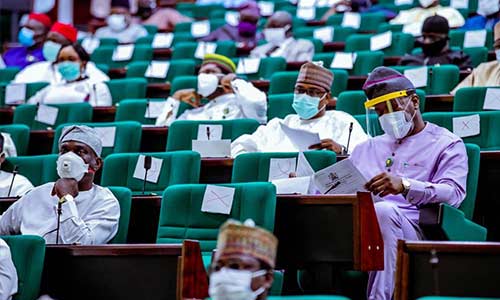
Constitution Review: House Steps Down Motion To Obtain 2014 National Conference Report

The House of Representatives at plenary Wednesday, stepped down a motion to obtain the report of the 2014 National Conference with the purpose of including it in the ongoing constitutional amendment process of the National Assembly.

The House Deputy Minority Leader, Hon. Toby Okechukwu, who sponsored the motion, made reference to the reports of the 2014 National Conference and the report of the ruling All Progressives Congress (APC) Committee on True Federalism chaired by Kaduna State Governor, Nasir El-Rufai, saying that it will address the mileage and challenges being faced in the union.

Moving the motion, Okechukwu said the House is aware that the federal hovernment instituted the National Conference on March 17, 2014 where about 492 delegates drawn from various segments, interest and professional groups of the Nigerian society brainstormed on how to build Nigeria into a more cohesive, viable and prosperous union.

He also noted that the conference made over 600 recommendations cutting across public service; devolution of powers and political restructuring; national security; trade and investment; energy; public finance and revenue generation; social welfare; politics and governance; and electoral reforms, among others.

Shortly after moving the motion, the Deputy Speaker of the House, Idris Wase, in his contribution, faulted the motion, saying it was procedurally wrong.

He said that the committee had sent out notice, requesting inputs by way of memoranda from Nigerians.

The Deputy Speaker explained that it was obligatory for owners of the documents to submit them to the committee if they considered it necessary.

Reacting, the Speaker, Hon. Femi Gbajabiamila, asked Okechukwu if he was okay with the Deputy Speaker’s input even though the prayer of the motion was commendable.

Responding, Okechukwu agreed to withdraw it but added that the documents should be made available to the committee in the course of its sitting.

Speaking to journalists later, Okechukwu stated that he would ensure that the document was obtained at the committee level.

He said: “The motion for me is an additional and persuasive authority for us to have that literature dialogue by reputable Nigerians and if we are truly the representatives of the people, we ought to have the documents. There isn’t anything in that conference report that cannot address the mileage, challenges we are facing in our union.

“As the deputy speaker believes that what we are looking for in Sokoto is in our sokoto (trousers), which means we have the responsibility of having the report. So if he has taken that obligation then it’s his responsibility to make sure it’s part of what we address in the constitution review. That document has become a document of the presidency and it should be made an official document of the parliament.

“The Speaker stepped it down because he was believing that the Deputy Speaker’s advice suffices. I was of a different view that we should have the motion. But the Speaker in his wisdom was of the view that the Deputy Speaker whose responsibility it is to get those documents, if he has obligated himself to have those documents nothing is wrong with it, then we can have it through him. I will interrogate that at committee level if he doesn’t.”

Also speaking to journalists, the Leader of the House, Ado Doguwa, said there was no opposition to the motion, but that it was procedurally wrong to ask the House to specifically call for the documents.

He added that the motion was unnecessary as the committee had already been mandated to do its work.

Doguwa said: “I don’t think there was anything against the motion of Deputy Minority Leader, Hon. Toby Okechukwu. What actually happened was that we all agreed that he was offering a very good piece of advice. What he was offering was something you can really believe is essential in the El-Rufai APC report and the 2014 national conference report. These are essentially historic documents that may be very much of help to the constitutional review process at the moment. All we were saying is that the procedure on which he came up was quite unconventional.

“For a committee like the Constitution Review Committee, which was already out there working and has also made itself available for all the agencies, institutions, civil society organizations, the media and every other Nigerian, has been given the opportunity to come up by the normal memoranda submission to the process. So, you don’t expect any instrumentality of the House by way of motion or resolution to further entrench that mandate already given to the committee. We felt it was superfluous, not necessary but the piece of advice he offered was noted.

“The chairman of the committee was there and myself being the deputy chairman was there. We have taken it as a very good observation and we will definitely get it used in the process of the constitutional review. But it needed not to be presented by way of motion or seeking the resolution of the House before any other person is asked to do what is naturally expected to do. Do you expect us to pass a motion before a civil society organization now comes up with its own civic responsibility? Do you expect us to pass a motion before a political party knows that they are expected to submit a memorandum to a Constitutional review committee? Basically, no.

“The motion was unnecessary but coming up with a very good piece of advice which he would have ordinarily submitted at the committee level to which he’s a member. But nobody argued against him. It was not against him as a member. Nobody also argued the idea in the context of the motion he raised. But the procedure was wrong and we should not be misled.” (thenigerialawyer)

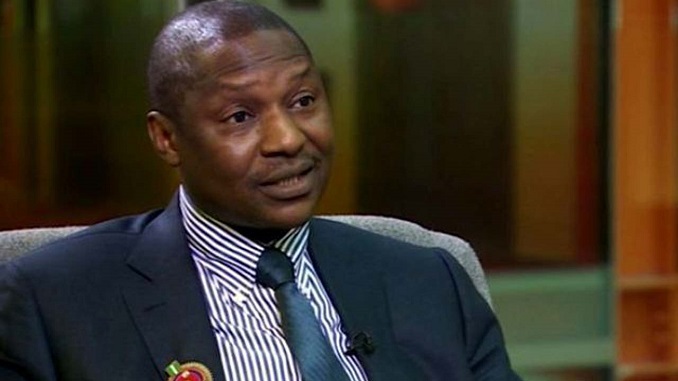
Buhari did not go outside the law,says Malami on IGP tenure extension

The Attorney-General of the Federation and Minister of Justice, Abubakar Malami (SAN), has said President Muhammadu Buhari acted in conformity with with the law when he extended the tenure of the Inspector-General of Police, Mohammed Adamu.

The Minister who spoke on Wednesday on Channels TV’s Politics Today maintained that the president acted within the period alowed by the constitution and exercised his powers to appoint persons into offices subject to confirmation by the Senate.

The decision of the president to extend by three months, the tenure of the IGP had stirred controversy as many lawyers alleged a breach of Sections 215 and 216 of the 1999 Constitution and Section 7 of the Nigerian Police Act 2020, and over alleged breach of the country’s constitution.

Adamu, who enlisted into the police on February 4, 1986, was due for retirement on February 4, 2021, having spent 35 years in service as stipulated by law.

But Malami said the argument of the lawyers were not based on facts available to the president.

“What I am saying in essence is that within the context of official records, within the context of the action taken by Mr President in terms of extension of tenure, the necessary compliance of with the law has been consummated, and the president was and indeed acted within the context of the law,” he said.

On the Transparency International’s Corruption Perception Index of 2020, which ranked Nigeria low as 149 out of 180 countries, Malami faulted the ranking as misplaced because it did not take into account, the various recoveries and convictions by the administration.

He said the president was still studying the report of the Judicial Inquiry into the activities of suspended acting chairman of the EFCC, Ibrahim Magu.

$1.36m, N50m Debt: Emirates Airlines Seeks Stay Of Execution

A Federal High Court in Lagos will on February 22 rule on an application by Emirates Airlines seeking to stay execution of a $1.623million and N50million judgment debt owed to a businessman, Orji Prince Ikem.

Justice Muslim Hassan fixed the date on Wednesday after the airline’s counsel Prof Awa Kalu SAN moved an application seeking to stay execution of the judgment pending appeal.

Ikem’s counsel, Sir Chris Ekemezie, had prayed the court to order the judgment debtor to deposit the $1.623m and N50m in an interest yielding account of the court’s Deputy Chief Registrar.

Ekemezie contended that the airline, a judgement debtor, could not continue to hold on to the sum and be enjoying the benefits thereof while the appeal is pending.

He said: “My lord, a labourer deserves his wages. How can a judgment debtor be holding on to the fruit of a judgment creditor? I urge my Lord to refuse an undertaking to pay after appeal which can still travel up to the Supreme Court.”

On January 11, the court ordered Emirates Airlines to pay Ikem $1.36m, being the amount contained in his hand luggage which went missing in the airline’s custody during a 2007 China trip.

Justice Hassan also ordered the airlines to pay Ikem N50million as damages for the “untold hardship and loss of earning” he suffered by the deprivation of use of his money from 2007 till date.

The judgment followed the plaintiff’s nearly 12 years battle to recover two hand luggage containing personal effects and $700,000, as well as $930,000 in 18 bundles of $50,000 wraps each and $30,000 cash not in wrap.

The court heard that the $930,000 belonged to another businessman, Olisaemeka Ugwunze, who wanted it delivered in China for purchases.

Ikem stated that at the departure lounge of the Murtala Muhammad International Airport Ikeja, Emirates Airlines staff requested that he hand the luggage to them for safe keeping in the cockpit, but he refused and insisted on keeping them himself.

They insisted on keeping the luggage for him considering the huge amount of money contained therein and that on arrival destination, the two bags would be handed over to him.

After a prolonged argument and in order not to miss his flight he yielded and handed over the two hand carry-on bags to them, and they were tagged with tag numbers EK428682 and EK428683 respectively.

That was the last time he saw the bags and the money. On his arrival in Guangzhou, the airline could not account for his four pieces of luggage.

Tougher EU Privacy Rules Loom For Messenger, Zoom

Messaging apps such as Messenger or WhatsApp and video calls on Zoom face stricter privacy rules in Europe, after a draft law passed a key EU hurdle on Wednesday.

The EU’s 27 member states approved a proposal that was stuck since 2017, with countries split between those wanting strict privacy online and others wanting to give leeway to law enforcement and advertisers.

Portugal, which currently holds the EU’s rotating presidency, submitted a compromise proposal that was approved by qualified majority at a meeting in Brussels.

“The path to the council position has not been easy,” Portugal’s minister of infrastructure Pedro Nuno Santos said.

“But we now have a mandate that strikes a good balance between solid protection of the private life of individuals and fostering the development of new technologies and innovation.”

France, which wants to give its police forces stronger tools to fight terrorism, wants to limit the law’s curbs on access to private data.

The fight against child pornography was also a major concern of many member states.

But Germany supported far more robust privacy rules, with fewer exceptions.

In the approved text, member states agreed that service providers are allowed “to safeguard the prevention, investigation, detection or prosecution of criminal offences”.

In addition, companies such as Facebook and Google, can continue to process metadata of their users, but only with consent and if the information is made anonymous.

The final text also lent support to the advertising industry and abandoned a plan to ban so-called cookies that closely track user activity online.

The proposal updates existing EU rules that date back to 2002, under which strict privacy protection is only applied to text messages and voice calls provided by traditional telecoms, sparing tech giants.

Portugal will now negotiate with the European Parliament on a final version of the plan, that would then need ratification by MEPs and the 27 member states.

But the lead parliament’s rapporteur overseeing the negotiation warned that the talks would be rigorous.

“It is to be feared that the industry’s attempts to undermine the directive over the past years have borne fruit — they’ve had enough time to do that,” Birgit Sippel, a German MEP from the centre left S&D group, said.

“We must now analyse in detail whether the proposals of the member states really contribute to better protecting the private communication of users online, or instead primarily serve the business models of some digital corporations.” (thenigerialawyer)

TIPS