Home Blog Page 1036

Sheikh Gumi: Deodorising evil in search for peace

By Ikechukwu Amaechi

Sheikh Gumi with bandits in the forests of Zamfara

Islamic cleric Sheikh Ahmad Gumi is a man with a lot of clout in his neck of the woods. A retired army officer and a medical doctor who decided to be a full-time Islamic preacher, his people put much stock in whatever he says and does.

So, when he embarked on a self-assigned mission of talking his Fulani kinsmen holding sway in the ungoverned spaces of the North West out of banditry, Nigerians paid attention. So far, he has been to Kaduna, Zamfara and Sokoto States.

Last week, Gumi came out from the forests of Shinkafi, Sububu, Pakai, and Maradun in Zamfara State where he engaged with outlaws who have declared war against the State.

He has since riveted Nigerians with tales of a people who have an axe to grind with their fellow citizens and the government.

The bandits, he told us, unfurled a catalogue of grievances, threatening there will be no peace until their demands are met by the Nigerian State they claimed abandoned them.

Gumi thinks they have a point, concluding that they are victims of the base conduct of unconscionable state actors. He also came to another conclusion.

Judging from what he saw in the forests, he said, the Nigerian State has no chance of defeating the bandits militarily and, therefore, has no choice than to negotiate for peace on their terms.

Most of these people holding Nigerians to ransom, Gumi added, are stark illiterates with no education whatsoever, but he thinks, nevertheless, that since they took up arms because of injustice allegedly done to them, then, “if they should be called upon and talked to, they could be persuaded to embrace peace.”

“They were victims of violence so they took arms to protect themselves. Wherever they are as cattle herders, they face problems with farmers; we saw what happened in Oyo, how their homes and cattle were burnt. These people live in huts while those killing them and destroying their homes live a better life,” Gumi said.

He canvassed for amnesty for those who want to lay down their arms as was done for the militants in the Niger Delta – and schools and skills acquisition centres should be built for them.

“Let there be peace; you all have a legitimate concern and grievances and I believe that since the Niger Delta armed militants were integrated by the Federal Government and are even in the business of pipelines protection, the Federal Government should immediately look into how something like that will be done to the Fulani to provide them with reasonable means of livelihood including jobs, working capitals, entrepreneurship training, building clinic and schooling,” the Islamic cleric told the bandits in their lair.

And to the rest of Nigerians, he said, “We cannot abandon them. I have a picture of some little girls that are drinking water from the same stream with animals. They have no social amenities; no hospitals and we are here talking.”

Gumi admitted in an interview with Daily Trust that those he met in Zamfara forests were Fulani herders.

Expectedly, Zamfara State Governor Bello Matawalle is happy and so is the Federal Government that has publicly endorsed the cleric’s efforts.

“When you want to resolve an issue like this, you use lots of back channels,” Minister of Information and Culture Lai Mohammed said. “Again, it is not unusual for a respected cleric to have the confidence of (approaching) outlaws or bandits …. So, it is not unusual for him to act as a bridge between government and the outlaws in an attempt to find solution.”

Surprisingly, Kaduna State Governor Nasir el-Rufai, who has hitherto been an advocate of Gumi’s appeasement rhetoric of negotiating and paying ransom to bandits, disagrees. This time, rather than amnesty and compensation for them, he calls for their elimination.

Speaking in an interview with the Hausa Service of the British Broadcasting Corporation (BBC) on Monday, el-Rufai declared that any bandit arrested in Kaduna State will be killed, insisting that “the state is at war with bandits.”

He added: “Anybody that thinks a Fulani herdsman that is engaged in kidnapping for ransom and is earning millions of naira would go back to his former life of getting N100,000 after selling a cow in a year, must be deceiving himself.”

El-Rufai may well be right.

Before going into the forests to meet the Fulani bandits, Gumi was told by the chairman of Shinkafi local government that they had paid over N200 million ransom to the bandits.

If a local government has paid that much, imagine how much the bandits are making from the state government and the entire region. And to imagine that there are little or no consequences. No bandit will give up such a lucrative business on a platter of Gumi’s ridiculous platitudes.

His ad-hominem fallacy which has become the battle cry of other Fulani ideologues – such as Prof Usman Yusuf, former Executive Secretary of the National Health Insurance Scheme (NHIS); and Adamu Garba, the CEO of IPI Solutions Nigeria Ltd, and a former presidential aspirant under the All Progressives Congress (APC), in the 2019 elections – is disingenuous and dangerous.

To contend as Gumi and his co-travellers are doing that the Fulani bandits are angry because they have been grossly offended, and their livelihoods taken away, is to play fast and loose with the facts.

Who offended the Fulani in Nigeria? In this raging war of attrition across the country, Fulani bandits are the villains and not victims. Gumi cited what happened in Oyo State as an example of how badly his people are treated by the rest of the country. But he is being economical with the truth. The fact that he disingenuously sidestepped is that the Ibarapa crisis was a reaction by a people who have been humiliated for so long in their own land.

Granting amnesty to Fulani bandits is tantamount to rewarding criminality. Acts of criminality should be punished and not compensated. Why should a people be compensated after killing others and destroying their homes?

In the last one week since after Gumi came back from the Zamfara forests, bandits have killed well over 43 Nigerians and wounded many others in Kaduna State alone.

Last Saturday, 23 were killed in an attack on Ungwan Gajere, Kutemeshi ward, Dankyawai, Janbala, Kishisho, Gwagwada-Kasaya, Agwa and Bugai communities in Birnin Gwari, Giwa, Chikun, Igabi and Kauru local government areas.

That attack was launched barely 72 hours after gunmen killed 19 persons in Birnin-Gwari and Kajuru local government areas.

So, what did the victims do to deserve death? And what kind of peace is Gumi talking about here? How can reward and compensation for banditry engender peace? Can there be peace without justice and equity?

Who compensates the victims that have been driven away from their ancestral homes and are living in IDP camps all over the country? Who compensates the women that have been made widows and children who have been orphaned?

Most of these herders causing problems for the country are said not to be Nigerian citizens. Even President Muhammadu Buhari has acknowledged that. But even if they are Nigerians, is their claim that they have been abandoned by the Nigerian State enough to levy war against the country, kidnapping, raping, killing and maiming fellow citizens? Does the Nigerian State care for any of her citizens? Gumi talked about little girls that are drinking water from the same stream with animals, does he know where little girls of Igbo extraction get their drinking water from? Has he bordered to find out where little Ijaw girls get their drinking water? Is the Nigerian State not failing millions of Nigerian youths who graduate every year from the university without jobs? Should they then take up arms and levy war against fellow citizens, who are also collateral damages of a failing state?

To draw a moral equivalency between Fulani bandits and Niger Delta militants or Indigenous Peoples of Biafra (IPOB) activists as Gumi and his ilk are trying to do is a fallacy that is unbecoming. It is as foolhardy as “comparing apples and oranges.”

The Fulani don’t own every inch of the Nigerian soil as some of them claim. If the goal of this violence is to cow other Nigerians into submission, it will fail.

Why? Because no ethnic nationality has the capacity to impose its will on the rest of the country. If this madness persists, particularly “now that the war is on our doorstep,” as Nobel Laureate, Professor Wole Soyinka, said this week, there will be mobilisation. That is exactly what Sunday Igbogho is doing in the South West.

Nobody wants to be a slave in his own country. That is as intolerable and unacceptable to Soyinka as it is to anyone else.

Whatever will make a man like Soyinka to declare that: “Whatever it takes, I stand ready to contribute in any way and I have made my governor understand this, we are here not just to live but to live in dignity. Right now, our dignity is being rubbished,” is a serious matter.

Incidentally, many Nigerians have come to that inescapable conclusion.

If I were Gumi, rather than being an ideological prop to bandits, my message to the Fulani herdsmen would have been: Please don’t provoke a war you have no chance whatsoever of winning.

Military doesn’t want terrorism to end because they’re benefitting from it – Gumi

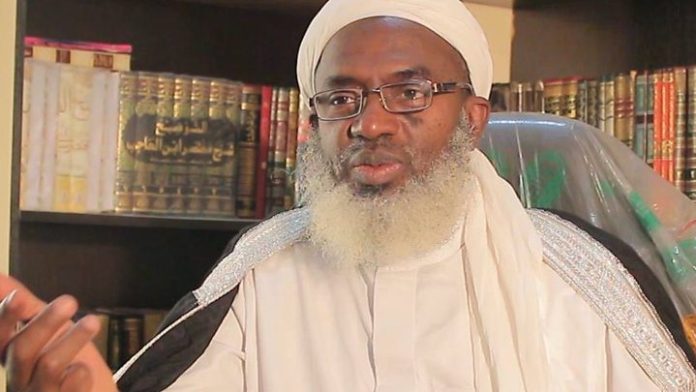
A prominent Islamic scholar, Sheik Ahmad Gumi, has accused the military of profiting from terrorism.

In an interview with ARISE TV, Gumi said some top military officials want insecurity to continue because of the huge funds allocated for tackling it.

He also spoke on his recent trips to the forest to engage bandits on the need to embrace peace.

“The military is not encouraging matters at all because they are the beneficiaries of this insecurity.”

“The bandits are ready to drop their arms and return back to the fold if the federal government will accede to their simple demands such as building schools, hospitals and providing water.

“They (the bandits) are complaining mostly against the military killing innocent people. They resorted to buying arms. How did they get the arms? They resorted to kidnapping people which is an end result of these military actions.

“Look, they are ready to drop these arms and return back to the fold of the Nigerians just for simple things; schools, hospitals, water.

“And there is an allegation: the military don’t want this conflict to end because of the billions of Naira they claim for fighting insurgency. So the military is not cooperating.

“I praise the police and the Inspector-general of Police. I give him credit for assisting us to go and meet these people, but the military is not forthcoming, they are not cooperating, I don’t know why.”

Asked to react to the allegation, Brig Gen Mohammed Yerima, Spokesman of the Nigerian Army, said Gumi is entitled to his opinion.

“If a learned man, a respected Islamic scholar can say that, then it’s unfortunate. He is entitled to his opinion but all I can say is that we are sacrificing our lives to protect this nation. We are giving our best to the country.

“Does the Sheik have evidence to back up his claim? Can he prove it? This is unfortunate but that is his opinion and he is entitled to it,” he said. (Thelagostimes)

ICC To Elect New Prosecutor As Controversial Bensouda Set To Step Down

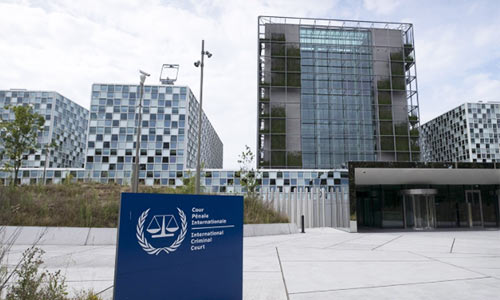
International Criminal Court

The International Criminal Court’s member countries were set to elect a new chief prosecutor for the war crimes tribunal on Friday, a grueling job whose current holder is under US sanctions.

Four candidates from Britain, Ireland, Italy and Spain are vying to replace outgoing prosecutor Fatou Bensouda, who has led controversial probes into the Israeli-Palestinian conflict and Afghanistan.

Britain’s Karim Khan is said to be in pole position ahead of Carlos Castresana of Spain, Ireland’s Fergal Gaynor and Italy’s Francesco Lo Voi, according to British media reports.

The ICC’s member states have failed to reach a consensus despite several attempts in recent weeks, and will now vote on the new prosecutor at the United Nations in New York.

Gambian-born Bensouda is due to step down in June after nine years in one of the most challenging jobs in international justice, with a mixed record of success at the Hague-based court.

Whoever becomes the court’s third prosecutor since its formation in 2002 will be taking on a bulging file of difficult cases at a tribunal whose legitimacy is constantly under attack.

‘Unacceptable’ sanctions
British lawyer and human rights specialist Khan has been a defense lawyer in several ICC cases, including for late Libyan leader Muammar Gaddafi’s son Seif al-Islam.

Khan recently headed a UN special probe into Islamic State group crimes and called for trials like those of Nazi leaders at Nuremberg.

Spain’s Castresana, a judge by training, previously headed a UN panel combating crime and corruption in Guatemala, but resigned in 2010 alleging “systemic attacks” by power-hungry officials.

Ireland’s Gaynor has previously represented victims of crimes at the ICC, in probes including the Afghan war investigation, and a case against Kenyan President Uhuru Kenyatta.

Sicilian prosecutor Lo Voi meanwhile has led cases against Italy’s Mafia and a major people-smuggling network.

The new prosecutor’s first tasks will include deciding the next steps on the probe into war crimes in Afghanistan and the hugely contentious investigation into the 2014 Israel-Palestinian conflict in Gaza.

In a major decision last Friday, a pre-trial chamber of the ICC determined that The Hague has jurisdiction to open a criminal investigation into Israel and the Palestinians for war crimes alleged to have taken place in the West Bank, Gaza Strip and East Jerusalem, paving the way for a full investigation after a five-year preliminary probe opened by Bensouda.

Bensouda indicated in 2019 that a criminal investigation, if approved, would focus on the 2014 Israel-Hamas conflict (Operation Protective Edge), on Israeli settlement policy and on the Israeli response to Hamas-led protests at the Gaza border.

Israel and the United States — neither of which are ICC members — have strongly opposed the probe into alleged war crimes by both Israeli forces and Palestinian terrorist groups.

Israeli Prime Minister Benjamin Netanyahu said of the ruling: “Today the ICC proved once again that it is a political body and not a judicial institution. The ICC ignores the real war crimes and instead pursues the State of Israel, a state with a strong democratic government that sanctifies the rule of law, and is not a member of the ICC.”

“In this decision,” Netanyahu added, “the ICC violated the right of democracies to defend themselves against terrorism, and played into the hands of those who undermine efforts to expand the circle of peace. We will continue to protect our citizens and soldiers in every way from legal persecution.”

The administration of then-US president Donald Trump hit Bensouda and another senior ICC official last year with sanctions including a travel ban and asset freeze over a probe that includes alleged US war crimes in Afghanistan.

The Biden administration has signalled a less confrontational line but has not said whether it will drop sanctions against Bensouda, who has attacked the “unacceptable” measures.

Mixed record
Bensouda has had a mixed record even as she expanded — some analysts say overextended — the court’s reach.

Under her leadership former Ivory Coast president Laurent Gbagbo was cleared of crimes against humanity, while former DR Congo vice-president Jean-Pierre Bemba was acquitted on appeal.

Kenya’s Kenyatta also saw charges of crimes against humanity over electoral bloodshed dropped by Bensouda.

But Bensouda has recently secured high-profile convictions against Ugandan child soldier-turned-Lord’s Resistance Army commander Dominic Ongwen and Congolese warlord Bosco “Terminator” Ntaganda.

She has also been credited with improving the prosecutor’s office compared with her predecessor Luis Moreno-Ocampo, whose leadership was described as “autocratic” in a probe ordered by the ICC into the Kenyatta case.

The ICC is the world’s only permanent war crimes court, after years when the only route to justice for atrocities in countries like Rwanda and the former Yugoslavia was separate tribunals.

Hamstrung from the start by the refusal of the United States, Russia and China to join, the court has since faced criticism for having mainly taken on cases from poorer African nations.

Culled fromh ttps://www.timesofisrael.com/

Herdsmen Kill Two, Burn Amotekun Vehicle In Ondo

— Victims shot in the head, both hands chopped off
— Amotekun leader in Owo missing
— Operation vehicles, Motorcycles burnt
— We’ll apprehend the killers- State Commander of Amotekun assures

Suspected herdsmen have killed two persons during an attack on men of the Ondo state security outfit codenamed Amotekun at the government forest reserve located at Ago Sanusi along Ute Road in Owo, area of the state.

The report had it that the herdsmen laid an ambush for the security personnel who acting on security report stormed the forest reserve to fish out suspected criminal element who reported abducted a farmer identified as Lanre.

Lanre’s corpse was later reportedly found in the forest reserve by the security personnel with both hands chopped off.

Our correspondent gathered that another member of the Vigilante Group of Nigeria who joined the Amotekun in the operation was shot in the head by the herdsmen.

The attack on according to findings happened at about 2:00 am.

Our correspondent gathered that the herdsmen were armed with AK47, dressed like militiaman men with live ammunition wrapped around their shoulders.

…Head of Amotekun in Owo still missing
The report had it that the head of Operations of Amotekun in Owo, Oluwasesan Adebayo who led the operation has not been found since the attack.

Adebayo younger brother, Pastor Idowu Adebayo said the family has been in great pain since his abduction.

He appealed to the state government and all security outfits in the state to intervene.

Adebayo said indications have shown that Fulani herdsmen have a secret agenda to take over the state and the entire Southwest

“it is now clear that every part of the state has been invaded by the herdsmen thereby putting indigenes and other residents in great danger.

* Farmers abandoned their farms
Speaking with Vanguard, a farmer at Sanusi camp, Abu Sikiru said he and other farmers at the camp have abandoned their farms for fear of being killed.

Abu said that the camp and all other camps in the area have been deserted.

Recall that Amotekun arrested 15 illegal miners allegedly involved in illegal mining in Owo community.

* We’ll apprehend the killers- Amotekun commander
Confirming the killing of the two persons, the Amotekun commander in the state, Chief Adetunji Adeleye confirmed the killings by the herdsmen.

Speaking through the corps image-maker Adebayo Ayeni in a statement, the commander said “Men of Ondo State Security Network Agency, (AMOTEKUN CORPS) has again made another major breakthrough in their strive to get rid of criminal elements in Ondo State.

” This cartel were piling up arms and ammunition to invade the entire State while masquerading as herders and using the forest as kidnappers den for negotiation and ransom, illegal mining activities and cultivation of Indian hemp.

” The Security outfits in conjunction with the Police, the Army and other security agencies in the State, however, smoked them out of the forest, after it was discovered that the bandits had killed a farmer and a member of the vigilante group in the Area.

” They also went to the village where an Amotekun vehicle was parked and set it ablaze.

“We sympathize with the families of the victims of this dastardly act while assuring them that the culprits will surely be apprehended. (Thenigerialawyer)

Paternity Fraud: Justice Okorodas On ‘Trial’

By Michael West

Rather than receive empathy and consolation for being cheated and betrayed, hard knocks, castigations and reprimands have become the lot of Justice Anthony Okorodas following the public declaration of his marital crisis that bothers on the paternity of his three grown-up children in his failed marriage.

The narrative now is akin to a situation in which the cheated is being blamed, the guilty is defended and the victims being vindicated. In this wise, Justice Anthony Okorodas, who was allegedly cheated and betrayed by his former wife, Barrister Celia J. Ototo, is now being vilified for being “selfish,” being economical with the truth and for damaging the public image of his innocent children for nothing but showmanship, grandstanding and self righteousness. The presumed “guilty” in this case, Celia Ototo, is being defended against what some people observe as “not giving her the privilege to state her own side of the story.” Nobody does anything without a reason. She must definitely have her reasons. By the contents of Okorodas’ statement, his estranged ex-wife deserves to be taken to the Golgotha for her alleged sacrilegious acts. The victims in this family messy situation are the children. They didn’t choose their parents, nativity, and when or where they were born but are now being subjected to public ridicule, a stigma that some, if not all of them, will carry as a cross for the rest of their lives.

Critics took a swipe at Okorodas for being an attention seeker whose outburst is seen as unfair and disparagingly unfatherly to his children. The main question many are asking is that “Why must he make his family issue public?” Is he the only man with the painful burden of paternity fraud? Who is he that addressing a press conference over his DNA results should become a breaking news? There is suggestive notion that he wanted to disparage his ex-wife in order to earn public sympathy and to let the children know that he’s not their biological dad because of how he would share his estate in his will.

The thought line of several readers since last weekend till now appears unanimous. The direction of people’s opinions signals that a robust evaluation of issues is necessary to avoid a kind of backlash Okorodas is getting now.

A university don, Dr. Henry Hunjo of Lagos State University feels the judge’s reaction was to curry favour and sympathy with a tinge of emotional blackmail without hearing from the other side. He posits that such occurrences are not new in our society. He stated inter alia: “These experiences are not new. I’ve heard of these stories from my old folks as a growing child. I don’t underestimate the humiliating feelings that envelope one as soon as one discovers that a partner in a marriage violates the fidelity laws once or in multiple times. Be that as it may, we often hear one side of the story most of the times, sympathising with the victims but never patient enough to hear from other person, the woman. Even in the Judge’s Press Briefing, the offending woman has been reported to have walked away from the marriage. There’s no indication of her expressed reasons or conditions.

“I know that objectivity becomes backgrounded so much that there will be no chance to hear the side of the story. My view, though a minority one, and may not be acceptable but promotes peace, is that a cheating woman has reasons she cannot explain. The same is true of a cheating man. Therefore, it’s really hard to hear the truth but it’s better to accept the children of the union and look elsewhere about paternity. When these children, minor human beings, grow, they’ll appreciate the caring parents. Let’s be careful with DNA notwithstanding that I vehemently oppose infidelity.”

A special school proprietor in Lagos, Liz, descended heavily on Justice Okorodas for being unkind to his children. She couldn’t contain her displeasure about the whole scenario. “From time immemorial men have been fathering children outside their marriages and forcing, yes, forcing their legally married wives to accept them. Nobody hears of these cases. It’s not published in the dailies or on social media. But when a woman does same, it’s called sacrilegious, and all other big grammar that requires a dictionary. Do I approve of adultery? No. In both sexes, it’s a deal breaker for me.

“But the man went on record to tell the world that three innocent children were illegitimate. These children have a life, they have friends and colleagues. He has tainted their future with a tarred brush. Mr.Judge’s action is condemnable. To hell with him and his support and training. If he dies today, those children will succeed.

“It is unfortunate that people will forever see these children as ‘bastards.’ Social media lasts forever. Their own children will be born, grow up and read the story. The judge is a bad man and I pray he reaps the sour fruits of his deed so soon. Nonsense!

“I guess he’s one of many men prancing around with premature ejaculation and erectile dysfunction, which, I’m sure the judge has, hence the woman (ex-wife Barr. Celia Ototo) went outside to get her groove on. I’ve said my own.”

In his reaction, Frank Tietie, a human rights lawyer and Executive Director, Citizens Advocacy for Social and Economic Rights (CASER), berated the judge by describing his action as grossly “irresponsible and selfish” for denouncing the paternity of his children publicly, adding that the action is highly selfish and seriously harmful to the dignity and general psyche of the children involved.

The fiery lawyer further expressed his disapproval for the unfatherly action by describing it as utterly illegal. His statement reads further:“The public disclosure of the contents of such DNA test results to the public is most reprehensible. Why would any man subject a child or children born within wedlock to such psychologically debilitating encounter, foisting such traumatic experience that will permanently scar the self-esteem of such children, especially older ones, for life? It is utterly cruel and selfish!

“It is plain wickedness that is vindictive and propelled by crude vengeance. It must be condemned. Let it be known that by our law, in Nigeria, particularly, Section 165 of the Evidence Act, provides that all children that are born during the continuance of a valid marriage between their mother and any man, or within 280 days after the dissolution of the marriage, so long as the mother remains unmarried, the law and the court shall presume that such children in question are the legitimate children of that man.”

From the Mailbox
Re: How to Manage DNA Trauma
Your exposition on the success story of “strange blood” in some families is very true. My mother told me a story of someone like that in our family and that could be the only logical reason behind him. There was no DNA test confirmation but he has a different glory, positive character, etc. While such children may not actually be calculated efforts on the part of their ignorant mothers to end a lingering spiritual bondage in their family lineage, God in His divine mercy may use such human errors to bless an entire generation. King Solomon the Wise was also a product of an unplanned (or adulterous) relationship. It is very real, sir. God bless you. – Eric Adegbite, Ijebu Ode.

Don’t you think that Barr. Celia J. Ototo might have been a victim of labour room antics you wrote about recently on how babies are being swapped? If not the whole three but one or two. The DNA test should be discouraged except a situation where the woman categorically say the husband is not the father of the child or children. – 07035961555. West wrote via [email protected] 08059964446

[REGISTER] ESQ Practical Academy Introduces Training On Power Contracts Negotiation

Comparative Analysis Of The Powers Of General Meeting And Board Of Directors In Africa And Elsewhere

By Okpi, Bernard Adaafu

INTRODUCTION

This paper will analyze the controversy for the control of a company between board of directors and general meeting under different jurisdictions namely; England, India, Ghana and Nigeria.

THE POSITION IN ENGLAND

Generally, under common law the general meeting is the main organ that determines extent of the exercise of the powers assigned to the Board of Directors. Even though the board is responsible for the day to day running of the company, the board must not act outside its powers contained in the article or as may be prescribed by the members in general meeting.

The Court in AUTOMATIC SELF CLEANSING FILTER SYNDICATE V CUNNINGHAM (1906) 2 Ch PG. 34, held that;

‘the division of power between the Board of Directors and members of the company in the General meeting depends entirely on the definition of the articles’. So where the powers are vested on the Board of Directors, the General meeting cannot interfere because the Articles of Association is a contract between members, and where the Articles of Association say only the directors should manage the company, so be it’.

The English Companies Act of 1985 in Article 80, Table A of the 1st Schedule to the Act stated that; ‘the business of the company shall be exercised by the directors……’

A renowned English professor of law, Professor Gower in his book ‘Principles of Modern Corporate Law’ page 152 captured the new position, when he stated that;

‘Both the General meeting and Board of Directors are the primary organs of the company, between whom the powers are divided. The old idea that the General meeting is the only organ of the company and the Board of Directors are the servant seem no longer the law as it is certainly a fact’.

THE POSITION IN INDIA

In India, the law expressly provides for the power of the general meeting and powers of the board of directors. Section 179 of the India’s Companies Act 2013 provides for the powers of the board of directors. The section is reproduced below.

  • The board of directors of a company shall be entitled to exercise such powers, and to do such acts and thing, as the company is authorized to exercise and do:

Provided that in exercising such power or doing such act or thing, the board shall be subject to the provisions contained in that behalf in Act, or in the memorandum or articles, or in any regulations not inconsistent therewith and duly made thereunder, including regulations made by the company in general meeting:

Provided further that the board shall not exercise any power or do any act or thing which is directed or required whether under the Act or by the memorandum or articles of the company or otherwise, to be exercised or done by the company in general meeting.

  • No regulation made by the company in general meeting shall invalidate any prior act of the board which would have been valid if that regulation had not been made.
  • This section enumerates powers of the board….
  • Nothing in this section shall be deemed to affect the right of the company in general meeting to impose restrictions and conditions on the exercise by the board of any of the powers specified in this section.

The above section is clear on how the board of directors shall run the company subject to regulation by the Act and members in general meeting. Thus the board can restrict the exercise of the powers of the board of directors and impose condition for exercise of such powers when necessary.

THE POSITION IN GHANA                      

In Ghana, the controversy of whether or the not the board of directors is superior to the members in general meeting has been addressed in the new Ghana’s Companies Act 2019 in section 145. The section is reproduced below;

“(1)  A company shall act through the members of the company in general meeting or the board of directors or through officers or agents appointed by, or under authority derived from the members in general meeting or the board of directors.

(2) Subject to this Act, the respective powers of the members in general meeting and the board of directors shall be determined by the constitution of the company.

(3) Except as otherwise provided in the constitution of a company, the business of the company shall be managed by the board of directors who may exercise the powers of the company that are not by this Act or the constitution required to be exercised by the members in general meeting.

(4) Unless the constitution of the company otherwise provides, the board of directors when acting within the powers conferred upon them by this Act or the constitution of the company are not bound to comply with the directions or instructions of the members in general meeting.

(5) Subject to section 145, the members in general meeting may;

(a) act in any matter if the members of the board of directors are disqualified or are unable to act because of a  deadlock on the board or otherwise;  

(b) institute legal proceedings in the name of and on behalf of the company, if the board of directors refuse or  neglect to do so;  

(c) ratify or confirm any action taken by the board of directors; or  

(d) make recommendations to the board of directors regarding action to be taken by the board.  

(6) An amendment of the constitution of a company shall not invalidate any prior act of the board of directors which would have been valid  if that amendment had not been made”.  

Section 145 made it compulsory for major transactions of the company to be sanctioned by special resolution.

The Act in subsection 4 empowered the board to exercise its powers without any restriction from members in general meeting except as may be prescribed by the constitution of the company. At first sight it appears the subsection made the board a superior organ but a cursory look at subjection 5 reveals that fact that the general meeting is the watch dog of a company.

THE POSITION IN NIGERIA

Under the Nigerian legal system, the powers of board of directors and general meeting are provided by the law. The position is provided in Section 63 of the Companies and Allied Matters Act 2004, and section 87 of the Companies and Allied Matters Act 2020.

The position in Nigeria is similar to that of Ghana. In fact the provisions of the new

Nigerian Companies and Allied Matters Act 2020 is modeled after the Ghana Companies Act of 2019.

It is pertinent to reproduce the provision in Section 63 of the old Companies and Allied Matters Act 2004 before looking at the current position in the Act. Section 63 is reproduced thus;

“(1) A company shall act through its members in general meeting or its board of directors or through officers or  agents, appointed by, or under authority derived from, the members in general meeting or the board of directors.  

(2) Subject to the provisions of this Act, the respective powers of the members in general meeting and the board of directors shall be determined by the company’s articles.  

(3) Except as otherwise provided in the company’s articles, the business of the company shall be managed by the  board of directors who may exercise all such powers of the company as are not by this Act or the articles required  to be exercised by the members in general meeting.  

(4) Unless the articles shall otherwise provide, the board of directors, when acting within the powers conferred  upon them by this Act or the articles, shall not be bound to obey the directions or instructions of the members in  general meeting:  Provided that the directors acted in good faith and with due diligence.  

(5) Notwithstanding the provisions of subsection (3) of this section, the members in general meeting may‐  

(a) act in any matter if the members of the board of directors are disqualified or are unable to act because of a  deadlock on the board or otherwise;  

(b) institute legal proceedings in the name and on behalf of the company, if the board of directors refuse or  neglect to do so;  

(c) ratify or confirm any action taken by the board of directors; or  

(d) make recommendations to the board of directors regarding action to be taken by the board.  

(6) No alteration of the articles shall invalidate any prior act of the board of directors which would have been valid  if that alteration had not been made”. 

The above section gave the board of directors the power to carryon routine business of the company but at the same time limits the exercise of such powers by regulations made by general meeting or the articles. Subsection 5 clearly enumerated instances where the general meeting can act for and on behalf of the board of the directors.

Section 87 of the Companies and Allied Matters Act 2020 is reproduction of the old section 63 in the Companies and Allied Matters Act 2004.

CONCLUSSION

From the foregoing, it is obvious that in England,  India, Ghana and Nigeria  the powers of the company are shared between the general meeting and the board of directors as contained in the articles or the Act. However, the board undertakes the day to day running of the company and may act ultra vires but the general meeting is empowered as the watch dog to checkmate the excesses of the board of directors. The two organs are assigned essential duties for the growth of a company and one cannot be elevated above the other because none of the organ can exist in isolation. Professor Gower was right when he postulated that, “Both the General meeting and Board of Directors are the primary organs of the company, between whom the powers are divided. The old idea that the General meeting is the only organ of the company and the Board of Directors are the servant seems no longer the law as it is certainly a fact”.

Written By Okpi, Bernard Adaafu, LL.B, B.L, LL.M(IN VIEW)

[email protected], [email protected], Okpi Bernard @Twitter

CRIMINAL CARTELS ON THE LET LOOSE

BY OLUSEGUN ADENIYI

Following a tip-off in July 2016, the Office of the National Security Adviser (ONSA) arrested an obscure fruit seller under a bridge in Zaria, Kaduna State. Investigations revealed the man to be a high-ranking Boko Haram operative who coordinated the finance cell of the group with others in Dubai, United Arab Emirates (UAE) to disburse funds to various terror camps in North East Nigeria as well as Diffa, Nigér Republic. From what I gather, the Zaria arrest proved to be a major breakthrough that eventually revealed a pattern of financial flows and transactions not only to Boko Haram field operatives but to other criminal cartels, particularly those engaged in kidnappings for ransom.

The ONSA investigations further revealed that between 2015 and 2016, the sum of $782,000 was transferred from Dubai to Nigeria through Bureau De Change (BDC) operators to aid Boko Haram. As reported in the media, this was what led to the conviction in April 2019 of six Nigerians, including a man identified as a government official. Later that same year (December 2019), an Abu Dhabi Federal Court of Appeal affirmed the judgment of the lower court and upheld the imprisonment sentence imposed on the six Nigerian citizens. Aside laundering money for the terror group, these men were also found guilty of running a Boko Haram cell in the UAE to raise funds and material assistance for the insurgents in Nigeria. Although the convicts claim innocence, follow-up investigations have helped the security agencies to better understand the movement of money by criminal cartels in Nigeria. The investigations also led to the arrest of accomplices in Kaduna, Kano and Zamfara States.

Meanwhile, the Dubai security breakthrough helped to expose how some of the criminal networks operating in Nigeria had perfected a seamless method of laundering money through BDC operators. Once the money has been given to a BDC operator in Dubai, he contacts an associate in Nigeria who gives the same amount in cash to the coordinator. On the instruction of the Boko Haram leadership, the coordinator goes ahead to distribute the funds to members who incidentally have no direct contact with one another, in an elaborate scheme to cover their tracks. The same pattern was discovered for disbursement of ransom monies from kidnappings, especially those traced to illegal mining in Zamfara State.

What the foregoing suggests quite clearly is that we are dealing with a serious national security threat that is not only well organized but well-funded. For instance, the thriving Nigerian gold market in the UAE has been traced to activities of illegal miners in Zamfara with Aminu Kano International Airport as a gateway. “It is the most notorious airport in the country”, a security source told me last week. But the real challenge is in Zamfara where the proliferation of arms and hundreds of muscle men working as miners, (licensed as well as illegal) engage in kidnappings. A combination of porous borders, weak signal and technical intelligence, lack of proper data of licensed miners and the influx of illicit drugs such as Tramadol have combined to make banditry the most lucrative enterprise in the state.

According to security sources, there is a nexus between kidnappings for ransom and terrorism as well as between gold prospecting in Zamfara State and the general wave of criminality by herdsmen that has spread to the southern part of the country with dire implications for national peace and security. For instance, a clear pattern has emerged between ISWAP and kidnappings with many of the herders implicated as foot soldiers. “Most of the herdsmen you see all over the place, whether in the north or south, kidnapping, raping and maiming people are employees of a larger terror network. They kidnap but the ransom does not go to them”, a senior security officer told me.

Most of the people identified with illegal mining in Zamfara State are herders who realize that more money can be made from kidnappings. They are not only ‘diversifying’ their business, many of them are also moving southward. “A lot of these Fulani marauders are from Mali, Niger and Burkina Faso” said a security source. Sadly, rather than tackle the problem, the presidency indulges in making excuses that lead to accusations of complicity and most often in a manner that threatens the unity of the country as an inclusive polity founded on diversity. And with that, kidnappings for ransom has become the most lucrative enterprise in the country.

In October 2019, a former Inspector General of Police (IGP), Mohammed Abubakar disclosed that over N3 billion was collected by bandits as ransom from relatives of victims in Zamfara alone within a period of eight years. Abubakar who chaired a committee set up by the current governor, Bello Matawalle to find solutions to banditry in the state, said the report covered the period from June 2011 to May, 2019. The money, according to Abubakar, was collected from 3,672 victims whose relatives paid to secure their freedom. Abubakar said that a total of 4,983 women were widowed, 25,050 children orphaned and 190,340 persons displaced by banditry over the period in the state.

While that level of threat should worry the authorities, there is also an international dimension to the criminality that is just as intriguing to security agencies. I understand that there are more than a thousand Chinese and Indians in the mining business in Zamfara State. “Yet, not a single one of their nationals has been kidnapped.” Meanwhile, some of the people who serve as security personnel to these miners have been discovered to be engaged in kidnappings for ransom, raising questions about who they work for.

The threat coming from this criminal enterprise is now political given what the senate yesterday described as “issuance and counter issuance of eviction notice by some ethnic entrepreneurs and groups posing as ethnic nationalists and champions”, while kidnappers continue to operate mostly on the roads, outskirts of towns and farms where they ambush innocent rural people. That these kidnappers kill, maim and rape is bad enough. That they are identified as belonging to a certain ethnic colouration is the problem. They particularly enjoy brutalizing their victims which perhaps explains why in most instances, they force their captives to walk long distances on thorns and sharp stones in the bush.

Quoting the global risk consultancy, ‘Control Risks’, the Financial Times of London, recently reported that Nigeria has the highest rate of kidnaps for ransom of both locals and foreigners in all of Africa. “For most businesses, the greatest risk to their employees is while they are travelling,” Tom Griffin, senior partner for Africa and the Middle East at Control Risks was quoted to have said. “Almost half of all kidnaps in Nigeria recorded by Control Risks occur during road travel, with kidnappers often selecting targets based on perceived wealth during roadside ambushes, roadblocks or attacks in traffic congestion.”

We must admit that we have a crisis on our hands that is not restricted to any section of the country. It is national. In the clip of the interview he granted a television station that has gone viral, Alhaji Bashir Kurfi, National Chairman, Network for Justice narrated an incident that happened in Kurfi, Katsina State where he hails from. “One lady came to share her story. She went to see her daughter who gave birth and then the bandits came—they asked her to hold the baby and they raped the daughter. And then after, they asked the daughter to hold the baby and they raped the mother. This is what is going on everyday…it is the reality on the ground and it is a shame on us.”

It should worry President Muhammadu Buhari that whether on land or in water, the Nigeria territorial space is now one of the least safe spaces in the world. The latest report by the International Chamber of Commerce’s International Maritime Bureau (IMB) reveals that over 95 per cent of the 135 shipping crew members kidnapped last year were recorded in the Gulf of Guinea and mostly on Nigerian waters. “Incidents in the Gulf of Guinea are particularly dangerous, as over 80 per cent of attackers were armed with guns,” according to the IMB.

That there is no coherent strategy to deal with the challenge can be glimpsed from the interview granted the BBC Hausa Service by the Kaduna State Governor, Mallam Nasir elRufai. While he advocates that you do not appease criminals, his Zamfara State counterpart believes in offering ‘amnesty’ and money to bandits and kidnappers to make them change their ways. El-Rufai has therefore cited lack of unity and cooperation among the governors of the North West as one of the reasons the security challenges persist. The governors, according to El-Rufai, have different approaches to ending banditry and kidnapping.

This is where the moral authority of the president can help. He should be able to impress upon the governor of Zamfara State that you do not make deals with criminals. Bandits and kidnappers being offered government largesse will never keep to deals as we see with the experience of Katsina State. And while there is a place for the personal efforts such as the one being undertaken by Sheikh Gumi, the state must muster the capacity to restore law and order without bowing to criminals.

At a time we are facing apprehension over impending national crisis, it is the responsibility of leadership to identify solutions to difficult problems, ensure stability of the polity, and guide the society to prosperity. The fear of a national crisis, this time, is fueled by criminal activities traced to herdsmen who now roam the country with impunity. The rising profile and complexities of conflict disorders in the country therefore requires a hands-on approach from the president. Sadly, that is precisely where the problem lies.

That sundry criminal cartels have overpowered the capacity of the state to restore law and order is no longer in doubt. But more worrisome is the fact that our national security challenge is being framed around identity politics which can only exacerbate the situation. The tone of debate yesterday in the Senate reflected this unfortunate national divide. According to a senator from Adamawa State, Binos Yaroe, whenever kidnappers are arrested anywhere within the country, the majority of them always turn out to be Fulani. That is the kind of rhetoric you also get from the street. “Right now, we are an endangered species. People are going into homes to abduct, to rape, herdsmen are everywhere. We have spoken several times and nothing has been done. Posterity beckons”, said Senator Biodun Olujimi from Ekiti State in a note of resignation.

The connecting thread for the variants of violence that we witness across the country today, as I have argued several times on this page, is that the Nigerian state has lost what Max Weber described as the monopoly of “the legitimate use of physical force” to criminal cartels. Until we muster the capacity to effectively confront them, we will continue to be at their mercy. But whichever way one looks at the current challenge of insecurity across Nigeria, it all leads to the doorstep of President Buhari. It is therefore my hope that he will address that challenge most decisively. Before the amber light turns red!

#EndSARS unfrozen accounts: FG’s decision to comply with the court order is not out of intimidation — AGF Malami

Says Government Cannot Be Intimidated When Fulfilling Its Constitutional Duties
Says The Interest of The Public Matters To Government, When Taking Decisions
… Says Buhari’s Administration was Lenient With #EndSARS Protesters

The Attorney-General of the Federation and Minister of Justice, Abubakar Malami, says President Muhammadu Buhari tolerated the “excesses” of the #EndSARS protesters.

Speaking on Wednesday when he featured on Politics Today, a programme on Channels Television, Malami said Buhari was “lenient” with the #EndSARS protesters, despite what he referred to as the “violations and destruction” which resulted from the crisis that followed the demonstrations.

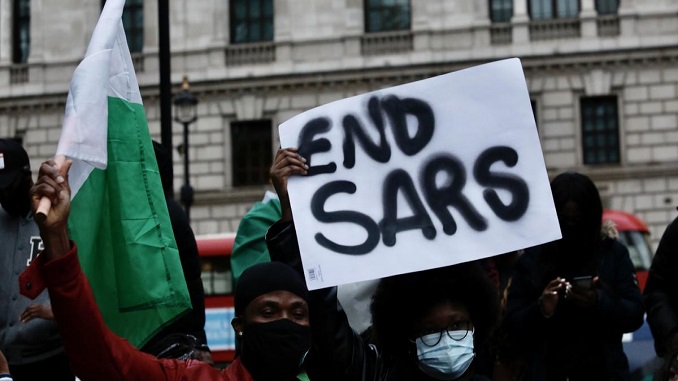
In October 2020, Nigerian youths took to the streets in many parts of the country to protest against police brutality, while calling for the disbandment of the now-defunct special anti-robbery squad (SARS).

The protests were initially peaceful, until hoodlums infiltrated the demonstrations, resulting in loss of lives and destruction of properties.

According to Malami, no nation in the world would tolerate the destruction of its security institutions, adding that “over 200 policemen were killed in the process of the purported freedom of expression”.

“I think the government of President Muhammadu Buhari has been very, and indeed extraordinarily, lenient with the human rights protection and that was indeed what caused the problems associated with the violations of the  #EndSARS protests,” he said.

“Take for example: no nation in the world could have tolerated a situation whereby over 200 of its policemen were killed in the purported process of freedom of expression. Nigeria has tolerated that.

“No nation in the world could have tolerated the idea of destruction to its security institutions. I think over 20 police stations or more — I’m not certain about the number, they can be more — were destroyed during #EndSARS protests and government has a responsibility to ensure protection of lives and freedom of movement.

“We are confronted with a situation whereby #EndSARS protesters blocked roads, caused mayhem, caused deaths, caused destruction, and they were significantly tolerated to a certain extent.”

The attorney-general argued that it is logical to conclude that Buhari protected human rights, owing to how the president “accommodated and tolerated the excesses of the #EndSARS protesters”.

“I think it is only logical for one to conveniently, logically and justifiably conclude that the government of President Muhammadu Buhari has shown greater zeal in terms of protection, and indeed given accommodation to human rights, to the extent of perhaps accommodating the excesses, which ordinarily ought to have been engaged and confronted squarely,” Malami added.

“As far as the human rights record of the government of President Muhammadu Buhari is concerned, the facts speak for itself.

“International commendation; local compliance with the recommendation of the national human rights commission which has been unprecedented; tolerance, and indeed, accommodation of the excesses of the #EndSARS protesters, were all facts that go to establish a point that the government of President Muhammadu Buhari has shown greater accommodation of human rights violations.”

Speaking on the decision of the court, unfreezing the account of #EndSARS protesters Malami said the decision to comply with the court order or not would not be out of intimidation, adding that the government cannot be intimidated.

Government is not wrong particularly in circumstances that justifies intense investigation. It is the end result of an investigation that can determine whether government is right or wrong as determine by the court on the basis of the facts presented.

“The decision to comply with the court order or not is not a decision that is a product of intimidation; government cannot be intimidated, government cannot in anyway be compromised as far as the exercise of its constitutional powers are concerned but that does not mean the government is perpetually inconsiderate.

“The bottom-line is that the public interest matters most in whatever decision the government arrives at as far as compliance or non-compliance with the orders or judgments of the court are concerned. Intimidation is out of it, threats are out of it, constitutionality is the bottom-line.”

#EndSARS: CBN During Military Dictatorship Never Froze Activists’ Bank Accounts — Falana, SAN

Human rights lawyer and Senior Advocate of Nigeria, Femi Falana, has asked the Central Bank of Nigeria to stop freezing the bank accounts of protesters and activists in the country, saying the bank never did so when it was managed by professionals.

Falana stated on Wednesday that it was “infringement on the fundamental right to fair hearing and property” for the bank to freeze bank accounts of protesters.

The SAN recalled that even during the dark days of military dictatorship, it never happened that the CBN froze the accounts of protesters.

He said, “On November 4, 2020, the CBN approached the Federal High Court for an ex parte order to freeze the bank accounts of#EndSARS protesters. The CBN asked for 180 days to investigate the #EndSARS protesters for the offences of money laundering and terrorism.

“Convinced that the CBN was telling the truth, the court ordered that the bank accounts be frozen for 90 days. Since the #EndSARS protesters did not commit any offence whatsoever, the CBN did not investigate them until the ex parte order expired on February 4, 2021.

“It was on the basis of the expiration of the ex parte order that the case of the CBN was struck out by the Federal High Court today.

“It is pertinent to recall that during the dark days of military dictatorship in Nigeria, those of us in the front line of the battle for the restoration of democratic rule in Nigeria were routinely arrested and detained under the obnoxious State Security (Detention of Persons Decreed) No 2 of 1984. But we regained our liberty on the orders of courts that acted as guardians of the civil rights of the Nigerian people even when judges were required to blow muted trumpets.

“In desperation, the military dictators charged us with sundry criminal offences, including treasonable felony for having the temerity to challenge their corrupt practices and human rights abuse. But the courts ensured that we were admitted to bail in liberal terms.

“Our passports were impounded at the airports and confiscated by the National Security Organisation (now State Security Service) to prevent us from travelling abroad to expose the atrocities of the dictators. But the passports were released to us on the orders of our courts.

“It is on record that the Central Bank of Nigeria, which was then manned by professional bankers, never filed any ex parte application to freeze our accounts. Let the CBN stop freezing the bank accounts of activists because it constitutes a gross infringement on the fundamental right to fair hearing and property. If the CBN does not desist from the illegal practice, our courts should turn down frivolous applications for freezing the bank accounts of activists and other citizens.”

The Federal High Court in Abuja had earlier today ordered the CBN to unfreeze the accounts of 20 individuals linked to the #EndSARS protests.

The judge, Ahmed Mohammed, issued the order unfreezing the accounts on Wednesday after the legal teams of both the CBN and defendants decided to end the case.

The CBN had in October 2020 asked banks to freeze accounts of 20 #EndSARs protesters.

Some of the affected individuals include Bolatito Racheal Oduala, Chima David Ibebunjoh, Mary Doose Kpengwa, Gatefield Nigeria Limited, Saadat Temitope Bibi, Bassey Victor Israel, Wisdom Busaosowo Obi, Nicholas Ikhalea Osazele, Ebere Idibie, Akintomide Lanre Yusuf, Uhuo Ezenwanyi Promise, Mosopefoluwa Odeseye and Adegoke Pamilerin Emmanuel.

Others are Umoh Grace Ekanem, Babatunde Victor Segun, Mulu Louis Teghenan, Mary Oshifowora, Winifred Akpevweoghene Jacob, Victor Solomon and Idunu A. Williams.

Their lawyer, Femi Falana (SAN), explained that he vehemently opposed the Nigerian government lawyer, former Attorney General of the Federation, Michael Aondoakaa, who told the court they were still in reconciliation and that the order had expired since last week. (Thenigerialawyer)

Uyo Female Corps Member Who Killed ‘Lover’ Spends One Month In Cell Without Trial

A female member of the National Youths Service Corps in Akwa Ibom State, Princess Odume, who was arrested by the police for hacking a man suspected to be her lover to death, on January 10, 2021, has now spent one month in police cell without trial.

SaharaReporters learnt, Not TheNigerialawyer that Odume is still in police custody and it is not clear whether the police have underlying interests other than taking her to court promptly for prosecution.

A source told SaharaReporters that the police might either be trying to “settle the matter without court action” or allowing time to pass so that Nigerians will forget about the case after some time.

On January 10, Odume, a graduate of the University of Nigeria, Nsukka, Enugu State, was arrested by the police after she allegedly hacked her male friend, Japhet Akwaowo, to death, with a machete.

It had been reported that the female corps member was stripped naked and humiliated by neighbours of the deceased, who caught her trying to jump over the fence with the cutlass.

SaharaReporters had On January 11 reported that Odume was caught at Abak Road after neighbours saw the corpse of the suspected lover lying in a pool of blood with several cuts on his body.

The police had on January 12 said the corps member committed the crime in self-defence.

The police spokesperson in the state, Odiko Ogbeche-Macdon, had said that the lover, Akwaowo, threatened to kill her upon her refusal to oblige his request to remove her clothes so that he could have sex with her.

A source confirmed to SaharaReporters on Wednesday that Odume was still in police custody one month after and no time had been given yet to commence her prosecution.

He said, “She is being detained at the police headquarters in Uyo. There is so much controversy around the issue. She was not allowed to be interviewed by the press, so the claim of self-defence by the police does not hold water. She slept in his house all night and they had been friends altogether.

“Till date, after a month, the police have yet to charge her to a competent court of law and they are still detaining her. In the long run when eventually the case is called up in court, it may take years for justice to be served.”

A Facebook user, who was at the scene of the incident, had posted about the incident on his timeline after it took place.

“She was accused of killing a young guy early this morning at Abak Road. I saw a large crowd gathered at Abak Road by Afaha Offot so I ran there. Lo and behold, this young lady was being beaten and stripped totally naked.

“She was found this morning around 9.30am trying to jump over the fence of a young guy she went for hook-up with. Bloodstains were all over her so she was caught and beaten into a stupor and also stripped naked.

“Some bike men (commercial motorcyclists) there said that she used to send them (to get her) weed always, ever since she was deployed to Akwa Ibom for her NYSC (National Youth Service Corps),” the Facebook user had posted. ( thenigerialawyer)

TIPS