Home Blog Page 1028

Lessons from Okonjo Iweala’s emergence as WTO DG

” A strong WTO is vital if we are to recover fully and rapidly from the devastation wrought by the COVID-19 pandemic. Our organisation faces a great many challenges but working together we can collectively make the WTO stronger, more agile and better adapted to the realities of today.”

– Newly-appointed Director-General of World Trade Orgnisation, Dr. Ngozi Okonjo-Iweala of Nigeria, on Monday, Feb. 15, 2021

Dr. Ngozi Okonjo-Iweala’s meritorious appointment on February 15, 2021 as the first female, first African Director-General of the 26-year-old Geneva-based World Trade Organisation is commendable and noteworthy. The WTO General Council agreed by consensus on Monday to select the two-term former Minister of Finance of Nigeria as the organisation’s seventh DG with effect from March 1, 2021. Her term, renewable, will expire on August 31, 2025.

The WTO on its website says its functions include: Administering WTO trade agreements; Forum for trade negotiations; Handling trade disputes; Monitoring national trade policies; Technical assistance and training for developing countries and Cooperation with other international organisations.  Established on January 1, 1995 and with a membership of 164 countries representing 98 per cent of world trade, the world trade body has a staff strength of 623.

According to the New York Times of February 15, 2021, Okonjo-Iweala is coming to the WTO at a very challenging time. According to the newspaper, the organisation’s many critics say it has fallen short on several of its core mandates, including failing to advance new trade negotiations and adequately police unfair economic behaviour from China. At a time of growing global protectionism and deep uncertainty for the global economy brought about by the COVID-19 pandemic, the WTO’s system for dispute settlement also remains crippled after challenges from the Trump administration.

Okonjo-Iweala is however equal to the task of surmounting the enormous challenges facing the global trade body. The 66-year-old Harvard-trained economist and international development expert comes with a wealth or academic and career experiences. She schooled at some of the best ivory towers in the world namely Harvard and Massachusetts Institute of Technology in the United States of America. She had earlier graduated magna cum laude with an A.B. in Economics from Harvard University (1976), and earned a Ph.D. in Regional Economics and Development from the MIT, in 1981. She has received honorary degrees from 15 universities worldwide, including some from the most prestigious colleges. Okonjo-Iweala has had a 25-year career at the World Bank as a development economist, scaling the ranks to the Number 2 position of Managing Director, Operations from 2007 – 2011. She sits on the boards of Standard Chartered Bank, Twitter, Global Alliance for Vaccines and Immunisation and the African Union’s Risk Capacity.

Dr. Okonjo-Iweala served twice as Nigeria’s Finance Minister, from 2003-2006, 2011-2015, and briefly Foreign Affairs Minister in 2006, the first woman to hold both positions in the country’s history. In 2005, Euromoney named her the Global Finance Minister of the Year. As Minister of Finance in Nigeria, she spearheaded negotiations with the Paris Club of Creditors that led to the wiping out of $30 billion of Nigeria’s debt, including the outright cancellation of $18 billion. In her second term as finance minister, she was responsible for leading reforms that enhanced transparency of government accounts and strengthened institutions against corruption, including the implementation of the Government Integrated Financial Management System, the Integrated Personnel and Payroll Management System and the Treasury Single Accounts.

A princess from Ogwashi-Uku in Delta State, Okonjo-Iweala is the founder of Nigeria’s first ever indigenous opinion-research organisation, NOI-Polls. She also founded the Centre for the Study of Economies of Africa, a development research think tank based in Abuja, Nigeria. She has authored many books among which are, “Fighting Corruption is Dangerous: The Story Behind the Headlines” (MIT Press, 2018), “Reforming the UnReformable: Lessons from Nigeria”, (MIT Press, 2012).

Okonjo-Iweala has been listed as one of Transparency International’s eight Female Anti-Corruption Fighters Who Inspire (2019), one the 50 Greatest World Leaders (Fortune, 2015), the Top 100 Most Influential People in the World (TIME, 2014), the Top 100 Global Thinkers (Foreign Policy, 2011 and 2012), the Top 100 Most Powerful Women in the World (Forbes, 2011, 2012, 2013 and 2014), the Top 3 Most Powerful Women in Africa (Forbes, 2012), the Top 10 Most Influential Women in Africa (Forbes, 2011), the Top 100 Women in the World (The UK Guardian, 2011), the Top 150 Women in the World (Newsweek, 2011), and the Top 100 most inspiring people in the World Delivering for Girls and Women (Women Deliver, 2011). She has also been listed among the 73 “brilliant” business influencers in the world by Condé Nast International.

What lessons are there to learn from the life of this amazing amazon and worthy “Nigeria Ambassador Plenipotentiary”? First is that every child should be treated equally whether male or female. If Okonjo-Iweala had not been educated by her parents and had been married off as a teenager without any skill-set for life’s sustenance, she wouldn’t have been able to make a difference in the world. Second is that hard work pays. A quarter of century at the World Bank and a life of selfless service cutting across the private and public sectors have earned her this exalted appointment as the DG of WTO. Third, her never-say-die spirit is exemplary. She is renowned as the first female and black candidate to contest the presidency of the World Bank Group in 2012, she lost at that time and in 2020 October, the US under Donald Trump administration stood against her candidacy as the consensus aspirant to the Director Generalship of the WTO. Eventually, through a lot of diplomatic shuttles, she eventually emerged victorious for the plum job after defeating seven other candidates.

How will Nigeria gain maximally from her leadership of the WTO? Not many analysts are optimistic of Nigeria’s benefits due to our mono-cultural and unproductive economy. I am however of the opinion that Okonjo-Iweala may be helpful in our trade negotiations with other countries especially the world economic powers. Moreover, she may be able to influence a thing or two to the benefits of her home country especially now that Nigeria has signed on to the African Continental Free Trade Area. She could also help to ensure that Nigeria and indeed Africa benefit from COVID-19 vaccines. Overall, I look forward to Okonjo-Iweala making international trade to be fair, especially to all member countries of the WTO.

For Nigeria to however benefit maximally from Okonjo-Iweala’s leadership of the WTO, there is a need for our indigenous industrialists to scale up their productivity. The Federal Government can do a lot by ensuring ease of doing business so that Nigerian commodities will become globally competitive. Value addition to raw materials will also enable Nigerian exporters to earn more revenue. We stand to earn less from our export of crude oil, raw solid minerals and agricultural produce whereas if these commodities are processed into finished or semi-finished goods, our entrepreneurs will earn a lot more foreign exchange.

Hearty congratulations to all Nigerians in the Diaspora making the country of their birth proud. Just last August, Nigeria’s former Minister of Agriculture, Dr. Akinwumi Adesina, was re-elected unanimously as President of the African Development Bank Group after the initial disapproval of the USA. His splendid performance in his first tenure ensured that for him. Early this month, President Joe Biden of USA appointed Nigerian-born Enoh Titilayo Ebong as the acting director of the US Trade and Development Agency. Earlier, he had appointed Nigerian-born Adewale Adeyemo (39) as the new Deputy Treasury Secretary.  Adeyemo is the first Black person to serve in the role. On January 2, 2021, Biden appointed another Nigerian, Osaremen Okolo (26), as COVID Policy Advisor and a member of the COVID-19 Response Team. On January 12, the US president also appointed Nigerian-born Funmi Olorunnipa Badejo (26), a lawyer and an alumna of Berkeley Law College, as one of the 20 members of the office of the White House counsel.

– Follow me on Twitter @jideojong

PUNCH.

Criticisms of WTO

By Tejvan Pettinger

The World Trade Organisation (WTO) is committed to improving free trade amongst its member countries. However, its role has been controversial –  creating polarised views.

These are some of the criticisms of the WTO

  1. Free Trade benefits developed countries more than developing countries. It is argued, developing countries need some trade protection to be able to develop new industries; this is important to be able to diversify the economy. It is known as the infant industry argument. Many developed economies used a degree of tariff protection in their development phase. Economist Ha Joon Chang argues WTO trade rules are like ‘pulling away the ladder they used themselves to climb up’ (Kicking away the ladder at Amazon)
  2. Most favoured nation principle. This is a core tenant of WTO rules – countries should trade without discrimination. It means a local firm is not allowed to favour local contractors. It is argued this gives an unfair advantage to multinational companies and can have costs for local firms and the right of developing economies to favour their own emerging industries.
  3. Failure to reduce tariffs on agriculture. Free trade is not equally sought across different industries. Both the US and EU retain high tariffs on agriculture, this hurts farmers in developing economies who face tariff protection
  4. Diversification. Arguably developing countries who specialise in primary products (e.g. agricultural products) need to diversify into other sectors. To diversify they may need some tariff protection, at least in the short term. Many of the existing industrialised nations used tariff protection when they were developing. Therefore, the WTO has been criticised for being unfair and ignoring the needs of developing countries.
  5. Environment. Free trade has often ignored environmental considerations. e.g. Free trade has enabled imports to be made from countries with the least environmental protection. Many criticise the WTO’s philosophy that the most important economic objective is the maximisation of GDP. In an era of global warming and potential environmental disaster, increasing GDP may be the least important. Arguably the WTO should do more to promote environmental considerations.
  6. Free trade ignores cultural and social factors. Arguably a reasonable argument for restricting free trade is that it enables countries to maintain cultural diversity. Some criticise the WTO for enabling the domination of multinational companies which reduce cultural diversity and tend to swamp local industries and firms.
  7. The WTO is criticised for being undemocratic. It is argued that its structure enables the richer countries to win what they desire; arguably they benefit the most.
  8. Slow progress. Trade rounds have been notoriously slow and difficult to reach an agreement.
  9. WTO becoming overshadowed by TIPP agreements which fall outside the purvey of WTO rules.

Evaluation – response to these criticisms

In response to these criticisms, we could mention.

  • Failure of countries to agree tariff reduction in agriculture is not the fault of WTO, but countries themselves.
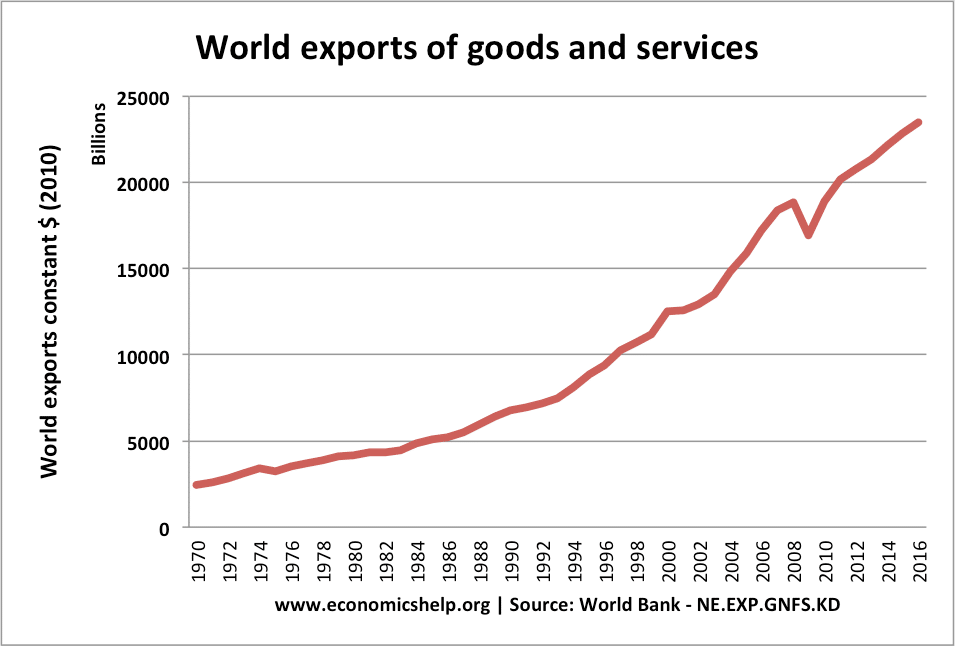
  • Free trade and growth of exports have been an important factor in raising living standards, especially in south-east Asia, which has benefitted from the remarkable growth of world trade.
world-exports-real
World exports of goods and services has increased to $2.2 trillion
  • The growth of world trade has helped reduce absolute poverty.
  • In recent years, the WTO has made more efforts to consider the situation of developing economies. Recent rounds have put pressure on developed countries to accelerate removing restrictions on imports from the least-developing countries.
  • The WTO has over 160 members representing 98 percent of world trade. Over 20 countries are seeking to join the WTO.
  • WTO has been given credit for helping to avoid trade disputes.

(Economicshelp)

Senate moves to regulate bleaching cream

 NAFDAC has been directed to regulate importation, formulation, and sale of cosmetics within Nigeria.

A resolution to ensure the regulation of the formulation and distribution of cosmetics, especially bleaching cream, was passed by Nigerian senators on Tuesday, February 16, 2021.

Senator Remi Tinubu raised the motion during plenary to urge the National Agency for Food and Drug Administration and Control (NAFDAC) to wake up to its responsibility to protect Nigerians against harmful cosmetics.

She expressed concern with the proliferation of small and medium enterprises and businesses that have flooded the Nigerian market with beauty products whose production are not well-regulated.

The senator raised concerns that products used for skin lightening are not indicating ingredients, or expiry dates to enlighten users of their content.

“The Senate is worried that it is impossible to determine that hygiene, quality assurance and good manufacturing practices are adhered to in the formulation of these products,” she said.

The lawmaker noted that side effects of cosmetic products can be damaging and cautioned that the market is regulated to protect Nigerians.

While seconding the motion, Senator Chimaroke Nnamani said bleaching cream is especially damaging to the skin and should be regulated to ensure safety of Nigerian consumers.

He said the advertisers of the products should also be regulated by the relevant regulatory agency because consumers are likely to believe anything they see.

Senator Barau Jibrin said improper manufacturing of the products can be harmful to Nigerians, and NAFDAC must ensure that what they do is up to standard.

“Those who fail to go in line with the established regulations, the full weight of the law must be brought to bear on them. We must make sure that we protect our people,” he said.

Lawmakers resolved to mandate the Senate Committee on Health to investigate the procedures in place for certification on quality and safety of cosmetics, and propose a way forward for accountability.

They also directed NAFDAC to regulate importation, formulation and sale of cosmetics within Nigeria, and maintain a products database, showing name and address of manufacturers, and ingredients list.

The agency was also directed to commence a sensitisation and awareness campaign on the ills of harmful substances, and wor with the Federal Competition and Consumer Protection Council (FCCPC) towards ensuring the tracking of consumer injury. (voiceairmedia)

Insecurity: Again, Senate tells Buhari to declare state of emergency; Niger’s Bello says 42 were abducted

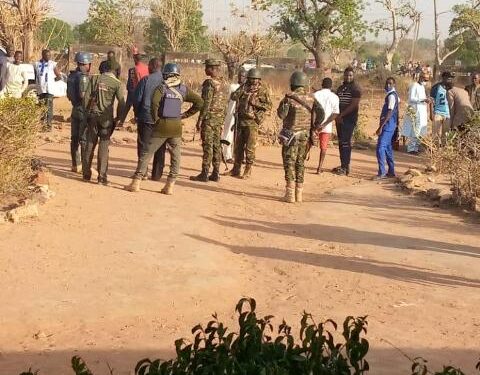
Security operatives, soldiers and others in the Kagara school premises

Facebook Video: And yet we want to confirm the same men as ambassadors

27 students, three staff and 12 family members were abducted from the Government Science College, Kagara, State Chief Executive, Abubakar Sani Bello, has revealed just as the Senate has called on President Muhammadu Buhari, to as a matter of urgency, declare a state of emergency on insecurity in the country. 

At a news conference shortly after a top level security meeting, which came shortly after President Muhammadu Buhari dispatched a team to the state and ordered retrieval of the students and their tenders, Bello ordered the immediate shutting down of all boarding schools in Shiroro, Rafi and Muyan Local Government Areas, the epicentre of banditry in the state.

He vowed not to pay ransom, the fuel that has driven kidnap for ransom in the country.

“When you negotiate and pay ransom to criminals, they will use the money to purchase more weapons,” he said.

The Senate’s call for a state of emergency did not come without grumbling by some that the same security and service chiefs who allowed the festering insecurity “are about to be confirmed as ambassadors by the same Senate.”

Asked to expatriate, a National Assembly source drew attention to the outburst of Senator Tolu Odebiyi in a Facebook post. (See below)

https://fb.watch/3ABilbGfX_/

Said Odebiyi (wrongly identified as Chimaroke Nnamani in the video): “We need to be frank with ourselves, proposed appointments of the immediate past Service Chiefs as ambassadors  is nothing but reward for failure  because it was under them as heads of the various strategic security outfits, that the country got to this precipice of a civil war.

 “We have a national crisis on our hands and this is not the time to play politics or be sentimental in any way. The former Service Chiefs didn’t do the expected as far as the worsening security situation in the country is concerned and do not in any way deserved to be compensated with ambassadorial appointments.

 “There is also the need to ban open grazing in the country as well as carrying of illegal arms and ammunition by anybody or group of people.”

The Upper Legislative House condemned in very strong terms, Wednesday’s abduction of students and teachers of Government Science School, Kagara, Niger State, by bandits. 

After consideration of a motion, “Abduction of Students and Teachers of Government Science School Kagara: Need for urgent action”, sponsored by Senator Mohammed Sani Musa (APC, Niger East), the Senate urged President Buhari to immediately declare a state of emergency on insecurity in the country. 

The Upper Chamber also urged the President to consider and implement the recommendations of the Senate Ad-Hoc Committee on Nigeria’s Security Challenges dated March, 17th 2020 and Senate Resolutions therefrom, as a holistic response to the mounting security challenges across the country.

The Senate President, Ahmad Lawan, in his remarks, underscored the need for the military and security agencies to work in collaboration with the various state governments towards securing schools situated in the northern part of Nigeria were abduction remains predominant. 

His words: “I believe that there is need for something new; a different initiative on especially how to protect our schools. And, let me be a little bit clear about the incident of abducting students from schools.

“Almost all incidents of abducting students from schools happen in northern Nigeria, and we all know how much efforts our leaders of yesterday, probably right from independence, worked so hard to ensure that children go to school in northern part of Nigeria. 

“With incidents like this, we will be reversing all the gains that were made in convincing parents and wards to take their children to school. 

“So, there’s need for our security agencies and government to ensure that we come up with a strategy of ensuring security in schools, because with this spate of kidnapping or abductions, definitely there’ll be that negative adverse effect on the desire and willingness of parents to allow their children to go to schools.

“And, the consequences of not going to school are better imagined in 21st century Nigeria or 21st century world.

“So, the Service Chiefs-designate have their work and take clearly cut for them. Part of what they are supposed to carry on board is how to secure our schools in addition to so many other challenges that they have to deal with.

“I believe that the states have to be carried along, because the schools belong to the states. So, that partnership and cooperation between the security agencies and the states must be adhered to, so that the states cooperate fully with security agencies of government. 

“With that, the whole country will be praying and waiting for our abducted children to be returned back to their parents secured and well”, Lawan said.  (Everyday)

UNN Suspends Lecturer for Allegedly Impregnating Four Ladies Within 4 Years Of Appointment

A lecturer of University of Nigeria Nsukka, Mr. Chigozie Odum has been suspended,

This is coming after the lecturer allegedly impregnated four students of the Institution within his four years of being appointed as a lecturer.

His suspension was signed by the deputy registrar of the institution, Achiuwa. F. C (MRS) for the Registrar.

In the suspension letter, the suspended lecturer was asked to stay away from his duties until the conclusion of investigation and verdict is issued by management on the matter.

He has been equally placed on half salary within the period of investigation. (allaboutschoolsng)

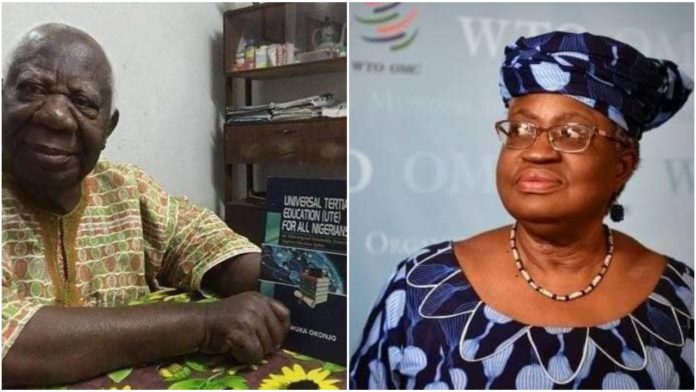
Exclusive: New WTO DG, Ngozi Okonjo-Iweala Was Raised By Her Grandfather

She was raised by her grandmother because her parents were studying abroad, when she was finally reunited with them…she held on tight!

She always wanted her father’s attention and this need for attention led to a “COINCIDENCE” that changed her life!Her father was a lecturer at the University of Ibadan, a mathematical economist who was working on a paper and didn’t want any disturbance but the young girl needed her father’s attention…

So he picked a book off his shelf and gave his daughter to read the 1st chapter that he would ask questions later and she happily ran off to read it, happy she got her father’s attention…

The book turned out to be a book in “ECONOMICS”, it was boring and she didn’t enjoy it but she still read it and promised herself NEVER to read “ECONOMICS”

– COINCIDENCE 1 –

A few years later at the age of 18, she had already passed her entrance exams to Cambridge and Harvard with Cambridge being her main choice…She wanted Cambridge because she wanted to study “GEOGRAPHY” and her godmother was lobbying for her to come to Cambridge but something happened, her mother had just gained admission to Boston to do her Ph.D. and as a young teenager, it was better to stay with her mum.She had to go to “HARVARD” which is in Boston to stay close to her mum.You can call this “

– COINCIDENCE 2 –

” as we’re trying to create a pattern.On getting to Harvard, they didn’t offer her core subject “GEOGRAPHY” and the only subject close to it that could satisfy her curiosity was “ECONOMICS”So she studied “ECONOMICS”, a subject she swore never to read in a school that was never her first choice…

– COINCIDENCE 3 –Forbes called her the “Accidental Economist” but I don’t see it as “Accidental” or “Coincidence”, it was God pushing her towards her destiny of greatness…Thanks to Economics– Former MD World Bank– First Female Finance Minister– Euromoney Global Finance MinisterAnd yesterday she became the “WORLD’S FIRST FEMALE AND FIRST AFRICAN DIRECTOR GENERAL OF WORLD TRADE ORGANIZATION”Her name is Ngozi Okonjo-IwealaDo you think it was a coincidence or God playing anonymous behind the scenes and directing her steps…I believe things happen for a reason, there is no coincidence in life.You can see how every major event in her life led to the next big event, they are all connected.

Credit: OYO

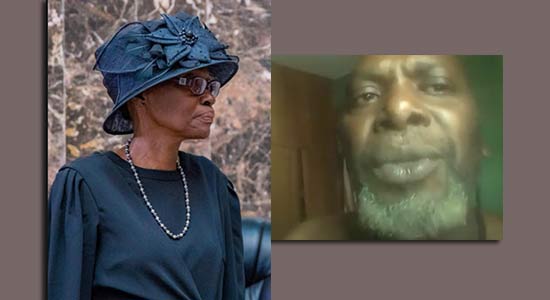
Alleged Detention For 3 Years: Man In Viral Video Cries Out To Buhari, Others For Rescue, As Ondo CJ, Akeredolu, Refute Alleged Victim’s Claim

*God Will Expose Evil Doers To Shame And Ridicule — Ondo CJ

The Chief Judge of Ondo State Judiciary Hon. Justice Oluwatoyin Akeredolu has responded to the claim by one Mr.  Olumikpelumi Fagboyegun, that he was remanded for three years at her instance. Her Lordship narrated her own side of the story during a conversation with TheNigerialawyer (TNL) where she vehemently denied the allegation made by Mr. Olumikpelumi on her person.

In her response, she firmly noted that what is happening is the handiwork of some persons who are using Mr. Olumikpelumi Fagboyegun against her family. She said that, two years after her father died, somebody bearing his name filed a suit against her mum, two of her brothers, and the eldest male of her father’s family, stating that they should exhume her father’s body and do a DNA because the man in question alleges to be her father’s son.

According to her, a person must be alive to acknowledge paternity. She stated that the said man filed a Writ of Summons which was served on her mum which itself made her mum felt agitated and embarrassed. She had to call the lawyer and asked what was behind the action. In response, the lawyer who filed the Writ told her that Mr.  Olumikpelumi Fagboyegun alleged that he was born in the household of her grandmother; and that, his mother was living with her grandmother when he was born. When she asked who the grandmother was, he said the person in question was her father’s mother. She then told him that the woman died in 1967, stressing that, she knew her very well, and that no women lived with her.

Speaking further, she stated that the thing died down, and that no statement of claim was filed afterwards.  She also added that her father died at over 80 years old, while the man claiming that her father was his father is just 60 years old or thereabout.

“One or two years after my mum died, he went to one of my father’s premises, where my cousin wanted to establish a poultry farm. One morning, he went with thugs wielding cutlasses, but he was prevented from entering the premises,” she said.

Going further, she added that her cousin responded by calling the police to arrest him because he had invested in the place. She then noted that the matter has nothing to do with her. “The police looked into the matter and by the time police got there, he had escaped,’ she stressed. She also narrated that the matter is before the Magistrate Court, and that she does not know the magistrate handling the matter; also, she has not shown interest in the matter.

Furthermore, she alleged that he also came with thugs and cutlass wanting to take over one of their premises. Narrating further, she said at a point someonetold one of her brothers that what Fagboyegun was looking for was money and same should be given to him but her brother refused on the basis that it was not a matter of someone requesting for financial assistance, rather, it was someone claiming to be biological child of their father and claiming entitlement to the estate of their father.

She said Fagboyegun is being used by some people.

As a way of disproving him, she also said that they should ask the said Mr. Olumikpelumi Fagboyegun which police station or prison is keeping him and by whose order, stressing that, God will expose evil doers to shame and to ridicule.

TNL recalls that Mr. Olumikpelumi Fagboyegun, had earlier called on President Buhari, the Chief Justice of Nigeria and Attorney-General of the Federation to come to his rescue as he has been on remand for three (3) years on an offence that is punishable for 1 year only.

Fagboyegun in a viral video seen by TNL said that he shares the same father with the current Chief Judge of Ondo State and the said Chief Judge has been using her influence to keep him in jail for allegedly entering his father’s house forcefully

“The Honourable Chief Justice of Nigeria and Attorney-General of the Federation, come to my rescue and rescue me from the Ondo State Judiciary which is been run like a family affairs that if you don’t know anybody you cannot get justice.

“I have been living abroad for over 30 years. I came on holiday to Nigeria to my father’s house, because I share the same father with the Chief Justice (sic) of Ondo State, I was arrested at my father’s place, I was locked up, I was charged with forceful entry into my father’s house.

“Even if I was convicted of this crime, it only carries one year prison penalty but I have been on remand for the past 3 years.” he said

Fagboyegun narrated that the Chief Judge of the state has been using her influence to deny him justice. He has been arrainged five times and judges have been changed five times. His charges have also been changed five times.

“Please come and rescue me, rescue me, help me, help me! The Ondo State government cannot help me because it is a family business

“Buhari help me from the hands of this woman, I wanna go back to my family, I wanna go back to my children. I am a single parent and this woman is keeping me here for the past three years for coming to my father’s house, please help me I am begging you people. I wanna go back to my family.” the man cried out. (Thenigerialawyer)

Nigerian women form #AnkaraArmy to celebrate new WTO boss, Ngozi Okonjo-Iweala.

(CNN)Nigerians are recreating the distinctive signature style of new World Trade Organization boss Ngozi Okonjo-Iweala to celebrate her confirmation for the role.The former Nigeria Finance Minister was appointed by the WTO on Monday. She is the first woman and African to lead the global trade body.To honor this feat, Nigerians are donning her signature look: a full outfit and head tie in African wax cloth known as Ankara, a single strand necklace, and clear glasses. Her supporters have also taken up the moniker, #AnkaraArmy to rally behind the WTO chief.

In the run-up to the WTO announcement, Twitter user and Life Bank founder Temie Giwa-Tubosun, proposed a cash prize for the winner of the challenge which she shared under the #NOIGoesToWTO hashtag.”Hillary [Clinton] had a pantsuit army. We are going to create an #AnkaraArmy for NOI! Get ready, the date is February 15th..,” Giwa-Tubosun tweeted days prior to the announcement.

“Let’s do this. On the day Prof. Ngozi Okonjo Iweala is to be named as the Director General of the World Trade Organization, we all dress up like her. In ankara, with a scarf, necklace just like hers. Share photos too. #justlikeNgozi,” Twitter user, Jane Whyte said.

The challenge has since been shared more than 30,000 times under different hashtags, including #BeLikeNgoziChallenge as the women say how inspired they are by an African woman holding such a powerful position.”Thank you for giving my daughter and so many African girls someone to look up to,” one Twitter user, journalist Tolulope Adeleru-Balogun, whose daughter took part in the challenge said.

Okonjo-Iweala spent 25 years at the World Bank as a development economist, rising to the position of managing director. She also chaired the board of Gavi, which is helping to distribute coronavirus vaccines globally. Her term at the WTO will begin on March 1 and will initially run until August 2025. (CNN)

Bandits in night raid abduct dozens of students Niger secondary school

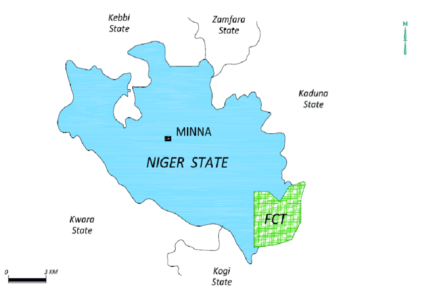
MINNA – Dozens of students have been abducted by armed bandits at Government Science College (GSC) Kagara, in Niger State, North-central Nigeria.

According to PRNigeria, the bandits in military uniforms, stormed the school premises which has close to 1000 students on Tuesday night, overpowered the security guard, before whisking away the students.

However, some students escaped after the raid. A headcount is being conducted at the school in the wee hours of Wednesday to ascertain the actual number of missing students.

But PRNigeria also gathered that security agencies were able to detect the coordinate and nature of the area, and have started tracing the bandits’ movement while NAF aircrafts have been seen hovering in the air to track the location of the students. (Sundiatapost)

The beautiful mind of Kadaria Ahmed and the trouble with Nigeria

By Rudolf Okonkwo

Maybe Achebe did not explain this leadership thing very well. But I doubt it.

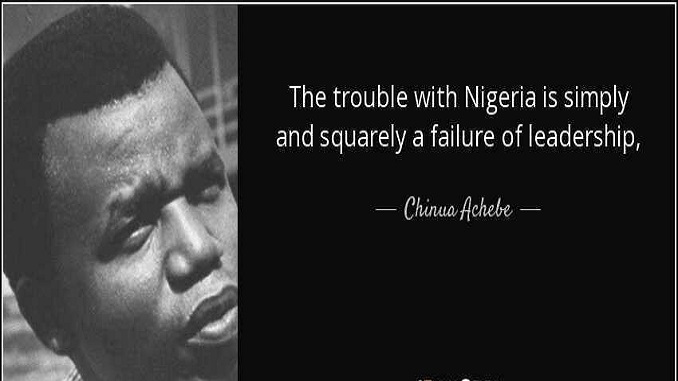
When Chinua Achebe wrote his seminal work, “The Trouble with Nigeria,” he blamed it squarely on leadership. He made the book brief, hoping that Nigerians would not have any problem reading it. But apparently, they didn’t. Or if they did, like in the case of Kadaria Ahmed, they misunderstood the leadership Achebe meant.

Kadaria Ahmed’s recent intervention following last weekend’s attacks on Northerners in Shasha, Oyo State, did not scratch the surface of what afflicted Nigeria. I agreed with her that violence is not the way to follow and that everyone must do their part to dissuade killings and destruction of properties.

Beyond that, what Kadaria’s intervention did was simply to apportion blame to the media. As much as the media shares responsibility when things go wrong, she wrote as if the media is not a product of its environment.

More troubling, she wrote as if she wanted to use her blame of the media to protect the people who have real power to do what is right for everyone in the country. Her thesis was quite dishonest in her decision to absolve the real culprits – leaders – leaders, like herself, Gov. Nasir Ahmad El-Rufai, the governor of Kaduna state, and so many others.

Kadaria did what the elite are good at doing – throw the little guys under the bus. It was the fault of the extremists, the hoodlums, and the ones propelled by emotions. Meanwhile, the real extremists, hoodlums, and those driven by emotions are those in government houses across the country. Those little people with guns and machetes on the streets were just learning from the ogas at the top.

Who will ever be more extreme than Gov. El-Rufai of Kaduna state, who went to West African countries to pay foreign herdsmen who killed his people in Kaduna? Who will ever be a more dangerous hoodlum than a governor who warned foreign election monitors that they would go back home in body bags because they were in Nigeria to monitor elections and make sure elections were free and fair?

Who will be more dangerous than Governor Bala Mohammed of Bauchi who, amid the tension already in the country, felt it was appropriate to have Fulani herdsmen continue to carry AK-47 when elements within them were proven to be involved in kidnappings and killings across the South?

The violence the elite in Nigeria are wrecking on the society is worse than those Boko Haram and the bandits have done. It is just that nobody is counting. Nigerian prison is full of innocent people who are victims of that elite’s violence. The greed, corruption, and indulgence of the elite are responsible for the immeasurable violence in the heart of the masses. The elite’s celebration of “might is right and woe to the weak” is what the bandits adopt in their little world of influence. The ransom elected officials in Nigeria collect every month in the form of security votes, allowances, and bribes are over 1000 folds more than what all that the kidnappers in Nigeria have ever gotten in two decades. The only difference is that while elected officials stay in air-conditioned offices to kidnap using the pen, the kidnappers in the bushes use guns.

The people that we call extremists today are the people who have decided that they would no longer play the games that we have been playing for over sixty years. Today’s media democratization means that even if the mainstream media blacks out the dispossessed and unheard voices, they would find an outlet underground. At their peak, the mainstream blocked Sinn Fein leader Gerry Adam in the UK. It did not stop his message from spreading. And it did not stop the violence.

Kadaria’s intervention was just an effort to deflect the blame and provide cover to the wicked, corrupt, and lazy people who cornered political power in Nigeria without an iota of idea on what to do with it. In all she wrote, she did not mention Buhari’s name. The man on whose watch the country is going to the dogs did not get even a passing mention.

How long ago has this inherent danger of herdsmen conflict with farmers been going? A chronicle of excuses given why President Buhari did not intervene in the last six years would fill up a 24-by-24 container. When Buhari blamed the killer herdsmen on foreigners from Libya and some West African countries and at the same time urged Nigerians to accommodate them, that was when Kadaria should have screamed. When Buhari’s spokesman told Nigerians worried about herdsmen destroying their farms to choose if their lives were more important than their farms, that was when Kadaria should have punched the air and yelled. I saw her do that when the killings going on in her home state of Zamfara became unbearable. But even at that scene of carnage at her home, she was not consistent. And it continued.

Leadership is not something you show when it is convenient or when the people you consider your folks are in dire need of it. Leadership is not a part-time job or a per diem gig, like driving Uber. Leadership is something you show every day, everywhere, and every way. It is not something you reluctantly assume after the people have cried themselves hoarse, like the kind of leadership Buhari has offered Nigeria. Leadership is a calling that entails sacrifice, not a position to indulge in comfort. Leaders don’t go in counting what they would gain for being leaders. They go in agonizing what they would do each day to improve the condition of the masses. Leadership is not about flying private jets, first-class but about leaving the flag of your country flying high in the sky and in the hearts of your people. In all these counts, Buhari has been a failure. As for Kadaria, I will let her use her tongue to count her teeth.

Leadership is not about rushing out when a monster is by your door to scream May Day, May Day, danger and danger. Leadership is about having the foresight to see the monster when it is still a baby. Leadership is to stop those cuddling the baby monster when its teeth were not yet out and dripping with blood. A leadership team without vision is doomed to lead by fire brigade approach.

Beyond this, the most fetal trouble with Nigeria is our penchant for waiting until a scourge gets to our doorstep before we do something about it. The elite like Kadaria are suckers for that. It doesn’t concern them until it concerns them. When kidnappings started in the Niger Delta and the victims were expatriates, elite like Kadaria thought it was not their problem. When it got to the Eastern part of Nigeria, everyone had a boogeyman – that it was the Igbo problem and it was happening because they liked money. But people are essentially people.

Some Fulani herdsmen quickly figured out that it was easier to kidnap people and collect millions instead of spending days and nights in the bushes for peanuts. It was a lot easier for them, too – they have got the guns and are allowed to flaunt them. Also, nobody would think it was them. After all, they do not like money.

Perhaps the most haunting, the most devastating of Nigeria’s maladies is still the original sin- that is, the tendency to blame the group for the sins of a few. Kadaria forgot to mention that. It first manifested itself in a major way in the interpretation and reaction to the coup of January 15, 1966. Over fifty-five years after, we still have not come to terms with the simple fact – that a group of army officers, the majority of who were Igbo, on their own planned a coup without consulting ordinary Igbo people in the street.

They decided to kill political leaders, most of whom were non-Igbo. For doing so, thousands of innocent Igbo people, whom the coup plotter did not consult, were singled out and killed. Even after a counter-coup, when scores of Igbo officers were killed in a revenge killing, including the then head of state Gen. J. T. Aguiyi-Ironsi and his host in Ibadan, Lieutenant Colonel Adekunle Fajuyi, the bloodletting did not stop.

It occurred in all of northern Nigeria in 1966, Kano in 1980, Maiduguri in 1982, Jimeta in 1984, Gombe in 1985, Kaduna & Kafanchan in 1991, Bauchi, Kastina, & Kano in 1991, Zango-Kataf in 1992, Funtua in 1993, Kano in 1994, all of Northern Nigeria over Sharia Law implementation in 2000, Kaduna over the hosting of Miss World beauty contest in 2002, all of Northern Nigeria over Danish cartoon of Prophet Muhammad led to killings in 2006 and 2007, Adamawa in 2012 where Gov. Nyako offered to buy the coffins for 43 killed, and so on and so forth.

Until Nigeria atones for this original sin of blaming the group for the sins of a few, we are doomed to repeat it. Geography is the only thing that would be changing. Every part of Nigeria will experience being refugees and depending on foreign charities for survival while other parts of the country keep going to school, falling in love, and getting married. Until we atone for this original sin, the concept of Nigeria as a nation would remain an illusion, even for those leading the country.

Kadaria, in her article, referred to Rwanda’s genocide. Rwanda is still atoning for its sins of 1994 when it killed 800,000 citizens in 100 days. Fifty years after ours, we have not even acknowledged that it was a sin. We have not even started atoning for the sin. We have no monuments built for those we killed at the places they were killed, as a reminder to those who killed them that it was wrong.

We still do not have their names written on walls that would never crumble. Just like everything in Nigeria, we hope that the sin would fizzle out. Sins do not fizzle out if they are not atoned; instead, they multiply like viruses. Atonement is the only vaccination against sins.

Twenty-five years after the massacre of their own people, Rwanda is a better country because the people who took control of the country after the genocide made a deliberate choice to punish the culprits, atone for the sins, and build a fair and just society. In our own case, the people who took over continued the war by other means, holding themselves and the country down.

Pray if you like or record a crying audio message like Kadaria, things won’t get any better until what affects people in Sokoto becomes a concern of people in Port Harcourt, and what affects people in Sagamu becomes of concern to people in Maiduguri. But more importantly, until Nigeria ceases to be the most unjust society where the elite who failed Nigeria are beneficiaries of that failure, things would be going from bad to worse. To put it in the simplest Peter Tosh’s terms, “There won’t be peace until there are equal rights and justice.”

Where there is systematic injustice, as we have in Nigeria, what changes are the colour, gender, ethnicity, creed, religion, sexual orientation of the victims? In such an environment, pursuing others and having others pursuing you is a matter of turn by turn. The victims change depending on the time in history that the historian started their pontification. To break the cycle, we need atonement.

Maybe Achebe did not explain this leadership thing very well. But I doubt it.

Let me go and read the book again.

▪︎ This article was originally published in People Gazette (www.peoples-digest.com)

TIPS