Home Blog Page 1027

Citibank Can’t Get Back $500 Million It Wired By Mistake, US Judge Rules

After committing one of the “biggest blunders in banking history,” Citibank won’t be allowed to recover the almost half a billion dollars it accidentally wired to Revlon’s lenders, a US District Court judge ruled.

Citibank, which was acting as Revlon’s loan agent, meant to send about $8 million in interest payments to the cosmetic company’s lenders. Instead, Citibank accidentally wired almost 100 times that amount, including $175 million to a hedge fund. In all, Citi (C) accidentally sent $900 million to Revlon’s lenders.

Some lenders did return the money, but others did not. Citibank filed a lawsuit in August seeking the return of its funds, but it still has not received $500 million from 10 investment advisory firms after the accidental transfer.

An exception to the rule
The law usually punishes those who spend money accidentally deposited in their accounts. Accidental transfers are common in the digital age, and wires can be paid back instantly. A Pennsylvania couple faced felony charges after spending money accidentally deposited in their account.

But New York law has exceptions to this rule, known as the “discharge-for-value-defense.”

If the beneficiary is entitled to the money and did not know it was accidentally wired, they can keep it. Revlon lenders said they believed Citibank was wiring prepayments for a loan. After all, the money accidentally wired was the exact amount “to the penny” Citibank owed them, although the loan wasn’t set to mature for quite some time.

“We are extremely pleased with Judge [Jesse] Furman’s thoughtful, thorough and detailed decision,” said Benjamin Finestone, who represented two lenders, Brigade and HPS Investment Partners.

‘Borderline irrational’
The court ruled the lenders were justified in believing the payment was intentional. Citibank itself did not realize the magnitude of its mistake until nearly a day later.

“To believe that Citibank, one of the most sophisticated financial institutions in the world, had made a mistake that had never happened before, to the tune of nearly $1 billion — would have been borderline irrational,” the court document said.

The judge’s ruling used internal chats between HPS employees as further proof the creditors had no idea the wiring was a mistake until after Citibank sent notices. In the chat, which was dated a day after the mistaken wiring, HPS employees joked about the error:

DFREY5: I feel really bad for the person that fat fingered a $900mm erroneous payment. Not a great career move . . . .

JRABINOWIT12: certainly looks like they’ll be looking for new people for their Ops group

DFREY5: How was work today honey? It was ok, except I accidentally sent $900mm out to people who weren’t supposed to have it

DFREY5: Downside of work from home. maybe the dog hit the keyboard

The lenders cannot take the money and run. Since an appeal is a possibility, a temporary restraining order is still in effect.

“We strongly disagree with this decision and intend to appeal. We believe we are entitled to the funds and will continue to pursue a complete recovery of them,” Citigroup said in a statement.

The pandemic has hurt makeup brands like Revlon (REV), shares of which are trading more than 40% lower from a year ago.

New York (CNN Business)

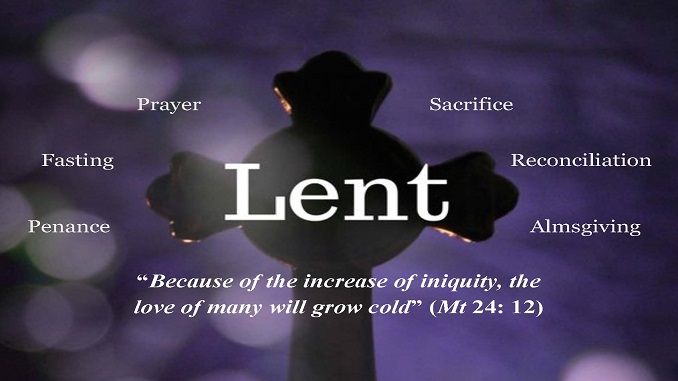
What lent means to Christians

By Mary Fairchild

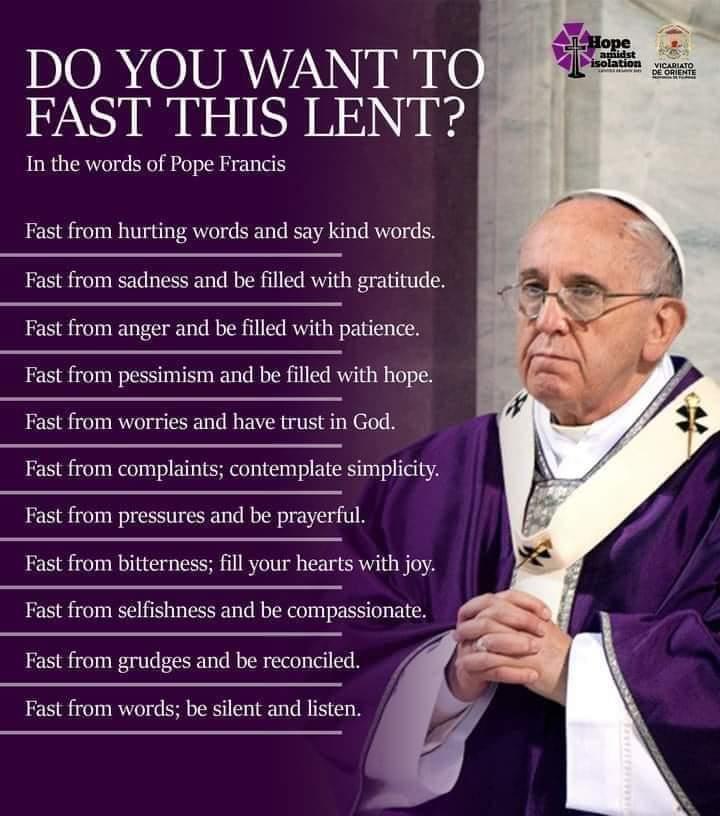
Lent is the Christian season of spiritual preparation before Easter. In Western churches, it begins on Ash Wednesday. During Lent, many Christians observe a period of fastingrepentance, moderation, self-denial, and spiritual discipline. The purpose of the Lenten season is to set aside time for reflection on Jesus Christ—to consider his suffering and his sacrifice, his life, death, burial, and resurrection.

Many churches that observe Lent, celebrate Shrove Tuesday. Traditionally, pancakes are eaten on Shrove Tuesday (the day before Ash Wednesday) to use up rich foods like eggs and dairy in anticipation of the 40-day fasting season of Lent. Shrove Tuesday is also called Fat Tuesday or Mardi Gras, which is French for Fat Tuesday.

During the six weeks of self-examination and reflection, Christians who observe Lent typically make a commitment to fast, or to give up something—a habit, like smoking, watching TV, swearing, or a food or drink, such as sweets, chocolate, or coffee. Some Christians also take on a Lenten discipline, like reading the Bible and spending more time in prayer to draw nearer to God.

Strict observers of Lent do not eat meat on Fridays, often opting for fish instead. The goal of these spiritual disciplines is to strengthen the faith of the observer and develop a closer relationship with God.

The Significance of 40 Days

The 40-day period of Lent is based on two episodes of spiritual testing in the Bible: the 40 years of wilderness wanderings by the Israelites after the exodus from Egypt (Numbers 33:38 and Deuteronomy 1:3) and the Temptation of Jesus after he spent 40 days fasting in the wilderness (Matthew 4:1-11; Mark 1:12-13; Luke 4:1-13).

In the Bible, the number 40 holds special significance in the measurement of time, and many other important events revolve around it. During the flood, it rained for 40 days and 40 nights (Genesis 7:4, 12, 17; 8:6). Moses fasted on the mountain for 40 days and nights before God gave the Ten Commandments (Exodus 24:18; 34:28; Deuteronomy 9). The spies spent 40 days in the land of Canaan (Numbers 13:25; 14:34). The prophet Elijah traveled for 40 days and nights to reach the mountain of God in Sinai (1 Kings 19:8).

Lent in Western Christianity

In Western Christianity, Ash Wednesday marks the first day, or the start of the season of Lent, which begins 40 days prior to Easter (Technically 46, as Sundays are not included in the count). Officially named “Day of Ashes,” the exact date changes every year because Easter and its surrounding holidays are movable feasts.

In the Catholic church, adherents attend mass on Ash Wednesday. The priest distributes ashes by lightly rubbing the sign of the cross with ashes onto the worshippers’ foreheads. This tradition is meant to identify the faithful with Jesus Christ. In the Bible, ashes are a symbol of repentance and death. Thus, observing Ash Wednesday at the start of the Lenten season represents one’s repentance from sin as well as Jesus Christ’s sacrificial death to set followers free from sin and death.

Lent in Eastern Christianity

In Eastern Orthodoxy, the spiritual preparations begin with Great Lent, a 40-day period of self-examination and fasting (including Sundays), which starts on Clean Monday and culminates on Lazarus Saturday. Ash Wednesday is not observed.

Clean Monday falls seven weeks before Easter Sunday. The term “Clean Monday” refers to cleansing from sinful attitudes through the Lenten fast. Lazarus Saturday occurs eight days before Easter Sunday and signifies the end of Great Lent.

Do All Christian Observe Lent?

Not all Christian churches observe Lent. Lent is mostly observed by the LutheranMethodistPresbyterian and Anglican denominations, and also by Roman CatholicsEastern Orthodox churches observe Lent or Great Lent, during the 6 weeks or 40 days preceding Palm Sunday with fasting continuing during the Holy Week of Orthodox Easter.

The Bible does not mention the custom of Lent, however, the practice of repentance and mourning in ashes is found in 2 Samuel 13:19; Esther 4:1; Job 2:8; Daniel 9:3; and Matthew 11:21.

The account of Jesus’ death on the cross, or crucifixion, his burial, and his resurrection, or raising from the dead, can be found in the following passages of Scripture: Matthew 27:27-28:8; Mark 15:16-16:19; Luke 23:26-24:35; and John 19:16-20:30.

History of Lent

Early Christians felt the importance of Easter called for special preparations. The first mention of a 40-day period of fasting in preparation for Easter is found in the Canons of Nicaea (AD 325). It is thought that the tradition may have grown from the early church practice of baptismal candidates undergoing a 40-day period of fasting in preparation for their baptism at Easter. Eventually, the season evolved into a period of spiritual devotion for the whole church. During the initial centuries, the Lenten fast was very strict but relaxed over time.

Herdsmen Crisis: Journalists carpet Kadaria Ahmed over attack on Nigerian media

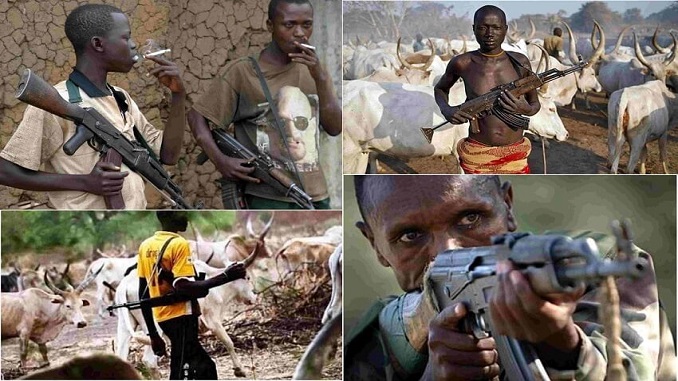
Nigerian journalists have rebuked fellow colleague in the media profession, Kadaria Ahmed, over her scathing criticism of journalists’ reportage of the herdsmen crisis in the country.

Ahmed, a television host with background in print, radio and online reporting, had accused Nigerian journalists of fanning the flames of ethnic hate through their coverage of the crisis involving mainly the Fulani ethnic group.

Kadaria, who apparently was reacting to the eviction threats being faced by the Fulani and Hausa in the South West region, had said that some Nigerian journalists will “end up before an international court” for allegedly fuelling ethnic killings through profiling of the Hausa-Fulani people as kidnappers, bandits and armed robbers terrorising people of the region.

She had also accused the Nigerian media of giving platforms to “extremists and the blood thirsty” individuals, who trough “ethnic profiling”, have allegedly fuelled attacks on some certain ethnic groups. Her criticism of the media was contained in an opinion piece titled “My message to Nigerian media.”

But reacting on Monday, Chairman of the Nigeria Union of Journalists (NUJ), FCT chapter, Emmanuel Ogbeche, described Kadaria’s article as, “insincere, jaundiced, and laced with half-truths and falsehood.”

Ogbeche said Kadaria threw honesty to the wind when she sat down to the put the article together, adding that “It is regrettable that an individual with such media latitude is a dishonest arbiter.”

Also reacting to the article, publisher of online news medium, Next Edition, Ibanga Isine, berated Kadaria for not speaking up when Igbos and Niger Delta youths were profiled as secessionist and militants.

Isine regretted that she suddenly found her voice when it had to do with Fulani herdsmen, even though the media was “merely reporting the truth of what some Fulanis, who even the Sultan of Sokoto, has confirmed, are responsible for over 80 percent or more of banditary, kidnappings and killings across Nigeria.”

While acknowledging some Fulani’s contributing to Nigeria’s unity, Isine however said, “the fact is that the media is not just profiling any tribe as criminals, the records speak clearly to what is happening across the country.”

He wrote in a Facebook post: “But Kadaria, like many others who are on the same lane, believes a certain group has all the rights in the books to kill, maim, plunder and walk away without being called out or mentioned by the media.

“It doesn’t bother her that communities being plundered and people being killed are subject to the same laws and have the same rights as those who carry sophisticated weapons and unleash mayhem across the country. She kept mute when every Igbo is profiled as IPOB and secessionist.

“She lost her voice when Niger Deltans are profiled militants and oil thieves and when security forces constantly parade and torture them while her brothers in Zamfara, who mine gold illegally are protected and allowed to help themselves to the nation’s natural resource. She has suddenly forgotten when she cried out against the same people she is defending now for killing and raping her kin in Zamfara.

“Of course, she was politically correct to blame President Buhari for not tackling the crimes in Zamfara but she failed to mention those unleashing the terror on her people. Today, she has a voice to speak against her colleagues who are merely reporting the truth of what some Fulanis, who even the Sultan of Sokoto, has confirmed, are responsible for over 80 percent or more of banditary, kidnappings and killings across Nigeria.

“She didn’t condemn the Sultan or disagree when His Eminence said out of ten kidnappers and bandits caught, eight or more are Fulanis. Perhaps, the media was wrong to quote the Sultan or even report about it. Kadaria didn’t say anything when Fulani herdsmen were, as early as 2016, designated the fourth bloodiest terrorist group in the world. Perhaps, it was the media that orchestrated the rating. She is disappointed when the Nigerian media say it as it is and lay the blame where it rightly belongs.

“She would not speak when prominent Fulani leaders openly take responsibility and justify attacks in many parts of Nigeria. I think Kadaria is playing hide and seek with the TRUTH but unfortunately, Nigerians are wiser and the media know better than her absolute vilification of the truth, her ethnic bias and illogical prognostication,” said Isine.

Ehi Ekhator, a UK-based Nigerian journalist, also described Kadaria as “a disgrace” to the journalism profession and “the journalists who go extra miles to guarantee truth are uncovered.”

Ekhator said, “I observed from your article that you are still living in “If world”. It appears for many years; you haven’t seen that there are some ethnic group backed by the government, going about and murdering honest individuals even at their own homesteads.”

The Danger of “Cattle Imperialism”, By Olusegun Adeniyi

From Olusegun Obasanjo to Goodluck Jonathan and now Muhammadu Buhari, ‘triumphalism’ by members of the ethnic group whose ‘son’ is in power has become the defining ethos of their relationship with other Nigerians. This display of arrogance of power—even without deriving any ‘benefit’ beyond the fact that the president speaks their language—not only causes problems for their man, but creates needless tension for our fragile nation. However, at no period in the past 21 years has our country descended to the level of inter-ethnic animosity in which it finds itself at the moment. What is fueling the current angst has been aptly described by Nobel Laureate, Professor Wole Soyinka, as a not-so-subtle attempt to impose on the nation ‘cattle imperialism’.

I agree with those who canvass that the media must resist being converted into pawns in this latest version of an old game. That is not to say that we should shirk our responsibility. In her preface to the journal, ‘Reporting Ethnic Conflict in Nigeria’ published in 2001 by the International Federation of Journalists, with support from the Commission of European Union, Bettina Peters wrote that “a multicultural world requires media which reflect the variety and richness of society without discrimination and which do not promote social division and conflict.” But she also added: “This does not mean journalists must remain silent. In some countries, the reality of ethnic conflict is denied as if silence could mask a problem or heal it.”

In the situation we are in today, ultimate responsibility rests with President Muhammadu Buhari. He should not continue to play into the hands of those who profit from manipulating our differences by the choices he makes (or refuses to make). Rather than apply the law to our serious security challenges, excuses are offered to rationalize criminality in a manner that has created ‘freedom fighters’ in different sections of the country. As I said, this is a familiar problem. Two months after Obasanjo came to power in 1999, I had cause to write a column titled ‘Kogbodoku President’ in response to what I considered the provocative disposition of a number of Yoruba leaders at the time.

‘Kogbodoku’ literally translates into ‘he must not die’. As I wrote on 16th July 1999, this “is the new name for our darling President Olusegun Obasanjo. The ‘christening’ must have been done by the Oodua Peoples Congress (OPC) with Dr. Frederick Fasheun and Justice Adewale Thompson presiding. ‘Any problem for Obasanjo would bring unmitigated chaos for Nigeria, so all those annoyed with him should go and purge themselves of their annoyance and join us to rally round him. The OPC will protect our own with every ounce of our strength. Obasanjo is our own any day,’ said Fasehun last Wednesday. He was merely echoing the words of Thompson who had earlier threatened that Yorubas would not take it lightly if anything happened to Obasanjo. What they would do if such happened, (God forbid) nobody knows but it is becoming a fad now for any attention–seeking Yoruba leader to make a threat on Obasanjo’s behalf.”

After highlighting several ways Yoruba leaders were provoking other ethnic nationalities, I then added: “The hypocrisy of it all is that these threats are coming from the same forces that fought Obasanjo dirty before other sections of the country elected him and now he has become their own… Now that Obasanjo is in Aso Rock, we have Thompson and Fasehun to tell us ‘it is our time’. Obasanjo’s mandate is national, at least it would have been if Yoruba people had voted for him, but it is sad that these same people would offend the sensibilities of other Nigerians with reckless statements that stand logic on its head…”

While he may have occasionally retreated to the Southwest for political survival, Obasanjo to a large extent kept Yoruba ethnic entrepreneurs at bay for most of his eight years in office. So, whatever may have been his other faults, Obasanjo was Pan-Nigerian in his distribution of opportunities and execution of the policy thrust of his administration. There were occasional ethno-religious clashes but to the extent that the man at the helm was not perceived as taking sides, challenges were managed. To demonstrate Obasanjo’s resolve at that time, the cover photograph of TELL magazine edition of 3rd September 2001 featuring a picture of an unclad Chief Ganiyu Adams (OPC leader and current Aare Ona Kakanfo of Yorubaland) chained in both legs and hands, is still circulating on WhatsApp.

When I noticed early in the administration of President Jonathan that noted Ijaw people were attempting to claim him for themselves, I also warned in a piece titled, ‘Their Son, Our President’ published in January 2012. The intervention followed a press statement by Chief Edwin Clark after a meeting of Niger Delta leaders where they alleged that the then ongoing nationwide protests against removal of fuel subsidy were targeted at removing President Jonathan from office. “The People of the South-south will not tolerate any untoward action or plan against our son, whose actions though seemingly painful in the interim, are geared towards repositioning this country for the ultimate good of all in the future,” Clark had warned on behalf of the group at a period Niger Delta militants were also making incendiary statements. Somehow, those provocative statements, which were allowed free reign at the time, ultimately worked against the second term aspiration of President Jonathan in 2015.

To be sure, the problem between herders and farmers in Nigeria predates the election of President Buhari. But the preachments for ‘accommodation’ from him following a gruesome massacre in Benue State (when he ought to advocate justice for victims) helped to inflame passions. So also the rationalisation by others that cattle could graze freely anywhere in the country or that herdsmen have a right to carry AK-47 while roaming about. With the impression created (and justifications made by public officials at different times) that lawless bands of herders (the majority of whom may not even be Nigerians) are not accountable for killing, kidnapping, raping and maiming rural dwellers in the north, it was not long before this impunity was carried to the south. That was the beginning of the problem in a nation where a combination of identity and politics has always been combustible.

As Reuben Abati pointed out in his piece on Tuesday, “when government fails to promote the values that bind us together, language, ethnicity and geography become tools of conflict”. That precisely is what we are facing, especially given the impression that some are above the law. For instance, I have been living in Abuja since 2007 and never have I experienced the current situation where motorists must compete with cows on the road on a daily basis, despite laws banning open grazing within the FCT. From Asokoro to Maitama, Wuse and Jabi, the common sight within the past six years is that of herds of cattle blocking major access roads. And we are asked to accept the situation as normal?

In an editorial on this ugly development four years ago in July 2017, THISDAY stated: “…the herdsmen have continued to operate without hindrance and with a sense of entitlement. Yet to allow them to persist in utter disregard for the law prohibiting cattle grazing within the precincts of the federal capital is to suggest to other citizens that the possibility exists that they too could do as they wished. That certainly will not augur well for the nation…If the authorities do not curb the brazen acts of these herdsmen who, in turning Abuja to their grazing field, act as though above the law, they are unwittingly sowing the seed of a serious crisis.”

A few weeks before that editorial, I had arrived home to meet a crowd of people, including policemen whose facility in butchering I later witnessed. A cow had strayed into the small shed built for the PHCN transformer beside my house and was electrocuted immediately. The young Fulani shepherd was running to help the cow before he was held back. I shudder to imagine what would have happened to us if the boy (who could not be more than 12 years old) had died. That is the sort of security problem created when Nigeria is turned into a grazing field.

Let’s be clear. This administration has not done a thing for the development of Fulani people. Even in terms of distribution of opportunities, only few Fulani are in government. Some of us can distinguish those who are genuinely Fulani from the ‘political Fulani’ so we know that these herders are also victims of the Nigerian malaise. By encouraging nomadism as a way of life for certain people, not only do we encourage a violation of the rights of land and property owners, we also devalue and deny those herders the full benefits of citizenship. Meanwhile, those who romanticize this culture send their own children abroad to school and when they want to marry, they don’t seek spouses in the forest; they go for educated people like themselves, including from other ethnic groups.

What transpired in the Soyinka case bears eloquent testimony to the fact that we are encouraging a culture that has no future. Instead, young nomads have become mere fodder. After the cows that invaded his compound had been ‘arrested’, the Nobel Laureate said he decided to go to the police to lodge a report. “On the way, we met a detachment, turned round, and together we returned to the scene of the crime. The police wanted to commence combing the bush for the fugitives but I stopped them – what was the point? Keep the cows, I advised, and the owner will show up. Of course, that owner eventually did,” said Soyinka. That owner, as the Ogun State Police Command spokesman, Abimbola Oyeyemi, would later reveal is “a gentleman by the name, Kazeem Sorinola, who is Yoruba. He put the cows in charge of a Fulani man.”

While that speaks volume, this is the time for responsible leadership in both Abuja and the states. But profiling in a diverse society such as ours can only perpetuate a poisonous social environment antithetical to peaceful co-existence. We have a law and order problem with herders. But because regime protection is considered more important than national security, criminal activities not in any way threatening to the government in power are treated with levity. This in turn has encouraged a resort to barbarism against innocent people who happen to speak the same language as herders. I understand that the man whose ‘aluwo’ (diabolic fatal blow) started the whole crisis in Ibadan’s Shasha market, is actually from Niger Republic!

That the current administration has done little to address the issue of perception is a critical point. It is not enough to threaten to deal with errant herders, it is necessary to actually prosecute and make examples of some to serve as deterrence. When we allow things to fester, people become emboldened, and the combination of different ethnicities, religions, and languages guarantees an explosion. We must urgently find a way to redefine cattle rearing. We should move beyond open grazing and grazing routes which will always spark conflict. We may need a transitional arrangement but rethinking animal husbandry is an urgent task. We also need to depoliticise this issue. Beyond the herder-farmer crisis, there is broader insecurity which also requires urgent solutions too.

In what has become a lucrative enterprise, bandits yesterday morning moved to Government Science College, Kagara in Niger State where they killed one student before abducting 27 others, three staff and 12 members of their families. “When you negotiate and pay ransom to criminals, they will use the money to purchase weapons”, said an exasperated Governor Sani Bello in apparent reference to the policy of appeasement that defines the approach to security in some northern states with the federal government looking the other way.

At the end of the day, we must come to terms with the different variants of criminality that threaten the unity of our country, destroy the future of our young citizens and put Nigeria in the ranks of nations striving to return to a primitive economy in a 21st century world. On the last score, the abiding problem remains that we are striving to build a modern nation on the foundation of primordial tribal instincts.

▪︎NEITI: Waziri Adio Bows Out

The stewardship of my friend and brother, Waziri Onibiyo Adio, as the Executive Secretary of the Nigeria Extractive Industries Transparency Initiative (NEITI) ends today after five excellent years. It is non-renewable single term. I am proud of his achievements at the institution that also means a great deal to me.

NEITI was established in 2003 to institutionalise transparent and accountable management of extractive resources as a response to the pervasive resource curse syndrome experienced by countries like Nigeria. Appointed by President Olusegun Obasanjo to represent the media, I was a founding member of the board (the inaugural National Stakeholder Working Group of NEITI). A certain Chibuike Rotimi Amaechi, then the Speaker of the Rivers State House of Assembly, was also appointed to represent the legislature of the 17 southern states. The main catalyst, of course, was our chairperson, Mrs Oby Ezekwesili. Working with the then acting Executive Secretary, Dr Bright Okogu, Ezekwesili helped to lay a solid foundation that others continue to build on.

Waziri has left indelible marks at NEITI. Advocacy responsibilities of the Executive Secretary demanded that he move between the worlds of media – his natural habitat – to that of other extractive sector players, including the previously notoriously opaque NNPC, multinational oil companies, civil society organisations, governments etc. This is he did remarkably well. Anyone familiar with the workings of NEITI will know of its audit reports of production and revenues earned from Nigeria’s oil, gas and solid minerals sectors. Since inception, the annual audit report has remained NEITI’s flagship service to stakeholders because it provides Nigerians with clear and credible information on the workings of the country’s extractive sectors. Which oil company produced what? What volumes were produced? How much was paid and to whom? Who is owing what? These are some of the questions the NEITI audit reports provide answers to.

For the past five years, with Waziri at the helm, NEITI has elevated this mandate. By diligently executing strategic plans that repositioned NEITI as a valuable entity in a very challenging time for Nigeria, Waziri went beyond producing the usual audit reports to include helping stakeholders use those reports for key policy choices.

At the time Waziri was appointed, NEITI had published a total of five cycles of oil and gas industry reports (1999 to 2004, 2005, 2006 to 2008, 2009 to 2011, and 2012), three cycles of solid minerals industry reports (2007 to 2010, 2011, and 2012), and one cycle of the Fiscal Allocation and Statutory Disbursement (FASD) report, covering 2007 to 2011 and was challenged by the irregularity of its reports. It also had deep challenges with funding its activities and ensuring remedial actions in its reports were acted upon by relevant actors.

Due to a combination of factors, including funding, NEITI had backlogs of audit reports to publish. Waziri cleared them all, starting from 2013 to 2018 financial years, with the reports for 2019 financial year also ready for release. NEITI also cut down the publication time from 29 to 15 months to make the reports timelier and useful. The 15-month publication timeline was nine months ahead of the global EITI’s deadline. This milestone could have been further improved upon had the 2019 audit reports been released, as scheduled, last year or early this year.

To address one of the yawning gaps in the organisation’s work and move the needle on policy reforms, Waziri introduced policy analysis, research and strategy into the work of NEITI. He pioneered the NEITI Policy Brief, the NEITI Quarterly Review, the NEITI Occasional Paper Series and the NEITI Policy Dialogue to move NEITI values beyond annual industry reports to evidence-based tools for public policy engagements and actions. Waziri believed that change in the extractive sectors would not be brought about unless voluminous technical reports were marshalled as evidence-based tools, including policy options, provided through direct engagement with policy actors. And like the audit reports, policy and strategy papers became sought-after hits.

Leveraging the content of previous audit reports, NEITI unilaterally forced the federal government to review and amend the Deep Offshore and Inland Basin Production Sharing Contract (PSC) Act in November 2019 by repeatedly pointing out that enormous losses would be incurred by not amending the terms of the 1993 PSCs. Truly, NEITI was living out its advocacy mandate. Under Waziri, it used this to provide palpable information about what Nigeria had lost from not obeying its own law and succeeded in plucking what could be termed a ‘low hanging fruit’ in the absence of the PIB.

Waziri’s sincerity of purpose also attracted financial and in-kind support from institutional donors, with at least $1.5 million in direct grants invested in NEITI by these actors in addition to technical support extended for it to deliver on its assignment. In 2019, NEITI earned Nigeria the ‘Satisfactory Progress’ status from the EITI board, bringing her in the same category as Norway, a country seen as the poster-boy for transparent and effective management of extractive resources. Only eight of 55 EITI-implementing countries have attained this status so far. Under his leadership, NEITI also established the Beneficial Ownership register – a publicly accessible register of the beneficial owners of extractive assets in Nigeria. The register provides Nigerians information about who owns what in the oil, gas and solid minerals sectors, further providing transparency of sectors previously hidden from Nigerians.

As a trust, public service demands a commitment to pursue excellence, accountably manage resources and deliver value to citizens. Waziri used his time at NEITI to accomplish all these and more. He worked diligently with people in and outside the organisation to place the agency in a position of immense value. And with his job done, Waziri (who holds two master’s degrees—one in Journalism from Columbia University and the other in Public Administration from Harvard Kennedy School) proceeds on a three-month academic fellowship at Oxford University to clear his head, reflect on the past five years and share his experience in running the most extensive EITI operation in the world with students, faculty members and other stakeholders on campus.

Congratulations for a job well-done my brother!

• You can follow me on my Twitter handle, @Olusegunverdict

(Theconclaveng)

British High Commissioner, Laing, Joins #BeLikeNgoziChallenge

British High Commissioner to Nigeria, Catriona Laing, on Wednesday, joined the #BeLikeNgoziChallenge which has been trending online since the beginning of the week.

The #BeLikeNgoziChallenge challenge has attracted sizzling attention lately with the historic emergence of Nigeria’s pride, Dr. Ngozi Okonjo-Iweala, as the Director-General of the World Trade Organisation.

The Nigerian development economist, known for her African print Ankara wears and peculiar headgear usually tilted at a convenient angle, said in a recent interview that she unabashedly “love being African and being Nigerian”.

The #BeLikeNgoziChallenge challenge involves social media users dressing up like Okonjo-Iweala. It was started by Temie Giwa-Tubosun of Lifebank, a platform that delivers medical supplies.

Giwa-Tubosun

Giwa-Tubosun shared the first entry in the challenge on Sunday and promised to give a N100,000 prize to the best dressed person.

The challenge gained more traction on Monday as the WTO announced the appointment of Okonjo-Iweala as the new chief of the Geneva-based body. Okonjo-Iweala breaks a 26-year record as the first African and first female boss of the global trade and dispute settlement organisation.

A social media user in the #BeLikeNgoziChallenge

In a video released via her verified Twitter handle, the British high commissioner who was clad in an Ankara print enthused, “Hey, my sister Ngozi, we are so proud of you, the new director-general of the World Trade Organisation. Congratulations!”

“And all you young girls out there, see what you can achieve, you can be brilliant in your career but also be yourself,” Laing advised in a report by The Podium.

See tweet:

Happy to join #BeLikeNgoziChallenge initiated by ⁦@temite⁩ with my #AnkaraArmy ‘gele’. For girls in Nigeria & all over the world ⁦@NOIweala⁩ shows there are no limits and you can still be yourself. Congratulations to the first female DG of ⁦@wto⁩ #NoiGoesToWTO pic.twitter.com/NnqU6VpTEi

— Catriona Laing (@CatrionaLaing1) February 17, 2021

(Theconclaveng)

From Kankara to Kagara, hypocrisy defines the Buhari government

By Ikechukwu Amaechi

Anyone who watches the trending video of heavily armed bandits taunting Nigeria and its doddering leadership and emotionally assaulting passengers of the Niger State Transport Authority (NSTA) bus without feeling sorry for the country must be subhuman. The victims were abducted in the Yakila district of the Rafi Local Government Area of Niger State on February 15.https://www.youtube.com/embed/OBKOQFtgdHo?feature=oembedVideo of the Niger State Transport Authority (NSTA) bus abductees with the bandits

I had goosebumps watching babies crying, women frantically pleading, men, humiliated and resigned to fate, and of course, their tormentors, having the fun of their lives, celebrating their successful haul of yet another human cargo that will soon translate into millions of naira in ransom.

Niger State Governor, Abubakar Sani Bello, has confirmed the video and the N500 million ransom demanded by the bandits.

The video graphically illustrates how low the country has sunk under President Muhammadu Buhari’s watch. It depicts the helplessness of Nigerians in the face of the existential threat they collectively face.

Under Buhari’s watch, it is sorrow, tears and blood, as the Afrobeat legend, Fela, would say. But the consolation is that Nigerians, South of the Niger, have also resolved never to roll over for the hoodlums from the North ever again.

I had resolved last week to stay off the tomfoolery of the Nigerian elite, having come to the inevitable conclusion that they are dyed-in-the-wool hypocrites, set in their adulterous ways. They have no fidelity to the common good.

But it is extremely difficult, if not impossible, to stay aloof when at issue is existential dread – Nigerians are at that dreadful moment when many are increasingly questioning whether their lives have meaning, purpose, or value in their own country.

We are at that scary juncture where though Fulani bandits have become an existential threat, yet the northern elite, like the ostrich, are burying their heads in the sand, pretending that by so doing the country’s woes will be wished away.

On Tuesday, Islamic cleric, Sheik Ahmad Gumi, the chief ideologue of the Fulani supremacist agenda, was on Africa Independent Television (AIT) where he made the bold-faced claim that bandits learnt kidnapping from Niger Delta militants. That is a lie.

To dissuade Fulani terrorists from maiming and killing fellow citizens, he doubled down on his vexatious demand that they be granted amnesty and handsomely compensated if they magnanimously agree to be persuaded to lay down their arms. To them, we, the lesser mortals, don’t have the right to live, peacefully or otherwise. It is a privilege at their whims and caprices.

The hubris is suffocating. Rather than address insecurity, what you hear from the Northern elite is this condescending admonition to the rest of the country not to provoke their wrath.

Rather than telling their brothers to stop the kidnappings and senseless bloodletting, they are angry that Nigerians have the audacity to call them out. They are enraged that other Nigerians have the guts to push back on their brazen expansionist agenda.

Why would a governor from the South demand that Fulani bandits be flushed out of the forests in his state? They are enraged that non-state actors like Sunday Igbogho would dare challenge the suzerainty of Fulani bandits and defend their people in the face of government’s shameful abdication of its primary responsibility which is the protection of lives and property of the citizens.

They are deploying every trick in the book to deflect the blame from themselves. In all their posturing, they do everything to shield Buhari, the man on whose watch the country is going to the dogs, from any blame.

Curiously, a people that long ago elevated to an art the tendency of blaming the group for the sins of a few are today crying foul that Nigerians are blaming Fulani bandits for the mayhem across the country.

They are now saying that crime has no ethnicity, which is true. But remember the egregious lie of branding the January 15, 1966 coup an Igbo coup? Yes, that is the hypocrisy that rules the land.

They pretend not to know what happened on that fateful day – a group of idealistic army officers, majority of who happened to be Igbo, on their own planned a coup without consulting the ordinary folks on the street. Yet, the Northern elite conveniently branded it Igbo coup for the singular purpose of exacting maximum revenge on the Igbo.

Over 55 years after, that lie has persisted and it is at the root of all the injustices meted out to the Igbo in Nigeria.

Yet, these same people are protesting loudly that Nigerians are calling out those who have turned Nigeria into a huge killing field.

Why shouldn’t those terrorising Nigerians be identified ethnically? If they are Igbo, will the Gumis of this country do otherwise? Now that it has been established beyond doubt that Fulani bandits are behind the carnage in the land, why should we shy away from saying so?

Gumi acknowledges that those he met with in the Zamfara forests are Fulani and those Governor Nasir el-Rufai of Kaduna State went to West African countries to pay ransom after they killed his people in Kaduna were Fulani. Those Governor Bala Mohammed of Bauchi State said should carry Ak-47 rifles are Fulani. Ondo State Governor, Rotimi Akeredolu, said this week that the killer herdsmen according to the debriefing from those kidnapped, speak Fulfulde, language of the Fulani. Those who are busy all over the country negotiating the payment of ransom to bandits, or release of arrested bandits, or threatening fire and brimstone whenever moves are made from any quarter to rein in the impunity of herdsmen are Fulani with leaders of Miyetti Allah Cattle Breeders Association of Nigeria (MACBAN) in the lead.

Any country that chooses to pamper bandits and reward, rather than punish criminality, pays a very stiff price. Criminals are emboldened when they are treated with kid gloves.

So, while Gumi is busy demanding amnesty for Fulani bandits, most of them non-citizens, who have made Nigeria a hell for citizens, the bandits struck again on Wednesday.

This time, it was at the Government Science College Kagara in Rafi local government of Niger State. The bandits, who struck at about 2 a.m. killing one student, Benjamin Doma, whisked away 27 others, three teachers and 12 family members.

The Kagara abduction came less than three months after gunmen abducted hundreds of students of Government Secondary School, Kankara in Katsina State.

Though the number of abductees as confirmed by Bello are fewer, this is the first time a student would be killed at the crime scene and teachers taken hostage.

Of course, the governor has not only shut down the school with about 650 students, he has also ordered that all boarding schools in Rafi, Mariga, Munya and Shiroro local government areas of the state be shut until further notice.

Truth be told, the joke is on these Fulani leaders like Sheikh Gumi who are enabling the bandits all in the name of ethnic solidarity. The joke is on the president, a Fulani, under whose watch Nigeria is heading to point of no return, as former Head of State, Gen. Abdulsalami Abubakar, put it on Wednesday, while he is fiddling.

With this incessant pillaging of schools in the North, how can parents yield to persuasion to enroll their wards? Yet, this is a region that has the highest number of out of school children globally and the few that agreed to go to school are being kidnapped, killed and dehumanised by bandits. What a tragedy!

The reactions are the same. It is all déjà vu. Bello, pretending to be the tough cookie that he is obviously not, told journalists on Wednesday his government will not pay ransom to the bandits. But he is prepared to support and assist repentant bandits. Who is fooling who?

Senators making their usual noise, called on Buhari to declare a state of emergency and implement their various recommendations on how to tackle the escalating insecurity across the nation.

Buhari described the kidnapping as brazen and cowardly even as he dispatched a team of security chiefs to Minna, the Niger State capital, to coordinate the “rescue” operation.  

His Senior Special Assistant on Media and Publicity, Garba Shehu, said the president assured the security chieftains of the support of his administration and urged them to do all that can be done to bring an end to the saga and “avoid such cowardly attacks on schools in the future.”

Wasn’t that exactly what he said after the Kankara kidnap saga?

The Minister of Defence, Major General Bashir Magashi, assured that the Kagara abductees will be rescued with the same strategy used in Kankara. Put simply, they will negotiate with the Fulani bandits and pay hefty ransom to secure the release of the victims. That was the Kankara strategy.

Magashi said Nigerians have a responsibility to ensure adequate security, insisting it is not the responsibility of the military alone.

“We shouldn’t be cowards. Sometimes the bandits come with about three rounds of ammunition and when they fire shots everybody will run. In our younger days, we stood to fight any form of aggression,” he said.

Isn’t that interesting coming from the same government that will shoot down anyone who tries to stand up to the impunity of Fulani bandits? Hypocrisy truly defines the Buhari government. (Thenicheng)

Tangale King: State govt in face-off with the people

Gombe State

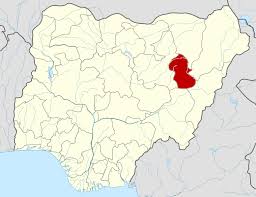
Contrary to the reports that Gombe State government has appointed a new King in Tangale Chiefdom to replace late Abdu Buba-Maisheru (II), the 15th Mai of the Chiefdom, the state government says it has not done so.

While some social media reports say Mr. Danladi Maiyamba was appointed as the new Mai, while others claimed that Dr Musa Idris Maiyamba was chosen by the Kingmakers.

Debunking the reports, Secretary to the State Government, Prof. Ibrahim Abubakar Njodi, said until normalcy is restored in Tangale land, the government will not make any pronouncement on the issue.

According to him, “Following the development taking place in parts of Billiri Local Government Area,the Gombe State Government wishes to categorically state that it has not pronounced a New Mai Tangale because the process has not been concluded.

“Until normalcy is restored in Tangale Chiefdom, it will be difficult for Government to make any pronouncement on the issue.”

The government also called the on protesters that blocked Gombe – Yola road to withdraw with immediate effect.

Recall that people of Tangale Chiefdom in Billiri local government area of Gombe State took to the street to protest what they called “delay tactics” in announcing their preferred candidate to replace the late King of the Chiefdom, Late Abdu Buba-Maisheru (II).

A resident of the town, Benjamin Dangoma told our correspondent that they are protesting to call on the state government to respect the choice of the people of the Tangale.

He alleged that the governor is planning to announce somebody other than their preferred candidate, Dr Musa Idris Maiyamba, who according to him, got the highest votes from the Kingmakers.

According to him “Following the demise of our late King, Late Abdu Buba-Maisheru, as it is under the customary law, the Kingmakers of this Kingdom have the responsibility to choose for their people who will be the next Mai (King), subject to confirmation of the governor.

“The Kingmakers have sat down and voted, where five out of nine voted for Dr Musa Idris Maiyamba, two voted for Ahmad Magaji and another two voted for Mr Danladi. So you see the Tangale people have spoken through their Kingmakers.

“Our wonder is, why is the delay? We heard that the governor has his own preferred candidate other than the one elected by the Kingmakers.

“So we are protesting to call the attention of the governor to please allow the will of the people prevail for peace to reign. We are peace people and all we want is peace.” he added.

▪︎ Report by Daily Light Reporters

NIMC Regulation That Makes NIN Compulsory For Filing Court Process, Tribunals, Is Unconstitutional — Court Rules

— Says Only Heads Of Courts Can Make Rules Regulating Filing Of Court Process
— Says NIMC Creates Three Categories of Persons And Deprives Others Not Included From Services

The Federal High Court, sitting in Abuja, yesterday, 17th February, 2021 declared the provisions of Regulation 1 (1) (u) of the Mandatory Use of The National Identification Number Regulations, 2017, unconstitutional, null, and void for curtailing right of access to court or arbitration processes.

The provision in question reads, “1. In accordance with the provisions of Section 27(1)(1) of the Act, the use of the National Identification Number (NIN) shall be mandatory for the following transactions-
u) Filing and registrations of criminal and civil action in courts or other arbitration processes;”

Hon. Justice Ojukwu, whilst delivering judgement in suit number FHC/ABJ/CS/189/2019 between Eustace Nwaozuzu and National Identity Management Commission (NIMC) said the constitution guarantees and protect the right of access to court without unnecessary encumbrance, and that only the Heads of Courts are given powers to make rules as regards accessing the court, accordingly, the purported regulation in that respect was a nullity, TheNigerialawyer reports.

She said the implication of  Regulation 1 (1) (u) is that persons who are not eligible to obtain a NIN by virtue of Section 16 of the NIMC Act cannot institute an action in court, be it civil or criminal.

She said the provision appears to run contrary to Chapter 4 of the Constitution of the Federal Republic of Nigeria 1999 which guarantees the fundamental human rights of Nigeria citizens including right of access to court which is applicable to everyone, without any exceptions.

Furthermore, she said the placing of NIN as a condition precedent to access court appears to short-change or truncate a person’s right to approach the court…

Similarly, the powers of the Commission do not extend to usurpation of the powers of the Chief Judge of the Federal High Court to make rules and regulations for the practice and procedure in the Federal High Court, which includes procedure and requirement for filing processes in this Court or any Court for that matter.

Justice Ojukwu noted that, the National Identity Management Act creates and binds only three category of persons, and as such, persons who do not fall within these categories are deprived from accessing the services in which the use of the national Identity number is made mandatory.

She said, “Granted that Section 16 of the NIMC Act allows non-citizens of Nigeria to obtain NIN, it restricts the category of such persons to only those who are either permanently resident in Nigeria or those who have resided in Nigeria for a period of two years and above. The question then is; what happens to a foreigner/non-citizen of Nigeria who may have had his right abrogated or violated on his short visit to the Nigeria? Does the Regulation 1 (1) (u) not deprive of him of the right to institute an action for the enforcement of his rights and obligations? …It is for the above reason that I hereby declare the provisions of Regulation 1(1)(u) of Mandatory Use of the National Identification Number Regulations 2017 null and void and inapplicable to the Federal High Court.”

However, the Judge ruled that Regulation 1 (1)(q) of the Mandatory Use of the National Identification Commission Act 2017 is not breach of right to peaceful assembly and association under Section 40 of the Constitution of the Federal Republic of Nigeria.

From the copy of the judgment obtained by TheNigerialawyer, the plaintiff, Eustace Nwaozuzu, had approached the court seeking amongst other things:

1] A declaration that the provisions of Section 27(1) of the National Identity Management Commission Act and Regulation, 1 (1) (u) of the Mandatory Use of the National Identification Number Regulations 2017, insofar as they purport to regulate the filing and registration of criminal and civil actions in courts are unconstitutional, ultra vires and therefore null and void.

2] A declaration that the National Identity Management Commission cannot make any regulations to regulate the filling and registration of criminal and civil actions or arbitration processes in the Federal High Court.

3] A declaration that the provisions of Section 27(1) of the National Identity Management Commission Act and Regulation, 1 (1) (q) of the Mandatory Use of the National Identification Number Regulations 2017, insofar as they purport to restrict the entitlement of persons to freely associate with other persons and form or belong to associations by regulating the registration and membership of professional bodies are unconstitutional, ultra vires the defendant and therefore null and void.

(Thenigerialawyer)

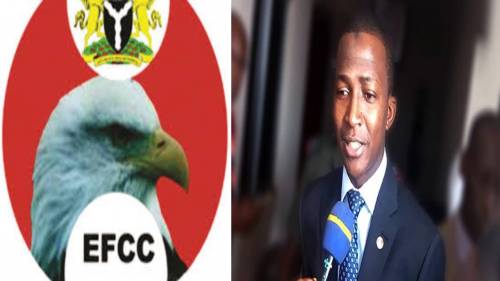
EXPOSED: How Newly Nominated EFCC Boss, Bawa, Was Detained For Alleged Multi-billion Naira Fraud In 2019

The new EFCC chairman who was then in charge of the Port Harcourt zonal office abruptly auctioned the trucks in 2019 to his proxies at “ridiculous prices”.

BY SAHARAREPORTERS, NEW YORKFEB 16, 2021

Abdulrasheed Bawa, the chairman-designate of the Economic and Financial Crimes Commission (EFCC) was arrested and detained by the anti-graft agency in 2019 for selling at least 244 trucks worth between N20-30 million each to his proxies at N100,000 per unit.

President Muhammadu Buhari had on Tuesday asked the Senate to confirm Bawa as the substantive Chairman of the EFCC.

“President Muhammadu Buhari has asked the Senate to confirm Mr Abdulrasheed Bawa as substantive Chairman of the Economic and Financial Crimes Commission (EFCC).

“In a letter to President of the Senate, Ahmad Ibrahim Lawan, the President said he was acting in accordance with Paragraph 2(3) of Part1, CAP E1 of EFCC Act 2004,” a statement by Femi Adesina, presidential spokesman, read.

According to Peoples Gazette, Bawa’s handling of dozens of petrol-bearing trucks that were confiscated from suspected looters deprived the country of at least N4.88 billion in potential loot recovery. 

The new EFCC chairman who was then in charge of the Port Harcourt zonal office abruptly auctioned the trucks in 2019 to his proxies at “ridiculous prices”.

“If you take a conservative approach and multiply the trucks by N20 million each, even though some were far above that price, you will arrive at N4.88 billion for the 244 trucks he sold out,” the newspaper quoted a senior EFCC official as saying.

“So Bawa is being compensated for ensuring that nearly N5 billion did not go into the public treasury.”

While some of the 244 trucks have been declared as proceeds of corruption by the Federal High Court, the newspaper learnt that forfeiture proceedings on most of them had yet to be concluded before Bawa sold them off.

Angered by the move, Ola Olukoyede, then EFCC secretary, confronted Bawa about the whereabouts of petrol tankers that were under forfeiture by the Port Harcourt zonal office in late 2019.

Olukoyede had received complaints that the deputy chief detective superintendent was tampering with seized assets that were still undergoing forfeiture proceedings in court.

“It is illegal to take possession of a citizen’s assets without a due process, which involves getting a federal judge to declare such assets as proceeds of public loot.

“He was asked to explain what happened to over 240 trucks that the zonal office was trying to secure their forfeitures, But he was unable to explain,” a source said.

The source said Bawa initially told Olukoyede that he got the directives to sell the trucks from the then acting Chairman, Ibrahim Magu, but he declined to write that claim in his statement. 

“It turned out that he was just dropping names, or he was trying to protect Magu,” a source said.

“He refused to write it in his statement that it was Magu who sent him.” 

The source said Olukoyede immediately called Magu, who was away on an official trip at the time, with details of what transpired in Port Harcourt. After concluding his findings, Olukoyede returned to Abuja, expecting Magu to take action upon his return from the trip. 

When Magu returned, it was learnt he made an urgent trip to Port Harcourt, and Bawa was removed as the zonal head the next day.

“He was ordered to be detained in Port Harcourt for several days,” another source familiar with the matter said.

“He was then asked to report at the training school in Abuja, which we thought would be the end of his career.”

As a member of the elite ‘Course 1’, EFCC’s first set of cadets now mostly at grade-level 13, Bawa has flaunted his association with Magu, and once acclaimed himself ‘anointed leader’ of the so-called ‘Magu Boys’.

Magu led the EFCC from November 2015 until his disgraceful ouster on July 7, 2020. He was accused of grossly enriching. (SaharaReporters)

Senate Moves To Repeal 96-Year-Old Quarantine Act

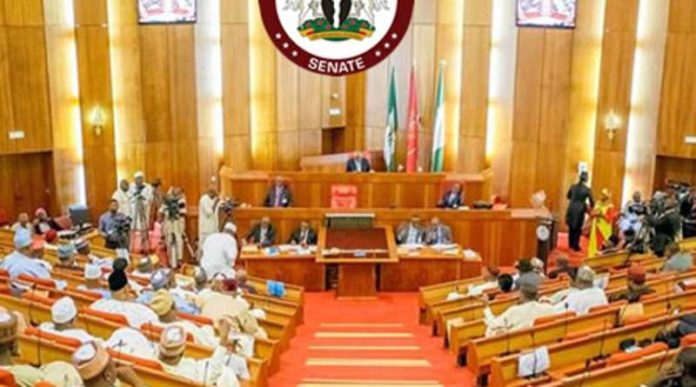
The Senate on Wednesday considered a bill that would see to the repeal of the Quarantine Act enacted in 1926, and help Nigeria deal with any impending outbreak of infectious and contagious diseases in the future.

The Health Emergency Bill, 2021, which scaled second reading on the floor during plenary, also does not make it mandatory for any Nigerian to be subjected to forced immunisation under the proposed legislation.

Sponsor of the bill Senator Chukwuka Utazi (PDP, Enugu North) said the piece of legislation under consideration was informed by the challenges that confronted the nation regarding the coordination of national response measures to combat the dreadful coronavirus crisis.

According to the lawmaker, the executive in an attempt to scale the loopholes created as a result of the extant archaic quarantine legislation, was compelled “to embark on a litany of subsidiary legislations to deal with certain exigencies” at the time.

He, specifically, emphasised that the bill provides the legal and institutional framework for imposition and implementation of mandatory seIf-isolation and quarantine of infected persons, introduction of movement restrictions, and adoption of appropriate safety and welfare measures at or during the outbreak of dangerous contagious diseases.

Utazi said, “It provides statutory recognition for power of the president, and in appropriate circumstances, the governor, to declare any place or area ”an infected area” and accordingly issue appropriate regulations or directives to prevent the spread of such infections in Nigeria, and the transmission from Nigeria to any other part of the world.

“It also provide for funding and accountability mechanisms for containment measures introduced at the outbreak or during disease epidemics and pandemics.

“This bill further prescribes offences and appropriate punishments for violations and contraventions associated with the control and management of dangerous contagious disease epidemics or pandemics.”

Senate President Ahmad Lawan referred the bill after scaling second reading to the committee on primary health care and communicable diseases for further legislative work.

The committee is expected to report back in two weeks.

Meanwhile, the Senate also on Wednesday considered a bill for an Act to establish the National Environmental Research and Training Institute. (Thenigerialawyer)

TIPS