Home Blog Page 1029

Nigerian couple clash over ‘side chick’, property

Katherine Daramola says her husband and his mistress are conniving to deprive her of the property, an allegation Mr Daramola denies.

A United States-based lawyer has accused her estranged husband, Adetokunbo Daramola, of plans to illegally acquire their jointly-owned property in Lagos.

Katherine Daramola, 57, said her husband and his mistress are conniving to perpetrate the act.

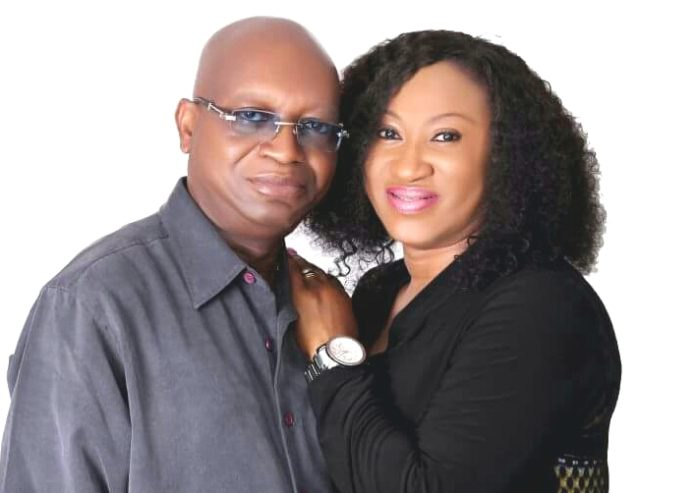
Adetokunbo and Katherine Daramola during happier times.

The property in question is a twin duplex at Magodo, an high-brow estate in Lagos.

Allegations

In 2010, Mr Daramola partly relocated to Nigeria where he began executing contracts for the Lagos Inland Revenue Service (LIRS) and some local government areas in the state, Mrs Daramola told PREMIUM TIMES in an interview.

The couple had earlier acquired plots of land at the Magodo GRA where they built the duplex.

“We got two plots of land at Magodo but we were not able to build on both plots, so we got a developer who paid N10 million on an agreement that he would take two duplexes and the family the other two duplexes,” said Mrs Daramola.

“We built two duplexes and the Certificate of Occupancy (C of O) has my name (on it).”

Mrs Daramola said she contributed 75 per cent of the money spent on building the house and furnished most parts of their home.

She alleged that, unknown to her, her husband, while in Nigeria, began an affair with another married woman. Upon completion and furnishing of their home, her husband and his mistress moved into the house, she added.

Mrs Daramola said after over three decades of legal practice, she had begun planning her retirement.

“I’m home-grown, I am close to retirement,” she said. “I need to come home, which is why we built the house, now they are trying to deny me access to my house.”

‘Abandonment, infidelity’

Mrs Daramola said her estranged husband “intermittently abandoned” her and their four children in the U.S., leaving her to single-handedly cater for the kids.

She also accused him of having an “illicit and adulterous” relationship with a woman whose husband was in the United Kingdom.

“He came to the United States, spent few months, then came back to Nigeria in 2018. I noticed he was having an affair, but I didn’t know how serious it was,” she said.

In August 2018, Mrs Daramola said while she was buying the furniture and other home items in the U.S. and shipping them to Nigeria, her estranged husband, who was clearing the properties in Lagos. was giving his mistress the impression that he was an “American big boy”.

“I handed over everything to him out of trust and that him, being the husband, the man of the home, he should take over. That was the trust and I just continued here buying things and shipping them home,” she said.

“Unknown to me, his mistress was living in my house. She was the first person that used my Jacuzzi, my brand new bed, my kitchen utensils and everything. She felt that comfortable, whatever he was telling her, I don’t know.”

Mrs Daramola said the “illicit and adulterous” relationship broke their marriage of 25 years.

“Due to abandonment and numerous incidents of adultery, and fear of being infected with deadly sexual diseases, I separated from him and asked him to give up my share of the twin duplexes,” she said.

Lawsuits

Mrs Daramola said she visited Nigeria in May 2019 unannounced only to find female items all over their home.

She said her husband denied knowing the owner of the items.

She said by her next visit to Nigeria, the locks to the house had been changed by her husband’s mistress. She accused the woman of planning to take over the house with her mother.

She said she hired a lawyer in Nigeria and began filing legal notices against them.

“Despite several legal notices and lawsuits, both defendants continue to stay in my part of the duplex. Mr Daramola continues to lock me out and I have to break into the house several times.

“On Sunday, January 9th (2021), I arrived with my children and broke the locks and padlocks to gain entry into my house and found Abisoye’s (the mistress) personal and intimate items strewn all over my bedroom and secure areas.

Adetokunbo Daramola and his alleged mistress, Abisoye Shitta-Bey

“My children and I moved her things out of my house and piled them up at the gate. When they were notified by third parties that we were in the house, they called the police and the Isheri DPO invited all of us.

“Tokunbo Daramola and Abisoye (were) asked to remove their personal belongings from the home. In the presence of the police officers, they both threatened to kill me. The DPO advised us to return with police escort and they came to pick up their load.

“Abisoye started screaming and insisting them she will not leave my home. Herself and Olatokunbo Daramola conspired and falsely accused me of stealing. They, however, later admitted that none of their personal items were stolen but (still) filed a police report,” Mrs Daramola said.

She said she has received several threats from the mistress and her mother that they would kill her “within six months”.

Mrs Daramola accused her husband and his mistress of evading court service.

“What Mr Daramola is exhibiting is the current trend of Nigerian men in the diaspora who walk away from long term marriages and children and subject wives to mortgages while they come to Nigeria and live with other women,” she said.

“Olatokunbo needs to the needful and give me my property. He wants to continue staying over at the house. I spent my whole life savings, I spent over $53,000 furnishing the house.”

Mr Daramola reacts

When PREMIUM TIMES contacted Mr Daramola on the allegations, he told this newspaper, “not to get involved in their matter”.

The businessman said his estranged wife “had already gone on Facebook to drag his name in the mud”.

“The Bible says seek the truth and hold on to it, she is just making all sort of lies, but I’m not interested in all these publicity. Let her do whatever she likes,” he said.

“I am not interested. She is a serious troublemaker, I can’t tell you much because I am not interested in the publicity. I left the house for her.

“She has been terrorising me for several years, enough is enough. We are going to America so we will start a divorce. We have been to court several times and she has been losing.

“This is not my first house, I have built houses before I met her, ” he said.

Meanwhile, Mr Daramola’s alleged mistress did not respond to phone calls and text messages. (premiumtimesng)

The Mickey Mantle story

‘Anyone who belongs to Christ has become a new person. The old life is gone; a new life has begun!’
2 Corinthians 5:17 NLT

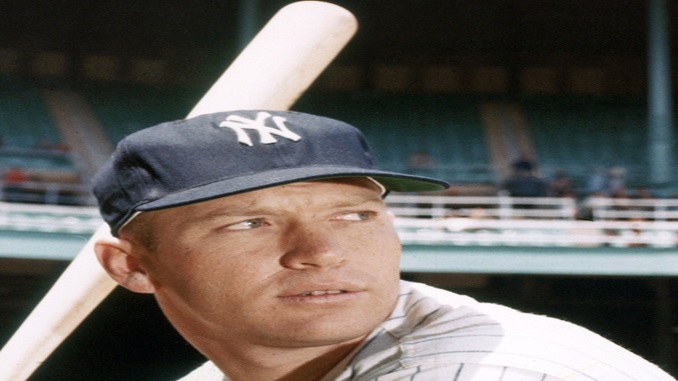
Mickey Mantle is one of the true legends of baseball history. He played two thousand four hundred and one games for the New York Yankees from 1951 until 1968, hit a record eighteen homers in twelve World Series, and was placed in baseball’s Hall of Fame in 1974. The crowd loved him. He was famous. He was rich. But he still felt empty inside, so he turned to alcohol.

In a Sports Illustrated interview, he once described his long battle with alcohol and his heartbreaking problems with his family. The interviewer then asked, ‘So how are things going with you today, Mickey?’ He replied, ‘I haven’t had a drink in eight months. I’m starting to get my life back together, but I just feel like there’s something missing.’

Do you feel that way today? Have all the things you’ve achieved or acquired failed to satisfy you? Mickey Mantle finally discovered how to fill the hole in his soul. Near the end of his life he found what he had always been looking for – Jesus Christ. Another famous former baseball player, Bobby Richardson, led him to Christ.

At Mantle’s funeral, Richardson told of helping Mantle receive the Lord Jesus as his personal Saviour. On his death bed Mickey Mantle said, ‘I am trusting in Christ’s death for me to take me to heaven.’ Home run! And what Jesus did for Mickey Mantle, He wants to do for you too. ‘Anyone who belongs to Christ has become a new person. The old life is gone; a new life has begun!’

Bible in a Year: Leviticusn 8-10, Matthew 25:31-46

Credit: The Word for Today

Photo Credit: SB Nation

Police Arrest Kano Hisbah Commander With Married Woman In Hotel

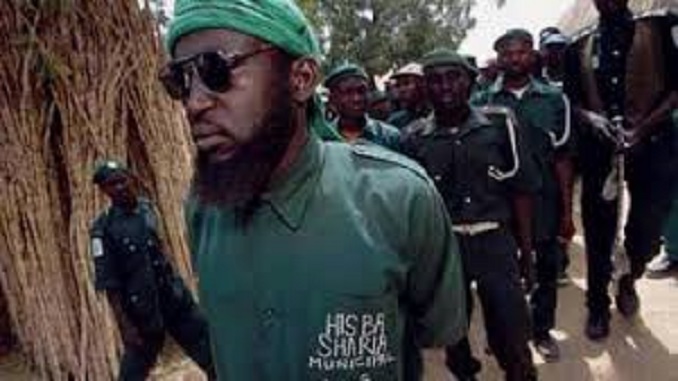
The arrested commander is said to be in charge of arresting beggars and prostitutes in Kano metro area. He was taken into custody after the husband of the woman with whom he allegedly had an affair filed complaints.

The Kano State Police Command has arrested a senior official with the state’s Hisbah board after he was allegedly caught with a married woman in a hotel.

According to Freedom Radio Kano, the official was arrested in the Sabon Gari area of the city. His name was not immediately mentioned, but he was described only as police chief when the matter featured on Freedom FM’s popular magazine programme “Inda Ranka”.

The arrested commander is said to be in charge of arresting beggars and prostitutes in Kano metro area. He was taken into custody after the husband of the woman with whom he allegedly had an affair filed complaints. 

According to the station, Kano Hisbah Commander, Muhammed Haruna, while describing the incident as unfortunate, said a two-man committee had been set up to investigate the matter. 

Hisbah officers regularly arrest unmarried people caught in hotels, presumably for sexual activities, as part of their enforcement of the Sharia. 

Established to enforce Sharia, Hisbah recently banned stylish haircuts, sagging of trousers, playing of music at social events by disk jockeys and seized tricycles from riders for adorning them with pictures considered to be obscene and against the tenents of Islam in some states. 

Hisbah also banned commercial motorcycle and tricycle riders from carrying two women at a time.

This was in addition to other unusual directives reeled out by the Islamic police.

Sahara Reporters

20 Tips for Mentors and Mentees

  • by Onyekachi Umah, Esq., LL.M, ACIArb(UK)

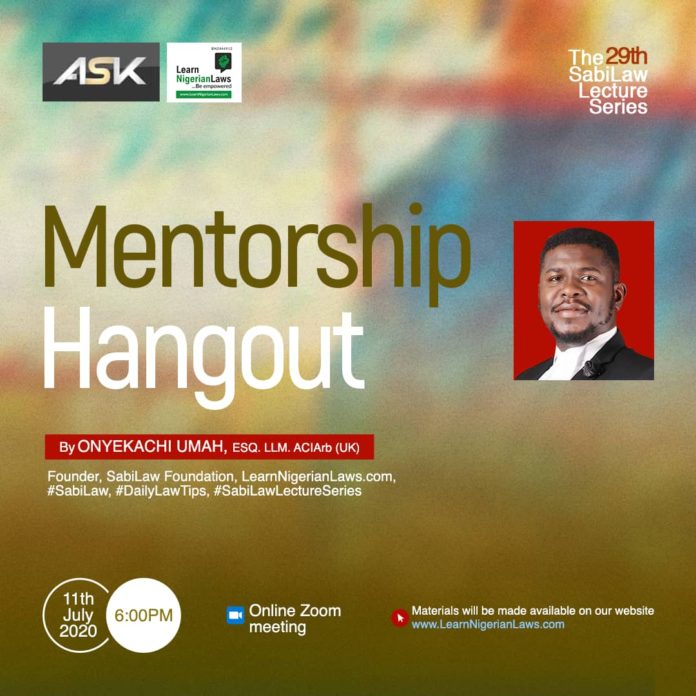
20 Tips for Mentors and Mentees is part of a presentation delivered by Onyekachi Umah at the “ASK Mentorship Hangout” and “the 29 Sabi Law Lecture Series” on 11 JULY 2020 (6:00 PM)

20 Tips for Mentors and Mentees

  1. MENTORSHIP is the transfer of wealth (experience, skill, knowledge and time) from a more experienced and willing person to a willing person in need of wealth, so that both parties may grow. A mentee must have genuine hunger for the wealth of the mentor and the mentor must be willing and available to lead and cheer his mentee for free. The relationship is long term and often informal. Mentors selflessly make other people’s dreams come true!
  2. A mentorship is a two-way traffic. Both Mentor and Mentee grow and learn in a mentorship relationship. Mentors must have open minds to pick up new ideas from mentees in order to better lead mentees through their often creative and innovative quest.
  3. Mentorship is far from classroom teaching rather it is a priceless life experience. There is often standard curriculum, rather it is bespoke. There is no special training for mentors. Mentors are not coaches. Coaches are often in need of some level of showmanship rather mentors are often better observed in their ecology.
  4. Mentees must seek for people that have gone through the paths that mentees desire. You don’t need people that have read or studied about the way (mere consultants/professionals) rather people that have walked through the way, no matter how little.
  5. Mentors must not be successful but must be experienced! Most coaches of world best teams and athletes were never world champions but have the skill and experience to make champions. There are better lessons in the heart of the one that has failed severally. Go for mentors with process and not necessarily results. Success is often not a direct proof of a reliable process but reliable processes and approaches are often multiple routes to success. This is important in a world where there are many successful people without a transferable process or approach.
  6. Avoid having one mentor for all aspects of your life, if not you may become a mere copy of a fading original. Every person is a unique being that can achieve what no man has attempted in life, so why be a counterfeit? Do not copy a mentor rather aspire to understand him, learn his approach and apply your own initiative. Mentors provide a baseline for greater impact and innovations and not crowns of success.
  7. A mentor is not perfect so be ready for a shocker or mistake. You must not always agree with your mentor but learn to be courteous and courageous. Always apply your own logic and avoid being a gullible extremist. Story of Malcolm X and his mentor (Elijah Muhammad) is instructive.
  8. There is no room for competition in mentorship. A mentor like a good father, praying and working to have his son greater than him, with louder exploits. Strive to go pass your mentor and not to be your mentor. Every good mentor wants a greater mentee. The reward of a mentor is the testimonies of his mentee.
  9. Mentorship can be acknowledged or unacknowledged. It can be physical and or remote. It can be via meeting, walks, visits, books, tapes and publications.
  10. Mentorship is mentee-driven. Mentors want to see enthusiasm, passion and hunger for knowledge. Mentors have information and knowledge that mentees need and it is the duty to mentees to passionately seek for such from mentors.
  11. Mentee is not a servant rather a respected and respectful person willing to learn from the experiences of another. Mentees should never be abused or taken advantage of, after all proper legal action can be taken against a mentor. Also, mentors should never be abused by mentees.
  12. Mentorship is better without any financial considerations. The moment you pay for mentorship, it becomes coaching and a lecturer-student relationship. It becomes short term and the mentor will have no long-term commitment. Go to school and coaching sessions if you want a paid coach for a specific issue, a specific time and result.
  13. Appreciate your mentors (kind words) and avoid bribing/buying them or showing off wealth. Mentors need your sincere comments and feedback, so don’t send wrong signals.
  14. Avoid disturbing a mentor’s personal space. There is time for everything and avoid losing your consciousness.
  15. Mentee must be serious with mentorship and do all assignments with genuine hunger for more. Don’t be pulled rather show eagerness and willingness at all times. Failing and failures are part of mentorship, so bury your fear and shame.
  16. Mentees must have some minimum/baseline knowledge (not necessarily experience). Mentors are not trained teachers and may not be patient for lack of basic fundamentals. So, mentees must do some homework and self-training. Hence, some mentors send out assessment tests to prospective mentees before accepting a mentorship relationship.
  17. Mentors must Consult, Counsel and Cheer their mentees. Mentors must be approachable and detailed enough to inquire and lead mentees, as well as advice, encourage and celebrate every little improvement of mentees.
  18. Mentees Stages in Mentorship: Preparation, Negotiations, Application and Transition. Mentorship starts with preparing to be led, negotiating to be led, being led and then transforming the relationship.
  19. How to choose a mentor: write you desired deliverables (what you want); justification (why you want what you want. Your justification must align with your purpose in life); scout, study and list leaders in your chosen area; reduce the list to 5 desired mentors in order of priority; reach out professionally (physically or remotely); wait for response (avoid being a pain) and when accepted as a mentee, commence with appreciation and an open mind.
  20. Don’t worry, you must not have a mentor to be successful but life is easier climbing on the right shoulders!

Sabi Law Projects:

#SabiLaw

#DailyLawTips

#SabiBusinessLaw

#SabiElectionLaws

#SabiHumanRignts

#SabiLawOnBeatFm

#SabiLawLectureSeries

#CriminalJusticeMonday

#SabiLawVideoChallenge

To keep up to date on all our free legal awareness projects of Sabi Law Foundation, follow us via

Facebook Page:@LearnNigerianLaws, Instagram: @LearnNigerianLaws and Twitter: @LearnNigeriaLaw

Please share this publication for free till it gets to those that need it most. Save a Nigerian today! NOTE: Sharing, modifying or publishing this publication without giving credit to the author or Sabi Law Foundation is a criminal breach of copyright and will be prosecuted. This publication is the writer’s view not a legal advice and does not create any form of relationship. You may reach the writer for more information.

This publication is powered by www.LearnNigerianLaws.com {A Free Law Awareness Program of Sabi Law Foundation, supported by the law firm of Bezaleel Chambers International (BCI).} Sabi Law Foundation is a Not-For-Profit and Non-Governmental Legal Awareness Organization based in Nigeria.

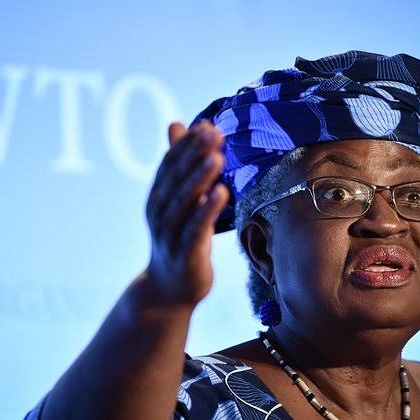
Vaccine nationalism won’t save the world from COVID-19, WTO DG warns

Freshly minted Director General of the World Trade Organization (WTO), Ngozi Okonjo-Iweala has cautioned countries especially the advanced and vaccine exporting ones that vaccine nationalism would not help the world exit the coronavirus pandemic challenge.
She gave the warning during a press event shortly after her emergence.
She said actually it is normal for countries to think of taking care of themselves and excluding others. But this time, such nationalistic and exclusive thinking won’t help
“I have been in politics sometime as the finance minister of my country and I know that naturally, a politician or government would focus on its own citizens. This is natural and normal.
But this is a case of worldwide threat
So by the time a country takes care of her citizens and opens her doors to mingle with the world, people who are still vulnerable would travel in and bring in the infection
So the best is that while some countries might not have the means to make their vaccines, there should be an arrangement by the World Health Organization through the COVAX to enable some countries manufacture the invented vaccines locally while still taking care of the intellectual property rights of the trademark owners
That will help make the availability more assured while the WTO will work out a means of making sure the trade and movement of the vaccines is not hindered.” (africachinapresscentre)

How Nigerian soldiers routinely raped, tortured us in Abuja barracks — Women arrested in Obigbo, Rivers

The girls confessed that two female victims were tortured to death while others were routinely raped during the weeks they spent at the detention facility in Mogadishu Barracks, Asokoro.

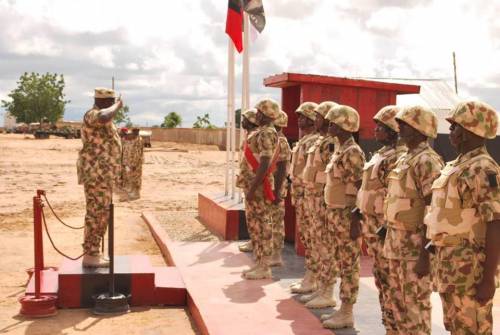
Some soldiers of the Nigerian Army in Abuja have been accused of torturing and raping dozens of ladies arrested from Obigbo (Oyigbo) in Rivers State, between October and November 2020, during a raid in the area.

The girls confessed that two female victims were tortured to death while others were routinely raped during the weeks they spent at the detention facility in Mogadishu Barracks, Asokoro.

The females were arrested from around a market in Obigbo on their way home from work between 7pm and 7.30pm on November 2020 and initially taken to the Nigerian Army base in Obinze Army Barracks, Owerri, Imo State.

From there, they were transported to Abuja and detained for “questioning” at Mogadishu Barracks, Abuja where many of them were subsequently routinely raped.
“I was raped three times. The soldiers shouted on us. They came in the morning and in the evening. We could not easily pick their identities. One of us was beaten to death. She was taken out of the detention and never returned. There were many of us – around 50 girls,” one of the victims said.
 
Another victim said, “I was arrested around the market square while returning from work. I was taken to Obinze barracks and from there the following day, we all found ourselves in Abuja. I was raped also. I secured my freedom through a lawyer only last week. Some of us were tortured as we were being raped.”

A civic organsiation, International Society for Civil Liberties and Rule of Law, from Owerri, Imo State, in a report on the incident, said at least 53 females were raided from Obigbo, and most of them are feared to have been sexually molested by the Nigerian Army personnel.

The group called for an independent government’s investigation of the incident, while demanding that Buratai and other culpable serving and retired military officers be brought to justice.
 (SaharaReporters)

Prof of Law, Company in legal battle over N73m legal fee

By Yemi Oyeyemi, Abuja

A professor of law and a Senior Advocate of Nigeria (SAN), Prof. Yemi Akinseye- George, and a private indigenous company, NACENN Nigeria Limited, are locked in a fierce legal battle over disputed N73M legal fee.

The legal battle is holding before a High Court of the Federal Capital Territory (FCT), Abuja on payment of N73m professional fee.

While the claimant, Prof Akinseye-George in his suit marked HC/CV/2055/2020 claimed that the company is indebted to him to the tune of the N73m, being his outstanding professional fee, the company in its counter claim, has however accused him of fraudulently inflating his professional fee from 10% to 20%.

In his writ of summons dated July 3, 2020, he narrated how he was engaged by the Chairman and Chief Executive Officer of the Company, Engineer. Greg Ezulike (now late) through one Maduka Anigbogu, to help in recovering some long standing debts owed the company by the federal government.

That by a letter dated February 28, 2018, he was engaged to recover the debts in the sum of about N2 billion.

He stated in his statement of claim that pursuant to the letter, he was to be paid 10 percent of any payment received from the federal government on or before March 30, 2018.

That at the expiration of the time frame, the Chairman and Chief Executive Officer of the company asked him to continue to carry on with the assignment.

That although he was paid the agreed 10 percent professional fee in respect of some payments he secured for the company, his professional fee amounting to N73m subsequent recoveries has not been paid to him.

That he has suffered great financial inconveniences as a result of the company’s refusal to pay the balance of his professional fee, which has impacted negatively on the running of his law firm.

However, in its counter claim filed by its counsel, Godwin Omaka (SAN), the company informed the court that the letter of payment did not stipulate that it will pay the claimant 10 percent of any payment received from the federal government on or before March 30, 2018.

That rather, the letter stipulated that the company’s obligations (including payment of 10 percent of any recovered sum) to the claimant shall terminate automatically after March 30, 2018 from the date the claimant receives the letter, if the company does not receive payment of the total sum of N2 billion from the federal government.

The company said it received payments from the Federal government in the sum of N100m and N150m respectively and paid 10 percent of the said sum to the claimant as agreed fees, in June 2018.

It stated however that, “following the death of its former Chairman and Chief Executive Officer, Late Chief Ezulike, the claimant, by a letter of demand dated November 27, 2019, demanded from the company among other things, the sum of N100m, being 20 percent (instead of agreed 10 percent) of the N500m recoverd from the federal government on its behalf in November 2019.

That the new management of the company ignorantly paid the N100m to him, acting on the belief that 20 percent was the agreed fee due to him under the letter of engagement, having not seen or read the letter of engagement for his services in this regard.

That the claimant making the demand of 20 percent of the said recovered sum took advantage of the situation of the death of the former Chairman of the company.

That upon discovering the letter of engagement and reading the terms contained therein, Afam Ezulike, the son of the late Chief Ezulike, who succeeded his father to become the new chairman, discovered that the claimant misrepresented that he was entitled to 20 percent of the recovered sums from the federal government, when the letter of engagement provided that he will be entitled to only 10 percent.

Consequently, the company is asking the court to declare that the conduct of the claimant in misrepresenting that his professional fee is 20 percent of the recovered debt value was unjustified and wrongful.

A declaration that the conduct of the claimant vitiates his engagement with the company the sum of N59m with accrued interest as prevailing bank rate from November 28, 2019 till the time of final liquidation. (Everyday)

Stripping suspects naked is torture and it’s a crime

By Onyekachi Umah

Introduction: 

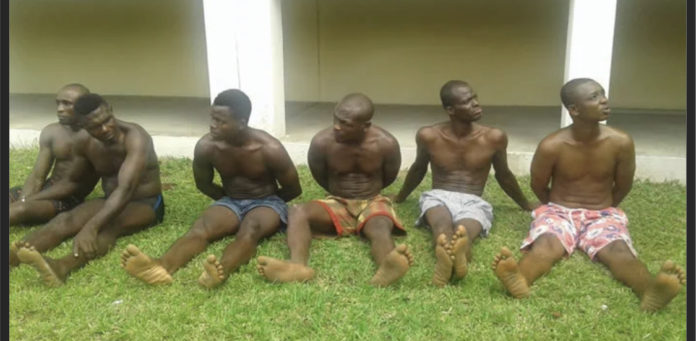
Across Nigeria, most persons (suspects) upon being arrested and detained are forced by the arresting officers to remove their clothes, belts, shoes, phones, wristwatches and other personal belongings. Most suspects are detained in police stations naked (barely wearing a short/pant, if any). Where a suspect is fortunate, he is offered his own trousers but to wear it inside-out.

As a practicing attorney, my first visit to a police station in Nigeria was horrifying, mere suspects were paraded like mad people by police officers, who maltreated and ordered the suspects like slaves. This is the norm across most detention centers and law enforcement agencies. One wonders if having naked suspects is part of the training and operational protocol of law enforcement agencies in Nigeria. This work examines the legality of stripping suspects naked by law enforcement agents and the punishments for such in Nigeria.

Nakedness is Lawlessness:

From the Constitution of Nigeria to all the laws and regulations in Nigeria, there is no justification for stripping any person or suspect naked. Not even a convicted murderer is permitted to be stripped naked, not to talk of mere suspects, that have not even been found guilty of any wrong.

The parts of the body of a person is private to the owner of the body. Clothing them is the choice and right of the owner of the body. As such forcefully unclothing any person is a violation of privacy. Privacy and private life are protected in Nigeria as fundamental human rights and as such stripping, any person naked is a violation of fundamental human right. It violates the “Right to Private and Family Life”. Also, being clothed is part of being human and forcefully removing clothes is dehumanizing and torturing. It is a violation of another fundamental human rights; “Right to Dignity of Human Persons”. Any victim of violation of human rights may approach a High Court and will be duly compensated.

On 20th December 2017, the National Assembly (federal legislature) enacted a federal law (Anti-Torture Act) that further criminalized all forms of torture. The said law was signed into law by President Muhammed Buhari. It clearly listed “stripping naked” as a torture and created punishment for any law enforcement agent that stripes any person naked. It also created punishments for heads of units/departments, where a person was stripped naked as well as for any officer that watches such acts. By the federal law, the punishment for stripping any person naked (or any other form of torture) is imprisonment for not more than 25 years, without an option of fine.

Torture includes; beatings, food deprivation, rubbing of pepper/chemicals, assuming of stressful bodily positions, rape, exposure to cold/sunlight, use of drugs, blindfolding, threat, prolonged interrogation, unscheduled transfer of persons, secret detention, denial of sleep, shaming, stripping naked and parading in public places.

Police torture is a crime, irrespective of the alleged offence of the victim of torture. There is no justification for torture, not even war, national security or high-profile case. Every police torture and torture by a law enforcement officer is a violation of fundamental human right. Where there is torture in any security agency, the immediate commanding officer in-charge of the unit/department that committed such offence of torture will be held liable as an accessory to the crime, for any act or omission or negligence on his part that may have led to the commission of torture by his subordinates/colleagues. Any person that witnesses or is present when torture is being conducted is as liable as the person that conducted the torture.

 Conclusion:

There is no justification for stripping any person naked. It is barbaric and dehumanizing. Any operational protocol or rules of engagement of any law enforcement agency that allows stripping suspects naked is unlawful, illegal and a violation of the constitution of Nigeria. That an officer was merely obeying commands from superior officer is not an excuse for stripping naked or any form of torture.

The argument that stripping suspects naked is necessary, to avoid possession of weapons or drugs is not a justification for violation of any human right. In this century, there are better ways of policing and managing suspects. You cannot curb crime by violation of human rights. Although human rights are not absolute, since there can be suspended, there are constitutionally approved circumstances and procedures for such suspension.

If a person is to be stripped naked, it can only be done with a valid order of a court of law and not on the order of any other person, institution or law enforcement agent. Where torture leads to death, the violator will be tried for murder. The punishment for murder is death. Also, with internal disciplinary measures, the offending law enforcement officer should lose his/her job too.

At all times, law enforcement agencies are liable for the conducts of their law enforcement agents. Feel free to sue any offending police officer/law enforcement agent as well as the offending law enforcement agency. Seeking for justice is a right; a fundamental right to fair hearing.

My authorities, are:

  1. Section 1, 2, 3, 4, 5, 6, 33, 34, 37, 39, 40, 41, 318 and 319 of the Constitution of the Federal Republic of Nigeria, 1999.
  2. Sections 1, 2, 3, 4, and 5 of the Police Act, 2020
  3. Sections 2, 3, 7, 8 and 13 of the Anti-Torture Act, 2017
  4. Sections 1, 2, 3, 4, 69, 70, 71 and 72 of the Criminal Code Act, 1916.
  5. Sections 1, 3, 4, 5, 100, 105, 106 of the Penal Code Act, 1960
  6. Sections 1, 2, 3, 7, 9 and 10 of the Riot (Damages) Act, 1963.
  7. Sections 1, 2, 3, 4, 10, 18, 19 and 20 of the Riot Damage Act, 1958.
  8. The judgment of the Supreme Court of Nigeria (on meaning and nature of fundamental human rights) in the case of RANSOME-KUTI & ORS v. AG FEDERATION & ORS (1985) LPELR-2940(SC)
  9. The judgment of the Supreme Court of Nigeria (on meaning and nature of fundamental human rights) in the case of AGBAI & ORS v. OKOGBUE (1991) LPELR-225(SC).
  10. The judgment of the Supreme Court of Nigeria (on when and why fundamental human rights can be restricted/suspended) in the case of DOKUBO-ASARI v. FRN (2007) LPELR-958(SC).
  11. The Judgement of the Court of Appeal of Nigeria (on the Unconstitutionality of the Public Order Act) in the case of Inspector-General of Police v. All Nigeria Peoples’ Party (2008) WRN 65
  12. The Judgement of the Federal High Court of Nigeria (on the Unconstitutionality of the Public Order Act) in the case of All Nigeria Peoples Party & Ors. v. Inspector General of Police (2006) CHR 181
  13. Judgment of the Supreme Court of Ghana (on that no permit or license is needed for protests) in the case of of New Patriotic Party v. Inspector-General of Police, Accra (1992-1995) GBR 585.
  14. Onyekachi Umah, “Can Police Punish Unlawful Protesters?” (LearnNigerianLaws.com, 15 February 2021) <https://learnnigerianlaws.com/can-police-punish-unlawful-protesters/> accessed 16 February 2021.
  15. Onyekachi Umah, “When Can A Protest Become A Riot?” (LearnNigerianLaws.com, 6 November 2020) <https://learnnigerianlaws.com/when-can-a-protest-become-a-riot/> 15 February 2021.
  16. Onyekachi Umah, “#EndSarsNow: Punishment For Police (SARS) Torture” (LearnNigerianLaws.com, 6 October 2020) <https://learnnigerianlaws.com/endsarsnow-punishment-for-police-sars-torture/> accessed 15 February 2021.
  17. Onyekachi Umah, “#EndSarsNow: Nigeria Police Lacks Power To Punish” (LearnNigerianLaws.com, 7 October 2020) <https://learnnigerianlaws.com/endsarsnow-nigeria-police-lacks-power-to-punish/> accessed 15 February 2021.
  18. Onyekachi Umah, “#EndPoliceBrutality: How To Sue the Nigeria Police Force and Police Officers” (LearnNigerianLaws.com, 14 October 2020) <https://learnnigerianlaws.com/endpolicebrutality-how-to-sue-the-nigeria-police-force-and-police-officers/> accessed 15 February 2021.
  19. “Demand justice for Police Brutality in Nigeria” (Amnesty International) <https://www.amnesty.org/en/get-involved/take-action/nigeria-end-impunity-for-police-brutality-end-sars/> accessed 15 February 2021.
  20. Onyekachi Umah, “Who Can Be Lawfully Killed In Nigeria?” (LearnNigerianLaws.com, 26 October 2020) <https://learnnigerianlaws.com/who-can-be-lawfully-killed-in-nigeria/ > accessed 3 November 2020.
  21. Femi Falana, “Police Permit Not Required For Rallies in Nigeria” (Premium Times, 23 January 2014) <https://www.premiumtimesng.com/opinion/153860-police-permit-required-rallies-nigeria.html> accessed 14 October 2020.
  22. Onyekachi Umah, “Can A Person With A Nigerian Flag Be Shot Or Killed?” (LearnNigerianLaws.com,23 October 2020) <https://learnnigerianlaws.com/can-a-person-with-a-nigerian-flag-be-shot-or-killed/ > accessed 3 November 2020
  23. Onyekachi Umah, “#EndPoliceBrutality: When & How Can Government Prohibit Protest In Nigeria?” (LearnNigerianLaws.com, 19 October 2020) <https://learnnigerianlaws.com/when-and-how-can-government-prohibit-protest-in-nigeria/ > accessed 3 November 2020.
  24. Onyekachi Umah, “#EndPoliceBrutality: The Right To Protest Is A Human Right.” (LearnNigerianLaws.com, 15 October 2020) <https://learnnigerianlaws.com/endpolicebrutality-the-right-to-protest-is-a-human-right/ > accessed 3 November 2020.
  25. Onyekachi Umah, “#EndPoliceBrutality: Do You Need A Police Permit To Protest?” (LearnNigerianLaws.com, 16 October 2020) <https://learnnigerianlaws.com/endpolicebrutality-do-you-need-a-police-permit-to-protest/> accessed 3 November 2020.
  26. October 2020. 1 Onyekachi Umah, “Does The President/Governors Have Powers To Lockdown Any Part Of Nigeria Or Restrict Human Rights?” (Daily Law Tips [Tip 537]) <https://learnnigerianlaws.com/does-the-president-governors-have-powers-to-lockdown-any-part-of-nigeria-or-restrict-human-rights-daily-law-tips-tip-537-by-onyekachi-umah-esq-llm-aciarbuk/ > accessed 18 October 2020.
  27. Onyekachi Umah, “Human Rights That Can Never Be Restricted Even In War, Pandemic or State of Emergency (Daily Law Tips [Tip 539]) <https://learnnigerianlaws.com/human-rights-that-can-never-be-restricted-even-in-war-pandemic-or-state-of-emergency-daily-law-tips-tip-539-by-onyekachi-umah-esq-llm-aciarbuk/> accessed 18 October 2020
  28. Onyekachi Umah, “Duty of Government to Pay Compensation for Damages Caused By Riot.” (LearnNigerianLaws.com, 4 November 2020) <https://learnnigerianlaws.com/duty-of-government-to-pay-compensation-for-damages-caused-by-riot/> accessed 15 February 2021.
  29. Onyekachi Umah, “Who Pays For Properties Damaged or Lost In A Riot In Nigeria” (LearnNigerianLaws.com, 6 August 2018) <https://learnnigerianlaws.com/daily-law-tips-by-onyekachi-umah-esq-tip-157-who-pays-for-properties-damaged-or-lost-in-a-riot-in-nigeria/ > accessed 3 November 2020.
  30. Onyekachi Umah, “List of Fundamental Human Rights In Nigeria.” (LearnNigerianLaws.com, 22 October 2020) <https://learnnigerianlaws.com/list-of-fundamental-human-rights-in-nigeria/> accessed 15 February 2021.
  31. Onyekachi Umah, “Does The President/Governors Have Powers To Lockdown Any Part Of Nigeria Or Restrict Human Rights?” (Daily Law Tips [Tip 537]) <https://learnnigerianlaws.com/does-the-president-governors-have-powers-to-lockdown-any-part-of-nigeria-or-restrict-human-rights-daily-law-tips-tip-537-by-onyekachi-umah-esq-llm-aciarbuk/ > accessed 18 October 2020.
  32. Chris Admin, “Onyekachi Umah Speaks To ChannelsTv On SARS & The New Police Act” (LearnNigerianLaws.com, 9 November 2020) <https://learnnigerianlaws.com/onyekachi-umah-speaks-to-channelstv-on-sars-the-new-police-act/> accessed 15 February 2021.
  33. Onyekachi Umah, “What Is The Punishment For Any Person Including Police Officers That Tortures Another Person” (LearnNigerianLaws.com, 18 December 2018) <https://learnnigerianlaws.com/daily-law-tips-by-onyekachi-umah-esq-tip-251-what-is-the-punishment-for-any-person-including-police-officers-that-tortures-another-person/> accessed 15 February 2021.
  34. Onyekachi Umah, “Is Obeying “Orders From Above” a Defence for Torture in Nigeria” (LearnNIgerianLaws.com, 7 September 2019) <https://learnnigerianlaws.com/is-obeying-orders-from-above-a-defence-for-torture-in-nigeria-daily-law-tips-tip-409-by-onyekachi-umah-esq-llm-aciarb-uk/> accessed 15 February 2021.
  35. Onyekachi Umah, “Being Present During Torture Without Participating In It, Is A Crime” (LearnNigerianLaws.com, 25 November 2019) <https://learnnigerianlaws.com/being-present-during-torture-without-participating-in-it-is-a-crime-daily-law-tips-tip-464-by-onyekachi-umah-esq-llm-aciarb-uk/> accessed 15 February 2021.
  36. Onyekachi Umah, “New Punishment for Security Officers Involved in Torture in Nigeria.” (LearnNigerianLaws.com, 27 August 2017) <https://learnnigerianlaws.com/new-punishment-for-security-officers-involved-in-torture-in-nigeria-daily-law-tips-tip-401-by-onyekachi-umah-esq-llm-aciarb-uk/> accessed 15 February 2021.
  37. Onyekachi Umah, “Watching Torture but not Participating in it, is Torture.” (LearnNigerianLaws.com, 19 November 2019) <https://learnnigerianlaws.com/watching-torture-but-not-participating-in-it-is-torture-daily-law-tips-tip-460-by-onyekachi-umah-esq-llm-aciarb-uk/> accessed 15 February 2021.
  38. Onyekachi Umah, “Any Security Agency’s Manual/Protocol that Allows Torture Even for National Security Cases is Unlawful and its Officers are Liable.” (LearnNigerianLaws.com, 11 September 2019) <https://learnnigerianlaws.com/any-security-agency-s-manual-protocol-that-allows-torture-even-for-national-security-cases-is-unlawful-and-its-officers-are-liable-daily-law-tips-tip-412-by-onyekachi-umah-esq-llm-aciarb-uk/> accessed 15 February 2021
  39. Direct access to previous works on Torture in Nigeria <https://learnnigerianlaws.com/?s=torture+>
  40. Direct access to previous works on Nigeria Police Force <https://learnnigerianlaws.com/?s=police+>
  41. Pic credit: https://www.google.com/amp/s/punchng.com/police-kill-one-arrest-six-calabar-bank-robbery/%3famp=1

Sabi Law Projects:

#SabiLaw

#DailyLawTips

#SabiBusinessLaw

#SabiElectionLaws

#SabiHumanRignts

#SabiLawOnBeatFm

#SabiLawLectureSeries

#CriminalJusticeMonday

#SabiLawVideoChallenge

Speak with the writer, ask questions or make inquiries on this topic or any other via [email protected], [email protected] or +2348037665878 (whatsapp).

To receive free Daily Law Tips, join our free Telegram group, via this link: https://t.me/LearnNigerianLaws

To keep up to date on all our free legal awareness projects of Sabi Law Foundation, follow us via

Facebook Page:@LearnNigerianLaws, Instagram: @LearnNigerianLaws, Twitter: @LearnNigeriaLaw and YouTube: Learn Nigerian Laws

Please share this publication for free till it gets to those that need it most. Save a Nigerian today! NOTE: Sharing, modifying or publishing this publication without giving credit to the author or Sabi Law Foundation is a criminal breach of copyright and will be prosecuted. This publication is the writer’s view not a legal advice and does not create any form of relationship. You may reach the writer for more information.

This publication is powered by www.LearnNigerianLaws.com {A Free Law Awareness Program of Sabi Law Foundation, supported by the law firm of Bezaleel Chambers International (BCI).} Sabi Law Foundation is a Not-For-Profit and Non-Governmental Legal Awareness Organization based in Nigeria.

Okonjo-Iweala: A Win for Nigeria, Africa and Multilateralism

By Simbo Olorunfemi

When on June 4, 2020, President Buhari announced the withdrawal of the candidacy of Ambassador Yonov Frederick Agah, Deputy Director-General and Nigeria’s Permanent Representative to the World Trade Organisation (WTO) for the position of Director-General for the organisation, replacing him with Dr. Ngozi Okonjo-Iweala, quite a few feathers were ruffled, at home and abroad. At home, some could not find justification for taking out a man with such depth of experience on international trade and the WTO in particular, having been with the organisation since 2005, when he was appointed Nigeria’s Ambassador to the WTO, serving as chair of the WTO’s General Council in 2011, among other notable positions.

From abroad came stiffer opposition to this replacement. For some reason, Egypt strongly felt it amounted to pulling the rug under its feet and that Nigeria was only sneaking behind to re-open the shop when the window for nomination, as mutually agreed on within the African Union (AU), had closed. Indeed, Egypt was right to the extent that the process set in motion by the AU for coming up with an ‘African Candidate’ had lapsed before Nigeria pulled out what appeared to be a joker from her pack. Having taken the position at its summit in Niamey in July 2019 that the AU should do everything to ensure that the next Director General of the WTO is African, it was agreed that interested countries should present their candidates to the African Union by the end of November 2019.

The African Union, at its Executive Council’s 36th Ordinary Session held in February, had endorsed the candidates from Benin, Egypt and Nigeria “as the short list for the African candidates to the post of Director General of WTO and REQUESTS the Ministerial Committee on African Candidatures within the International System to consider the matter and report to the Executive Council’s 37th Ordinary session with a view to agreeing on a single African candidate.” The candidates were: Dr. Agah (Nigeria), Éloi Laourou (Benin) and Abdel Hamid Mamdouh (Egypt). But then, on account of COVID-19, the AU Summit that had been scheduled to hold in Chad in July, at which a final decision would have been ratified, had to be cancelled.

Also, whereas the selection process for the next DG of WTO had been expected to start in December 2020, as a result of the sudden decision in May 2020 by the Brazilian career diplomat, Roberto Carvalho de Azevêdo to step down on August 31, 2020, a year before the expiry of his mandate as WTO Director-General, the General Council had to immediately launch the selection process for a new Director-General for the WTO in June, thus kick-starting a frenzy towards the emergence of a new DG, which by convention had to come through consensus among the 164 member-states.

How that development led to the decision by Nigeria to have a change of candidates, with Okonjo-Iweala, who years back had been linked to the same WTO, coming into the picture, is unknown. The point, however, remains that Nigeria had not before then and could not have even made a formal presentation of the Agah candidacy to the WTO. Rather, what was done was a participation in the process set up by the AU, which, as earlier explained, had not reached conclusion. But understandably, Egypt, perhaps seeing itself as the favourite, buoyed by the rich resume of its candidate, a trade lawyer, with extensive experience in international trade and the WTO, having worked in different capacities within the WTO, especially within the Secretariat since joining the General Agreement on Tariffs and Trade (GATT), the predecessor to the World Trade Organisation (WTO), in 1990, was quite miffed at the hand played by Nigeria.

But her request to the “Ministerial Committees on Candidatures to officially inform the African Group in Geneva that candidature of Ambassador Yonov Frederick Agah of the Federal Republic of Nigeria has been withdrawn and disqualified, and that Mr. Abdulhameed Mamdouh of the Arab Republic of Egypt and Mr. Eloi Laourou of the Republic of Benin are currently the only two endorsed African candidates” was quite an over-reach. She cited a legal opinion by the Office of Legal Counsel (OLC), purportedly given during the Ambassadorial level Ministerial Committee on Candidatures meeting, which she said was held on June 4, “regarding Nigeria’s nomination of a new candidate to the post of WTO-DG, in which the OLC clearly highlighted that – from a legal point of view – such a nomination is not in conformity with the Executive Council decision EX.CL/Dec.1090(XXXVI), since the council’s decision has specifically endorsed the three names of candidates as submitted by the Ministerial Committee’s report after thoroughly examining the qualifications and professional experience of each of the three above mentioned candidates.”

I made the case at the time for a strategic alliance involving some key countries to enable Nigeria sail through at the AfDB and WTO. For Nigeria to tread with caution over these two irons in the fire at the same time. She has to be cautious with her approach, ensuring not to operate with a zero-sum mindset, but incorporating a give-and-take strategy…

But even if that was the opinion of the Counsel, apart from it just being another advice with no binding effect, the position canvassed and the premise upon which it stands clearly have no evidential basis in the document that Egypt makes reference to. Nothing in the Executive Council decision EX.CL/Dec.1090 (XXXVI) cited by Egypt makes mention of candidates by their names or infers that the endorsement decision was only on the basis of the qualifications and experience of these candidates. Rather, the Council simply endorsed “the candidates from Benin, Egypt and Nigeria as the short list for the African candidates to the post of Director General of WTO.” Also, the matter had only been referred to the “Ministerial Committee on African Candidatures within the International System to consider the matter and report to the Executive Council’s 37th Ordinary session with a view to agreeing on a single African candidate,” which, as widely reported, had not yet taken place. Indeed, Egypt had pushed the envelope further than it could have legitimately done, as the AU process was quite distinct from that of the WTO. As witnessed in the case of Kenya, non-participation in the process set up by the AU or not abiding by the procedure could not legitimately stop a country from directly participating in the process set up by the WTO. In as much as it would have been the best for Africa to line up behind a single candidate, emerging through the process set up by the AU, it is doubtful if the reading by Egypt or a legal opinion purportedly offered at an Ambassadorial level meeting, if it had been allowed to prevail, would have best served the interest of Africa in what eventually turned out to be a demanding process in which unusual factors bubbled to the top in the campaign. Yet, even though the process as set out by the AU did not quite deliver as expected, it still speaks to the possibilities that can come through the deft deployment of consensus as a tool of decision-making in international relations, as the WTO best exemplifies.

For Nigeria, the timing of the row with Egypt over the selection of a new Director-General for the WTO could not have been more inauspicious. At the time, Nigeria was in a titanic battle over the re-election of Dr. Akinwunmi Adesina as the President of the African Development Bank (AfDB), instigated at the instance of the United States of America, over which the support of Egypt, with 5.649 per cent shareholding in AfDB, the second largest after Nigeria, among African countries, was critical. Apart from that, Egypt is highly influential across the North of Africa. So, Nigeria had to tactfully navigate the diplomatic waters.

I made the case at the time for a strategic alliance involving some key countries to enable Nigeria sail through at the AfDB and WTO. For Nigeria to tread with caution over these two irons in the fire at the same time. She has to be cautious with her approach, ensuring not to operate with a zero-sum mindset, but incorporating a give-and-take strategy, with gains assured for other parties in the process. The extent to which that played out, we might not know, even if the withdrawal of the candidacy by Benin Republic and endorsement of Nigeria’s Dr. Okonjo-Iweala is left to interpretation. Obviously, Nigeria recognised and appreciated the intersection and successfully managed the process.

But only few would have known that the fight by Egypt and the indirect face-off between the U.S. and Nigeria at the AfDB was only to foreshadow what would eventually play out at the WTO, with respect to the candidacy of Dr. Okonjo-Iweala for the position of the Director General. At the close of nomination, eight candidates had been nominated by their respective governments, following which a special General Council meeting held for three days in July, during which the candidates met with WTO members to make presentations and respond to questions from members.

At the end of the first round, there were five candidates left in the race, which was pruned to two after the second round. On October 28, 2020, the three facilitators of the selection process – Ambassador Walker, Dacio Castillo and Harald Aspelund announced at the Heads of Delegation meeting that, “based on their consultations with all delegations, the candidate best poised to attain consensus and become the 7th Director-General was Ngozi Okonjo-Iweala of Nigeria.”

While many had thought that the consultation process had finally yielded a consensus, the United States of America injected another round of uncertainty into the process, rejecting the consensus choice of Dr. Okonjo-Iweala, the Nigerian candidate, as the new DG of the WTO. The U.S. Trade Representative’s office released a statement officially backing South Korean trade minister, Yoo Myung-hee, the only other remaining candidate, arguing that at a “very difficult time”, the WTO “must be led by someone with real, hands-on experience in the field,” playing to the orchestrated criticism of the Nigerian candidate of having limited experience with respect to multilateral trade.


That Nigeria succeeded in securing a second term for Dr. Akinwunmi Adesina at the AfDB and is now on the verge of having Dr. Okonjo-Iweala confirmed as the new Director General of the WTO, with the General Council set to take a final decision at a special meeting scheduled to hold on February 15, is a huge and unprecedented diplomatic win for the country.

Soon, it had become obvious that the consultation process was not leading anywhere, with the American elections around the corner. On November 6, 2020, Ambassador Walker announced that the General Council meeting which had been scheduled for November 9, 2020 had to be postponed “during which time he would continue undertaking consultations with delegations.” That temporarily aborted the process that would have culminated in the formal announcement of Nigeria’s Dr. Okonjo-Iweala as the new DG of the WTO.

That would not be the first time America, under President Donald Trump, would stand in the way of multilateral consensus. That would not be the first time America would take a stand, seeking to block a Nigerian candidate for a top international position. At the AfDB, Dr. Akinwunmi Adesina had, by consensus, received the backing of the shareholders for a second term as the President of the institution, only waiting for a formal affirmation at the Annual General Meeting. Then came allegations of wrongdoing from anonymous whistleblowers. However, following investigation by the Ethics Committee, he was cleared of the allegations. But the U.S., being the second largest shareholder in AfDB, after Nigeria, would not have it. U.S. Treasury Secretary Steven Mnuchin questioned the integrity of the committee, insisting on an external, independent probe into the allegations. At its meeting of June 4, 2020, the AfDB Board of Governors reached a “compromise” decision for an “independent review” of the Ethics Committee report, which had exonerated Dr. Adesina on all grounds by a committee made up by members, who deemed him “a neutral, high-caliber individual with unquestionable experience, high international reputation and integrity.” This was AfDB bending backwards to please the U.S., yet at the end of the day, Dr. Adesina was exonerated by the “high-level panel.”

Africa was essentially off the radar for Donald Trump in his four years in the White House. His presence loomed large in the continent for his loud absence. He could not muster a single visit to the continent for the whole term. Whereas, like his predecessors, there was some signature project around which an African policy was anchored, his “Prosper Africa” was more pronounced for the absence of the signature of the person supposedly behind it. Safe to say, there was effectively no place for Africa on the table and that was quite understandable. On occasions that Nigeria featured in Trump’s frame of reference, she was either qualified with words from his repertoire of the ribald or forcefully inserted into a discriminatory immigration policy, which restricted entry into the United States for a category of Nigerian immigrants, a decision the current President of the U.S., Joseph Biden referred to, at the time, as a “disgrace”. Whereas Trump was unable to give fillip to his African policy, his administration, by some coincidence, at critical points, found a way to undermine African leadership in African Development Bank; the World Health Organisation under the Ethiopian, Dr Tedros Adhanom; and not surprisingly, the Okonjo-Iweala candidacy for the Director-General of the WTO.

That Nigeria succeeded in securing a second term for Dr. Akinwunmi Adesina at the AfDB and is now on the verge of having Dr. Okonjo-Iweala confirmed as the new Director General of the WTO, with the General Council set to take a final decision at a special meeting scheduled to hold on February 15, is a huge and unprecedented diplomatic win for the country. It is to the credit of President Buhari and his foreign policy team under the leadership of Geoffrey Onyeama. It was heart-warming to see Dr. Adesina flown home, even when borders around the world were on lockdown, to be assured of support for a renewal of his tenure. Dr. Okonjo-Iweala came calling in October, to thank President Buhari and his team, following up by asking the President to “make one final push within the week to beat the Koreans and bring this to Nigeria by sending a few letters and placing telephone calls to some world leaders, and also thank others for their support”. It is gratifying to see the final push pay off.

President Joe Biden says “America is back”. It is good to see America back, re-embracing multilateralism. The country is back in the World Health Organisation. It has made a return to the Paris Climate Accord. It has given its backing to the candidacy of Nigeria’s Dr. Ngozi Okonjo-Iweala as Director-General of the WTO, affirming the consensus arrived at by other members of the organisation, paving the way for the first African and woman as head of the institution. It is a historic win for Nigeria and Africa as well as a reassuring return of a more embracing form of multilateralism on the world stage.

Simbo Olorunfemi works for Hoofbeatdotcom, a Nigerian Communications Consultancy and publisher of Africa Enterprise. Twitter: @simboolorunfemi

Biography of Ngozi Okonjo-Iweala (as seen on WTO’s website)

Dr Ngozi Okonjo-Iweala is a global finance expert, an economist and international development professional with over 30 years of experience working in Asia, Africa, Europe, Latin America and North America. Currently, Dr Okonjo-Iweala is Chair of the Board of Gavi, the Vaccine Alliance. Since its creation in 2000, Gavi has immunized 760 million children globally and saved thirteen million lives. She sits on the Boards of Standard Chartered PLC and Twitter Inc. She was recently appointed as African Union (AU) Special Envoy to mobilise international financial support for the fight against COVID-19 and WHO Special Envoy for Access to COVID-19 Tools Accelerator. She is a skilled negotiator and has brokered numerous agreements which have produced win-win outcomes in negotiations. She is regarded as an effective consensus builder and an honest broker enjoying the trust and confidence of governments and other stakeholders.

Previously, Dr. Okonjo-Iweala twice served as Nigeria’s Finance Minister (2003-2006 and 2011-2015) and briefly acted as Foreign Minister in 2006, the first woman to hold both positions. She distinguished herself by carrying out major reforms which improved the effectiveness of these two Ministries and the functioning of the government machinery. She had a 25-year career at the World Bank as a development economist, rising to the No. 2 position of Managing Director, Operations. As a development economist and Finance Minister, Dr Okonjo-Iweala steered her country through various reforms ranging from macroeconomic to trade, financial and real sector issues.

She is a firm believer in the power of trade to lift developing countries out of poverty and assist them to achieve robust economic growth and sustainable development. As Finance Minister, she was involved in trade negotiations with other West African countries and contributed to the overhaul of Nigeria’s trade policy enabling it to enhance its competitiveness. She has closely followed developments at the WTO, as she believes that a strengthened multilateral trading system is in the interests of all countries, particularly least developed and African countries.

She is renowned as the first female and African candidate to contest for the presidency of the World Bank Group in 2012, backed by Africa and major developing countries in the first truly contestable race for the world’s highest development finance post. As Managing Director of the World Bank, she had oversight responsibility for the World Bank’s $81 billion operational portfolio in Africa, South Asia, Europe and Central Asia. Dr Okonjo-Iweala spearheaded several World Bank initiatives to assist low-income countries during the 2008-2009 food crisis and later during the financial crisis. In 2010, she was Chair of the World Bank’s successful drive to raise $49.3 billion in grants and low interest credit for the poorest countries in the world.

As Minister of Finance in Nigeria, she spearheaded negotiations with the Paris Club of Creditors that led to the wiping out of $30 billion of Nigeria’s debt, including the outright cancellation of $18 billion. In her second term as Finance Minister, Dr Okonjo-Iweala was responsible for leading reform that enhanced transparency of government accounts and strengthened institutions against corruption, including the implementation of the GIFMS (Government Integrated Financial Management System), the IPPMS (Integrated Personnel and Payroll Management System), and the TSA (Treasury Single Accounts).

Dr Okonjo-Iweala has been listed as Minister of the Decade, People’s Choice Award by Nigeria’s This Day newspaper (2020), one of Transparency International’s 8 Female Anti-Corruption Fighters Who Inspire (2019), one of the 50 Greatest World Leaders (Fortune, 2015), the Top 100 Most Influential People in the World (TIME, 2014), the Top 100 Global Thinkers (Foreign Policy, 2011 and 2012), the Top 100 Most Powerful Women in the World (Forbes, 2011, 2012, 2013 and 2014), the Top 3 Most Powerful Women in Africa (Forbes, 2012), the Top 10 Most Influential Women in Africa (Forbes, 2011), the Top 100 Women in the World (The UK Guardian, 2011), the Top 150 Women in the World (Newsweek, 2011), and the Top 100 most inspiring people in the World Delivering for Girls and Women (Women Deliver, 2011). She has also been listed among 73 “brilliant” business influencers in the world by Condé Nast International.

In 2020, she became an Angelopoulos Global Public Leader at Harvard University Kennedy School. She was also appointed to the Presidential Economic Advisory Council (PEAC) for President of South Africa His Excellency Cyril Ramaphosa. In 2019, Dr Okonjo-Iweala was elected to the American Academy of Arts and Sciences. In 2017, she received the Madeleine K. Albright Global Development Award from the Aspen Institute, the Women’s Economic Empowerment Award from WEConnect International, and the Vanguard Award from Howard University. In 2016, she received the Power with Purpose Award from the Devex Development Communications Network and the Global Fairness Award from the Global Fairness Initiative in recognition of her contribution to sustainable development. She was also conferred High National Honours from the Republic of Cote d’Ivoire and the Republic of Liberia. She is also the recipient of Nigeria’s third highest National Honors Commander of the Federal Republic (CFR). In addition, Dr Okonjo-Iweala has been awarded the David Rockefeller Bridging Leadership Award (2014), the President of the Italian Republic Gold Medal by the Pia Manzu Centre (2011), the Global Leadership Award by the Chicago Council on Global Affairs (2011) the Global Leadership Award by the Columbia University School of International and Public Affairs (2010), and the Bishop John T. Walker Distinguished Humanitarian Service Award (2010). She is also the recipient of the TIME Magazine’s European Heroes Award in 2004, named Finance Minister of the Year (Africa Investor Magazine, 2014), Finance Minister of the Year for Africa and the Middle East (THE BANKER, 2004), Global Finance Minister of the Year (EUROMONEY, 2005), Finance Minister of the Year for Africa and the Middle East (Emerging Markets Magazine, 2005), and Minister of the Year (THISDAY, Newspaper 2004 and 2005).

Dr Okonjo-Iweala is currently also Chair of the Board of the African Union’s African Risk Capacity (ARC), an innovative weather-based insurance mechanism for African countries; and co-Chair of the Global Commission on the Economy and Climate with Lord Nicholas Stern and Mr Paul Polman. She is also Chair of the Board of the Nelson Mandela Institution, an umbrella body for the African Institutes of Science and Technology, and Chair of the Board of the African University of Science and Technology, Abuja. Dr Okonjo-Iweala is a trustee of the Carnegie Endowment for International Peace. She presently serves on the following advisory boards or groups — the Asian Infrastructure Investment Bank, Harvard University International Advisory Board, the Oxford University Martin School Advisory Council, Mercy Corps International Advisory Board, Women’s World Banking Africa Advisory Board, the International Commission on Financing Global Education (Chaired by Gordon Brown), Japan International Cooperation Agency (JICA) Advisory Board, Tsinghua University Beijing — School of Public Policy and Management Global Advisory Board, the CARICOM (Caribbean) Commission on the Economy, the Bloomberg Task Force on Fiscal Policy for Health, and Tax Inspectors Without Borders of the OECD among others. She is a member of the B Team of Business and Civic Leaders cofounded by Sir Richard Branson, a board member of the Ellen Johnson Sirleaf Foundation, and also co-chair and board member of Lumos, an Africa focused renewable energy company.

Previously, she was also a Senior Adviser at Lazard (2015-2019) and she served as the co-Chair of the Global Partnership for Effective Development Cooperation with UK Secretary Justine Greening, and Chair of the World Bank’s Development Committee (2004). She was also a member of the International Monetary and Finance Committee of the IMF (2003-2006 and 2011-2015), the United Nations’ Secretary General’s High-Level Panel on the Post-2015 Development Agenda, the Danish Government-led Commission on Africa, the World Economic Forum Global Leadership Council on Transparency and Corruption, and the Commission on World Growth (led by Nobel Prize winner Professor Michael Spence). She served for a decade on the Rockefeller Foundation Board and the World Economic Forum Young Global Leaders. Dr Okonjo-Iweala has also served on the advisory board of the ONE Campaign, the Clinton Global Initiative, the Global Development Network, and the University of Oxford’s Blavatnik School of Government.

Dr Okonjo-Iweala is the founder of Nigeria’s first ever indigenous opinion-research organization, NOI-Polls. She also founded the Center for the Study of Economies of Africa (C-SEA), a development research think tank based in Abuja, Nigeria. She is a Distinguished Visiting Fellow at the Center for Global Development, and also at the Brookings Institution, premier Washington D.C. think tanks.

Dr Okonjo-Iweala graduated magna cum laude with an A.B. in Economics from Harvard University (1976) and earned a Ph.D. in Regional Economics and Development from the Massachusetts Institute of Technology (MIT, 1981). She has received honorary degrees from 15 universities worldwide, including from: Yale University, the University of Pennsylvania, Brown University, Trinity College (University of Dublin), Amherst College, Colby College, Tel Aviv University, and Northern Caribbean University, Jamaica. She also has honorary doctorate degrees from a host of Nigerian universities including Abia State University, Delta State University, Oduduwa University, Babcock University, and the Universities of Port Harcourt, Calabar, and Ife (Obafemi Awolowo). She is the author of numerous articles and several books, including Women and Leadership: Real Lives, Real Lessons co-authored with Julia Gillard (Penguin Random House, July 2020), Finding A Vaccine is Only the First Step (Foreign Affairs, April 2020), Fighting Corruption is Dangerous: The Story Behind the Headlines (MIT Press, 2018), Reforming the UnReformable: Lessons from Nigeria, (MIT Press, 2012), Mobilizing Finance for Education in the Commonwealth (Commonwealth Education Report 2019), Shine a Light on the Gaps — an essay on financial inclusion for African Small Holder Farmers (Foreign Affairs, 2015), Funding the SDGs: Licit and Illicit Financial Flows from Developing Countries (Horizons Magazine, 2016), and The Debt Trap in Nigeria: Towards a Sustainable Debt Strategy (Africa World Press, 2003). She also co-authored with Tijan Sallah the book Chinua Achebe: Teacher of Light (Africa World Press, 2003).

Dr. Okonjo-Iweala is married to neurosurgeon Dr. Ikemba Iweala. They have four children and three grandchildren.


Top EFCC official arrested for alleged theft now head of Lagos Zonal Office

Abdulrasheed Bawa’s transfer to the agency’s most prestigious bureau came amidst probe of his untidy involvement in depletion of confiscated assets

By NIMI PRINCEWILL

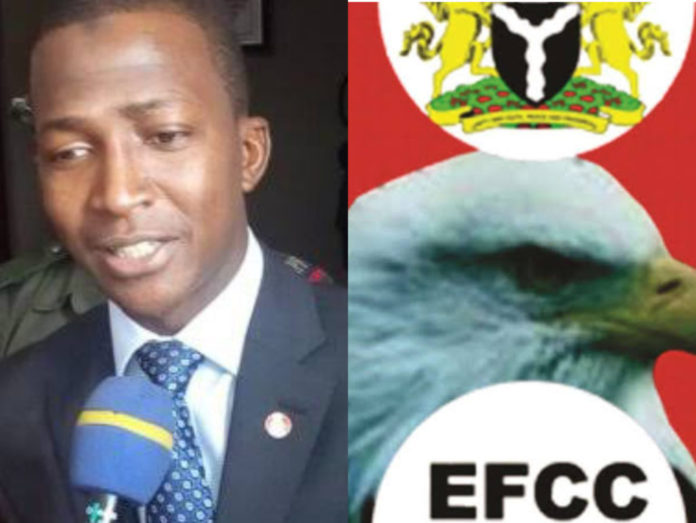
Abdulrasheed Bawa, head of EFCC field office in Lagos now under investigation for alleged loot of recovered assets
The management board of the EFCC confirmed a controversial senior detective to a prestigious appointment despite a slate of unsettled corruption allegations and a cacophony of colleagues who cried foul over the potential damage the agency could suffer if it continues to reward questionable conduct within its ranks.

The anti-graft office asked Abdulrasheed Bawa to lead its field office in Lagos with effect from August 8, despite an active probe of his alleged theft of confiscated proceeds of ill-gotten loot at his previous appointment in Port-Harcourt, multiple sources briefed on the matter told Peoples Gazette.

Mr. Bawa was in-charge of the Port-Harcourt zonal office last year when dozens of petrol-bearing trucks that were confiscated from suspected looters were abruptly auctioned off to his proxies at “ridiculous prices,” sources said.

Three of his junior colleagues who were alarmed by the sheer mismanagement of priced public assets and other suspicious acts of Mr. Bawa’s took immediate steps to curb his excesses by filing anonymous complaints to the headquarters in Abuja, the Gazette understands.

He was subsequently arrested and detained for several days in Port-Harcourt before Ibrahim Magu, erstwhile head of the agency, ordered his transfer to the agency’s training school in Abuja pending conclusion of investigation.

The months-long investigation into Mr Bawa’s alleged corruption and a jarring crackdown on Mr Magu and other ex-senior officials of the EFCC were yet to be concluded when he was tapped for the top job in Lagos, a development that underscores how arbitrary power, unmoored to a transparent standard, can propel individual careers in a frightening miscarriage of justice.

“The government said Magu and others were arrested and flushed out to save the EFCC from institutional damage,” an official said. “But how can you secure people’s confidence if you only trade one crooked officer for another?”

Five anti-graft officials who spoke with the Gazette for this story wished to remain anonymous, citing their active engagement status and a lack of clearance to speak to journalists on a matter that was still under investigation. This paper agreed not to identify them in accordance with its policy on anonymous sources.

‘Loot re-looted’

Mr. Bawa was accused of selling at least 244 trucks worth between N20-30 million each to his proxies at N100,000, or slightly more, per unit.

A proxy sold one of the tankers to a businessman in Ibadan for N14.8 million, officials said, lamenting that the businessman has been evading invitation and the agency is reluctant to declare him wanted in order not to draw public attention to the investigation.

Officials said Mr. Bawa’s handling of the trucks had deprived the Nigerian people of at least N4.88 billion in potential loot recovery.

“If you take a conservative approach and multiply the trucks by N20 million each, even though some were far above that price, you will arrive at N4.88 billion for the 244 trucks he sold out,” a senior EFCC official said. “So Bawa is being compensated for ensuring that nearly N5 billion did not go into the public treasury.”

EFCC’s overhead for 2019 was N3.6 billion, which was also enough to cover its staff strength of 4,962, officials said.

Procedurally, recovered cash and assets are returned to the public coffers upon conclusion of forfeiture proceedings in court. While some of the 244 trucks have been declared as proceeds of corruption by the Federal High Court, the Gazette learnt that forfeiture proceedings on most of them have yet to be concluded before Mr. Bawa sold them off.

For nearly two weeks, Mr. Bawa declined multiple requests for comment from the Gazette for this story.

Wilson Uwujaren, chief spokesman for the EFCC, said he could not provide information on the status of the probe and the decision of moving a subject of an active investigation to Lagos.

“Since the issues of assets are already before the presidential panel, for now we cannot comment on those things,” Mr. Uwujaren told the Gazette on Thursday afternoon.

But in January, Mr. Uwujaren defended Mr. Bawa’s action publicly, saying there was no wrongdoing in the sale of the trucks. Nonetheless, he said in the same statement that a probe had been ordered into the suspicious auction.

Name dropped

Mr. Bawa, a deputy chief detective superintendent, was first confronted by Ola Olukoyede, then EFCC secretary, about the whereabouts of petrol tankers that were under forfeiture by Port-Harcourt zonal office in late 2019, multiple sources, including one official who was present, told the Gazette.

Mr. Olukoyede had received complaints that Mr. Bawa was tampering with seized assets that were still undergoing forfeiture proceedings in court. It is illegal to take possession of a citizen’s assets without a due process, which involves getting a federal judge to declare such assets as proceeds of public loot.

“He was asked to explain what happened to over 240 trucks that the zonal office was trying to secure their forfeitures,” a source said. “But he was unable to explain.”

The source said Mr. Bawa initially told Mr. Olukoyede that he got the directives to sell the trucks from Mr. Magu, but he declined to write that claim in his statement.

“It turned out that he was just dropping names, or he was trying to protect Magu,” a source said. “He refused to write it in his statement that it was Magu who sent him.”

The source said Mr. Olukoyede immediately called Mr. Magu, who was away on an official trip at the time, with details of what transpired in Port-Harcourt. After concluding his findings, Mr. Olukoyede returned to Abuja, expecting Mr. Magu to take action upon his return from the trip.

Mr Olukoyede, who has since been suspended from office as part of the raging presidential probe, declined comments for this story.

When he returned, Mr. Magu made an urgent trip to Port-Harcourt, and Mr. Bawa was removed as the zonal headthe next day.

“He was ordered to be detained in Port-Harcourt for several days,” another source familiar with the matter said. “He was then asked to report at the training school in Abuja, which we thought would be the end of his career.”

Mr. Magu did not return a request for comment. But in its January statement, the EFCC said Mr. Magu did not benefit from the controversial sale of the trucks, but instead allowed a transparent process to play out.

‘Unmerited and highly political’

Anti-graft detectives, mostly deputy chief detective superintendents, said they thought posting Mr. Bawa to the training school, known as ‘Siberia’ amongst personnel, would take him out of circulation.

They were, however, “disappointed” when a posting circular on August 8 said he had been transferred to Lagos.

An internal memo confirms Mr. Bawa’s transfer to Lagos on August 8, 2020.
“We saw him on the list as the new head of Lagos office, and everyone revolted,” the source said. “But our revolt was a quiet one.”

As a member of the elite ‘Course 1’, EFCC’s first set of cadets now mostly at grade-level 13, Mr. Bawa has flaunted his association with Mr Magu, and once acclaimed himself ‘anointed leader’ of the so-called ‘Magu Boys’, sources said.

Mr. Magu led the EFCC from November 2015 until his disgraceful ouster on July 7. He was accused of grossly enriching himself while arresting and prosecuting other Nigerians for graft.

Although a government panel that was raised to hear the charges has yet to return its recommendations, Mr. Magu strongly denied all corruption and abuse of power allegations and asked his lawyers to file court processes aimed at clearing his name.

Still, serving EFCC officials who believe Mr. Magu deserved his inglorious exit said his collaborators within the anti-graft office should have equally suffered a similar fate.

But rather than being affected by his ties to Mr. Magu, Mr. Bawa has instead been propelled to the very job he had deemed beyond reach, his colleagues said.

“He was a don of Magu Boys,” one of his colleagues said. “But he thought his career had finished when he was caught in Port-Harcourt, detained for days and later transferred to the EFCC training school in Karu.”

The EFCC’s zonal office in Lagos is seen as the agency’s main hub of operations, earning a long-standing dread as the nemesis of advanced-fee crooks, corporate racketeers, money launderers and other economic criminals in the commercial capital.

Mr. Bawa’s elevation as the head of Lagos zone, ‘de-facto vice-chairman’ as officers described it to the Gazette, stemmed from his foamy political ties than fortitude, sources said.

Despite being a close associate of Mr. Magu’s, Mr. Bawa managed to maintain a working relationship with Abubakar Malami, Nigeria’s controversial attorney-general who spent years waging supremacy waragainst the former head of EFCC, according to two EFCC officials familiar with his dealings.

“He was friends with both enemies,” an official said. “It is now clear that his transfer to Lagos is unmerited and highly political.”

Mr. Malami, himself a subject of multiple corruption claims he has denied, finally realised his plans to remove Mr. Magu from office after years of confrontation. He has since taken over the activities of the anti-graft agency and is believed to be behind a slate of policy changes aimed at undoing Mr. Magu’s legacy.

Both Mr. Malami and a spokesperson for his office did not return requests seeking comments about the attorney-general’s relationship with Mr. Bawa.

‘Joke of the year’

The EFCC has been Nigeria’s most prominent bulwark against endemic corruption since it was introduced by President Olusegun Obasanjo in 2003.

Since inauguration, its successive heads have been dogged by the spectre of being disgraced out of office, often on allegations of corruption they were detailed to combat.

From Nuhu Ribadu and Farida Waziri to Ibrahim Lamorde and Mr. Magu, every leadership has been mired in controversies. Shortly before his removal from office in 2015, the Nigerian Senate said Mr. Lamorde had mismanaged over $5 billion in public funds. He denied the allegations as a smear campaign.

Fatima Ibrahim, an anti-corruption activist, said the EFCC cannot be taken seriously if its leadership cannot stay above temptation.

“It is now very important that they focus on fighting corruption within their ranks,” Ms. Ibrahim said, decrying Mr. Bawa’s appointment as “an insult to Nigerians.”

“They have promoted someone who has been under investigation for corrupt practices to lead an anti-corruption drive,” Ms. Ibrahim said. “This would be the joke of the year but for its serious ramifications for the country.”

Muhammadu Buhari became Nigeria’s president in 2015 on the back of a promise to check corruption, but his government has continued to wither from one corruption scandal to another.

Other than Messrs. Malami, Magu and Bawa, Mr. Buhari’s top administration secretary, Babachir Lawal, was disgraced out of office in October 2017 after being exposed for stealing funds earmarked for displaced victims of Boko Haram.

Mr. Lawal’s dismissal came months after Mr. Buhari had spent months exonerating the then-secretary to the government against federal lawmakers who wanted him fired and prosecuted for the theft, later widely dubbed as the grass-cutting scandal.

“For a government that keep repeating its unproven bona fides on corruption, there have been too many corruption scandals under this government for anyone to take it seriously,” Ms. Ibrahim said.

TIPS