Home Blog Page 1020

Immunity for Past Governors In Nigeria.

Immunity for Past Governors In Nigeria.  Daily Law Tips (Tip 741) by Onyekachi Umah, Esq., LL.M, ACIArb(UK)

Introduction:

For every action there is a reaction, but not when one is a Governor, Deputy Governor, President or Vice President of Nigeria. Yes, holder of the above-mentioned elective offices enjoy immunity from prosecution in any civil or criminal case. So, for them and their actions, there are really no reaction (consequences). This works gives a brief overview of executive immunity in Nigeria, defining its boundaries.

Immunity Compass:

Apart from the enormous powers vested on the offices of Governors of state, Deputy Governor of states, President of Nigeria or Vice President of Nigeria, their occupiers are bigger and higher than any court case in Nigeria and outside Nigeria. Any person occupying such office is constitutionally exempted from being arrested, imprisoned, prosecuted or sued in any court (whether civil or criminal) or even served with any court process (document).

The immunity is a constitutional provision and as such is mandatory, irrevocable, unchallengeable and cannot be waived by any court, government or person, including the person vested and enjoying such rights. Hence, at no time, place or circumstance can executive immunity of President, Vice-President, Governor or Deputy-Governor be waived or revoked. However, such offices and their occupiers can be sued only in their official capacity and not personally (such case do not affect the offices and their occupiers, and new government inherits such cases)

Note that the mentioned office holders cannot be sued but they can sue. However, they can be investigated so far, such investigations will not involve detention and service of court processes (documents). Note further that, a Governor, Deputy Governor, President or Vice President in Nigeria enjoys executive immunity only during his/her tenure. The moment the holder of the office ends his/her tenure, such a person can be prosecuted, dragged to court (both for criminal and civil cases), for any matter (including for his/her actions/inactions while in government).

Conclusion: 

Truly, the actions/inactions of a serving Governor, Deputy Governor, President or Vice President of Nigeria has no reaction (consequences). After all, such an executive is constitutionally shielded from being arrested, imprisoned, prosecuted or sued in any court (whether civil or criminal) or even served with any court process (document). Although, such office holders cannot be sued, they can sue. This position turns upside-down the moment a Governor, Deputy Governor, President or Vice President of Nigeria ends his/her tenure. So, there is no immunity for any former Governor, Deputy Governor, President or Vice President of Nigeria.

My authorities, are:

  1. Section 1, 2, 3, 4, 5, 6, 308, 318 and 319 of the Constitution of the Federal Republic of Nigeria, 1999.
  2. Sections 308 the Constitution of the Federal Republic of Nigeria, 1999.
  3. The Supreme Court decisions in the case of MOHAMMED ABACHA v. FEDERAL REPUBLIC OF NIGERIA(1986) LPELR-214(SC) (2014) LPELR-22014(SC).
  4. The Supreme Court decisions in the case of ALI V. ALBISHIR (2008) ALL FWLR (PT.415) 1681 AT 1710, PARAS. A-B, B-E.
  5. The Supreme Court decisions in the case of BOLA TINIBU VS. I.M.B. SECURITIES PLC (2001) LPELR-SC.32/2001 OR (2001) 16 NWLR (PT. 740) 670 OR (2001) 9 -10 S.C 49.
  6. The Supreme Court decisions in the case of CHIEF GANI FAWEHINMI V. INSPECTOR-GENERAL OF POLICE & ORS (2002) LPELR-SC.201/2000 or (2002) 7 NWLR (Pt.767) 606 or (2002) 5 S.C (Pt.I) 63.
  7. The Supreme Court decisions in the case ofGLOBAL EXCELLENCE COMMUNICATIONS LIMITED & ORS V. MR. DONALD DUKE or (2007) 16 NWLR (Pt.1059) 22 or (2007) 7 S.C. (Pt II) 162
  8. Onyekachi Umah, “When Can Immunity Be Waived By President/Vice-President Or Governor/Deputy-Governor In Nigeria” (LearnNigerianLaws.com, 29 September 2019) <https://learnnigerianlaws.com/when-can-immunity-be-waived-by-president-vice-president-or-governor-deputy-governor/> accessed 22 February 2021
  9. Onyekachi Umah, “Can A Serving Senator Be Convicted, Even With His Immunity” (LearnNigerianLaws.com, 13 July 2019) <https://learnnigerianlaws.com/can-a-serving-senator-be-convicted-even-with-his-immunity/> accessed 22 February 2021

Sabi Law Projects:

#SabiLaw

#DailyLawTips

#SabiBusinessLaw

#SabiElectionLaws

#SabiHumanRignts

#SabiLawOnBeatFm

#SabiLawLectureSeries

#CriminalJusticeMonday

#SabiLawVideoChallenge

Speak with the writer, ask questions or make inquiries on this topic or any other via [email protected], [email protected] or +2348037665878 (whatsapp).

To receive free Daily Law Tips, join our free WhatsApp group via https://chat.whatsapp.com/GAEPC3mH1ik0Ghq0yvzbvv or Telegram group, via the below link: https://t.me/LearnNigerianLaws

To keep up to date on all our free legal awareness projects of Sabi Law Foundation, follow us via

Facebook Page:@LearnNigerianLaws, Instagram: @LearnNigerianLaws, Twitter: @LearnNigeriaLaw and YouTube: Learn Nigerian Laws

Please share this publication for free till it gets to those that need it most. Save a Nigerian today! NOTE: Sharing, modifying or publishing this publication without giving credit to the author or Sabi Law Foundation is a criminal breach of copyright and will be prosecuted. This publication is the writer’s view not a legal advice and does not create any form of relationship. You may reach the writer for more information.

This publication is powered by www.LearnNigerianLaws.com {A Free Law Awareness Program of Sabi Law Foundation, supported by the law firm of Bezaleel Chambers International (BCI).} Sabi Law Foundation is a Not-For-Profit and Non-Governmental Legal Awareness Organization based in Nigeria.

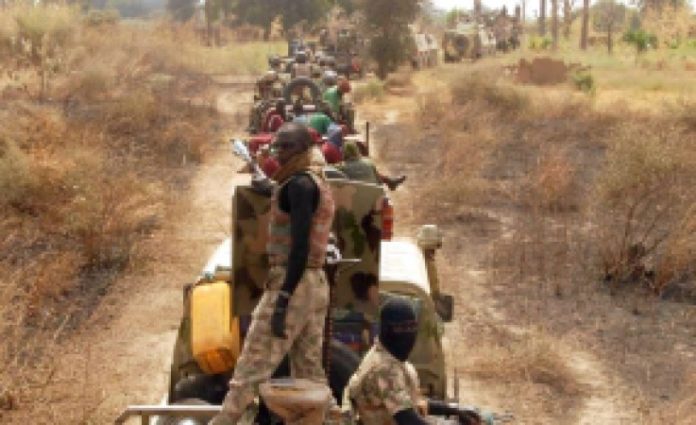
Many Villages Deserted As Bandits Kill Residents In Sokoto

Suspected bandits have raided some communities in the eastern part of Sokoto state, killing four persons and rustled several livestock.

Colonel Garba Moyi (Rtd), the state Commissioner for Carrier and Security Matters, confirmed the attacks, saying three persons were killed at Bargaja village in Isa local government area while one was killed in a community under Sabon Birni local government.

Daily Trust learnt that the attackers invaded Bargaja around 2pm on Thursday, shooting sporadically.

A resident said six persons were shot in the village, but only three died while the remaining three are currently receiving treatment in the hospitals.

A resident of Isa who identified himself as Surajo, told Daily Trust that inhabitants of Bargaja, Tozai, Turba and Danzanke have all relocated to Isa town following series of attacks on their villages.

“They don’t sleep in their places any more. Only some of their men who have farmlands nearer to the village go back every morning to work on them and rush back to Isa town before sun set,” he said.

Another resident, who sought for anonymity, said one person was killed on Friday at Adamawa village.

Took hostages at Sabon Birni

A resident identified as Malam Sanusi Gatawa told Daily Trust that Gatawa in Sabon Birni local government is now flooded with refugees from neighbouring villages.

The villages include, Makera, Dankura, Burkusuma, Kumaro, Garin Tunkiya, Zangon Malam and Asha Banza among others.

He stated that one Malam Bilya Idris otherwise known as Idi Gago was killed at Dankura village and Malam Abdulmajid Abdurrahman, Muhammadu Hatimu and Yazzid Sa’idu lost their lives during Zangon Malam’s attack some weeks ago.

However, the commissioner explained that the attacks were made by the splinter groups of those gangs that already embraced peace with the government and they were meant to rustled animals not to kill the villagers.

Vigilante operatives, others killed

He explained that most of the people killed were either members of the vigilante group or those who lost their animals and decided to pursue the bandits.

“That is why we don’t encourage the villagers to engage them because we have our own ways of recovering whatever they have stolen.

“We use their brothers who embraced peace to recover the animals and even their weapons as well as secure release of kidnapped victims,” he said.

He added that over 20 weapons had been recovered from the bandits while many captives have been freed.

When contacted the Spokesman of the Sokoto state Police Command, ASP Sunusi Abubakar, promised to get all the information about the attacks and get back to our reporter.

Meanwhile, the Command has confirmed the abduction of PDP chairman in Gwadabawa local government area of the state.

(dailytrust)

(Video) Shocker: VP Osinbajo backs cryptocurrency, prefers regulation rather than ban from CBN, says it’s goose that lays the golden egg

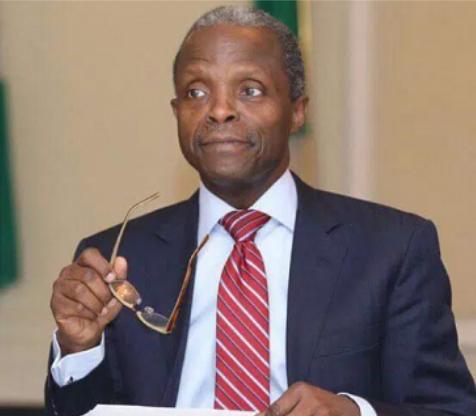
Speaking virtually, Vice President Yemi Osinbajo SAN, in keynote remarks at the CBN/ Bankers Committee’s Initiative for Economic Growth, simply told his audience that it was not wise to throw away the baby with the dirty bath water.

He admitted that though there were legitimate fears, a strong regulatory framework would help. According to Osinbajo, it is the goose that lays the golden eggs.

Feature Photo by Tolani Ani

Video: Courtesy, Presidency

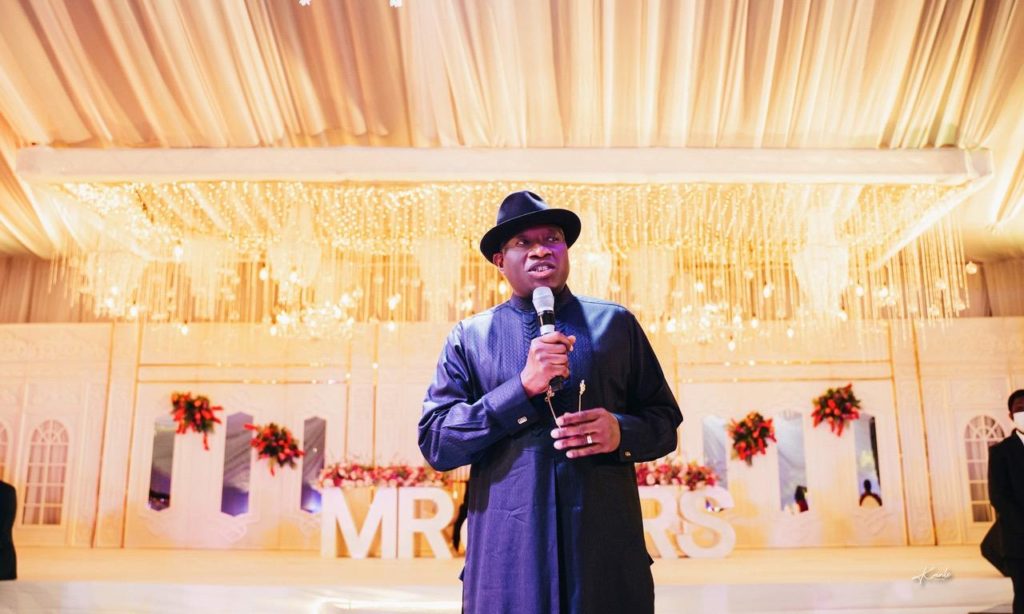
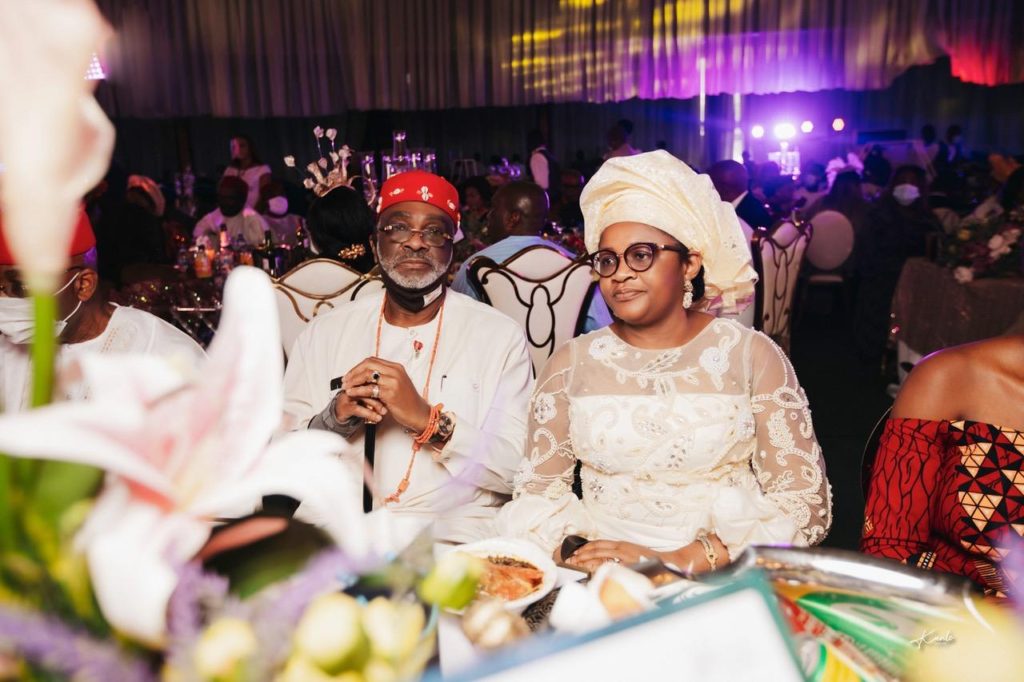
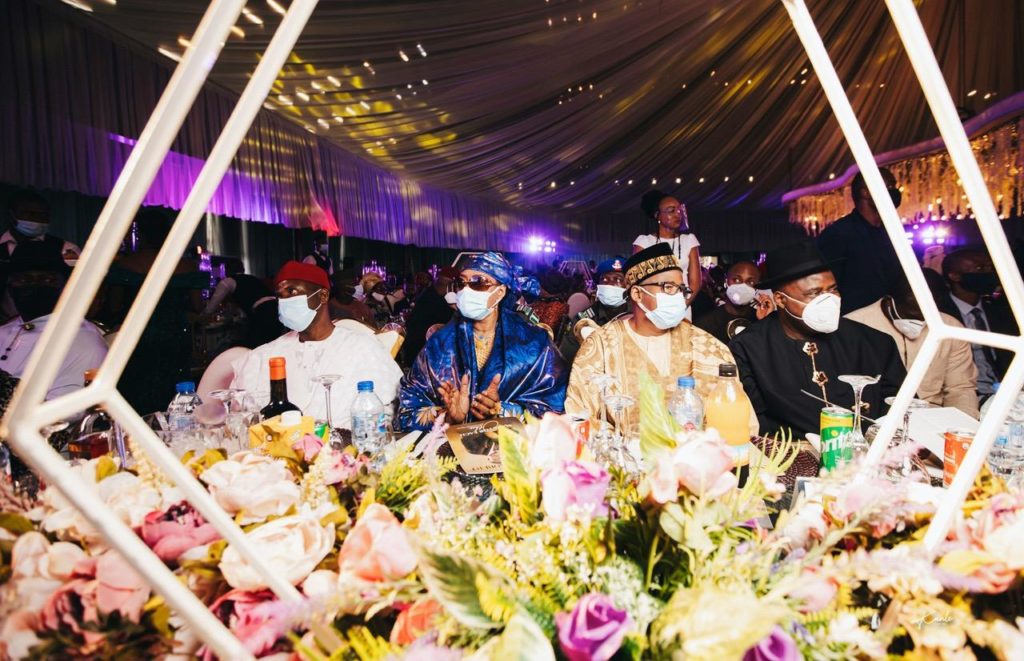
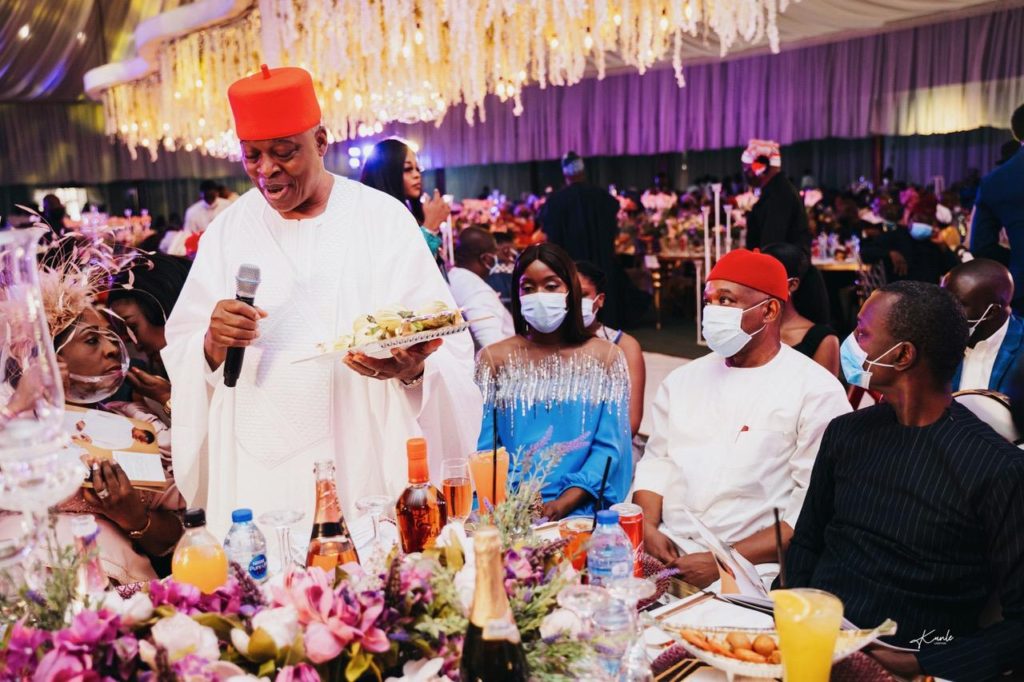
Jonathan, Saraki, Bala Mohammed others, storm Abuja as Chris Uche, SAN, gives out daughter in marriage

By Lillian Okenwa

It was a roll call last Saturday in Abuja when Chief Chris Uche, Senior Advocate of Nigeria gave out his first child in marriage. Everyone who is anyone was there.

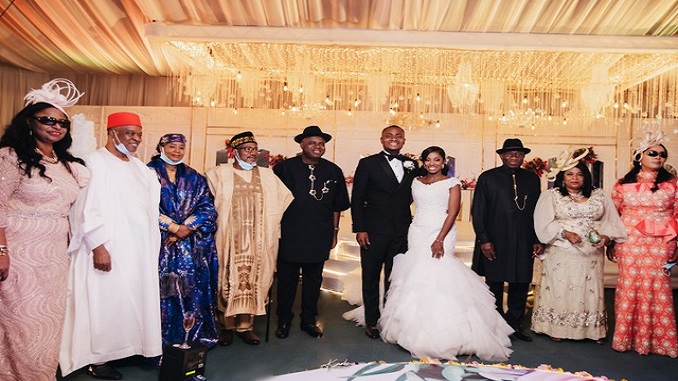
The wedding which brought together top dignitaries including former President Goodluck Jonathan and his wife, Dame Patience Jonathan, took place on Saturday 20th February 2021 at the National Christian Centre, Abuja. A grand reception held at the International Conference Centre. 

Robert and Angel

Barrister Angel Uche (first child and daughter of Chief Chris Uche, SAN and Mrs. Ijeoma Uche of Igbere, Abia State) got married to Dr. Robert Ifeonu (first son of late Chief Robert Ifeonu and Deaconess Esther Ifeonu of Amawbia, Anambra State).

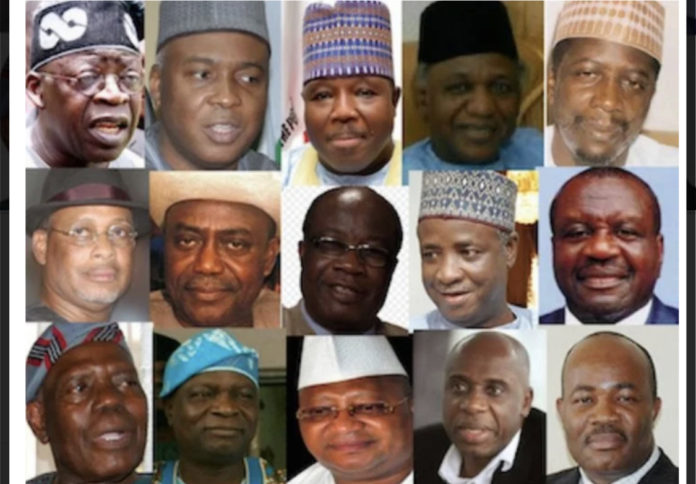
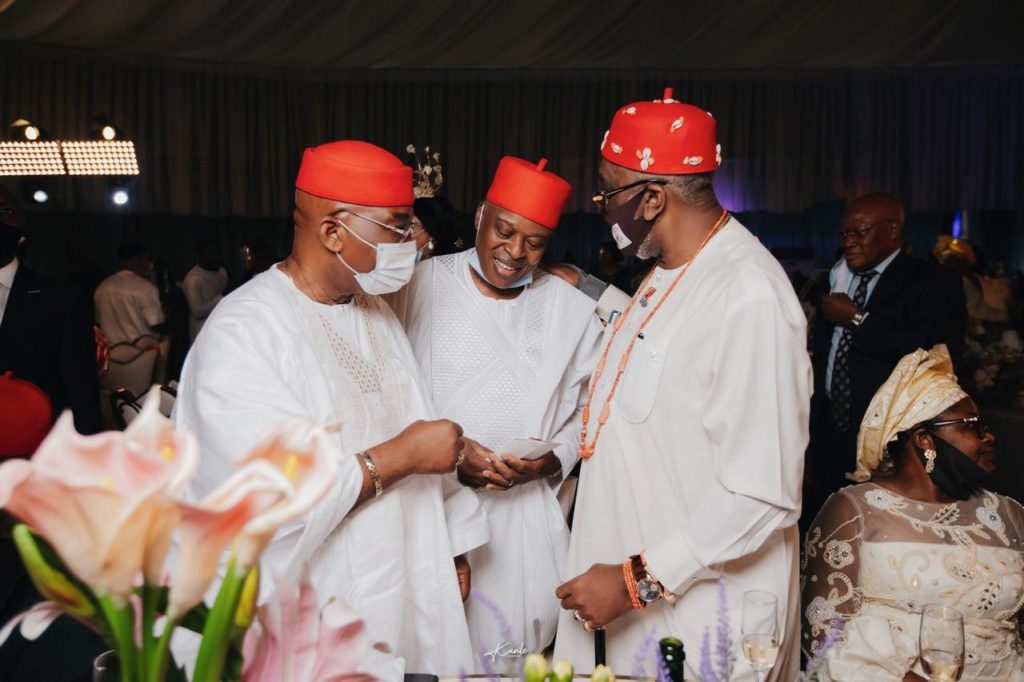
The star studded event also had former Senate President, Dr. Bukola Saraki, Governor Bala Mohammed of Bauchi, Gov Douye Diri of Bayelsa, Mr. Peter Obi, former Governor, Anambra, Alhaji Ibarhim Idris, former Governor, Kogi, Captain Idris Wada, former Governor, Kogi, Sen. Orji Kalu, former Governor, Abia, Sen. T. A. Orji, former Governor, Abia in attendance.

Other are: Chief Achike Udenwa, former Governor, Imo, Chief Ikedi Ohakim, former Governor, Imo, Senator Rocahs Okorocha, former Governor, Imo, Chief Emeka Ihedioha, former Governor, Imo, several Senators and Members of House of Representatives, Justices of the Supreme Court, Court of Appeal and HighCourt, several Senior Advocates of Nigeria, captains of industries, and many more.

Secretary to the Government of the Federation (SGF), Mr Boss Mustapha and his wife were at the Church service.

Couple with parents

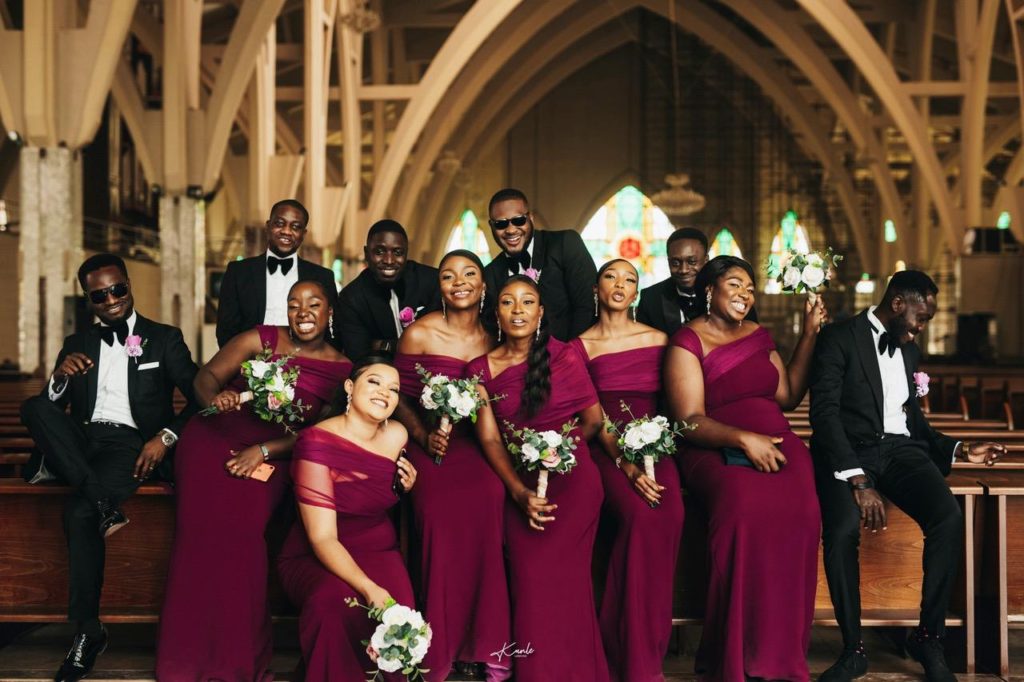
Bridesmaids and groomsmen
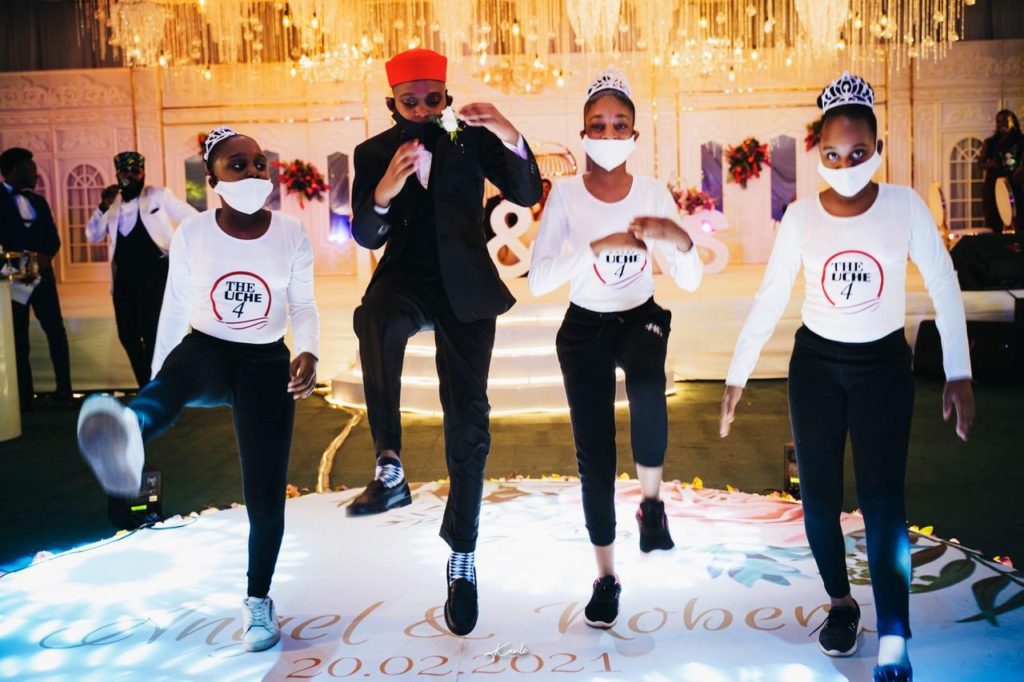
The Uche Four
Fmr. President Jonathan
Senator Ben Obi and wife
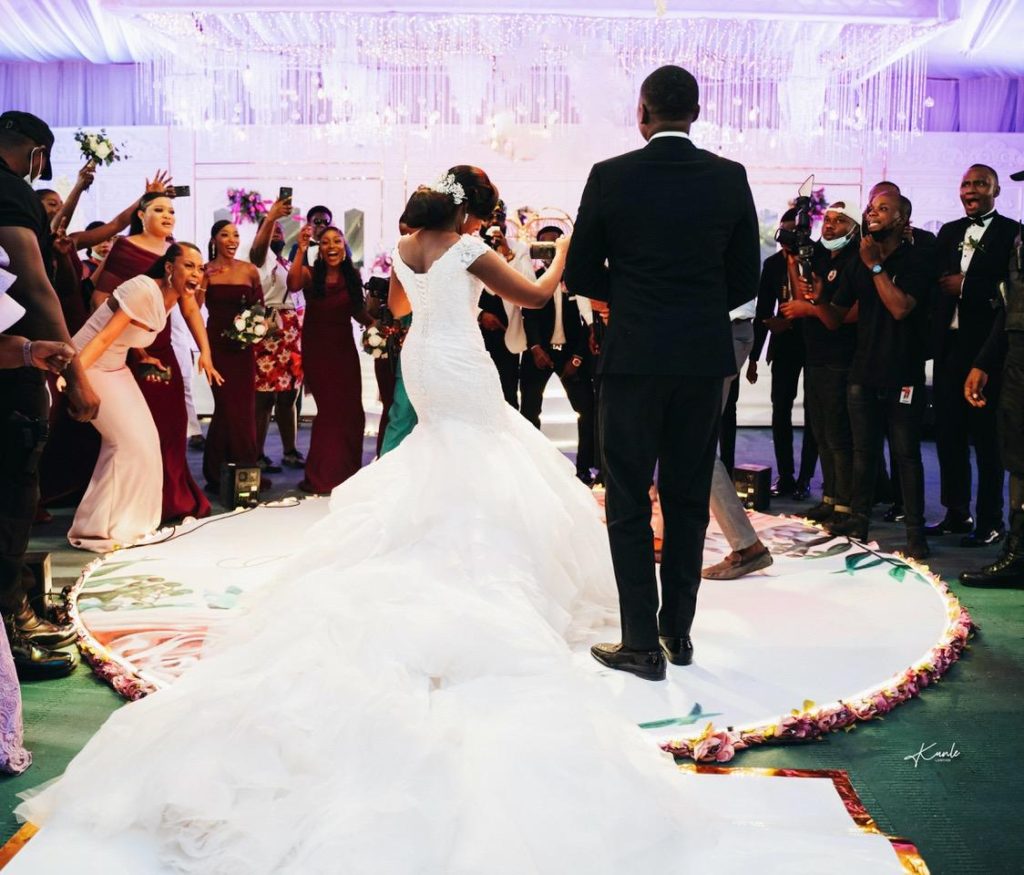
The couple
Chief Uche, SAN praying over the kolanuts
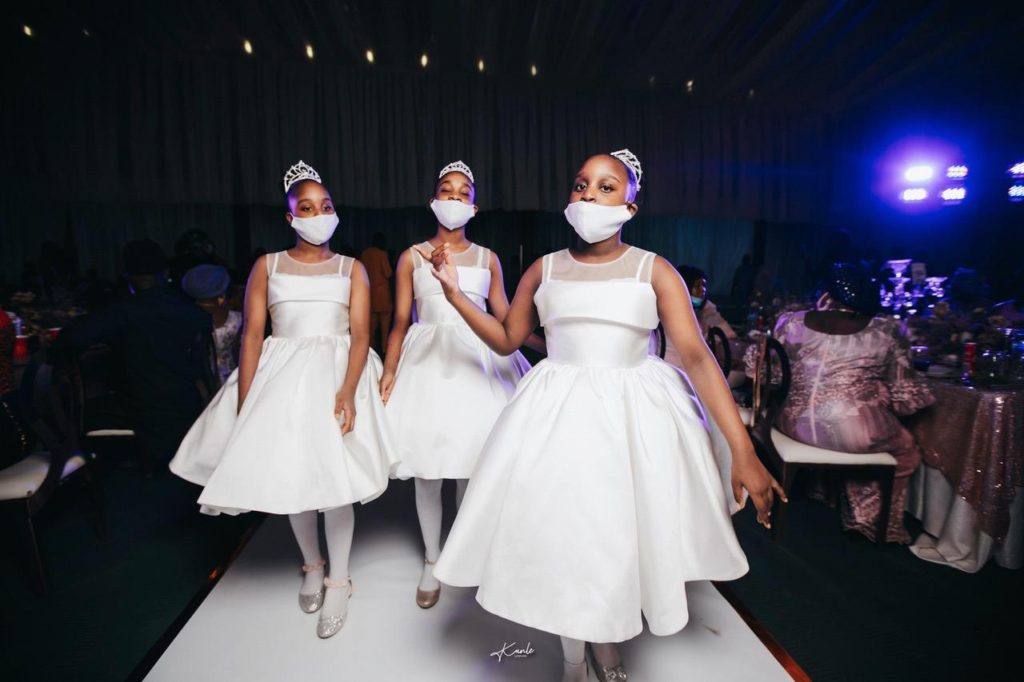
The Uche sisters

Osinbajo’s exact words on the cryptocurrency controversy

Details of Vice President Yemi Osinbajo comments have just been released by the presidency. They were contained in his remarks at the CBN Bankers Committee Summit on the economy this Friday. His full address follows.

On the very topical issue of blockchain technology, digital assets, and cryptocurrencies, let me say two things. First is that there is no question that blockchain technology generally and cryptocurrencies, in particular, will in the coming years challenge traditional banking, including reserve banking, in ways that we cannot yet imagine. So we need to be prepared for that seismic shift. And it may come sooner than later.

Already remittance systems are being challenged. Blockchain technology will provide far cheaper options to the kind of fees being paid today for cross-border transfers by banks.

I am sure you are all aware of the challenge that the traditional SWIFT system is facing from new systems like Ripple which is based on the blockchain distributed ledger technology with its own crypto tokens.

There is of course a whole range of digital assets spawned daily from blockchain technology. Decentralized finance, using smart contracts to create financial instruments, in place of central financial intermediaries such as banks or brokerages, is set to challenge traditional finance. The likes of Nexo Finance offer instant loans using cryptocurrency as collateral. Some reserve banks are investigating issuing their own digital currencies.

Clearly, the future of money and finance, especially for traditional banking, must be as exciting as it is frightening. But as we have seen in many other sectors, disruption makes room for efficiency and progress.

Secondly, I fully appreciate the strong position of the CBN, the Securities Exchange Commission, SEC, and some of the anti-corruption agencies on the possible abuses of cryptocurrencies and their other well-articulated concerns. But I believe that their position should be the subject of further reflection.

There is a role for regulation here. And it is in the place of both our monetary authorities and SEC to provide a robust regulatory regime that addresses these serious concerns without killing the goose that might lay the golden eggs.

It should be thoughtful and knowledge-based regulation, not prohibition in my view. The point I am making is that some of the exciting developments we see, call for prudence and care in adopting them and this has been very well articulated by our regulatory authorities, but we must act with knowledge and not fear. We must ensure that we are in a position to benefit and in a position to prevent any of the adverse side effects or even possible criminal acts that may arise as a consequence of adopting any of these options.

Infrastructure is of course critical for increasing growth and productivity and the Buhari administration has a track record of building roads, rail, and power projects across the country. In spite of this commitment, we are still very far away from meeting the full infrastructural needs of the economy. This is one reason why we have resorted to Public-Private Partnerships for the provision of infrastructure.

In addition to the Road Infrastructure Tax Credit Scheme through which private sector companies are allowed to recoup the costs of building roads from their tax payment obligations, the President has now approved the establishment of InfraCo which will be a public-private partnership chaired by the CBN Governor to overcome our infrastructural deficits. I expect that this is a project that will excite the interest of financiers and bankers and I encourage you all to lend support to make it a success.

As we increase investment in all these areas, we must also pay attention to skills. The CEO of Apple Corporation several years ago, pointed out that the reason his company makes iPhones in China is not because of the cheap labour there, but rather because of the concentration of high-level skills in that country.

At the time he made the statement there were over two million app developers in China. Undoubtedly human capital development underpins growth beyond the benefits that accrue from having a well-educated populace.

Before concluding, let me emphasize that in order to engender sustained economic growth, we must think in terms of scale. I am quite concerned when I hear that national interventions are classified as pilots involving sometimes no more than 1000 people or such small-scale interventions.

Given the size of our population, we cannot afford the luxury of pilot projects. We should design our interventions very carefully and then go big. This is the way our financial institutions must also think in terms of supporting government projects.

It was quite puzzling to me when people said that our plan to build 300,000 houses under the ESP was too ambitious a target. After all, when you look at it, this just amounts to 400 houses per local government, yet many of our local governments are larger than some African countries that would not consider building 400 houses in one year as an onerous task. I do appreciate the reason why 300,000 houses may be considered daunting, obviously, there are capacity issues and also issues around absorbing some of the implications of building in that way.

The truth is that the task of national development requires that we fire on all cylinders. We simply have to think big and ensure that we develop the capacity to implement the big things and projects on scale. After all, at one stage, China was building 1.9million housing units per year over a number of years.

Let me end by restating the obvious, that the banking sector has a crucial part to play in promoting increased and inclusive growth in Nigeria and I take this opportunity to commend, first, CBN for the forward-looking support for growth-related initiatives, especially under the Economic Sustainability Plan. The banks also for their patriotic contribution to sustaining growth in the country by creatively accommodating their clients especially those that faced difficulty at the height of the pandemic.

You should nevertheless go further to deepen the provision of patient or long-term capital that would allow businesses to grow over the long term.

Some of you have shown this spirit with regard to providing finance for programmes in the Economic Sustainability Plan, but we can certainly do a lot more in this regard. I know that you are in business to make profit, but I’m sure you don’t need anyone to tell you that you will m

NIGERIA CAN BE A GLOBAL TRADING HUB, FACTORY FOR THE CONTINENT

*How Mr President’s early actions saved Nigeria from recession

*VP calls for regulation of cryptocurrency


KEYNOTE ADDRESS BY HIS EXCELLENCY, PROF. YEMI OSINBAJO, SAN, GCON, VICE PRESIDENT OF THE FEDERAL REPUBLIC NIGERIA AT THE CBN BANKERS’ COMMITTEE SUMMIT ON THE ECONOMY ON THE 26TH OF FEBRUARY, 2021

PROTOCOLS

It is a pleasure to be with you this morning. I think the CBN, Bankers’ Committee, and the Vanguard Newspapers deserve praise for availing us all of this opportunity to share views on growth ideas and initiatives.

To start with, I think it would be important to address the issue of growth from two perspectives. First is the immediate and pressing need to recover from the economic crisis caused by the COVID-19 pandemic. The other is to bring about increased and inclusive growth in the economy.

It is, of course, no longer news that the Nigerian economy has climbed out of its second recession in four years with the economy growing by 0.11% in the fourth quarter of 2020 after two successive quarters of negative growth. The growth rate of 0.11% though marginal is encouraging because it is a V-shaped recovery with a growth of 3.74 percentage points from the previous quarter. Indeed, although growth for the full year 2020 was still negative at -1.92%, it was far better than predicted by domestic analysts and international agencies.

We all as policymakers, lawmakers, and business leaders have cause to cheer this relatively good performance in the face of the negative impact of the COVID-19 pandemic. It shows what we can achieve as a nation if all of us work together with sincerity and a sense of purpose towards achieving a common objective.


This encouraging growth performance owes a great deal to the early actions of Mr. President, first in providing an initial stimulus and then, constituting the Economic Sustainability Committee and the Economic Sustainability Plan.

In addition, direct support and easier credit terms with the proactive support of CBN given to individuals, households, businesses, and some specific sectors, greatly helped.

Let me stress however that we cannot afford to get carried away or to let up on our efforts. For one thing, COVID-19 is still with us and even when we overcome its economic challenges, we still have our ultimate objective of achieving sustained, sustainable and inclusive growth to lift millions of Nigerians out of poverty.

We must remember that there is still the risk of a W-shaped economic recovery where the economy slides back into negative growth, if the health outlook worsens or, indeed, if we let up in our efforts to stimulate the economy.

In terms of health, if the COVID-19 virus continues to mutate or we relax our non-pharmaceutical interventions of social distancing, face masking and hand sanitization, then we might be faced with increasing infection rates that may call for tightening of restrictions. Vaccinations as early as possible will of course help greatly in stemming the tide of the disease and its economic impact.

Moving beyond the pandemic induced crisis, I feel that the first step in achieving lasting growth is to focus on productivity and value addition.

We simply must encourage value addition in every sector of our economy. For example, in agriculture our focus must be on the processing of raw produce, adding value means more jobs and the value chain makes more money. Same with mining, more beneficiation, already we have seen quite a few investments in gold refining. A lot of value that will be added to the mining of gold has a multiplier effect on our economy.

Manufacturing, especially light manufacturing is key, we can be the factory for the continent, we have been discussing the prospects of zero taxes for machinery generally, machines mean production in one form or the other.

We must of course encourage investments in information and communications technologies, creative industries, tourism amongst others.

In sum government policy should be geared to making Nigeria a value-adding economy, especially in our areas of comparative advantage.

Talking of comparative advantage, Nigeria must leverage its trading talents. We have some of the greatest traders and entrepreneurs in the world such that we can become a global trading hub. It is important to loosen generalized restrictions on trade.

Blanket import restrictions are a dampener on economic activity because a lot of items that might be needed in the manufacturing process might be affected with consequent negative impact on value addition in the economy.

Importation itself is not the problem. It is what you import and what you do with it. It is value-added that matters. This is how jobs and wealth can be created. Many countries of the world who manufacture are huge importers. And they import far more than Nigeria.

Let us take the example of garment manufacturing. Bangladesh the world’s leading garment manufacturer does not produce most of the cotton it uses. As a matter of fact, it only grows 2% of its annual cotton requirement. In 2019 Bangladesh imported $11.8 billion dollars’ worth of textiles and apparel while it exported $37.94billion dollars worth of garments in the same year. There is every need for us to look at areas where we may have an advantage, and in those areas, we may need to expand our export capacity.

The tourism, hospitality, and entertainment sectors suffered severely as a result of the COVID-19 pandemic, but these sectors can make significant contributions to economic growth. Some of the interesting ideas coming from the Ministry of Trade and Industry involve boosting tourism by combining it with trade, such that Africans including those in Diaspora see Nigeria as the best destination for shopping for cosmetics, electronics, gadgets, clothes, shoes, (just like Dubai attracts people from all over the world, and in many ways, has become the shopping capital of the world).

A starting point will then be the introduction of a national shopping month so that rather than having “Black Friday” (a day where a lot of shopping takes place), it can be a Nigeria Month for shopping tied to tourism.

Another thing that we need to do promptly and about which discussions are going on is to combine a strategy of managing limited supplies with one of aggressively expanding the supply base. This is particularly true of foreign exchange. We must address supply.

Aside from moving towards a more market reflective exchange rate, we have accepted that we need to take more dramatic steps to boost exports in order to earn foreign exchange. In this regard, there is consensus about other urgent steps required. These include the establishment and promotion of export trading houses; ensuring that companies in Special Economic Zones export most of their products; expanding and revitalizing the export expansion grant scheme, (the President has approved a N50billion export expansion facility, as part of the Economic Sustainability Plan, to provide support for exporters particularly MSMEs).

Also, the removal of any existing export restrictions, creation of special export terminals, export promotion of non-traditional agricultural commodities such as sesame, fruits, horticulture, hibiscus, and cashews, are all crucial. Of utmost importance is that we must remove restrictions on the use of export proceeds. The way to incentivize exporters is to give them the liberty to bring their export proceeds into the economy and use them as they please.

In a similar context, it is clear to the government that we must find a way of moving the Nigerian digital economy into overdrive. Of course, the Telecoms sector in Nigeria has made giant strides with its value growing almost 40 times from 1990 to date.

The point though is that we still have a lot more to do. For instance, although widespread computing started less than 30 years ago, India has already managed to build its software exports from scratch to $136 billion worth by 2019.

Similarly, the “Big Six” Technology Companies Facebook, Amazon, Apple, Alphabet, Microsoft, and now Tesla, account for up to half of the value of the NASDAQ 100 and had nearly $1trillion in revenues in 2019.

By contrast, Nigeria’s GDP in 2019 was just about $450billion. What this shows is that as a nation, we have to embrace technology and learn to use it for our own developmental purposes.

The banking industry demonstrated that it could do this with the introduction and deployment of BVN, but it is yet to demonstrate the same innovative spirit in relation to FinTech and mobile payments.

Take for instance, the challenge that small businesses face in accessing credit because they lack collateral. It is clear that the way to go now is the use of solutions based on artificial intelligence and machine learning algorithms to determine the creditworthiness of people and entities for the purposes of lending without collateral.

We are seeing a good number of small FinTech companies offering this service. This principle is already in play in the mobile telephone sector where it is possible for subscribers to borrow credit based on the value of their past purchases of airtime. So, there is a lot to be done in that area, especially because of the sheer number of MSMEs in Nigeria and the questions around access to credit. We simply have to make access to credit easier. Technology is offering us new opportunities and new vistas and we must take advantage of them.

On the very topical issue of blockchain technology, digital assets, and cryptocurrencies, let me say two things. First is that there is no question that blockchain technology generally and cryptocurrencies, in particular, will in the coming years challenge traditional banking, including reserve banking, in ways that we cannot yet imagine. So we need to be prepared for that seismic shift. And it may come sooner than later.

Already remittance systems are being challenged. Blockchain technology will provide far cheaper options to the kind of fees being paid today for cross-border transfers by banks.

I am sure you are all aware of the challenge that the traditional SWIFT system is facing from new systems like Ripple which is based on the blockchain distributed ledger technology with its own crypto tokens.

There is of course a whole range of digital assets spawned daily from blockchain technology. Decentralized finance, using smart contracts to create financial instruments, in place of central financial intermediaries such as banks or brokerages, is set to challenge traditional finance. The likes of Nexo Finance offer instant loans using cryptocurrency as collateral. Some reserve banks are investigating issuing their own digital currencies.

Clearly, the future of money and finance, especially for traditional banking, must be as exciting as it is frightening. But as we have seen in many other sectors, disruption makes room for efficiency and progress.

Secondly, I fully appreciate the strong position of the CBN, the Securities Exchange Commission, SEC, and some of the anti-corruption agencies on the possible abuses of cryptocurrencies and their other well-articulated concerns. But I believe that their position should be the subject of further reflection.

There is a role for regulation here. And it is in the place of both our monetary authorities and SEC to provide a robust regulatory regime that addresses these serious concerns without killing the goose that might lay the golden eggs.

It should be thoughtful and knowledge-based regulation, not prohibition in my view. The point I am making is that some of the exciting developments we see, call for prudence and care in adopting them and this has been very well articulated by our regulatory authorities, but we must act with knowledge and not fear. We must ensure that we are in a position to benefit and in a position to prevent any of the adverse side effects or even possible criminal acts that may arise as a consequence of adopting any of these options.

Infrastructure is of course critical for increasing growth and productivity and the Buhari administration has a track record of building roads, rail, and power projects across the country. In spite of this commitment, we are still very far away from meeting the full infrastructural needs of the economy. This is one reason why we have resorted to Public-Private Partnerships for the provision of infrastructure.

In addition to the Road Infrastructure Tax Credit Scheme through which private sector companies are allowed to recoup the costs of building roads from their tax payment obligations, the President has now approved the establishment of InfraCo which will be a public-private partnership chaired by the CBN Governor to overcome our infrastructural deficits. I expect that this is a project that will excite the interest of financiers and bankers and I encourage you all to lend support to make it a success.

As we increase investment in all these areas, we must also pay attention to skills. The CEO of Apple Corporation several years ago, pointed out that the reason his company makes iPhones in China is not because of the cheap labour there, but rather because of the concentration of high-level skills in that country.

At the time he made the statement there were over two million app developers in China. Undoubtedly human capital development underpins growth beyond the benefits that accrue from having a well-educated populace.

Before concluding, let me emphasize that in order to engender sustained economic growth, we must think in terms of scale. I am quite concerned when I hear that national interventions are classified as pilots involving sometimes no more than 1000 people or such small-scale interventions.

Given the size of our population, we cannot afford the luxury of pilot projects. We should design our interventions very carefully and then go big. This is the way our financial institutions must also think in terms of supporting government projects.

It was quite puzzling to me when people said that our plan to build 300,000 houses under the ESP was too ambitious a target. After all, when you look at it, this just amounts to 400 houses per local government, yet many of our local governments are larger than some African countries that would not consider building 400 houses in one year as an onerous task. I do appreciate the reason why 300,000 houses may be considered daunting, obviously, there are capacity issues and also issues around absorbing some of the implications of building in that way.

The truth is that the task of national development requires that we fire on all cylinders. We simply have to think big and ensure that we develop the capacity to implement the big things and projects on scale. After all, at one stage, China was building 1.9million housing units per year over a number of years.

Let me end by restating the obvious, that the banking sector has a crucial part to play in promoting increased and inclusive growth in Nigeria and I take this opportunity to commend, first, CBN for the forward-looking support for growth-related initiatives, especially under the Economic Sustainability Plan. The banks also for their patriotic contribution to sustaining growth in the country by creatively accommodating their clients especially those that faced difficulty at the height of the pandemic.

You should nevertheless go further to deepen the provision of patient or long-term capital that would allow businesses to grow over the long term.

Some of you have shown this spirit with regard to providing finance for programmes in the Economic Sustainability Plan, but we can certainly do a lot more in this regard. I know that you are in business to make profit, but I’m sure you don’t need anyone to tell you that you will make a lot more if the financing of investment promotes growth.

I wish you fruitful deliberations during the rest of this Summit.

Thank you very much for listening.

▪︎Released by:Laolu Akande, Senior Special Assistant to the President on Media & Publicity, Office of the Vice President
26th February 2021

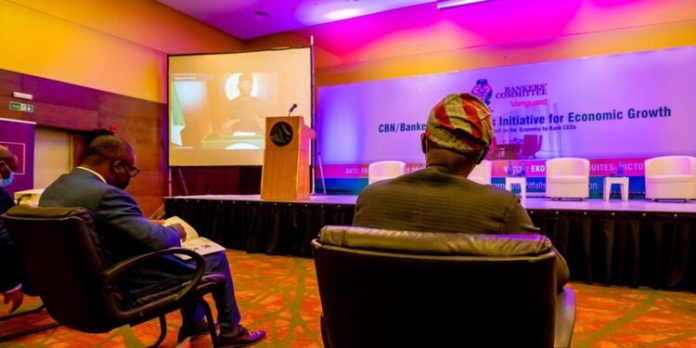
▪︎ Feature Photo: Bankers listening to the Vice President. Photo by Tolani Ani.

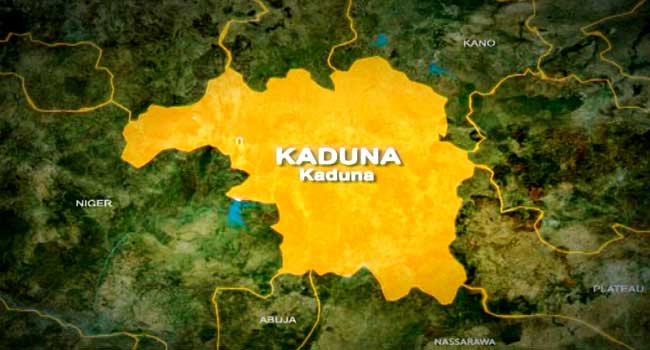
We’re tortured, detained because we’re from Southern Kaduna – Petitioner

Friday Olokor, Abuja

A complainant, Tony Duch, on Wednesday told the Independent Investigative Panel on Allegations of Human Rights Violations by the defunct Special Anti-Robbery Squad how he and eight other suspects were unlawfully tortured, detained and imprisoned by the police because they were from Southern Kaduna.

A statement by the Head of Media, National Human Rights Commission, Fatima Mohammed, said Duch told the IIP-SARS that he and the other suspects knew nothing about allegations of conspiracy, assault and theft levied against them.

The counsel to the accused persons, Samuel Yusuf, informed the panel that on the day of the arrest of the suspects, a team of policemen came to their residential houses in Durumi area of Abuja and started shooting sporadically to their utter surprise.

He said, “Apart from the gunshots, arrests were made by the police and virtually all the people arrested were youths from Southern Kaduna, except few people from Idoma in Benue state.”

To prove his point, he said while the arrest was being made by the police, one Inspector Cornelius Agbo mentioned Southern Kaduna people as those he was targeting.

According to the complainant, Inspector Agbo stated that he will “deal with Southern Kaduna people so that anywhere they see him they will not play with him.”

Other complainants listed in the petition were Silas Daniel, Suleiman Yabganya, Mba Kibori, Richard Elisha, Moses Williams, Jonathan Tagwai and Gideon Yohanna.

Their counsel, Samuel Yusuf, informed the 11-member panel chaired by Justice Suleiman Galadima (retd) that one of the complainants, Moses Williams, had died.

The complainants had earlier prayed the panel for an order of N50m compensation on behalf of the victims for their unlawful arrest, torture and detention.‌

Yusuf stated that the complainants were only victims of circumstance as the actual persons who allegedly had issues with Inspector Agbo had left the scene where the victims were arrested before the inspector invited his fellow SARS officials to arrest them.

The police legal team led by DCP James Idachaba, in his cross-examination asked the complainant if he was also tortured while in prison custody and he answered in affirmative.

The matter was adjourned till March 24, 2021, for the police to open their defence.

PUNCH.

God gave me cause to dance again – Onoja, SAN

By Lillian Okenwa

When doctors told him early January 2020 that he urgently needed a triple coronary artery bypass surgery, he was stumped. Yes, he had had a number of fainting spells but nothing prepared him for the news that his arteries were 99.9% blocked! The surgery was successful and by 19th of February, just weeks after the procedure, his entire chest wrapped in thick bandages, barely able to sit up, he marked his 52nd birthday.

Indeed, his life has been mired in many battles. Born at Idah, then under Kabba Province of Northern Nigeria and present day Kogi state in the thick of Nigeria’s civil war, the joy of his arrival was nearly marred. Not long after the happy proclamation, the unthinkable happened. Idah was bombed! Not surprisingly, he was named Ogwu, the Igala word for war.

Then on 25th April, 2019, his wife Mrs. Rosemary Onoja miraculously escaped death after gunmen riddled the SUV she was travelling in with over 30 bullets. She was going to represent him at a wedding in Dekina, Kogi State. About 30 pellets were later found inside the car.

And so when he began to feel sick again in January this year, Chief Ogwu James Onoja, Senior Advocate of Nigeria knew he needed a deeper conversation with his maker. The response he received got him dancing again. Hence his choice to spend the day with kids of Divine Wounds Of Jesus Christ Orphanage Home, Tunga Maje, along Zuba-Gwagwalada Express Way Abuja.

He spoke with Law & Society’s Lillian Okenwa.

L&S: Chief by this time last year, you were almost immobile, with huge bandages on your chest and leg.

Answer: This birthday is special for so many reasons. I celebrated that of last year while coming out of clinic; not fully healed, while still moving around with bandages and stitches, having undergone a heart operation.

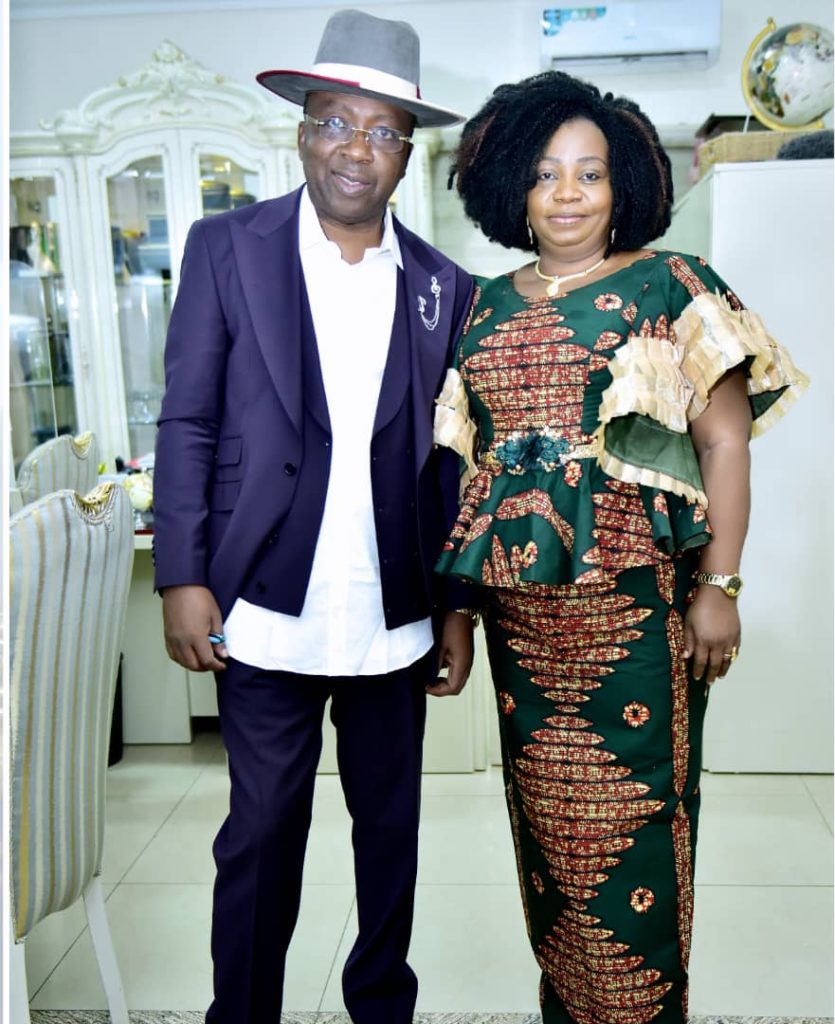
Chief Ogwu James Onoja, SAN and Mrs. Rosemary Onoja on his 53rd birthday

My chest was sawed open. The heart was opened and joined too. Veins harvested from my left leg was used for the corrective surgery, so I couldn’t stand or sit. And if you looked closely at me, you will see that I was walking bent. I was in terrible in pains.

Seven days before this year’s birthday, I didn’t know I was going to walk. I was visiting the hospital for some other ailment that I couldn’t fathom, and suddenly, I got my healing so, I have all reasons to celebrate differently. I needed to focus on God and humanity this time around, because, I now see that every day I live is a bonus.

For the first time I’ve also began to realize that the human spirit is strong. It is what we agree to that will come upon us. I nearly gave up in January. I went to the hospital several times, but they kept saying, “We didn’t see anything.” I went again twice after and despite several tests, they sent me away saying they couldn’t find anything wrong with me. I kept asking God, “Does it mean that, I’m going to be sick again on this birthday?” I said, “Ah, God, you cannot leave like this. I can’t be in bed again this time.” Seven days to my birthday, I felt a new energy. I don’t know how to thank God oooo!

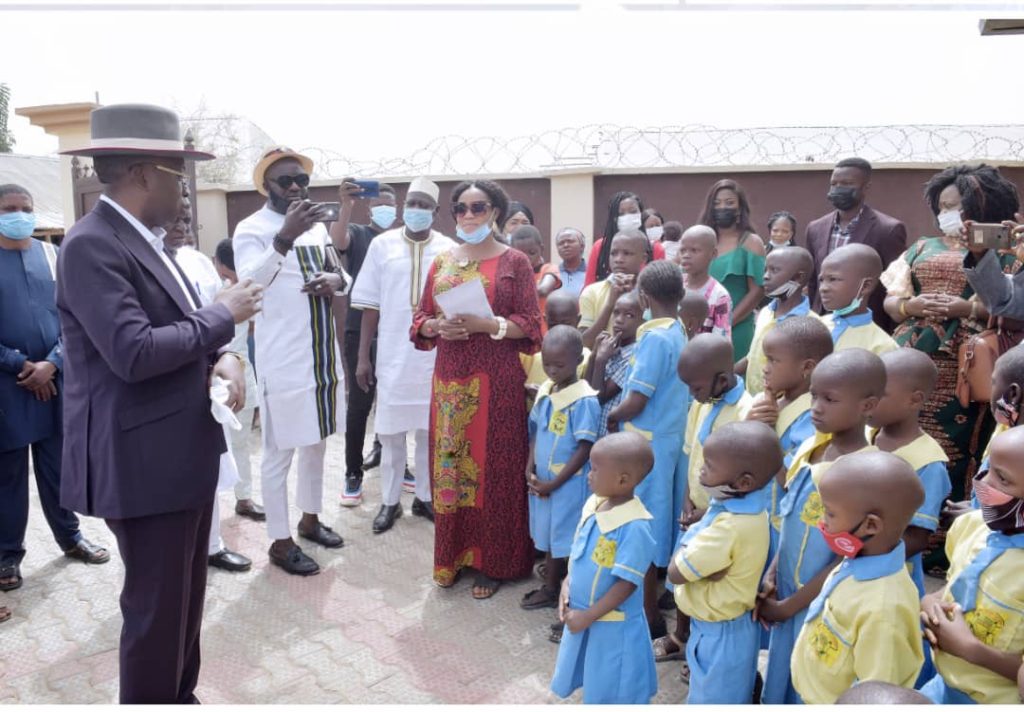
Addressing kids of Divine Wounds Of Jesus Christ Orphanage Home

I would have been long dead. I didn’t even know I will survive last year. It just shows the mercy and grace of God once again in my life, and in my family and in the lives of my friends and loved ones. God has kept me alive for a purpose, and I celebrated it differently by going to the Motherless Babies’ Home.

I celebrated it differently by giving glory more to God, and dancing my heart out like King David who showed gratitude to God both in dancing and in acts of kindness.

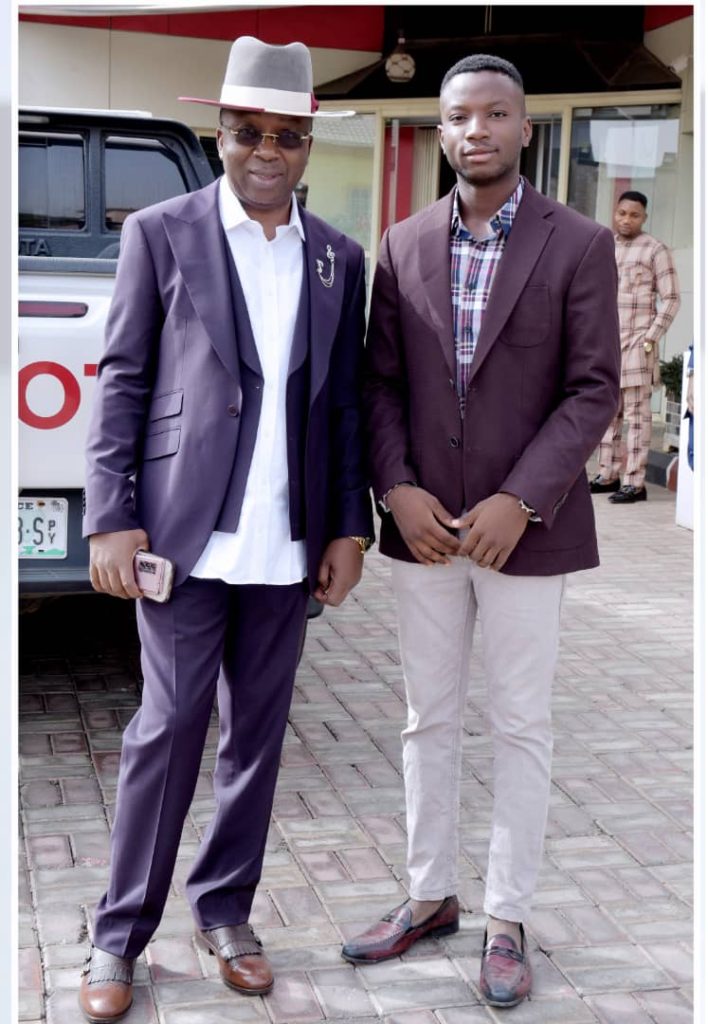
Chief Onoja and Son, Idoko Onoja

Last year there seemed to be no hope. This year, I have hope that I will live. For the first time, I saw a glimmer of hope that I was going to live a long life. God didn’t allow our enemies to laugh over us. God made us to show strength in a way that left our enemies wondering, because some of them had written us off.

Some people started withdrawing their files, saying that I’m always sick. They told me to my face, and then strength came from somewhere and I started dancing. They are now returning files so we thank God.

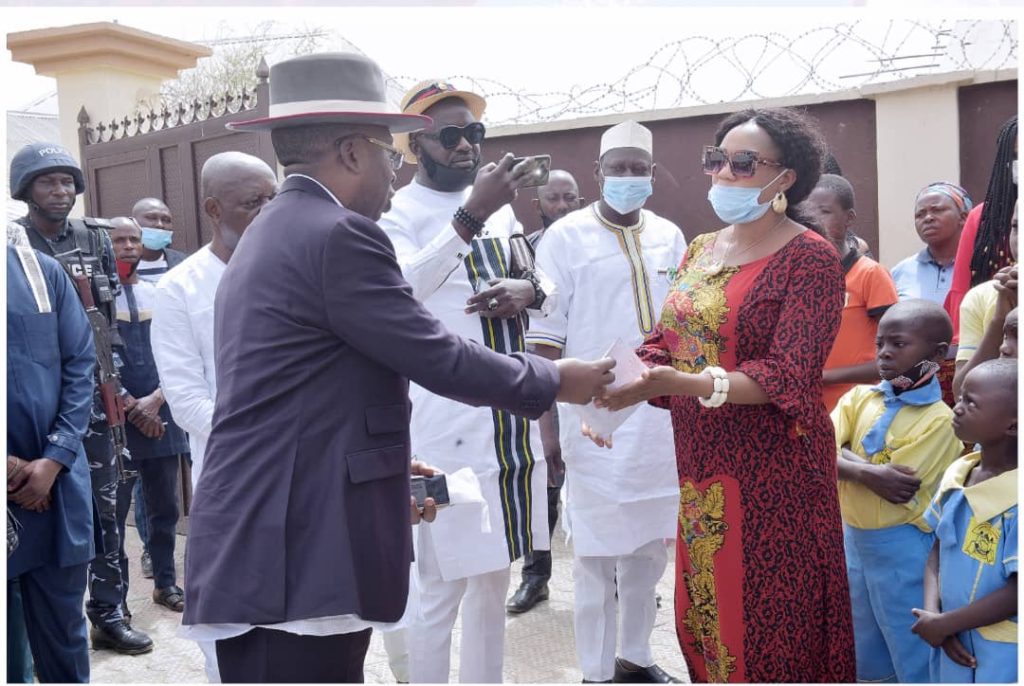
Delivering a birthday gift to the Orphanage home Coordinator

This 53rd birthday is particularly special because it is also an anniversary of a tumultuous year 2020 but God saw us through.

BREAKING: 300 female students kidnapped as gunmen storm Zamfara secondary school

By GARBA MUHAMMAD, Kaduna

About 300 school girls of Jangebe Girls Secondary School in Zamfara State, Northwest Nigeria, have been abducted by gunmen early Friday morning, February 26, 2021. 

The school which is located within the Talata-Mafara local government area of the state came under siege at past midnight.

Confirming the incident to Channels Television via a telephone conversation, the state commissioner for information, Hon. Suleiman Tunau Anka said the gunmen stormed the school around 1 a.m on Friday and abducted the students.

He, however, did not confirm how many students were kidnapped.

Reports however suggest that no fewer than 300 girls were snatched from their dormitory.

As of the time of filing this report, all attempts to reach police authorities in the state have proved abortive.

The latest abduction in Zamfara comes at a time when banditry is increasingly threatening the peace of the nation, especially from within the northeastern and northwestern region.

A major focus for the bandits in recent times has been to attack secondary schools and whisk students away, mostly, in a bid to use them as bargaining chips in their negotiations with the government.

In a bid to forestall an attack of this nature, the Zamfara State government had last December ordered the immediate closure of 10 boarding and day schools in the state.

According to the government, the affected schools were those that share borders with Katsina, Kaduna, and Sokoto States which for quite a while have been prone to banditry.

The Government Girls Secondary School in Jangebe happens, however, not to be one of the schools ordered to close.

Additional reports by Channels TV.

https://youtube.com/watch?v=Q06XswMaflo28

Governors take fools’ ride to next level, By Azu Ishiekwene

If there was any doubt that governors are underworked and overpaid, this week proved it. 

This is not the old, familiar sitting governor vs godfather nasty fight. It’s a brawl mostly among serving governors of the same party and even the same region, who have no qualms airing their dirty laundry as entertainment. 

What started as a sitcom starring Benue Governor Samuel Ortom and his Bauchi counterpart Bala Mohammed in a bizarre farmer-herdsmen exchange, later zig-zagged, morphed, and swept across the country in an expanded theatre of the absurd. At least four other governors have now been engulfed in the flame. 

Ortom set the stage in a no-holds-barred video in which he called out President Muhammadu Buhari for being “soft” on herdsmen and bandits

He accused the leadership of the association of cattle herders, Myetti Allah, of enabling and arming criminal herdsmen with automatic weapons, while the Presidency turns a blind eye. 

As of Wednesday, the Ortom video had received 65,000 views, with a trail of vitriolic comments on both sides, long enough to strangle a herd of trespassing cattle.

Mohammed responded that Ortom was incompetent and irresponsible. He said if the Benue governor had done his homework, he would have found that some of the Fulani herdsmen were also victims and only carried weapons to protect themselves from cattle rustlers. 

Short of accusing Ortom of intolerance, he asked the governor to find a place in his heart for persons from other parts of the country, the same way Benue people are welcome in Bauchi.

As Mohammed was counting his teeth after his bizarre and twisted patronage of armed herdsmen, which a) ignored rampant cases of violent trespass and b) source of the automatic weapons and the legality of their use, the proverbial old woman in Ortom knew that Mohammed’s gesture was aimed at him.

Ortom responded in kind. He accused Mohammed of incitement and warned that the Bauchi governor would be held responsible if any harm came to him. The two governors, both members of the same party and cousins in the Northern Governors’ Forum, descended into the gutter, with their aides cheering.

While the exchanges between Mohammed and Ortom made headlines – which was precisely what they wanted – it’s also a reflection of how governors, used to endless supply of drama on demand, have perfected the art of milking public frustration to unleash our worst instincts.  

And they’re succeeding and diverting attention from their incompetence. Criminal herdsmen – Fulani or not – are a menace and must be rooted out not through the microphone, but by force and intelligence.

But while we’re at it, governors must also do their jobs.

Ortom talks a good game. Yet, anyone who wants to know what he has done six years after assuming office will have to be content with the renovation of the palace of the paramount traditional ruler, the Tor Tiv; and the wheelbarrows he distributed to empower the youth as evidence of performance. 

Beyond that, there’s not much else to show for an average N4billion which the state gets monthly from Abuja.

He’s still owing salaries and even though teachers now work a three-day week and have to farm to make ends meet, life in Benue, for the most part, is still very hard. It’s a far cry from what Ortom promised when he first came to power on the platform of the All Progressives Congress (APC) in 2015. 

Of course, Ortom can argue, justifiably, that two things have compounded his misery: the politics of George Akume, one of the state senators whom he has accused of diverting every good thing coming the state’s way from Abuja; and the sinister activities of Fulani herdsmen, which he insists have jeopardised farming. It appears that he would also have to add Mohammed to his list of distractions.

But there’s no need. Mohammed has never claimed to be anything other than a permanent distraction in public service. He had a disastrous outing as Minister of the Federal Capital Territory, but since politics rewards the indolent, he has managed to advance to the next level.

Ortom and Mohammed are like Tweedledum and Tweedledee; as far as performance goes, it’s hard to choose one above the other whether in their current or previous lives.

They’re not alone. The proxy war between Kogi State governor, Yahaya Bello, and Abia State Governor Okezie Ikpeazu over the role of champagne in public administration tells yet another depressing story. How a discussion about Safe School Initiative on the floor of the Senate could descend into name-calling and bitter insults among proxies of the two governors is a reflection of the dangerous reach and egregious influence that governors have in our politics.

But the story that takes the cake for travesty is the Sunday drama between Imo State Governor Hope Uzodimma, and former Governor Rochas Okorocha. 

Only a few months ago, both men were on the same side, united against a “common enemy”, Emeka Ihedioha, who was then governor. As soon as Uzodimma and Okorocha toppled Ihedioha and retrieved their daggers from his back, most observers knew that Ihedioha’s ouster was only the end of the beginning: Imo is not big enough to contain the ego and vanity of the two men.

What played out on Sunday was largely a territorial war, even if it was executed in the name of saving the people from Okorocha’s matchless greed. 

For eight years in Okorocha’s Imo, the only oasis of prosperity was the Okorochas. The man helped himself to whatever he fancied. Whatever he could not take for himself, he took for his daughter. Whatever he could not take for his daughter, he took for his son-in-law. And whatever he could not take for his son-in-law, like the awe-inspiring world-class leisure park, called the Royal Palm Estate, he took brazenly for his wife. It was government of the family by the family for the family.

Uzodimma knew of this sordid record, but politics being politics, he still went ahead to forge a marriage of convenience with Okorocha and Ifeanyi Ararume to topple Ihedioha. Now, all three conspirators, who are also members of the same party, can’t see eye-to-eye. Okorocha is on his way to exile from the APC, while Ararume remains in political limbo, fenced off from his senatorial ambition by Uzodimma’s deadly insecurity.

That drama on Sunday about the sealing of Okorocha’s wife’s leafy playground, and the video of the former governor’s brief arrest by the police mean nothing beyond Uzodimma’s personal gratification. A government that is really serious about holding its predecessor to account, in the interest of the public, knows what to do and how.

The next time you’ll hear about Okorocha’s wife or any of the priceless jewels the man appropriated for family and friends, is when he crosses Uzodimma’s line again. Any other sin would be forgiven, but the full price for this one is saved for another day.

That’s the way our politicians play. That’s the way the governors roll. One day, they condemn bandits and banditry, and the next they say there’s absolutely nothing wrong inviting bandits to lunch or even paying them handsomely to keep us safe. 

We’re not fooled by this attempt to give delinquency a new name. We know these folks are members of different factions of the same party. And from the look of things, the Class of Governor Ben Ayade’s Olympotic Idiocy may well have a larger collection than was once thought.

•Ishiekwene is Editor-In-Chief of LEADERSHIP

To Shield His Grandchildren From Racism & Injustice, Stevie Wonder Tells Oprah He’s Relocating To Ghana

By Darlene Aderoju 

Stevie Wonder is heading to West Africa for a profound reason.

During a recent interview with Oprah Winfrey, the 25-time Grammy-winner, 70, opened up about his future plans to live in Ghana indefinitely — as part of his efforts to shield his lineage of grandchildren and great grandchildren from racial injustice in the U.S.

“I wanna see this nation smile again,” he told Oprah, 67. “And I want to see it before I leave to travel to move to Ghana, because I’m going to do that.”

When asked if he plans to relocate permanently, the star replied, “I am, because I don’t want to see my children’s children’s children have to say, ‘Oh, please like me. Please respect me. Please know that I am important. Please value me.’ What kinda [life is that]?”

Getty (2) Stevie Wonder, Oprah

The star’s decision may be influenced by a number of reasons — but it is often said that living in majority Black regions gives Black individuals a sense of safety, confidence, liberation and pride. Many argue that within the U.S., attending HBCUs (historically Black colleges and universities) gives American Black students the same feelings.

Wonder has been considering moving to Ghana since as early as 1994, per the Orlando Sentinel. At the time, the “I Just Called to Say I Love You” hitmaker told a Washington gathering of the International Association of African American Music that he had fallen in love with the country and “there’s more of a sense of community there.”

Last month, in honor of Martin Luther King Jr. day, the musician wrote an emotional letter to the late civil rights leader and addressed the lack of racial advancement since the fight for equality, which began in the U.S. in the mid-1950s.

“Dear Dr. King, I met you when I was 14 years of age,” he began. “You were a true hero and you became an inspiration.”

Wonder later said, “It is painful to know that needle has not moved one iota. For 36 years, we’ve had a national holiday honoring your birthday and principles, yet you would not believe the lack of progress. It makes me physically sick. I am sick of politicians trying to find an easy solution to a 400-year problem.”

The vocalist concluded his letter with a call-to-action for “all those in the Senate to speak truth to what they know they can physically see and begin the steps towards accountability, forgiveness and then healing.”

  • People

Credit:thecrestng

TIPS