Home Blog Page 1016

Citizenship and the Imperative of Identity Management in Nigeria

By Daniel Daudu Makolo

Barr. Daniel Daudu Makolo served as an Immigration Officer at different points and states in Nigeria. He was in the service from 1988 to 2018. He now practices as a private legal practitioner while pursuing a PhD at the Faculty of Law, University of Abuja. His research interest is on Trans-border migration and the challenges of national security in Nigeria.

Introduction

Our present legal framework on Nigerian citizenship and acquisition can be found in Chapter III, Sections 25 -32 of the Constitution Federal Republic of Nigeria 1999 As Amended by the 1st, 2nd & 3rd Alteration ACT 2011.

LEGAL ISSUES OF CITIZENSHIP IN NIGERIA

Section 25, (1 (A) provides as follows;-

“The following persons are citizens of Nigeria by birth;-

EVERY PERSON BORN IN NIGERIA BEFORE THE DATE OF INDEPENDENCE,

(1st October, 1960 italics mine)

  1. Either of whose parents,

OR

  •  Any of whose grandparents,
  • Belongs to

OR

d. Belonged to

  • A community indigenous to Nigeria.”

BRIEF LEGAL ANALYSIS OF OUR PROVISIONS FOR NIGERIAN CITIZENSHIP

Every person born in Nigeria before the date of independence, either of whose parents or any of whose grandparents belongs or belonged to a community indigenous to Nigeria as presently constituted is a Nigerian citizen.

Every person born in Nigeria after the date of Independence either of whose parents or any of whose grandparents is a citizen of Nigeria is a Nigerian citizen and

Every person born outside Nigeria either of whose parents is a citizen of Nigeria is equally a Nigerian citizen.

LITERARY MEANING OF THE ABOVE

In view of the above, any person born in Nigeria provided that either of the parents or any grandparent are themselves citizen of Nigeria by birth is a citizen. Grandchildren of Nigerians are citizens, even though they are born outside Nigeria, provided they did not renounce their Nigerian citizenship at full age and capacity.

THE PROBLEM WITH OUR LEGAL PROVISION ON NIGERIA CITIZENSHIP

The problem with this section is that for practical purpose, immigration officers at the land border in Nigeria, have problem implementing the constitutional provision of the phrase;

“BELONGS TO OR BELONGED TO A COMMUNITY INDIGENOUS TO NIGERIA”

The map below is Nigeria Immigration Service duty map, showing the immigration service personnel’s presence surrounding the whole country Nigeria.

Some places, we have immigration control post in the forest or in the centre of town that spans from Nigeria into neighbouring countries.
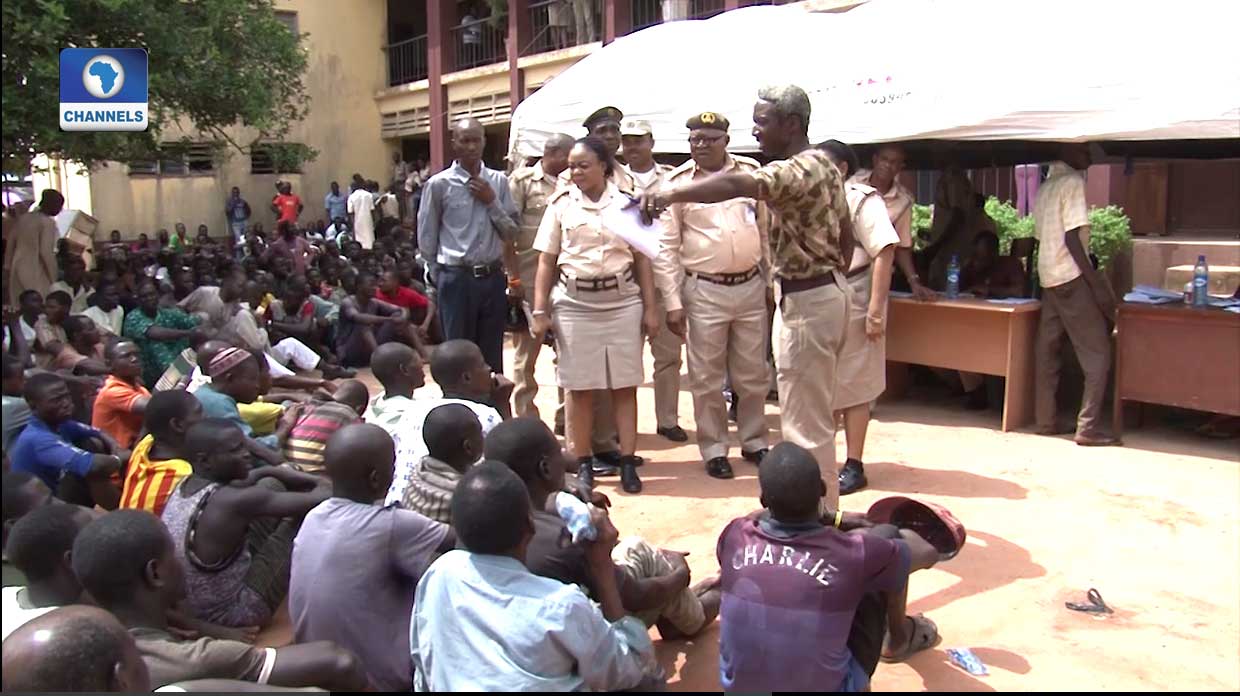
Nigerian Immigration Service – Channels Television

Identifying, separating and managing Nigeria citizen identity as duty calls by the Nigeria immigration official is a hard task because of similarities in look, common ancestors or linage, common markets, culture and socio-economic interactions by border communities who are intermarrying and civilizing together.

According to (WDR) Late Prof. Jadesola Akande, in her book “Introduction to the Constitution of the Federal Republic of Nigeria 1999”, stated that;

Presumably a Cameroonian could claim to have belonged to a community indigenous to Nigeria, after all; some part of Cameroon was previously part of Nigeria.

My View

All Africans are Nigerians?

I think that Indeed, any African from any part of the continent especially Sahelian and Sudano Sahel region who are from communities, similar to communities indigenous to Nigeria can claim to be a Nigerian because he “belongs or belonged” to a community that is indigenous to Nigeria as well.

Many of the people in the border communities are members of communities indigenous to both countries and as such are legally free to take advantage of the constitutional provision without any measure of legal commitment or loyalty to Nigeria or belief in her values and aspirations.

This is because there is affinity, cultural and linguistic homogeneity among them.

For example, a Chadian Fulani who joins the Fulani community of Nigeria could claim “belonging” to a community indigenous to Nigeria although he is a Chadian.

Massacre in Northern Nigeria Involves Cattle Rustling, Jihadis, and  Vigilantes | Council on Foreign Relations
Porous borders in northern Nigeria

The same thing goes for a Cameroonian Fulani when in Nigeria.

Likewise, Egun people in Benin Republic having similar community of their kiths and kins in Badagry area of Lagos.

The same goes for Barubas in Borgu, Kwara State they have theirs kiths and kins in northern Benin Republic around the Paraku area.

The same thing goes for the communities around the Nigerian border in Kebbi State like the Zabarama people.

Yoruba’s are all over the West Africa e.g. in Benin, Togo, Ghana, Cote d’Ivoire, likewise Fulani’s and Hausa’s in these countries and Cameroon, Niger, Mali, Burkina Faso, Kanuri’s in Bornu and Chad Republic and the Fulani’s in Nigeria and Cameroon Border towns.

The same thing in Adamawa, Tarabas’ Marbella Plateau, Jato- Aka in Benue State, Mfum, Obudu Catle ranch, Ekan, Ekon in Cross Rivers State having border with Cameroon. It is the same thing in Abana, Atabong in Akwa Ibom State and many islands in the Bakassi Peninsula.

We have Ijaws in the coastal areas all across the West Africa.

All these people are, intermarrying and civilizing together regardless of any legal framework in place for or against them by anybody or institution in Nigeria.

CASES DECIDED

 It was on the basis of this provision that the case of SHUGABA DARMAN V THE MINISTER OF INTERNAL AFFAIRS & ORS (1981) 2 NCLR 459, decided and the challenge succeeded.

The Plaintiff was a principal member of Bornu State House of Assembly in the 2nd Republic. He had a problem then and the government decided to deport him. He accepted in Court that his father was a Chadian but Claimed that his mother is a Nigerian of the Kanuri tribe, a community or tribe equally indigenous to both Chad and Nigeria.

Once this was proved, he was accorded the rights and privileges of being a Nigerian citizen, even when such a person is a notorious or wanted criminal or terrorist globally.

According to Oye Adefila in Shugaba’s case, the court held that once it is proven that a person is a Nigerian citizen, he cannot be deported from Nigeria.

And it is further held by Lord Devlin, in ROOKES V BENARD (1964) 1 ALL N.L.R that any unlawful deportation or unlawful interference of fundamental rights of a Nigerian citizen attracts compensatory and exemplary damages.

In the event of any legal friction and challenges by this kind of “citizens”, their successful challenge will attract exemplary damages and heavy compensation from our financial resources as a nation.

EFFECT OF OUR CITIZENSHIP CONSTITUTIONAL PROVISIONS ON OUR NATIONAL SECURITY

The problem area for national security is where any member of this type of community appears before an immigration officer, without any proof of Nigerian citizenship in the face of any environmental disaster, conflict or terrorist attack or climate change induced transborder migration etc, such a person cannot be prevented from entering Nigeria.

Gallery – Nigeria Immigration Service
Nigeria Immigration Service Officials

So the dilemma of Immigration Service Officials at the border towns across Nigeria in the discharge of their Statutory functions are better imagined in the face of the affinity, homogeneous socio-cultural relationships, language and common ancestors of border communities.

THE IMERATIVES OF NIGERIAN IDENTITY MANAGEMENT

Nigerians need to carry out a national discussion on these issues in other to be able to understand, appreciate and enhance the countries security by a proper citizenship acquisition, identification and protections.

This national discussion is necessary because, we must not only protect our sovereignty against domestic, foreign terrorist and criminal entities, we must also protect it jealously against those who wish or are intent on breaching our Border laws out of envy which is a common attitude of insurgents, sometimes promoted by some nations or their nationals towards Nigeria especially in these border communities.

The Nigerian Chief of Defence Staff Air Chief Marshal Alex Badeh was reported in the Guardian newspaper on Wednesday January 7th, 2015 page 3 lamenting the non – cooperation of the neighbouring African countries, especially Chad and Niger in dealing with the insurgents as they attack Baga town in Bornu state recently.

Yet Nigerienes and Chadians are found all over Nigerian cities, towns and villages mostly as security guards and gate men, keeping the gates in most houses in Nigeria today. You 8 find them in almost every city street in Nigeria as motor cycle riders, truck pushers, cattle rearers, farmers, harbingers of scrap materials, Muslim Missionaries.

Many of them can be found in highly sensitive government establishments as security guards etc. They are in all the nooks and crannies of Nigeria to the extent that they know our villages and forests better than we do. Where is our collective security and safety in their hands?

THE FAILURE OF IDENTITY MANAGEMENT

The failure to create a full proof Nigerian national identification scheme that can clearly tell and identify a Nigerian easily has the consequence in the low rating for our fight against insurgents terrorizing us in Nigeria today.

The terrorist are aided by the homogeneous nature of our border communities around the whole Nigeria, and the near total neglect in infrastructural provision for border settlements, coupled with the extreme discretion given to security agencies at the border posts saddled with the responsibility of securing Nigeria territorial integrity with a flawed citizenship laws.

These account for the terrorist camps around the border areas. They attack us in Nigeria and retreat or slide across our border unnoticed to “their homes” living us in pains, shock and national anguish. Now this cycle is repeated often to the extent of national distress and embarrassment to Nigeria today

CONCLUSION

We don’t have to continue like this. We have to do something in the right direction by;

 a. Amending our citizenship laws.

b. Create a proper legal frame work for citizenship acquisition, identification and provisions.

The failure to create a full proof Nigerian national identification scheme that can clearly tell and identify a Nigerian easily has the consequence in the low rating for our fight against insurgents, terrorizing us in Nigeria today.

The terrorist are aided by the homogeneous nature of our border communities around the whole Nigeria, and the near total neglect in infrastructural provision for border settlements, which demoralizes many members of the border communities into developing some soft spot for viral elements in their settlements.

These, coupled with the extreme discretion without clear cut uniform criteria given to security agencies at the border posts, saddled with the responsibility of securing Nigerian territorial integrity but with flawed citizenship laws, creating a monumental problem for national security in Nigeria.

In most cases, criminals incubate at the border communities, which is a haven for criminal activities, many of whom operate from these places conveniently against the rest of us in Nigeria.

These accounts for the terrorist camps around the border areas.

They attack us in Nigeria and retreat or slide across our borders unnoticed to “their homes” living us in pains, shock and national anguish.

Now that this cycle is repeated often today, to the extent of national distress and embarrassment to Nigeria, it is time to act.

We must all fight this monster collectively even though from different angles. Blame game will not help us in anyway.

MY SUGGESTIONS

I therefore think –

  1. It is time to get our citizenship laws correct through constitutional amendment.
  • The fortification of our citizenship acquisition and identification scheme through proper legal frame work is a necessity.
  •  Reduce excessive discretionary powers of our security agencies within the border communities.
  • Pay more attention to border communities,
  • Create deliberately as a policy the consciousness of being a Nigerian citizen in body, soul and spirit in the life of Nigerian settlers at the border towns.
  • We have to make them feel that, they are also a part of Nigeria as a whole. This way we can get them to contribute usefully to the peace, progress and general well-being of Nigeria, including providing assistance in our effort at creating a modern society in Nigeria, where contamination by viral human elements will be minimal especially from the border settlements all around Nigeria.
  • We equally need to have a proper legal framework for our security agencies especially at the border post whereby the provision for excessive discretion in the enabling legal provision is replaced with a clear concise regulation standardizing and having a uniform functions or duty regulations around the country in line with the constitutional regulations and global best practice.

SUMMARY

The imperative of national identity management cannot be over emphasized.

The failure to create a full proof Nigerian national identification scheme that can clearly tell and identify a Nigerian easily has the consequence in the low rating for our fight against insurgents/banditry terrorizing us in Nigeria today.

This area of law needs amendment before we can effectively harvest citizenship data for identity card management scheme as being done by the National Identity Card Management Commission now.

As it is today, our constitutional provision on who is a Nigerian citizen is foggy.

We need to properly define who is a Nigerian citizen, in a very clear and definite constitutional manner. Until we are able to solve the legal riddle of who a Nigerian citizen is, harvesting individual data I think is a mirage and a colossal waste of the scarce national resources.

Our enemies are determined strategically prepared to wipe out of these space without a trace. God forbid.

Daniel Daudu Makolo, presented this paper at a webinar on Citizenship and the Imperative of Identity Management organised by the Nigerian Bar Association, Abuja Branch (Unity Bar) in conjunction with Commercial Intermediates

Our Bar is very knowledgeable, our Bar is wealthy, but our Bar is rather scant on integrity – Fidel Albert

“Since 1997 I have been working in Hong Kong, London and Beijing. First with Simmons & Simmons, then Freshfields Bruckhaus Deringer, and finally, via a firm which I co-founded in Beijing in 2002. During this time, I have continued to see tremendous use of governing law clauses referring to England and Wales”, writes Matthew Murphy founder MMLC Group in an article for The Law Society Gazzette, UK.

In a recent article Murphy examined how English law is being used in different jurisdictions. His research led to exciting discoveries on the confidence and trust multinationals and Asian partners place in English law.

Conversely, Fidel Albert’s encounter during legal proceedings at the Supreme Court of Newfoundland & Labrador, St. John’s, Canada raised concerns about the gaps and inefficiencies in the Nigerian judicial system. The Nigeria based legal practitioner said being involved in the case GOSL v. Marport Robotics, led to a voyage of many discoveries.

Matthew Murphy’s story

In the late 1990s, I ran English and international law training seminars for leading People’s Republic of China (PRC) lawyers in Hong Kong and London. It was here that I first noticed their enthusiasm, in that they were keen to understand English and common law concepts.

Given that the modern PRC legal system is akin to a Germanic civil system, many common law concepts and practices initially seem quite fascinating for local PRC lawyers, and there has always been an eagerness to learn how English law has developed and is applied in practice.

Matthew Murphy_headshot
Matthew Murphy

Most cross-border work that I have seen over the years while working in Hong Kong and Beijing has been in the capital markets, mergers and acquisitions (M&A), intellectual property (IP) and technology, media and telecommunications (TMT) licensing practice areas.

During this time, I noticed that for those transactions involving UK-based multinationals and Asian partners, most agreements involved governing law clauses referring to the laws of England and Wales.

Several Asia-wide IP/TMT licensing agreements that I worked on over the years for a well-known and diversified UK-based group, saw English law as the happy compromise between the UK licensor and various Asian licensees based in several key Asian hubs, illustrating the trust that many experienced international lawyers place in English law.

Often negotiations commenced with Asian licensees seeking to have agreements governed by their own local laws, with third-party jurisdictions often posed as alternatives. In the end though, English law would win out.

The use of English governing law clauses, coupled with dispute resolution clauses designating Hong Kong-based arbitration centres – such as the Hong Kong International Arbitration Centre (HKIAC) – for dealing with disputes seems to be a popular strategy these days, especially for UK and Hong Kong-based multinationals when they are negotiating commercial and transactional agreements with PRC and Asian partners.

Hong Kong arbitration providers, including the HKIAC, always have a pool of experienced solicitors admitted in England and Wales on their panels, including myself. They are also in a unique position compared with arbitration centres in other jurisdictions as they have provisions for asset protection and other procedural remedies through special arrangements set up between Hong Kong and Beijing.

We are also seeing English law being used as a potential choice for US multinationals, when US and PRC parties are unable to agree on which governing law clause to use in commercial agreements. There is enthusiasm for the consideration of English law, particularly if the PRC parties have operations in the UK and a familiarity with English law.

What would you advise a client who is debating a choice of law to govern contracts in the Asia region?

Like any transaction, these decisions will come down to the where the parties are based, their sophistication in handling international laws, how the dispute resolution procedures are negotiated and how fast access to pre-trial remedies could be sought if an agreement was breached.

If these issues are taken into account and English law is a good fit for the agreement, it’s worth pursing English governing clauses in these agreements, provided it is for the benefit of all parties, they are educated on common law and equitable principles and understand how disputes are determined under English law.

Fidel Albert’s story

The case was GOSL v. Marport Robotics. Proceedings were pending before the Supreme Court of Newfoundland & Labrador, St. John’s, Canada. This case came with lots of lessons and experiences for me, especially as it concerns the gaps and inefficiencies in the Nigerian judicial system.

I think I had just left paid employment to set up our little shop with my partner. We were both 5 years at the Bar when we decided to take this leap of faith. We were briefed by a Nigerian Client to institute legal action in Canada for breach of contract against a Canadian company. Of course we were not licensed to practice law in Canada, so we needed a top-rated Canadian law firm to lead us.

It took us six months of intense search to find a good law firm willing to take the brief. And this was not for lack of good law firms in Canada. There are hundreds of them. Problem was, no one was willing to touch a brief from Nigeria with a 10-meter pole!! Once they hear “Nigeria”, they’ll politely tell you they’re not interested, and hang up. Firm after firm, this is what confronted us. No one wanted to take a big commercial brief, whether they would make money from it or not, as long as it came from Nigeria. It was an extremely depressing experience.

FIDEL ALBERT | AES Triplex LP
Fidel Albert

Eventually, a large firm agreed to handle the brief, after much persuasion and cajoling from me. But then, I didn’t know they had done intensive due diligence on me before accepting. One night, I got a call from my former boss, Babatunde Irukera, demanding to know what business I had to do in Canada. I told him I had some prospective litigation we were trying to get going there. He said well, Aelex (one of the biggest firms in Nigeria) just called him to confirm who I was and whether I had worked with Simmonscooper Partners as I claimed, and he graciously confirmed that I was legitimate. So, it turns out that the Canadian law firm had engaged one of the biggest law firms in Nigeria to undertake due diligence on me, for a fee I reckon, before accepting a legal brief from me. Interesting!

All said and done, the case was filed and I had to attend the Discovery Proceedings in Canada. Lawyers would understand what this means. It was during the proceedings that this picture was taken. So Discovery Proceedings is simply where parties meet on the record to examine each other’s documents, narrow down issues of disputes, examine witnesses and perhaps make admissions. It helps to streamline the case of each party preparatory to trial. Proceedings are recorded and are undertaken under oath. It’s a very tedious process.

But I saw strange things. I’ll tell you one of those. In the course of proceedings, the Defendant’s Counsel handed us a bundle of documents that it would rely on at trial. We were supposed to examine each one, ask questions on it and indicate if we had any objections to admissibility of the documents. I remember clearly that while examining the documents, the opposing counsel stopped us abruptly, and indicated to us that we had missed examining a key document in the bundle and that he believes we ought to examine that document. We asked him which document he was referring to, and he flipped the bundle and extracted the document he thought we missed, and kept it on the table. Fair enough. So I took a look at this document and couldn’t believe it. This single document was enough to bury their entire case, yet the Counsel felt himself under a bounded obligation to draw our attention to it, to the detriment of his own case!!

I reflected this matter for a long time, and kept thinking of the judicial system in my own country. After the proceedings, I asked my lead Counsel, Liam, why the opponent did what he did. Liam looked at me bemused, perhaps wondering why I, as a lawyer, should ask such stupid question when I ought to know. But he did eventually tell me that if the man did not disclose the document, he would have been disbarred. It’s an extremely serious infraction in their judicial system, according to Liam.

I thought about the Nigerian judicial system again and what it has become in recent times. You see, in our Bar, honest disclosure by lawyers is a very strange phenomenon. Lawyers actively and deliberately conceal and suppress facts and evidence that they consider injurious to their case. More worrisome is the fact that we do so under oath. Let’s say I was the opposing counsel in that case, what I would have done, and what my client would gladly pay me to do, would have been to burn that adverse evidence and then have my junior in chambers swear under oath that such document never existed. And the oath ends with a phrase “so help me God”! But I kid you not, this is even not the worse things that happen on a daily basis at the Bar! Worse things happen.

I have personally seen a lot in my few years at the Nigerian Bar. Sometimes I’m left wondering what has become of this our profession. Unfortunately, there are no consequences, especially for the big guys who have exerted lots of sweat to institutionalize these terrible practices. It was supposed to be a profession of nobility, but sadly, except for a few, you can’t find integrity at the Bar. Even worse, the system seems to reward unethical conducts. I have seen people who should not be lawyers at all on account of a total lack of integrity become Senior Advocates of Nigeria. It almost seems as though the harder you dig in the mud, the more likely you are to strike gold. So the Bar has become a huge stampede in mud and grime.

So do you still wonder why the international legal community will scarcely take the Nigerian lawyer serious? Out there, far more premium is placed on integrity and rectitude, than knowledge or wealth. And this is the problem. Our Bar is very knowledgeable, our Bar is wealthy, but our Bar is rather scant on integrity.  

How is it that many multinational companies will rather lose a deal in Nigeria than sign a contract where forum for dispute resolution and governing law is stated as Nigeria? I’m talking about contracts that are signed in Nigeria, where the work is to be executed in Nigeria, and where all the parties are in Nigeria! But when it comes to the dispute resolution and/or governing law clauses, they insist to the death that any dispute arising from the contract must be resolved in courts of other jurisdictions, not Nigeria. In fact, if you insist on NIGERIA, they will rather walk away from that deal, no matter how much profit they were to make, than leave jurisdiction to Nigerian Courts! Ever wondered the effect of this? Do we not know that that is work taken away from Nigerian lawyers? Or that that is transaction and litigation experience taken away from the Nigerian lawyer, which we will never have?

Even our own Government, when they have huge projects to execute in Nigeria, hire international law firms to undertake work for them. The most benefit we get from these deals is that government will hire some of our local law firms to piggy-back and act as “assistants” (but they use respectable appellations like “co-counsel”, “co-solicitors” to describe their role) to these international law firm to do the work. Our government won’t even trust its own local firms. You know, this reminds me of what my boss used to say ever so often to us when he wanted to underscore the importance of exhibiting integrity in all our dealings. He would say “do you know that even a thief will always look for an honest man to keep the quarry for him?”? Think about it, it’s the gospel truth. 

And yet we strut around like peacocks with so much hubris, seemingly oblivious to the fact that our conduct in destroying the moral fabric of this profession will perpetually keep us as bottom feeders, where we wallow in the shallows waters, forever banished from the deep ends of the oceans, where international law firms are raking the bottoms of their priceless bounties. But I have no pity. We laid this bed of thorns with our own hands, let’s enjoy the sleep!

When you read the English decision in IPCO v. NNPC, and how the English Courts terribly x-rayed the Nigeria legal system under the harshest light possible, your heart will melt. Mine melted. Despite a heroic attempt at patriotism, I knew there was truth somewhere in there.  

IPCO v. NNPC is a decision where a party got an arbitration award against the defendant, NNPC, in an international arbitration. Before he could enforce the award, the defendant filed an action in the NIGERIAN courts to set aside the award. The plaintiff joined issues in the new suit in the NIGERIAN courts but thereafter went to the UK to file an action for enforcement of the award, while a challenge of same award was pending in Court in Nigeria.

Many questions faced the UK Court in the enforcement proceedings, but the one that caught my attention was whether enforcement could proceed in the UK, while proceedings to set aside the same award sought to be enforced was pending in Nigeria! Normally, the UK court should have waited for the Nigerian challenge proceedings which came before the enforcement proceedings in UK. But the UK Court didn’t think it was that easy and straightforward because of the country involved. The UK Court spent a great deal of time x-raying the unfairness of Nigerian legal system and how the concept of justice was fleeting on account of inexplicable delays and questions of integrity. In the end, the Court settled for requiring the Defendant, NNPC, to make deposits of huge sums as security before a stay of the UK proceedings could be ordered.

While I am not unaware of the appeal processes in the IPCO v. NNPC case and variations to the orders of the lower Court that were eventually made by the House of Lords, I still find it distressing that the world has taken judicial notice of what we have made of our judicial system.

I fear that if something drastic is not done to reposition our Bar and the entire justice administration system, I fear that if we do not raise the bar of the Bar, this Bar of ours will be reduced to rowdy sessions of inebriate fellows at a raucous bar. We will have a bar without the Bar.

We wait!

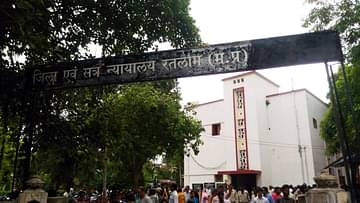
Lawyer sent to jail for sending birthday wishes to judge, Madhya Pradesh High Court to hear bail plea

The lawyer had downloaded the photo of the judge from her Facebook account and attached it on a birthday card sent by email.

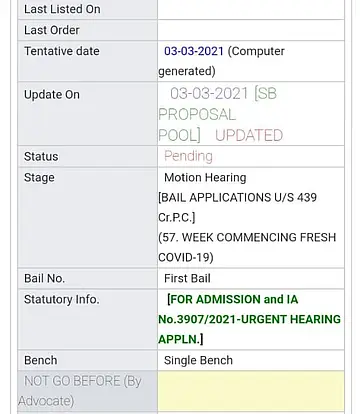
The Madhya Pradesh High Court will hear tomorrow a bail plea filed by a lawyer who was jailed for sending birthday wishes to a judge.

On February 9, the Ratlam Police had arrested advocate Vijaysingh Yadav after he sent Judicial Magistrate (First Class) Mithali Pathak an email and a birthday card on January 29. It was alleged that he had downloaded Pathak’s photo from her Facebook account and attached it with the birthday wish/card.

In the complaint, it has been alleged that Yadav had downloaded the photo of the judge without any authorization and sent the email to her official account. Further, since he was not added as a friend on the judge’s Facebook account, such ‘unauthorized access’ or use of the photograph would attract provisions of the Information Technology Act.

The First Information Report (FIR) was lodged for offences under Section 420 (Cheating and dishonestly inducing delivery of property), 467 (Forgery of valuable security ), 468 (Forgery for purpose of cheating), 469 (Forgery for purpose of harming reputation) of the Indian Penal Code and Section 41 read with 67 (Punishment for publishing or transmitting obscene material in electronic form) of the Information Technology Act, 2000.

On February 13, the family members of the accused had applied for bail on his behalf, but the same was rejected.

This prompted Yadav to approach the Madhya Pradesh High Court.He will be represented by advocate KK Gupta before the High Court.

In the bail plea, Yadav has contended that he has been implicated with unnecessary and unwanted charges. He has submitted that there was “no intention” to deteriorate the reputation of the judge. Moreover, he has claimed that he does not possess much knowledge about ‘internet access‘ and social media.

Case status on Madhya Pradesh HC website

Case status on Madhya Pradesh HC website

The Indore Bench of the High Court will hear the matter tomorrow.

Credit: barandbench

Detention of 14 years old boy after court order; family petitions NASS, PSC, IGP

By Yemi Oyeyemi, Abuja.

Bothered by police’s refusal to release a 14-year old held since February 5 this year, despite court order granting him bail, the family of the minor has taken its case to the National Assembly, the Police Service Commission (PSC), and the Inspector General of Police (IGP) for their intervention.

The family, in petitions written by its lawyer, Ishaka Dikko (SAN) and sent to the IGP; the Chairman, PSC; the Chairman, Senate Committee on Police Affairs, and the Chairman, House of Representatives Committee on Police Affairs, wants them to prevail on the police to obey the order for bail made on February 24, 2021 by a Federal High Court in Lafia, Nasarawa State.

Dikko stated that the 14-year old,, an SS1 student of Jofaq International College, Lafia, Nasarawa State, was arrested on February 5, 2021 by police personnel from the “A” Division Police Station, Lafia, Nasarawa State on the allegation of rape of a girl at his residence.

He added that despite Master Anthony Udokwu’s denial that he never had carnal knowledge of the alleged victim, the police, allegedly acting on the directive of Chief Superintendent of Police (CSP) J. A. Idoku (OC Legal), transferred the case to the Criminal Investigation and Intelligence Department (CIID) for further investigation.

The lawyer stated that despite efforts to have them grant bail to the minor, the police have continued to detain him at the CIID and allegedly subjecting him to all forms of torture even when he is unwell and had been treated, at the expense of his parents, at the Police Clinic in Lafia.

Dikko added that as part of efforts to secure freedom for the detained minor, he later filed a fundamental rights enforcement suit before the Federal High Court, Lafia, marked: FHC/LF/FHR/4/2021, following which Justice Yellim Bogoro, in a ruling on February 24, 2021, ordered the release of the detained minor, an order the police has refused to obey.

He stated: “Despite the provisions of Section 217 of the Child Rights Law of Nasarawa State 2005 and the Child Rights Act 2003, all oral applications for bail of our client by his parents as well as by counsel, was ignored by the said Police CIID, Lafia under the directives of DCP Bappa Magaji Jahon and CSP J. A. Idoku Esq

“Regrettably, the O/C Legal, CSP J. A. Idoku Esq, an officer of the court and a lawyer duly called to the Nigerian Bar, who is ordinarily supposed to advised and ensure strict compliance with extant laws and orders of court, has remained complicit in ensuring that the Order of the Federal High Court is not complied with.

“While no citizen should condone any commission of crime especially the most heinous offence of Rape, again No citizen or any official Government or any Institution of Government should vilify or crucify any person suspected of commission “of crime without due compliance with the law even if it is the most dreaded and heinous offence of murder.

“Our client since the 5th day of February, 2021 has been in detention at the said Criminal Investigation Intelligence Department, Lafia Nasarawa State, despite all efforts for his bail and clearly because the father of our client could not afford to give the father of the alleged victim the sum of N500,000.00.

“Needless to say that, assuming without conceding that our client is culpable of the allegation, no father would afford to sell the womanhood of his daughter for money.”

The lawyer wants the IGP; the Chairman, PSC; the Chairman, Senate Committee on Police Affairs, and the Chairman, House of Representatives Committee on Police Affairs to compel the police to ensure “the immediate release of our client in compliance with the order of the Federal High Court Lafia.”

He is also seeking the “investigation of all the officers involved in the violation of the valid order of court of competent jurisdiction, which ordered the release on bail of our client, who is a minor of 14 years, as well as the act of torture of our client.”

Dikko wants disciplinary measures taken against “the officers involved in accordance with the Police Act, as any officer found wanting, would have clearly breached the law and abused the most revered Police uniform, worn to defend the citizenry.”

Credit:Everyday

Upsurge in rape of women and children, shadow pandemic or creepy mental health?

“Until each woman takes charge of her life, gender violence will not end.” –Ogechi Abu

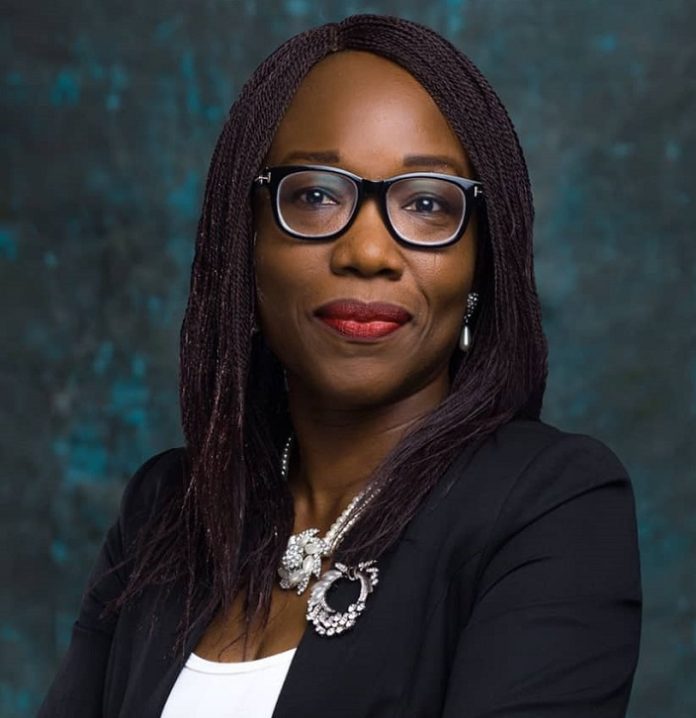
She is a seasoned legal practitioner with interest in all forms of dispute resolution mechanisms. A feminist with keen interest in the rights of women and children. A staunch member of the International Federation of Women Lawyers (FIDA) Nigeria, Abuja Branch, Ogechi Abu, Notary Public and immediate past Vice Chairperson of the Nigerian Bar Association Abuja Branch (Unity Bar) has also served as Secretary of FIDA Abuja and Publicity Secretary of FIDA Nigeria. She spoke with Lillian Okenwa on a wide range of issues.

“The surge in underage rape and Gender Based Violence (GBV) is nothing short of an abomination and glaring evidence of moral/social depravity and legal inefficiency in the country”, said Ogechi Abu.

Indeed, the impact on victims, particularly young people’s psychological and physical health can be shattering, especially given that this developmental period is when young people should be developing and refining intimacy skills in close relationships. Unfortunately, most of these close relationships have been grossly abused.

Today, about five times more women than men have been victims GBV or direct sexual assault and young adults are at especially high risk. What is remarkable about sexual assault is that despite years of research and public health interventions, there has been little change. Even more interesting is that in Nigeria, sexual assault cuts across ethnic groups. None is exempt; neither is it more predominant in some geopolitical zones.

Heather Murphy of New York Times in 2017 wrote about the unusual newspaper ad placed in newspapers throughout Los Angeles by a Ph.D. candidate at Claremont Graduate University in 1976. The ad reads:

The advertiser, Samuel D. Smithyman according to Murphy, sat by his phone, “skeptical that it would ring. But the phone did ring nearly 200 times.

“At the other end of the line”, she wrote “were a computer programmer who had raped his ‘sort of girlfriend,’ a painter who had raped his acquaintance’s wife, and a school custodian who described 10 to 15 rapes as a means of getting even with ‘rich bastards’ in Beverly Hills.”

By the end of the summer, the now 72 year – old South Carolina based Dr. Samuel D. Smithyman had completed 50 interviews, which became the foundation for his dissertation: “The Undetected Rapist.” What was particularly surprising to him was how normal these men sounded and how diverse their backgrounds were.

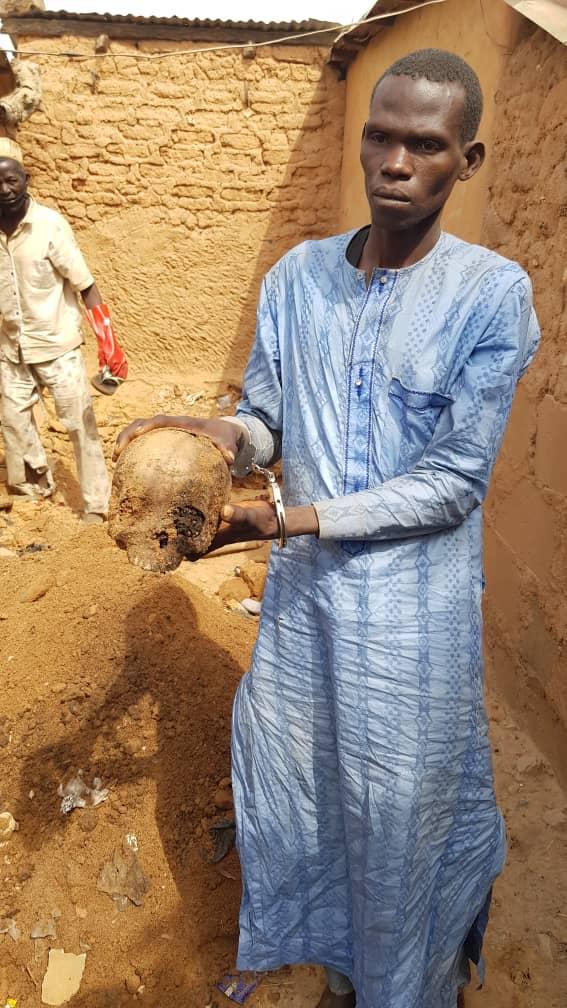
Recently, the social media was assailed by photos of the remains of Aisha Muhammed. Remains of the 11 year-old was exhumed from a pit toilet by the Yobe State Criminal Investigation and Intelligence Department (CIID) in company of FIDA and NCWS (National Council of Women Society) after she was raped and mutilated by one Sani Saleh (35years). Sani confessed to the crime after he was arrested by the police in Fika for another offence of rape against one Kailatu Shuaibu (15 years).

Sani Saleh

Again, a Chief Magistrate’s Court in Zuba Abuja is currently sitting over a matter related to the defilement of an 8 year old by her biological father. A relation the child confided in confirmed the act when the child pointed out their waste-bin where her father disposed blood stained condoms he used the previous day. 

Could this really be a shadow pandemic or the sign of a deepening creepy mental health challenge in the society? That perhaps will be for psychologists and psychiatrists to answer but Ogechi Abu did bare her mind on GBV and similar matters.

L&S: There seem to be a rise in gender based violence particularly within this period that the world has witnessed and still witnessing the Covid-19 pandemic.

Answer: Yes and it is not difficult to see why, because there is a lot of psychological factors. Covid-19 came with so many challenges and shook an already brittle society or an already fragile system. So, if you had a situation for instance, an already fractured relationship where parties who don’t see eye to eye suddenly begin spending time together, problems will arise. Most people are already out of the house by 7am. Some have to take the children to school. If you live in a very busy city like Lagos, you may not even get home till about 10 or 11pm, and the next thing you do is go to bed and sleep. The next morning the cycle continues.

These things provided some kind of buffers and management for fractured relationships. Because you spend little or no time together, there was really no incidence or opportunity for violence to escalate. But all of a sudden, you now find that you are stuck with the person. They are in your face. You are in their face and then Covid-19 also came with its own psychological challenges. It gave people so much time on their hands; you have nothing to do. It was subsequently that some kind of routine started coming in, as in virtual working and all that. But in the first 2 – 3 weeks, it was a complete halt. Everything came to a screeching stop, you know. So this person that you cannot stand, you’re now with them. You’re forced to be with them; to confront your issues; to deal with your challenges.

 A lot of people caved in, and don’t forget the economics of it too. There were economic challenges. The majority of Nigerians live from daily earnings. That was taken away; even the people who earn salaries. For some months people didn’t receive salaries. People who received salaries received a reduced percentage, so, there was a lot of factors that collided; that came together to exacerbate an already difficult situation.  

L&S: Aside from domestic violence on women, the rape of underage girls has equally increased and it cuts across every tribe and region in the country. None is exempt.

Answer: The surge in underage rape and gender based violence is nothing short of an abomination and glaring evidence of moral/social depravity and legal inefficiency in the country! There seem to be some wave of pervasion going across and it’s a global thing.

I think it has its roots in the erosion of our values. Our values have completely eroded, even though we have churches and mosques. And all of these are springing up in every corner. Yet, there is no co-relation with the effect. The positive effect that one will ordinarily expect from all of that is not happening. We now have what I may describe as a very permissive society. You know, and I think that a lot of people have poisoned their minds in terms of what they have allowed into their systems. For instance, pornography is now just one touch away. It’s just a click of the button away.

L&S: Is there any relationship?

Answer: Yes. I’m saying that all of these things poison your mind, because when you go down that part… Child pornography for instance is a big deal. Billions of dollars are involved in this global syndicate. The volume of revenue that is being yielded from child pornography is huge. Do you see what I mean? It is now a trade; a commodity. And it is because of all these things that people get into weird entertainment. In addition to that, there is no accountability or consequences. Nobody gets punished for these things, and there are so many factors that comes into it. It is not just the failure of the court system, it is families. A father sexually abuses his daughter and the mother keeps quiet.

L&S: Or the child will be told to keep quiet and the abuse continues.

Answer: Exactly. So many people put their own selfish interest first. You don’t want to lose your marriage even though the marriage is a sham. There’s nothing left of that marriage you know. Even, in FIDA, in the litigation committee where we get some of these reports, some of the victims who find the courage to come out and seek justice gets harassed by family members.

You will still find that it is family members who collude and torment the victims. They’d say ‘what do you want to achieve by what you have done? What has happened has happened.’ Sometimes you hear people talk about settlement. They would rather receive money from the perpetrators than pursue prosecution. You see, there are so many factors. And then, for the handful of cases that eventually get to court, proof becomes another problem because of lots of times, from the time when the incident occurred… From the time of rape and when it was reported, or even when the child first opened up to anybody, it is usually a long time. There is usually some gap, and it is that time that evidence is lost. So there is hardly any scientific means and this is not a situation where we have an eye witness to the crime. This offence of rape usually happens in secrecy, so it is my word against your word, and except in a very rare case, where the perpetrator admits to having done that, you are hardly ever able to establish a good case and the courts are not courts of sentiments.

L&S: There are instances where rape or violation of a minor as the case maybe was established, but the judges chose instead to mete out the least punishment.

Answer: Yes, but this is now a question of the judges. There is nothing you or I can do about it. It is entirely within the discretion of the courts, but if the court appreciates that there is a real issue, that there is a different element to it, then maybe they may be more, or not be so lenient. And don’t forget that in criminal cases, there is what we called “allocutus” where even if a confession is made, or a conviction is secured, the court gives the defendant an opportunity to make a case as to why he should not be sentenced.

Sentencing is a different matter altogether. Sometimes, the court may consider the age of the offender, because the court may consider that this is a first time crime. The court may consider other factors like, maybe you were intoxicated or maybe under the influence of hard drugs. Don’t forget also the pandemic of drug abuse that is going on.

L&S: What about the victim?

Answer: I’m not the Judge. I’m just saying that, a lot of times when we make these comments, we are not privy to the judgment of the court. That is to say, we only hear the summary of it but we don’t know. We have not read the judgment to see how the points were arrived at. I’m not holding brief for the courts though. I’m one of the advocates of stiff punishments for crimes against children. Rape of women and children are real dehumanizing crimes.

L&S: The Penal Code prescribes less punishment for rape than the Violence Against Persons (Prohibition) (VAAP) Act 2015, yet police prosecutors prefer to use Penal Code in rape cases.

Answer: That is a shame. Maybe we need to actually drag the police to court to challenge the legality of the continued application of the Penal Code vis-à-vis the VAAP Act, especially for those offences that the Act has repealed. The Act is very clear. There is a repeal clause there, that all of these offences as contained in the penal code or any other law have now been repeated. So quite frankly, the police prosecuting any of those offenses covered under the VAAP Act, under the Penal Code is a shame.

My disappointment with the police is so wide, because the police is an institution in this country that probably has the most number of lawyers. When you look at the pedigree of the police, you may find just a handful of IGPs that were not lawyers. There are so many officers who are lawyers, but it does not translate in the execution of their mandate. The police remains the most lawless institution in the country. The police remain the institution with the highest human rights violation in this country. Look at even the ENDSARS thing. In spite of the gravity of that protest, you will find from recent events and occurrence that the police has learnt nothing since that protest.

Ogechi Abu

We are still seeing videos of the police, including the so called disbanded SARS still brutalizing citizens. I’m saying prior to that time, one see videos of them beating, flogging people just dehumanizing people generally and this is so unfortunate. It’s most unfortunate even now that after all the protest about police brutality, nothing has changed.

I personally feel that the police is not sincere about fighting crime involving women and children. The other day, FIDA had a meeting where the head of the Gender Unit, was part of the programme and all that. She spoke well, but translating it into action is another thing. Sometimes, I appreciate the challenges they have in terms of manpower, in terms of resources. When I talk about resources, I mean operational resources like vehicle, and all of these things that should make their work easier and even though their services are supposed to be free you’d discover that when we (FIDA) take matters to the police and similar agencies, we still need to put hands into our pockets to mobilize for action if we need to achieve any kind of result. I know that recently, FIDA has been involved in a project on “Gender responsive budgeting” in terms of safe budgeting. How public fund is spent. These agencies handling or battling gender violence should have specific budgets to cover their work but so far it is not available.

L&S: In all these, what’s the way forward on gender violence and violence against children?

Answer: Women and children really need to take their place in the society or at least get what is rightfully theirs, even by the mere existence. We are talking about the issues of human rights, here. Now they say women’s rights are human rights, so we are talking about 50% of our population in the world.

L&S: What about men? Is it all about women?

Answer: It is women all the time because there is a huge imbalance that we are trying to correct. There is a huge injustice that has its roots in patriarchy across the world that we are trying to correct. So it’s not as if the focus is women, women, women. We are just trying to address the problem. The men don’t have much issues. They have always been in charge. They have always been in control. It is the crumbs; what they have allowed over the years, over the centuries is what women have had. Have you ever heard of a time when men were not to vote? But there was a time when women could not vote; even back in the USA. When were women allowed to vote? Here in Nigeria, you go back and trace women’s voting rights back to the Aba women riot.  

No man for instance complains about the right to hold land. It is something that is endowed to them as their status as men once they’re born. It’s like human rights that are inalienable. It accrues to you by the mere fact that you are a man. It’s not same for women, In many cultures here in Nigeria, cannot women hold land. You don’t hear about any man who is disinherited, but women are disinherited by the more fact that they are born women.

Left for me, I like practical solutions, my personal view is that, until each woman takes charge of her life, gender violence will not end. To be honest with you, there are too many of us condoning gender violence, and for numerous reasons. ‘Oh this is a marriage, you can’t walk away like that.’ ‘Oh you have children.’ But I find that one of the largest considerations is economic factor. It boils down to the issue of women and poverty. A lot of women stay because they are not always in a position to fend for themselves when they leave the marriage. Then a handful of instances where there are financially empowered women who condone it and all of those are because of issues of shame, stigma in the society. ‘My children need their father and all that.’ I feel that leaving children in a violent situation causes more harm than good.

A lot of these children are scarred for life, especially when they witness it and it is inevitable that they will witness it every now and then. So we end up raising a very dysfunctional society. So many people are damaged. So many people are damaged from all of the effects from their childhood.

L&S: But some people insist that broken homes have their own baggage.

Answer: We have so many damaged people in the society, and they are all from broken homes? Take the census. You will see that it doesn’t tally. A lot of the people who perpetrate all these things grew up in homes with both parents. But both parents being there does not necessarily translate the love and care and attention for children. It’s just like the exposure now of children, we were talking to rape and all of these things. I mentioned the issue of perversion in the society. The lack of consequences and all that. But there is also an element of exploitation. There is a huge element of exploitation tied to economic gain. A lot of these children who are usually molested apart from the very unfortunate cases of breach of trust, that is to say where a father or somebody who ordinarily should protect a child, is the perpetrator, more often than not, a lot of these children especially the girl child… These things happen outside the home especially children who hawk, or your send your child go to some place unsupervised. How old is the child?

And once they go out there, they cannot protect themselves. They become vulnerable to the elements but someone is at home. Whatever the child is hawking belongs to some adult somewhere who is sitting at home perhaps doing nothing or there is a role reversal, where a child is now the one fending for the parents. It is a different thing when a child is supporting or assisting with home chores and all that. Otherwise, this is exploitation. Child labour. And because the state is overwhelmed, the state has not put anything in place. Look at our laws. When you read the Child’s Right Act, you will see all of these things are prohibited and punishments prescribed. We are very sentimental society. That is also one of the biggest impediments and why we are not making much progress. Sentiments everywhere. It is exhibited in our homes. It is exhibited in government institutions. The people who should enforce the law will say eh…eh, this is a family matter.

For a very long time domestic abuse of any colouration was waved away as family matter. For a very long time, even till today, there are still women who will report to you that, when they go to the police to complain, they will be told “Madam, go and settle now. Go and settle.” Even when you refuse, the matter does not get the seriousness that it required. A lot of law enforcements agents don’t consider it as a serious issue. There is also some kind of element of negligence in the sense that… Do we pay attention to what is going on with our children? Why as a parent should I be comfortable at any particular point in time when I cannot account for the where-about of my children whether male or female? This is different from the instance that I told you of the breach of trust where you leave a child in an environment which you consider to be safe but that is not what you get. It’s all a Cocktail of issues. So many factors contributing.

L&S: What’s the way forward?

Answer: The way forward is to take individual responsibility because the state has failed and in a sense, I believe that prevention is better than cure. If there is a way to prevent the cry ab initio then we should do that. As parents, we should consider not exposing our children to some of these factors. All these children you see hawking one thing or the other, when they should be in school, that is not a sight to see.

In conclusion, the big matter that we are all shying away from, maybe because it is not a political correct or our cultural or religious sentiments and all that is- family planning. There needs to be a nationwide sensitization to people about bearing the number of children they can afford. There is a direct relationship between the number of children and poverty. There is a direct correlation. The cost of bring up four to five children is not the same as that of two. And we live in a society where you have just one child, you can’t afford to take care of that child, you have a second one. You still can’t afford to take care of the two and then you have a third and more. We don’t appreciate that there is an economic element to having children.

Look at our population and then you look at the growth of the population of Western Nations. The disparity is astronomical. It is enormous. Then you begin to wonder why those western countries are able to have a safe society where things are working. Why? Because people consider these factors. They think. You have young people who are working, and they will still tell you that there is a budget even before they get married. Before they start having children, they will tell you there is a fair idea of the cost on particular child. That’s not what we have here, and nobody is addressing this critical issue.

Question: But our people it’s God that gives children.

Answer: God gives but when it happens, do they call God? Seriously, they will call Lillian Okenwa or they will call me. They will call a sister or some relation and this is transferring pressure. There is an importance placed on children in our clime that is entirely misplaced. In my humbly view, it’s important to have children, but when you die, your children are not buried with you, you know. We always have this thing, LEGACY, LEGACY, LEGACY. That rhetoric needs to change. That orientation needs to change. Your children are not your legacy. I know this is not a popular thing to say your children are not your legacy. What you do for yourself and for your society is a legacy. Till today everybody talks about “Madiba” when you think of Madiba and you remember him, you do remember the number of children he had? Do you even know his children other than one or two popular ones? None of his kids have been able to rise into that phenomenal height he rose to, because everybody has their own lives to live.

Even Martin Luther King that we celebrate, everyday do you remember him for the number of children he had? Here in Nigeria, when you talk about Zik of Africa, when you talk about Tafawa Balewa, Sardauna or Ojukwu, do you remember them for their children? You will remember them for the life they lived, their convictions and their contributions to the struggle and their personal values. That’s all we remember them for. We need to address this whole dysfunction. No matter what government wants to provide, as long as there is that disparity between resources and the number of people, there will always be problem. You can’t bridge that gap. The gap is widening every day. Look at all the countries they tell you are the poverty capitals of the world. What do they have in common? What they have in common is population.

PWAN trains 30 young women on political leadership and mentoring

By Rahila Dauda

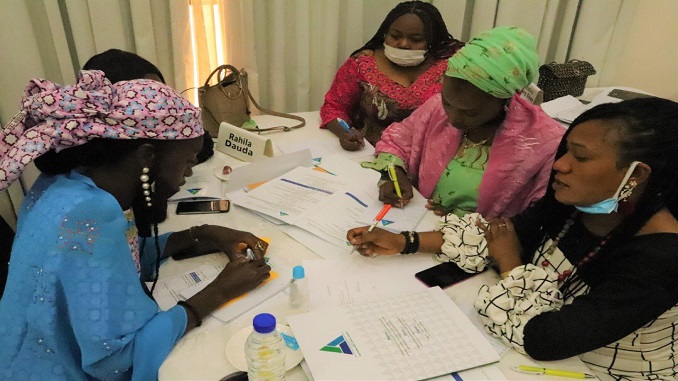
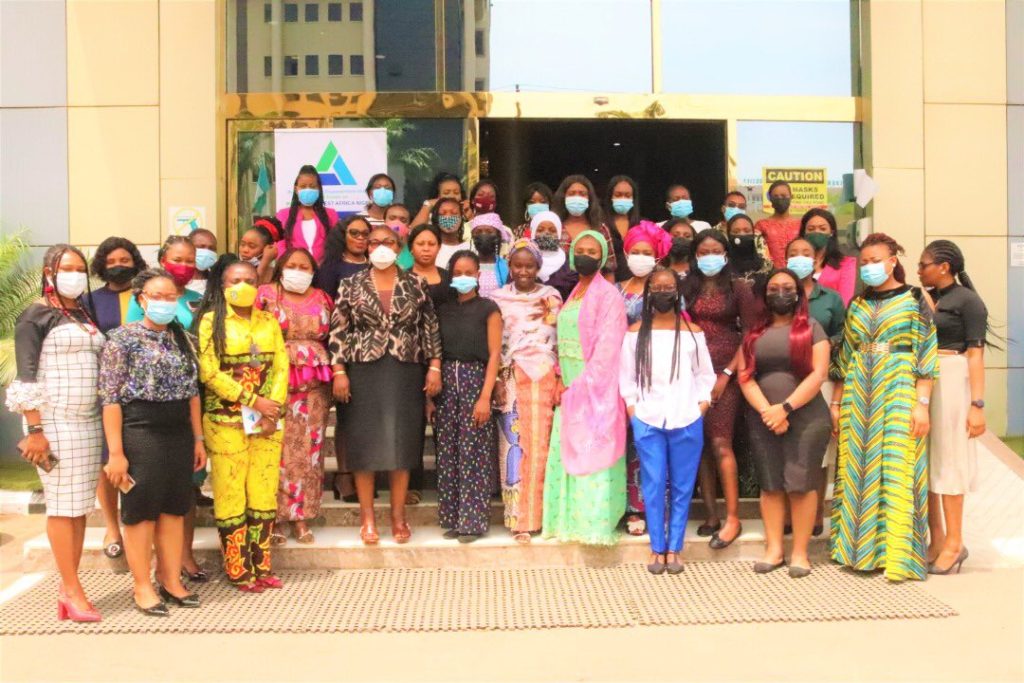
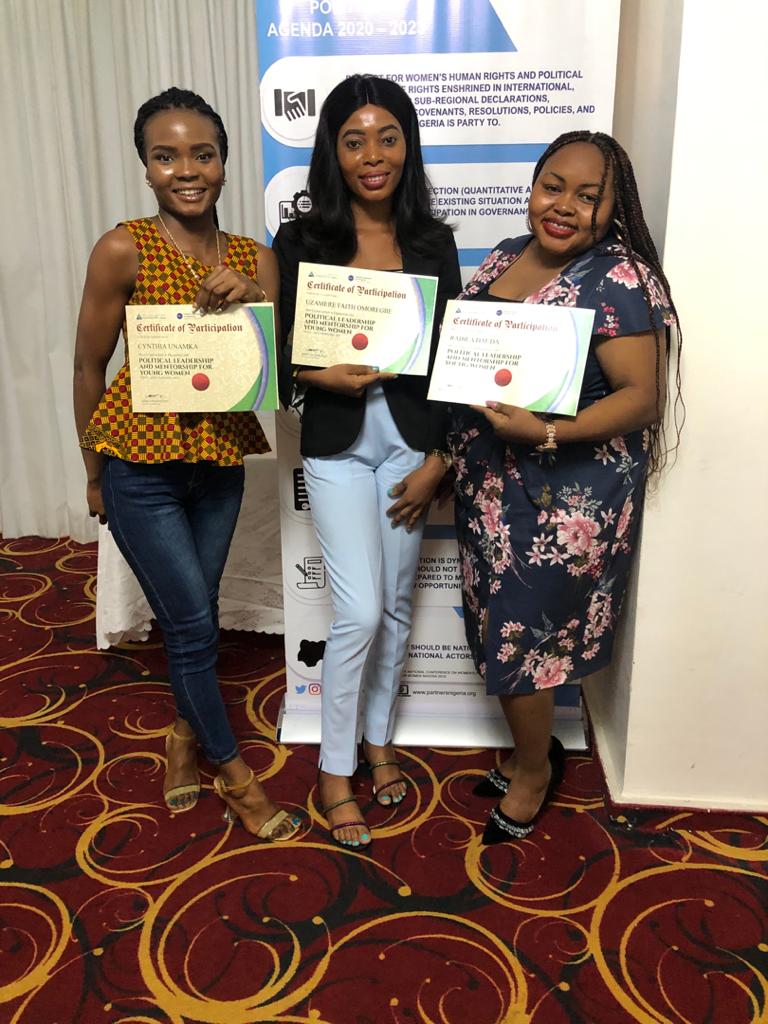
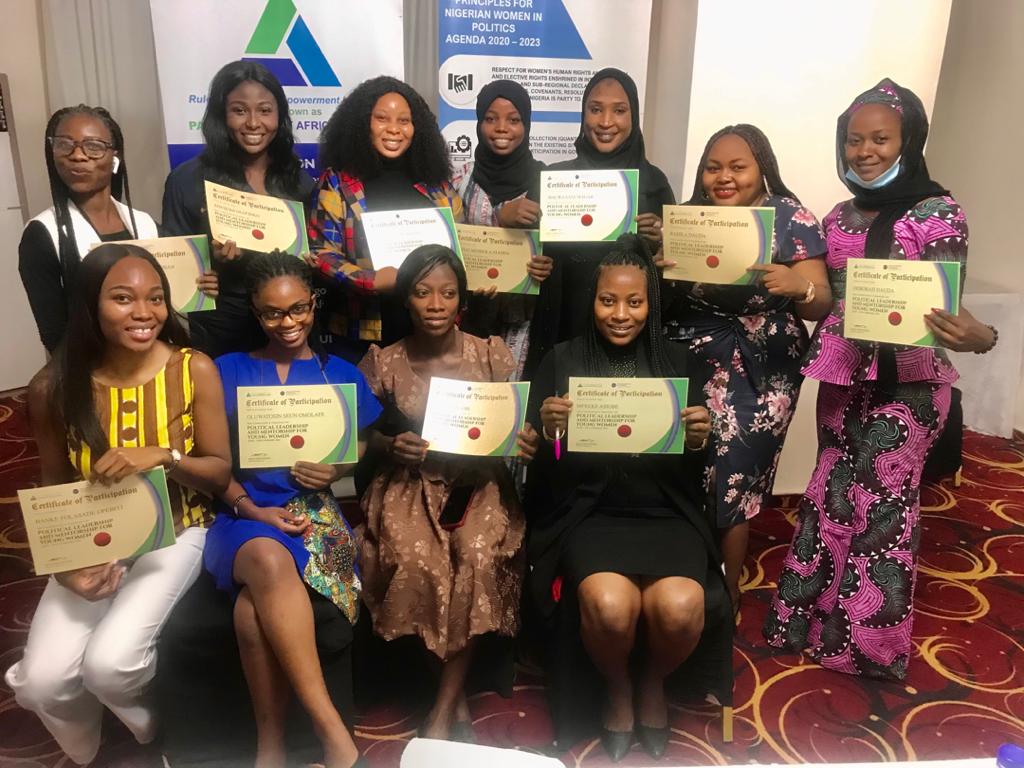
Rule of Law and Empowerment Initiative also known as Partners West Africa Nigeria (PWAN) kicked off the second phase of its Political and leadership mentorship programme with the just concluded 3- day boot camp for young women between the ages of 18 to 35.

The programme was hosted with the support of the National Endowment for Democracy (NED) and in collaboration with YIAGA Africa, EnoughisEnough (EiE) and Women’s Rights Advancement and Protection (WRAPA). The boot camp is the second phase of the program as the first phase was held last year

Participants at the training

According to Kemi Okenyodo, Executive Director of PWAN, the training  was mainly aimed at equipping politically minded young women who aspire for political offices.

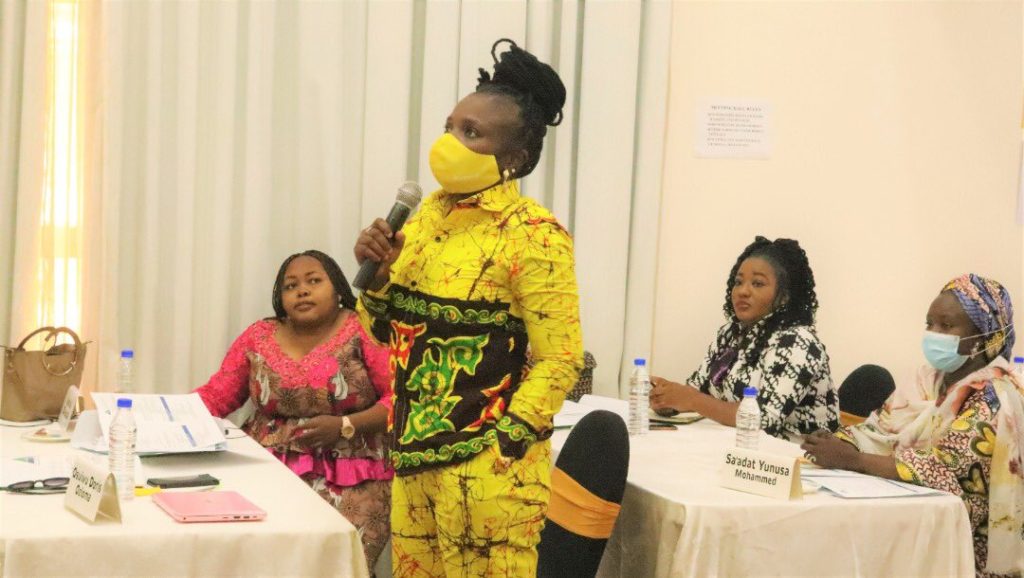
It was also intended to make them more prepared and knowledgeable on the rudiments of running for political offices, what it takes and how to be successful at the polls. The boot camp also afforded participants with the opportunity to meet with current political holders, those who have ran for offices before, seasoned and amazing speakers.

In the words of Kemi Okenyodo Esq, “PWAN seeks to build the capacity of the young women present in navigating the political terrain in Nigeria, understanding the electoral system and good governance.”

Participants were trained on the history of the Nigerian political system- women’s experience; running for elective office; democratic ethics; process of lawmaking; the life of a full-time politician; professional ethics; networking and engaging with your constituencies; public speaking and media engagement. Those were powerful sessions that left participants much better equipped and mentored.

Some of the participants have this to say:

‘’A big thanks to Mrs Kemi Okeyondo, the Executive Director  and the team members who made the whole process a success .The total experience of learning and sharing exceeded my expectations  and I must confess that it is indeed a milestone me which I hope to run with it’’-  Susan Okolie

‘’My heartfelt gratitude to PWAN and its amazing team of Beautiful and Hardworking ladies, for the platform to learn and expand our knowledge, capacity and networks. It was such an impactful and memorable experience, one I will love to relive if the opportunity presents itself again’’ -Bushrah Balogun

Indeed the Political Leadership and Mentorship boot camp has impacted meaningfully in the lives of these 30 women and also gave the opportunity to network and make friends with different people from diverse background in Nigeria.

The young trainees

Worthy of note is the fact that the participants will be paired with a mentor for the next six months……

Hmmmm if this is not amazing and unprecedented then I cannot find a word to say otherwise. kudos to Rule of Law and Empowerment Initiative (PWAN) for this life changing programmme and yes the writer is a participant too.

Rise in GBV: FIDA Abuja launches Centre in Gwagwalada

By Rahila Dauda

In line with its mandate of promoting, preserving and protecting the rights of women and children, the International Federation of Women Lawyers, FIDA (Nigeria) Abuja branch launched a centre at university town of Gwagwalada in Federal Capital Territory (FCT) on the 25th of February 2021.

Professor Josephine Agbonika, a lecturer at the Faculty of Law, University of Abuja has been appointed as coordinator.

FIDA members at the event

In her opening remarks, Chairperson of FIDA Abuja Mrs Rekia Rachael Adejo-Andrew said there cannot be a better time to bring FIDA to Gwagwalada, seeing that the cases of abuses and violence against women and children are on the increase.

L-R: Professor Josephine Agbonika, Coordinator FIDA Gwagwalada Centre, Mrs. Amina Agbaje, Deputy Country Vice President, FIDA, Chief Mrs Victoria Awomolo SAN, immediate past FIDA Regional Vice President (North And West Africa) and Mrs Rekia Rachael Adejo-Andrew, Chairperson of FIDA Abuja.

She further said: “It is our belief that with the inauguration of FIDA (Nigeria) Abuja Branch, Gwagwalada Centre…, the indigent women and children in Gwagwalada Area Council who are victims of any form of violence, discrimination and any form of threatened rights violation and or abuse shall get free legal services for the redress of such violations and abuses’’ Mrs Rekia Rachael Adejo-Andrew

It is instructive to note that the FIDA Abuja Branch, Gwagwalada Centre is not autonomous, but a creation of convenience and accessibility to members of the public in Gwagwalada and shall for the time being remain an integral part of FIDA Abuja.

Josephine Agbonika, Coordinator of the FIDA Abuja, Gwagwalada Centre

The Country Vice President of FIDA Nigeria who was represented by the Deputy Country Vice President, Mrs Amina Agbaje reiterated the importance of FIDA and its mandate, she also appreciated the chairperson of FIDA (Nigeria) Abuja Branch and her executives for making this possible

In her own speech, the immediate past FIDA Regional Vice President (North And West Africa) Chief Mrs Victoria Awomolo SAN explained the role of FIDA in the society: its structure and how it operates. She also explained that FIDA has over the years handled pro bono cases for indigent women and children, and most worthy of note is that FIDA has put in structures to ensure that the future generation continues with the vision. She further encouraged the society to support FIDA and all it stands for as the rewards far outweighs the sacrifices.

The FIDA International UN Representative who was also a former country vice president of FIDA Nigeria Dr Hauwa Shekarau gave her own remarks, stressing the need for more centres across branches as this will bring FIDA closer to its members and also ensure effective justice delivery.

Other dignitaries present including the Presiding Judge of the FCT High Court, Gwagwalada, Hon Justice Anna I. Akobi of the Kwali High Court and Chairman Nigerian Bar Association (NBA) Gwagwalada Branch Mr Isah Aliyu expressed appreciation to FIDA for the giant stride and pledged their unfettered support to FIDA and her activities.

Prof Josephine Agbonika, the Coordinator of the FIDA Abuja, Gwagwalada Centre equally expressed her appreciation to FIDA Nigeria, the judiciary, the NBA and all present for making Centre a reality. She particularly thanked the Chief Magistrate of Gwagwalada for giving the Centre a space in his court for their operations.

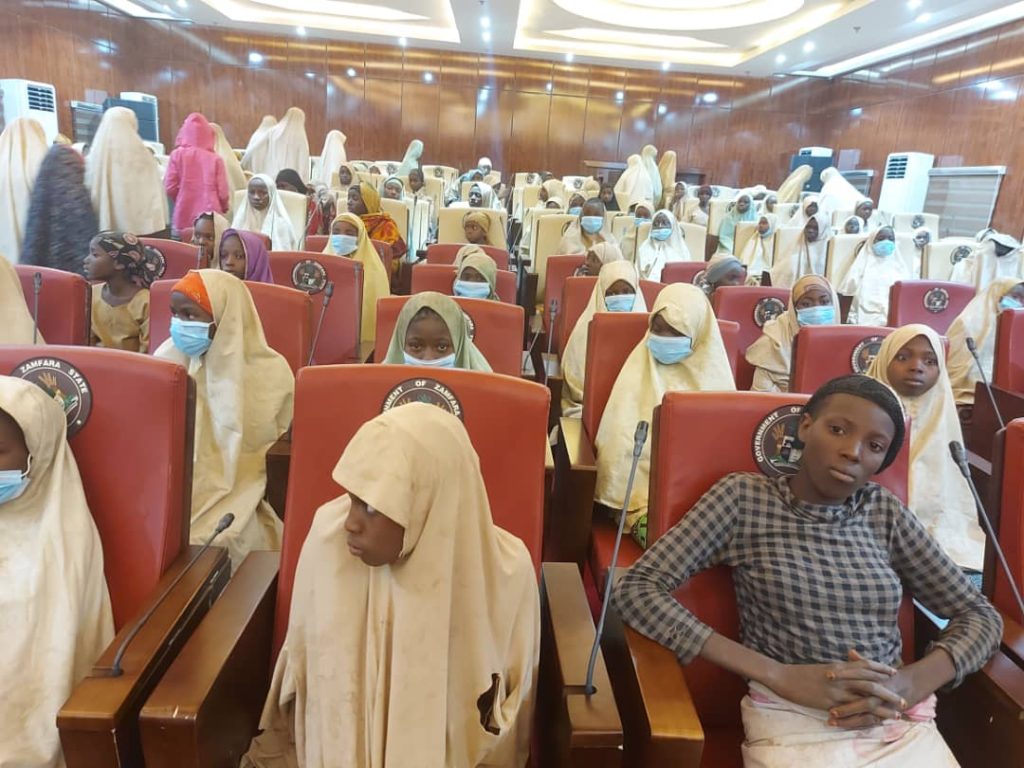
Wicked bandits! Freed Zamfara girls say they walked on them, put sand in rice, pray but bar them

Freed Zamfara school girls

Incredible tales are putting a lie to the burnished image negotiators and self-appointed public relations officers are giving bandits as stories by freed abductees and students paint a picture of monsters.

The stories are coming just as many are wondering if media houses were not right in reporting their release last Sunday. “The girls looked touched up, with new uniforms, all that within a few hours after their release, something does not add up,” a source said.

Nevertheless, the stories by freed girls of Government Girls Secondary School, Jangebe is heart-rending. One of them in tears, Hafsatu Anka, an SS II student said they were laid in trenches littered with human feaces.

“They walked us on foot where some of us got dislocated on their foot, they would pray as Muslims but never allowed us to pray and they fed us with rice in which they put sand after cooking,”

She added, as many have confirmed in the past, that hundreds were still being kept in the bandits camp.

Earlier this Tuesday, Governor Bello Matawalle, confirmed the release of not less than 279 students of the Jangebe school kidnapped last Friday by armed bandits.

It still remained unclear where exactly the abducted school girls were brought from to Gusau about 5:00 a.m on Tuesday. Reports on Sunday said they were released from a forest in Anka and taken to the palace of the Emir of Anka.

But the heavy joint security personnel, according to media reports were led by State Commissioner of Police CP Abutu Yaro.

The students are currently at Government House Council Chamber being reviewed by the Governor Bello Mohammed Matawalle and his Wife, Hajiya Aisha Bello Mohammed Matawalle.

Gov Matawalle said no ransom was paid for the girls adding that repentant bandits helped security agencies in the operation leading to the rescue of schoolgirls after reaching agreements with abductors
The relief in Zamfara, notwithstanding, embattled residents, it was gathered, want their Governor to declare those behind the abduction, after his claim, on Sunday, that he knew them.

Credit: Everyday

UPDATED: 279 of the kidnapped Jangebe schoolgirls freed (PHOTOS)

Released Zamfara Jangebe Schoolgirls, (PHOTO CREDIT: Zamfara Govt House Press)

The 317 schoolgirls were kidnapped from the Government Girls Secondary School, Jangebe, in Talata Mafara Local Government Area of Zamfara State last Friday.

The majority of the 317 female students abducted from a school in Zamfara State have been freed.

The schoolgirls were kidnapped from the Government Girls Secondary School, Jangebe, in Talata Mafara Local Government Area of Zamfara State last Friday.

Yusuf Idris, the media aide to Governor Bello Matawalle of Zamfara, confirmed the release of the girls to PREMIUM TIMES Tuesday morning.

The official said 279 schoolgirls were released around 4:00 a.m. on Tuesday. He said the girls are currently at the Zamfara government house waiting to be reunited with their parents.

He asked for more time to provide details on the remaining 38 girls.

PREMIUM TIMES had reported how the students were abducted early Friday amidst the worsening security situation across Nigeria.

The abduction in Zamfara occurred about two weeks after dozens of students and staff members were abducted by armed bandits from a school in Kagara, Niger State. The students in Niger were released on Saturday morning.

President Muhammadu Buhari had condemned the abductions saying his government would not succumb to the blackmail of the bandits.

On Monday, a leader of the federal government delegation sent to sympathise with the people and government of Zamfara State over the kidnapped Jangebe schoolgirls, Hadi Sirika, briefed President Buhari on the outcome of their mission to the state.

Speaking to State House correspondents after a closed-door meeting with the president on Monday in Abuja, Mr Sirika, who is also the minister of aviation, expressed optimism that the abducted female students of Government Girls Science Secondary School, Jangebe, would soon be freed from their abductors.

He said the government and people of Zamfara State have expressed satisfaction with the efforts of the federal government toward addressing the menace of banditry and kidnapping in the state.

Mr Sirika said: “Well, the message we have brought back to the president is that the government and people of Zamfara are very appreciative of the efforts of Mr President, including all of the things that the president had done towards Zamfara.

The 317 schoolgirls that were kidnapped from the Government Girls Secondary School, Jangebe, in Talata Mafara Local Government Area of Zamfara State

“The governor also said he has an unfettered access to Mr President and Mr President has always given him a listening ear, and they have helped him in so many ways in reaching a peaceful coexistence with his people.

“So he’s very glad and he’s very happy. He asked us to greet Mr President and tell Mr President that he should count him as a partner in this challenge.’’

Mr Sirika had on Sunday delivered Mr Buhari’s message to the people and government of Zamfara.

Released Zamfara Jangebe Schoolgirls, (PHOTO CREDIT: Twitter @Bellomatawalle1)

He said new measures had been developed by the federal government which would bring a complete end to all forms of criminality in the nation.

“The president is saddened by the abduction of the students from Jangebe and reassures you that the government has all the resources and wherewithal to contain these criminals.”

Other members of the delegation were the Minister of Police Affairs, Maigari Dingyadi; Minister of Humanitarian Affairs and Disaster Management, Sa’adiya Umar-Faruk; and Minister of Women Affairs, Pauline Tallen.

Credit:premiumtimesng

Penalty For Driving Commercial Vehicle Intercity Without Carrying…

#OBSCURELEGALFACTS BY AROME ABU

In Nigeria, it is an offence to drive a commercial vehicle carrying passengers on intercity journey without a passengers manifest.

PENALTY
Fine of N10,000.00.

See Section 10(4)(dd) of the Federal Road Safety Commission Act.

Arome Abu is the Managing Partner of TCLP.

CAVEAT: Note that this information is provided for general enlightenment purposes and is not intended to be any form of legal advice.

Obscure Legal Facts is an exclusive daily publication of THE COUNSEL L-P.
Plot 108 Idris Gidado Way, Wuye, Abuja.
abuarome@[email protected]
+234 803 262 2359
+234 708 1156 539.
Twitter: @TheCounselLP

TIPS