Home Blog Page 1017

Politics And The Court of Appeal

BY REUBEN ABATI

It is most unfortunate that the proposed appointment of new judges for Nigeria’s Court of Appeal has been controversial since the announcement of a shortlist in December 2020. The President of the Court of Appeal, Justice Monica Dongban-Mensem has now found herself in an uncomfortable situation where she has to defend the integrity of her Court and the process that led to the emergence of a list of 20 preferred candidates and a list of additional 20 reserved candidates. To have the judiciary dragged into the mud of Nigerian politics and the usual culprits: ethnicity, religion, Federal Character and nepotism playing a prominent role in the matter, is disheartening. Why is it so difficult in Nigeria to have at least one sacred institution, a special symbol, that no one can desecrate? As it is, that seems increasingly impossible.

I asked this question as I read over the weekend, a statement attributed to the President of the Court of Appeal, Justice Dongban-Mensem in which she had cause to protest that persons who have been complaining about the alleged manipulation of the ongoing process of appointing Judges for her Court are seeking to destabilize and scandalize the judiciary. She argues that the appointment process has so far followed “due and usual process” and that the allegation of “favouritism” is a false campaign of calumny: “A total of 80 nominees were shortlisted and recommended for the appointment of 20 Justices to fill the existing vacancies. I state on my honour that any of the 80 nominees could be appointed”, she writes. “It is unfortunate that some people have elected to go to the press without hard evidence which are readily available to those who seek to know. I hereby state that the current recommendation pending determination by the National Judicial Council was done without any preference for tribe, creed or association.”

The problem here is that many stakeholders and interested parties do not think so, Mi’Lord. Shortly after the list was made public, the Southern and Middle Belt Leaders Forum (SMBLF) was one of the first groups to cry out in protest. The group alleged that the published list favours only Muslims from the North and does not in any way reflect the fact that Nigeria is multi-ethnic and multi-cultural. Thirteen out of the 20 preferred judges are from the North, including three Sharia Judges. The SMBLF asked to know if there is no Christian judge at all from the North and the Middle Belt who can be considered good enough to be a Judge of the Appellate Court! Along the same lines, a civil society group, the Global Integrity Crusade Network (GCIN) petitioned the Chief Justice of Nigeria to ask that the National Judicial Council should not go ahead to approve the “fraudulent” list before it. Stakeholders from the South East of Nigeria also cried foul. In a petition to the President of Nigeria and the Chief Justice of the Federation, the Alaigbo Development Foundation led by Professor Uzodinnma Nwala pointed out that the proposed list of new Court of Appeal Justices is meant to deny the South East its quota in the Court of Appeal based on the principles of Federal Character as enshrined in the 1999 Constitution.

The ADF puts the matter thus: “…it is very unjust and unfair for only one Justice to be appointed from the South East out of twenty (20) justices that are being appointed from the six geo-political zones, whereas the other zones were allocated as follows: North West (8), North East (3), North Central (2) South West (4), South South (2)”. Before the ADF, the Christian Association of Nigeria (CAN) also found it necessary to express “ïts feelings of sadness, disgust and anger at the insensitivity demonstrated by the FJSC in compiling the list. It seems undeniable that the recklessness displayed by the FJSC suggests a steady and gradual descend (sic) to a process of Islamising the Judiciary of Nigeria…”

It is possible to dismiss all of these as rather too familiar: the typical Nigerian response to appointments and processes in the public sector but it must be noted that protests such as this speak to a major crisis that Nigeria is now grappling with on a daily basis: the menace of ethnicity, religion and geography. For this reason, nobody believes that the country is fair to anybody. There is a crisis of trust between the government and the people, and among the people themselves. More than 60 years after independence, Nigerians have reduced every institution of state to the politics of proximity and advantage. There is a prolonged and unending struggle over who gets what, and who controls power. The effect is that this dominant tendency brings out the worst in all of us. The educated man in the North who is a first-class intellect is likely to defend a bandit who kills and maims just because he thinks that by doing so, he is protecting his kinsman against other Nigerians, of different ethnic and religious extraction, who are insisting that justice must be done. Similarly, a Southerner of the same pedigree would defend his own kinsman against the Northerner for no reason other than the fact that they both speak the same language or belong to the same region or religion.

This is the ugly drama being played out in Nigeria. It is not new but the melodrama is now tragic. What is disturbing is that the judiciary, the last refuge of the common man, and the expected bastion of the rule of law is now these days, dragged into the crisis of nationhood in a manner previously unseen. Before now, the Nigerian judiciary faced the challenge of military rule and the abbreviation of its Constitutional rights. It survived. Today, the same judiciary is now accused of everything from nepotism, to mediocrity, corruption, incompetence, complicity in the Nigerian mess and if care is not taken, eventual irrelevance. The last point is the main reason caution is advisable.

The judiciary must stay above dirty politics, very far away from it. Its gates must be locked against politicians by all means possible. Nigeria already suffers from too much politics: the politics of ethnicity, religion, difference and mischief. But whereas the involvement of the legislative and executive arms of government in cut-throat, dirty politics may be excused on the grounds that these two arms of government are dominated unavoidably by products of partisan politics, there is cause for worry when the third arm of government, under the doctrine of the separation of powers, becomes a pawn in the hands of politicians, or becomes even so openly mired in politics that its neutrality becomes a subject of analysis, speculation, and even protest. It is worse when the judiciary is accused of partisanship and desperately so. The court, the work-place of the judiciary, is expected to be a temple of justice and everyone who works therein, an honest, untainted officer.

It is the duty of the judiciary to interpret the law and ensure justice, and provide a refuge for all persons whose rights may have been violated, and at the same time, punish according to the law, those errant characters in society who violate the public order and return society by their conduct to the state of nature as defined by Thomas Hobbes. The law exists therefore, to restrain animal conduct and remind all of us of the need to be human. The judex are at the apex of the ladder. Given the privileged position that they occupy, they are expected to be above board, unimpeachable in terms of integrity, most deserving of their positions and of such moral and professional competence to be able to deliver justice without prejudice. When the judiciary however, becomes a target, subject, victim of partisan politics, or rank emotionalism, this goal cannot be achieved. A politicised and compromised judiciary is a threat to the same rule of law that it is required to uphold and enforce.

This re-affirmation is necessary against the background of what looks like the current politicisation of the proposed appointment of additional Justices for Nigeria’s Court of Appeal. Justice Monica Dongban-Mesem is in order to defend her Court. The Court of Appeal is too important in the hierarchy of courts to become a playground for public prejudice and suspicion. Men and women who sit on the Appeal Court must be seen to merit their positions on the basis of their accomplishments and experience. Trust and confidence in the “due and usual process” of the appointment of judges is relevant to the subsequent level of confidence in their performance in office. But with due respect, Her Lordship’s rebuttal does not go far enough. The “hard evidence” that she talks about in terms of what is available in the public domain and what is known contradicts her own declarations. It provides a strong justification for an interrogation of the queries that have been raised and why the National Judicial Council must review the list of proposed Judges before it takes any action.

A review of all the complaints so far would suggest that the Court of Appeal indeed followed “due and usual process” in the screening of the judges that applied for appointment into the Court of Appeal, but problem arose after the President of the Court forwarded the decision of the Committees to the Federal Judicial Service Commission (FJSC). The key allegation is that the FJSC turned the list upside down and ignored the recommendations of the Court of Appeal. Is the President of the Court of Appeal defending the FJSC? Would she be willing to publish the original list that she submitted to the Judicial Service Commission to provide greater clarity and allow the public to compare and contrast? And just in case the list that is in circulation is incorrect, no one has said so. The hard evidence that is currently in circulation is that 13 out of 20 nominated judges are Northerners and Muslims. The 13 Muslim Judges are from Niger, Plateau, Adamawa, Yobe, FCT, Kano, Kaduna, Kebbi, Sokoto, Zamfara, and Katsina, the home state of the incumbent President, which has two nominees. The entire South East is represented by one Judge from Imo State. The South South has two slots: Bayelsa and Delta State. The entire South West has 4 – Ondo (2) plus Ogun, and Lagos. The reserve list of 20 follows more or less the same pattern! By what criteria on earth did the FJSC arrive at such a list which can only fuel the anger about how under the present dispensation, there is an alleged deliberate attempt to grant undue advantages to a section of the country – from cattle rearing, to public appointments?

It may be argued that ordinary people have no business raising questions about the appointment process in the judiciary. But that would be a terribly wrong thing to say. Judges are first and foremost human beings. They are part of society. They have rights too. A lawyer who has chosen a career on the Bench expects that he would be promoted according to his ability. If he is denied the opportunity for advancement and self-actualization, just because his kinsman is not in power or he does not know people in high places, he would be disturbed. He or she will be demoralized. We expect the judiciary to dispense justice, but should such an institution also promote injustice and unfairness within its ranks? However, where are the judges who believe that they are qualified to be on the preferred list? Why are they not the ones writing petitions? Civil society groups may crow as they wish, but their efforts will ultimately raise the question of locus standi? Should judges who push this same principle be seen to be sleeping on their own rights?

There have also been snide remarks about the competence of some of the judges on the FJSC’s proposed list. I have no “hard evidence” in that regard. Elsewhere in the United States for example, there will be open access to the judgments that judges about to be elevated have written, their positions on key judicial matters and their contributions to the development of the law. Here in Nigeria, there is so much politics and secrecy. Judges who think that they are more deserving are bound to feel discouraged. Last year, there was so much controversy over the appointment of the Federal High Court Judges in Abuja. This year, we are at the same point with the appointment of Justices of the Court of Appeal. At other times, there have been issues over the appointment of Chief Judges at the state level, and the thorny issues have been more or less the same: merit, ethnicity and religion (re: Kebbi, Adamawa, Cross River). Who will judge the judges? It has also been said that the current list before the National Judicial Council does not include senior members of the Bar and persons from the academia whose inclusion in line with the enabling Guidelines can broaden the scope of the Court of Appeal, and provide needed depth.

Finally, the President of the Court of Appeal is a Christian. Right under her watch, we have this controversial issue of 13 nominee-Justices of the Court of Appeal out of 20 who are Muslims and Northerners? Whatever she says, it will be recorded that the deed is hers. Was she intimidated or influenced? What other “hard evidence” do we need? What else would she be willing to defend on “her honour?” These are issues that the NJC must consider.

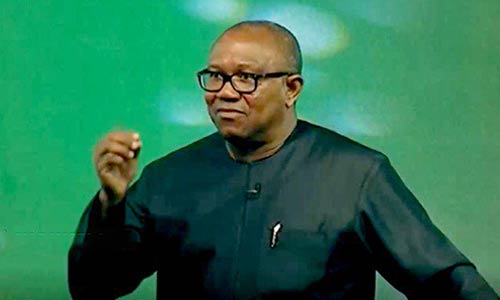
Ransom Will Encourage More Criminal Ransom Will Encourage More Criminal Activities — Obi

Former Anambra Governor Peter Obi has described the payment of ransom to kidnappers as unacceptable, saying it would escalate crimes.

Obi made this assertion while answering questions from reporters on the sidelines of a book presentation by Senate Minority Leader, Senator Enyinnaya Abaribe: Made in Aba, A life of coincidences” in Abuja.

He noted that security is local and urged the Federal Government to provide jobs for Nigerians to curb criminal activities.

Obi, while responding to a question on the rising spate of kidnappings across the country and payments of humongous ransom, said: “Security is local. It starts from the community. Then the local government and state before the Federal level.

“We can’t have a situation where everything is controlled from the centre. We need to redesign it. It can’t work with the way it it right now.

“We need to deal with insecurity, let’s start with the issue of poverty. Let’s deal with poverty. The more people have access to sources of livelihood, the more you reduce crime.

“A man who doesn’t know where his next meal will come from will likely take to crime. Economy is used in fighting crime. You can’t throw people into poverty and expect them not to go into crime.”

On payment of ransom to kidnappers, he said: “It is not acceptable. We need to reward hard work. Instead of doing that, we should create or support small businesses.

“By paying a ransom, you’re paying people who aren’t productive. People are making money without being productive.”

On the call to grant amnesty to bandits, Obi said: “Like I said, people must make money genuinely. It is bad enough that we are borrowing money to do everything.

“But to also pay people for going into crime is unacceptable. If you’re going to pay kidnappers and grant them amnesty for committing a crime, you’re simply asking everyone to take to crime.” (thenigerialawyer)

BREAKING: FG to sell oil in Naira to $15bn-Dangote Refinery

The Federal Government has concluded plans to sell crude oil to the $15 billion Dangote Refinery in Naira.

This is part of measures adopted to strengthen the currency and by extension the nation’s economy.

The governor, Central Bank of Nigeria, CBN, Mr Godwin Emefiele, who visited, Saturday, to inspect the ongoing construction, said: “We have taken the decision to sell the crude to the Refinery in Naira because we want to impact the economy.

“We also hope that by the time the Refinery start to refine, and sell its petroleum products in Naira, the local currency will be stronger, and by extension the nation’s economy, which is still oil-driven.” (barristerng)

Sheikh Gumi: Abducting School Students Is Lesser Evil Than Attacking and Killing

Self-appointed negotiator between bandits and willing State governments and Islamic Scholar, Ahmad Gumi, stirred anger, again, on Monday when he declared that the abduction of school students by bandits  is a lesser evil than storming communities and taking lives.

His comments, though agreeable to some sparked outrage because it tended to endorse the abduction of over 300 female students of a girls secondary in Zamfara State.

In social media comments, many fault the timing of his comments.

On a BBC Pidgin interview, the cleric said, “Kidnapping children from school is a lesser evil because in the end, you can negotiate and now bandits are very careful about human lives.

“Before, the mission of bandits was to go into a town, ransack it and kill people. By this, I can say our preaching is working and hopefully, we are coming to an end of banditry in Zamfara and other states.

“Bandits are more careful about lives now and just want to do sensational attacks which would bring attention to themselves.”

Credit:Everyday

Moratorium Under Section 14 IBC Covers Section 138 NI Act Proceedings Against Corporate Debtor For Cheque Dishonour : Supreme Court

The Supreme Court on Monday held that the declaration of moratorium under Section 14 of the Insolvency and Bankruptcy Code(IBC) covers criminal proceedings for dishonour of cheque under Section 138 of the Negotiable Instruments Act against the corporate debtor. “We hold that a Section 138/141 NI Act against the corporate debtor. “We hold that a Section 138/141 NI Act proceeding against a corporate debtor is covered by Section 14(1)(a) of the judgement.

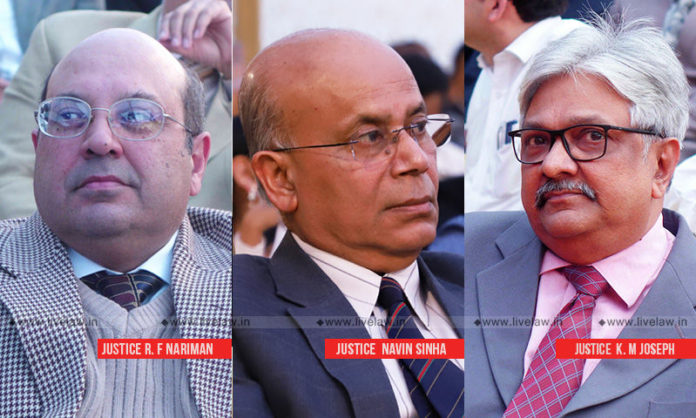
A bench comprising Justices RF Nariman, Navin Sinha and KM Joseph delivered the judgment on a batch of petitions(P Mohanraj and others v M/s Shah Brothers Ispat Ltd and connected cases) which challenged the continuation of criminal trial under Section 138 NI Act during the pendency of liquidation proceedings can continue against natural persons in-charge of the corporate debtor, such as directors of the company.

Continue reading

(Livelaw)

EXCLUSIVE: Documents expose how Buhari awarded N12 billion Ruga contracts to dubious, unregistered companies

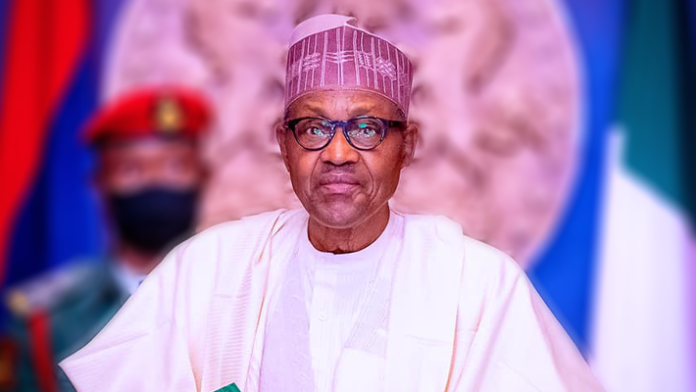
President Muhammadu Buhari

The president suspended the controversial Ruga policy in July 2019, but not before the country had been plunged into financial liabilities.

Following nationwide outrage, President Muhammadu Buhari suspended the controversial Ruga policy in July 2019.

The decision proved an instant public perception lifeline for the president because it was widely seen as saving the country from another round of needless ethnic and tribal animosity — which the Ruga programme was fast degenerating into prior to its suspension.

Many were also pleased to finally see an urgent reconsideration from a leader with a reputation so rigid and sluggish he acknowledged the label of ‘baba go slow’ from his critics.

What a large chunk of the population did not know, however, was that the president’s decision came at a substantial cost to the national treasury: N12 billion.

A Groundwork Laid

In 2019, Premium Times reported that President Buhari sacked Vice-President Yemi Osinbajo from his role as the head of an inclusive committee working on resolving the deadly conflict between farmers and herdsmen in the northern and central parts of the country.

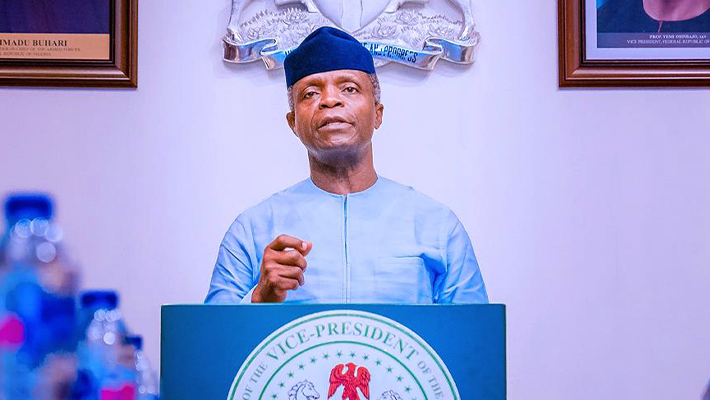
Vice President Yemi Osinbajo
Vice President Yemi Osinbajo [Photo Credit: Twitter]

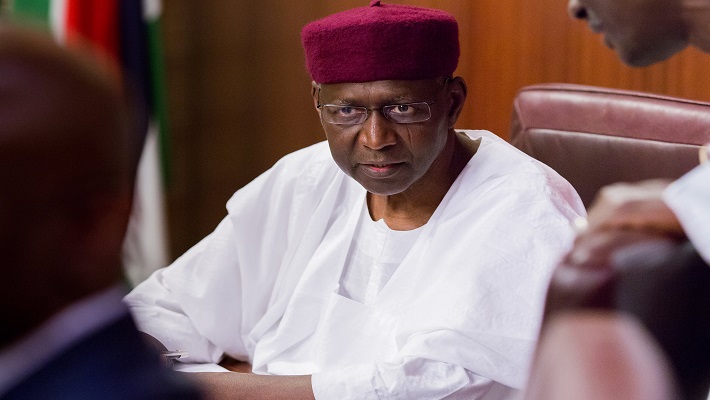
Mr. Buhari took the decision based on the recommendation of his departed chief of staff Abba Kyari. Mr. Kyari had intercepted a memo from Mr. Osinbajo to Mr. Buhari, in which the vice-president updated his principal on the progress of the livestock transformation committee and requested funding to execute a long-time proposal that would effectively resolve the decades-long crisis that has killed thousands.

Specifically, Mr. Osinbajo had requested for funds to commence resettling and compensation of people displaced by the farmers-herdsmen violence that devastated many parts of the country for many years — only recently abating for the longest stretch since Mr Buhari took office in 2015.

Mr. Osinbajo’s request for N22 billion in the April 12, 2019, memo was made in respect to the National Livestock Transformation Plan (NLTP) that Mr. Buhari had delegated him to lead. State governors were also part of the NLTP, which was coordinated by the National Economic Council (NEC).

Thirty-five billion naira was initially budgeted for the activities relating to the resolution of the farmers-herdsmen conflict. Contracts worth were awarded for Ruga projects (construction of ranches for Fulani herders along designated grazing routes).

The memo, which was addressed directly to the president as procedurally accepted of such communications, was soon hijacked by Mr. Kyari, who advised the president to disregard its prayers because they were either premature or entirely unnecessary.

He said the N12 billion that was budgeted for the Ruga projects had not been fully utilised, therefore the funding for resettling of those displaced in the conflict areas should be held back for an indefinite period of time.

Mr. Kyari also asked Mr. Buhari to disband the NLTP altogether and appropriate all its functions under the National Food Security Council (NFSC). The president is the head of the council.

Late Abba Kyari
Late Abba Kyari

Without seeking Mr. Osinbajo’s opinion on the observations of Mr. Kyari, Mr. Buhari endorsed the recommendations of his chief of staff, effectively undermining his own vice-president.

N12 billion boondoggle

Although Mr. Kyari’s argument to Mr. Buhari appeared rational on the surface, he convinced the president to drop Mr. Osinbajo from the NLTP as part of a larger scheme to circumvent accountability in the implementation of policies aimed at resolving the farmers-herdsmen crisis, according to presidency sources familiar with the matter.

With Mr. Osinbajo out, the president retained near-absolute control of the livestock policy and accompanying expenditures under the NFSC. Mr. Kyari was confident of exercising the president’s powers through the NFSC, sources said.

The Gazette obtained documents that showed how nearly N12 billion worth of contracts were hurriedly awarded for Ruga projects just as Mr. Osinbajo was being eased out of the entire livestock policy.

On April 30, the Bureau of Public Procurement (BPP) issued a certificate of no objection to 60 companies and two government agencies for the construction of Ruga settlements for Fulani herders in 12 states of Sokoto, Nasarawa, Benue, Zamfara, Kebbi, Kogi, Niger, Plateau, Taraba, Kaduna, Katsina, and Adamawa.

The certificate, which carried reference BPP/S.1/Vol.XIV/18/243, was issued following a request from the Federal Executive Council that the procurement process for the Ruga projects be expedited because they required urgent implementation.

Fulani-Herdsmen
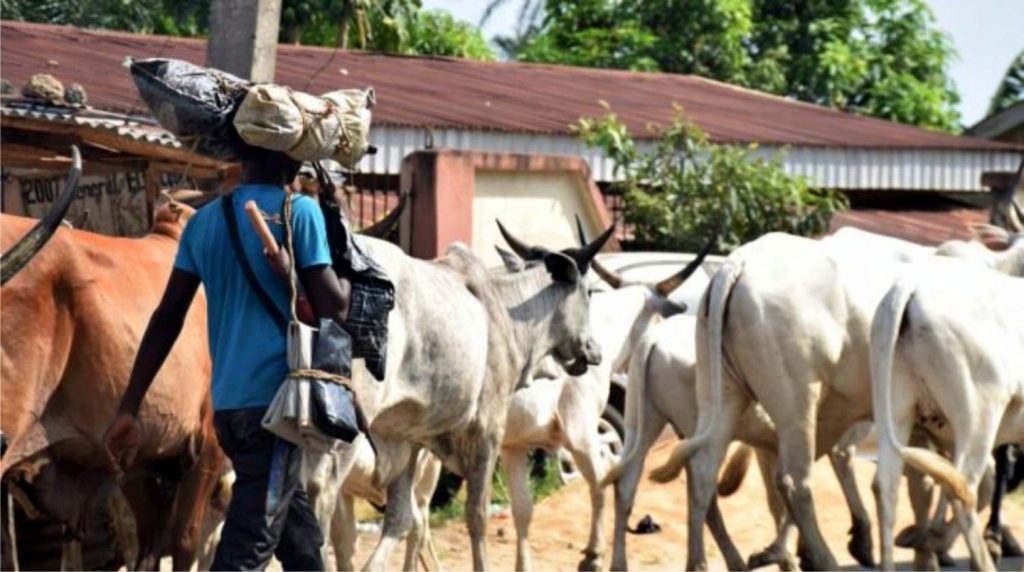
Photo of a Fulani herder used to depict the story ( Photo Credit: Vanguard Newspaper)

The contracts, which ranged between N19 million to N382 million, were awarded for activities such as the installation of boreholes and dams as well as the construction of roads and hospitals, amongst others.

The Federal Ministry of Interior received a lump sum of N1 billion to install security outpost and watchtower for civil defence officers; while the Federal Ministry of Agriculture was given N10 million for project monitoring. The two were the only public institutions captured in the contracts.

Letters of contract award were subsequently issued to the companies, most of which were registered in Abuja. Some of the companies were, however, not registered or their registration status was unverifiable, the Gazette found.

Contracts worth N11.7 billion were awarded to the 60 companies and two agencies in one fell swoop. The FEC had proposed N11, 722, 827, 834.72 expenditure for the project in its request for a standalone waiver for companies and ministries, but the BPP approved N11,722, 676.634.72, reflecting a cost reduction of a paltry N151,200.

The Gazette’s findings showed some of the contracts were awarded to unregistered firms without due diligence and replete with frivolous line items. Sixty-one companies that took part in the contracts were looked up for their registration credentials at the Corporate Affairs Commission, only fifty-one were duly registered.

For instance, the Gazette found that at least four companies amongst those that received the dubious contracts belonged to the same man. Unique-Life Properties Ltd., Power Cleit Ltd., Lansoj Ltd. and Fab Henr Nigeria Ltd. are run by Fabian Nwaora, an Abuja-based public works contractor infamous for his use of sundry companies to corner lucrative government contracts.

Fabian Nwaora

Officials at the CAC were unable to match the registration details of 10 companies, saying they were either unregistered or provided invalid names to get the contracts from the government. Some of the unregistered companies include Ajeje Ventures Ltd., Bonjoa Nigeria Ltd. and Landlord Properties Ltd.

Officials also raised suspicions that the companies that received the contracts are based in Abuja, rather than in the states where the Ruga constructions would be carried out.

“They quickly awarded the contracts to Abuja briefcase contractors who would not even step a foot near the states that Ruga settlements would be built,” an official said. “It is really embarrassing for the country that this level of mismanagement is still going on.”

A concept note of the Ruga projects prepared by the Ministry of Agriculture said the Ministry of Interior planned to spend its N1 billion share from the largess to purchase “arms and ammunition.”

But the civil defence officers that would be deployed to protect all Ruga settlements across the northern parts of the country had already begun as standard for their law enforcement duty. Like police and other security agencies, ammunition procurement features in the annual budget of the civil defence.

Liabilities incurred

A few weeks after the contracts were awarded, the president ordered the suspension of the Ruga projects after the policy had caused serious disaffection from some corners of the country.

In Benue, Governor Samuel Ortom rejected attempts to establish a Ruga settlement for Fulani herders. The state said its anti-open grazing law (2016) only permitted the construction of ranches for livestock. The Ruga was proposed to be a mini-community of mostly-Fulani herders and their relatives, which led Benue to reject it.

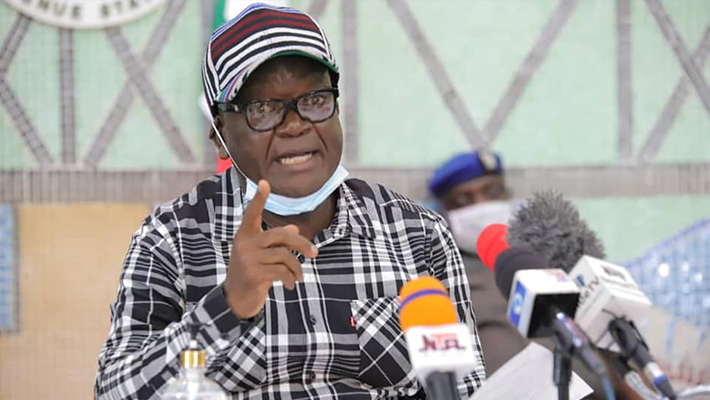
Samuel Ortom (Credit: Benue State Government Website)

All states in the southern parts of Nigeria rejected the Ruga plan, preferring to be left to individually determine what policy would be most suitable for their residents.

The proposed NLTP under Mr. Osinbajo allowed states the power to individually determine whether they prefer ranches within their respective borders or Ruga or a hybrid of both measures.

Benue commenced implementation of the ranches in July 2019, describing the policy as popular amongst livestock farmers. The state, however, said no Fulani herdsmen had applied for land to the ranch, indicating they remained adamant on their Ruga settlement.

Nigerian taxpayers stand to lose heavily as companies have started demanding their pay for the contracts — even though no tangible work had been done prior to the announcement of the suspension.

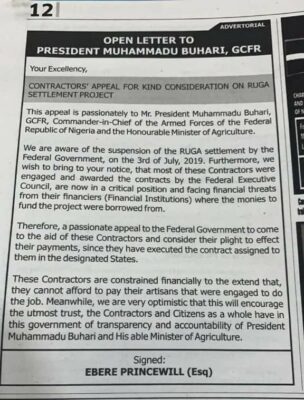
In late August 2019, a newspaper advertorial pleaded with the president to release funding for the contractors because they had been indebted to banks in the course of securing the contracts.

A senior presidency source told the Gazette the companies’ demand was legitimate, seeing it as a fallout of the removal of Mr. Osinbajo from the livestock transformation panel.

“The NEC had gone through a rigorous phase with the NLTP,” the source said. “But they prioritised Ruga policy that was just a memo over it because it would be of immediate financial benefits to them.”

“A contract had been awarded and contract letters issued,” the source said under anonymity to avoid being targeted for interacting with the media without authorisation. “There is already a liability whether the funds had been paid out or not.”

The source said some of the companies had already been paid parts of their contract sum, while many others were in the process of being mobilised before the policy suspended. The Gazette could not establish whether or not any other firms were paid after the policy was suspended.

It was also unclear the number of companies that had received some form of payment prior to the suspension of the Ruga projects.

Presidential spokesman Garba Shehu told the Gazette he could not comment on the manner the N12 billion Ruga contracts were awarded, directing enquiries to other agencies, especially the agric ministry.

A spokesperson for the Ministry of Agriculture, Ikemefuna Ezeaja, initially answered his call, but abruptly disconnected it after learning that it was about an enquiry on the N12 billion for Ruga projects. He did not answer subsequent calls to his line over two days.

A freedom of information request which the Gazette filed to the BPP was not treated for several weeks. (Peoplesgazatte)

Video: The black man, his prostrate, its care (also for women who want to help)

A nurse and a man. Photo: Courtesy of Conversation.com

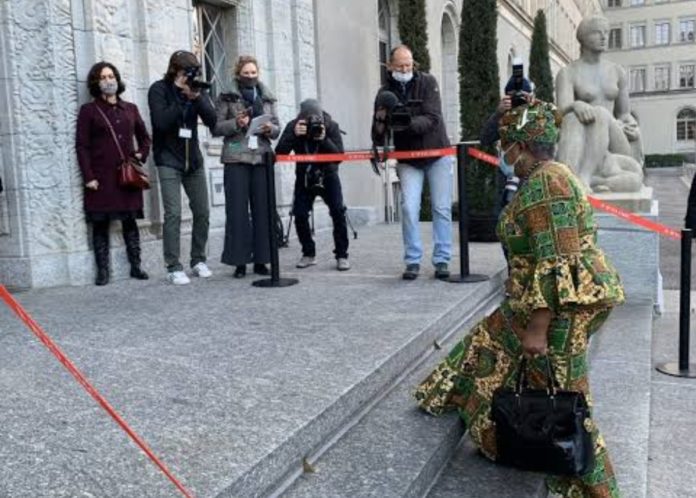
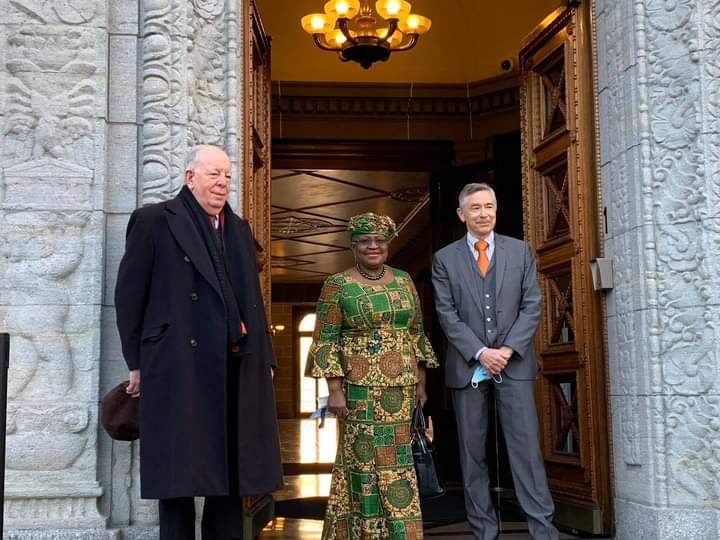
Breaking: Ngozi Okonjo-Iweala Arrives WTO Headquarters To Assume Office ( Pictures)

The newly elected President of Director General of World Trade Organisation, Nigeria’s Dr Ngozi Okonjo Iweala has arrived the headquarters of the organization this Monday to resume office

She was recieved by top management team of the organisation on arrival 

Pictures 

Credit:Cknnigeria

Requiem For Nigeria

By Tony Eluemunor

Recently, the question of whether Nigeria is still alive as a nation or dead was finally answered. But before I delve into that, I have to give a back grounding of how that morbid thought came my way. 

It was around 1988 and I was in the 113 Ogunlana St, Suru-Lere office of THISWEEK newspaper, assembling quotable quotes to be used for the end of the year magazine. 

Then, an item in Newsweek magazine made me stop on my tracks: the Lebanese Foreign Affairs Minister was going to the airport when he noted the level of devastation within the capital city of Beirut. Then he shook his head and declaimed; “for long this country has been dying, but it is now dead”. 

Those words have stuck with me all through the years since that day. 

Some may say that it is a meaningless twaddle to say that Nigeria is dead when there is a country that bears that name and it is recognised by the African Union and the United Nations Organisation, has a government, a currency, and Army. To such people, I would counter that a dead body does not lie still immediately it has breathed its last; no, it usually suffers death spasms. A chicken whose head is cut off while go into a dance of death. Cut off the head of a snake and that reptile would go into a prolonged moment of meaningless wriggling, writhing in a meaningless dance of death. 

After death, we move our muscles as a result of an electrochemical reaction in our nerves. The chemicals that cause this reaction are stored in our nerve endings, and when we die, they’re gradually released. Usually, though, the resulting movement is just a twitch. 

And to all intents and purposes, Nigeria is gone. Even though Chinua Achebe referred to the defunct Biafran Republic in his last book; THERE WAS A COUNTRY, many Nigerians have started using that phrase when they are talking about their country. 

This dire or even morbid realization hits me like a kick to the groin a few month ago when several strange things happened in Nigeria, and were assumed to be normal, yes, normal. 

It all began when the bandits in the forests of Katsina State upped their ante and abducted students of the Kankara secondary school, in Katsina State. That shame of a nation happened in the evening of 11 December 2020, when over 300 pupils were kidnapped from a boys’ secondary school. 

When the students were released, the nation heaved a sigh of relief, the government gave itself a pat on the back, and business continued as usual. That was sad. At least, when the Chibok girls were kidnapped and taken into the bush, there was national cry of anguish; it was as though the soul of the nation was in danger of being lost, and those who stood for its regaining, cried out against the then President Goodluck Jonathan, who deservedly lost the presidential elections that followed. 

Up till the time of writing, not all the kidnapped Chibok school girls have been reunited with their parents. The poster girl of that sordid kidnapping, Leah Sharibu, has all been forgotten. Nobody remembers her, nobody talks about her any longer. It is like she and their parents do not matter. It is like we have all forgotten that she is a Nigerian and has her God-given rights that deserve to be protected. 

Nigeria has failed Leah Sharibu terribly. 

In 2017, the UN estimated that the conflict between Boko Haram and security forces had destroyed 1,500 schools from January 2014 to December 2016, with at least 1,280 teachers and student casualties. Attacks on schools decreased after 2015, possibly due to the closure or destruction of schools in northeastern Nigeria, which left Boko Haram fewer institutions to attack. 

An Amnesty International report stated that up to 50 schools were attacked, burned, or destroyed in Borno State alone in 2013, resulting in the deaths of 70 teachers and dozens of students. Another report, The Watchlist on Children and Armed Conflict, noted that until mid-2013 Boko Haram carried out most attacks at night, when schools were empty. But after mid-2013, attacks began happening more frequently during school hours, according to Amnesty International. 

Not even Primary schools were spared: on March 11, 2013, unidentified attackers set fire to Gwange I Primary School in Maiduguri city, Borno State, burning it down. Unidentified attackers reportedly set fire to Gwange III Primary School in the same city two days later. On March 23, 2013, three private schools in Biu town, Borno State, were burnt down at night. 

On July 6, 2013, members of Boko Haram attacked and burned down a secondary school in Mamudo, Yobe State, during the day, killing at least 29 male students and one teacher, this was after the terrorist organistion had actually earlier threatened to attack the school and kill any student found there. 

Human Rights Watch reported that on September 6, 2013, Boko Haram bombed the science laboratory at the Government Secondary School Gajerai and the principal’s house, before abducting the principal and capturing six students. Boko Haram members forced students to point out the homes of teachers and local education administrators in the village, then killed the teachers they found and destroyed their teaching certificates. They then abducted one of the students and killed the other five. 

In August 2016, UN data showed that an estimated 1,697 schools were closed in Northeastern Nigeria, of which 524 were in Adamawa State, 110 were in Yobe, and 1,063 were in Borno. 

One of the most highly publicized attacks on education occurred on April 14, 2014, when Boko Haram stormed a government-run secondary school for girls in the Chibok local government area in Borno state. They burned down the school and kidnapped 276 female students. Boko Haram boasted of the kidnapping as a warning against girls participating in Western education. Fifty-seven of the girls escaped from the group soon after the kidnapping, and one was found in May 2016. 

Another 21 were released after negotiations with Boko Haram in October 2016. One more schoolgirl was found in January 2017 with a six-month-old baby, to whom she had given birth while in captivity. Another 82 were released in exchange for Boko Haram prisoners in May 2017. 

Then the Kankara school kids kidnapping took place. Despite the gory tales it produced, Nigerians did not feel outraged. Thanks to Usman Aminu Mali, we have some heart-rending stories about that abduction. He recounted: “Marching at gunpoint in a forest Usama Aminu Mali wondered whether he and hundreds of other abducted schoolmates would survive. 

The 18-year-old said he overheard one of his captors ask in a phone call, “Sir, should we release or kill them?” The order came through: Keep walking. Relieved, Usama kept moving and praying. 

He was rescued Sunday morning, over 30 hours after his ordeal began, because he had lagged behind because of chronic illness, and so was saved. 

If the abuse and the sufferings those kids encountered did not outrage Nigerians into vowing never again, nothing else will. “They kept hitting us as we walked, there was no food, so we started picking fruits and leaves from any available tree. I was so weak and couldn’t stand up, so other students had to bring me the leaves to eat. It makes one thirsty, and there was no water to drink,” said Usama. 

The students continued marching into the night Saturday. “After walking for a long time, they asked us to kneel down while they waited for other students to catch up,” Usama recalled. He realized they were near a village. “I decided to find a place to lie down because I was in serious pain,” with aching bones, he said. “I could not walk anymore. I was saying to myself, ‘I may be lucky for them to leave me behind.’ I started praying.” 

The gunmen, trying to avoid detection, moved the group under cover of darkness – and didn’t notice Usama’s absence. 

Then, students were kidnapped in Kagara, Niger State and soon after that, in Zamfara State. 

We should face the bare fact that reason governments exist, to protect life and property, has been destroyed in Nigeria. There is general insecurity everywhere. Inter-city travel has for long become a dangerous adventure. Now, even an intra-city jaunt, has also become an arduous and hazardous task. 

Nigeria has been dying for a long time. It was in the throes of death when we elected President Muhammadu Buhari to salvage it – as he promised. Now it is dead. Ask before whoever will occupy the president’s office come 2023 will be to resurrect Nigeria. 

You may dismiss my submission with a mocking laughter. But history is littered with the tales of dead states which were unable to protect their citizens. The important thing here is that most of them actually rotted before they were overwhelmed. 

It is actually sad to watch the beginnings of a decays –such as Nigeria experienced. Some of us clapped when the decay set in especially during General Ibrahim Babangida’s watch. He annulled a free and fair election, took Nigeria into the Organisation of Islamic Countries – from an observer position to full membership. Thus, to our ethnic problems, he added the religious one. 

And in came Buhari …and instead of solving any of the old problems, the cattle problem became a real and present danger. For years now, Nigeria has been in a spasm of death, all because of cattle. 

How many Bandits are in the Nigerian bushes? Sheik Gunmi has made matters worse; he has said that the bandits are enraged and mistreated Fulanis, and he went on to tell them that the soldiers attacking them are Christians. 

In any country of the world, once the army is divided, so goes the nation. Yet, that division of the military is what Gumi attempted to do. 

One final fact remains that any country that has failed to, or is incapable of defending its citizens from the whims of outlaws, is, to all intents and purposes, dead. The sure sign of this death is in the fact that never have the bandits or the terrorists who have abducted Nigerian school children, were pursued and arrested and tried – to tell the citizens that there is a government in Nigeria. This is the only way to rebuild confidence and to warn the outlaws to quit fighting a war against their own country. 

Some students were abducted just days ago. How would they and their parents be feeling now? That they have a real country? I doubt it…and as I write this, I feel their pains. We have failed our children. Yes, there is no doubt about that. 

FIDA International condemns abductions of children from Nigeria’s schools

The International Federation of Women Lawyers (FIDA) joined its voice in condemning the now incessant abduction of children from schools in Nigeria.

A statement jointly signed by FIDA International President Carolina Rios Villota and its International Secretary Florence Adokiye Amiesimaka described the trend as worrisome while charging the Federal Government “to be alive to its primary constitutional mandate to ensure the welfare and security of the people.”

The statement reads: “Federacion Internacional de Abagados( FIDA) joins the Country Vice President and all members of FIDA Nigeria to unequivocally condemn the worrisome trend of abduction of children from their schools in Nigeria, and strongly urges the Federal Government of Nigeria to be alive to its primary constitutional mandate to ensure the welfare and security of the people.

“FIDA notes with dismay that the abductions constitute an unacceptable and intolerable criminal violation of the Rights of the Child as recognised by the Federal Government and the various international and regional instruments that Nigeria has rightly endorsed.

“FIDA decries the trauma impact of the abduction and its effects on the mental wellbeing of the children, and calls on the abductors to quickly release them. FIDA further urges the Federal Government of Nigeria to deploy all available resources to not only ensure the timely release of the school children but to also put an end to this deplorable trend.

“FIDA requests the International community to provide support to this process and further require that the Nigerian Government lives up to its duty to ensure the safety of her children.”

TIPS