Home Blog Page 101

Nigeria’s Security Collapse: Priest, Imam abducted in Kaduna as killings continue despite state promises

The killings continue—unabated—despite presidential orders, military deployments, and repeated assurances that the tide has turned.

In the early hours of Saturday, suspected armed militants stormed Karku community in Kauru Local Government Area of Kaduna State, abducting a Catholic priest and at least 11 others while killing three residents. The attack, residents said, was swift, coordinated, and executed with military-style precision.

The kidnapped priest, Rev. Fr. Nathaniel Asuwaye, is the parish priest of Holy Trinity Catholic Church, Karku, according to the Catholic Archdiocese of Kafanchan. Church officials confirmed that Asuwaye was taken alongside 10 villagers during the assault, which began around 3:20 a.m.

Witnesses described gunmen arriving in large numbers, firing indiscriminately as they moved from house to house before retreating into nearby forests with their captives.

“This attack has left our community devastated,” said Jacob Shanet, Chancellor of the Kafanchan Diocese, who confirmed that three residents—Jacob Dan’azumi, Maitala Kaura, and Alhaji Kusari—were killed during the raid.

The violence extended beyond Kauru.

In Kagarko Local Government Area, the Chief Imam of Janjala Central Mosque, Bello Abdullahi, and a Fulani community leader, Shehu Bello, were abducted in separate but related attacks. Armed groups reportedly struck multiple villages, abducting residents, rustling cattle, and forcing families to flee overnight.

A community leader said the attackers, armed with AK-47 rifles, arrived around 9 p.m., targeting community leaders first.

“They went straight for the imam. Then they took the Fulani leader. That was when people started running for their lives,” the source said.

Residents fled to nearby towns, while others slept in surrounding bushes, fearing further attacks.

Security sources said joint military and police units engaged the assailants in gun battles, but residents say such statements have become routine, rarely followed by arrests or rescues.

The kidnappings occurred days after armed groups reportedly issued a seven-day ultimatum demanding ₦6 million ransom for a previously abducted woman and her four children—an ultimatum that expired without visible security intervention.

Police authorities declined to comment. Repeated attempts to reach the Kaduna State Police spokesperson were unsuccessful.

Religious leaders warn that the attack reflects a deepening national crisis.

“The kidnapping of priests and innocent citizens has become unbearable,” said Rev. Joseph Hayab of the Northern Christian Association of Nigeria. “Despite repeated promises, the violence continues.”

A Familiar Pattern, a Failing State

Public affairs analyst Sa’adiyyah Adebisi Hassan says Kaduna is no anomaly.

“Kwara. Benue. Kaduna,” she said. “Different locations. Same script—massacres, condolences, deployments, silence, repeat.”

Nigeria, she argues, continues to misdiagnose terrorism as criminality rather than organized ideological violence sustained by financing, recruitment networks, and political hesitation.

Other nations confronted similar threats and prevailed by abandoning ambiguity. Sri Lanka dismantled the Tamil Tigers by reclaiming territory and crushing command structures. Colombia broke insurgent networks through intelligence and financial disruption. Egypt, Indonesia, Morocco, Saudi Arabia, and France asserted state authority through surveillance, religious regulation, elite counterterror units, and zero tolerance for enablers.

Nigeria, Hassan argues, has done the opposite—negotiating with killers, protecting narratives, and surrendering territory.

“Nigeria wants to defeat terrorism without offending anyone,” she said. “That is not how states survive.”

Why the Violence Persists

According to Hassan, Nigeria’s failure rests on five realities it refuses to confront:

Terrorism in Nigeria is ideological, not accidental.
Extremists operate with political, religious, and financial enablers.
Negotiation culture emboldens violence.
The state does not control large swathes of its territory.
Narratives are protected more than lives.

As long as armed groups dictate movement, worship, and survival in rural communities, no number of operations or press statements will restore security.

The Choice Ahead

Ending the violence, Hassan argues, requires naming terrorism as terrorism, criminalizing incitement, dismantling funding networks, reclaiming territory, and building elite, intelligence-driven counterterror units.

Above all, it requires political resolve.

“Terrorism does not defeat states,” she said. “Indecision does.”

For communities like Karku and Janjala, the consequences of that indecision are already written—in empty homes, mass graves, and abducted leaders.

Until Nigeria chooses authority over ambiguity, tomorrow will bring another kidnapping, another condolence message, and another promise that changes nothing.

The SEDC will need protection from political extortion

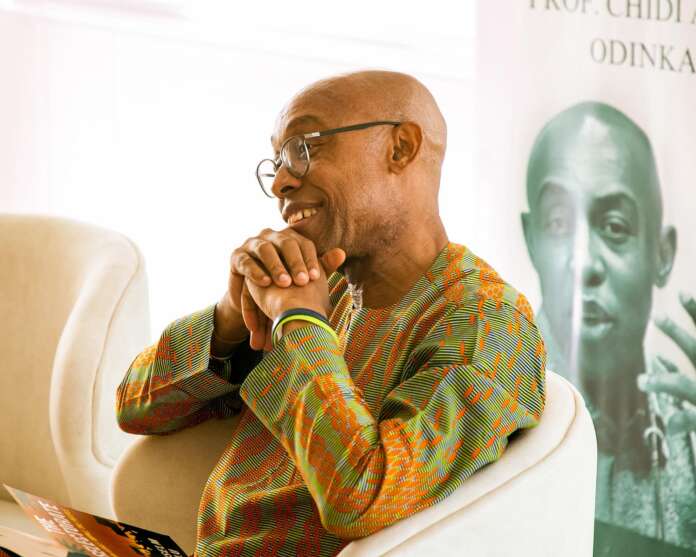
By Chidi Anselm Odinkalu

When he presented his budget proposals for 2024 to Nigeria’s National Assembly, the first full year of appropriations under his presidency, President Bola Ahmed Tinubu identified as his priorities human asset development, poverty reduction and fighting insecurity.  Last week, his official spokesperson, Bayo Onanuga, appeared to forget or renounce that policy direction when he acknowledged that 133 million Nigerians were multi-dimensionally poor but claimed that had nothing to do with the Federal Government. According to Mr Onanuga, the states and local governments were responsible for that.

On the same day, 450 kilometres away, Vice-President, Kashim Shettima, provided a full rebuttal of Mr Onanuga’s escape into sovereign abdication. The occasion was the launch of the Stakeholder consultation of the South East Development Commission, SEDC, for its regional development plan called South East Vision 2050 (SEV2050). At the event, the Vice-President went beyond merely reaffirming the leadership and responsibility of the Federal Government in eliminating poverty. He also underscored that this had to be “inclusive, sustainable, and anchored on peace and productivity.”

This was not an unveiling of the SEV2050. Rather, it kicked off the process to evolve one. It was also the coming-out promenade of the SEDC.

The Commission is one of the four regional development commissions established by President Tinubu under the Ministry of Regional Development. The others are in the north-central, north-west, south-west. Preceding these, the Niger Delta Development Commission, NDDC, has been in existence since 2000, and the North-East Development Commission, NEDC, since 2017.

The Stakeholder consultation in Enugu was a credit to the Board of the SEDC, chaired by Emega Wogu and the management led by the Managing Director, Mark Okoye. It was clearly a pitch for political support and constituency building for the Commission. The SEDC achieved the significant feat of lining up the public support of the governors of all five states of the south-east. By contrast, when its counterpart for the north-west organized similar event last month, none of the seven governors of the zone attended.

Imo State Governor, Hope Uzodinma, coincidentally the Chair of the South-East Governors Forum, was the only one of the five who did not attend in person. He sent the Speaker of the Imo State House of Assembly in his stead. It appears the Commission will not be short of goodwill as it sets out on its mission. Quite clearly also, it will not be short of human obstacles in its path.

As its primary mission, the SEDC Act of 2024 charges the Commission with the responsibility to “receive and manage funds from allocations of the Federation Account for the reconstruction and rehabilitation of roads, houses and other infrastructural damages suffered by the region as a result of the effect of the Civil War….” The SEDC is the only regional development commission with an explicit mission of post-war reconstruction. One question that the consultation put before the Commission was: reconstruction from which war?

Anambra State Governor, Chukwuma Soludo, addressed this question in his remarks, arguing that the region was in recovery from not one war but “two major wars”. One was the Nigeria-Biafra war, which was supposed to have officially ended on 15 January 1970. The second was what he called “an internal war of self-destruction that has been on since 2021.” Some people may argue that his dating of this second conflict to 2021 is either artificial or unrealistically recent.

It was notable that Governor Soludo failed to say who the parties were to this second war. Pointedly, however, he noted that “after the (first) civil war, there was a promise of rehabilitation and reconstruction; and…. this is yet to happen.” What he left unsaid was that the failure to fulfill that promise made what he described as the second war all but inevitable. Whether that was deliberate or inadvertent is immaterial.

 Even as it sought to project an ambition over the next quarter-century, the SEV2050 consultation could not escape the enduring backdrop of reconstruction that frames its search for a mission. The mistake will be to focus on brick and mortar and forget to prioritise a reconstruction of minds, memories, and mentalities.

Vice-President Shettima acknowledged as much with some deftness in his opening remarks when he paid tribute to “a region defined not only by memory, but by motion.” Like Governor Soludo, what he left unsaid was even more eloquent. It was impossible to miss that he felt unable to say that this motion led to movement or progress.

How to transform motion into movement and ultimately to regional progress, more than half a century after the end of the conflict that continues to define independent Nigeria, is what the SEDC seeks.

On show were early signs of constructive competition among the states of the south-east. It begs to be harnessed.

Abia State offers a vision for energy transition to inspire value-added processing and industry.

Anambra State is willing to lead in enterprise and innovation.

Ebonyi State’s value offer is in food security and agriculture value chain.

Enugu State offers a secure home for a shared mission of co-ordination for regional prosperity.

These reassure. But the event equally advertised the daunting challenges that confront the Commission along its path. Three were evident.

One is a crisis of mismatched expectations. This was best illustrated by Governor Soludo. Having advised the Commission to be realistic in its ambitions, he nevertheless asked it to lead the delivery of a “Marshall Plan” for the south-east, a reference to the US-led plan for Europe’s reconstruction after World War II. According to Governor Soludo, this regional Marshall Plan should include a regional security framework and “super inter-state infrastructure” such as regional railways and regional highways. The problem, however, is that an SEDC that purports to lead on the former is likely to antagonize the state governors and a Commission that claims to lead on the latter will be on a fool’s errand.

Two is the problem of evolving a viable business model for the SEDC. For long, the NDDC has defined the business model of the regional development commissions. Under this model, these commissions operate largely as front offices for extortion, which holds the fate of citizens of the concerned region(s) hostage in carve-ups by political insiders sharing development funds as private loot. By 2022, according to one report on the NDDC, “12,000 out of 13,377 projects were abandoned after paying trillions of naira for them.” As development agents, they have been largely ineffectual. The SEDC can’t afford this.

Three, therefore, SEDC will face pushback from the usual species of greedy political grubbiness. The event in Enugu had in attendance the Vice-President, the Governors of all the south-east States, and the Speaker of the House of Representatives, who was represented by the Majority Leader, Professor Julius Ihonvbere. But it was impossible not to notice the absence of the Chairman of the SEDC Committee in the Senate and former Governor of Abia State, Orji Uzor Kalu; his counterpart in the House of Representatives, Chris Nkwonta; and the man who refers to himself as “Number Six Citizen”, Deputy Speaker, Benjamin Kalu. Senator Orji Kalu reportedly sent one of his daughters to represent him. She holds no relevant public office. Anyone who thinks the near collective absence of the National Assembly caucus of the region was a coincidence misunderstands how the place works.

As a convening, the SEV2050 event in Enugu has been arguably as successful as its planners could have hoped. In terms of its symbolisms and optics, it may indeed have exceeded expectations. The Commission will not be short of ideas as it goes forward; nor will it be short of determined antagonists.

Post-war reconstruction is an existential undertaking. The SEDC has neither the budget nor the latitude for the errors that have become the habits of the NDDC. If the Commission can confine its mission and secure protection against baleful political extortion from predictable sources, it may lay durable foundations under its current leadership for a business model suited to its unique and historic mission.

A lawyer and a teacher, Odinkalu can be reached at [email protected]

The views expressed by contributors are strictly personal and not of Law & Society Magazine.

[Video/photos] Royal Spectacle: Two presidents, power brokers storm Matawalle’s ‘wedding marathon’ as 10 children marry in one day

Power brokers from Nigeria and other countries converged in Abuja on Friday, 6 February for the wedding fatiha of 10 children of the Minister of State for Defence, Bello Matawalle, who all got married in one day. 

The wedding ceremony was held in the National Mosque, Abuja, after which they proceeded to a large hall where the reception for all 10 children took place. 
 

Two presidents, scores of dignitaries in attendance as Defence Minister Matawalle


Nigeria’s President Bola Tinubu was in attendance and even received the brides on behalf of the Matawalles into the family. 

The President of São Tomé and Príncipe, Carlos Vila Nova, also attended the ceremony alongside Tinubu. 
 

Two presidents, scores of dignitaries in attendance as Defence Minister Matawalle


Also present were the Deputy Senate President, Senator Jubril Barau, and Senior Special Assistant to the President on Politics and Other Matters, Ibrahim Masari.

Governors at the event included Ahmad Aliyu of Sokoto State, Umar Namadi of Jigawa State, and Nasir Idris of Kebbi State. 
 

Two presidents, scores of dignitaries in attendance as Defence Minister Matawalle


Matawalle, a former governor of Zamfara State, gave out five of his daughters: Maryam, Safiyya, Farida, Nana Firdausi, and Aisha, in marriage. 

Five of his sons, Ibrahim, Abdul Jalal, Surajo, Bello, and Fahad, also got married on the same day. 
 

Two presidents, scores of dignitaries in attendance as Defence Minister Matawalle


The officiating Imam, Prof. Luqman Zakariyah, prayed to Allah to bless the marriages, grant success to the couples in their life journeys, and bless their parents and grandparents. 

On X (formerly Twitter) Matawalle thanked Tinubu for serving as “Wali” at his children’s wedding fatiha which held at the National Mosque Abuja. 

Two presidents, scores of dignitaries in attendance as Defence Minister Matawalle


Nigerians took to the post to express outrage that Tinubu attended the wedding but did not go to Kwara State where terrorists k!lled scores of innocent citizens just hours earlier.

Two presidents, scores of dignitaries in attendance as Defence Minister Matawalle

Watch the video below.

Abuja man dazed after woman he lodged in hotel with flees with his car, other valuables

A hotel rendezvous in Abuja’s elite Asokoro district allegedly ended in chaos after a young woman, Precious Chinyere, reportedly made away with a man’s car and personal belongings, leaving him stunned and stranded.

The incident occurred on Thursday, when the man and the woman reportedly visited the hotel for a short stay. According to the victim, events took a dramatic turn later in the evening when he discovered that Precious had quietly left the hotel room without informing him.

SaharaReporters gathered that the woman allegedly made away with several personal items belonging to the man, including his mobile phones and laptop, as well as his car.

Following the discovery, the distraught man reportedly alerted the hotel management and immediately lodged a complaint with the police.

Confirming the incident, the spokesperson of the Federal Capital Territory (FCT) Police Command, SP Josephine Adeh, told SaharaReporters that the case has been reported and is currently under investigation.

She said efforts are ongoing to trace and apprehend the suspect, adding that further details would be made public as the investigation progresses.

Who owns the copyright of AI-generated works in Nigeria? By O. M. Atoyebi, SAN 

INTRODUCTION

The rapid growth of Artificial Intelligence (AI) has reshaped the creative landscape globally. From music and film to literature and visual arts, AI tools are increasingly being utilised to generate original outputs.[1] These technologies are not merely assisting human creators but are increasingly capable of producing complete, complex, and seemingly original works without direct human input in the creative process. As Artificial Intelligence (AI) tools such as generative models, deep learning algorithms, and neural networks continue to evolve, they are challenging long-established legal and philosophical notions of authorship, creativity, and ownership.[2]

A central question has emerged at the intersection of AI and intellectual property law: “Who owns the copyright in a work generated by an AI system?” Should it be the developer of the Artificial Intelligence (AI), the user who prompted it, the AI itself, or perhaps no one at all? In Nigeria, these questions are particularly urgent given the country’s growing digital economy and vibrant creative industry. The Nigerian Copyright Act 2022, which provides the legal framework for protecting literary, musical, artistic, and other creative works, still presumes a human origin behind the act of creation.

This article critically examines the ownership of AI-generated works under Nigerian law, while comparing global approaches and offering recommendations for reform.

OWNERSHIP OF COPYRIGHTS OF ARTIFICIAL INTELLIGENCE

Copyright is a legal right granted to the creator of an original work of art, allowing him/her exclusive rights for its use and distribution.[3] The rationale behind this exclusiveness granted to the creator of a work is due to the fact that the author is an originator merged with Locke’s economic theory of possessive individualism.[4] For grant of copyright, the work should first be in a tangible form[5], and secondly, it should be original.[6]

A copyright is exercised generally for literary and artistic works. Since one of the contemporary areas of AI’s applicability is creation of literary works, the study of copyright in the light of AIs, becomes relevant.[7] In the case of Bleistein v. Donaldson Lithographing[8], the court clearly differentiated between a human’s work and something artificial. The Court made its stance clear by using the words ‘something irreducible, which is one man’s alone’ which meant that there was no scope for anything that was not a product of man’s creativity.

Before now, the authorship or ownership of copyrightable works which are computer-generated was not in doubt. The popular belief is that since a computer is a manmade invention, it is deemed as a tool in the hand of a human creator, consequently authorship of the resultant work would belong to the human creator.[9] The current impact of Al is starting to disrupt this seemingly rigid traditional presumption.[10] This development has also raised fundamental issues as to who owns the copyright of generated by Artificial Intelligence.

There are divergent scholarly and regulatory views on the point. The current position of copyright legislations worldwide is that human authorship is an indispensable requirement for copyright protection.[11] Most copyright jurisdictions across the world only recognise natural persons and registered corporations as authors who are entitled to appropriate both economic and moral rights over the created work.[12]

COMPARATIVE ANALYSIS OF AUTHORSHIP OF COPYRIGHTS OF ARTIFICIAL INTELLIGENCE

Globally, jurisdictions are increasingly grappling with the complex issue of AI authorship as artificial intelligence systems become more capable of generating original content across various creative domains. Traditional copyright laws are built on the premise of human authorship, which poses a significant challenge when the “creator” is a machine with little to no human input. Courts and lawmakers in countries such as the United States, the United Kingdom, Australia etc, have had to consider whether AI-generated works can be protected under existing legal frameworks and, if so, who should own the rights, whether it’s the developer, the user, or no one at all.

UNITED KINGDOM: In England, the Copyright, Design and Patent Act 1988 makes provision for computer-generated works.[13] It provides that the author of a computer-generated work is the person by whom the arrangements for the creation of the work were undertaken. The Act further grants the author[14]years protection but does not include moral rights.

NEW ZEALAND: In New Zealand, copyrights on works made by machines, belong to “whoever has undertaken the necessary provisions for the creation of the work.[15]In other words, copyright in such work will not be conferred on the machine/Al but on the person who created the machine.

UNITED STATES: Under the United States copyright law, an author of an artificial intelligence work may have legal claims over the resulting creation if he cites the AI programme as a tool or medium used in the creative process.[16] The case of Burrow-Giles Lithographic Co. v Sarony first extended copyright protection to photography.[17] The camera used to capture the image was considered by the court as a tool which aided the “author” in creating “an original work of art.”[18]

NIGERIA: In Nigeria, copyright is conferred only on a qualified person i.e. an individual who is a citizen of or who is domiciled in Nigeria, or rather, an incorporated entity registered under Nigerian law.[19] Although the Nigerian Copyright Act makes no reference to computer-generated works, it can be deduced from the Act that only humans are capable of owning copyright over a work. Therefore, where a work is created by a machine in Nigeria, the copyright in that work will be conferred on the human inventor or programmer. Since the creative process of Artificial Intelligence (AI) generated works are usually initiated by a human, it suffices to say that the copyright in the work should belong to the human creator.

LIABILITIES OF COPYRIGHT OF ARTIFICIAL INTELLIGENCE

In determining liability for copyright infringement by AI, the best solution would be to examine who had influence over the action of the algorithm resulting in the legal violation. It might be the case that the person who created the algorithm designed it in such a way that it cannot operate without infringing copyright. In that case, even if the user does not intend to infringe copyright, they are more or less forced to do so, as use of the algorithm is inseparably bound up with violation of other persons’ copyright.[20] In that situation, it should be found that the person liable for the copyright infringement is the person who wrote the algorithm. Other than civil liability, computers are also criminally liable. For one to be criminally culpable there must be a harm caused by his action which makes him guilty.[21]

AUTHORSHIP UNDER THE NIGERIAN COPYRIGHT ACT 2022

In Nigeria not every work is eligible for copyright. Simply put, an ostensible work of copyright must come under the list enumerated under the Copyright Act.[22]These include literary works; musical works; artistic works; cinematograph films; sound recordings; and broadcasts.[23] With respect to literal, musical or artistic work, sufficient efforts must have been expended by the creator to give them an original character and they must be fixed in any definite medium of expression now known or later to be developed from which it can be perceived, reproduced or otherwise communicated either directly or with the aid of any machine or device. A copyright protects the author. Under the Copyrights Act, the first ownership of copyright is enjoyed by the author of the work, unless a contract of employment or apprenticeship with a publisher stipulates that it belongs to the employer.

As regards Artificial Intelligence in Nigeria and the Copyright Act, it is important to note that there are no provisions for the protection of software under the Copyright Act in Nigeria. Copyright protection arguably only extends to the original documented expression of the software. This original expression does not extend to the functionality of the software. It is only limited to the blueprint either in an audio, written or any other form permissible by the Copyright Act as being protectable thereunder.

CONCLUSION

Although copyright laws have been moving away from originality standards that reward skill, labour and effort, perhaps we can establish an exception to that trend when it comes to the fruits of sophisticated artificial intelligence. The alternative seems contrary to the justifications for protecting creative works in the first place. Having critically analysed the protection of AI, neither national nor international law recognises AI as a subject of law, which means that AI cannot be held personally liable for the damage it causes. The question of authorship in AI-generated works is at the frontier of copyright law. Under the Nigerian Copyright Act 2022, authorship remains human-centred, leaving AI outputs in a grey area. For Nigeria to fully harness the opportunities of AI in the creative economy, legal reforms and policy clarity are essential. Until then, the safest interpretation is that copyright subsists only where significant human creativity is involved

RECOMMENDATION

It has become imperative to amend existing IP legal regimes in order to provide for computer-generated works and Al operations, both in Nigeria and internationally. The law needs to clearly identify the rights and liabilities, if any, attributable to the Al for its inventions. Alternatively, a computer or Al related IP legislation may be enacted to deal with the intricacies associated with authorship of Al and computer-generated works, among others.

Reference

  1. David Ekanem, ‘Artificial Intelligence and Copyright Protection in Nigeria, Legal Impact and Challenges’ (2024)https://sskohn.com/wpcontent/uploads/2024/05/Artificial_Intelligence_and_Copyright_Issues_in_Nigeria_-_2024.pdf accessed 30 September 2025. ↑
  2. Blake Brittain, ‘OpenAI says New York Times ‘hacked’ ChatGPT to build copyright lawsuit’, (2024)www.reuters.com accessed 30 September, 2025. ↑
  3. Tripathi and Ghatak, ‘Algorithms in decision-making House of Commons Science and Technology Committee’ (2020) https://publications.parliament.uk/pa/cm201719/cmselect/cmsctech/351/351.pdf accessed 30 September, 2025. ↑
  4. L Zimmerman, ‘It’s an Original! (?): In Pursuit of Copyright’s Elusive Essence’ (2020), 28 COLM. J. L. & ARTS 187, 194 ↑
  5. S Tripathi and C Ghatak, ‘Artificial Intelligence and Intellectual Property Law’ (2017) Vol.7, No.1, Christ University Law Journal p.83 ↑
  6. Burrow Gilles Lithographic Co. v. Sarony, (1884) 111 U.S. 53 ↑
  7. Bleistein v. Donaldson Lithographing, (1903) 188 U.S. 239 ↑
  8. (Supra) ↑
  9. O Mayowa, ‘Nigeria: Who owns the Copyright in an AI Invention? (2020) https://www.mondaq.com/Nigeria/Intellectual-Property/881214/Who-Owns-The-Copyright-InAn-AI-Invention accessed 30 September, 2020. ↑
  10. A Viswanath, ‘Intellectual Property and Artificial Intelligence’ (2020) http://www.mondaq.com/india/x/852186/Patent/INTELLECTUAL+PROPERTY+AND+ARTIFICIAL accessed 30 September, 2025. ↑
  11. Ibid. ↑
  12. Copyright Act 2022, section 1. ↑
  13. Copyright Design and Patent Act 1988 of the United Kingdom, section 9 (3) ↑
  14. Ibid, section 9 (3) ↑
  15. Copyright Act 1994 New Zealand, s. 5 (2) (a) ↑
  16. Burrow-Giles Lithographic Co. v Sarony (1884) 111 U.S. 53 ↑
  17. Burrow-Giles Lithographic Co. v. Sarony, (supra) ↑
  18. Ibid. ↑
  19. Copyright Act 2022, s. 2(1) ↑
  20. K Szczudlik, ‘Liability for Copyright Infringement by AI’ (2018) https://newtech.law/en/author/katarzyna-szczudlik/ accessed 30 September, 2025. ↑
  21. Andrew Ashworth Principles of Criminal Law (5th ed, Oxford University Press, New York, 2006)31 ↑
  22. Copyright Act, 2022, s. 1 ↑
  23. Ibid. ↑

Saudi Arabia to issue passports to millions of camels

Saudi Arabia has announced plans to issue official passports for camels, a move aimed at better regulating and managing one of the kingdom’s most culturally and economically significant assets.

In a statement this week, the Saudi Ministry of Environment, Water and Agriculture said the initiative would help improve oversight of camel ownership while enhancing ‘productivity and efficiency in the sector’ by creating a centralised and reliable reference database.

According to state-backed broadcaster Al Ekhbariya, the document will be used to regulate the sale, transport and trade of camels, while also helping protect owners’ rights and simplify proof of ownership.

Saudi authorities estimate that the kingdom is home to around 2.2 million camels, based on government figures released in 2024. The animals remain deeply embedded in Saudi society — historically as a primary means of transport and today as symbols of heritage, prestige and wealth.

In recent years, camels have also become central to a lucrative breeding and competition industry, particularly at large annual festivals such as the King Abdulaziz Camel Festival, where prize-winning animals can sell for hundreds of thousands of dollars.

That growing commercial value has prompted authorities to tighten oversight, especially after repeated scandals involving the cosmetic manipulation of camels entered into beauty contests. Organisers have banned practices such as injections and fillers used to enhance lips, noses and humps, with offenders facing fines and disqualification.

Officials say the passport system is part of a broader effort to modernise agricultural governance while preserving traditional industries — using documentation, data and traceability to manage practices that once relied entirely on oral record and custom.

Court of Appeal dismisses CBN, ABU bids to halt N2.5bn payments to 110 illegally sacked workers

The Court of Appeal in Abuja on Friday dismissed the fresh bids by the Central Bank of Nigeria (CBN) and Ahmadu Bello University (ABU) to stop the implementation of N2.5bn judgment debt against the University and in favour of the 110 ABU workers unlawfully sacked in 1996.

The Appellate Court, in two separate unanimous judgments by a three-member panel of Justices, ordered CBN to immediately release the N2.5bn to the former workers of the ABU without any further delay.

In the lead judgments delivered by Justice Okon Abang, the Court of Appeal threatened to impose heavy sanctions against the prime movers of CBN, should the Apex Bank further refuse to release the money kept in its custody since 2018 by ABU for onward payment to the aggrieved workers.

Justice Abang dismissed the claim of the CBN that the 110 workers unlawfully sacked by ABU in 1996 but ordered reinstated by the National Industrial Court in Abuja could not use garnishee proceedings against it to collect the money.

The claims of Apex Bank that consent of the Attorney General of the Federation and Minister of Justice (AGF) must first be obtained by the workers before payments could be effected were also dismissed by the Court of Appeal.

The CBN and ABU had, in separate appeals, challenged the implementation of the judgment of the Industrial Court, which ordered ABU to pay the entitlement of the 110 workers having found that they were unlawfully laid off by the Sole Administrator of the University, General Mamman Kontagora, in 1996.

The two appellants also faulted the use of garnishee proceedings against them by the workers to effect payments.

The two appeals were dismissed for being unmeritorious.

Justice Rakiya Haastrup of the Industrial Court had on January 27, 2022 issued a “garnishee order absolute,” directing the CBN to pay the judgment sum to the workers from ABU’s funds.

Justice Abang held that the workers were right in filing garnishee proceedings against CBN to enforce payments of their entitlement as required by law.

The Court of Appeal scolded the CBN for wasting public fund to engage lawyers to file suit to frustrate the payments of the entitlement to the aggrieved workers.

According to the Court, the conduct of the CBN in opposing payments of the money was reckless and reprehensible to the workers since the ABU had deposited the money with it for the settlement of the judgment debt.

“In this matter, it is not the duty of the CBN to play the role of the advocate but to implement the court judgment that awarded the money to the workers in the absence of any contrary court order.

” It is also unethical for the lawyer to the CBN to have supported the bank in frustrating the judgment of the Industrial Court. The unfortunate action of the CBN had prolonged the sufferings and hardships of the workers.

“The lawyer ought to have advised the CBN not to play the role of the advocate no matter how juicy the CBN brief. The action of CBN is cowardice. It took the matter personal against the workers who have been suffering since 2013.

“There is no lawful reason for the CBN to have filed this appeal against the judgment of the Industrial Court since the workers made no claims against the bank.

“The lawyer owes a duty to the court, to the country and to the 110 workers to see that they are not unjustly punished or denied the fruits of their court victory. He ought to have withdrawn his services if CBN goes against his advice. They ended up wasting the valuable judicial time of this Court.

“How can CBN be asking that the order of court not made against it be vacated when it has been holding the workers money since 2018?. The situation must not continue. There must be an end to it. The workers deserve the fruit of their labour”, he said.

The Court of Appeal awarded N5m against CBN and another N5m against ABU to be paid to the workers as costs of litigation in addition to the N2. 5bn.

State-Sponsored Terror?  Ebonyi community accuses security forces of killings, arson amid military crackdown

Fresh allegations of security force brutality have ignited national concern in southeastern Nigeria, where civil society groups warn that a government-backed military operation meant to restore order may instead be plunging an entire community into fear, displacement, and economic ruin.

The coalition, Advocates for Good Governance, has accused security operatives deployed to Amasiri in Afikpo Local Government Area of Ebonyi State of carrying out what it described as “state-sponsored terror” following a communal conflict that prompted the January 30, 2026, deployment.

In a strongly worded statement released Saturday, the group alleged that troops abandoned their peacekeeping mandate and engaged in extrajudicial killings, arson, and widespread destruction of livelihoods — claims that, if verified, could intensify scrutiny of Nigeria’s approach to internal security operations.

“The Amasiri community has witnessed a descent into state-sponsored terror,” the statement read. “Women, children, and the elderly — many now displaced in the bushes — face a campaign of intimidation and violence that borders on collective punishment.”

From Protection to Fear

Residents reportedly welcomed the arrival of security forces after violence linked to the communal dispute rattled the area. But according to the petition signed by the group’s leader, Onyedika Agbo, that initial sense of relief quickly evaporated.

“The ‘shield’ promised by the government has become a ‘sword,’” the statement said.

Central to the allegations is the imposition of a 20-hour curfew, described by advocates as draconian. Under its cover, operatives allegedly burned homes and destroyed farm produce worth hundreds of millions of naira, raising fears of an impending food crisis in a largely agrarian community.

The restrictions have also reportedly cut off access to urgent medical care for the sick and elderly, compounding what activists say is a rapidly escalating humanitarian emergency.

Protest Met With Gunfire

The group further claimed that women who staged peaceful protests were met with force, including gunfire that allegedly resulted in civilian casualties.

“The primary objective of security forces should be to maintain stability,” the advocates said. “Instead, the people are witnessing the destruction of livelihoods and the shooting of peaceful protesters. When the hands meant to shield us become the swords that pierce us, the social contract is fundamentally broken.”

The Ebonyi State Government and security agencies had not publicly responded to the allegations as of press time.

Governor’s Silence Questioned

Advocates directed sharp criticism at Governor Francis Nwifuru, accusing his administration of failing to intervene as the crisis intensified.

“The silence from the government while Amasiri bleeds is not golden — it is a tacit connivance in the suffering of its own citizens,” the group charged.

They are demanding an immediate investigation by both the governor and the National Human Rights Commission, humanitarian access for displaced residents, and either the withdrawal of the joint task force or a complete overhaul of its operational guidelines to prioritize civilian safety.

The coalition also urged the international community and media to pay attention to what it called “indiscriminate force” applied over the past 72 hours.

Lawyer Urges De-Escalation

Adding to the growing calls for restraint, Abuja-based lawyer M. O. Idam issued a public appeal urging the state government to de-escalate the military operation in the interest of innocent lives.

While condemning the gruesome killings that reportedly triggered the security deployment — including viral footage of victims allegedly decapitated — Idam stressed that justice must remain targeted and lawful.

“Innocent individuals and entire communities must never suffer for crimes they did not commit,” he wrote.

He described the killings as “horrific and inhumane,” insisting that perpetrators be swiftly identified and prosecuted. However, he warned against retaliatory actions that risk punishing civilians.

“The weight of state authority has been felt; it is now time to allow calm, justice, and due process to prevail,” Idam said.

A Familiar Security Dilemma

The unfolding situation reflects a broader challenge confronting Nigerian authorities: how to respond decisively to violent crimes without triggering accusations of collective punishment or human rights violations.

Security deployments across the country have increasingly drawn criticism from advocacy groups, who argue that heavy-handed tactics can deepen distrust between communities and the state — sometimes fuelling the very instability they are meant to quell.

For Amasiri residents now reportedly hiding in surrounding bushes, the immediate concern is survival.

For the government, the stakes may be even higher: restoring confidence that the machinery of state power protects rather than terrorises the citizens it is sworn to defend.

Whether the operation ultimately brings peace or leaves deeper scars may depend on how swiftly authorities address the mounting allegations — and whether accountability follows.

Nigeria is not short of brilliant women—it’s short on trusting them, Akiyode-Afolabi warns

  • Says, “Women do the work, men hold the power”

Nigeria’s chronic leadership crisis is not rooted in a lack of capable women, but in a deliberate failure to empower them, gender rights advocate Dr Abiola Akiyode Afolabi said at a major national gathering this week.

Speaking at the 39th Annual Conference and Rally of the National Governing Body of Inner Wheel Clubs in Nigeria, Afolabi—executive chair of the Women Advocates Research and Documentation Centre (WARDC)—delivered a blunt diagnosis of the country’s gender imbalance in leadership and governance.

“Nigeria does not suffer from a lack of brilliant women,” Afolabi said. “Nigeria suffers from a refusal to fully trust, include, and empower them.”

Her keynote address, titled “Step Up and Lead,” challenged political institutions, cultural norms and even women themselves to confront what she described as entrenched systems of exclusion that continue to sideline women from power, despite their dominance in community, economic and caregiving roles.

Women Lead Everywhere—Except Where Power Is Decided

Afolabi pointed to prominent Nigerian women such as Ngozi Okonjo-Iweala, Oby Ezekwesili, Ibukun Awosika, Amina Mohammed and former Chief Justice Aloma Mukhtar as proof that women succeed when barriers are removed.

“These women did not wait for society to be comfortable,” she said. “They stepped into spaces not designed for them—and delivered excellence.”

Yet she warned against celebrating a handful of success stories while thousands of capable women remain blocked by poverty, violence, cultural restrictions and political gatekeeping.

A Stark Gender Gap in Power

Despite making up nearly half of Nigeria’s population, women hold just 4.5 percent of seats in the 10th National Assembly, with only four female senators out of 109. At the state level, women occupy fewer than five percent of seats in Houses of Assembly nationwide. At the grassroots, the picture is bleaker: only 41 of 811 local government chairpersons are women.

By contrast, the judiciary, where promotion is more structured, shows higher female representation, with women serving as chief judges in 15 states and occupying nearly one-third of appellate court seats.

“This tells us something important,” Afolabi said. “Where systems are transparent, women rise.”

Girls Shut Out Before Leadership Begins

Afolabi warned that exclusion begins early. Nigeria has the highest number of out-of-school children globally, with more than 10.5 million affected—over 60 percent of them girls. In northern Nigeria, nearly half of girls are married before age 18, often ending their education permanently.

“These are not statistics,” she said. “They are futures interrupted.”

She linked poor access to education, child marriage and maternal mortality—Nigeria accounts for nearly 20 percent of global maternal deaths—to a broader national failure to prioritise women’s lives.

Politics Designed to Keep Women Out

Drawing from gender audits of Nigeria’s elections since 2007, Afolabi said women are often mobilised as voters and campaigners but denied party tickets and decision-making power.

“Participation is permitted. Leadership is withheld,” she said.

High nomination fees, political violence, intimidation and patriarchal party structures continue to deter women from contesting elections. Over time, Afolabi said, systemic exclusion produces internalised self-doubt that keeps many women from stepping forward.

“The system thrives when women self-exclude,” she warned.

Migration, Desperation and Lost Hope

Afolabi also linked women’s exclusion to rising migration, noting that young Nigerian women risking dangerous journeys abroad are not lacking ambition—but opportunity.

“No society should force its daughters to gamble with death just to have a future,” she said.

From Advocacy to Action

Afolabi highlighted WARDC’s work supporting more than 2,000 women with legal aid, standing with survivors of domestic and sexual violence, and challenging laws and practices that normalise abuse.

“When women gain access to justice, they heal,” she said. “They rebuild. They lead.”

A Moral Test for Nigeria

Afolabi concluded with a stark warning: Nigeria’s democratic future depends on whether women are allowed not just to survive—but to lead.

“Step up and lead is not a slogan,” she said. “It is a moral demand. History will not ask whether we were comfortable. It will ask whether we were brave.”

Below is the full text of the Keynote Address.

STEP UP AND LEAD BY EXAMPLE

A Keynote Address by Dr. Abiola Akiyode Afolabi

The Executive Chair of Women Advocates Research and Documentation Centre (WARDC)

On the 39th Annual Conference and Rally of the National Governing Body of Inner Wheel Clubs in Nigeria 

Distinguished members of the National Governing Body, members of the Local Organizing Committee, award recipients, colleagues, sisters and brothers; thank you for this honour and for this moment.

I stand before you today not only as the Executive Chair of WARDC, but as a woman who has spent over 25years listening to women whose voices were ignored, whose pain was normalized, and whose leadership was discouraged.

The title of my speech is “Step Up and Lead.”
And I want to say this clearly from the beginning:

“Nigeria does not suffer from a lack of brilliant women.
Nigeria suffers from a refusal to fully trust, include, and empower them.”

“Step Up and Lead” is not a motivational slogan; it is a call to action grounded in lived realities. Across Nigeria, women have consistently demonstrated competence, resilience, and leadership capacity in homes, communities, civil society, business, and public service. Yet, when leadership spaces, especially political and decision-making spaces are defined, women remain largely absent or deliberately excluded.

The issue is not women’s readiness to lead. The issue is the structural, cultural, political, and psychological barriers that continue to constrain women’s leadership and participation.

When Women Step Up, Nations Change: We all know the names.

  • Ibukun Awosika.
  • Oby Ezekwesili.
  • Ngozi Okonjo-Iweala.
  • Amina Mohammed.

Ibukun Awosika

Ibukun Awosika stepped up in a corporate Nigeria that was deeply male-dominated. She began her career as a young entrepreneur when women were rarely taken seriously in boardrooms. She faced skepticism, exclusion, and the constant pressure to “prove herself twice over.” Yet she persisted. Through competence, integrity, and consistency, she became the first female Chair of First Bank of Nigeria, one of the country’s most powerful financial institutions. She did not just break the glass ceiling she redefined leadership as ethical, people-centred, and inclusive.

Oby Ezekwesili

Oby Ezekwesili stepped up by choosing truth over comfort. As a former Minister of Education and later Vice President of the World Bank for Africa, she confronted corruption and inefficiency head-on. Her insistence on accountability made her unpopular in powerful circles. She paid the price for speaking truth to power politically and socially. Yet she emerged as one of Nigeria’s strongest moral voices. From the #BringBackOurGirls movement to governance reform advocacy, Oby Ezekwesili shows us that leadership is not about being liked, but about being right.

Ngozi Okonjo-Iweala

Ngozi Okonjo-Iweala stepped up in moments of national economic crisis. As Nigeria’s Finance Minister, she pushed through debt relief negotiations and economic reforms under intense political pressure. She faced public criticism, personal attacks, and even threats. Still, she delivered results helping Nigeria secure historic debt relief. Today, as the first woman and first African Director-General of the World Trade Organization, she stands as proof that African women can lead at the highest global levels without compromising excellence or integrity.

Amina Mohammed

Amina Mohammed stepped up quietly but powerfully. As Nigeria’s former Minister of Environment and now Deputy Secretary-General of the United Nations, she has worked across national and global systems to advance sustainable development, climate justice, and gender equality. She navigated male-dominated international spaces with patience and strategic clarity. Her leadership reminds us that transformation does not always come with noise, sometimes it comes with persistence, coalition-building, and unwavering commitment to justice.

Justice Aloma Mariam Mukhtar

Justice Aloma Mukhtar stepped up within Nigeria’s judiciary one of the most conservative and hierarchical institutions in the country. In 2012, she became Nigeria’s first female Chief Justice, after decades of service marked by discipline and integrity. She inherited a judiciary facing credibility challenges and moved decisively to restore public trust, sanction judicial misconduct, and assert independence. Her leadership proved that women can lead firmly, fairly, and without fear even in the most rigid systems.

These women did not wait for society to become comfortable with women’s leadership. They stepped into spaces that were not designed for them corporate boardrooms, global financial systems, international diplomacy and they delivered excellence.

“But let us be honest with ourselves: Why do we keep celebrating the same few women?

Because for every woman who breaks through, thousands are held back by culture, violence, poverty, and silence.”

  1. The Reality of Gender Inequality

Gender inequality in Nigeria is not theoretical. It is lived daily in women’s bodies, homes, classrooms, and workplaces.

Nigeria is responsible for nearly 20% of global maternal deaths, with an estimated 512 maternal deaths per 100,000 live births (World Health Organization [WHO], 2023). These are women who die not because solutions do not exist, but because their lives are not prioritised.

Across our universities, especially in law faculties, the very places where justice is taught, women remain severely underrepresented. Out of approximately 240 law professors in Nigeria, only 44 are women. That means fewer women shaping legal thought, mentoring students, and influencing the future of justice.

“So I ask a painful but necessary question:
Why are we seeing these things so clearly, yet failing to change them?”

  • Girls, Education, and Child Marriage

Vanguard newspaper (2024), According to UNESCO, as of 2023, 129 million girls are out of school, a staggering figure that highlights the deeply rooted inequalities in educational access. The crisis is particularly alarming in sub-Saharan Africa, where cultural barriers, poverty, and insecurity disproportionately affect girls. Nigeria has the highest number of out-of-school children in the world with about 10.5 million children are out of school, with more than 60 percent of them being girls. For these girls, education is often interrupted by early marriage and the pressing need to contribute to their family’s survival.

According to the National Bureau of Statistics, NBS, 45.7 percent of girls in Northern Nigeria are married before the age of 18, often marking the end of their formal education.[1]

In Northern Nigeria, many girls are still forced into child marriage, ending their education and exposing them to early pregnancy and lifelong poverty. UNICEF reports that over 44% of Nigerian girls are married before the age of 18 (UNICEF, 2021).

 “These are not just statistics. They are futures interrupted.”

Most of these girls are in the North-East and North-West, where poverty, insecurity, child marriage, and deep-rooted gender norms continue to limit their futures. Girls from the poorest households are the least likely to return to school, often pushed instead into early marriage or domestic labour. These figures are not abstract; they are a call to conscience. When girls are kept out of school, communities lose leaders, families remain trapped in poverty, and the nation’s progress is delayed. This is where organisations like Inner Wheel must continue to step up because educating a girl is one of the most powerful acts of leadership and service.

  • Cultural Inhibitions and the Fear of Women’s Leadership

Let us speak honestly.

Because of cultural inhibitions, it is not easy for women to step up and lead.

Women are taught to endure, not to challenge.
To sacrifice, not to demand.
To survive quietly, not to lead boldly.

When a woman speaks out, she is called difficult.
When she leads, she is questioned.
When she insists on justice, she is told to be patient.

But patience has cost women their lives.

  • Young Women, Migration, and Desperation

We must also confront another reality that is often ignored.When young Nigerian women between the ages of 18 and 35 are boarding boats, risking their lives, becoming returnees from Germany and other countries, it is not because they lack ambition.

It is because opportunity is unequal. It is because leadership spaces are closed. It is because hope has been denied.

No society should force its daughters to gamble with death just to have a future.

  • Women’s Participation and Leadership in Nigeria: The Reality

Women constitute nearly half of Nigeria’s population, yet their representation in political leadership and high-level decision-making remains abysmally low. From elective offices to appointive positions, Nigeria consistently ranks among the lowest globally in women’s political representation. This gap is not accidental, it is systemic.

Allow me to begin with a personal recollection that illustrates this intersection.

Many years ago, I participated in a political process where democratic participation appeared open and inclusive. Women were present mobilizing voters, strengthening party networks, sustaining grassroots structures. Yet when decision-making authority was exercised, it occurred elsewhere. Quietly. Strategically Participation was permitted. Leadership was withheld.

This experience reflects what feminist political theorists describe as the distinction between descriptive participation and substantive power, where presence does not translate into influence. Scholars such as Anne Phillips and Iris Marion Young have long argued that democratic legitimacy requires more than representation; it requires access to decision-making authority itself. Without such access, inclusion remains symbolic rather than transformative.

This insight underscores why stepping up cannot be interpreted merely as individual ambition. Stepping up is structural engagement. It involves challenging institutional norms that define leadership through historically masculine paradigms and redefining authority in inclusive terms.

Gender inequality in leadership is not incidental. It is historically embedded. Feminist institutionalism as articulated by scholars including Mona Lena Krook demonstrates that formal rules often coexist with informal norms that sustain exclusion. These norms shape recruitment pathways, define acceptable leadership behaviours, and determine legitimacy. As a result, leadership systems frequently reproduce themselves by privileging continuity over diversity.

Nigeria’s leadership story is one of contrasts: with significant contributions by women across key sectors on the one hand, and persistent under-representation at decision-making tables on the other. Women sustain families and communities and play active roles in entrepreneurship and frontline services. However. their presence thins out in politics, corporate boardrooms, and senior government positions. At the federal level, women occupy only a fraction of political leadership positions.

In the 10th National Assembly. 21 of 469 seats are held by women, representing just 4.5 percent. This includes four senators and seventeen members of the House of Representatives, one of the lowest rates in Africa and far below the global average of 27.2%’. The federal cabinet reflects a similar imbalance: 8 of 48 ministers are women. alongside 10 of 34 presidential advisers.

These appointments are important but still fall short of the 35 percent benchmark set by Nigeria’s National Gender Policy.

The data across the states shows the same pattern. Women hold just 49 of 988 seats in the Houses of Assembly nationwide, less than five percent overall. Notably, six women currently serve as Deputy Speakers, signaling that opportunities exist where political will aligns. State cabinets provide another important avenue for women’s leadership.

Here, Kwara stands out, with women making up 46 percent of cabinet positions, surpassing the national quota. Ekiti, Oyo, Taraba, Anambra, and Kaduna record more balanced cabinets, though most states still hover in the single digits, with many barely appointing one or two women.In contrast, the judiciary stands out as one of the more inclusive arms of government.

Fifteen of Nigeria’s 36 states currently have women serving as Chief Judges, and the Chief Justice of Nigeria is a woman. At the Supreme and Court of Appeal, women occupy close to one-third of the seats. This is a reminder that where transparent career progression and tenure-based promotion exist, women are more likely to rise into senior roles.

At the grassroots, where governance is closest to the citizens, women remain almost entirely absent from leadership. Out of 811 Local Government Chairperson position? nationwide, only 41 are occupied by women just five percent. Councillorship seats tell a similar story: of 8,773 Councilors profiled, only 604 are women, representing less than seven percent. Regional disparities are stark. Southern states perform better, with Akwa Ibom leading at 34 percent female councillors, followed by Cross River (24 percent). Ekiti (22 percent), and Lagos (20 percent). Many northern states, by contrast, record no women at all. This gap at the local level weakens service delivery but also cuts off the pipeline of women leaders who would otherwise rise to higher positions. In the private sector. progress is evident. though significant gaps remain. Across the fifty most capitalised firms on the Nigerian Exchange (NGX), women hold 31 percent of board seats. This represents gradual improvement, however, only five of the 50 companies have a woman as board chair. The financial sector has taken the lead, driven by the Central Bank of Nigeria’s Sustainable Banking Principles and governance codes that promote diversity. By contrast, sectors like oil and gas, technology. and utilities show far slower progress, with women holding barely a quarter of leadership positions or even less. In the education and health sectors. women dominate at the frontline but are few at the top. Women account for more than half of the teachers at secondary level and are majority of the nurses, mid-wives, and community health workers. But only 12 of 270 Vice Chancellors in Nigerian universities are women, and professional associations across health and education remain overwhelmingly led by men. This reflects the “XX paradox”: where women deliver most of the services yet rarely shape the decisions.

Finally, cultural norms continue to shape outcomes. Leadership is still widely coded as male in Nigeria. Research shows women leaders are often penalised for being either too soft or too tough, creating a double bind that limits their progression. This outcome goes beyond equity concerns, undermining institutional performance and limiting national development

Women’s participation in economic productivity, community organization, and social service delivery is extensive. Yet representation diminishes sharply within formal decision-making spaces. Legislative representation remains low; executive appointments fall short of national policy benchmarks; leadership distribution across governance levels remains uneven.

5.1 A Political Scenario: The 2007 Gender Audit

The 2007 Gender Audit of Nigeria’s elections revealed glaring disparities in women’s participation across all stages of the political process. Women were largely absent as candidates, marginalized within political parties, and often sidelined during primaries where real power negotiations occurred.

Despite women’s active roles as campaign mobilizers, voters, and party supporters, very few were given party tickets to contest elections. Where women showed interest, they were discouraged sometimes subtly, other times aggressively through intimidation, financial barriers, and patriarchal gatekeeping. This audit exposed a hard truth: women were present, but not empowered.

5.2 It Is Not That Women Are Not Ready to Lead

From the Gender Audit of Nigeria’s elections from 2007-2023, there are glaring disparities in women’s participation across all stages of the political process. Women were largely absent as candidates, marginalized within political parties, and often sidelined during primaries where real power negotiations occurred. Yet, leadership opportunities remain unequal, not because women are unqualified, but because the system is designed to exclude them.

Despite women’s active roles as campaign mobilizers, voters, and party supporters, very few were given party tickets to contest elections. Where women showed interest, they were discouraged sometimes subtly, other times aggressively through intimidation, financial barriers, and patriarchal gatekeeping. This audit exposed a hard truth: women were present, but not empowered. What does 2027 hold for women in politics?

Reasons for Exclusion: Understanding the Barriers

Women’s exclusion from leadership in Nigeria is driven by interconnected internal and external factors. Addressing one without the other limits progress. The “What”: Major Challenges Facing Women in Leadership.

Below are six major challenges shaping women’s leadership exclusion in Nigeria:

  1. Patriarchal Political Structures: Nigeria’s political system is deeply patriarchal. Political parties, electoral processes, and leadership norms are built around male dominance, reinforcing the idea that leadership is a “man’s space.”
  • Economic and Financial Barriers: Politics in Nigeria is capital-intensive. High nomination fees, campaign costs, and patronage systems exclude many women who lack access to financial networks controlled by men.
  • Violence, Intimidation, and Political Harassment: Electoral violence disproportionately affects women physically, psychologically, and reputationally. Many women are forced to withdraw for safety reasons.
  • Discriminatory Legal and Institutional Practices: Even within formal institutions, discrimination persists.
  • Example: Qualified female judges have been denied elevation to Chief Judge positions because they were “married to another indigene,” despite constitutional guarantees of equality. These practices reinforce institutional bias against women’s leadership.
  • Cultural and Social Norms: Cultural expectations position women as caregivers first, leaders second. Women who assert leadership are often labeled aggressive, immoral, or neglectful of family duties.
  • Internalized Suppression and Self-Doubt: Years of exclusion produce internal barriers self-doubt, fear of backlash, and the belief that leadership is “not meant for me.”

5.3 The “Why”: Why Women’s Exclusion Persists

Women’s exclusion persists because external barriers are reinforced by internal suppression.

  • External systems tell women they do not belong
  • Over time, women begin to question themselves
  • This internalized doubt limits participation even when opportunities arise

The system thrives when women self-exclude because of fear, discouragement, or lack of confidence.

5.4 Internal vs External Barriers: The Leadership Battle

Internal Barriers: Internal barriers are the silent ones:

  • “Am I good enough?”
  • “What will people say?”
  • “Can I survive the backlash?”

These thoughts are not natural, they are learned responses to exclusion.

External Barriers: External barriers include:

  • Party gatekeeping
  • Legal discrimination
  • Violence and intimidation
  • Cultural resistance

The Key Insight: The most effective way to confront external barriers is to first confront internal suppression. When women develop internal confidence, political consciousness, and leadership identity, they are better equipped to challenge exclusionary systems.

6.      The “How”: How These Challenges Affect Women

These barriers result in:

  • Low political ambition among young women
  • Tokenism instead of meaningful inclusion
  • Burnout among women leaders
  • Loss of competent leadership for Nigeria

The nation loses diverse perspectives, inclusive policies, and sustainable development outcomes.

7. What Must Be Done: The Way Forward

a. Strengthen Internal Leadership Capacity

  • Leadership development and mentoring
  • Political education and consciousness-raising
  • Safe spaces for women to unlearn internalized suppression

b. Reform Political and Institutional Structures

  • Enforce gender quotas in parties and governance
  • Reduce nomination fees for women
  • Sanction discriminatory practices

c. Protect Women in Politics

  • Address political violence
  • Provide legal and psychosocial support
  • Strengthen accountability mechanisms

d. Shift Social and Cultural Narratives

  • Normalize women’s leadership
  • Challenge stereotypes
  • Engage men as allies

e. Build Solidarity and Collective Power

  • Women supporting women
  • Cross-sector coalitions
  • Strong feminist and civic movements

Those of us who have access to education, platforms, and power must not keep quiet. Silence protects the system. Action changes it.

We must:

  • Invest in women’s leadership
  • Protect survivors of violence
  • Mentor young women
  • Demand accountability from institutions

9. From Silence to Action: What WARDC Has Done

At WARDC, we decided that silence was not an option.

Over the past few years:

  • We have supported over 2,000 women with legal aid, helping them escape violent relationships and seek justice.
  • We have stood with survivors of domestic and sexual violence and returnees when the system failed them.
  • We have challenged laws, institutions, and cultural practices that normalize abuse and inequality.
  • The GIZ project

We have seen what happens when women are given access to justice: They heal. They rebuild. They lead.

Conclusion: Step Up and Lead

“Step up and lead” is not a motivational phrase. It is a moral demand.

It means recognizing that women’s leadership is not a favor, it is a right. It means addressing both the internal battles women fight dailyand theexternal systems designed to exclude them.

It means choosing courage over comfort. Speaking even when your voice shakes. Acting even when the system resists.

Nigeria cannot achieve democratic governance, justice, or sustainable development without women fully stepping up and being allowed to lead. Nigeria’s future depends on whether women are allowed not just to survive but to lead.

History will not ask whether we were comfortable. It will ask whether we were brave.

Thank you.


[1] https://www.vanguardngr.com/2024/10/uncertain-future-out-of-school-children-hits-10-5m-in-nigeria/

Police officers arrested in Lagos for assaulting, extorting $1,200 from Ijoba Lande

The Lagos State Police Command has arrested officers involved in the alleged assault of popular content creator, Ijoba Lande.

The command’s spokesperson, SP Abimbola Adebisi, disclosed this in a statement on Friday, February 6, 2026.

The development followed allegations by Lande that he was assaulted and robbed by police officers six days after returning to Nigeria from the United Kingdom.

Read Also: Bloodied and Bruised: Nigerian comedian Ijoba Lande accuses police of assault, theft of iPhone 16, $1,200

In a statement shared on his Instagram page @ijoba_lande1, the content creator alleged that the officers forcefully collected his iPhone 16 Pro Max and took $1,200 (N1.7 million) belonging to his brother during the incident.

The allegation sparked public outrage after videos showing Lande injured and in visible distress circulated widely on social media.

Reacting to the incident on Friday, Adebisi disclosed that both the officers involved, the content creator, and his friend have given their statements to aid investigations.

She wrote on X: “The officers involved have been identified and brought forward to the Command for investigation.

“At the moment, both the officers, the actor, and his friend are giving their statements. Further developments will be communicated accordingly.”

TIPS