Home Blog Page 1005

Non-Indigene? Fall Out Please. The Notable Decision In Njoku Fidelia Ada & 3 Ors V AG Abia State & 2 Ors

By Mofoluwawo Oluwapelumi Mojolaoluwa.

In a country as diverse ethno-socially, culturally, and religiously as Nigeria, we most often do not appreciate the extents and implications of our differences until it is time to gain some benefit or lose out on some opportunities. In the interesting case of Njoku Fidelia Ada & 3 Others v Attorney General of Abia State and 2 Ors (NICN/0W/45/2018), the Claimants who were public servants in Abia State and rightfully so, received a rude shock when their employment was suddenly terminated in 2011 on the sole grounds that they were non indigenes of Abia State. This case assumes importance because it is one of the many instances which underline and restate the delicateness of the ‘One Nigeria’ message and how the actions and inactions of state subjects can challenge that fundamental ideology. Thankfully, the court came to the rescue in this instance, shedding light on key grey areas; thus saving the day.

The Claimants in this case, suing on behalf of themselves and the Abia State Disengaged Non-Indigene Workers, 460 persons in all, were variously employed into the service of the Abia State Government and were working as such. However, on the 25th of August, 2011, a circular issued by the office of the Head of Service in Umuahia titled- “Backloading On Transfer of Non-Indigenes in the Abia State Public Service to their States of Origin, mandated them all, alongside many others, to return to their various states of origin to be absorbed into their State’s Public Service. Due to the disapproving reactions of the affected States, some affected officers were exempt from this exercise while the Claimants were not as lucky. They were thus officially disengaged from the services of Abia State. Initially, a class action with over 4000 applicants was filed before the Federal High Court, Enugu State for the enforcement of their fundamental human rights under section 42 of the Nigerian Constitution (1999 as amended). The court declined jurisdiction and struck out the suit. Before 13/12/2013 and allegedly due to public outcry, the Defendants issued a publication directing the Claimants to reapply for reabsorption, an exercise which went to no effect till date. Allegedly also, by a letter dated 14/7/2014, the Defendants stated that the reinstatement process of these Claimants was ongoing but by 2018 when this suit was filed, the Defendants had neither reinstated, reabsorbed the Claimants nor paid their salaries to date. The Claimants therefore brought an action by way of originating summons for the interpretation of certain constitutional provisions. The issues for determination as brought forward by the Claimants at the National Industrial Court, Owerri division were as follows:

  1. Whether having regards to Section 42 of the Constitution of the FRN 1999 the circular dated 25/8/2011 does not amount to discrimination and therefore unconstitutional?
  2. Whether the Defendants are not bound by the provisions of the Constitution of the FRN 1999 particularly its Section 42?
  3. Whether the purported disengagement of the Claimants is in compliance with the Abia State Government Public Service Rules?

Per the Claimants’ disengagement from the Public Service of the Abia State Government, the only reason given by their employer (Abia State) was that they were non-indigenes of the State of Abia. Meanwhile, the Constitution of the Federal Republic of Nigeria clearly provides in section 42 thus:

  1. (1) A citizen of Nigeria of a particular community, ethnic group, place of origin, sex, religion or political opinion shall not, by reason only that he is such a person:-

(a) be subjected either expressly by, or in the practical application of, any law in force in Nigeria or any executive or administrative action of the government, to disabilities or restrictions to which citizens of Nigeria of other communities, ethnic groups, places of origin, sex, religions or political opinions are not made subject; or

(b) be accorded either expressly by, or in the practical application of, any law in force in Nigeria or any such executive or administrative action, any privilege or advantage that is not accorded to citizens of Nigeria of other communities, ethnic groups, places of origin, sex, religions or political opinions.

(2) No citizen of Nigeria shall be subjected to any disability or deprivation merely by reason of the circumstances of his birth.

The Claimants relied on this provision, as well as Section 2 of the African Charter on Human Rights as ratified in Nigeria (albeit their failure to specifically and properly plead the latter denied the court of its rightful application). The crux of the arguments in support of their issues was that disengagement on the grounds of being a non-indigene was unconstitutional; that executive and administrative orders(such as the circular) inconsistent with the provisions of the constitution must bow to the constitution, and that the their employment being statutory in nature, could only be terminated in accordance with the provisions of the Public Service Rules of Abia State and by no other means. Not having complied with all applicable laws and regulations therefore, their disengagement was null and void, and they were entitled to an order of reinstatement.

The defendants in their defense, argued that the Nigerian Constitution recognizes the autonomy of federating States to make their own laws and policies; that the policy did not leave the Claimants in the lurch rather it transferred them for reabsorption into their respective States’ Public service upon disengagement as such there was no civil wrong for the court to redress. they also argued that granting the Claimants’ reliefs will negate the principle of separation of powers, as the judiciary cannot direct the executive on how to conduct its affairs and vice versa. Inter alia, they relied on subsection 3 of section 42 of the Constitution which states:

(3)Nothing in subsection (1) of this section shall invalidate any law by reason only that the law imposes restrictions with respect to the appointment of any person to any office under the State or as a member of the armed forces of the Federation or member of the Nigeria Police Forces or to an office in the service of a body, corporate established directly by any law in force in Nigeria.

They concluded that the suit was baseless as the Claimants had not proved their case before the court.

In arriving at its decision, the court opined that the word ‘non-indigene’ is not recognized by the Nigerian constitution. While the term indigenes has been used to delineate persons tracing their patrilocal ancestry through a particular area of Nigeria, and non-indigenes to delineate persons resident outside their area of patrilocal ancestry; the court held that:

“In its also very common usage of the term, non-indigenes are further subdivided into strangers and settlers. Giving this country’s extraordinary cultural diversity, it is quite clear that certain divisions are held and maintained by its peoples so as to differentiate between persons not belonging to ethnic groups recognized within a politically recognized territory of a State as opposed to those who belong there. This is demeaning, I must state, and it is this differentiation that the Constitution abhors, and which is the basis for making all acts done by any authority which seem discriminatory, unconstitutional.”

The court further held that the use of the word ‘non-indigene’ on any public document made by any government or authority is unconstitutional, violating section 42 of the Constitution in so far as it discriminates against persons of certain ethnic groups or place of origin, precluding them from gainful employment in public service. This was the groundbreaking declaration of the Honourable Justice Ibrahim Suleiman Galadima. By this declaration, the circular of disengagement was rendered unconstitutional as it offended the provisions of S42 of the Constitution.

In interpreting subsection 3 of section 42 as relied upon by the defendants, the court held that the subsection does not confer blanket powers on any state government or authority to disengage any person from its public service by mere the fact/reason of such persons belonging to another State of origin, sex, or holding certain religious or political opinions or beliefs. The court further held, that checking the excesses of the executive arm and indeed the safeguard of checks and balances in governance by one arm to another, is the whole essence of the doctrine of separation of powers (sections 4, 5, 6-CFRN), as such the defendants’ arguments were rejected.

Observing that (1) some of the Claimants were reabsorbed by their States of origin, (2) the Abia State government had made a publicized attempt at recalling the Claimants in a subsequent circular – however unconcluded, (3) the government had attempted an amicable settlement with the Claimants in the course of the law suit; the court commended the Abia State’s government’s attempts at correcting a grave error and mending the fabric of national unity. The court then resolved issue 2 in favour of the Claimants. Without further ado, the court finally held that for an employment with statutory flavor, the Claimants’ disengagement was not in accordance with laid down statutory procedures and thus ultra vires and void. The court therefore granted all the reliefs sought by the Claimants namely:

  1. A declaration that by virtue of the provisions of Section 42 of the Constitution of the Federal Republic of Nigeria 1999 the Defendants cannot capriciously transfer these Claimants from the Abia State Civil Service in the manner done on the basis that they are non-indigenes of Abia State.
  2. A declaration that the purported disengagement of these Claimants from the Public Service of the Defendants on the basis that they are non-indigenes of Abia State is a violation of Section 42 of the CFRN 1999 and therefore unconstitutional.

iii.A declaration that the disengagement of these Claimants is against the Public Service Rules and is thus illegal, null and void.

  1. A declaration that the administrative/executive directives/orders contained in a circular titled “backloading on transfer of non-indigenes in the Abia State Public Service to their various States of origin” dated August 25, 2011 (except those in tertiary institutions) and which was acted upon by the Government of Abia State with effect from 1/10/2011, is in violation of Section 42 of the 1999 Constitution and thus unconstitutional.
  2. A declaration that any executive or administrative order or law made by these Defendants in transferring out these Claimants without their consents on the basis of not being indigenes of Abia State, is unlawful, null and void.
  3. An order directing the Defendants to reinstate these Claimants to their status as Civil Servants without prejudice to their entitlements and promotions which might have accrued to them during the period of their disengagement.

vii.A declaration that the Claimants are still in the employment of these Defendants;

viii.An order compelling these Defendants to pay these Claimants all their outstanding salary arrears and other emoluments which the Defendants illegally stopped.

  1. The sum of N3,000,000.00 only representing the cost of this suit.

By implication, this decision reinforces the supremacy of the constitution, a big win for a nascent democracy as ours, in such a heterogeneous society as we find ourselves. One must be careful however, not to assume that a decision as this now mandates State Governments to employ all and sundry into its public service notwithstanding their origin. On the contrary, this decision merely safeguards extant employments from being determined merely on the ground of the employee being a ‘non indigene’. There will always be arguments such as that of the availability of equally qualified indigenes to be employed into the public service of their states, maintaining the autonomy of state governments to conduct their own affairs including how and who they recruit into their service, amongst others.

And perhaps, now compelled to determine statutory employments as provided by enabling laws, States will now only need to come under the appropriate grounds for dismissal as opposed to the playing the non-indigene card. What is more, they would probably now foreclose non indigenes from initial employment to prevent this kind of situation in the future. This ongoing practice in Nigeria, however prejudicial and contrary to the spirit of section 42, CFRN, has not been addressed by this decision. Nonetheless, it is a big win for Njoku Fidelia Ada and others, big win for non-indigenes already in State public service, and a restatement of the powers of the court to grant redress, as well as interpret the law.

Written by Mofoluwawo Oluwapelumi Mojolaoluwa. [email protected]

World Consumer Rights Day 2021: A Balance Of Safety For The Consumer And Safety For The Environment

By Mohammed Nasir Ibrahim

With most countries in the world inclined towards free trade and investments, producers of goods and services are wont to abuse their dominant position to the detriment of the consumers.

It is in reaction to this that consumer rights and consumer protection issues have always occupied the front burner. Many countries have taken significant steps to clearly outline the rights of the consumer and lay down sanctions against those who contravene these regulations.

March 15th is set aside every year to commemorate and promote the basic rights of all consumers by the international community. It is celebrated as a day to demand that those rights be respected and upheld. It basically reminds policy makers, consumers, and other stakeholders that an ample amount of consumer protection adds to the peace, socio-economic prosperity and most importantly, safety of everyone.

A quick search on Consumer International, a global federation of consumer organizations founded in 1960, that serves as an independent and influential voice for consumers reveals that; this year’s World Consumer Rights Day global theme is “Tackling Plastic Pollution” which is aimed at raising awareness, and engaging consumers globally to adopt, and promote more sustainable practices.

This will also focus on the central role that consumer advocates, governments, and businesses can play in tackling the global plastic pollution crisis that is rife in the realities of today’s world.

The theme for this year is quite apt in light of the prevailing circumstances, and also considering the negative impact plastic pollution has on marine life. The United Nations has estimated that about 5.25 million plastic particles weighing about 268,940 tonnes are currently floating the world oceans.

Many governments are already making plans to outrightly ban the use of un-recyclable plastics, and Nigeria is still lagging behind in curbing the use of and disposal of plastic materials. There is need for urgent policy intervention as well as rigorous grassroots enlightenment and sensitization on the use, recycling, and disposal of plastic and non-plastic wastes.

Equally important as this year’s theme, is the dire need to raise the level of awareness amongst Nigerian consumers on their rights, and its enforcement which is abysmally low even in light of the provisions of the Federal Competition, and Consumer Protection Act. The increase in trade and commerce-online and offline has increased the propensity for consumer rights to be trampled upon without anyone doing as much as raising an eyebrow.

Indeed, the FCCPA has made bounteous provisions regarding the protection of the rights of consumers. The Act defines consumers as those who purchase or offers to purchase solely for their immediate use and consumption; or a person to whom a service is rendered (S.167 FCCPA). Below is a quick run through of consumers ‘fundamental’ rights as espoused by the Act covering (S. 114 to S.133 FCCPA).

  1. Right to receive information in plain and understandable language
  2. No goods shall be displayed without adequate notice of the price to the consumer and the consumer shall not be required to pay higher than the displayed price
  3. A consumer has a right to adequate trade description and to have goods labelled or described as to the number, quality, and quantity of the goods
  4. Secondhand, rebuilt, re-conditioned or re-made goods must be conspicuously displayed
  5. A consumer is entitled to have a detailed written record of every transaction made
  6. A consumer shall not be given a pre-condition to be fulfilled before a transaction can be entered for the supply of goods or services.
  7. A consumer shall have the right to cancel any advance booking, reservation or order for any goods or services, subject to a reasonable charge for cancellation of the order or reservation by the supplier or service provider
  8. Where a consumer has agreed to purchase goods solely on the basis of a description or sample, or both provided by the supplier, the goods delivered to the consumer shall in all material respects and characteristics, correspond to that which an ordinary alert consumer would have been entitled to expect based on the description, or on a reasonable examination of the sample, as the case may be
  9. A consumer has the right to reject goods: –
  • Where the goods are intended to satisfy a particular purpose, which is communicated to the supplier and upon delivery, the goods are not fit for that purpose.
  • Where the consumer did not have the opportunity of examining the goods before purchase (e.g., in e-commerce transactions) and upon delivery the goods do not match the sample and/or description or they do not meet up to the quality and type envisaged in the sales agreement.
  • Where the goods are defective and unsafe.
  • Where a consumer returns goods in any of these circumstances the consumer is entitled to a full refund of money paid for the goods.
  1. A producer, importer, distributor, retailer, trader or service provider shall not, in pursuance of trade and for the purpose of promoting or marketing, directly or indirectly, goods or services, imply any false or incorrect representation concerning those goods.
  2. An undertaking (“this includes a seller, supplier, distributor, importer and a manufacturer”) or any person acting on its behalf shall not use physical force, coercion, undue influence or pressure, harassment, unfair tactics or any other similar conduct against any person in connection with-
  • marketing of any goods or services;
  • supply of goods or services to a consumer;
  • negotiation, conclusion, execution or enforcement of an agreement to supply any goods or services to a consumer;
  • demand for, or collection of, payment for goods or services by a consumer; or
  • the conduct of a legitimate business transaction.
  1. An undertaking (“this includes a seller, supplier, distributor, importer and a manufacturer”) shall not directly or indirectly express or imply a false, misleading or deceptive representation concerning a material fact to a consumer or prospective consumer.
  2. A business or supplier of goods and services shall not supply, offer to supply, market or negotiate goods and services to consumers in a manner and/or for prices that are unfair, unreasonable and unjust
  3. Any notice to consumers or potential consumers, or provisions of a consumer agreement, which purports to limit in any way the risk or liability of an undertaking supplying goods or services shall be drawn to the attention of the consumer in a conspicuous manner
  4. When an undertaking agrees to perform any service for or on behalf of a consumer, the consumer has a right to the timely performance and completion of those services, and timely notice of any unavoidable delay in the performance of the services.
  5. Every consumer has a right to receive goods that are reasonably suitable for the purposes for which they are generally intended.

Generally, a consumer may seek to enforce any right by resolving the issue with; an undertaking or by referring the matter to the applicable industry sector regulator with jurisdiction, or by filing a complaint directly with the Commission.

Notwithstanding the above, a consumer can directly approach a court with appropriate jurisdiction to seek redress when there’s an infringement.

As this year’s celebrations are underway, it is pertinent for the government, consumer rights advocates and other stakeholders to key into this year’s theme towards ensuring a more efficient usage and disposal of plastic wastes. Also, consumers must educate themselves on the rights owed to them by business owners and suppliers of goods and services. Overall, these will in effect ensure the safety of consumers and the safety of our environment from the menace of pollution by plastic waste materials.

Mohammed Nasir Ibrahim [email protected]

North Has Already Destroyed Itself, It Remains South To Demolish

By Dele Sobowale

“Out-of-school children constitute security risk in Nigeria.”
– Senator Lawan, Senate President,

I did not know whether to laugh or cry about that news report. Lawan, Ph.D, well-educated in any country on earth, and a leader in the North for some time, is suddenly discovering, like other Northerners, what ordinary commonsense should have told all of them more than half a century ago. A society cannot go about multiplying the number of people with nothing to lose indefinitely without reaching a breaking point.
Readings in Sociology and Criminology have already established that those with nothing to lose, e.g almajiris, always account for most of the crimes in society and they never quit. Northern leaders had been contented to breed them, exploit them during elections and then discard them after the dubious votes were counted. We watched under-age children on television voting for President, Governors, Senators etc – people who did not give a damn about them before and after the elections. Nobody thought very much about the long term consequences or the possibility that a judgment day will come.
In a manner of speaking, the judgment day is here for the North. Unfortunately, it is wealth created in the South that will be used to pay for the rehabilitation of those kids fathered by lunatic parents — if the South is stupid enough to continue in this untenable federation. There must be an expiry date to this economic rape.
If Nigeria ranks as the poverty capital of the world today, the North makes it so. Draw a straight line across the North and South and computation of per capita income of the Southern States will never place them among the poorest in the world. More likely they will rank among the top half. Southerners are now treated with the contempt visited on poor people universally and at all times on account of our association with the North. It would have been bad enough if this is a temporary discomfort. One can counsel patience and prayer. But, the truth, which sends the chills down the spine, is more terrifying.
All the indices which generally account for positive and sustainable economic growth and social progress, and which can reverse the headlong dive into deeper poverty point to a bleak future for the North. The best estimate for Northern recovery is twenty or more years as a matter of fact. Given the precarious situation at the moment, that is also sufficient time to turn the region literally into a desert. The deeper it sinks the more of the wealth generated by the South will be siphoned to help save a place which is now almost beyond redemption.
“If gold rusts, what then will iron do?” Geoffrey Chaucer, 1342-1400. VANGUARD BOOK OF QUOTATIONS, VBQ, p 78.
Federal and State Governments as well as traditional and religious leaders in the region had been slow, they are always very slow, to understand the inevitable impact of the globalisation of information and the consequences for social transformation. The recent muddle concerning the dethronement of the Emir of Kano is symptomatic of the barbarism, covered by immaculate babanrigas still lurking in the hearts and mind of the leaders in the new millennium. The main author of the Kano atrocity also holds a Ph.D – or so we were told.
The ex-Governor of Zamfara State virtually abandoned his state to bandits. He spent more time out than in Zamfara. Nobody called him to account. He returned to arm-wrestle the rubber stamp State House of Assembly to sign a bill granting him a stupendous pension package for a “job well done.” The money for that monkey business will come mostly from the South. Zamfara has nothing and can never pay the pension without oil and VAT money.
“You cannot stop terror with appeasement. You fight terror with terror.” Adolf Hitler, 1899-1945.
Hitler, one of the greatest terrorists of the last century had a word of advice for Nigerians – especially Southerners. This is very important because this is our destination with this article. Let us examine what appeasement had purchased.
Kaduna offers a perfect and last example, among several ways the North had annihilated itself and wasted money. Regarded as one of the most intelligent Northerners, very erudite El-Rufai, Governor of Kaduna State will qualify as somebody to be described as “intelligent but not wise.” When bandits commingled with Fulani herdsmen first invaded mostly Christian communities in Zonkwa and Kafanchan area of the state and the people abandoned to self-help managed to kill some of the invaders and destroyed their cattle, Rufai, by his own admission compensated the herdsmen but not the people in the Christian communities. I was in Zonkwa area after one of those attacks.
If you ask El-Rufai why, he would probably justify the one-sided payout by asserting that it was done with good intentions. He must have forgotten what he learnt in Barewa College, Zaria. “The road to hell is paved with good intentions.” It was akin to feeding a dragon with goats in the vain hope that it would become as docile as your house pet. In reality, appetite grows with eating good food. The bandits received the hand-outs and learnt only one lesson. There is more where that came from. They went hunting on their own when the free issue from Rufai stopped. Kaduna is now a No-Go area for those who want to see tomorrow. Appeasement failed. Kaduna which should have been the flagship state for Northern recovery is now leading the region back into the Dark Age.
The reason for pessimism about any Northern recovery in the next twenty years is not hard to discover. There is no leader to bring it about. Cast a glance across the Northern landscape and tears of despair must come to your eyes. I don’t want to publish the names of individuals known to us only to demolish them. Better to make a blanket condemnation and challenge whoever thinks he has an answer to the region’s myriad challenges to step forward.
“Nothing in this world is more powerful than an idea whose time has come.” Victor Hugo, 1802-1885, VANGUARD BOOK OF QUOTATIONS, VBQ p 96.
The most important thing is for all Southerners to boldly confront the questions which lurks in all our hearts. One, should we continue in this broken “shot-gun marriage” which Lugard forced on us in 1914? If not what should we do as the South about it? Who will lead the effort to re-write our history? When do we start the irreversible movement leading to a new political and social contract? These are difficult issues to determine; but not impossible to achieve. We can all hang together or die separately. The Northern knives are already held at our necks. As you are reading this, there is no single Southern terrorists operating anywhere in the North. There are several groups of terrorist herdsmen occupying large areas of land in several Southern States — kidnapping, raping, robbing with impunity – with the nearest Army Garrison Commander, state’s Commissioner of Police and the Directorate of State Services, DSS, apparently unconcerned or helpless because one of the Life Patrons of the terrorists is in Abuja sending condolence messages to relatives of victims. Obviously, only a bloody fool Southerner or a slave to the Northern power bloc can deny that the Federal Government, FG, is either incapable or unwilling to help us. More likely, elements at the top level of the FG are not only impotent, or unwilling to stop the carnage in the South, they are accomplices. Some are collaborators because the flocks of cattle being used to seize our ancestral lands in the South belong to them. Shocking as most of us might find it, one of the Life Presidents of the mass murderers of our people is ex-Emir of Kano. I rose to Sanusi’s defence last week because of Christian charity (“Do good to those that persecute you”).
Three things the south must do to save itself from annihilation.
“Any man who wants to be a cowardly slave can have no honour.” Adolf Hitler, 1899-1945, VBQ p 95.
Southerners are allowing themselves to be treated as slaves by some of the Northerners. Only a slave can have his wife and daughter raped, his farm destroyed, his land occupied and his farm produce eaten and rendered unfit for human consumption without being able to lift a finger. Our British overlords, being more civilised than the barbarians who have invaded our region did nothing as horrible as these. Yet, our founding fathers confronted them asking: “Let my people go.” A new generation of Southern fathers must now summon the courage to tell our Northern brothers and sisters, who have become parasites in this Federation the same thing. “Let my people go.”
“The man who eats in idleness, what he does not produc,e is a thief.” – Jean Jacques Rousseau, VBQ p 97.
Engineer Galadima, former close associate of Buhari, last year disclosed that a lot of new palatial mansions have sprung up in Daura in the last five years by people with no visible means of income. Meanwhile millions of Southerners are working themselves to death and still cannot eat two meals a day. Southerners account for almost seventy per cent of the revenue derived from Value Added Tax, VAT, on alcohol. Several Northern states discourage alcohol consumption and even destroy them eg Kano’s Hisbah. Yet, the hypocritical North collects the lion’s share of all VAT – including those on alcohol which they claim to abhor. We drink; they collect the proceeds of VAT and share them.
There is no need to list seriatim all the ways by which Southerners have made themselves indentured slaves to Northerners. We were in many respects our own worst enemies. As Eleanor Roosevelt, wife of late US President, once said, “Nobody can make you feel inferior without your consent.” We partly allowed inferiority complex to creep into our relationships. Already, we notice how those infected with “2023 Virus” worship their god in Abuja. Those who, for years, espoused True Federalism are now asking us to define it. Those who wrote restructuring into their manifesto in 2013 are now suffering from amnesia. They cannot remember discussing it. We the people of the South are now on our own. In our march to freedom, we must leave the North with its mental slaves – those who are scheming to be President in 2023 in a Nigeria just as it is at the moment. We know some of them. They remind me of a small boy, years ago in the U.S., who after being rescued from fire ran back inside the inferno. He wanted his favourite toy. There are political leaders who will be nothing without politics in Nigeria as it is. We must discard them and march to our destiny as free people.
That still leaves the question: what is to be done? The answer remains the same for all time.
“Hereditary bondsmen, know ye not who would be free must strike the first blow?” Lord Byron, 1788-1824, VBQ p 67.
Most of the South missed the first boat. We did not act fast enough. We failed to notice when Fulani herdsmen moved to the Next Level. They have had three things since 2015 – a strategy to invade the South, lots of weapons to actualise the plan and a commander in chief all their own. For its survival the South needs its own response. Amotekun is only a rehearsal of the real response we must urgently develop…

The TRUTH that sets free


By Buti Sam Kputu

All men desire and deserve freedom. Whether it is from an inconvenience, abuse, oppression or spiritual bondage. The quest for freedom is a major propeller for most human endeavours. And anyone or anything that offers freedom is in high demand, whether fake or real.

Our Lord God, in His love and mercy, has laid out a path to freedom for all men, it is in The Gospel.

▶️ He gave us Jesus as a sacrifice to purchase our freedom on the cross: “So if the Son sets you free, you will be absolutely” (Jn. 8:36, GWT)

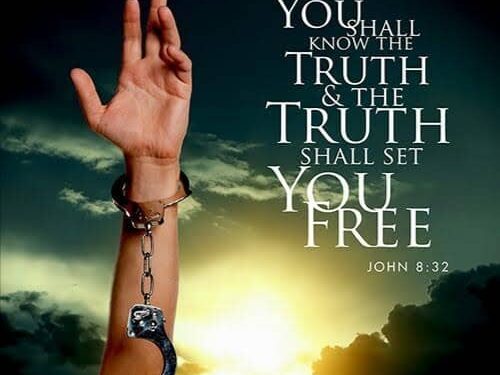
▶️ He gave us His word that liberates from the lies of the devil and the falsehoods of men, which are often high-sounding cost-demanding but fall short of true freedom redemption:_ _”You will know the truth, and the truth will set you free.” (Jn. 8:32, CEV)

When true freedom and deliverance is your need, you can either let Jesus and God’s truth set you free or allow some fake religion, teachers and prophets enslave and fleece you.

© Buti Sam KPUTU

Scary revelations by Senators explain insecurity in Zamfara; allege Dangote, BUA mining diamonds in Edo

If the revelations by Senators is anything to go by, insecurity has tentacles that are far-reaching, while deceptive business practices is causing the country to lose millions of dollars by the day.

First, members of the Senate Committee on Public Accounts are alleging that Dangote, BUA groups maybe illegally mining diamond in Edo under the guise of cement production.

There have been similar unverified allegations that hundreds of trucks of a cement company that leave Okaba area of Ankpa in Kogi State daily mine much more than they make the people and government believe.

There are also allegations that in Zamfara, foreigners, especially the Chinese, are fanning insecurity to keep locals busy killing themselves while making a kill in diamond mining.The Senate Committee also expressed dismay at the absolute security enjoyed by Chinese nationals amidst the pervasive insecurity related to illegal mining in Zamfara.

Chairman of the Committee Senator Matthew Urhoghide and his Deputy, Senator Ibrahim Hadeja spoke while interacting with officials of the Ministry of Solid Minerals Development and tasked them to come with bills that would open up the sector for legal operations.

Urhoghide said an Austrian revealed to him ten years back when he travelled to that country that the quality of deposits of diamond around Okpilla was high.

‘So do not be surprised today, Dangote BUA are all in that place. You will think it is cement , they are mining diamond.

“I was in Austria about 10 years ago, an Austrian asked me where I am from, I told him I am from Edo and we were trying to look up Edo and pointed out that it is between Auchi and Okpilla.”

“The Liberian civil war was all about illegal Diamond. What we require is a bank-able data. They want to know the type of minerals resources, the level and quantity available.

“They are the ones to give you bankable data, everywhere in the world, it is the major companies that come to do the exploration

“If today, you give them bankable data, they will not take it, Let them come in, half of what is taken out there including the big time Diamond marchants are illegal there has to be a market.

The Vice Chairman expressed concern that the Chinese nationals numbering over 400 are getting security protection amidst illegal mining in Zamfara.

“They are paying for protection, they said no flying zone, what is no flying zone, things are happening there.

“In Nasarawa here, they arrested one guy called Dan China, he has 32 Chinese persons working for him, this guy had a rail track coming from where he is extracting minerals.

According to Hadeja, artisanal mining in Zamfara was carried out by children which later attracted older members of the family from which they prospered and owned houses, cars and wore good clothings.

He said overtime organized group took over the mining of gold in Zamfara and created problems by blocking the locals from accessing the gold which they take to Dubai and sell at $1,600 per kilogram.

“The same people now brought in  mechanisation to the exclusion of the community, they started extracting these solid minerals in huge quantity.

“That is why they created the instability there to keep the people in check because the local were getting restive.

“In the past, it was their kids that were doing the mining, they got money, they bought cloths, they bought cars and build houses but now you say no more and brought in a heavy duty truck to harvest tonnes of gold and you are just there looking at them. 

“Once in a while you see people arrested at the Murtala Mohammed Airport with 32kg of solid gold, heading for Dubai at $1600 per kilo.

“If you go to Dubai today with Babanriga and checked in suitcases, you will be approached by people who ask you, do you have gold?

“It is not Illegal, so long as you pay the tax, they ask you, do you have gold, are you from Zamfara?

The committe also querried  the ministry over non-remitances of N2.8bn solid minerals revenue generated between the month of January to December 2016 into the Federation Account.

The panel however vacated the query by the office of the accountant general seeking the ministry’s explanation.

The panel challenged the ministry to spearhead bills that would make major players participate in legal exploitation of the nation’s solid minerals for the benefit of the people.

▪︎ Additional report by National Update

SERAP sues Buhari over move to borrow N895bn from Nigerians’ dormant accounts

Socio-Economic Rights and Accountability Project (SERAP) has filed a lawsuit asking the Federal High Court in Abuja “to restrain and stop President Muhammadu Buhari and the Federal Government from borrowing an estimated N895bn of Nigerians’ money in the form of their unclaimed dividends and balances in dormant accounts, under the guise of the patently unlawful, unconstitutional, and discriminatory legislation known as ‘the Finance Act, 2020.’”

The suit followed recent move by the Federal Government to take over and borrow unclaimed dividends and dormant account balances owned by Nigerians in any bank in the country. But the same legislation explicitly excludes dormant official bank accounts by all branches of government and their agencies.

In the suit number FHC/ABJ/CS/31/2021 filed last Friday, SERAP is seeking: “an order of perpetual injunction restraining and stopping President Buhari from demanding, taking over, borrowing, and collecting Nigerians’ money in the form of their unclaimed dividends and funds in dormant accounts or transferring and moving the money into a trust fund known as ‘Unclaimed Funds Trust Fund’”.

In the suit, SERAP is arguing that “the Federal Government should not be allowed to borrow Nigerians’ money. Borrowing unclaimed dividends and funds in dormant accounts owned by ordinary Nigerians would negatively affect their right to an adequate standard of living, and access to clean water, quality healthcare and education.”

According to SERAP: “Despite Nigeria’s dwindling oil revenue, the growing level of public debt, and widespread poverty, public officers including the President, Vice President, governors and their deputies, and members of the National Assembly have refused to cut their emoluments, allowances and security votes. At the same time, millions of Nigerians continue to bear the brunt of mismanagement and corruption.”

Joined in the suit as Defendants are: Mr Abubakar Malami SAN, Attorney General of the Federation and Minister of Justice; the Senate President, Ahmad Lawan; the Speaker of House of Representatives, Femi Gbajabiamila; and the Minister of Finance, Budget and National Planning, Ms Zainab Ahmed.

SERAP is also arguing that “For there to be a borrower, there must be a lender. The intention to enter into such borrower-lender relationship must be known to both parties. Any other arrangement that allows a borrower to access funds from a lender without the knowledge and express consent of the lender will amount to stealing.”

According to SERAP: “The Federal Government has repeatedly failed to ensure transparency and accountability in the spending of public wealth and resources such as recovered stolen public funds, and the loans so far obtained, estimated to be $31.98bn, and failed to address the systemic and widespread corruption in ministries, departments and agencies (MDAs).”

The suit filed on behalf of SERAP by its lawyers Kolawole Oluwadare and Ms Adelanke Aremo, read in part: “By the combined reading of section 44(1) of the Nigerian Constitution 1999 (as amended) and Article 14 of the African Charter on Human and Peoples’ Rights, the Federal Government has absolutely no right to borrow Nigerians’ money in the form of their unclaimed dividends and funds in dormant accounts without their knowledge and express consent.”

“The move to borrow Nigerians’ money amounts to unlawful expropriation, as it is neither proportionate nor necessary, especially given the unwillingness or inability of the government to stop systemic and widespread corruption in MDAs, cut waste and stop all leakages in public expenditures. The borrowing is also not in the public interest.”

“Respect for the right to property is important to improve the enjoyment of other basic human rights and to lift Nigerians out of poverty. There is a limit on the ability of any government to interfere with private property without legal justification. The right to property is a sacred and fundamental right.”

“Borrowing unclaimed dividends and funds in dormant accounts without due process of law and the knowledge and explicit consent of the owners is arbitrary, and as such, legally and morally unjustifiable.”

“To create a valid trust relationship, there must be explicit agreement between the setlor and the trustee, for the benefits of the trust beneficiary. There must also be sufficient evidence of the setlor’s intention to create a trust. The relationship cannot be arbitrarily created. It can also not be forced or assumed unilaterally, which is exactly what the Federal Government is pushing to do in this case.”

“According to the Nigerian Bureau of Statistics (NBS), four in ten Nigerians or over 82.9 million Nigerians live in poverty.”

“Where agencies of government are allowed to operate at large and at their whims and caprices in the guise of performing their statutory duties, the end result will be anarchy, licentiousness, authoritarianism and brigandage leading to the loss of the much cherished and constitutionally guaranteed freedom and liberty.”

SERAP is also seeking the following reliefs:

1. A DECLARATION that the provisions of Section 60[3] and Section 77[1] and [2] of the Finance Act allowing the Federal Government under the leadership of President Buhari to borrow Nigerians’ money in the form of unclaimed dividends and funds in dormant accounts and transferring the money into the “Unclaimed Funds Trust Fund” is unlawful, unconstitutional and a breach of Nigerians’ fundamental human rights particularly the right to property.

2. A DECLARATION that the provisions of Section 60[3] and Section 77[1][2] of the Finance Act, being inconsistent with section 44[1] of the Nigerian Constitution, is therefore null and void to the extent of its inconsistency pursuant to Section 1[3] of the Constitution.

3. AN ORDER of perpetual injunction restraining the Defendants, or any other organisation, institution or officer[s] acting under their instruction or control, from demanding, collecting or transferring unclaimed dividends and funds in dormant accounts of beneficiaries and account holders into Unclaimed Funds Trust Fund.

4. AND ANY OTHER ORDER(S) that the Honourable Court may deem fit to make in the circumstance of this suit.

No date has been fixed for the hearing of the suit.

Credit:theconclaveng

How young Lawyer, Uzonwanne was killed by her Doctor – NBA petitions Doctors Union

The Nigerian Bar Association, Gwagwalada Branch has petitioned the Code of Conduct Bureau and Medical and Dental Practitioners Counsel of Nigeria over the unprofessional role played by Dr. Jide Kudehimbu in the untimely death of Miss Mercy Uzonwanne.

In a petition signed by the Chairman and secretary of the branch, Isah Abubakar Aliyu and Akachukwu Nwoye respectively, the branch decried the role of Dr. Jide Kudehinbu by diverting a registered patient of NAF hospital to his private hospital.

Part of the the Petition reads “The Nigerian Bar Association, Gwagwalada Branch humbly wishes to bring to your notice a case of professional misconduct against Dr. Jide Kudehinbu of Airforce Base Hospital (NAF Hospital) along Nnamdi Azikiwe International Air Port Road, Abuja  pursuant to sections 15 and 16 of the Medical and Dental Practitioners Act. We wish to inform you of the following facts;

“Sometime in 2020, late Uzonwanne Chidinma Mercy developed an illness and was rushed to the NAF Hospital at Airport Road, FCT-Abuja for medical attention. The NAF Hospital diagnosed her to have fibroid and advised her to prepare for surgical procedure. However, Dr. Jide Kudehinbu, a Medical Practitioner and Staff of the NAF Hospital who was part of the medical team looking into the case advised her to come to his private hospital called Medmore Hospital Clinic, Lugbe, FCT-Abuja for the surgical procedure. He further represented to her that since he was the leader of the medical team that would carry out the surgery, she should think of going to his private hospital for the procedure.

“The surgical operation was performed on her by Dr. Jide Kudehinbu in his Medmore Hospital Clinic, Lugbe, FCT-Abuja on the 13th of December, 2020 and thereafter she was discharged. Her situation deteriorated after 3 days of surgery. She was readmitted to Dr. Jide Kudehinbu’s Medmore Hospital Clinic, Lugbe, FCT-Abuja.

“On the 6th of January, 2021, following the worsening situation of her health, she was rushed to the NAF Hospital where she was initially taken to, for further investigation.

“At the NAF Hospital, the management of the Hospital initially rejected her on the ground that she was not supposed to have gone to a private Hospital after consulting them. However, the NAF Hospital later changed its mind after a lot of persuasion for the corrective surgery.

“Despite her corrective surgery, her condition did not improve and she eventually relapsed into a coma. At this stage, the NAF Hospital referred her to the University of Abuja Teaching Hospital, Gwagwalada-Abuja on the 21st of January 2021 where she died on the 22nd of January 2021 without coming out of coma.

“An autopsy was performed on her by the University of Abuja Teaching Hospital. The result obtained indicates that the deceased’s health was negligently and unprofessionally managed by Dr. Jide Kudehinbu as evidenced in the cause of death as reported in the autopsy viz: severe cerebral oedema, overwhelming sepsis, colonic perforation, renal inforation.

“The autopsy result reveals that she had a breakdown of the surgical wound with purulent discharge which necessitated another surgical intervention at the NAF Hospital.

“In view of the above facts, we humbly urge you to use your good offices in line with your Medical and Dental Practitioners Act to investigate this matter’ the petition reads. (Barristerng)

Fire On The Nigerian Mountain; Everyone Is Running

After years of the government’s seemingly standing by as insecurity was blanketing the country, a change came.

President Muhammadu Buhari signposted that change by appointing new Service Chiefs. Immediately the new Service Chiefs set to work, some discordant voices arose from various parts of the country.

One of the most noticeable of such voices belonged clearly to Sheikh Ahmad Gumi, who graduated as a Medical Doctor at the Ahmadu Bello University, Zaria, joined the Army and retired as Captain.

Gumi, who was born a proud Nigerian on Independence Day, 1960, further studied Islamic Jurisprudence and Tafsir (providing elucidation, explanation, interpretation, context or commentary for clear understanding and conviction of God’s will) at the Umm al-Qura University, in Saudi Arabia. He is currently at Kaduna’s Sultan Bello Central Mosque as a preacher.

How much have things changed in Nigeria since the National Security Adviser, Gen Babagana Monguno (rtd) delivered his speech on the new measures with which to stem the insecurity in the country? That was on Tuesday 2 March 2021.

Very much has changed. First, the speech specified that the Federal Government was hell-bent in confronting the insurgents and had not conceded any grounds, and would never bargain with them. It was in that speech also that a no-flight zone was imposed on Zamfara State. The NSA inferred aplenty that Gumi was on his own and not acting for the government. Yet, did the Minister of Information and Communication not say openly, when asked about Gumi’s meeting with the bandits, that government had various ways of reaching out in its search for an end to insurgency? Was he just trying to ride a storm, or was he unknowingly leaking out the information that a faction in the presidency may have sent Gumi on his mission?

Well by the time Gumi began to reach out to the bandits, it was clear that there was fire on the mountain. As if by a coordinated action, that was exactly when both bandits and killer herders began to run amok, kidnapping school children and killing villagers almost on weekly basis. As though part of that concert, many Northerners began to speak out in defence of killer herders.  But it was Gumi who did Nigeria a real service, even if inadvertently. He gave us the invaluable information that the herders and the bandits were one; Fulanis wronged by the terrible Nigerian social system.

Yet, what aroused the Federal Government to issue a battle cry through the NSA on March 2nd? There was really fire on the mountain that week. On February 27, bandits killed four and kidnapped twenty-six in Rafi, Niger State; killed four in Igabi LGA and three in Kajuru LGA in Kaduna and three in Sabon Birni, Sokoto State. February 28, Police officers killed nine bandits in Safana, Katsina State. February 28, bandits kidnapped seven in Rafi LGA; three in Katcha LGA in Niger State; gunmen killed five in Zangon Kataf LGA and five in Chikun LGA in Kaduna and three in Tsafe, Zamfara. Same February 28, soldiers troops killed “dozens” (estimated at twenty-four) in Igabi, Kaduna.

March 1, was particularly bloody; bandits killed five in Igabi LGA and one in Kauru LGA while airstrikes killed “many” (estimated at twenty) bandits in the surrounding area in Kaduna, kidnapped one and killed twelve in Illela, Sokoto. Same day (March 1) sectarian violence led to two deaths in Okobo, Akwa Ibom while Boko Haram abducted seven aid workers in Dikwa, Borno.

March 2, kidnappers abducted three students in Safana, Katsina, bandits kidnapped fifty in Rafi, Niger State and gunmen killed one and kidnapped “some” (estimated at five) in Obokun, Osun state. March 3, gunmen killed six police officers in Obubra, Cross River State and bandits kidnapped seventy in Maru, Zamfara, while Nigerian troops killed “some” (estimated at ten) Boko Haram militants in Marte, Borno.

March 4: sectarian violence led to five deaths in Offa, Kwara while bandits killed one and kidnapped two in Bodinga, Sokoto, and a clash between soldiers and bandits in Safana, Katsina left four outlaws dead but Nigeria lost one soldier, unfortunately.  Same day, soldiers killed one Boko Haram militant in Ngala LGA and five militants in Dikwa LGA in Borno. March 5, bandits killed seventeen in Sabon Birni, Sokoto and suspected herders killed two farmers in Ikole-Ekiti.

So, it was important that the Federal government spoke out when it did. It was also noteworthy that Gumi asked for amnesty for bandits just days after the Minister of Justice and Attorney-General of the Federation started drawing flacks for asking for a Commission for pastoralists, Tuesday Feb 16. No thanks to the Attorney-General, his statement caused many in the South to call on their communities to defend themselves,  (independent)

As we prepare for state police…

by Simon Kolawole

It would appear setting up state police in Nigeria is now a matter of “when” – not “if”. What started as a campaign championed solely by south-west political and opinion leaders at the dawn of this democracy has gone on to win more disciples nationwide. Support is coming from unlikely quarters in the north, with many of the region’s governors now in tow – even though they do not fully embrace the broader campaign for “true federalism” and “restructuring” as championed mostly by southern leaders and their allies in the middle belt. The kidnapping and banditry up north are clearly playing the key role in persuading the northern governors that the time for state police has come.

What is state police? Although the campaign has gone on for decades, there has been no proper articulation of the idea apart from what Senator Ike Ekweremadu, as deputy senate president, came up with in a bill some years ago. However, when people canvass “state police”, it is generally understood to mean a force controlled by the state that set it up. It will exist alongside the Nigeria Police Force (NPF), which is seen as the exclusive property of the federal government. The inspector-general of police is appointed by the president. But the chief of state police, or whatever title they will go by, will be appointed by the governor. That is the concept as currently canvassed.

Why do people want state police? I want to believe that the agitation was initially sparked off by political currents under President Olusegun Obasanjo as he used and abused the police for partisan purposes. He deployed the police to intimidate his opponents ahead of the 2003 elections and subsequently captured many states. In one fell swoop, he took five of the six states in the south-west, leaving only Lagos. To counter this abuse of power, many started arguing that state police would provide a “balance of force”. The agitation was built on the foundation of “true federalism” – that is, every state should have control over its internal law enforcement, as in other federations.

On another front, it has also been well argued that Nigeria is too big for policing to be efficiently administered from Abuja. There are 200 million Nigerians, according to population estimates, spread across 36 states and FCT, 774 LGAs and a million towns and villages. Many proponents believe that the mammoth size of Nigeria is responsible, partly at least, for police inefficiency. More so, there is the argument that if police officers serve in their states of birth/origin, their local knowledge can help in intelligence gathering and general crime fighting. It is argued, for instance, that posting a Hausa officer to my village in Kogi state can be unhelpful if he does not speak Yagba or Yoruba.

Today, the broader justification for state police is the pervasive insecurity. It is believed that if states had their own police forces, insurgency, terrorism, banditry, kidnapping and other crimes crippling the country would have been prevented. It must be noted that there is nothing new about state police: policing was decentralised until 1966 when the military took over and centralised command (as with all things military). Every region had its own police force: Local Government Police in the west, Sheriffs and Court Messengers in the east and Native Authority Police in the north. With states now setting up quasi-police outfits, we are in a way already trying to cross the Rubicon.

What will state police look like? Under the “Ekweremadu Model”, the national assembly will set out the framework and guidelines; the state legislature will make laws for the administration; funding will be a first-line charge on state allocation; the police commissioner will be appointed by the governor (on the advice of a proposed National Police Service Commission) and confirmed by the state legislature; the commissioner will serve for five years or until retirement age; the governor may give “lawful” orders to the commissioner, who can refer unlawful orders to the proposed State Police Service Commission; and the commission, not the court, will have the final say.

What’s more, the commissioner could be removed by the governor as recommended by the National (not State) Police Service Commission but this must be approved by two-thirds majority of the state legislature. It is noteworthy that the chairman of the state commission will be appointed by the governor subject to confirmation by the house of assembly, while the chairman of national commission will be picked by the president subject to senate confirmation. Both will have representatives from the civil society, labour and media. This, I suppose, is to provide for oversight and accountability. That is basically the Ekweremadu Model. I am yet to see or read other proposals.

Where do I stand? I used to be very sceptical about, but not completely opposed to, state police. My argument had always been that our problems were deeper than they appear and while state police might address certain issues, they might create others. My main reservation was its desirability in a very complex and complicated entity like Nigeria where ethnic and religious emotions are always running high. Also, I have argued that if politicians really want the federal police to work, they would. Political manipulation is the major handicap. Today, it is not that my reservations have disappeared but I’m thinking: why don’t we try something “new” and see what happens?

If the people really think it is state police that will end or contain Boko Haram insurgency, banditry and herders-farmers clash, please let them have their wish. After all, regions are already setting up security outfits, even if the results so far are not overwhelmingly positive. Many states are already running bodies that perform police functions, just that they do not bear arms. In Lagos state, we’ve had LASTMA doing traffic management (a police function) for years, KAI enforcing discipline with frog jumps and Black Marias, and the governor’s task force (peopled by federal police officers) seizing freshly cooked rice (with steaming stew and fried meat) from roadside vendors.

However, I would like to highlight some issues as we move closer to decentralising the police. One, there is very popular notion that “decentralised police” is part of “true federalism”. In truth, unitary systems also have decentralised police. The United Kingdom runs a unitary system, but the police are decentralised. There are 48 police forces across the UK; London alone has Metropolitan Police Service and City of London Police. Counties also have community police. Before Nigeria adopted a form of federalism under the Richards Constitution of 1946, policing was also localised. So even as a unitary system (where powers are highly centralised), policing was decentralised in Nigeria.

Two, while the impression is that we do not currently have decentralised policing, the argument should be that the command structure is too centralised. The police are somewhat decentralised: force headquarters in Abuja; 12 zones across Nigeria; 37 state commands (FCT inclusive); divisional police headquarters; police station; police post; and village police post. But operational orders are issued from Abuja by the IGP, an appointee of the president. State police commissioners, in theory, do not take orders from governors (although they do in practice). Basically, what the governors want is to be able to issue orders to the police commissioners without any IGP standing in the way.

Three, there is this argument that state police would be more efficient than the federal one. Really? What do the states run better? Are state universities better managed than federal ones? Are state hospitals better run than the ones under the federal government? Are the toilets in the state secretariats cleaner than the ones in the federal secretariat? However, there is a bit of the argument that is sustainable: decentralisation should, on paper, improve the speed and quality of operations. The current reality, I must highlight, is that states already spend a lot to support the police and they manage to get many things done, except when the federal government is an interested party.

Four, I worry about funding. States are already stressed financially. As I write this, some states are surviving on half salaries. Pensions are not even on the agenda. To set up and equip a police force, recruit and train personnel, and run overheads will cost more than one naira. I am also tempted to think that since the personnel would be Nigerians, they may not be too different from the federal ones. Politicians will have slots. Area boys, political thugs and career criminals would certainly find their way into state police. In which case, our problems would only be decentralised. But, yes, we can argue that state police would create jobs and take many would-be criminals off the streets.

Finally, I fear a bit about the potential political and ethnic manipulation of state police. While the federal police are not saints, they still behave like “mother hen” at times and allow a “level field” when they are not being used. I do not see state police being given to neutrality at any point. We have seen how state “independent” electoral commissions always return council elections in favour of the governor’s party. Recently in Kano, APC won all the 44 chairmanships and all the 484 councillorships. It happens everywhere: the SIECs always “deliver” to the governors. We can make all the laws in the world to checkmate misuse but you and I know that law is law and reality is reality.

My conclusion: despite all my misgivings, let there be state police. The status quo clearly needs improvement and if state police would provide that, why not? There is nothing strange or unprecedented about decentralised policing. More so, more people across the divides are buying into the idea, which means the political consensus is growing. This is critical in a country reeling under mutual distrust, morbid suspicion and fear of domination. However, we should be very clear in our minds that state police will not be the jolly ride that has been sold to us. From experience, there are plenty dangers ahead for everybody. And there will always be work to be done.


AND FOUR OTHER THINGS…


BANDITS’ PARADISE

It is very heart-breaking that at a time we are celebrating women, bandits went to the Federal College of Forestry Mechanisation in Afaka, Kaduna state, on Friday and kidnapped several students, mostly female. Once again, Nigeria has let down its citizens. My first instinct was to say maybe we should shut all schools in the north until security improves, but that suggestion tends to assume that students are safe anywhere else. I keep wondering: how do these bandits move without being tracked, even with technology? How many are they that we appear so overwhelmed? For how long will this go on? My thoughts and prayers are with the captives. Nigeria needs help. Urgently.

CLOSED GRAZING

Last week, the Ondo state chapter of the Miyetti Allah Cattle Breeders Association of Nigeria (MACBAN) said open grazing is “outdated” and herders need to seek modern alternatives. I told myself: “Finally!” Four years ago, we were being told open grazing is a culture that must not be tampered with. Now that things have got out of hand – with many killed and ethnic relations at knife-edge – I am seeing some compromise that once looked impossible. The Kano state government is, commendably, building a massive ranch that can take millions of cows. I feel sad that a lot of damage has been done before we are arriving at a solution, but it is better late than never. Forward.

HOUSE OF COMEDY

The house of reps on Wednesday passed a resolution asking the federal government to hire foreign mercenaries to fight Boko Haram. I didn’t know whether to laugh or cry. It shows the level things have degenerated to in Nigeria that such a sensitive national security issue would be a subject of open debate and resolution by the legislature – something that should be discussed in an executive session and the resolution forwarded quietly to the president. The reps topped it up by proposing a law that will force a state to produce at least one female senator. There are three senatorial zones in a state. What zone will you compel to go first? How many terms can the senator serve? Jokes.

DELTA FARCE

The UK has agreed to return the £4.2 million forfeited by associates of Chief James Ibori after the money laundering conviction of the former governor of Delta state. The federal government wants to use it to finance some projects. I like the idea. I favour extraordinary incomes being tied to projects so that we can see what we did with them. However, should the money go to the federal purse or Delta state? Since we returned funds recovered from Chief Joshua Dariye to Plateau state and Chief DSP Alamieyeseigha to Bayelsa state, why not Delta? As an aside, though, there is a risk that the Delta government could return the funds to Ibori through the back door. Nigeria!

Credit:TheCable

Bandits break into another school in Kaduna

Bandits have attacked Government Science Secondary School, Ikara in Kaduna State.

The armed men invaded the school in the early hours of Sunday but their plot to abduct students was foiled by the military, according to Samuel Aruwan, Commissioner for Internal Security and Home Affairs.

Aruwan confirmed that all 307 students of the school are safe.

“The attempted kidnap was foiled. Fortunately, the students utilised the security warning system and were thus able to alert security forces. 

The security forces comprises the Nigerian Army and the Police with some security volunteers moved swiftly to the school to engage the bandits, the military and police are currently trailing the bandits,” he said

(Cknnigeria)

TIPS