Home Blog Page 1004

How and When Nigeria Can Exit the AFCFTA.

How and When Nigeria Can Exit the AFCFTA. Daily Law Tips (Tip 757) by Onyekachi Umah, Esq., LL.M, ACIArb(UK).

Introduction: 

Imagine Africa as one single market, that promotes intra-Africana trade, that will be the world largest free trade zone! The African Continental Free Trade Area (AfCFTA) is Africa’s move to harmonies its markets for economic integration, across all 55 member States of the Africa. Since 1st January 2021, Africa has been a single market. The entire process is running in phases and will require member states (African countries) to amend their laws and policies to encourage free movement of persons and goods, as well as affect dispute resolution, investment, competition policies, and intellectual property. Among its highlights will be the African passport, the African currency, the Single African Air Transport Market and other unified systems.

Nigeria signed and ratified the Agreement for the establishment of the African Continental Free Trade Area (AfCFTA) very late, due to fears that AFCFTA will not benefit Nigeria. The giant of Africa was or is still scared that the AFCFTA may turn Nigeria into a dumping ground and that Nigeria lacks needed trade infrastructure, security and system to cope with the opportunities and challenges of the AFCFTA. In a simple parlance, many Nigerians felt or feel that the AFCFTA may cause an immeasurable rush of Africans into Nigeria to compete with Nigerians over the resources in Nigeria. Many feared that Nigeria, like the United Kingdom that left the European Union, may have quick need to break out of the African Union’s AFCFTA. Hence, I have received questions from several Nigerians, who wonder if Nigeria can exit the AFCFTA and how/when such can be done. So, this work focuses on the timing and procedure for Nigeria or any member state to exit the AFCFTA.

AFCFTA and the Right to Exit: 

Agreement for the establishment of the African Continental Free Trade Area is a legal framework (combination of agreements, protocols, annexes and their appendices) covering trade in goods, trade in services, settlement of dispute, Competition policies, Investment and Intellectual Property Rights. African countries interested in the African Continental Free Trade Area (AfCFTA) sign to the agreement and protocols to become member states. So far, 54 African countries out of 55, have signed and approved the establishment of the African Continental Free Trade Area (AfCFTA). The outstanding country is Eritrea and could not sign due to its war with Ethiopia but is now ready to sign.

Like any other civil agreement, the agreement for the establishment of the African Continental Free Trade Area allows for member states to exit the agreement. However, there are deadlines and procedures for such for such exit. A copy of the Agreement for the establishment of the African Continental Free Trade Area solves this; specifically, at its Article 27 on Withdrawal. The agreement refers to an exit as a withdrawal. Click to download a free copy of the AFCFTA agreement here.

The agreement provides that after five (5) years from the date a state member signed the agreement, the state member may withdraw from the agreement. And, the withdrawal is to be made by giving notice to all other state members through the Depositary (ie, the Chairperson of the African Union Commission). However, the withdrawal will not be effective until after two (2) years from the date that the withdrawing state member delivered its notice to the depositary. As expected, withdrawal from the agreement does not affect any pending rights and obligation of the withdrawing member state before the withdrawal.

In the case of Nigeria, Nigeria signed the Agreement for the establishment of the African Continental Free Trade Area on 7 July 2019, ratified it on 11 November 2020 and deposited it on 5 December 2020. By the constitution of Nigeria, foreign agreements signed by government are not effective until there are ratified by the legislature. So, since the AFCFTA was ratified by Nigeria on 11 November 2020, it is deemed to have come into force in Nigeria on the date of ratification (11 November 2020). So, Nigeria cannot exit the agreement until after 5 years from 11 November 2020 (ie, from 11 November 2025). It is from 11 November 2025 that Nigeria can send its Notice of Withdrawal but the withdrawal will not be effective until after 2 years (ie, November 2027, assuming Nigeria submits the notice in November 2025).

Conclusion: 

No country can survive without trade and relationships with other countries. Like the Igbo adages says, “Ayoku mamiri, Ogba Ufufu” (when people urinate together in same bowl, it foams better); countries do better together. This is the simple basis for a single African market for all Africans. Nigeria must not miss the promises of AFCFTA, with the projections that AFCFTA will cover a market of 1.2 billion people and a gross domestic product (GDP) of $22.5 trillion, across all 55 member States of the African Union.

Although, Nigeria lacks basic data, basic infrastructure, reliable economic plan, technology-industrial hubs and security to drive needed export of finished goods and not raw materials alone, the world and Africans cannot be delayed. Nigeria has to catch up. AFCFTA is good but Nigeria has to be ready and good to benefit from its goodies. However, where Nigeria or any member state of the AFCFTA feels that its national security, public health or public order is threatened, it can always step aside from the AFCFTA. Like we say in Nigeria, “e no be by force” (it is not by force) to be with the AFCFTA.

My authorities, are:

  1. Sections 1, 2, 3, 4, 5, 6 and 12 of the Constitution of the Federal Republic of Nigeria, 1999.
  2. Articles 2, 6, 7, 8, 13 and 27 of the Agreement establishing the African Continental Free Trade Area. Click to download a free copy of the AFCFTA agreement here.
  3. African Trade Policy Centre “African Continental Free Trade Area; Questions & Answers” (African Union) <https://au.int/sites/default/files/documents/36085-doc-qa_cfta_en_rev15march.pdf> accessed 15 March 2021. 
  4. Africa Kiiza and Alex Nkosi, “Does the African Continental Free Trade Area (AfCTA) uphold Worker’s rights?” (Beyond Potential, 17 May 20202) <https://www.beyondpotential.org/post/does-the-african-continental-free-trade-area-afcta-uphold-worker-s-rights> accessed 15 March 2021. 
  5. Martyn Davies and Borge Brende, “Connecting Countries and Cities for Regional Value Chain Integration: Operationalizing the AfCFTA” (World Economic Forum, 26 January 2021) <http://www3.weforum.org/docs/WEF_Regional_Value_Chain_Integration_Automotive_Case_Study_2021.pdf> accessed 15 March 2021.
  6. Andrew Omosebi, “AfCFTA: The state of the manufacturing sector in Nigeria and its ability to capitalize on open borders” (Naira Metrics, 4 January 2021) <https://nairametrics.com/2021/01/04/afcfta-the-state-of-the-manufacturing-sector-in-nigeria-and-its-ability-to-capitalize-on-open-borders/> accessed 15 March 2021
  7. “The African Continental Free Trade Area: A Tralac Guide” (Tralac, August 2020) < https://www.tralac.org/documents/resources/booklets/4062-afcfta-a-tralac-guide-7th-edition-august-2020/file.html> accessed 15 March 2021
  8. Hippolyte Fofack, “A Competitive Africa; Economic integration could make the continent a global player” (International Monetary Fund, 2018) <https://www.imf.org/external/pubs/ft/fandd/2018/12/afcfta-economic-integration-in-africa-fofack.htm> accessed 15 March 2021
  9. Oge Udegbunam and Ronald Adamolekun, “AfCFTA: What Nigerian businesses must do to export to African countries” (PremiumTimes, 17 January 2021) <https://www.premiumtimesng.com/news/top-news/436908-afcfta-what-nigerian-businesses-must-do-to-export-to-african-countries-official.html> accessed 15 March 2021
  10. KOUASSI YEBOUA AND REQUIER WAIT, “Free trade deal could boost African manufacturing” (Issafrica, 8 December 2020) <https://issafrica.org/iss-today/free-trade-deal-could-boost-african-manufacturing> accessed 15 March 2021
  11. https://au.int/en/videos/20210101/afcfta-start-trading-ceremony-webinar

Sabi Law Projects:

#SabiLaw

#DailyLawTips

#SabiBusinessLaw

#SabiElectionLaws

#SabiHumanRights

#SabiLawOnBeatFm

#SabiLawLectureSeries

#CriminalJusticeMonday

#SabiLawVideoChallenge

Speak with the writer, ask questions or make inquiries on this topic or any other via [email protected], [email protected] or +2348037665878 (whatsapp).

To receive free Daily Law Tips, join our free WhatsApp group via https://chat.whatsapp.com/DgFYxiYw6Mm8MdvOl3N1yn  or Telegram group, via the below link: https://t.me/LearnNigerianLaws

To keep up to date on all our free legal awareness projects of Sabi Law Foundation, follow us via

Facebook Page:@LearnNigerianLaws, Instagram: @LearnNigerianLaws, Twitter: @LearnNigeriaLaw and YouTube: Learn Nigerian Laws

Please share this publication for free till it gets to those that need it most. Save a Nigerian today! NOTE: Sharing, modifying or publishing this publication without giving credit to the author or Sabi Law Foundation is a criminal breach of copyright and will be prosecuted. This publication is the writer’s view not a legal advice and does not create any form of relationship. You may reach the writer for more information.

This publication is powered by www.LearnNigerianLaws.com {A Free Law Awareness Program of Sabi Law Foundation, supported by the law firm of Bezaleel Chambers International (BCI).} Sabi Law Foundation is a Not-For-Profit and Non-Governmental Legal Awareness Organization based in Nigeria.

NJC Goes Digital, Completes Full-scale Automation of Meetings, Operations

By Yemi Oyeyemi, Abuja

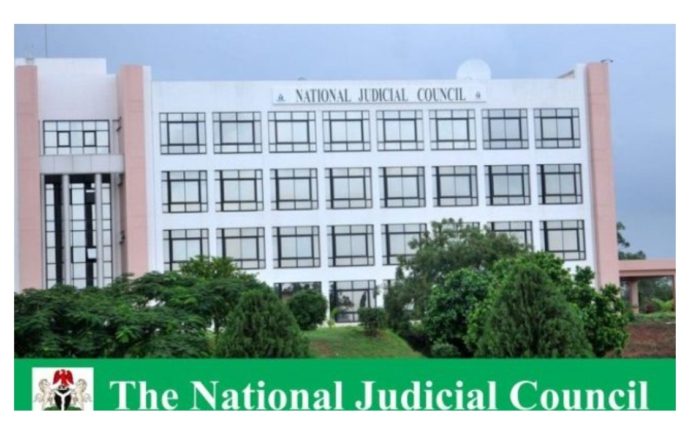
In a bid to cope with the unfolding challenges in the country, the National Judicial Council (NJC) has become fully digitalized with the completion of the full-scale automation of its meetings and operations.

The Chief Justice of Nigeria (CJN) and Chairman of the Council, Justice Ibrahim Tanko Muhammad who disclosed this in Abuja stated that the giant stride was part of measures aimed at ensuring that the justice system is not crippled in the face of threats posed by the Covid-19 pandemic.

He spoke at the Automation Retreat for members of the Council in Abuja.

“This is intended to herald a regime of electronic system to the Council’s document management, marking a significant departure and paradigm shift from the current paper-based operations”, Justice Muhammad was quoted as saying in a statement by the NJC’s Director of Information, Mr Soji Oye.

The CJN represented at the occasion by the Deputy Chairman of the Council, Justice Bode Rhodes-Vivour, said the NJC Chamber is now re-designed, retrofitted and equipped with a state of the art technology with in-built Security/Access control for the use of Council members.

He added that the re-designed Meeting Chamber has the following features: Voice tracking/audio conferencing; full video/audio recording of meeting with (playback); Call button-for assistance; wireless presentation/video call; video conferencing for members who are not able to attend; Intelligent System Retractable Tables and Enhanced Audio/Speakers Systems.

Other features are; secured access to meeting rooms; acoustic environment to eliminate echo and possible eavesdropping and avoidance of any listening devices; improved lighting and befitting restroom, canteen and lounge.

The features of the E-document management include but not limited to the following: instant access to update version; selective or complete printing; remote access; sharing documents during virtual meetings.

The statement noted that the E-document also has the following security/access or control mechanism: only authorized members and Secretariat can download (if needed); possibility of tracking who and what is done to a document; in case of committee assignments, only committee members can have access to documents pertaining to their respective committees.

Meanwhile the CJN has commended the NJC Secretary, Malam Ahmed Gambo Saleh, for galvanising his staff as well as consultants to achieve what he described as a technological milestone. (Everyday)

Group tells story of arrest, detention, freedom of 75 Igbo residents of Rivers, 136 others still detained

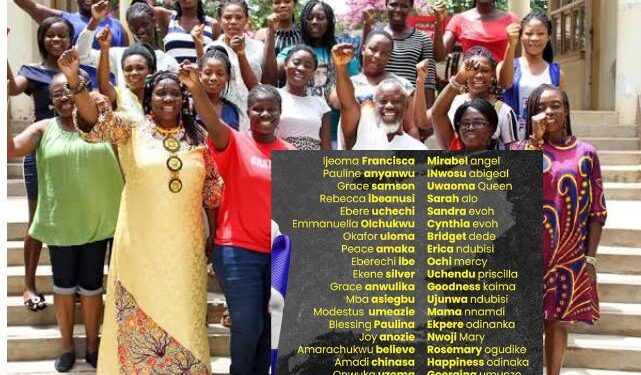
Some of the freed women

The International Society for Civil Liberties & Rule of Law has released a statement that claims the Nigerian Army, Nigeria Police Force, and the Department of State Services (DSS) were involved in the four months incarceration and alleged ill-treatment of freed 75 residents of Obigbo town in Rivers State.

Recall that hundreds of arrests were made in Obigbo and a curfew imposed during last year’s EndSARS protests, The curfew on the orders of Governor Nyesom Wike, followed the death of some security operatives and civilians.

The Independent People of Biafra (IPOB) was blamed, and the government ordered soldiers to fish out those behind the attacks.

The leader of Intersociety, Mr. Emeka Umeagbalasi, said on phone on Tuesday that a total of 283 have so far been freed, alleging that an additional 110 are still being kept at a military base in Bida, Niger State, while 26 others remain with the DSS.

He said it is left to the Army to tell Nigerians where they drive the powers to keep Nigerians for months, without informing the public or the families of those held where they are.

According to him, it is the agitation of his group and others that led the Army to begin to hand the detained persons to the Police and DSS about two weeks ago.

Meanwhile, the Intersociety statement says the freed 75, allegedly abducted since October/November, 2020, were freed early March after bail was granted by an Abuja Magistrate Court.

The Intersociety full statement reads: It gladdens the heart of International Society for Civil Liberties & Rule of Law to inform the world that the 75 innocent and defenseless Obigbo residents, comprising 55 women and 20 men, all Igbo natives and Christians, have finally returned to Igbo Land and rejoined their families, left for over four months or since Oct/Nov 2020 when they were abducted by soldiers of the Nigerian Army. The 75 abductees were freed on 4th and 5th March 2021, having earlier been granted bail by the Grade 11 Magistrate Court, Wuse 11, FCT Judicial Division, Abuja. While some were abducted between 7pm and 8pm in Obigbo and environs on their way home from work and other lawful social activities and held secretly for days at Headquarters of 6 Division of the Nigerian Army in Port Harcourt before bundled to the Mogadishu Barracks in Abuja, others were abducted during similar, if not same hours and bundled to Obinze Army Barracks in Owerri, Imo State from where they were disappeared and surfaced next day at Mogadishu Barracks in Abuja. All the freed 75 abductees were abducted at night and moved from 6 Division/Obinze Army Barracks to Mogadishu Barracks in Abuja late into the night or at hours of the blue law.

Among the 75 abductees are 55 women mostly between 18 and 25 years of age. The oldest among the 55 women are between 27 and 39 years of age including mothers of children and the newly married and among those in 18 and 25 years age bracket are university admission seekers, sales girls, hair dressing/plaiting and tailoring apprentices, fresh university undergraduates, etc. There are also hospital staff and a Day-Care proprietress, etc among those in 27 and 39 years age bracket. The 20 men among the 75 abductees are also of productive age bracket (18 years and 35 years and two are in their late 50s and mid 60s) including traders, trade apprentices, panel beaters, Secondary School leavers, university admission seekers, etc. All personal belongings of the 75 abductees including women’s hand bags and their contents, cash sums, mobile phones, identity cards, etc were taken away by soldiers till date and each of 55 women among them was forced to wear in Army captivity same underwear worn at the point of her abduction over four months ago.

It must be reminded that the 75 Obigbo abductees including 55 women and 20 men were abducted by soldiers of the Nigerian Army, held for days at the headquarters of 6 Division and Obinze Barracks and bundled to Mogadishu Army Barracks in Abuja, located very close to Aso Rock-the seat of Nigeria’s Presidential Power where they were secretly held outside public or their families’ knowledge or information for over four months. Their abduction and captivity were also done amidst grave inhuman conditions and without court trial. According to testimonies of most of the freed abductees, “they were transferred to DSS and Police facilities after being held in Army captivity for months”. In other words, they were transferred to DSS and Nigeria Police facilities few weeks before they regained freedom through Court bails following our advocacy campaigns and public outcries. While 53 women were released from the hands of DSS, 22 including 20 men and two women were freed from the hands of the Nigeria Police Force. Till date, Nigerian Army and its immediate past Chief of Staff-Retired Lt Gen Tukur Buratai (principal perpetrators) and authorities of DSS and Nigeria Police Force (conspirators) have refused to speak on their roles in the abductions.

Intersociety wishes to state again that by the existing laws of the Federal Republic of Nigeria including Decided Cases (Case-Laws), the Armed Forces Act of 2004 and the 1999 Constitution, the Nigerian Army or any other branch of the Armed Forces is disempowered from arresting, detaining, investigating and prosecuting civilian citizens not subject to the Armed Forces Act of 2004 and the Nigerian Security Agencies Act of 2004, governing the conducts of DSS, the Service is disempowered from usurping the core duties of the Nigeria Police Force such as investigation, arrest, detention and prosecution of civilian citizens or their discharge and acquittal. DSS is also disempowered by the referenced laws including Sections 35 and 36 of Nigeria’s 1999 Constitution from accepting civilian citizens abducted or illegally arrested and held for months by any branch of the Armed Forces particularly the Nigerian Army for purpose of incarcerating them further and unlawfully without trial. The Nigeria Police Force as lawful or authorized investigating, arresting, detaining and prosecuting authority, is barred by Law from holding civilian citizens without public knowledge and trial outside the constitutionally prescribed periods.

Freed Abductees’ Ten Days Tortuous Journey Back To Igbo Land

Apart from spending heavily to secure bail sureties for the 75 freed Obigbo abductees and feeding, cleaning, clothing (including new panties and brassieres, soaps and sponges and sanitary pads for each of the 55 women), foot-wearing, treatment (first aids), lodging (hotels within and outside Abuja), transporting (within and outside Abuja and rejoining him or her with his or her family) each of them; all running into millions of naira, it was also ten days tortuous journey of the abductees back to Igbo Land. During the ten days (5th to 14th March 2021) tortuous journey from Abuja to Igbo Land, the traumatized and the fainted were revived and conveying vehicles broke down severally. Funds also became a major hindrance.

Malicious surveillances and roadblocks were also mounted by detailed security agents so as to do the untoward. Some media practitioners were infiltrated or hired by malicious security agents and spying others including those working for the immediate past Chief of Army Staff (key perpetrator of the conduct atrocity crimes). They had bombarded us with calls pretending to be “professional” and “sympathetic” journalists “seeking to speak with the women especially the raped or their families”; whereas their sole mission was hostile journalism. In the end, the ten days tortuous journey of the 75 abductees back to Igbo Land, despite encountered challenges and difficulties, was hugely successful, thanks to doggedness of Barr Richie Okoroafor, leadership of IPOB and others contacted including lawmakers, etc. The highlight of it all was the historic visit to the freed female abductees by three parents: a father and two mothers and they can be spotted in front of the two photos attached.

Names Of Freed 55 Igbo Christian Women

They are: Ijeoma Francisca, Pauline Anyanwu, Grace Samson, Rebecca Ibeanusi, Ebere Uchechi, Emmanuella Oluchukwu, Okafor Uloma, Peace Amaka, Eberechi ibe, Ekene Silver, Grace Anwulika, Mba Asiegbu, Modesta Umezie, Blessing Paulina, Joy Anozie, Amarachukwu Believe, Amadi Chinasa, Onwuka Uzoma, Chidinma Ukachukwu, Chioma Isaac and Peace Isaac (sisters), Ebube Aneto, Tina Emeka, Stephanie Sunday, Mercy Chidinma, Diri Ibe, Mirabel Angel, Nwosu Abigail, Uwaoma Queen, Sarah Alo, Sandra Evoh and Cynthia Evoh (sisters), Bridget Dede, Erica Ndubuisi and Ujunwa Ndubuisi (sisters), Oluchi Mercy, Uchendu Priscilla, Goodness Kaima, Mama Nnamdi (39 years old), Ekpere Odinanka, Nwoji Mary, Rosemary Ogudike, Happiness Odinaka, Georgina Umunze, Ngozi White, Atumofe Charity and Atumofe Precious (sisters), Amaka Ebere, Clementina Obiageli, Success Florence, Dike Amara, Kelechi Orji and Ukaamaka Oluchi (all released from the hands of DSS after being held for months and transferred by Nigerian Army) and Joyce Igwe and Ujunwa Felix (freed from the hands of the Nigeria Police Force after being held for months and transferred by Nigerian Army).

Names Of Freed 20 Igbo Christian Men

They are: Precious Ibe, Okonkwo Peter, Basil Anyanwu, Apostle Collins, Emeajokwu Bright, Nonso Isaac, Kennedy Samuel, Ugwu Odinnaka, Hossana Gregory, Ambrose Kenechukwu, Timothy Onyeama, Raphael Adam, Lucky Okolie, Richard Okpara, Emmaus God-Day, Chibuike Andrew, Kenneth Onuigbo, Patrick Uzoma, Anthony Okparaego and Uche Paul (all freed from the hands of the Nigeria Police Force after being held for months and transferred by Army).

Credit:Everyday

Has Federal Character Principle Been Abandoned? – By Ray Morphy

The 1999 constitution as amended is very clear about the concept of Federal Character. It says that the composition of the government of the Federation or any of its agencies and the conduct of its affairs shall be carried out in such a manner to reflect the federal character of Nigeria and the need to promote national unity, and also to command national loyalty, thereby ensuring that there shall be no predominance of persons from few states or from a few ethnic or other sectional groups in that government or any of its agencies” (Section 14 (3) of the 1999 Constitution).

“Pursuant to this, the appointment of Ministers, shall reflect the Federal Character of Nigeria…the President shall appoint at least one Minister from each state who shall be an indigene of such state.”

(section 147 (3) 1999 Constitution). “Appointment to the offices of the Secretary to the Government, Head of Service, Ambassadors, Permanent Secretaries shall have regard to the federal character,” (section 171 (5) 1999 Constitution).

Hence, in search of a viable federalism, the federal character principle was inserted to ensure equitable sharing of posts and even distribution of natural and economic resources. It is a legal weapon put in place to regulate appointments, promotions, security of tenure and severance in every government department. Invariably, a definitive power sharing rules.

The germane question is to what extent has the federal character principle promoted the sharing of power and resources amongst the states?


Several researches by scholars have shown that while ethnic and religious diversity as such is not necessarily related to an increase in the risk of violent conflict, severe inequalities between culturally defined groups have been shown to significantly increase the risk of violent group mobilisation in diverse societies. Such inequalities have also plagued Nigeria both before and after independence.

Nigeria counts hundreds of ethnic groups, although the three major groups together, i.e. the Hausa-Fulani, the Yoruba, and the Igbo, are estimated to encompass about 60% of the population.

 Nigeria is also diverse in terms of religion, with Christianity and Islam each being practiced by about half of the population. While Islam is widely practiced in the North, a considerable number of Christians are living there as well, in particular in the North-Central region. Similarly, while Christianity is prevalent in the South, there is also a considerable number of Muslims in the South, in particular in the Southwest.

At independence, Nigeria became a federal state with three autonomous regions: the North, East, and West. The federal government was dominated by the Northern region, which was by far the largest one.

ADVERTISEMENT

This structure of ‘unequal federation’ pitted the regions and dominant ethnic groups in each region against one another.

Arguably, the most important cleavage exists between the North and the South of the country, and is rooted in these regions’ different ethnic, religious, political, and economic make-up.

While the South feared the North’s demographic majority, the North worried about losing out to the relatively higher educated Southern elites, particularly in the public service.

Tensions also exist between the Eastern and Western regions. Furthermore, this tripolar structure also generated disaffection among ethnic minority groups.

Even though the 1958 Willink commission of inquiry into minority fears of domination noted the concerns of these groups, they were largely ignored in the move toward independence.

However, over the years measures have been taken to allay the fears of minorities and to also avoid the domination of the country by one ethnic or religious group.

 The 1977 Constitution Drafting Committee canvassed options for the adoption of the federal character principle in the 1979 Constitution as strategy for peace, equity and stability.

 It argued that: “There had in the past been inter-ethnic rivalry to secure the domination of government by one ethnic group or combination of ethnic groups to the exclusion of others.

It is, therefore, essential to have some provisions to ensure that the predominance of persons from a few ethnic or other sectional groups is avoided in the composition of government or the appointment or election of persons to high offices in the state.”

To address the above anomalies, the Federal Character Commission was established in 1996. The mandate was to work out equitable formula subject to the approval of the National Assembly for the distribution of all cadres of post in the public service, armed forces, police force and other government security agencies.

 It is quite worrisome that 25 years on, the Federal Character Commission has not been able to fulfill its mandate and things have gone from bad to worse in recent times.

 President Muhammadu Buhari, was sworn in on May 29, 2015, and since his emergence it appears the federal character has been abandoned.

In the views of many Nigerians particularly those from the South, most of the appointments of the administration are lopsided as it favoured the North.

Former President Olusegun Obasanjo, recently reiterated that the essence of the federal character is to “avoid the concentration in a few ethnic hands or geographical places, as we currently have in the leadership of our security apparatus”. Consequently, there is deep-seated divide in Nigeria.

Unable to bear what it considered the present administration’s abandonment of the federal character any longer, some Southern leaders last year headed to the court.

 Recall that some leaders of the South last year filed a suit at the Federal High Court to challenge President Muhammadu Buhari’s alleged marginalisation in appointments made by his administration since 2015.

The leaders, in the suit filed on their behalf by 10 Senior Advocates of Nigeria (SANs) led by Chief Solomon Asemota and Chief Mike Ozekhome, asked the court to fine the president and three other defendants in the suit N50 billion for allegedly violating provisions of the 1999 Constitution (as amended) and the federal character principle.

Those sued alongside the president include the Attorney-General of the Federation (AGF), Clerk of National Assembly and the Federal Character Commission (FCC).

The plaintiffs, led by Chief Edwin Clark, Chief Reuben Fasoranti, Dr. John Nnia Nwodo, Dr. Pogu Bittus, Chief Ayo Adebanjo, Alaowei Bozimo, Mrs. Sarah Doketri, Chief Chukwuemeka Ezeife and Air Commodore Idongesit Nkanga (rtd), accused the Buhari administration of deliberately marginalising the South.

According to them, the present composition of the government of the federation, and most of its agencies, especially as regards the composition of the security and quasi-security agencies do not reflect the federal character principle.

They added that there is a predominance of persons from a few states and sectional groups in positions of authority and consequently threatening national unity and integration.

Some of the issues brought before the court for determination include whether it was not “reckless and adverse to the interest of Nigeria” for the president to obtain a loan facility from the Islamic Development Bank, African Development Bank, the World Bank, China, Japan and Germany amounting to $22.7 billion, for infrastructural development, only to allocate the bulk of the fund to the North.

The plaintiffs also want the court to declare that the loan facility purportedly for infrastructural development wherein less than one per cent of the amount is to be allocated to the South-east for specific infrastructural development, violates Section 16 (1) (a) (b) and S16 (2) (a) (b) (c) of the 1999 Constitution (as amended).

Similarly Nobel Laureate Professor Wole Soyinka, in a statement he issued last year titled, “Between ‘Dividers-In-Chief’ And ‘Dividers-In-Law’” accused the Buhari administration of lopsidedness in appointments to key top positions.

He said, “ Lop-sided appointments to crucial positions in Civil Service and parastatals!

Consider the prime economic cash cow – petroleum – exposed a few months ago as a reeking cesspit of nepotism. Who is the Minister of Petroleum under whose watch such an unprecedented contempt for geographical parity –uncontroverted till today — became entrenched?


That happens to be none other than the nation’s president – and he did make a show of astonishment at the gross disparities, promised to subject the anomaly to immediate enquiry.”

As the country continues to search for a viable federal system, this column proposes inclusion, that is, the deliberate creation of political and social structures that will allow adequate participation by the divergent multi ethnic groups and even spread in the allocation of resources.
Aluta Continua!

First Published in Leadership Newspaper

EXCLUSIVE: EFCC grills Tunde Fashola over corruption, demands minister’s asset documents from CCB

The works minister’s probe underscores raging concerns over what appeared to be a deliberate targeting of South-West politicians ahead of 2023 presidential election battle.

Babatunde Fashola, a top-tier member of President Muhammadu Buhari’s cabinet, has been interrogated by the EFCC over corrupt practices tied to his questionable asset declaration and an ongoing probe of Babatunde Fowler, the disgraced former chairman of the FIRS, two senior anti-graft detectives have told Peoples Gazette. 

Officials familiar with the works minister’s ordeal told the Gazette he was called in for questioning after detectives were tipped off about his involvement in Mr. Fowler’s loot during his days as the head of Lagos Inland Revenue Service and most recently at the FIRS. 

The EFCC also wrote to the Code of Conduct Bureau seeking the former Lagos governor’s asset declaration documents in order to further establish another phase of the investigation, according to a letter obtained by the Gazette. The Gazette first published the letter earlier this month in a report about an ongoing corruption probe of Bola Tinubu, but covered Mr. Fashola’s name in order to allow enough time to cross-check why his asset filings were being requested by the EFCC.

Mr. Fashola strongly denied all charges of corruption as presented to him by the EFCC, urging officials to ensure a thorough investigation of the matter before dragging his name into it, officials said. 

There was no immediate indication that Mr. Fashola, whose career in politics has flourished for two decades without the perception of greed and graft, will be arraigned for corruption anytime soon, officials said. But flagging him as a potential target for charges underscores raging concerns over what appeared to be a deliberate targeting of South-West politicians ahead of 2023 presidential election battle. 

The detectives provide information on the condition of anonymity for want of authorisation to discuss an ongoing investigation with the Gazette. 

Mr. Fashola’s visit to the EFCC towards the end of 2020 has been kept entirely secret until now. Even then, little has been uncovered about the overall nature of the investigation, and specifics of what the works minister was accused of are still fuzzy. 

But the mere summoning of a top administration official who handles a key ministerial position prompted suspicion amongst anti-graft officials that a cabal of other appointees and associates of the president may be seeking the former Lagos governor’s rapid fall from grace in order to delist him from 2023 presidential equation of the ruling APC.

It also signals the rising and uncurbed influence of Abubakar Malami, Mr. Buhari’s clumsy attorney-general now seen as the de-facto commander of national affairs. Mr. Malami has been thought to be hatching a plot to raise a mercenary that will cut South-West politicians to size before the primary season opens next year. 

“There is no one at the EFCC now that does not realise that the AGF is in charge,” an official said. “Most of the matters we are being asked to look into now are about people the AGF has not been so friendly with and working to bring down before 2023 primary exercise of the APC.”


Already, Mr. Malami has been blamed for EFCC’s ongoing corruption investigation against Mr. Tinubu, Mr. Buhari’s key benefactor who now sees himself as the front-runner for the ruling party’s 2023 presidential ticket. 

Mr. Malami has denied being in control of the EFCC, but admitted nominating scandal-plagued Abdulrasheed Bawa to lead the anti-corruption agency. Following the Gazette’s report that Mr. Tinubu was under investigation, Mr. Malami went on television to assert the powers of both EFCC and CCB to probe the former Lagos governor. 

“The EFCC and Code of Conduct Bureau are all statutory bodies that are vested with statutory powers to act within the context of the laws establishing them,” the attorney-general said, even though neither the EFCC nor the CCB has publicly commented on the charges against Mr. Tinubu.

For two weeks, both Mr. Fashola and his spokesman declined comments from the Gazette for this story. But a person close to the minister told the Gazette he distanced himself from both allegations of asset fraud and connivance from Mr. Fowler. 

Mr. Fowler was handed a disgraceful exit from office in late 2019 after Mr. Buhari caught wind of his lavish lifestyle said to have been funded with suspicious loot during his years as the head of the FIRS.

Mr. Fowler was the head of FIRS when Mr. Fashola was Lagos governor between 2007 and 2015. Both later became appointees of Mr. Buhari following APC’s presidential election victory in 2015. But as 2023 draws closer, desperation has mounted amongst loyalists of the president and those suspected to be close to Mr. Tinubu from the South-West. 

Since mid-2020, the EFCC has been probing Mr. Fowler, and he was reported to have mentioned names of several politically-exposed individuals as his collaborators. 

In December, the Gazette exposed how the FIRS under Mr. Fowler transferred N840 million to Isa Funtua, a friend of the president’s. Several officials said Mr. Fowler was at some point desperate to be friends with powerful individuals close to the president but ultimately lost his scheme to be retained as the head of the country’s tax office.

Mr. Fowler did not return a request seeking comments about whether or not he implicated Mr. Fashola before anti-graft officials. Spokespersons for the EFCC and Mr. Malami did not return requests seeking comments from the Gazette. 

But Ken Eluma Asogwa, an APC strategist, said Mr. Fashola’s investigation could further divide and distract the Buhari administration, seeing it first as a political witch-hunt by the attorney-general.

“You cannot write off politics from this, giving that gladiators are warming up for 2023” Mr. Eluma Asogwa said. “But this is what we’re talking about running a parallel government and it is time for Malami to be cautioned.”

The Abuja-based lawyer and political analyst said the attorney-general should have allowed the EFCC to tender any evidence of wrongdoing against Mr. Fashola before the president, rather than allowing the minister to be humiliated. 

“Fashola is still a member of the president’s cabinet and the president could have acted on intelligence to fire him by now if it is true,” Mr. Eluma Asogwa said. “Malami is using the EFCC to hunt and smear his political enemies and that should never be the primary function of a sensible attorney-general.”

Credit:Gazettengr

BREAKING: Inflation hits 17.33% — highest in four years

The consumer price index, which measures the rate of increase in the price of goods and services, increased to 17.33 percent in February.Advertisement

This is the highest point since April 2017.

According to the CPI/Inflation report released by the National Bureau of Statistics (NBS) on Tuesday, the food inflation stood at 21.79 percent, the highest point since the 2009 data series began.

More to follow…

(TheCable)

REVALIDATION: NBA REJECTS MOVE, BLASTS CAC OVER POOR SERVICES

The Nigerian Bar Association (NBA) has carpeted the Corporate Affairs Commission (CAC) over moves to charge each lawyer N10,000 to enable them revalidate their status as CAC accredited agents.

In a statement made available to CITY LAWYER, the lawyers’ body described the revalidation exercise as “insensitive,” adding that it “smacks of utter bad faith on the part of the CAC to proceed with this policy without due consultation with the NBA whose members make up over 80% of the customer base of the CAC.” The NBA also lampooned the nation’s corporate registry over persistent poor services.

CITY LAWYER reliably gathered from a source at NBA HOUSE that the NBA President, Mr. Olumide Akpata had vigorously engaged the CAC leadership immediately news of the revalidation exercise was made public, leading to “slight relaxation” announced by the national registry.

Below is the full text of the NBA statement.

CAC DIRECTIVE ON RE-VALIDATION OF ACCREDITED AGENTS: THE POSITION OF THE NIGERIAN BAR ASSOCIATION

The attention of the Nigerian Bar Association (“NBA”) has been drawn to a directive credited to the
Registrar-General of the Corporate Affairs Commission (“CAC”) to the effect that accredited agents of
the CAC, including lawyers, are to revalidate their status as agents with the CAC and pay the sum of
Ten Thousand Naira (₦10,000), failing which the defaulting agents may be unable to access the CAC’s
Portal.

Since the news broke out, the NBA has been engaging with the CAC on this subject. The ostensible
reason given by the CAC for this directive is to checkmate the spate of proxy interactions with the
Portal and to weed out from the CAC’s Database, accredited agents who are either now deceased or
have emigrated out of the country and/or changed their location.

Whilst this objective may be well intended, the position of the NBA on the issue is as follows:
1. The NBA takes the view that it is both insensitive and smacks of utter bad faith on the part of the
CAC to proceed with this policy without due consultation with the NBA whose members make up
over 80% of the customer base of the CAC. This is in spite of the fact that the NBA-CAC Task Force
has been in constant touch with the CAC regarding improving efficiency and processes at the CAC.

2. While we appreciate that following engagements with the CAC, the Commission has extended the
deadline from 31st March 2021 to 10th June 2021 and has also clarified that the payment will be
one-off fee, the NBA remains of the view that it is possible to achieve a clean database of accredited
agents by requiring those who had been previously accredited by the CAC to simply update and
revalidate their records on the CAC portal (at no cost) or lose their accreditation by the new
deadline. The obligatory charge imposed by the CAC should not apply to existing users but only
to those customers who have never been accredited by the CAC and who now seek to be part of
the system.

3. The NBA is deeply concerned about the timing of this policy, which is coming at a time when many
lawyers have endured epileptic services from the CAC and have either lost the faith of their clients
or have been de-briefed by clients who believe that the lawyers treat their instructions with levity.
This state of affairs is what has led to the establishment of the NBA-CAC Taskforce to facilitate
regular interface with the CAC in resolving issues associated with the its services. Available
reports from the Taskforce indicate that in spite of its engagement with the CAC, the service levels
are still quite abysmal.

4. The NBA strongly urges the CAC to reconsider its position with respect to the payment of the
revalidation fee by existing users, and more importantly to continue to work assiduously towards
improving customer experience by resolving the several complaints by users of the system and
enhancing efficiency. Resolving these issues will not only be beneficial to the CAC and its
customers but will significantly advance the Federal Government’s Policy on Ease of Doing
Business in Nigeria.

Members of the NBA can be assured that we will continue to engage the CAC on these and other related
issues that affect their dealings with the Commission.

OLUMIDE AKPATA
NBA PRESIDENT
12th March, 2021

Credit:citylawyermag

A ’HELLISH’ NIGHT WITH ASTRAZENECA VACCINE: A REPORTER’S EXPERIENCE

It was pomp and ceremony on Friday, March 12, 2021 when the Lagos State Government officially rolled out the AstraZeneca COVID-19 vaccine, first for the frontline health workers and others in the frontline of the battle against the dreaded Coronavirus. The venue was the Infectious Disease Hospital, IDH, Yaba where Governor Babajide Sanwo-Olu was to take the vaccine publicly to re-assure Lagosians that the vaccine is safe.

As I got to the venue early before the governor’s arrival, I made an effort to register to take the vaccine as a journalist. I consulted with some pressmen at the venue. Many didn’t want to take the vaccine. The fear was boldly written on many faces.

I called my wife to inform her of my decision to take the vaccine and right on the phone, she screamed “Don’t take it, don’t take it.” I laughed.

At exactly 3.00pm, Sanwo-Olu took the vaccine and his deputy, Dr. Kadri Hamzat also took it. Before the governor’s arrival, Commissioner for Health, Prof. Akin Abayomi had taken the vaccine first. With the governor taking jab, the fear of some was gone.

Along with a couple of journalists, I took the first jab. It was not painful, there was no reaction, I was joyous that I was among the first 100 people to take the vaccine in Lagos. I worked late on Friday night and decided to go to bed around past 1.00am. I was already feeling pains that I had not felt before. Soon after I hit the bed, sleep vanished. I prayed: “Lord, give me sleep.”

My prayer was answered and I slept. I was rudely jolted out of sleep few minutes later with serious shivering I never felt before. I took the bedsheet and wrapped myself in, but I shook like a leaf. Aside the shivering, internal high temperature set in. My whole system was aflame. I woke up my wife and said: “dear, touch my body, is it hot?” She said “no.”

But I could feel a hell of fire within me. The temperature was accompanied with sharp body pains. I could not sleep, pains, high temperature, headache and chill set in. Later in the night, the internal temperature found its way out. But my body was hot outside.

I held my wife and she screamed because of how hot my body was.

I had a hellish night.

Sleep later came early in the morning. I slept till past 1.00pm on Saturday. Though the headache and pains didn’t disappear, my body temperature normalised.

I called my other colleagues who took the vaccines to inquire if they felt the same way I felt last night. The story was the same with slight variation. We all experienced the side effect of AstraZeneca vaccine which we were not told.

Later, I got to know that the side effects of AstraZeneca vaccine are: pain or tenderness at the injection site, headache, tiredness, muscle or joint aches, fever, chills and nausea.

I wrote this article, still with the body pains, tiredness and headache yet to disappear. So if you want to take AstraZeneca vaccine, take note of the side effects, which I learnt will disappear in few days time.

By Kazeem Ugbodaga,
Editor, PM News.

Friendly Match: NBA Abuja thrash Nigerian Medical Association 4-1!!!

????????????????????????????????????
  • Siasia cheers winners

By Rahila Dauda

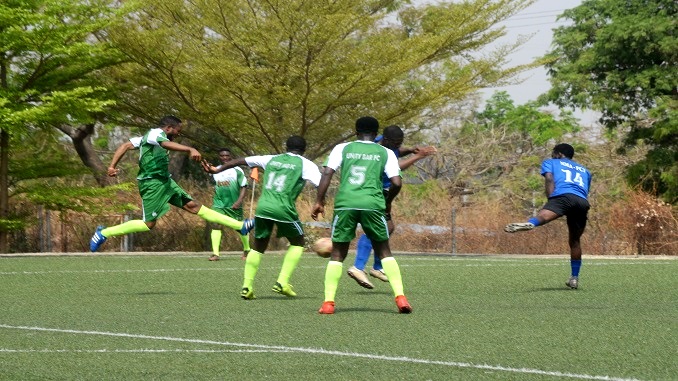
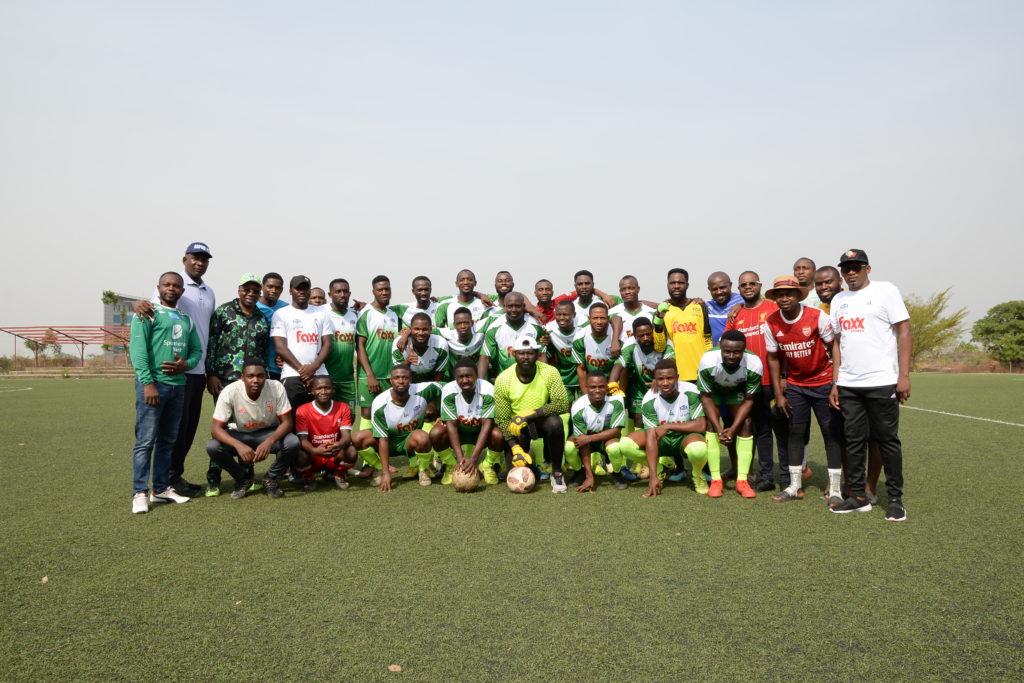
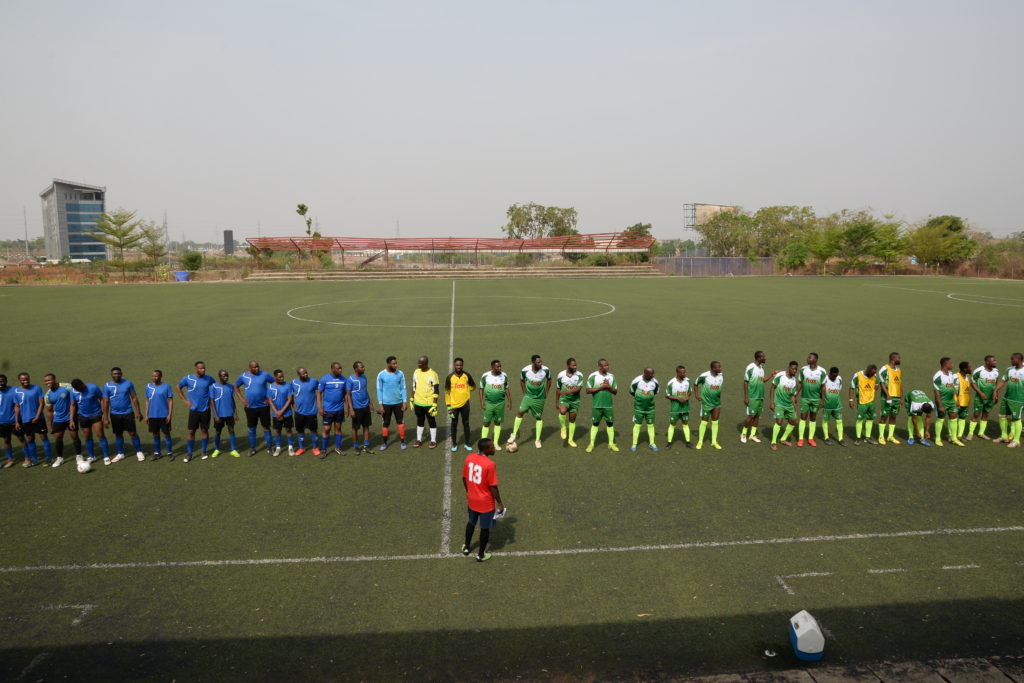
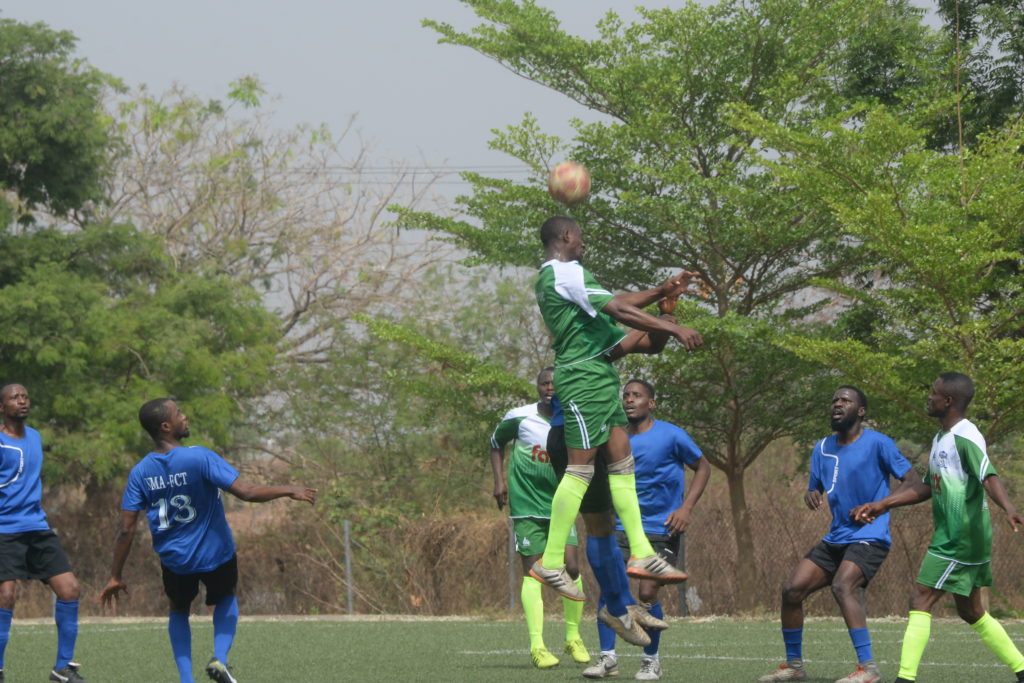
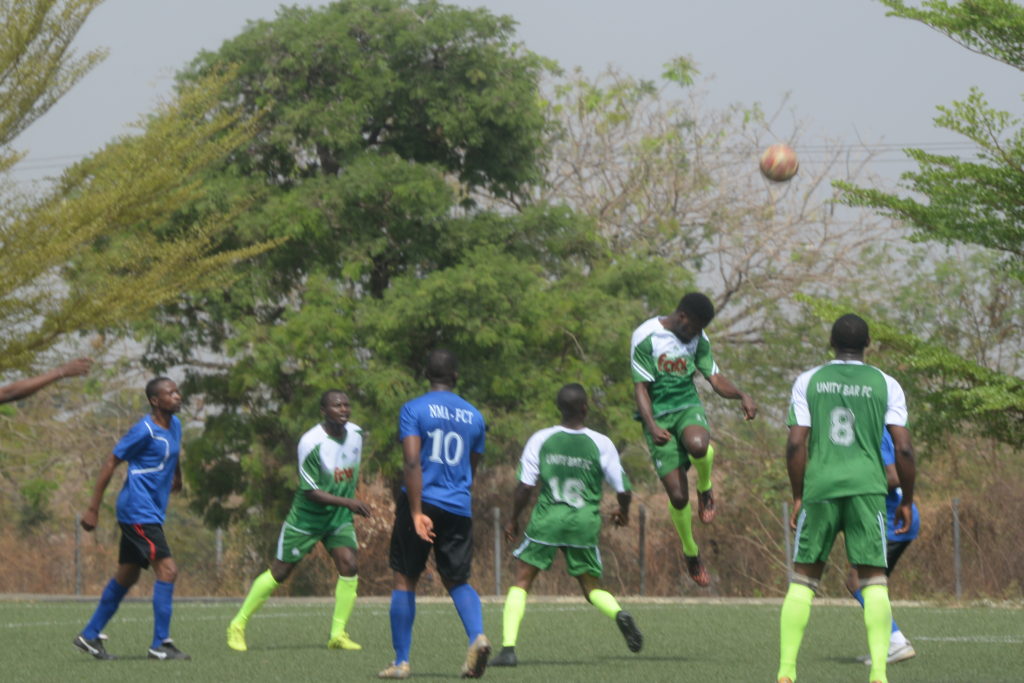
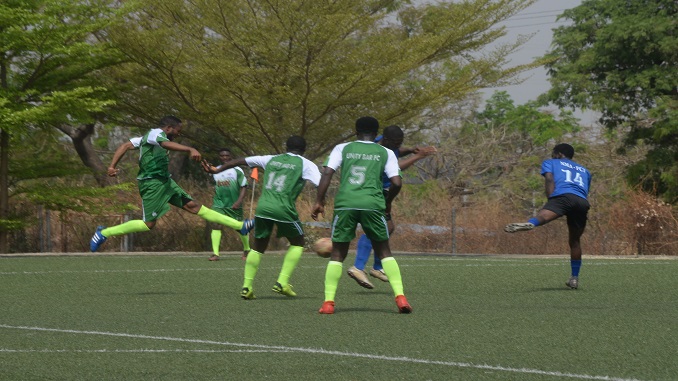
The Nigerian Bar Association (NBA), Unity Bar, Abuja at the weekend dealt a heavy blow to the Nigerian Medical Association (NMA) Abuja with a 4 -1 goal score.

The Unity Bar team and supporters

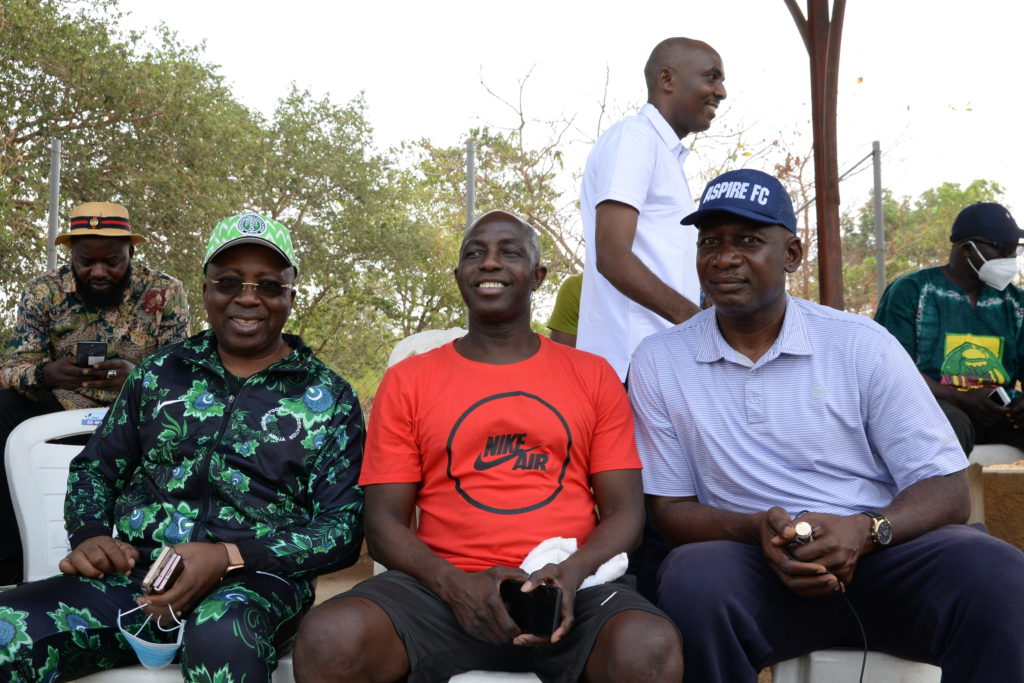
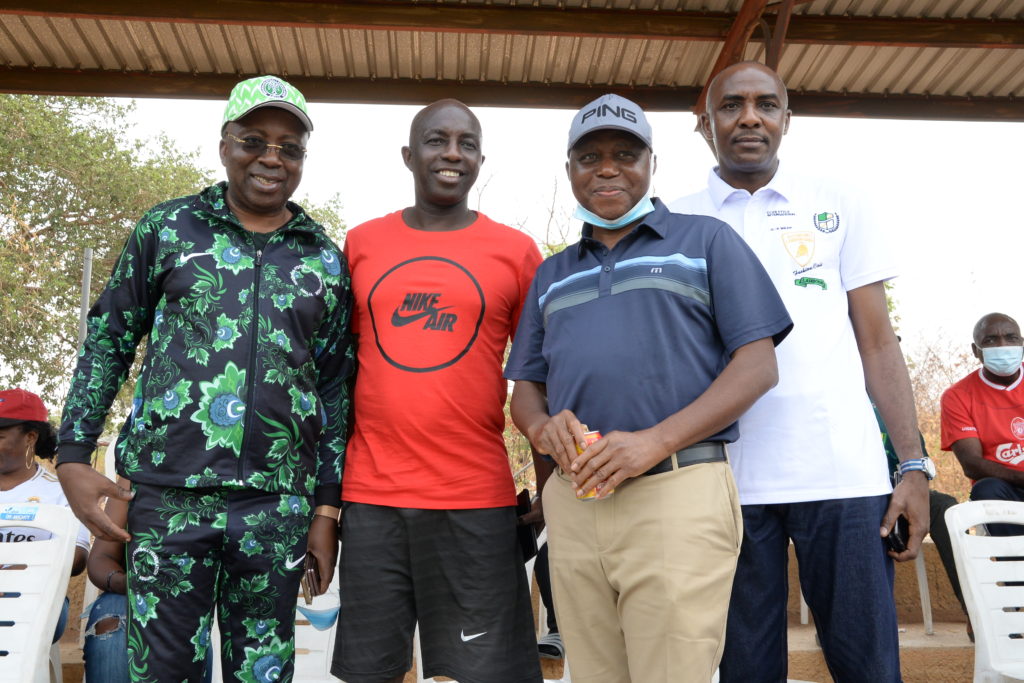
The friendly which took place at the FIFA Goal Project Field had the legendary Samson Siasia, dignitaries from both the medical and legal fields in attendance.

All set

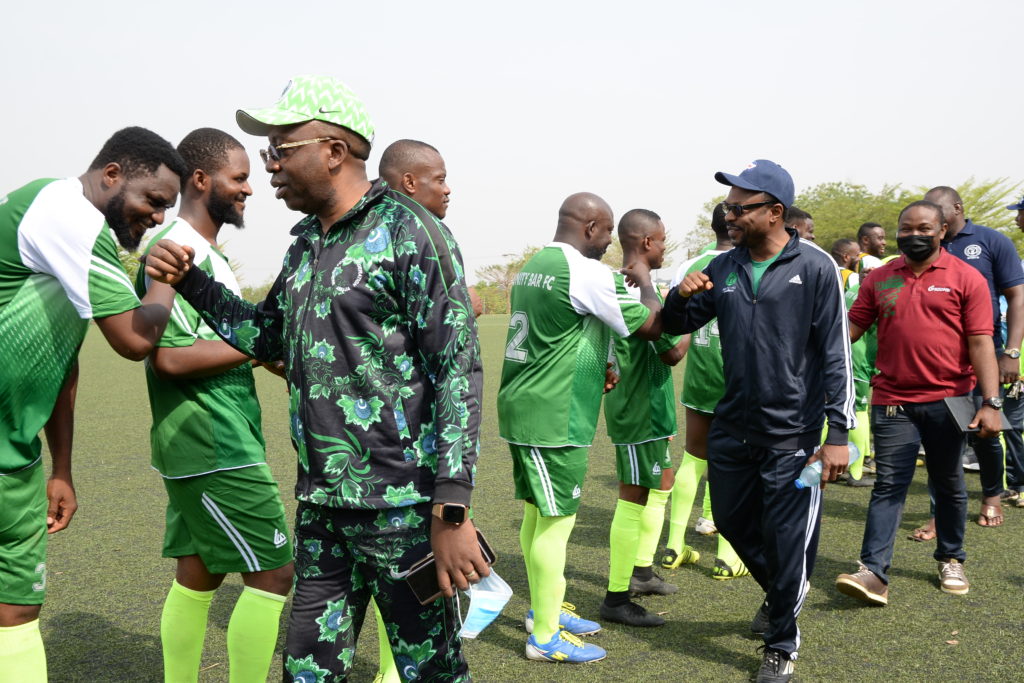
Distinguished Learned Silks Chief Ogwu James Onoja, SAN and Mr. Moses Ebute, SAN were also in attendance to cheer the Unity Bar team.

Chief Onoja, SAN and Chair, NMA greeting the NBA team

The match with the motto “promoting friendship through sports”, kicked off at about 10:00 am shortly after both teams exchanged pleasantries.

Unity Bar Sports Committee Chair, Afam Okeke, Esq. greeting the NMA team

The first goal came seven minutes into the commencement of the match with Otiga David, Captain of the Unity Bar team, scoring for the Unity Bar.

Onojja,, SAN, Samson Siasia and Afam Okeke

The second goal came in at about 13 minutes later in favour of (NMA) while the second goal for the NBA came in a short while after by Simon Kansio.

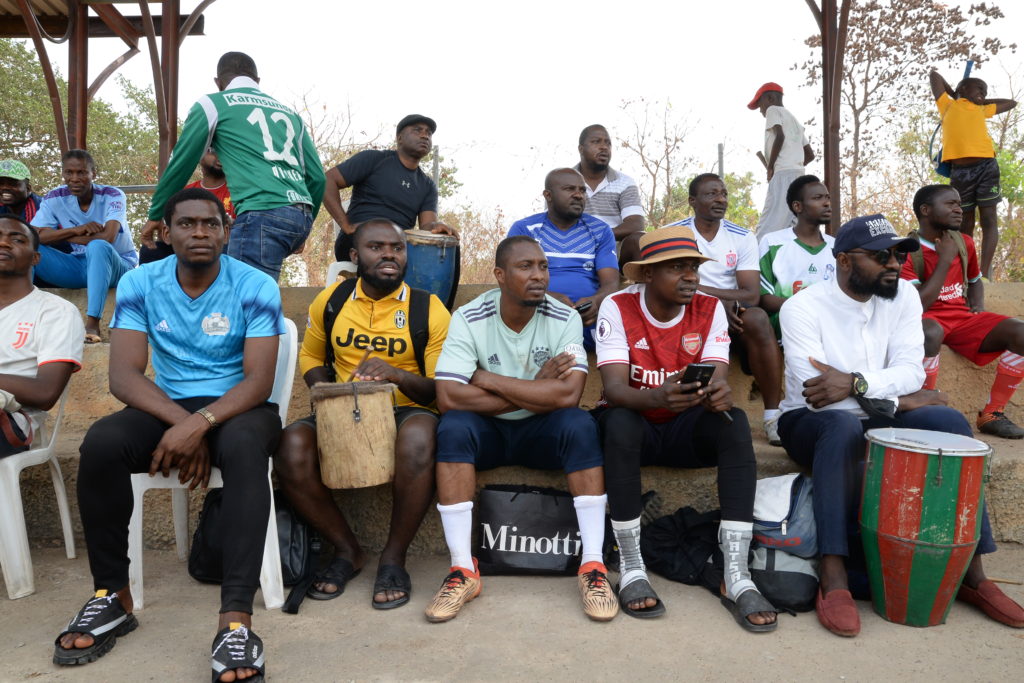
Supporters club

About 8 minutes after the second goal NBA scored a third goal.

Onojja,, SAN, Siasia, another dignitary and Moses Ebute, SAN

Emmanuel Simon aka Babban striker sealed off the Unity Bar team’s victory with a fourth goal, 10 minutes into the second half while also maintaining lead possession throughout the match.

Players were later treated to a sumptuous reception by Chief Onoja, SAN.

R-L: Rahila Dauda and another member of Unity Bar

Chairman of the Unity Bar Sports Committee Mr Afam O. Okeke expressed appreciation the team and assured them of the Committee and NBA’s commitment to supporting the team. He also encouraged them to aim for the NBA President’s cup

Jubilant Captain of the Unity Bar team, Mr Otiga David, Esq.  in his vote of thanks conveyed his gratitude to all who came to support them.  He specially showered appreciation on the Coach, Mr Agbolade Dosunmu for his support and commitment.

Unlawful Refund Policy And Practice Of “Aero Contractor” Airline

Daily Law Tips (Tip 756) by Onyekachi Umah, Esq., LL.M, ACIArb(UK)

Introduction:
Like any other sector, the commercial airline sector is regulated. The Nigeria Civil Aviation Authority (NCAA) regulates commercial airlines in Nigeria and has a robust 2015 Regulations on consumer protection issues. The Nigeria Civil Aviation Authority (NCAA) Regulations 2015, covers issues of rights and obligations of airlines to their customers (passengers). This includes the rights of customers to refund and compensation for overbooking, delayed flight, cancelled flight both for domestic and international flights as well as for delayed, lost and damaged baggage.

However, some commercial airlines have institutionalized their continued breach and violation of the 2015 federal regulation made by the Nigeria Civil Aviation Authority (NCAA) for commercial airlines and related service providers. This work reveals and condemns the unlawful refund policy and practice of “Aero Contractor” (a commercial airline in Nigeria); by disclosing how the airline violates the provisions of the 2015 Nigeria Civil Aviation Authority Regulations under the nose of its regulator (Nigeria Civil Aviation Authority) and reiterates the recommended sanctions for such infraction.

Aero Contractor, NCAA and the Refund Illegalities:
Aero Contractor claims to be “West Africa’s 61 years old Aviation Company …, a well-respected aviation service provider in scheduled commercial and helicopter offshore oil and gas sector operation”. According to information on its official website, the airline is “Headquartered in Lagos, Nigeria, Aero operates a combined fleet of around 3 helicopters and 4 fixed wing aircraft ranging from 50 seat Dash 8-300 to 140 seat Boeing 737-400/500, employing about 700 personnel.”

The Nigeria Civil Aviation Authority (NCAA) is a federal government agency empowered to regulate technical and safety issues in the entire Nigerian civil aviation sector. Also, there is the Federal Ministry of Transportation empowered to handle policies and strategies in the Nigerian civil aviation sector. In exercising its powers to make regulation on aviation safety and security, commercial air transportation and other related services, the NCAA made regulations in 2015 (the Nigerian Civil Aviation Authority Regulations). It is actually a series of amendments since 2006 that led to the 2015 regulations.

The 2015 Nigeria Civil Aviation Authority Regulations made provisions for consumer protection issues (rights and obligations of airlines to their customers [passengers]). This includes the rights of customers to compensation for overbooking, delayed flight, cancelled flight both for domestic and international flights as well as for delayed, lost and damaged baggage.

The 2015 federal regulation mandates airlines to offer passengers the options of refund of air fares or re-routing, where there is a cancellation of flight by air line. The refund must be the full cost of unutilized ticket at the price at which it was bought. So, a passenger is to choose from receiving refund of full air fare or a re-routing, once there is a cancellation of flight by airline.

More importantly, the regulation mandates airlines to refund air flight fares immediately for domestic flights and within 14 days for international flights. Also, the refund is to be made in cash or by electronic bank transfer or bank orders or bank cheques or, with the signed agreement of the passenger, in travel vouchers or other services. Well, many airlines will not in reality refund air fares without delays or forcing passengers to expend more money in seeking refunds, in clear violation of federal laws/regulations.

Businesses, individuals and groups are allowed to pursue lawful ventures. In doing such, they must obey laws and adhere to regulations. The supremacy of the constitution of Nigeria and other laws and regulations in Nigeria dwarfs both local and international businesses and their policies, guidelines, plans, protocols and procedures. Contrary to the 2015 Regulation that compels airlines to refund air fares where there is flight cancellation, the “Aero Contractor” has a refund policy that delays refund for over 14 days.

Specifically, from the website of Aero Contractor, the “Cash Ticket Refund Request Form” of Aero Contractor suggests that refunds from Aero Contractor only become due after 14 days from the date of submission of request for refund. The text on the Aero Contractor’s “Cash Ticket Refund Request Form”, reads; “Cash refund for unused ticket will be ready after 14 days from submission”. The “Cash Ticket Refund Request Form” of Aero Contractor stating that passengers are to wait for 14 working days before receiving a refund, contrary to the 2015 Nigeria Civil Aviation Authority Regulations can be accessed via <http://www.flyaero.com/refund/ticket-refund-form.pdf>.

On a personal complaint for refund for cancelled domestic flight, made via email, the Customer Service Advisor of Aero Contract, sent a reply on 11 February 2021, and stated; “If you would like the money to be sent to your account, it would take between 14-28 working days.” However, Aero Contractor agreed to make an immediate cash refund, on the condition that the affected passenger should suffer more hardship aside the cancelled flight, by traveling down to the airport office of Aero Contractor or by engaging the services of a third party to receive the cash payment. This contradicts the 2015 Nigeria Civil Aviation Authority Regulations which compels airlines to refund passengers of cancelled domestic flight immediately whether in cash or by any electronic means.

Obviously, Aero Contractor’s refund policies and procedures are in violation of the 2015 Nigeria Civil Aviation Authority Regulations. The illegality of the airline in refunding air fares for cancelled flights is institutionalized and publicly made available on the official website of the airline. Hence, the airline should be called to order by its regulator (the Nigeria Civil Aviation Authority).

There are sanctions (civil and criminal punishments) for violation of the Nigeria Civil Aviation Regulation 2015. Unlawful refund policies and practices of airlines have severe punishments, too. Generally, the maximum punishment for an airline is N5, 000,000.00, the moderate is N2,000,000.00 and the minimum is N500,000.00. The maximum punishment for staff of an airline is N200,000.00, the moderate is N100,000.00 and the minimum is N50,000.00. The punishment for any airline that fails to obey the directives of Nigeria Civil Aviation Authority (NCAA), or to investigate any case of passenger on compensation, is moderate penalty of N2,000,000.00 or suspension of license. Where there is a cancellation of flight, the sanction for failure to render assistance is moderate to maximum civil penalty. And failure to process ticket refund within time is also punishable with refund of the ticket and an additional 5% of the ticket value.

Conclusion:
Aero Contractor like any other commercial airline is bound by the 2015 Nigeria Civil Aviation Authority Regulations. The airline cannot be more powerful than the regulator; Nigeria Civil Aviation Authority. The airline and its legal team are called to do the needful and end its shameful unlawful refund policy and practice. The airline must adhere to its sector regulations and the laws of Nigeria at all times. The Nigeria Civil Aviation Authority must ensure that all operators are aboveboard at all times. Also, the unlawful refund policy and practice of Aero Contractor airline must be stopped in the interest of consumer protection

My authorities, are:
1. Sections 1, 2, 3, 4, 5, 6 and 16 of the Constitution of the Federal Republic of Nigeria, 1999.
2. Sections 1, 2, 27, 30, 31, 54, 61, 63, 71, 78 and 79 of the Civil Aviation Act, 2006.
3. Sections 1.1.1.2, 1.3.3.1, 1.3.3.2, 19.1, 19.2, 19.7, 19.8, 19.9, 19.10, 19.13, 19.14, 19.16 and 19.20 (Parts 1 and 19) of the Nigeria Civil Aviation Regulations, 2015. Accessible for free via https://ncaa.gov.ng/media/aubd0slk/ncaa-regulations-2015.pdf
4. Table 1- Table of Civil Penalties of the Nigeria Civil Aviation Regulations, 2015.
5. Sanctions VII, Para 5, 10 and 11 of Table 2- Recommended (Part 1) of the Nigeria Civil Aviation Regulations, 2015.
6. Aero Contractors, “Cash Ticket Refund request Form” (Aerocontractor) <http://www.flyaero.com/refund/ticket-refund-form.pdf> accessed 10 March 2021.
7. Onyekachi Umah, “Deadline for Refunds for Cancelled Flights” (LearnNigerianLaws.com, 11 March 2021) <https://learnnigerianlaws.com/deadline-for-refunds-for-cancelled-flights/> accessed 13 March 2021.
8. Onyekachi Umah, “Why You Can’t Get Compensation for Cancelled Flights” (LearnNigerianLaws.com, 3 March 2021) <https://learnnigerianlaws.com/why-you-cant-get-compensation-for-cancelled-flights/> accessed 10 March 2021.
9. Onyekachi Umah, “The Two (2) Rights Of Any Person Whose Local Or International Flight Is Cancelled In Nigeria” (LearnNigerianLaws.com, 27 November 2018) <https://learnnigerianlaws.com/the-two-2-rights-of-any-person-whose-local-or-international-flight-is-cancelled-in-nigeria/> accessed 2 March 2021.
10. Onyekachi Umah, “Dangerous Flying” Is An Offence In Nigeria” (LearnNigerianLaws.com, 21 September 2018) <https://learnnigerianlaws.com/dangerous-flying-is-an-offence-in-nigeria/> accessed 2 March 2021

Sabi Law Projects:
#SabiLaw
#DailyLawTips
#SabiBusinessLaw
#SabiElectionLaws
#SabiHumanRights
#SabiLawOnBeatFm
#SabiLawLectureSeries
#CriminalJusticeMonday
#SabiLawVideoChallenge

Speak with the writer, ask questions or make inquiries on this topic or any other via [email protected], [email protected] or +2348037665878 (whatsapp).

To receive free Daily Law Tips, join our free WhatsApp group via https://chat.whatsapp.com/DgFYxiYw6Mm8MdvOl3N1yn or Telegram group, via the below link: https://t.me/LearnNigerianLaws
To keep up to date on all our free legal awareness projects of Sabi Law Foundation, follow us via
Facebook Page:@LearnNigerianLaws, Instagram: @LearnNigerianLaws, Twitter: @LearnNigeriaLaw and YouTube: Learn Nigerian Laws

Please share this publication for free till it gets to those that need it most. Save a Nigerian today! NOTE: Sharing, modifying or publishing this publication without giving credit to the author or Sabi Law Foundation is a criminal breach of copyright and will be prosecuted. This publication is the writer’s view not a legal advice and does not create any form of relationship. You may reach the writer for more information.

This publication is powered by www.LearnNigerianLaws.com {A Free Law Awareness Program of Sabi Law Foundation, supported by the law firm of Bezaleel Chambers International (BCI).} Sabi Law Foundation is a Not-For-Profit and Non-Governmental Legal Awareness Organization based in Nigeria.
TIPS