By Bukky Shonibare
These trend graphs show the percentage representation of women in Nigeria’s parliament since 1999.
SENATE:
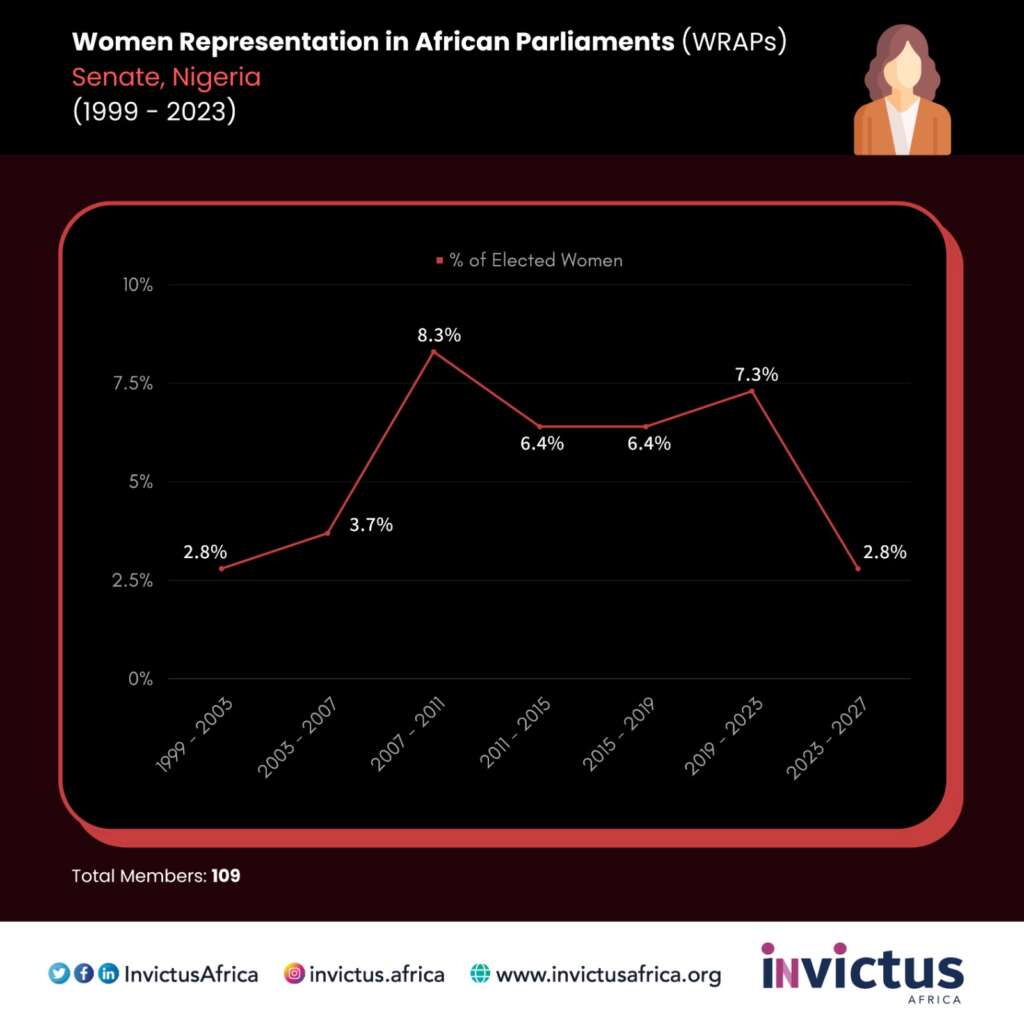
With 2.8%, women were least represented in 1999 and, now, in 2023. It peaked at 8.3% in 2007 after a 4.6%increase from the 3.7% recorded in 2003. This dropped in 2011 and 2015 and barely rose by 0.9% in 2019. After the recent elections, there has been a 4.5% decrease from 7.3% in 2019 to 2.8% in 2023. There is no female candidate in the supplementary elections to be held in the 11 senatorial districts.
HOUSE OF REPS:
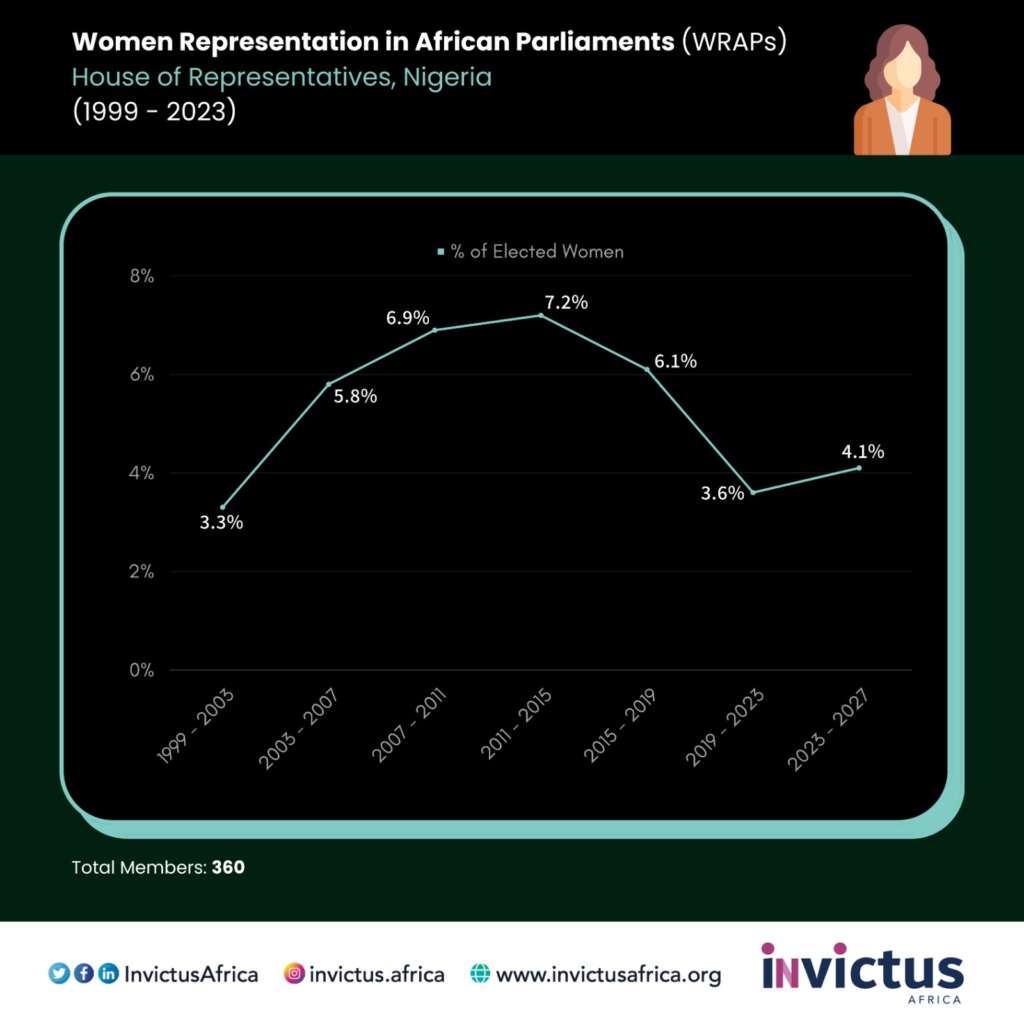
The least representation of women was in 1999 at 3.3%; however, there was a 2.5% rise in 2003. The % increase continued for three election circles and peaked at 7.2% in 2011. In 2015, it plunged by 1.1% and a further 2.5% in 2019. After the 2023 elections, there has been a 0.5% increase, which may change after the supplementary elections in the 35 federal constituencies in which eight women are candidates.
Summarily, the highest female representation in the Senate was 8.3% in 2007, and the lowest was 2.8% in 1999 and 2023 (so far). The highest in the House of Reps was 7.2% in 2011 and the lowest was 3.3% in 1999.
The (1999 – 2023) trend for State Houses of Assembly will be released after the results of the March 18 elections.
Bukky Shonibare, Executive Director, Invictus Africa