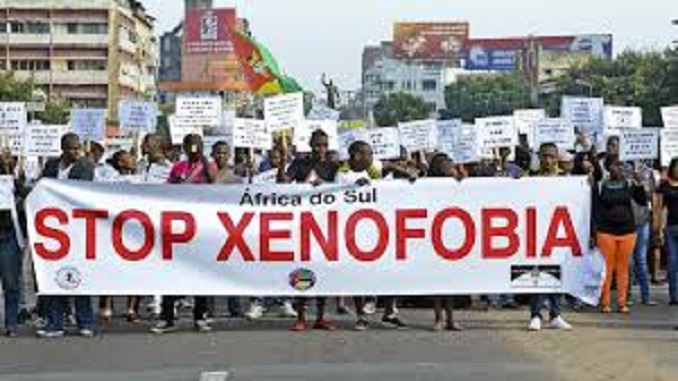
Union spokesperson claims police and soldiers—not street mobs—are behind several Nigerian deaths, while Pretoria rejects sweeping xenophobia accusations and warns of mounting economic fallout
Fresh allegations by the Nigeria Union South Africa (NUSA) have cast renewed scrutiny on the safety of Nigerians living in South Africa, with the organisation claiming that members of the country’s security services—not just anti-foreigner mobs—have been implicated in a series of fatal incidents involving Nigerian nationals.
In an exclusive interview with SaharaReporters, NUSA spokesperson Akindele Olunloyo alleged that South African police officers and soldiers have carried out extrajudicial killings of Nigerians and other African migrants, arguing that the threat extends beyond the periodic outbreaks of xenophobic violence that have long strained relations across the continent.
Significantly, Olunloyo disputed widespread narratives surrounding two Nigerian deaths recorded in April 2026, insisting they were not victims of xenophobic attacks but allegedly died while in the custody of South African security personnel.
“No Nigerian was killed in xenophobic protests in South Africa this year,” he said. “However, those protests were violent. The deaths we are talking about involve security agencies.”
Claims of Police, Military Involvement
According to Olunloyo, one victim, Ekmeyong Andrew, was arrested in Pretoria on April 19 following an altercation with metropolitan law enforcement officers.
He alleged that after officers searched both Andrew and his residence without finding incriminating evidence, the Nigerian was later discovered dead at the Pretoria Central Mortuary.
“They couldn’t find anything to incriminate him, and the following day he was dead,” Olunloyo claimed, alleging that roughly 20 metropolitan officials were involved.
He made similar allegations regarding another Nigerian, Aramiru Emmanuel, claiming the victim died after suffering severe injuries inflicted by members of the South African National Defence Force during detention.
“Emmanuel died from injuries sustained after he was seriously beaten by soldiers,” he alleged.
If substantiated, the accusations would raise profound questions about accountability within South Africa’s law enforcement institutions. However, the claims remain allegations by NUSA and have not been independently verified or adjudicated in court.
“Justice Needs To Be Seen”
Olunloyo argued that the alleged incidents reflect a broader pattern in which Nigerians have repeatedly died following encounters with security agencies.
He claimed that numerous complaints have been submitted to South Africa’s Independent Police Investigative Directorate (IPID), but lamented what he described as a lack of successful prosecutions.
“Justice needs to be seen to be done, not merely said to be done,” he said, adding that the absence of convictions undermines confidence in the accountability process.
The NUSA official also contended that official statistics may understate the scale of violence affecting Nigerians in South Africa.
Xenophobia and a History of Violence
While rejecting claims that this year’s Nigerian fatalities were directly linked to xenophobic riots, Olunloyo maintained that anti-foreigner sentiment remains deeply entrenched.
He noted that xenophobic violence has periodically erupted since the end of apartheid, citing major outbreaks in 2008, 2015 and 2019, and referenced previous Nigerian government figures indicating that 116 Nigerians were killed in South Africa between 2016 and 2017.
He further alleged that some historical cases involved police brutality, including deaths during interrogations where excessive force was reportedly used.
According to Olunloyo, at least five Nigerians are believed to have been killed during the first five months of 2026 alone, although he suggested the true figure could be higher because many incidents go unreported.
Pretoria Pushes Back Against Xenophobia Narrative
Even as concerns over migrant safety persist, South African officials have pushed back strongly against characterisations of the country as broadly xenophobic.
Justice and Constitutional Development Minister Mmamoloko Kubayi recently argued that recent immigration enforcement measures targeted undocumented migrants rather than foreign nationals generally and warned that persistent xenophobia allegations are damaging South Africa’s economic interests abroad.
Kubayi said South African businesses operating across Africa have suffered reputational harm, with some companies requiring government support and artists reportedly losing performance opportunities after public backlash.
“We can’t lie about the backlash,” she acknowledged, while urging citizens to distinguish between combating illegal immigration and profiling or targeting lawful foreign residents.
Calls for Accountability and Cooperation
The competing narratives underscore one of the region’s most sensitive diplomatic challenges: balancing immigration enforcement with the protection of migrants’ rights and public confidence in state institutions.
NUSA is urging both Nigerian and South African authorities to intensify cooperation, thoroughly investigate deaths involving Nigerian nationals, and ensure accountability wherever evidence supports criminal wrongdoing.
At the same time, South African officials continue to insist that lawful migrants deserve protection and have appealed for greater continental solidarity amid mounting tensions over immigration and xenophobia.