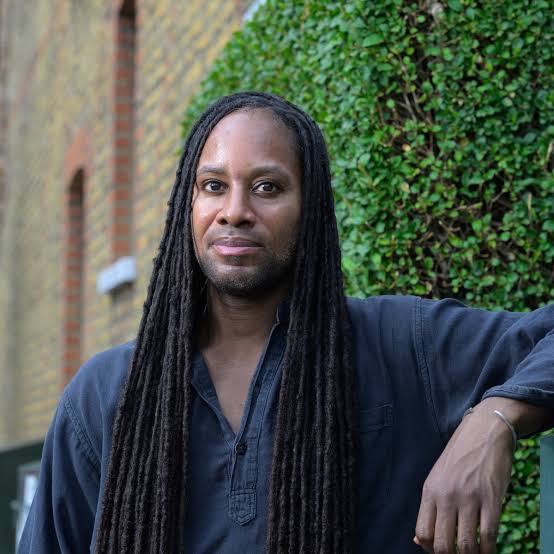
The life and death of Cambridge professor Jason Arday became the starting point for a global conversation about race, knowledge and the invisible structures that continue to shape universities around the world.
By Law & Society Magazine International Desk
For generations, universities have presented themselves as places where ideas prevail over identity, where scholarship is judged on merit rather than race, class or background. Yet, according to a panel of leading scholars from four continents, that ideal remains more aspiration than reality.
Gathering for the latest edition of the Toyin Falola Interview, academics from Britain, Germany, the United States and South Africa argued that the pressures confronting Black scholars should not be mistaken for evidence of a crisis in Black intellectualism. The deeper question, they said, is whether many of the world’s leading universities have fully confronted the racial hierarchies embedded in their own histories and institutional cultures.
Held on Sunday, September 6, under the theme “Jason Arday and Race in the Academy,” the discussion drew participants from across the globe and was streamed to audiences in dozens of countries. Chaired by renowned historian Toyin Falola, the forum brought together Professor Alan Lester of the University of Sussex, Professor Christine Vogt-William, Professor Vivek “Vik” Bahl, Professor Shose Kessi of the University of Cape Town and Dr Sabelo Mcinziba for what became less a memorial conversation than a searching examination of race, power and academic legitimacy.
At the centre of the discussion was the life and death of Jason Arday, the former Professor of Sociology of Education at the University of Cambridge. His remarkable academic rise, followed by intense public scrutiny and controversy, became, for many of the speakers, a window into larger questions about who is considered intellectually legitimate within elite institutions.
Rather than treating Arday’s experience as an isolated episode, the panel described it as part of a much older struggle over knowledge, belonging and the enduring influence of colonial ideas within higher education.
Professor Alan Lester, whose work explores the legacies of British colonialism, argued that attention has too often focused on Arday himself while overlooking the organised campaigns directed against Black scholars more broadly.
“Jason Arday was made to feel the burden of responsibility from all sides,” Lester observed. “He was positioned first as a pioneer by Cambridge and then as a symbol of hated supposed DEI or EDI policies by those who were out to get him.”
According to Lester, networks of racial theorists, white supremacists and far-right activists had long questioned the place of Black academics in universities before Arday’s appointment became a public controversy.
“Before this network had even heard of Jason Arday, they were already trying to get Black scholars out of the academy,” he said.
Lester argued that contemporary attacks on diversity initiatives were rooted in much older attempts to portray racial inequality as the natural consequence of differences in intelligence rather than the product of centuries of colonial conquest, enslavement and unequal access to education.
He also suggested that ideas first popularised within sections of the American political right had increasingly crossed the Atlantic, reshaping debates in Britain over equality, diversity and inclusion.
For Professor Christine Vogt-William, the conversation required a shift in perspective.
Reflecting on Arday’s life, she rejected suggestions that recent controversies pointed to any weakness in Black scholarship itself.
Drawing on the work of Oxford scholar Professor Patricia Daley, she argued that the real crisis lay elsewhere.
“The situation was not that Black intellectualism is in crisis, but that white supremacy is in crisis.”
It was a line that captured much of the afternoon’s discussion.
Vogt-William maintained that many universities proudly advertise their commitment to diversity while leaving intact institutional cultures that continue to place Black and minority scholars under exceptional scrutiny.
“We have elite liberal institutions which subscribe to DEI policies which still underscore the marginalised tokenisation of Black and minority ethnic scholars who are expected to tow the line and not rock the boat,” she said.
In her view, Black academics often occupy a contradictory position within universities. They are celebrated as evidence of institutional diversity while simultaneously subjected to levels of surveillance, expectation and criticism rarely experienced by many of their colleagues.
Achievements are treated as exceptional. Mistakes, she suggested, become magnified.
The result is an academic environment in which visibility does not necessarily translate into belonging.
That argument found strong echoes in South Africa.
Professor Shose Kessi, Dean of the Faculty of Humanities at the University of Cape Town, said Arday’s story resonated deeply with Black academics in a country still confronting the legacies of apartheid.
“When the story of Jason Arday broke in the media, it sparked many conversations here in South Africa,” she said. “His story resonates with many Black academics.”
Drawing on years of research into student experiences at historically white universities, Kessi described recurring accounts of exclusion, subtle discrimination and pressure to conform to dominant institutional cultures.
Students reported having their academic achievements questioned, feeling isolated in classrooms and group projects, encountering Eurocentric curricula and altering their speech and behaviour in order to fit accepted norms.
“They were often made to feel like outsiders and that they didn’t really belong,” she said.
The same patterns, she argued, frequently continue into academic careers.
Black lecturers often shoulder heavier teaching responsibilities, encounter greater scrutiny over research funding and promotion, and face institutional barriers that are less visible than formal segregation but no less significant.
For Kessi, these experiences cannot be separated from the history of universities themselves.
Many institutions, she noted, once helped produce and legitimise theories of racial hierarchy under the guise of scientific objectivity.
Those intellectual traditions may have evolved, but she argued that some of their assumptions continue to shape academic life in more subtle ways.
In the United States, Professor Vivek “Vik” Bahl approached the conversation from another angle.
Rather than focusing solely on elite universities, he drew attention to America’s community colleges, institutions that educate millions of students yet often receive far less attention in debates about race and higher education.
Bahl argued that many of the gains associated with diversity programmes did not begin as institutional policies.
Instead, they emerged from years of grassroots organising by students, faculty members and communities demanding broader access to education and fairer representation within universities.
“The movements that created those official DEI programmes came from unofficial movements,” he said. “They came from our own histories of struggle.”
Even Cambridge’s own journey towards greater diversity, he noted, reflected years of advocacy before Jason Arday’s appointment.
The lesson, Bahl suggested, was that institutional change rarely begins inside boardrooms. It is usually driven by sustained pressure from those seeking a more inclusive academy.
Perhaps the day’s most reflective intervention came from Dr Sabelo Mcinziba.
Rather than concentrating on Arday alone, he situated his experience within a much longer history of Black intellectual life.
“There is only one Jason Arday,” he said. “But, sadly, as a people, we have been here before.”
Mcinziba argued that Black thinkers have repeatedly been celebrated as extraordinary individuals while the systems surrounding them remain largely unchanged.
He drew on philosopher Lewis Gordon’s concept of epistemic reductionism—the tendency to reduce Black scholars to their identities and personal histories while paying less attention to the substance of their ideas.
One observation, in particular, lingered long after the discussion ended.
“One of the greatest victories of white supremacy is to deny Black mediocrity as the standard, but rather demand Black excellence only to subject it to white mediocrity.”
The consequence, Mcinziba argued, is that Black academics are often expected to embody exceptional brilliance simply to receive the recognition routinely extended to others.
He cautioned against celebrating isolated stories of “Black excellence” without confronting the institutional conditions that make such success appear exceptional in the first place.
Invoking figures such as Anton Wilhelm Amo, W.E.B. Du Bois and Cornel West, he argued that the questions raised by Arday’s experience have resurfaced across centuries.
“One day it is Wilhelm Amo. The day after that it is W.E.B. Du Bois. The day after that it is Cornel West,” he said.
“Today it is Jason Arday, and tomorrow it is you.”
The discussion closed without offering easy solutions.
Its participants acknowledged the progress universities have made in opening their doors to scholars from historically excluded communities. Yet they insisted that access alone cannot be mistaken for transformation.
The debate surrounding Jason Arday, they argued, is ultimately about more than one academic or one institution. It raises enduring questions about who defines intellectual authority, whose knowledge is treated as legitimate and whether universities are prepared to examine the assumptions they inherited from their own histories.
For institutions that pride themselves on the pursuit of truth, the challenge posed by the forum was as uncomfortable as it was direct: a university cannot fully claim to be a home for free inquiry while sections of its scholarly community continue to feel that they must first prove they belong.