The Senior Advocate says UNN shaped his character, forged his public life, and left a debt today’s graduates must repay
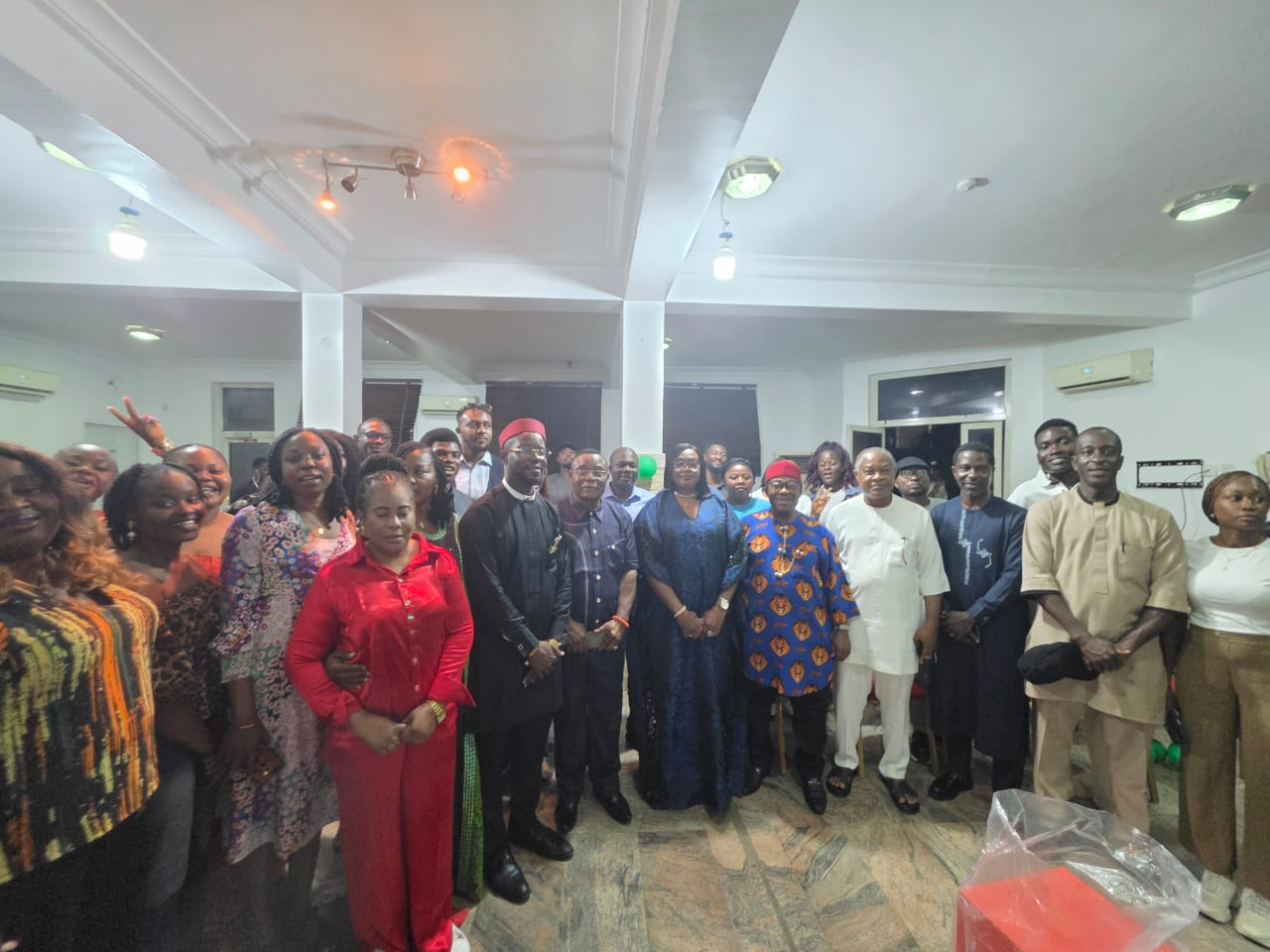
ABUJA — Senior Advocate of Nigeria, Dr. Monday Onyekachi Ubani, SAN, returned to a place that has never really left him on Saturday.
Addressing members of the University of Nigeria Alumni Association, Abuja Chapter, the former Nigerian Bar Association Vice President did more than reminisce about lecture halls, examinations and student politics. He offered a deeply personal account of how six years at the University of Nigeria—from his admission into the Nsukka campus in 1983 to his graduation from the Enugu campus in 1989—shaped the convictions, discipline and sense of public duty that have defined his career.
For Ubani, the University of Nigeria was never simply an institution where degrees were earned.
“There are places we visit, places we live in, and places that live in us,” he told fellow alumni. “The University of Nigeria is one of those places. It did not merely educate me. It helped make me.”
It was a reflection that resonated with graduates who have themselves carried the University’s influence into courtrooms, hospitals, classrooms, boardrooms and public offices across Nigeria.
More Than a Degree
Looking back more than four decades after he first walked through the gates of Nsukka, Ubani described university education as an experience that extends far beyond lectures and examinations.

Students, he said, often arrive believing they are pursuing certificates, only to discover that the institution is quietly shaping their character, testing their resilience and preparing them for responsibilities they cannot yet imagine.
His own journey began as a Political Science undergraduate at the Nsukka campus before he transferred to study Law at the Enugu campus in 1985. The transition, he explained, was less a change of direction than a continuation of the same intellectual search.
Political Science taught him to understand the nature of power, government and institutions. Law taught him how power should be restrained and exercised within constitutional limits.
One discipline asked who governs. The other demanded a more searching question: by what authority, and under what limits? That combination, he said, would later define his professional life.
Where Ideas Were Tested
Ubani recalled an era when university life was shaped as much by debate as by textbooks.
Lecture theatres spilled into hostel corridors, cafeterias and student gatherings where conversations about politics, ideology and Nigeria’s future often continued long after classes had ended.
Students disagreed passionately, challenged one another relentlessly and learnt that intellectual confidence came not from shouting the loudest, but from defending ideas with reason.
“It was an environment that demanded engagement,” he reflected. “You could not simply be present. You had to think.”
That culture, he said, instilled habits of inquiry that have remained with him throughout decades of legal practice and public service.
Lessons Beyond the Classroom
Some of the University’s most enduring lessons, however, were never listed on any course outline.
University life, he recalled, was also about surviving on limited resources, sharing meals when money was scarce, borrowing books before examinations, building lifelong friendships and learning to live with people whose backgrounds and beliefs differed sharply from one’s own.
Those experiences, he said, were every bit as valuable as the lectures. “The university was a laboratory for life,” he observed. “We entered as individuals. We left as members of a community.”
The remark drew nods from many in the audience who recognised their own stories in his reflections.
Leadership Before the Wig
Ubani also recounted his early involvement in student leadership, describing it as the first practical test of lessons that would later define his legal career.
After serving as a student representative, he was elected Chief Judge of the Students’ Union Government in 1988—a position that earned him the nickname “Ubani CJ,” a title some classmates still use decades later.
Those early experiences, he said, taught him that leadership required fairness, courage and the willingness to make difficult decisions.
Looking back, they also offered an early glimpse of the public responsibilities that would eventually lead him to the rank of Senior Advocate of Nigeria and prominent roles within the Nigerian Bar Association.
Character Before Certificates
While acknowledging the importance of academic excellence, Ubani urged today’s students not to measure university success solely by grades or professional qualifications. Degrees, he noted, may open doors, but character determines what happens after those doors are opened.
He encouraged students to read beyond their course materials, cultivate meaningful friendships, participate actively in university life and develop the courage to question accepted ideas.
“A certificate may hang on a wall,” he said. “But character travels everywhere with you.”
It was perhaps the most emphatic message of his address.
A Debt to Future Generations
Ubani reserved some of his strongest remarks for fellow alumni, urging them to transform nostalgia into responsibility.
Reunions, he argued, should not merely celebrate shared memories but inspire practical support for the institution that shaped them.
The next generation, he said, deserves more than stories about the University’s golden years.
They deserve scholarships. They deserve mentorship. They deserve stronger professional networks, better facilities and opportunities that today’s graduates have the capacity to create.
“Our memories should produce service,” he said.
“If we truly appreciate what the University gave us, then we must leave something behind for those coming after us.”
Looking Back, Looking Forward
As his remarks drew to a close, Ubani returned to the thought that framed the afternoon.
Education, he said, does not reveal every destination awaiting a young person. Instead, it equips individuals for journeys they cannot yet foresee.
The young Political Science student who entered Nsukka in 1983, he reflected, could never have imagined the courtroom battles, constitutional debates and public responsibilities that lay ahead.
Yet the foundations for those later achievements were laid on the campuses of Nsukka and Enugu.
“I left the University with far more than a degree,” he concluded. “I left with friendships, with intellectual curiosity, with a deeper understanding of Nigeria, and with the conviction that knowledge carries responsibility.”
His reflections also carried a note of gratitude for the friendships forged during those years, particularly among members of the UNEC ’89 class, many of whom have remained part of one another’s personal and professional journeys long after graduation. Time, he observed, may have transformed students into judges, senior advocates, academics, business leaders and public servants, but reunions such as the Abuja gathering had a way of dissolving titles and returning everyone, if only briefly, to the hopeful young men and women who once walked the corridors of Nsukka and Enugu believing they could change the country.
For many in attendance, the speech was less an exercise in nostalgia than a reminder that the true measure of a university is not simply the careers its graduates build, but the values they carry into the society they are called to serve.