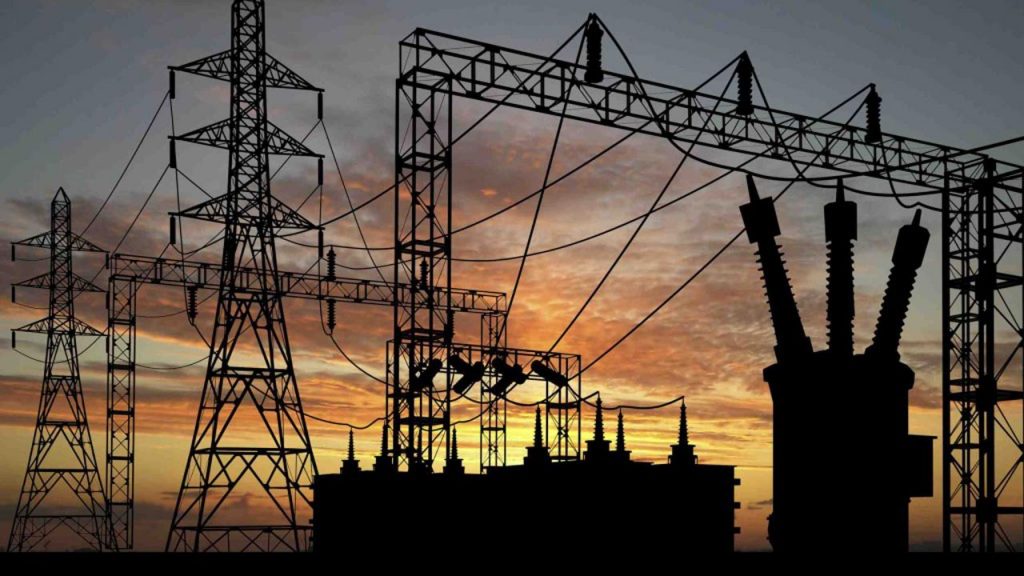
In the regional geography of West African infrastructure, a striking paradox defines the energy grid: Nigeria, a country chronically unable to keep its own streetlights on, continues to export electricity to neighbouring Benin, Togo, and Niger Republic—frequently struggling to collect payment on the millions of dollars in debt those international bilateral contracts generate.
Now, another regional neighbour is preparing to change the balance of power.
Accra is signaling a move into Nigeria’s domestic void. Ghana’s Minister for Energy and Green Transition, Dr. John Abdulai Jinapor, has explicitly stated Ghana’s ambition to extend its power export footprint directly to Nigeria, positioning Accra as the indisputable energy hub of the West African sub-region.
Read Also: World Bank unveils 6-year strategy to connect millions of Nigerians to power and high-speed internet
It is an audacious proposal—and a biting reality check for Abuja.
The Contrast: Ghana’s Industrial Vision vs. Nigeria’s Grid Dysfunction
The stark difference between the two economies lies not in potential, but in structural execution:
- Ghana’s 24-Hour Ambition: Ghana’s strategy relies on a diversified generation mix combining natural gas, utility-scale renewables, and planned nuclear power. The goal is to back President John Dramani Mahama’s “24-Hour Economy” initiative, delivering uninterrupted multi-shift industrial power at home while monetizing excess baseload across ECOWAS markets via the West African Power Pool (WAPP).
- Nigeria’s Grid Realities: Nigeria boasts an installed capacity of over 13,000 MW, yet its legacy grid collapses repeatedly under structural bottlenecks, gas-supply disputes, and transmission deficits—frequently delivering under 4,000 MW to a population of 230 million.
- The Sovereign Paradox: While Nigerian power generation companies (GenCos) export cross-border electricity to SBEE (Benin) and CEET (Togo) to capture hard-currency revenues—often yielding mounting unpaid international invoices—millions of domestic Nigerian businesses remain off-grid, burning expensive diesel and petrol to power daily operations.
The Infrastructure Gap: Can Accra Really Light Up Lagos?
Expanding transmission across borders to supply Nigeria presents significant engineering hurdles. Interconnecting the high-voltage lines of GRIDCo (Ghana) through Togo and Benin to reach Nigeria’s industrial hubs requires massive capital upgrades across the WAPP Coastal Transmission Backbone.
Yet, the commercial case is undeniable. Nigeria represents one of the largest unserved electricity markets in the global South. If Ghana successfully builds the generation scale and secures transmission access, it will unlock a lucrative captive market of Nigerian manufacturers desperate for stable power at predictable tariffs.
The Off-Grid Alternatives: Cassava Effluent to Biogas
As Ghana maps out grid-scale nuclear and natural gas expansions, Nigerian institutions are pursuing localized, off-grid alternatives.
At a recent U.S.-Nigeria workshop at the University of Ibadan, environmental health expert Prof. Taiwo Hammed outlined initiatives to convert cassava wastewater into biogas. By processing agricultural effluents—long treated as environmental hazards—into bio-energy feedstocks, localized systems attempt to meet agricultural and light-industrial energy needs without waiting for national grid reform.
The Bottom Line
While Nigeria experiments with localized waste-to-energy solutions and grapples with domestic grid instability, its neighbors are planning for scale.
Ghana’s intention to export electricity to Nigeria exposes a stark strategic divide: one nation is structuring its energy mix to power continuous industrial output and dominate regional trade, while the other remains an energy giant hobbled by its own infrastructure.
For an in-depth discussion on the financial and structural strains impacting cross-border energy trading, Benin, Togo, Niger Owe Nigeria ₦17.45bn in Electricity Debt provides relevant policy analysis on the revenue collection challenges facing West African grid interconnections.