By Ladidi Sabo
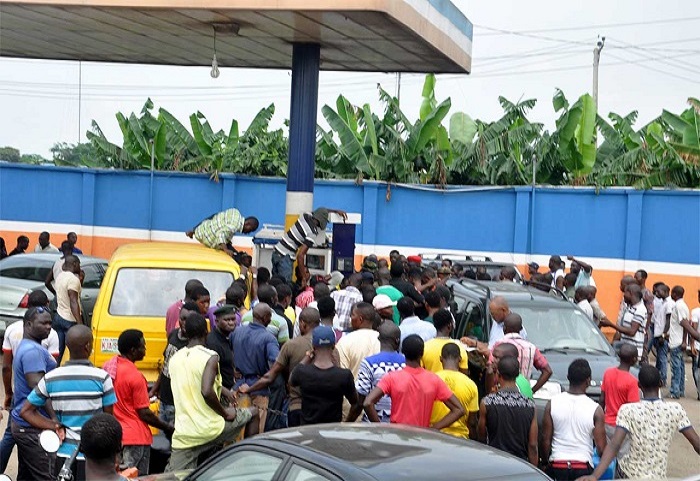
A viral street interview capturing the raw frustration of an ordinary Nigerian has reignited a familiar but unresolved national debate: why does fuel feel more expensive in Nigeria—despite the country being one of Africa’s largest oil producers?
The woman at the center of the now-circulating video did not cite policy papers or economic models. Her argument was simpler—and more devastating. Nigerians, she said, are paying fuel prices that feel crushing not because they are the highest in the world, but because they exist within an economy where wages are low, living conditions are harsh, and social support systems are weak.
Her point cuts to the heart of Nigeria’s economic paradox: in wealthier countries, fuel may cost more per litre, but incomes, infrastructure, and quality of life soften the impact. In Nigeria, by contrast, even moderate increases in petrol prices ripple through every layer of daily survival—from transportation to food costs—turning fuel into a symbol of economic strain.
That strain is unfolding against a troubled domestic refining landscape. As of early 2026, Nigeria’s hopes for energy independence rest largely on the Dangote Refinery—a 650,000 barrels-per-day mega-project widely seen as a game changer, yet still unable to single-handedly resolve the affordability crisis.
While the refinery represents unmatched scale and investment, it operates within a broken system. Fuel prices in Nigeria remain tied to global market dynamics, meaning that even increased local production does not automatically translate into cheaper pump prices. For millions of Nigerians, the expectation that domestic refining would bring relief has yet to materialize.
Beyond Dangote, the rest of Nigeria’s refining sector tells a more troubling story. State-owned facilities in Port Harcourt, Warri, and Kaduna—once pillars of national energy strategy—have remained largely non-functional despite more than $27 billion reportedly spent on rehabilitation over the past decade. Critics point to a familiar mix of mismanagement, outdated technology, and systemic inefficiencies.
Smaller, modular refineries, once touted as a flexible solution, are also struggling to gain traction. Operators face chronic crude shortages, high operational costs, and limited access to financing. Even policies designed to support them, such as the naira-for-crude initiative under the Petroleum Industry Act, have faltered in implementation, leaving many plants operating far below capacity.
Compounding the crisis is insecurity in the oil-producing Niger Delta, where pipeline vandalism and crude theft continue to choke supply chains. The result is a system where local refiners cannot access the very resource Nigeria exports in abundance.
Industry groups say modular refineries could meet up to 10 percent of Nigeria’s diesel demand under the right conditions. For now, they contribute less than 3 percent—another missed opportunity in a country long plagued by energy contradictions.
The dominance of Dangote’s refinery, while significant, also underscores a deeper structural imbalance. Unlike smaller operators, it benefits from independent infrastructure, financial muscle, and the ability to source crude internationally when local supply falters. It is, in many ways, an exception in an otherwise fragile ecosystem.
Yet even that advantage has limits. Without broader reforms, spanning supply chains, infrastructure, and economic policy, the benefits of large-scale refining risk being diluted before they reach ordinary citizens.
For Nigerians, the issue is no longer just about fuel, it is about fairness. The viral video’s central question lingers: what does it mean to compare fuel prices globally when the realities of income, welfare, and opportunity are so starkly unequal?
As the country grapples with inflation, stagnant wages, and rising living costs, fuel has become more than a commodity. It is now a daily referendum on governance, economic planning, and whether Africa’s largest oil producer can finally translate resource wealth into real relief for its people.
Watch the video below.