By Kachi Okezie, Esq.
Let’s start here: Iraqi player Ayman Hussein detained at the airport for 7 hours. The Iraqi national team photographer denied entry without any reason and returned to his country. The Iranian national team will play all its matches in the United States but will have to leave the country immediately after each match. The Japanese national team complain about the poor condition of their training pitch. Gunfire and injuries near the English national team’s training ground, prompting the coach requesting bullet-proof vests for his players during matches. All of these before the start of the 2026 FIFA World Cup!
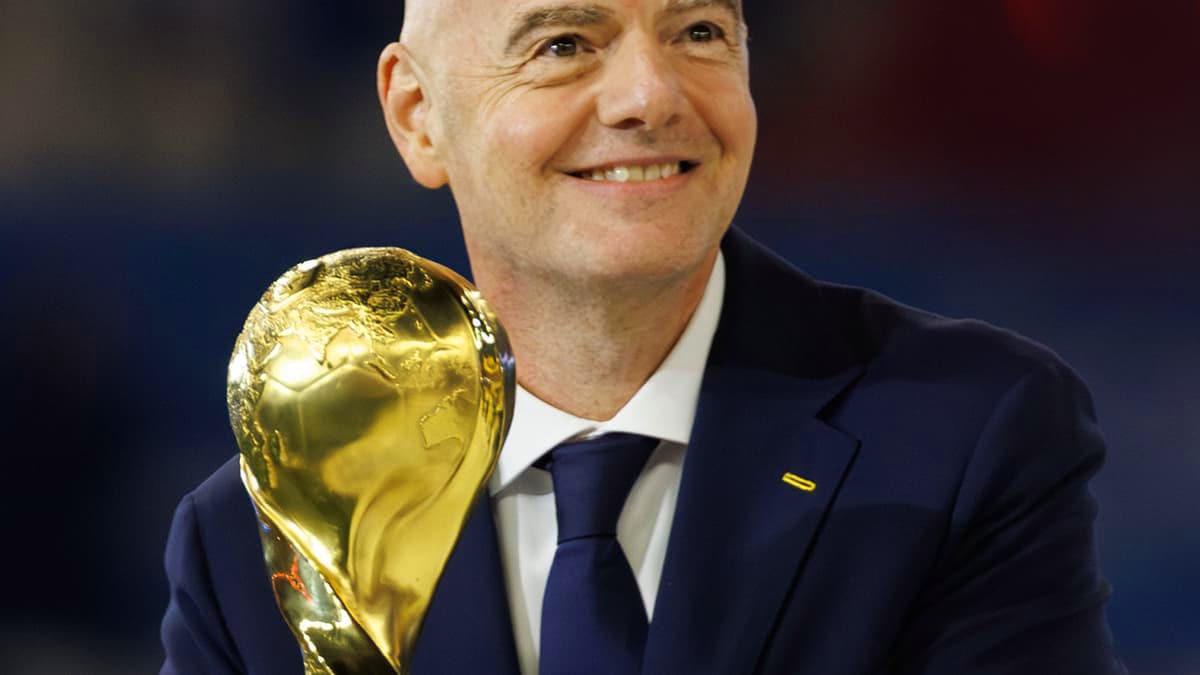
The global game is no longer merely being played; it is being strip-mined. As the expanded, hyper-commercialised 2026 FIFA World Cup gets underway across North America, the beautiful game has collided head-on with an ugly, modern reality. What was promised by FIFA President Gianni Infantino to be the “most inclusive World Cup ever” has instead degenerated into a stark, transactional exercise in geopolitical sycophancy and local alienation.
The defining narrative of this tournament is no longer the democratic poetry of a forty-eight-team pitch, but a series of administrative and political lockouts that demand a radical, structural response. It is time, therefore, to face the uncomfortable truth: FIFA can no longer be trusted with the stewardship of global football. The governing body must either be forcibly stripped of its unchecked monopolies or bypassed entirely in favour of a democratic, fan-and-labour-driven alternative.
The architecture of this “cash grab” was built on a foundation of manufactured scarcity. When FIFA defended its exorbitant ticket prices by citing an astronomical 500 million ticket requests, the data immediately began to tell a different, more cynical story. In local host communities across the United States, Canada, and Mexico, everyday fans have been priced out entirely, squeezed by local host city deficits and corporate hospitality tiering. Yet, on the eve of the tournament, hundreds of regular group-stage tickets remained unsold in cities like Toronto and Vancouver. This disconnect reveals an extractive business model that views the local supporter not as the heartbeat of the sport, but as a secondary asset to be monetised.
But the economic exclusion of the fan is merely a symptom of a deeper, systemic rot: the utter politicisation of the tournament’s administrative architecture. In the years leading up to this event, FIFA’s leadership engaged in a polarising, calculated alignment with the United States political executive. The presentation of an inaugural “FIFA Peace Prize” to President Donald Trump and the subversion of standard tournament oversight to a federal task force were marketed as guarantees that all qualified participants would feel “safe and welcome.”
Instead, that political appeasement has yielded a border crisis that tears at the very fabric of sporting merit and dampened the spirit of the beautiful game. The most egregious casualty of this geopolitical subversion is the exclusion of Somali referee Omar Artan. Named Africa’s Best Male Referee in 2025 by the Confederation of African Football (CAF), Artan had earned the historic merit of becoming the first-ever Somali official to grace a World Cup. Yet, upon landing at Miami International Airport with valid travel credentials, he was subjected to an eleven-hour interrogation by U.S. Customs and Border Protection and summarily deported, retroactively branded a security threat under broad regional restrictions and arbitrary vetting concerns.
The response from Zurich was a masterclass in moral cowardice. FIFA washed its hands of the diplomatic fallout, releasing a sterile, defensive statement asserting that “a host government ultimately determines who receives a visa.” By deferring entirely to local border enforcement, FIFA violated the core covenant of international sport: that the pitch remains a sovereign, neutral space where access is dictated strictly by athletic excellence, not the arbitrary whims of an administrative regime.
Artan’s exclusion is not an isolated incident; it is part of a sweeping, discriminatory pattern. More than fifteen essential staff and officials from the Iranian national team were denied visas, forcing the squad to establish their training base in Tijuana, Mexico, and endure the logistical absurdity of daily cross-border commutes just to play their scheduled group matches in California and Washington.
From the detention of Iraqi players to the profiling of African delegations at domestic airports, this tournament has exposed a bitter reality: FIFA will gladly sacrifice the dignity and integrity of its own stakeholders to protect its multi-billion-dollar corporate partnerships.
The question is no longer whether FIFA has failed, but how long the football world will consent to its misrule. Should the refereeing corps, the player unions, and the global fan base not stand united with one of their own against this assault on the global game? If a federation cannot protect its highest-performing minority officials from administrative overreach, it forfeits its right to govern.
True reform cannot happen within the current, tightly insulated walls of Zurich. Because FIFA operates as a non-profit association under Article 60 of the Swiss Civil Code, it enjoys staggering tax immunities and shields itself from the corporate transparency laws that govern standard multinationals. To break this cycle of corruption and exploitation, we must look toward two distinct, structural models of governance going forward:
First is the Multi-Stakeholder Democratic Cooperative model. We must transition global football away from an autocratic presidency and toward a decentralised, tripartite model scaled from Germany’s domestic “50+1” ownership philosophy. Voting power for international tournaments and policy must be divided equally between three independent chambers: a Supporters Chamber composed of regional fan trusts; a Labour Chamber run directly by player unions (FIFPRO) and referee associations; and an Administrative Chamber hired strictly for event and operational logistics. This structure ensures that no state-backed entity, billionaire sponsor, or political strongman can outvote the collective conscience of the sport’s actual producers and consumers.
Second is the Sovereign Oversight Trust model. If the tournament is to remain globally centralised, host selection must be stripped entirely from the political horse-trading of the FIFA Council. It should be managed by an independent judicial trust comprised of international jurists, human rights experts and forensic auditors. Under this model, host nations must sign a legally binding, irrevocable treaty granting sovereign athletic immunity: any nation that cannot guarantee unrestricted, dignified visa access for every qualified player, official, and fan, regardless of geopolitical tension, automatically forfeits its hosting rights. If a host government blocks an official like Omar Artan, the tournament moves.
A Call to Collective Action
It is worth noting that, contrary to the common impression, the ultimate weapon against FIFA’s predatory model does not reside in Swiss courtrooms; it sits in the turnstiles and on the pitch. FIFA’s immense power is an illusion sustained entirely by television broadcast rights and corporate sponsorships. If the global football community truly wishes to honour the principles of fair play and solidarity, it must mobilise its collective leverage.
The referees’ unions must consider coordinated walkouts, demanding absolute contractual protections and financial compensation for colleagues discarded by geopolitical gatekeeping. Concurrently, fans must leverage the power of the consumer boycott: shunning official merchandise, challenging corporate sponsors, and leaving empty seats in hospitality sectors. When the stakeholders who create the magic of the World Cup refuse to participate in its exploitation, FIFA’s financial house of cards will ultimately collapse.
Omar Artan returned to Mogadishu to a hero’s welcome, displaying a dignity and grace entirely absent from the executive suites in Zurich. His exclusion must mark the line in the sand. Football belongs to the people who play it, officiate it, and love it; not to the politicians who exploit it or the bureaucrats who sell it to the highest bidder. It is time to reclaim the global game for the global community. “Cup Mundial” it is, after all.
The views expressed by contributors are strictly personal and not of Law & Society Magazine.