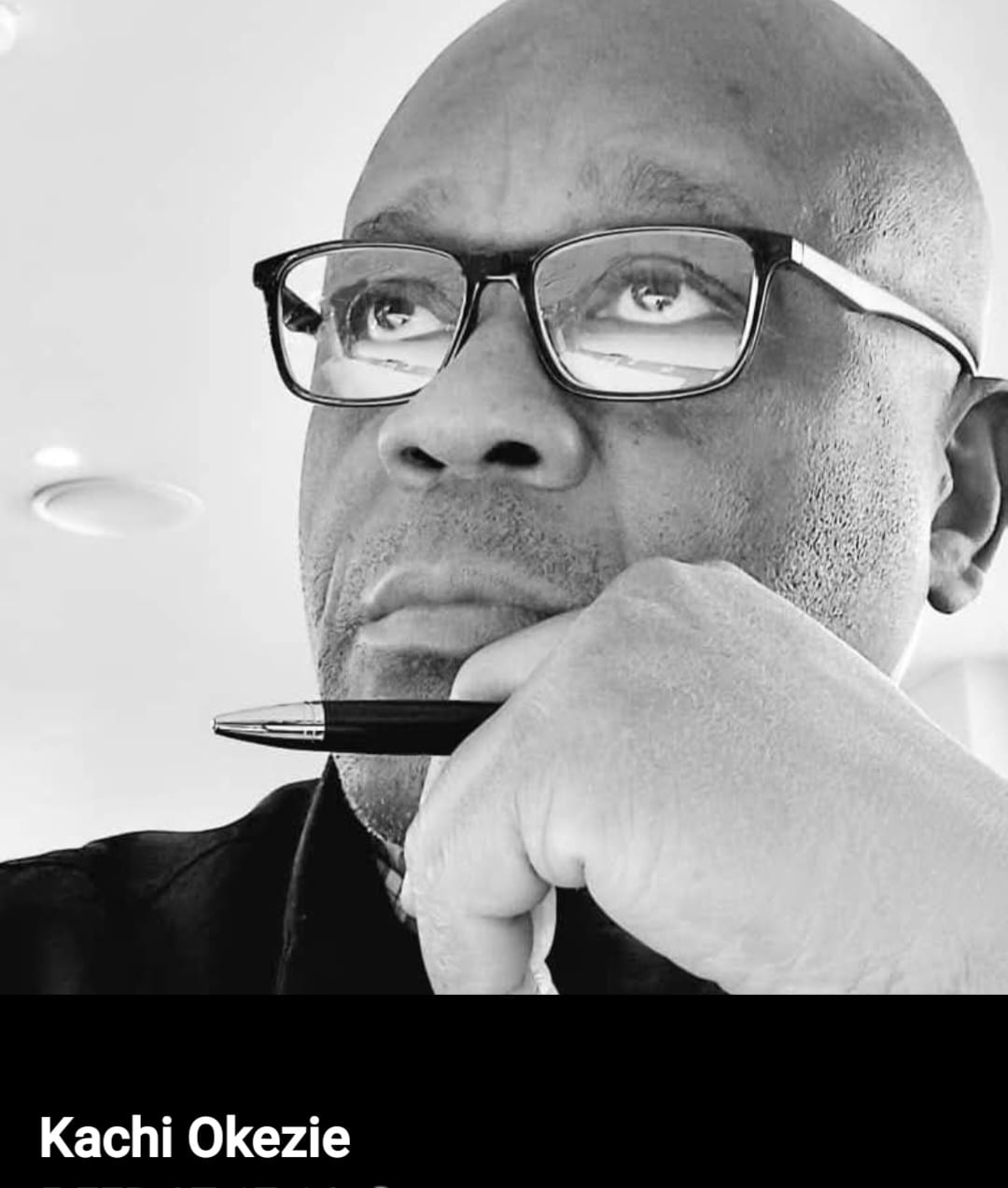
By Kachi Okezie, Esq.
When Muhammadu Buhari descended the steps of the inaugural podium in 2015, he did so draped in the borrowed robes of a secular saint. To a nation weary of the brazen decadence of the previous administration, he was “Mai Gaskiya,” the truthful one, an ascetic general whose very presence was expected to act as a disinfectant against the virus of corruption. He promised a “change” that was not merely political but existential, a fundamental reordering of the Nigerian moral compass.
Yet, as the gavel falls on the conviction of former Power Minister Saleh Mamman and the staggering details of the Buhari era’s rapacity continue to leak out of the courtrooms, it has become painfully clear that the man who came to cleanse the rot was, in fact, the overseer of its most sophisticated expansion. The “darkest period” in Nigeria’s history was not just defined by economic contraction and the bloody spread of insecurity, but by a level of hypocrisy so profound it bordered on the pathological.
The conviction of Saleh Mamman for a ₦33.8 billion fraud linked to hydroelectric projects is merely a single, late-arriving thread in a tapestry of systemic plunder. To understand the depth of the betrayal, one must look at the gatekeepers who were handpicked by Buhari to safeguard the nation’s soul and its treasury. There is no greater irony than the case of Ahmed Idris, the former Accountant General of the Federation, who is alleged to have presided over the theft of over ₦100 billion.
Under a president who famously asked “What is it that they are stealing?”, the man responsible for every kobo of the public purse was allegedly treating the national treasury like a private inheritance. This was not a failure of oversight; it was the inevitable result of a “Mr. Integrity” persona that shielded subordinates from scrutiny. Buhari’s integrity was used as a cloak, a moral pass that allowed his inner circle to operate with a level of impunity that would have made the previous “profligate” regimes blush.
The rot extended into every crevice of the administration. In the aviation sector, Hadi Sirika’s “Nigeria Air” project stands as one of the most expensive pieces of performance art in African history—a charade involving a repainted Ethiopian Airlines plane that served only to humiliate a nation while billions of naira vanished into the ether. Even more grotesque was the conduct within the Ministry of Humanitarian Affairs, Disaster Management, and Social Development.
Sadiya Umar Farouq, the woman tasked with cushioning the blow for Nigeria’s most vulnerable, now finds herself on the EFCC’s wanted list, accused of diverting funds meant for the poor. It is a peculiar brand of evil to posture as a reformer while the very mechanisms intended to alleviate poverty are weaponized to deepen it. These were not outliers; they were the core of the Buhari machine.
Perhaps the most damaging legacy lies with the duo of Abubakar Malami and Godwin Emefiele. As Attorney General, Malami presided over a justice ministry where the rule of law appeared to be a selective tool for political consolidation, while the allegations of massive money laundering and even terrorism financing now swirling around him suggest a total collapse of institutional ethics. Simultaneously, Emefiele’s Central Bank became a laboratory for disastrous monetary experiments and “Ways and Means” financing that fueled inflation and crippled the middle class, all while allegedly facilitating the enrichment of a select few through a convoluted multiple exchange rate system. Buhari’s silence during these years was not the quietude of a disciplined leader; it was the complicity of a man who cared more for the loyalty of his acolytes than the survival of the republic.
History will likely record the Buhari years as a period of profound national regression. Beyond the empty slogans of “Change” and “Next Level,” the reality was a country plunging into the abyss of debt, a terrorized landscape where bandits and insurgents operated with terrifying freedom, and a citizenry increasingly disillusioned by a leadership that preached austerity from the comfort of a refurbished presidential wing. The hypocrisy was the most bitter pill to swallow. While the president’s media handlers lectured Nigerians on patriotism and sacrifice, his ministers were reportedly building empires of graft. The “integrity” of the president became a hollow shield, protecting a cabinet of predators from the consequences of their actions. He did not kill corruption; he gave it a new, more sanctimonious lease on life.
The lessons for future generations of Nigerians are stark and uncompromising. We must learn, once and for all, that the “cult of personality” is a trap. Character is not a substitute for competence, and a reputation for personal austerity is meaningless if it is not accompanied by the courage to hold one’s own house to account. Nigeria does not need “saints” or “messiahs” who demand blind faith; it needs robust institutions, transparent systems, and a citizenry that prioritizes the rule of law over the charisma of the individual. The Buhari era proved that a leader who cloaks himself in the language of morality while allowing his subordinates to feast on the commonwealth is more dangerous than an honest thief. The former provides the moral cover that allows the latter to thrive undetected until the damage is irreversible.
As the trials of these ministers and appointees proceed, Nigerians must look beyond the spectacle of the courtroom. We must recognize that the “rot” was never just about a few bad actors; it was about a leadership style that valued personal loyalty over national interest and optics over reality. The darkness of the last decade should serve as a permanent warning. Future leaders must be judged not by what they say about themselves, but by the company they keep and the accountability they enforce. “Mr. Integrity” turned out to be a mirage that led a nation into a desert of debt and despair. The task of the next generation is to ensure that never again is the destiny of millions handed over to a man whose only qualification is a carefully curated myth of honesty that collapses at the first touch of the truth.