She was filing real estate papers when she noticed something wrong: medical records where they didn’t belong. That curiosity would expose a 30-year cover-up and win $333 million for poisoned families.
Her name was Erin Brockovich. And she proved that sometimes the most dangerous question you can ask is simply: “Why?”
It was 1993. Erin was twice divorced, raising three young children alone, and desperately trying to keep the lights on. She’d talked her way into a job as a file clerk at a small California law firm after losing a personal injury lawsuit they’d handled for her.
It was grunt work. Organizing papers. Filing documents. The kind of job where you’re not supposed to ask questions—just put things where they belong and move on.
But Erin had never been good at staying quiet.
One afternoon, she was organizing files for a pro bono real estate case. Standard stuff: property deeds, tax documents, purchase agreements for a home in a small desert town called Hinkley, California.
Then she paused.
Mixed in with the real estate papers were medical records. Blood test results. Doctor’s notes.
Why would a real estate file contain someone’s health information? Why would Pacific Gas & Electric—a utility company buying properties—need to know about residents’ medical histories?
Most people would have filed it away as a clerical error. Erin couldn’t let it go.
She drove out to Hinkley. It was a tiny town in the Mojave Desert—hot, dusty, quiet. The kind of place where everyone knew their neighbors and trusted the local industry that provided jobs.
PG&E operated a compressor station there for natural gas pipelines. For decades, the company had been a pillar of the community. They employed locals. They were good neighbors.
Or so everyone thought.
Erin started knocking on doors. She didn’t wear a suit. She didn’t use fancy legal language. She sat at kitchen tables, drank coffee, and listened.
What she heard was terrifying.
Almost every house had a story of illness. Children with chronic nosebleeds that wouldn’t stop. Mysterious rashes that appeared and disappeared. Respiratory problems. Joint pain.
And cancer. So much cancer for such a small population.
The residents were confused and scared. PG&E had told them their water contained chromium, but it was the “good kind”—like what’s in vitamins and supplements. Nothing to worry about.
Erin didn’t buy it.
She spent hours in libraries. She dug through records at the regional water board. She learned chemistry she’d never studied in school.
There are two types of chromium. Chromium-3 is a nutrient your body needs. Chromium-6—hexavalent chromium—is a toxic heavy metal used to prevent rust in industrial machinery.
It’s a carcinogen.
And PG&E had been lying.
Records showed that for over 30 years—from 1952 to 1966—the compressor station’s cooling towers had discharged wastewater containing Chromium-6 into unlined ponds. The poison seeped into the ground. It drifted into the aquifer.
It was in the water people drank. The water they bathed in. The water their children swam in.
When Erin brought this information to her boss, Ed Masry, he was skeptical. Taking on a billion-dollar utility company could destroy their small firm. PG&E had unlimited resources, armies of lawyers, and decades of experience burying problems.
But Erin had something PG&E didn’t have.
She had the trust of the people.
She went back to Hinkley again and again. She didn’t just collect data—she collected stories. She memorized the names of the children. She remembered which family had which surgery. She sat with mothers who cried about watching their kids get sick.
She became a repository of their pain.
The work was exhausting. She was still a single mother, working long hours while trying to raise three children. There were nights she wanted to quit. There were reportedly threatening phone calls telling her to stop digging.
The sheer size of the opposition was overwhelming.
PG&E was massive. They had political connections. They had scientists on retainer who would testify that the chromium levels were safe. They tried to downplay any connection between the water and the illnesses.
But Erin kept going.
She found the smoking gun—internal documents showing that PG&E headquarters had known about the contamination years before and had tried to keep it quiet. They’d deliberately misled residents about the type of chromium in the water.
She gathered over 600 plaintiffs. This wasn’t just a lawsuit anymore. It was a movement.
The legal battle was brutal. PG&E tried to bury the small firm in paperwork. They filed motion after motion trying to have the case dismissed. They made lowball settlement offers hoping people would take the money and go away.
Erin and Ed Masry held the line.
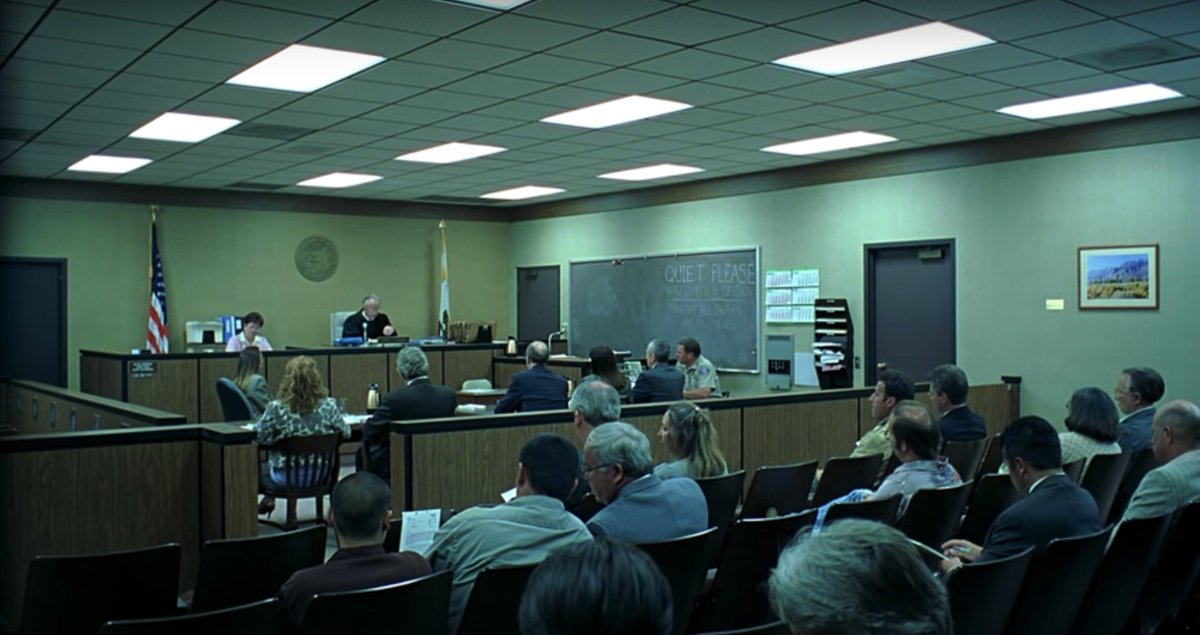
They pushed for binding arbitration—a risky strategy where a panel of judges decides the outcome with no possibility of appeal. If they lost, that was it. No second chances.
They bet everything on the truth.
In 1996, the decision came down.
The arbitrators ordered PG&E to pay $333 million.
It was the largest settlement ever paid in a direct-action lawsuit in United States history.
Six hundred and thirty-four families—mothers, fathers, children who’d been poisoned—would finally receive compensation. The money would pay for medical bills, move families out of contaminated areas, and secure futures that had been stolen by corporate negligence.
But the victory was about more than money.
It was about validation.
For years, these families had been told they were imagining things. That their illnesses were coincidental. That they should trust the company.
The settlement proved they’d been right all along.
It proved that a group of “nobodies” in a forgotten desert town could stand up to a billion-dollar corporation and win. It proved that truth, when championed by someone with enough courage, cannot be buried forever.
Erin Brockovich didn’t win because she had more legal expertise than PG&E’s lawyers. She won because she cared more.
She showed the world that you don’t need a fancy degree to know the difference between right and wrong. You don’t need credentials to recognize when something doesn’t add up.
You just need the courage to ask the hard questions—and refuse to accept easy lies.
For the people of Hinkley, Erin was more than a legal clerk. She was the one person who actually listened when everyone else looked away.
The aftermath wasn’t perfect. Hinkley today is nearly a ghost town. PG&E has spent over $750 million on cleanup efforts, but the contamination is still being addressed. Many families have left. Some who stayed still fear the water.
The scars remain.
But the precedent was set.
The case changed how America thinks about corporate environmental responsibility. It influenced water quality regulations in California and beyond. It proved that communities could fight back against pollution and win.
And it made Erin Brockovich a symbol—not because she was superhuman, but because she was ordinary.
She was a struggling single mom with no legal training who noticed something wrong and refused to turn the page.
That’s the part that matters most.
Because how many times do we see something that doesn’t make sense and just… move on? How often do we think “that’s weird” and then forget about it because we’re busy, because it’s not our problem, because surely someone more qualified is handling it?
Erin teaches us that sometimes the most important thing you can do is stop and ask: “Why?”
Why are medical records in a real estate file?
That one question—that moment of curiosity—changed 600 lives.
Think about what you might discover if you stopped filing things away and started asking why.
The 2000 film about her story, starring Julia Roberts, won an Academy Award and made Erin a household name. But she’s not interested in fame. She continues working as an environmental advocate, investigating water contamination cases across America.
Because she learned something in Hinkley that changed her forever: corporations lie when it’s profitable to lie. Systems protect the powerful. And ordinary people—people without degrees or credentials or connections—are often the only ones who will stand up and demand the truth.
“They tell you you’re not smart enough, not educated enough, not qualified enough,” she’s said. “But caring doesn’t require a degree. Noticing doesn’t require credentials.”
Erin Brockovich was a file clerk who noticed medical records where they didn’t belong.
That curiosity exposed a 30-year cover-up.
That persistence won justice for 600 families.
That courage proved that the most powerful tool against corruption isn’t a law degree—it’s a person who refuses to look away.
The next time you see something that doesn’t make sense, remember Hinkley.
Remember that one person asking “why?” can change everything.
And remember that sometimes the most dangerous opponent a corporation can face isn’t another corporation.
It’s a single mother with three kids and a question she won’t stop asking.
Credits: https://www.facebook.com/share/p/1EpALxxT7u/?mibextid=wwXIfr