

By Johnson Agu
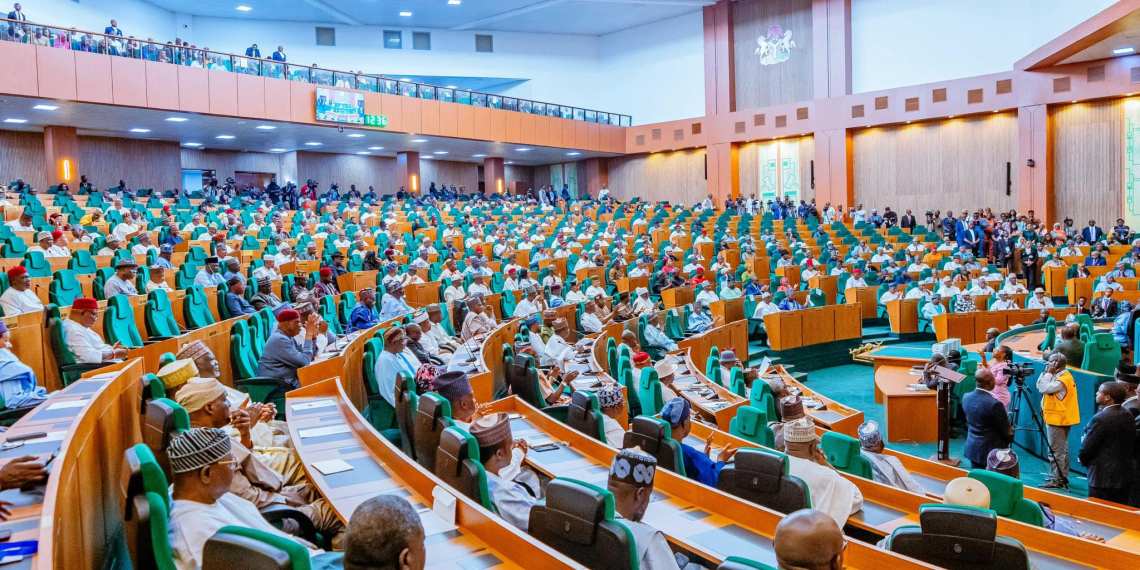
What began as a routine budget defence inside Nigeria’s House of Representatives spiralled into a dramatic confrontation over one question that still hangs in the air:
Where is the money?
At the February 25 hearing of the House Appropriation Committee, Hon. Alex Mascot Ikwechegh, representing Aba North/Aba South Federal Constituency, pressed Finance Minister Wale Edun over a stunning claim, that ₦1.15 trillion approved specifically to fund 30 percent of the 2025 capital budget had not been disbursed.
The exchange quickly turned into one of the most politically charged moments of the current legislative session.
Trillions Raised, Projects Frozen
According to figures cited during the hearing:
- ₦1.15 trillion was approved by the National Assembly for capital expenditure
- $1.2 billion was secured for digital infrastructure
- $500 million for economic stimulus
- $500 million for MSMEs
- $500 million from the African Development Bank for governance and energy transition
- A fresh executive request for $21 million, 15 billion Yen, and 4 billion Euros
At the same time, revenue agencies such as the Federal Inland Revenue Service and Customs reportedly posted strong performances.
Yet capital projects across ministries, lawmakers argued, remain stalled.
Hospitals underfunded. Roads abandoned. Schools incomplete. Contractors unpaid.
Meanwhile, recurrent expenditure — salaries, overheads, administrative costs — continues to flow.
The Confrontation
During the hearing, Ikwechegh walked the minister through the figures before delivering what observers described as the moment that froze the room:
“Why does our capital still remain at zero? This is our country. Are you not in Nigeria?”
Minister Wale Edun redirected the question to Minister of State for Finance, Doris Uzoka-Anite, stating she oversees disbursements.
That answer triggered visible frustration among committee members. If the substantive minister could not account for the disbursement status of ₦1.15 trillion, lawmakers asked, who could?
The hearing was adjourned and reconvened the following day.
‘Pre-Disbursement Conditions’
When Uzoka-Anite appeared before the committee, she confirmed that ₦1.15 trillion had indeed been approved for capital projects. However, she explained that funds could not be released until ministries met certain procedural requirements:
- Completion of project documentation
- Finalised procurement processes
- Submission of feasibility reports
- Compliance with sign-off protocols
In short, the money exists, but cannot legally move.
That explanation did not satisfy lawmakers.
They pointed to testimony from the Health Minister indicating that only ₦38 million had been released out of a ₦286 billion allocation, a fraction that raised eyebrows.
Ikwechegh posed a pointed follow-up:
“Can the minister name a ministry that met all conditions and still did not receive funding? If none existed, why approve ₦1.15 trillion when the conditions were not met?”
No specific example was provided.
Governance Optics: Spending vs. Delivery
The controversy unfolds against a backdrop of public frustration over governance priorities.
Across Nigeria:
- Critical roads remain impassable
- Power infrastructure struggles
- Water systems collapse
- Hospitals operate without essential equipment
Public finance experts say the core issue is not merely whether funds exist, but whether capital budgeting is realistic and executable.
Approving large capital envelopes without ensuring ministries are procurement-ready can create a cycle where budgets are celebrated, loans are secured, but delivery stalls.
That gap between appropriation and implementation fuels distrust.
Accountability Questions Multiply
The unfolding debate now centres on three competing possibilities:
- Administrative bottlenecks are genuinely preventing lawful release of funds.
- Budget approvals outpaced ministries’ operational readiness.
- A deeper financial infraction exists.
Ikwechegh framed the stakes bluntly:
“If funds were approved and did not reach their destination, that is misappropriation. And that is a crime.”
No evidence of criminal diversion has been formally presented. But the optics — ₦1.15 trillion approved, zero visible capital impact — have created a political storm.
Bigger Than One Hearing
Beyond personalities, the episode exposes a structural tension in Nigeria’s fiscal management:
- Heavy reliance on borrowing
- Ambitious capital budgets
- Slow procurement cycles
- Weak inter-ministerial coordination
- Limited transparency in real-time disbursement tracking
For citizens, the distinction between “approved,” “allocated,” and “released” is academic. What matters is whether roads are built, hospitals function, and jobs materialise.
When capital spending stalls, development stalls.
What Happens Next?
The House committee is expected to demand detailed disbursement records, compliance reports, and timelines for release.
If procedural delays are the sole explanation, the executive branch may face pressure to streamline bureaucratic hurdles.
If discrepancies emerge, the consequences could escalate.
Either way, the ₦1.15 trillion question will not fade quietly.
In a country battling inflation, infrastructure decay, and mounting debt, fiscal transparency is not optional.
It is foundational.
And until Nigerians see tangible results on the ground, the haunting refrain from the hearing will echo far beyond the committee room:
Where is the money?


