The African Bar Association (AFBA) has urged the Nigerian Armed Forces to take its security story to the world, saying Nigeria must do more to showcase the gains being made in the fight against terrorism, insurgency, banditry and other security threats.
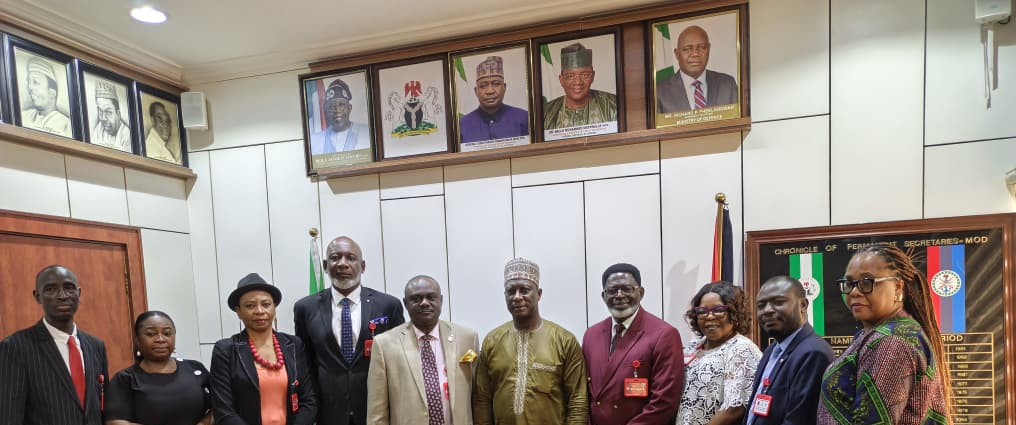
The call was made during a courtesy visit by the AFBA leadership to the Ministry of Defence in Abuja as the association prepares for its 2026 Annual Conference in Sal, Cape Verde.
The conference, scheduled for September 20–24 at the Hilton Cabo Verde Sal Resort, is themed “Resilient Africa’s Roadmap for Sustainable Development: Addressing and Strengthening Issues of Military, Security and Economic Stability.” It is expected to bring together lawyers, policymakers and other stakeholders from across Africa and beyond. Professor Ibrahim Agboola Gambari, former UN Under-Secretary-General and former Nigerian Ambassador to the United Nations, is the keynote speaker.
The Minister of Defence, General Christopher Gwabin Musa (rtd.), OFR, was away on official duties and was represented by the Director of Projects in the Ministry, Dr. J. C. Alozie, alongside other senior officials and members of the Armed Forces.
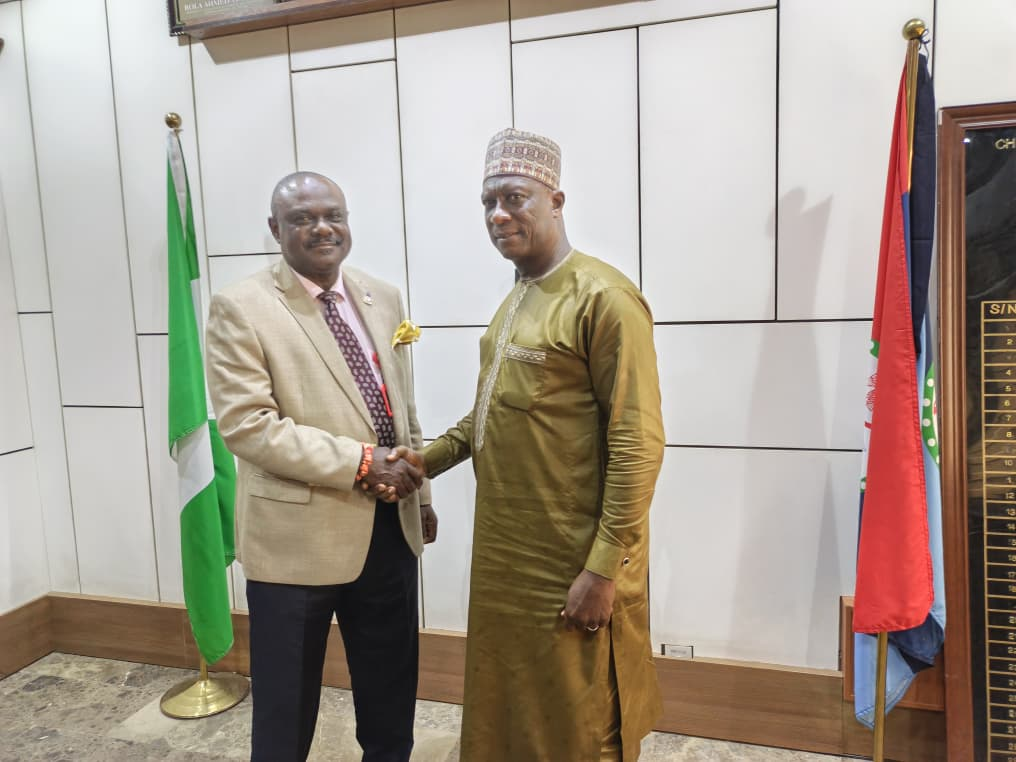
Speaking during the visit, AFBA President, High Chief Ibrahim Eddy Mark, said the association wanted the Nigerian military to use the international platform to explain its security efforts and communicate the progress being made in the country’s fight against terrorism and insurgency.
“We want the Nigerian military to tell its story,” Mark said.
He said the Armed Forces should explain, at an appropriate strategic level, what it was doing to confront terrorism, insurgency, kidnapping and banditry, the progress being made, the challenges confronting troops and the sacrifices of military personnel.
Mark stressed that AFBA was not asking the military to disclose classified information or compromise operational security.
Rather, he said, the objective was to give the Armed Forces an opportunity to communicate its work directly to Nigerians, the African legal community and the international community.
“There is a story that needs to be told. There are sacrifices that need to be understood. There are successes that need to be acknowledged. There are challenges that need to be appreciated,” he said.
Ministry: Opportunity to ‘Market Nigeria’
The Ministry of Defence appeared receptive to the idea, with its representative, Dr. Alozie, underscoring the potential value of having members of the Armed Forces participate in the Cape Verde conference.
Alozie said such participation would provide an opportunity to market Nigeria to the outside world, showcase the country’s positive sides and highlight the gains being made in the fight against terrorism and insurgency.
He said there was a need to communicate the positive developments taking place in the country, noting that “a lot of good is happening here.”
His remarks effectively aligned with AFBA’s call for the military to tell its own story, particularly at a continental gathering where Nigeria’s security experience can be presented directly to lawyers, policymakers and other influential stakeholders from across Africa and beyond.
For AFBA, the proposed engagement is not simply about public relations. It is about ensuring that Nigeria’s security experience, challenges, sacrifices and progress form part of the wider African conversation on resilience, development and stability.
‘Don’t Allow Others to Define Nigeria’s Story’
Mark said Nigeria had an opportunity to use the Cape Verde conference to present a fuller and more balanced picture of the country’s security situation.
He said the participation of senior military officers would provide an opportunity to reach the African continent and the wider international community while presenting Nigeria’s experience from the perspective of those directly involved in the country’s security operations.
He said Nigeria’s challenges should not be allowed to overshadow the progress being made by its institutions and security forces.
“The Armed Forces should have the opportunity to explain, in its own voice, the nature of the threats it faces, the strategies being employed, the progress being made and the contribution of military operations to national stability,” he said.
Security Is More Than a Military Issue
AFBA also drew a direct connection between security and economic development, arguing that the impact of military operations should be viewed beyond the battlefield.
Mark said insecurity affects farmers, businesses, investors, transportation, communities and the wider economy.
“When a terrorist network is disrupted, a community becomes safer. When a kidnapping network is dismantled, people can travel with greater confidence. When a highway is secured, commercial transportation becomes easier,” he said.
He added that farmers were more likely to return to their farms when communities were secure, while businesses could reopen and investors could operate with greater confidence when their people, assets and supply chains were protected.
According to him, security should therefore be regarded as an enabler of development, rather than an issue separate from economic growth.
AFBA Salutes Fallen Troops
The association also commended Nigerian troops for the sacrifices they continue to make in confronting terrorism, insurgency, banditry, kidnapping and other threats.
Mark paid tribute to military personnel who had lost their lives in the line of duty, noting that behind every deployment were families who had sent their loved ones to defend the nation.
“Behind every military casualty is a human being who has made the ultimate sacrifice in service to the nation,” he said.
He called for the sacrifices of fallen troops to be remembered and acknowledged the difficult conditions under which members of the Armed Forces continue to operate.
Lawyers Seek Stronger Military-Legal Engagement
The AFBA delegation also called for stronger cooperation between the military, legal profession, academia, civil society and the private sector.
The association maintained that national security and the rule of law should not be treated as competing objectives.
It argued that a professional military operating within the Constitution and the law strengthens public confidence, while a legal system that understands the realities of national security contributes to national resilience.
Mark noted that Nigeria’s security challenges also have wider African implications, given the transnational nature of terrorism, trafficking, organised crime, kidnapping and other threats.
He pointed to Nigeria’s participation in regional security initiatives, including the Multinational Joint Task Force in the Lake Chad Basin, as an example of the importance of cross-border cooperation.
He said Nigeria’s experience could provide valuable lessons for other African countries confronting similar threats.
Military Invited to Take Centre Stage
AFBA formally invited the Ministry of Defence and the Nigerian Armed Forces to participate prominently in its 2026 Annual Conference.
The association proposed a strategic presentation titled:
“Securing Nigeria: The Role of the Nigerian Armed Forces in Combating Insurgency, Terrorism, Kidnapping and Other Security Threats, and the Impact on National Development.”
The presentation would examine the connection between military intervention, peace and security, protection of civilians, protection of businesses and infrastructure, investor confidence, economic activity and sustainable development.
AFBA said the military’s participation would provide an opportunity to communicate Nigeria’s security experience to African lawyers, policymakers, diplomats, business leaders, civil society organisations and other stakeholders attending the conference.
Mark said AFBA was approaching the Ministry not merely to applaud the Armed Forces, but to listen, understand and build a partnership around Africa’s security and development challenges.
“A resilient Africa is not an Africa without challenges. It is an Africa capable of confronting its challenges, learning from them and emerging stronger,” he said.
He added that the story of Nigeria’s security was also part of the story of its development, while Nigeria’s resilience formed part of the wider story of an African continent seeking peace, justice, economic opportunity and sustainable growth.
The AFBA delegation included Prof. Agbo Madaki, Maj. General Shalingwa, Afam Okeke, Dr. Friday Agbo, Mimi Ayua, Lillian Okenwa and Teyojesam Eko.