By Lillian Okenwa
Nigeria’s primary healthcare system is facing renewed scrutiny as the civic technology group MonITNG warns that official speeches, reform launches, and optimistic statistics are concealing a worsening crisis—one defined by abandoned clinics, unsafe facilities, and communities forced to choose between dangerous care and no care at all.
In a report released Thursday, MonITNG described Umuoma Primary Health Centre (PHC) in Nekede, Imo State, as a “disturbing example of the collapse of primary healthcare,” despite repeated budgetary allocations running into billions of naira.
According to the organisation, more than 64 percent of primary healthcare facilities across Imo State are reportedly in ruins, a reality that starkly contradicts official assurances of progress in the health sector.
“When the Tracka team visited Umuoma community, we discovered the shocking and terrible state of this facility,” the report said. “Umuoma PHC is structurally unsafe and clearly unfit for service delivery.”
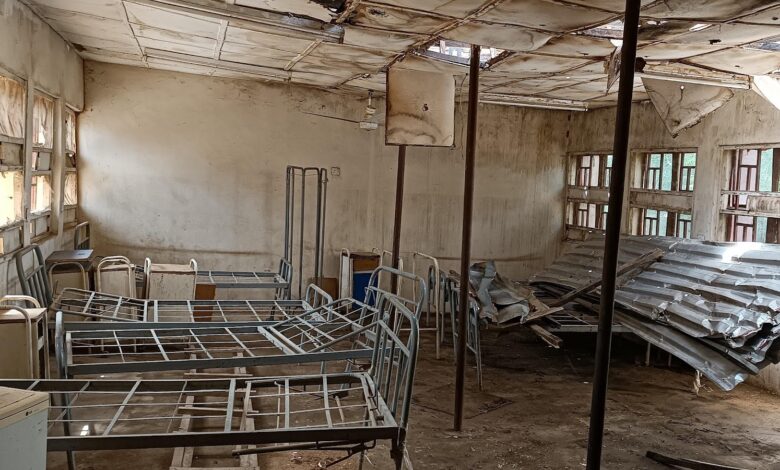
MonITNG documented multiple safety hazards, including collapsed ceilings, deep cracks in the walls and the absence of perimeter fencing—conditions that expose patients, health workers and medical equipment to serious security risks, particularly at night.
Yet, residents continue to rely on the centre because it is the closest healthcare facility available.
“This reflects the desperation of communities forced to choose between unsafe care and no care at all,” the organisation noted, quoting the officer in charge of the facility, who confirmed that patients still seek treatment there daily despite the risks.
MonITNG urged the Imo State Government, Governor Hope Uzodinma, the Federal Ministry of Health, the National Primary Health Care Development Agency (NPHCDA) and the Coordinating Minister of Health, Professor Muhammad Pate, to prioritise urgent reconstruction, proper staffing and equipment of the centre.
“Healthcare is a basic right. The people of Imo State deserve better,” the report stressed.
A Pattern Repeated Across States
Imo is not alone.
In Akpaka community, Ngbo, Ohaukwu Local Government Area of Ebonyi State, more than 3,000 residents face escalating health risks after their only public PHC was abandoned over four years ago—an ordeal MonITNG described as a “clear failure of governance.”
The organisation said the facility has remained in a shocking state of decay despite repeated notifications to elected officials and government agencies.
“The total neglect of the only primary health care centre in Akpaka community is a serious threat to human lives,” the report stated.
Rooms, beds and mattresses are damaged beyond use, the facility lacks qualified doctors and nurses, and basic medical equipment is non-existent. The building itself is unsafe, with broken roofing, collapsing ceilings and dilapidated walls.
Perhaps most alarming, pregnant women are reportedly forced to give birth by lantern light, without electricity, sterilised equipment or skilled attendants—conditions widely considered preventable in a functioning health system.
Residents seeking routine care must travel long distances or turn to expensive private clinics, deepening inequality and excluding the poorest from essential services.
Rights advocates argue the situation raises constitutional concerns. Section 14(2)(b) of Nigeria’s 1999 Constitution states that “the security and welfare of the people shall be the primary purpose of government”—a provision critics say is being routinely violated.
Despite formal letters submitted in December 2024 to lawmakers representing the area and repeated follow-ups throughout 2025, MonITNG said no meaningful action has been taken.
“For three years, concerns have been documented and escalated,” the organisation said. “Yet the silence from those in power has been deafening.”
Promises vs. Reality
The warnings come even as the federal government projects optimism.
Last weekend in Abuja, Professor Muhammad Pate, Nigeria’s Coordinating Minister of Health and Social Welfare, announced a 17 percent reduction in maternal deaths in selected local government areas under the Nigeria Health Sector Renewal Investment Initiative (NHSRII).
The figures were unveiled at the launch of the Built for Her Foundation, with officials describing the moment as evidence that reforms are working.
“The health of women and girls is inseparable from the future of our nation,” Pate said, describing maternal mortality as a “systems challenge.”
But health analysts caution that progress in pilot areas does not erase the reality facing millions of Nigerians dependent on broken primary healthcare facilities.
Across rural Nigeria—where maternal mortality is highest—clinics remain understaffed, poorly equipped and chronically neglected. Even in urban government hospitals, shortages of supplies, diagnostic tools and skilled personnel persist, forcing women to delay care or seek unsafe alternatives.
“The contradiction is glaring,” said a public health analyst familiar with MonITNG’s work. “You hear speeches about reform and innovation, but on the ground, roofs are collapsing and women are delivering babies with lanterns.”
A Fragile Reform Narrative
While partnerships with foundations and civil society groups have helped deliver targeted gains, critics warn that without sustained investment in grassroots healthcare infrastructure, Nigeria’s reform narrative risks becoming another cycle of promises without permanence.
For communities like Umuoma and Akpaka, the crisis is no longer abstract.
It is measured in unsafe buildings, preventable deaths, and a growing sense that government attention ends at press conferences, leaving citizens to navigate a broken system alone.