The South East Development Commission (SEDC) Vision 2050 Conference may have been historic, ambitious and intellectually rich, but it left one defining question unanswered: Who will pay for it?
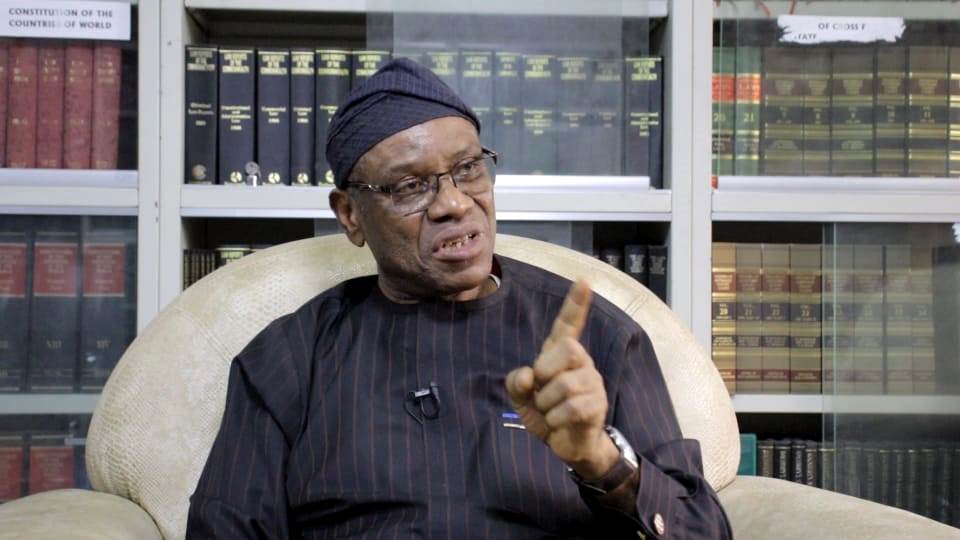
That was the blunt but strategic intervention by policy analyst Clem Aguiyi in a post-event address that is already stirring debate across political and economic circles in the region.
While commending the SEDC for daring to think in 25-year horizons in a country often trapped in electoral cycles, Aguiyi warned that without a credible fiscal architecture, Vision 2050 risks becoming “another eloquent blueprint that history forgets.”
“Vision is indispensable,” he wrote, “but without funding clarity, even the most inspiring ideas risk becoming fleeting illusions.”
A Rare Moment of Regional Consensus
The conference itself marked a significant departure from nostalgia-driven rhetoric often associated with conversations about the South East.
Governor Charles Soludo proposed a Marshall Plan-style intervention focused on security, infrastructure, energy and logistics connectivity. Governor Peter Mbah called for the region to function as a unified common market rather than five competing states. Governor Alex Otti underscored energy as the bedrock of private-sector growth.
Vice President Kashim Shettima assured stakeholders that the SEDC would operate as a delivery institution, not another bureaucratic layer, while the unveiling of the South East Investment Company Limited signalled an intent to mobilise structured capital.
Former Aviation Minister Osita Chidoka urged a shift from sentiment to strategy, arguing that human capital—not historical grievance—should anchor the region’s economic resurgence.
Taken together, the interventions painted a coherent picture of what Alaigbo could become by 2050.
But Aguiyi insists coherence is not capital.
The Silence in the Room: Funding
According to Aguiyi, the conference avoided confronting the most decisive issue: sustainable financing.
He cautioned against the reflexive reliance on loans — a model he described as historically disastrous in Nigeria, often leading to inflated contracts, abandoned projects and generational debt.
“For the South East to mortgage its future without exhausting internal capacities would be a grave mistake,” he warned.
He was equally sceptical of the long-standing assumption that foreign investors would drive transformation.
“We cannot advertise corruption and insecurity and expect outsiders to rush in with capital,” he noted, adding that Africa has too often “locked away its finest plates waiting for a very important visitor who never arrives.”
The Real Capital Is Already in Alaigbo
Aguiyi’s central thesis is both provocative and practical: the South East is not poor.
The region’s comparative advantage lies in commerce — a deeply institutionalised entrepreneurial culture powered by the Igbo apprenticeship system, vast SME networks and significant diaspora remittances.
Yet, he argued, much of the tax revenue generated by Southeastern entrepreneurs accrues to other states because corporate headquarters are registered outside the region.
“This is rational behaviour within a flawed fiscal framework,” he noted. “But it is economically self-defeating.”
Among his proposals:
- Incentivize South East–owned businesses nationwide to re-register head offices in their home states.
- Strengthen PAYE, VAT and company income tax derivation.
- Explore vehicle plate-number derivation reforms.
- Develop regionally anchored business registries.
- Leverage public-private partnerships to build rail, power and transport infrastructure under concurrent legislative powers.
“Our traders and diaspora are not looking for charity,” he argued. “They are looking for bankable projects and predictable governance.”
A Caution on Federal Dependency
Aguiyi also pushed back against what he described as unrealistic expectations of large-scale federal funding.
Citing the erosion of fiscal federalism since the days of the old Eastern Nigeria Development Corporation (ENDC), he argued that the SEDC must design for autonomy rather than dependence.
“Absent restructuring, which is unlikely in the near term, the Commission must build around self-reliance,” he wrote.
Federal support, he acknowledged, remains important — but the Commission’s real power lies in convening stakeholders, de-risking investments and enforcing regional discipline.
The Risk of Becoming Another ‘Feeding Trough’
In one of the address’s sharpest warnings, Aguiyi cautioned that development commissions in Nigeria have historically devolved into patronage structures.
Without radical transparency, professional governance and citizen oversight, he warned, the SEDC risks being “cannibalised before it delivers transformative results.”
The memory of Dr Michael Okpara’s ENDC, he argued, should inspire standards of integrity and production — not nostalgia.
Security and Justice
While endorsing investments in surveillance and security infrastructure, Aguiyi stressed that sustainable peace requires more than technology.
“Security cannot be divorced from justice,” he wrote, calling for credible elections, reduced corruption, political inclusion and resolution of long-standing grievances.
The Bigger Message: Believe Materially, Not Just Rhetorically
Aguiyi closed with a powerful analogy to post-war Europe, which was rebuilt by mobilising local champions before attracting foreign capital.
“The capital we seek is already in our markets, our banks, and our diaspora networks,” he said.
For Vision 2050 to succeed, he argued, it must abandon “borrowed illusions” and embrace disciplined, inward-looking economic coordination.
The people, he concluded, are ready.
What remains uncertain is whether the political structure will match their readiness.