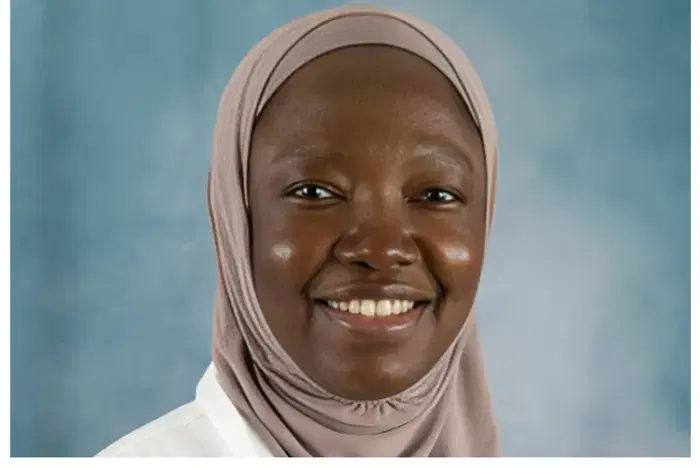
Dr Salamat Aliu-Ibrahim’s appointment to lead a US children’s clinic marks another milestone in a remarkable career — and offers a fresh window into the loss of highly trained Nigerian health professionals to better-resourced healthcare systems abroad
When Dr Salamat Ahuoiza Aliu-Ibrahim became Nigeria’s first indigenous-trained female neurosurgeon, she was entering a medical specialty in which women were still conspicuously underrepresented and in which the demands placed on specialists extended far beyond the acquisition of a medical degree.
Her achievement was significant not only because she became a pioneer for women in Nigerian neurosurgery, but also because she did so through a healthcare system whose limitations have since become one of the principal reasons highly trained Nigerian professionals seek opportunities elsewhere.
More than a decade after establishing herself as a neurosurgeon in Nigeria, Aliu-Ibrahim has reached another significant milestone thousands of kilometres away.
On July 21, 2026, she was appointed Medical Director of Freeman Children’s Clinic in Joplin, Missouri, placing a Nigerian-trained medical pioneer in a senior leadership position within the American healthcare system.
Her journey from Ilorin to Missouri is an extraordinary personal story, but it also sits within a much larger Nigerian story: the continuing migration of doctors, nurses, pharmacists, laboratory scientists and other health professionals whose skills are increasingly being deployed in countries that can offer better infrastructure, remuneration, professional development and working conditions.
Aliu-Ibrahim’s career is particularly instructive because her move to the United States was not a straightforward transfer from one neurosurgical system to another. After relocating, she was unable to secure a US neurosurgery residency position and instead retrained in paediatrics, eventually building a new career in the specialty and rising to a leadership position.
The result is a career that demonstrates both the resilience of the individual professional and the ability of a better-resourced system to absorb, retrain and deploy expertise developed elsewhere.
The woman who broke a medical barrier
Born in Ilorin, Kwara State, in 1980 and a native of Okene in Kogi State, Aliu-Ibrahim studied medicine at the University of Ilorin before pursuing specialist training in neurosurgery.
She trained at the National Hospital, Abuja, and later worked as a consultant neurosurgeon at the University of Ilorin Teaching Hospital, where she handled complex cranial and spinal procedures.
Her qualification represented a historic moment. She became Nigeria’s first female neurosurgeon and the first woman certified as a neurosurgeon in West Africa, according to records of the development of women in African neurosurgery. The Nigerian Academy of Neurological Surgeons also records her as its first female member.
The achievement came at a time when neurosurgery remained overwhelmingly male-dominated across much of Africa. Research into the participation of women in African neurosurgery has shown how limited female representation has historically been, with Nigeria itself having only a handful of female neurosurgeons among its relatively small specialist workforce.
Aliu-Ibrahim was therefore more than a specialist working in a difficult field. She was also a precedent for other Nigerian women who would later enter neurosurgery.
A second medical career in America
Her move to the United States introduced a different set of professional challenges.
Rather than simply transferring her Nigerian neurosurgical career into the American system, she had to navigate a new regulatory and training environment. She eventually completed paediatric residency training at the University of Texas Medical Branch and undertook further specialist training, including paediatric neurosurgery at Boston Children’s Hospital, affiliated with Harvard Medical School.
She later established herself in paediatric medicine in Missouri, where she has now assumed the position of Medical Director of Freeman Children’s Clinic.
The transition is significant because it demonstrates what migration can mean for a highly trained professional. The move did not simply take an experienced Nigerian doctor out of one operating theatre and place her in another; it placed her in a system where she could acquire additional training, change specialties and eventually take on an administrative and clinical leadership role.
For Nigeria, the implications are far-reaching.
The numbers tell another story
Aliu-Ibrahim’s experience comes as Nigeria faces an increasingly severe shortage of health professionals.
Figures from Nigeria’s State of Health of the Nation Report 2025, cited in a recent report, indicate that 20,966 Nigerian health workers relocated abroad within one year. The figure included 3,919 doctors, 7,487 nurses and midwives, 6,861 medical laboratory professionals and 702 pharmacists.
The United Kingdom has become one of the most important destinations for Nigerian medical professionals. Data from Britain’s General Medical Council showed that 4,691 Nigerian-trained doctors joined the UK medical register between May 2023 and April 2026.
The United States and Canada have also continued to attract Nigerian doctors, with the Commonwealth Fund estimating that Nigeria requires roughly 240,000 doctors but has only about 72,000 registered with the Nigerian Medical Association. The organisation also reports that at least 2,000 Nigerian doctors leave annually for countries including the US, UK and Canada.
Those figures have consequences far beyond government statistics.
When experienced specialists leave teaching hospitals, the immediate loss is to the patients who would have depended on them, but the longer-term effect reaches into medical education, specialist training and research. Young doctors lose mentors, hospitals lose institutional experience and patients are left with fewer options for complex treatment.
The consequences are particularly serious in specialties such as neurosurgery, where the number of trained specialists is already small and the equipment and multidisciplinary support required for advanced procedures are expensive and difficult to maintain.
The infrastructure problem
The debate over Nigeria’s medical migration is often reduced to salaries, although remuneration is only one part of the problem.
Doctors require functioning hospitals in which they can practise the medicine for which they were trained. Neurosurgery, in particular, depends on reliable operating theatres, anaesthesia, imaging, intensive care, blood services, specialist nurses, rehabilitation and a multidisciplinary team capable of supporting patients before and after complex procedures.
Where those systems are unreliable, professional frustration can become as powerful a reason for migration as the prospect of a larger salary abroad.
Studies on health-worker migration from Nigeria have repeatedly identified poor working conditions, inadequate remuneration and limited opportunities for professional advancement among the factors encouraging medical professionals to seek opportunities outside the country.
For a specialist, the issue is therefore not simply where the salary is higher. It is also where the skills acquired through years of demanding training can actually be put to effective use.
The real cost to Nigeria is measured not only in the number of doctors who leave, but in the expertise, mentorship and specialist services that leave with them.
The country pays to train, others benefit
There is a difficult economic calculation behind the migration of Nigerian health professionals.
The Nigerian state, families and individuals invest heavily in medical education and specialist training. The process can take more than a decade before a doctor reaches consultant level, particularly in highly specialised fields.
When that doctor eventually moves abroad, the receiving country benefits from a professional whose fundamental medical education and much of whose specialist experience were acquired elsewhere.
The receiving system may still require the doctor to pass examinations, obtain licences and, in some cases, undertake additional training, as Aliu-Ibrahim did. But it does not have to build the professional from the beginning.
The loss therefore extends beyond the number of doctors who leave.
It includes the years of experience they have accumulated, the trainees they would have supervised, the research they might have conducted and the specialist services they could have helped establish.
This is why the migration of Nigerian doctors is ultimately a question of human capital rather than merely a question of employment.
Yet migration is not betrayal
There is an important danger in discussing the issue as though doctors who leave Nigeria have failed their country. They have not.
Medical professionals, like other citizens, have legitimate aspirations for safety, professional growth, adequate remuneration and the opportunity to work in institutions equipped to support their expertise.
Aliu-Ibrahim’s decision to pursue another career pathway in the United States illustrates precisely why simplistic arguments about patriotism do not adequately explain the phenomenon.
She did not abandon medicine. She continued training, adapted to a different healthcare system and built a new professional identity in paediatrics before rising to medical leadership.
Her achievement belongs to her, and Nigeria has every reason to celebrate it. The harder question is what the country can learn from it.
From brain drain to brain circulation
Nigeria does not necessarily have to choose between forcing professionals to remain and watching them leave permanently.
There is a third possibility: creating conditions under which Nigerian professionals abroad can remain connected to the country’s healthcare system through specialist training, research partnerships, visiting appointments, telemedicine, equipment projects and periodic clinical missions.
Such relationships would not replace the doctors who have left, but they could turn some of the consequences of migration into opportunities for knowledge transfer.
The larger task, however, remains at home.
Retaining specialists requires more than appeals to patriotism. It requires hospitals with functioning equipment, reliable power, adequate staffing, competitive remuneration, transparent career structures and opportunities for doctors to develop professionally without having to leave the country to achieve them.
The challenge is especially pressing because Nigeria continues to train doctors who are capable of competing internationally while struggling to provide a healthcare environment in which enough of them can build long-term careers.
A Nigerian success story with a sobering message
Dr Salamat Aliu-Ibrahim’s appointment in Missouri should first be celebrated for what it is: the latest achievement in the career of a woman who broke a formidable barrier in Nigerian medicine and subsequently demonstrated the ability to reinvent herself in another healthcare system.
But her story also leaves Nigeria with a much larger reflection.
The country once needed pioneers such as Aliu-Ibrahim to prove that a Nigerian woman could become a neurosurgeon. It now needs to build a health system in which the specialists it produces can see a future at home that is professionally rewarding, adequately supported and worthy of the enormous investment required to train them.
Nigeria trained her. America has now given her another platform on which to thrive.
The real policy challenge is not to resent that success, but to understand why so many of Nigeria’s finest medical professionals increasingly find their best opportunities elsewhere — and what must change before excellence in Nigerian medicine becomes something the country can retain as well as export.