By John Azu
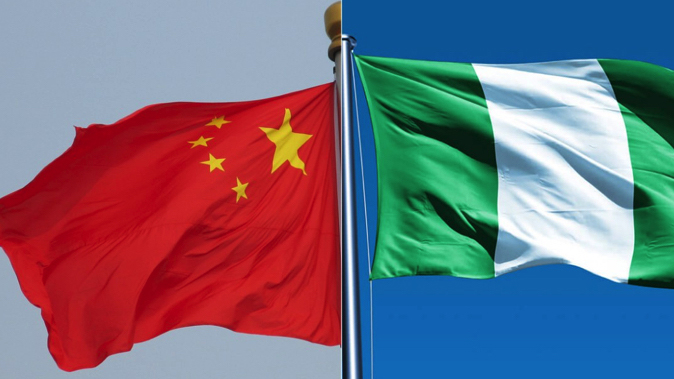
The Chinese Ambassador to Nigeria, Yu Dunhai has disclosed the positive growth by 80 per cent to $2.3 billion of the Nigerian trade exports to China following the introduction of zero-tariff policy for African products export to China.
Ambassador Yu said since the policy’s introduction from May to June alone, Chinese imports from Africa reached $29 billion, a 24 per cent year-on-year increase, while the estimates show that the zero-tariff policy has boosted overall African exports to China by roughly 6 per cent.
The Ambassador spoke on Friday during the opening of the international seminar with the theme: “China Zero-Tariff Treatment of Tariff Lines for African Countries and Its Implications for Structural Economic Transformation in Africa” organised by the Centre for China Studies and the Chinese Embassy in Nigeria.
“Nigeria’s performance has been especially striking: total bilateral trade reached $18 billion in the first half of the year, up 35 per cent year-on-year, while Chinese imports from Nigeria surged 80 per cent to $2.3 billion, with monthly growth exceeding 40 per cent in both May and June.”
He said President Xi Jinping had on February 14 announced that, starting May 1, 2026, China would grant zero-tariff treatment to all 53 African nations with diplomatic relations with China, which marked a strategic milestone in building a high-level China-Africa community with a shared future and advancing our joint vision for modernization.
He said the world is undergoing profound shifts unseen in a century. Geopolitical tensions continue to disrupt global supply chains, while unilateralism and protectionism threaten the international multilateral trading system.
Continuing, Xi said “African economies have long faced structural disadvantages – delayed industrialization, incomplete manufacturing systems, and infrastructure bottlenecks – leaving many caught in a cycle of resource abundance alongside economic lag. In the post-pandemic era, shrinking global demand and slowing capital flows have added further pressure. What Africa needs today is stable, open access to international markets to power its long-term recovery.
“China remains firmly guided by the principles of sincerity, real results, amity, and good faith, alongside a commitment to shared benefits. We do not interfere in internal affairs, we respect Africa’s independent path, and we are committed to helping address core development bottlenecks. This zero-tariff measure represents a major upgrade to China’s preferential policies, opening our market of 1.4 billion consumers without political conditions or market-access barriers. It creates a modern institutional bridge for practical, mutually beneficial cooperation.”
He noted that for Africa, paired with our “Green Channel 2.0” for agricultural goods, it directly lowers export costs, solves access challenges, and helps high-value resources reach China’s vast market – enabling Africa to reduce reliance on unprocessed commodities.
“For China-Africa cooperation, it shifts our partnership from traditional aid and raw material trading toward structural integration, value-addition, and shared industrial development.
“For global governance, it rejects trade bullying, injects positive momentum into the multilateral trading system, and sets a powerful example for equitable participation in global markets.”
Speaking, the Minister of Foreign Affairs, Mrs Bianca Ojukwu said Africa must create the conditions that enables its production to benefit from the zero-tariff policy such as infrastructure, energy supply, regulatory predictability, trade facilitation, skills development and the ease of doing business.
The minister, who was represented by the Permanent Secretary in the ministry, Donuma Ahmed, said the partnership should evolve from the exchange of commodities and manufactured goods to the one based on more production, industrialisation, innovation and shared value creation.
“The zero-tariff initiative should also encourage us to examine the composition and competitiveness of African exports; preferential market access will have limited transformational impact yet African economies continue to export predominantly raw materials while importing finished products,” he added.
Speaking also, the Minister of State for Agriculture and Food Security, Senator Aliyu Sabi Abdullahi said the policy opens a new chapter of China-Africa economic relations and a testament to the confidence of the Chinese government on African economy, sending a powerful message that Africa is becoming an indispensable partner in global trade, manufacturing and agricultural development.
Further, the Chairman House of Representatives Committee on Nigeria-China Parliamentary, Jafaru Yakubu, noted that the zero-tariff policy can spur economic growth in the African countries as China is the principal export destination for developing African countries at approximately $86 billion worth of goods, while pleading for better visa bottlenecks for Nigerian traders visiting China, especially those from Kano State.