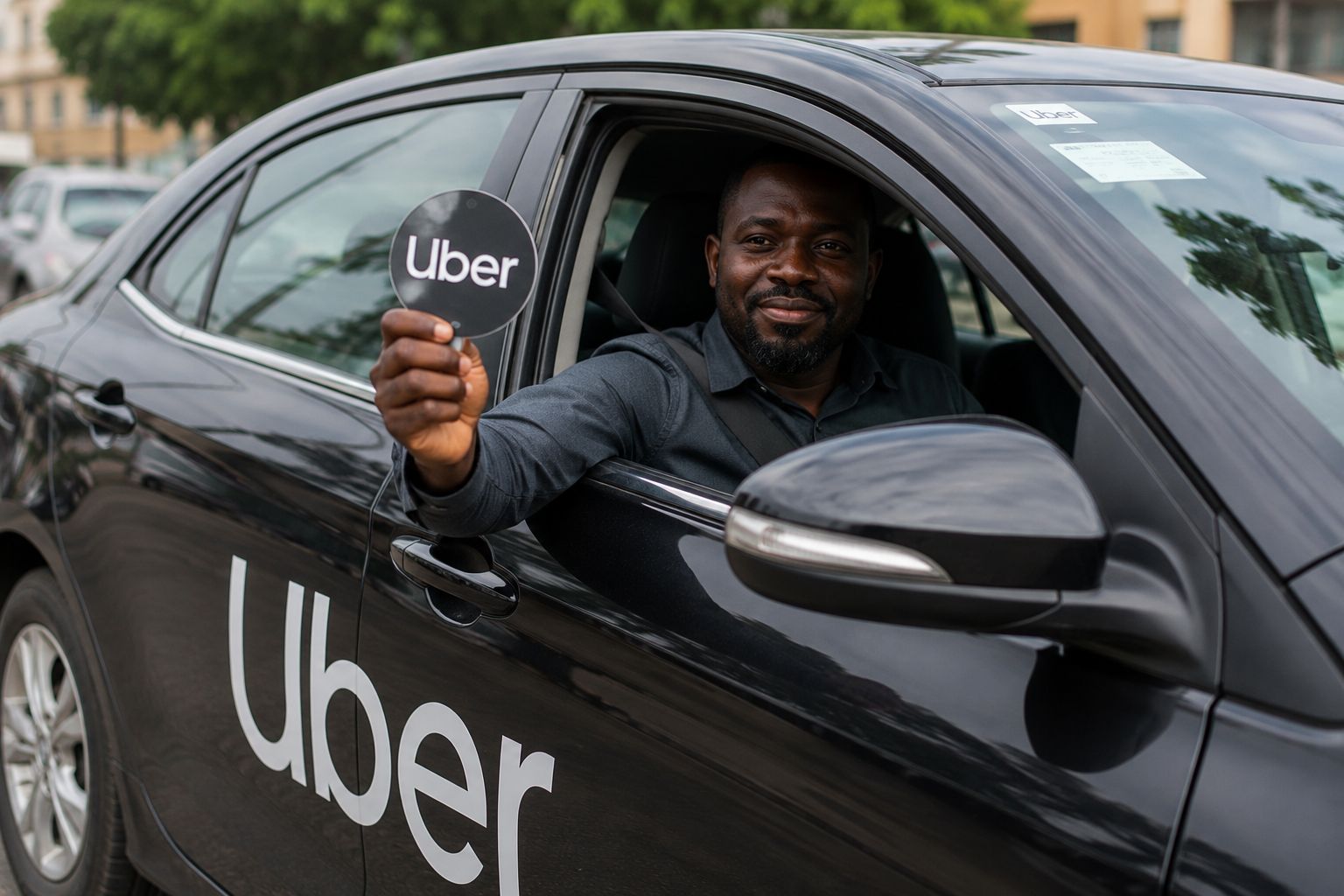
As Uber prepares to spend billions on Delivery Hero, including Glovo’s Nigerian business, the bigger story may be less about abandoning Nigeria than about changing what Uber wants Nigerians to buy.
LAGOS, NIGERIA — There is a temptation to read Uber’s departure from Nigeria as a simple corporate retreat: a global technology company arrived with enormous ambition, spent 12 years building a household name, and eventually decided that the Nigerian market was no longer worth the trouble.
That interpretation is understandable. It is also incomplete.
Uber ended its Nigerian ride-hailing operations on September 2, bringing down the curtain on a business that began in Lagos in 2014 and later expanded to Abuja and other Nigerian cities. The company has described the decision as part of a review of its business priorities and investment focus across Africa, without identifying a single cause for the withdrawal. Rising fuel prices, inflation, currency volatility and the increasingly difficult economics of ride-hailing have nevertheless made the Nigerian mobility market a demanding one for both drivers and platforms.
Then comes the detail that complicates the story.
In July, Uber announced a proposed takeover of Delivery Hero, the German food-delivery giant behind a collection of platforms operating across dozens of markets. The offer values Delivery Hero at about €13 billion on a fully diluted basis, or approximately $14.8 billion. If completed, the transaction would give Uber control of businesses spanning mobility, food delivery and quick commerce across 99 markets.
And Nigeria has not disappeared from that map.
Among the Delivery Hero businesses earmarked for acquisition by Uber is Glovo’s operation in Nigeria. In other words, almost as Uber is switching off the engine on one Nigerian business, it is positioning itself to acquire another.
Uber is leaving the Nigerian road while potentially buying a larger stake in the Nigerian consumer economy.
The Mayor of Fadeyi’s Warning
Commentator Ope Banwo, writing under his familiar Mayor of Fadeyi persona, offered a characteristically Nigerian reading of the development.
His warning was against taking the first appearance of an event as its complete meaning.
“In Nigeria, you have to read the news twice—sometimes three times.”
The metaphor is useful here. A company can withdraw from one line of business without abandoning the market itself. Multinationals rarely think in the emotional categories that dominate public debate—arrival, departure, victory, defeat. They think in portfolios, margins, market share, logistics, infrastructure and future growth.
Uber’s own numbers make that clear.
The company has been steadily expanding beyond its original identity as a ride-hailing company. Its proposed Delivery Hero acquisition follows a series of moves designed to strengthen its position in delivery and commerce. Uber also completed the acquisition of Getir’s delivery business in July 2026.
The strategy is increasingly visible: the company wants to be more than the application that sends a car to the kerb.
It wants to sit between consumers and a much wider range of everyday transactions.
Why Cars Are Becoming a Harder Business
Ride-hailing has always had an awkward economics.
The platform does not own most of the vehicles. Drivers absorb much of the cost of fuel, maintenance, depreciation and financing. Passengers, meanwhile, resist fare increases. The platform must balance the two sides while competing with rivals offering similar services.
Nigeria has made that equation harder.
Fuel costs have risen sharply. The naira’s volatility has affected vehicle and spare-parts costs. Inflation has raised the price of virtually every input required to keep a car on the road. At the same time, drivers need higher earnings while passengers remain sensitive to fares.
The result is a market in which demand may remain strong while profitability becomes increasingly difficult.
Uber has not said that these factors caused its exit, and it would be wrong to present them as an official explanation. But they form part of the commercial environment in which the company made its decision. Reuters reported that Nigeria’s ride-hailing industry has been facing rising fuel costs, inflation and currency volatility, all of which have increased operating pressure.
There is another complication: Regulation.
Uber’s withdrawal followed controversy surrounding e-hailing operations at Nigerian airports after the Federal Airports Authority of Nigeria directed airport managers to stop Uber and Bolt from operating commercially at FAAN-managed airports pending licensing arrangements. Uber subsequently made clear that its Nigerian exit was unrelated to the airport directive.
That clarification is important. The airport dispute may have added friction to the operating environment, but it should not be presented as the reason Uber left.
The Delivery Economy Is Different
Food delivery and quick commerce operate on a different economic logic from passenger transport.
A ride ends when the passenger reaches a destination.
A delivery platform can participate in a much larger chain: the restaurant, the supermarket, the merchant, the courier, the customer and, increasingly, the payments and logistics infrastructure connecting them.
That creates opportunities to build several commercial relationships around the same consumer.
This is the logic behind Uber’s proposed Delivery Hero transaction.
Uber says the combined group would have operations across 99 markets and combined pro-forma gross bookings of $236 billion in 2025. The company expects the acquisition to broaden its delivery footprint substantially, with Uber able to offer both mobility and delivery services in 58 markets rather than 34.
Nigeria therefore becomes interesting for a reason that has little to do with the number of Uber cars on Lagos roads.
It is the size and character of its consumer market.
More than 200 million people live in the country. Millions already transact through smartphones. Urban consumers increasingly rely on digital platforms for transportation, food, payments and commerce. The infrastructure may be difficult, but the market is enormous.
For a company thinking about the next decade rather than the next quarter, that distinction matters.
The Glovo Question
The most intriguing part of the story is therefore Glovo.
Delivery Hero’s portfolio includes Glovo operations in Nigeria and a number of other markets. Under the proposed transaction, Uber would acquire Glovo’s Nigerian business, among other Delivery Hero operations. Delivery Hero has separately agreed to sell businesses in 14 markets to SSW Partners, meaning not every Delivery Hero operation will pass to Uber.
So the immediate picture is not: Uber leaves Nigeria.
It is closer to: Uber leaves Nigerian passenger transport while positioning itself to strengthen its presence in Nigerian delivery and commerce.
A Different Kind of Footprint
There is also a lesson here for how Nigeria interprets foreign investment.
For years, the arrival of a multinational has been treated as evidence that Nigeria is winning the competition for global capital. Its departure is then treated as evidence that the country is losing.
Both readings can be misleading.
Companies continuously move money, people and assets towards the businesses they believe will produce the strongest returns. A multinational can close a loss-making operation in one sector while spending billions to acquire another business in the same country.
The relevant question is therefore not simply: Is Uber leaving Nigeria?
It is: Which part of Nigeria’s economy does Uber believe is worth owning?
From the Driver’s Seat to the Delivery Door
Uber’s Nigerian story began with a simple proposition: put a passenger with a driver through a smartphone.
Its next Nigerian chapter, if the Delivery Hero transaction is completed and the relevant businesses are transferred as proposed, could look very different.
Instead of taking people across Lagos, Abuja and other cities, the platform could be moving meals, groceries, packages and merchandise through the same urban infrastructure.
The car does not disappear.
The economic purpose of the journey changes.
And that may be the real significance of Uber’s departure.
The company is not necessarily betting less on Nigeria. It may simply be betting on a different Nigeria—one in which the most valuable transaction is no longer the journey from one address to another, but everything that can be delivered between them.
For Nigeria, that should prompt a more serious question than whether Uber has left.
If global companies are becoming more selective about where they put their capital, what does Nigeria need to do to make sure it is competing for the next investment—not merely mourning the last one?
The Mayor of Fadeyi’s goat may indeed be moving backwards.
The important thing is to watch where it turns.