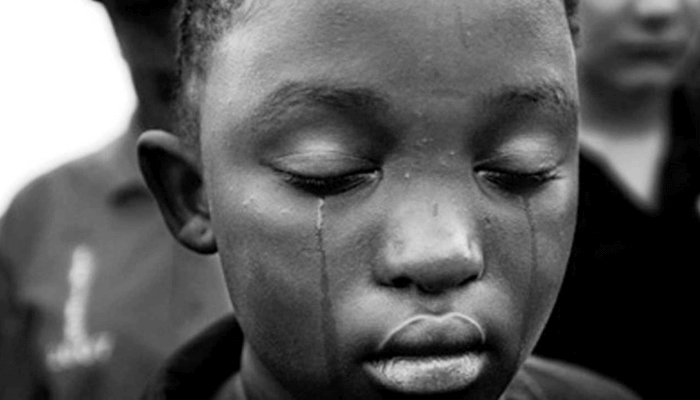
More children are stunted or die under the age of five in Nigeria than in countries with similar income levels, FIJ has gathered. A new report by the World Bank explains why.
According to the Nigeria Development Update published on Tuesday, Nigeria stands out for the wrong reasons in early child development. The report shows that the country records more than 100 deaths per 1,000 live births among children under five.
FIJ reported how the United Nations Inter-Agency Group for Child Mortality Estimation (UN IGME), in its report in March, estimated that Nigeria loses 115 children under the age of five in every 1,000 live births.
The National Health Demographic Survey, which the World Bank relied on, puts that figure at 110 children per thousand births. However, regardless of the source, Nigeria’s under-five mortality rate is still the highest in the World.
HOW NIGERIA COMPARES
Only about four other countries in the world have rates that high, and all of them are in the low-income category, with income per person around $403. Nigeria, however, is in the lower-middle-income group, with income per person between about $1,097 and $2,981.
Countries in that same income group are doing far better. Bangladesh, for example, records between 28 and 31 deaths per 1,000 live births. Even within West Africa, the difference is significant.
READ ALSO: DATA: 4 in 10 Nigerian Children Under 5 Have Stunted Growth
The only comparable country on the World Bank’s chart records between 60 and 80 deaths per 1,000 live births, still far below Nigeria’s level.
The report pointed out the same trend in nutrition. Around seven countries globally have child stunting rates close to 40 per cent. Six of them are low-income countries. Nigeria is the only lower-middle-income country in that group.
WHY DO NIGERIAN CHILDREN SUFFER?
The report links these outcomes first to poverty. The share of Nigerians living in extreme poverty has seen a steady rise since 2021 and reached close to 30 per cent in 2025, per the report.
For many households, this means children do not get enough food, healthcare or clean water. These are basic needs that directly affect whether a child survives and grows properly.
There are also wide differences within the country. Poorer states, especially in northern Nigeria, record much higher levels of child deaths and stunting than states such as Lagos, Ekiti and Enugu. A child’s chances of survival are still strongly tied to where they are born.
What the government spends on also contributes to the problem. Between 2022 and 2025, only five out of Nigeria’s 36 states spent more on social sectors than on infrastructure.
Social spending includes health, education and social protection, which directly affect children. This is happening even as states receive more money from federal allocations.
At the household level, poverty leads to missed care. Families delay or skip antenatal visits, routine immunisation and proper feeding. These gaps increase the risk of death before age five and raise the likelihood of stunting.
The report also fingered weak coordination across services. Key areas like health, nutrition, water and sanitation, education and social protection are managed separately.
Systems such as District Health Information Software 2 (DHIS2) and Education Management Information System (EMIS) have improved data collection within sectors, but they do not work well together. This makes it hard for health workers to track whether a child has received the full set of services needed in the first 2,000 days of life.
The implication is that many children miss out on essential interventions at critical stages. Without better coordination, stronger social spending and reduced poverty, Nigeria is likely to continue recording child mortality and stunting rates that are far higher than those of countries with similar income levels.