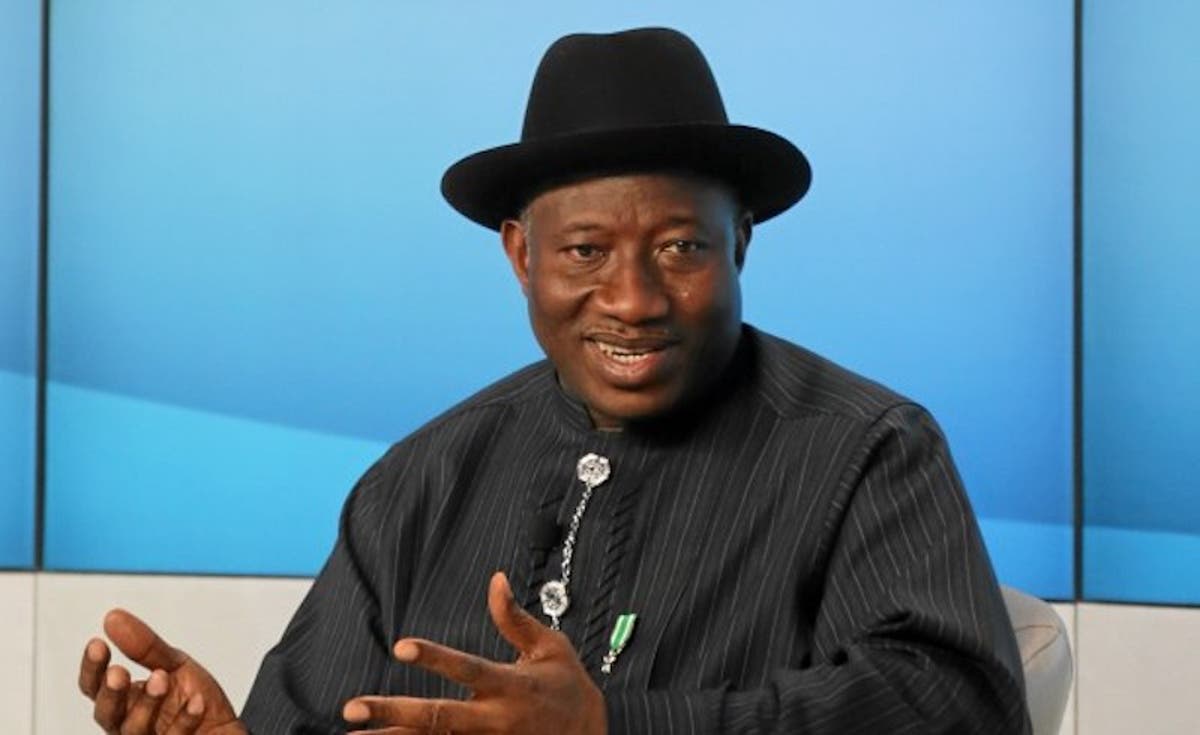
Former President Goodluck Jonathan has issued one of his starkest warnings yet about the state of Nigeria’s democracy, cautioning that the country risks sliding into a full-blown legitimacy crisis if judges — rather than voters — continue to determine the outcome of elections.
Speaking at the opening of the Nigerian Bar Association Abuja Law Week 2026 in Abuja on Wednesday, Jonathan delivered a sweeping critique of Nigeria’s electoral culture ahead of the high-stakes 2027 general elections, arguing that public faith in democracy is collapsing under the weight of judicial interference, political violence, vote-buying and institutional decay.
The former president said post-election litigation has become so entrenched in Nigeria that politicians now approach elections with the expectation that courts, not ballots, will ultimately decide power.
“In Nigeria today, not going to court after an election is what appears strange,” Jonathan said, drawing murmurs from the packed audience of senior lawyers, judges and political figures gathered at the NBA House.
Recounting a conversation with a former South African deputy president, Jonathan said the official expressed disbelief that Nigerian politicians routinely challenge election results in court.
“She asked me: ‘Why would somebody go to court after losing an election?’” he recalled. “In South Africa, that is strange. But in Nigeria, not going to court is strange.”
Jonathan warned that the trend was eroding democratic legitimacy and creating dangerous public perceptions that electoral outcomes could be overturned through judicial influence rather than popular mandate.
Read Also: The Selectorate: When the people vote but the judges choose
Read Also: The Selectorate: Now on sale, Grab your copy
In perhaps the most pointed moment of his address, the former president argued that courts should never declare winners in disputed elections, insisting that fresh polls — not judicial pronouncements — should be the constitutional remedy where substantial irregularities are established.
“The judiciary should do its work, yes,” he said. “But courts should not be declaring candidates winners. If the process is flawed, then let Nigerians go back to the field and vote again. Let the ballot decide.”
The remarks strike at the centre of one of Nigeria’s most contentious democratic debates: whether the judiciary has become an unelected extension of electoral politics.
Jonathan also questioned the logic of Nigeria’s electoral appeals structure, describing it as inconsistent and constitutionally awkward.
“Governorship elections go through three layers — tribunal, Appeal Court and Supreme Court,” he said. “Presidential elections go through two. Are we saying electing a governor is more important than electing a president?”
The former president painted a bleak portrait of a political system increasingly detached from ordinary citizens, lamenting that Africa’s most populous country now records some of the continent’s weakest voter participation rates.
Nigeria’s electoral commission, he argued, must look beyond the simplistic explanation of “voter apathy” and confront the deeper causes of public disengagement, including distrust in the integrity of elections.
Jonathan linked that growing distrust to the normalization of political violence and the rise of what he described as a lucrative ecosystem of political thuggery.
“Nigeria is probably the only country where thuggery has become a profession,” he declared.
“Some political thugs fly first class when travelling abroad while university professors struggle to buy economy tickets. When that happens, the country is upside down.”
The imagery captured a broader frustration with a political culture critics say increasingly rewards coercion over competence and patronage over public service.
Jonathan called on the Nigerian Bar Association to work with the National Assembly on urgent reforms to both electoral and judicial laws, including the possible creation of a specialised Constitutional Court dedicated exclusively to election disputes.
The proposal comes amid growing concern over the judiciary’s expanding role in political contests and mounting accusations — often fiercely disputed — that courts are being weaponised in post-election power struggles.
Former Attorney General of the Federation Mohammed Bello Adoke echoed many of those concerns in a keynote address that painted an equally troubling picture of Nigeria’s democratic trajectory.
Adoke warned that after more than two decades of uninterrupted civilian rule, Nigeria’s democracy still suffers from a profound crisis of credibility.
“The question is no longer whether elections are being conducted,” he said. “The real question is whether Nigerians still trust the outcomes.”
Citing the 2023 general elections, Adoke noted that voter turnout plunged to just 27 percent — the lowest since Nigeria’s return to democracy in 1999 — while election-related violence claimed at least 89 lives.
According to him, vote-buying, weak internal party democracy, poor enforcement of electoral laws and entrenched political violence have hollowed out the democratic process.
“Vote-buying has transformed elections into economic transactions rather than democratic choices,” he warned.
Adoke also criticised political parties for allegedly imposing candidates in defiance of democratic primary procedures outlined in the Electoral Act 2022, arguing that excessive dependence on courts to settle political disputes was steadily disenfranchising ordinary voters.
“The phrase ‘go to court’ has now become a silent reminder that the electorate’s role in choosing leaders is gradually being diminished,” he said.
Despite the grim assessment, Adoke reserved special praise for Jonathan’s conduct during the tense 2015 presidential transition, describing the former president as “a democratic legend” for conceding defeat peacefully in a period many feared could trigger national unrest.
NBA President Afam Osigwe said it was deeply troubling that nearly three decades after Nigeria’s return to civilian rule, the country was still grappling with fundamental questions about how to protect democracy itself.
Osigwe warned that electoral manipulation and violence now pose threats comparable to military intervention.
“Without tanks on the streets or soldiers announcing coups,” he said, “people still come to power through violence, thuggery and manipulation.”
He urged political actors to embrace the democratic spirit Jonathan displayed in 2015, when the former president famously declared that his personal ambition was not worth the blood of any Nigerian.
“That,” Osigwe said, “should be the guiding principle of every democratic process as we approach 2027.”
The event was attended by senior members of the legal community and political establishment, including representatives of the Federal Capital Territory High Court, the African Bar Association and senior advocates of Nigeria.