By Mabel Adinya Ade
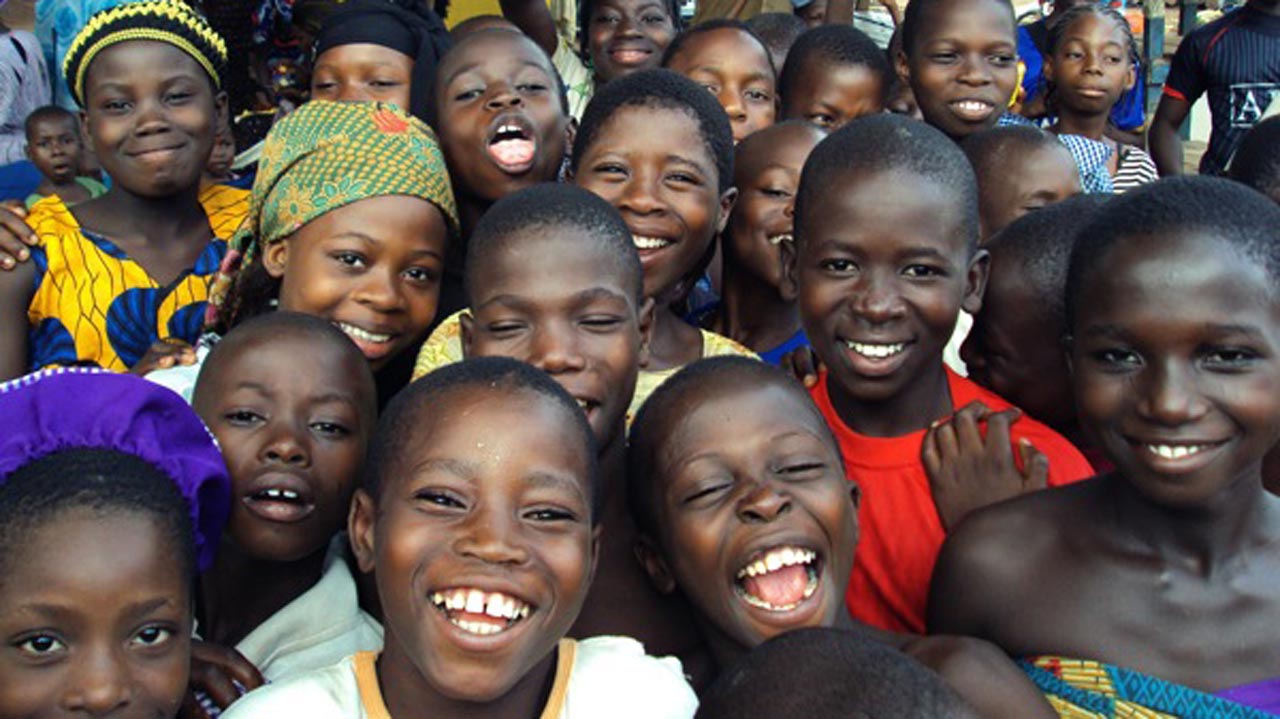
Today, as Nigeria marks Children’s Day, my heart travels back over four decades back to a time when being a child in Nigeria was something to celebrate without fear. I remember the anticipation that filled the air in our primary and secondary schools: the excitement of match pasts, the rhythm of cultural dances, the pride of representing our schools, and the joy of being seen, heard, and celebrated. Children’s Day was not just an event; it was a symbol of hope, innocence, and the promise of a brighter tomorrow.
We were children, free to dream, to laugh, to learn, and to grow. Today, that memory feels like a distant echo. I write with a heavy heart, burdened by the reality that many Nigerian children no longer have the safety, freedom, or environment to simply be children. In recent times and even within this past week our nation has been confronted with deeply troubling reports of children taken from their schools and communities. These are not isolated incidents. They are part of a growing pattern of insecurity that has turned places of learning into spaces of fear.
School abduction since 14 April 2014, when the world awoke to the shocking abduction of 276 schoolgirls from Government Girls Secondary School in Chibok, Borno State, by Boko Haram terrorists have become sadly frequent. On 19 February 2018, 110 schoolgirls were abducted from Government Girls Science and Technical College in Dapchi, Yobe State. Although many were later released, Leah Sharibu remains in captivity.
In December 2020, more than 300 schoolboys were kidnapped from Government Science Secondary School in Kankara, Katsina State. In February 2021, 27 students were abducted from Government Science College, Kagara, Niger State. And days later, 279 girls were kidnapped from Government Girls Secondary School, Jangebe, Zamfara State.
In March 2024, armed bandits abducted over 280 pupils and teachers from Kuriga in Kaduna State, once again reminding the nation that our schools remain dangerously vulnerable. To date over 70 attacks have been made on Nigerian schools, the latest occurring in Oriire in Oyo on 15 May 2026 where 39 school children and seven teachers were brutally abducted.
Sadly, behind every number is a child with a name, a future, and a family. Behind every incident is a parent whose world has been shattered, whose pain is beyond words. The anguish of not knowing, the trauma of loss, the silence of unanswered questions these are burdens no family should ever have to carry.
The key questions we must grapple with are: What brought about this has change? How did we move from a nation where children marched in celebration to one where they are counted in statistics of insecurity? Why have we allowed systems meant to protect the most vulnerable among us to weaken, to fail, or in some cases, to disappear altogether? Why does it seem easier to explain away these tragedies than to prevent them?
The persistent insecurity and violence targeting children and communities across Nigeria is intolerable. It is unacceptable. And it must stop. This is not the time for silence or shifting responsibility. It is a time for accountability.
Government at all levels Local, State, and Federal must rise to its primary duty: the protection of lives, especially those of children. Security agencies must be strengthened, coordinated, and held to the highest standards of responsibility. The judiciary must stand firm in ensuring that justice is not delayed or denied that perpetrators are held accountable and that victims and their families receive the justice they deserve.
But this responsibility does not rest with government alone. Parents, teachers, and school administrators must remain vigilant and proactive. Religious leaders and traditional institutions must lend their moral voice and influence to the protection of children. Communities must rebuild trust and collective responsibility, refusing to normalize what should never be accepted.
This is because protecting children is not a privilege. It is a duty. A sacred one.
We must also confront a difficult truth: it does not require extraordinary resources to begin to change this trajectory. The cost of securing our schools and communities is far less than the cost of inaction and certainly far less than the staggering sums lost to mismanagement and corruption. The question, therefore, is not whether we can act. It is whether we will. Enough is enough. The state must respond appropriately and curtail these sad incidences.
Our children deserve to go to school without fear. They deserve to learn in environments that nurture, not threaten, their potential. They deserve a nation that protects them not one that leaves them vulnerable.
This is therefore a call to conscience. It is a call to every Nigerian that we must reclaim our values. We must restore our sense of collective responsibility. We must demand transparency, accountability, and action from those entrusted with leadership. And we must be willing, each in our own sphere of influence, to stand up for the rights, dignity, and safety of every Nigerian child. Nigeria cannot afford to fail its children.
On this Children’s Day, let us move beyond celebration to reflection and from reflection to action. Let this not be another year where we speak fine words and return to silence. Let it be the turning point where we decide, collectively and unequivocally, that the lives of our children matter more than excuses, more than indifference, and more than broken systems.
Our children are not statistics. They are the future we cannot afford to lose.
Let us rise together to protect them, to defend them, and to ensure that once again, in every corner of this nation, children can laugh, learn, and live without fear. Let children be children again.
Mabel Adinya Ade is the founder and Executive Director Adinya Arise Foundation AAF 8 Eket Close Area 8 Garki Abuja.