By Añuli Aniebo
At the risk of sounding academic, my understanding of legitimisation became clearer through a second Masters in Gender Studies done in School of African and Oriental Studies (SOAS). One of the modules that stretched my brain -Gender, Sexuality and Law – introduced me to discourses and scholars who have done extensive research on the conceptualisation and construction of law as a structure and system that can be protective yet violent based on who is utilising the knowledge within it, for what intent and to which audience.
Locating “Victim”- hood
Discourses in jurisprudence also gave a deeper reflection of “victim”- hood, unpacking the binary definition that more often than not, center women as vulnerable and hence, are the weakest link. Same studies look at victim-hood as an ideology created during colonisation to prescribe an “inferiority” status for the Global South and for the “civilisation” process especially through the lens of the orientalist North.
Men are not depicted and socialised in this system as “vulnerable” or “victims” to maintain the masculine status and norms embedded in the social ordering however if or when a man becomes emasculated, either through violence such as rape, or through inability to meet the “provider” expectation, that situation becomes likened to or compared to what a woman goes through and the man then becomes essentialised into a victim.
Countries in Global South develop and expand laws albeit reactionary in some cases for example in India where a law had to be enacted to protect daughter-in-laws from mother-in-laws who abuse brides. Due to the cultural norms that exists, many women pay the groom price, some brides are unable to “complete” the dowry and this seldom leads to violence from the mother of the groom. Section 498A of the Indian Penal Code sets provisions in the Bharatiya Nyaya Sanhita (BNS) and the Protection of Women from Domestic Violence Act 2005 (PWDVA). The cases of some women who are violent is rarely heard because women are assumed to be the “weaker vessel”.
Generally, “victim”- hood mentality, in my opinion, has been used to minimise the visibility and occurrence of some women who are perpetrators of violence against others, silencing and shaming the lived realities of some women who experience harsh abuse from other women as well as de-center violence that some women inflict against children, other younger women and vulnerable people in the communities.
Many laws; Little Power
It is evident that the continent is not devoid of laws. There continues to be solid evidence that laws exists and can be utilised for protection of human rights. The real distraction from enforcement and implementation lies in the core awareness of the rights individuals possess and the “will” to go beyond societal silencing, shaming and sometimes, “learned” helplessness to activate the provisions that the laws serve to protect. Nonetheless, it is still very vital to ensure the knowledge of laws that exist for vulnerable people must be brought to their attention.
Aside from the very present patriarchal norms that can influence some types of discrimination against women and girls and often clash with rights of marginalised groups, religious and traditional institutions often project a strong foundation for moral responsibility and respect for dignity of all humans. I always believe that the place of religion and tradition can greatly champion attitudinal and behavioural shifts in the mindset of the members and I advocate that many of the rights of women and girls, be included in tenants and pulpit presentations.
The Right to Know your Rights is Priceless
The Protocol to the African Charter on Human and People’s Rights on the Rights of Women Africa (Maputo Protocol) will be in its 11th year since the onset of its inception. As part of the laws that are designed to protect women and girls, the Maputo Protocol, adopted 11th July, 2003, is created to legally protect rights of women and girls economically, socially as well as their reproductive rights across Africa.
It is not enough to know the laws that govern and protect women and girls. There lies a great disparity and disservice in the utilisation of laws that have the potential to protect vulnerable people. While this lacuna exists, the need to continually create awareness for such laws is very important. It is also crucial to educate and enlighten women and girls of the power within our legal systems. Some of these laws have either existed or have become legally binding through seeing cases of discrimination against women’s rights, overturned.
Legal Instruments as Arsenals
To ensure we keep advocating to address inequalities, a summary of these laws and provisions are highlighted below. In no particular order, here are some laws that are actively being applied in Nigeria
- [ ] The 1999 Constitution (as amended) Section 42
This law states that no one is to be discriminated differently based on sex and protects the right to dignity, and prohibits any inhumane treatment, torture or forced labour.
- [ ] Matrimonial Causes Act Section 70, 2004
An act that permits a wife to receive financial maintenance from her husband during marriage, during divorce proceedings and after separation.
- [ ] Matrimonial Causes Act Section 72, 2004
A wife can claim fair share of property after divorce while taking her contributions into account
- [ ] Married Women’s Property Act, 1882
A wife owns property which she acquires and can sell same without an automatic claim by her husband as long as she owns it.
- [ ] Labour Act Maternity Protection Clause, 2004
A woman on maternity leave cannot be dismissed by an employer. In the case of dismissal, she must be permitted to serve out her maternity leave and return to work before any notice of dismissal is issued
- [ ] Labour Act Section 54, 2004
Expectant mothers in employment are entitled to 12 weeks of maternity leave, 6 weeks taken after delivery with up to 50% pay for employment timeline of 6 months or more.
- [ ] Inheritance- Ukeje v Ukeje, 2014
A ruling by the Supreme Court states that the Igbo custom cannot prevent a daughter from inheriting her father’s estate. This provision relies on Section 42 of the Constitution which prohibits discrimination by sex, ethnicity, religion or any circumstances surrounding birth.
- [ ] River State Inheritance Law, 2022
Furthering the law Ukeje v Ukeje 2014, River State converted this ruling to State legislation and gives women in Rivers State a written law to rely on.
- [ ] Inheritance- Anekwe v Nweke, 2014
This ruling holds that a widow cannot be denied inheritance for failing to bear a son.
- [ ] The Child Rights Act, 2003
The law prohibits abuse against children and defines that any child below 18 years cannot be legally married nor consent to marriage
- [ ] The VAPP Act (Violence Against Persons Prohibition Act), 2015
While this federal law covers all genders, it is a legal instrument that covers most forms of violence against women and girls.
- [ ] Cybercrimes Act, 2015
This act protects women and girls from online violence and harassment. It protects against non-consensual sharing of intimate images (Revenge Porn), cyberstalking, and forms of technology-facilitated gender based violence.
- [ ] Trafficking in Persons (Prohibition) Law Enforcement and Administration Act, 2003
The law is domiciled and enforced by National Agency for the Prohibition of Trafficking in Persons (NAPTIP) in the protection of women and girls for sexual exploitation, exportation and forced labour.
- [ ] The CEDAW – Convention on the Elimination of All Forms of Discrimination Against Women.
Signed by Nigeria in 1985, the law requires that women and girls are protected against discrimination. The African Charter on Human and Peoples Rights (Ratification and Enforcement) Act of 1983 means this law has full legal force in Nigerian courts.
Discrimination Against Persons with Disabilities (Prohibition) Act of 2018.
This Act prohibits all forms of discrimination against Persons with Disabilities (PWDs). The law speaks to the accessibility for physical infrastructure and spaces and to have inclusive workplace, recreational facilities and buildings that take the needs of PWDs into account at all levels of Governance.
Realism of Rights
The need to further strengthen our understanding belongs to us. Ignorance is never blissful and the rights of self and others is an inherent responsibility that we must undertake. There’s still the question of legal representation – who knows the law and are willing to implement this for the protection of women, girls and vulnerable people.
Schools should evolve in adding these laws and legal instruments to the curriculum, communities and groups should discuss laws from onset to increase accountability of persons either to themselves or someone else and family units can adopt teaching such laws to their members as well.
Getting and gaining legal knowledge about human rights should be considered as a fundamental human rights, in my opinion. It should begin yesterday.
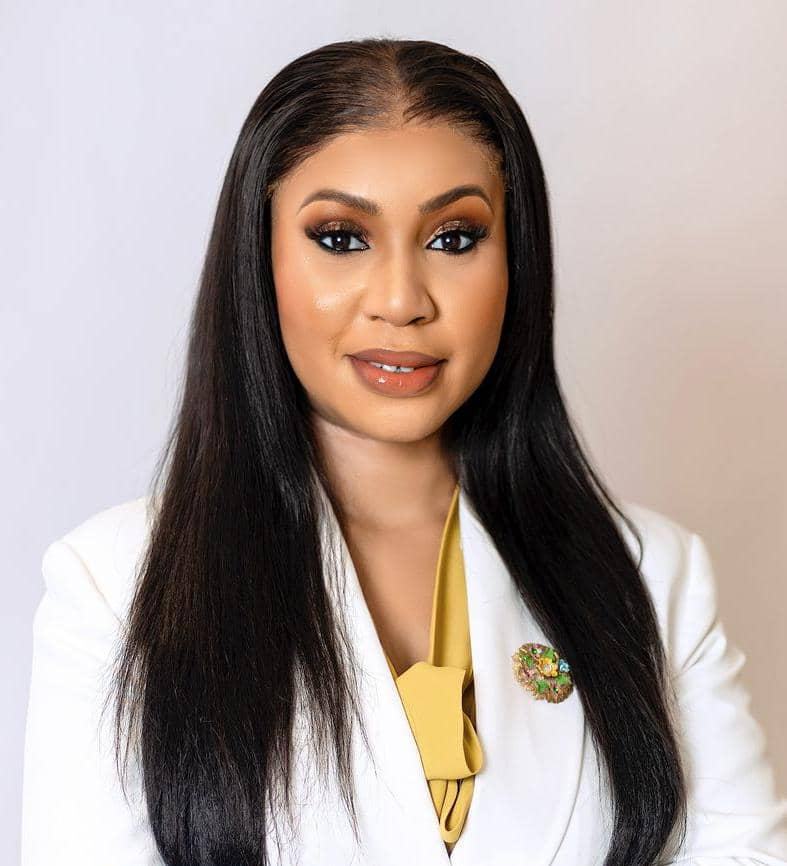
Añuli Aniebo
Gender and Inclusion in Practice | ED, HEIR Women Hub. IG @heirwoman. www.heir.com.ng