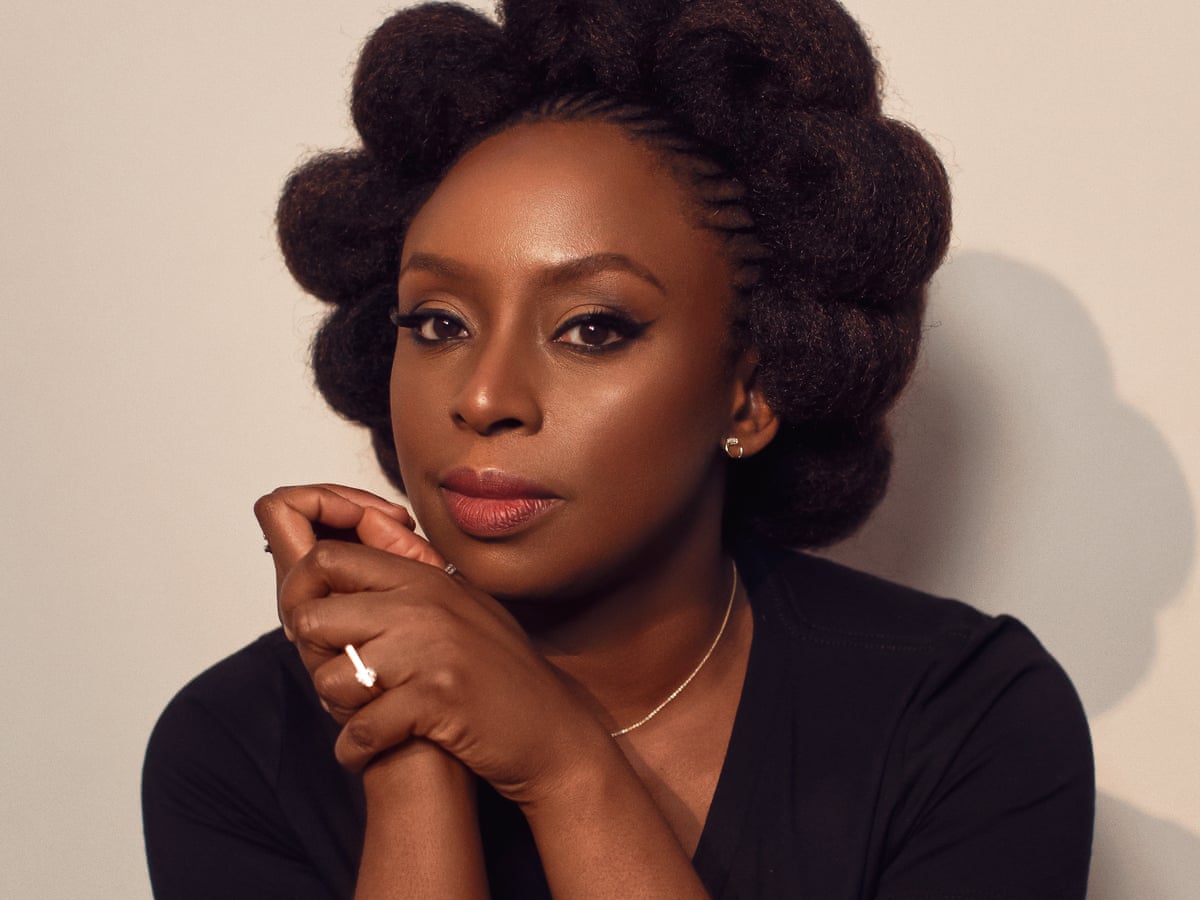
During the National Public Hearing for the Special Seats Reserved for Women Bill, which took place at the National Assembly, Abuja, on Monday, Senior Advocate of Nigeria and Life Bencher, Professor Joy Ezeilo, joined other voices to stress that ” Where the power is, Nigerian women are not!”
In the paper she presented at the public hearing, Prof. Ezeilo raised concerns that the representation of women in Nigeria’s national and state parliaments remains alarmingly low, with women securing less than 5 percent of available seats.


“Comparative Analysis of Nigeria and Other African States:
“Significant progress has been made in several African countries regarding the representation of women in parliament. According to the Inter-Parliamentary Union’s 2023 database, the following countries have achieved at least the 30% benchmark set by the Beijing Declaration and Platform for Action (BDPA: 1995) for women in power and decision-making:
1. Rwanda: Women constitute 61.3% of the lower house and 34.6% of the upper legislative chamber.
2. South Africa: Women represent 46.2% of the lower house and 44.4% of the upper legislative house.
3. Senegal: The percentage of women in parliament is 46%.
- Namibia: Women hold 44.2% of seats in the lower house and 14.3% in the upper legislative chamber.
- Mozambique: Women’s representation in parliament stands at 43.2%.
- Cape Verde: Women make up 41.7% of parliament.
Other notable countries include:
– Burundi: Women hold 38.2% of the lower house and 41.0% of the upper legislative house.
– Cameroon: The representation is 34.5% in the lower house and 29.0% in the upper chamber.
– Uganda: Women represent 33.8% of parliament.
– Angola: Women hold 33.6% of parliamentary seats.
– South Sudan: Women represent 32.4% in the lower house and 32.1% in the upper legislative chamber.
– Zimbabwe: Women make up 30.6% of parliament, with 44.2% in the lower and upper legislative houses.
– Tanzania: Women hold 37.4% of parliamentary seats.
“Faced with these sobering realities, Nigerian women across the country unite in strong support for the bold legislative action of the 10th National Assembly. The ongoing Constitution Review Process, particularly the proposed Special Seats Bill to amend the 1999 Constitution of the Federal Republic of Nigeria (CFRN), signals a transformative step forward.

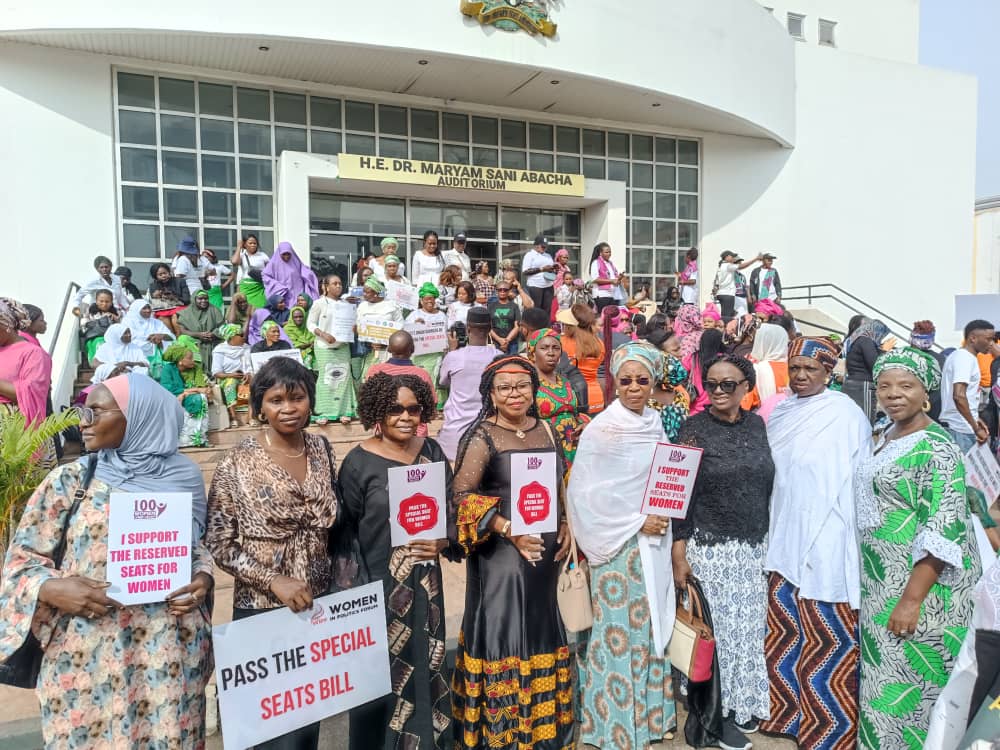
“The statistics show that Nigeria still has a long way to go in achieving gender parity in its parliament. Today, I participated in the public hearing of the National Assembly Constitution Review (House of Representatives) in Abuja.
“I stand in solidarity with the women and men of goodwill in Nigeria to declare that now is the time for the Special Seats Bill.”
Read the full text of her below.
NATIONAL PUBLIC HEARING 10TH NATIONAL ASSEMBLY (NASS) CONSTITUTION REVIEW PROCESS SPECIAL SEATS BILL: THE TIME IS NOW! SUPPORT THIS ACTION FOR INCLUSIVE GOVERNANCE 22ND SEPTEMBER, 2025 VENUE: TRANSCORP HILTON, ABUJA, FCT
PREAMBLE/SALUTATIONS: Your Excellency, the Chairman of the House of Reps, Constitution Review, distinguished leadership of HoRs, Honourable Members of the Constitution Review Process, Ladies and Gentlemen, including of the media and civil society organizations, especially women’s groups.
Introduction- Where are we in Inclusive Governance?
Despite the historic 2023 general election, the representation of women in Nigeria’s national and state parliaments remains alarmingly low, with women securing less than 5 percent of available seats. This stark statistic not only falls far short of the global average of 26.5 percent, but it highlights an alarming trend of declining female participation in Nigeria’s legislative bodies. Shockingly, at least 14 state houses of assembly have no female representatives at all. In the federal legislature, women hold a mere 3 percent of seats in the Senate and just 4 percent in the House of Representatives. The situation is equally bleak at the state level, where only 48 women serve among 990 legislators. Out of 1,019 female candidates who contested the 2023 State House of Assembly elections, only 48 emerged victorious—a discouraging success rate of just 4.7 percent for women.
Faced with these sobering realities, Nigerian women across the nation unite in strong support for the bold legislative action of the 10th National Assembly. The ongoing Constitution Review Process, and particularly the proposed Special Seats Bill to amend the 1999 Constitution of the Federal Republic of Nigeria (CFRN), signals a transformative step forward. By championing the inclusion of gender-responsive provisions and affirmative action measures, this initiative aims to break down entrenched barriers and open the doors to meaningful representation for women in elective offices. It is time to end the cycle of exclusion and empower Nigerian women to claim their rightful place in the country’s leadership, shaping a future that reflects the true diversity and dynamism of our nation.
Comparative Analysis of Nigeria and Other African States
Significant progress has been made in several African countries regarding the representation of women in parliament. According to the Inter-Parliamentary Union’s 2023 database, the following countries have achieved at least the 30% benchmark set by the Beijing Declaration and Platform for Action (BDPA) for women in power and decision-making:
1. Rwanda: Women constitute 61.3% of the lower house and 34.6% of the upper legislative chamber.
2. South Africa: Women represent 46.2% of the lower house and 44.4% of the upper legislative house.
3. Senegal: The percentage of women in parliament is 46%.
4. Namibia: Women hold 44.2% of seats in the lower house and 14.3% in the upper legislative chamber.
5. Mozambique : Women’s representation in parliament stands at 43.2%.
6. Cape Verde : Women make up 41.7% of parliament.
Other notable countries include:
- Burundi: Women hold 38.2% of the lower house and 41.0% of the upper legislative house.
- Cameroon: The representation is 34.5% in the lower house and 29.0% in the upper chamber.
- Uganda: Women represent 33.8% of parliament.
- Angola: Women hold 33.6% of parliamentary seats.
- South Sudan: Women represent 32.4% in the lower house and 32.1% in the upper legislative chamber.
- Niger: Women constitute 30.7% of parliament.
- Zimbabwe: Women make up 30.6% of parliament, with 44.2% in the lower and upper legislative houses.
- Tanzania: Women hold 37.4% of parliamentary seats.
This analysis highlights the strides made by various African countries in increasing women’s participation in governance and underscores the need for Nigeria to enhance its representation as well..
The statistics show that Nigeria still has a significant distance to cover in achieving gender parity in its parliament. Therefore, I support and stand in solidarity with the women and men of goodwill in Nigeria to declare that the time is now for the special seats bill.
The time is now! Inclusive governance is not just a lofty ideal—it is the recognition of women’s fundamental rights to shape the destiny of their nation. This is a matter of social justice, a cornerstone of authentic democracy, and a prerequisite for true and sustainable development. Women’s participation in government is not a privilege to be granted at the discretion of those in power; it is a constitutional and moral right that both the legislative and executive branches are duty-bound to uphold and advance. No woman should be expected to submit to laws or policies crafted without her voice or representation. The exclusion of women diminishes the very fabric of our democracy. Now is the moment to break the cycle of marginalization, insist on equal representation, and demand a system where every voice truly counts. The future of Nigeria depends on it.
UNDERSTANDING THE SPECIAL SEATS BILL PROPOSITION
This Bill seeks to amend the Constitution of the Federal Republic of Nigeria, 1999, to provide for the reservation of seats for women in the National Assembly and State Houses of Assembly. It seeks to remedy the low representation of women in Legislative Houses by providing for special constituencies to be contested and filled by women as a temporary measure to promote women’s political representation. The provision is subject to review after three general election cycles of twelve years, for either retaining, increasing, or abolishing the temporary measure.
RELEVANT SECTIONS OF THE CONSTITUTION TO BE ALTERED ARE: 48, 49, 71, 77, 91, 117 OF THE 1999 CFRN.
This Bill is expected to create additional seats as follows:
- Senate: The Senate of the National Assembly will have one additional seat per state, plus one for the FCT, totaling 37 seats. This amendment aims to alter Section 48, which concerns the composition of the Senate.
- House of Representatives: One additional seat for a women-only constituency across the 36 states plus the FCT, for a total of 37 seats. The amendment targets the alteration of Section 49, which pertains to the composition of the House of Representatives.
- State Houses of Assembly of each state: Will reserve one additional seat per senatorial district, resulting in a total of three additional seats for women in each state of the Federation, plus the Federal Capital Territory (FCT). Section 91 on the Composition of the House of Assembly is to be amended to accommodate the additional seats.
- Amendments to Sections 77 and 117 will provide for a “special constituency”, which means a constituency reserved explicitly for women, from which only women shall be elected, in accordance with the provisions of Sections 48, 49, and 91 of the 1999 Nigerian Constitution.
SUMMARY/CONCLUSION
Measures aimed at addressing inequalities and promoting inclusive governance do not constitute discrimination as defined in Section 42 of the 1999 CFRN. Instead, they support the realisation of the constitutional aspirations and objectives of non-discrimination among Nigerian citizens. This aligns with the National Gender Policy, 2022, which advocates for achieving 50 percent gender parity in elected and appointed positions. Vote in favour of these constitutional reforms! An increase in women’s representation benefits Nigeria.
No woman should ever be subjected to laws or policies crafted without her voice or representation. The exclusion of women is a direct affront to the very fabric of our democracy. We stand at a crossroads where we can choose to break the cycle of marginalization, insist on equal representation, and demand a system where every voice is valued.
The Future of Nigeria Depends on Us
Now is the moment to act decisively. The future of Nigeria hinges on our commitment to inclusive governance and equitable representation. Let us not miss this opportunity to change the narrative and embrace a governance structure that reflects the richness of our diversity.
Together, we can chart a course toward a more equitable, just, and prosperous Nigeria for all.
The time is now!
PROFESSOR JOY NGOZI EZEILO, SAN, OON (LIFE BENCHER)
Proposed amendment/Suggested Texts for Section 42:
JUSTIFICATION: The need for these measures comes from concerns that affirmative action—such as creating special seats—might be seen as discriminatory or as a breach of Section 42 of the Nigerian Constitution. However, Gender Bills that introduce “specific measures” are not meant to discriminate but to break down existing barriers and promote true equality of opportunity. These targeted actions are crucial in addressing historical and systemic inequalities that have limited women’s involvement in governance. By implementing such measures, we are not only supporting the principle of non-discrimination enshrined in the Constitution but also actively working towards the constitutional aim of inclusive representation. Ultimately, these reforms aim to create a level playing field, making sure that all citizens, regardless of gender, have fair access to political participation and leadership roles.
EITHER THIS (A)
S.42 Nothing in this Section shall prevent Parliament from enacting laws that are reasonably necessary to provide:
(a) for the implementation of policies and programmes aimed at redressing social, economic or educational imbalance in the Nigerian society; and
(b) for matters relating to adoption, marriage, divorce, burial, devolution of property on death or other personal law issues.
Repeal of S. 42 (3)
OR
THIS (B)
New Section 42
- Everyone is equal before the law and has the right to equal protection and benefit from the law.
Equality includes the full and equal enjoyment of all rights and freedoms. To promote the achievement of equality, legislative and other measures designed to protect or advance persons or categories of persons disadvantaged by unfair discrimination may be taken.
The State shall not discriminate directly or indirectly against anyone on one or more grounds, including race, gender, sex, pregnancy, marital status, ethnic or social origin, colour, age, disability, religion, conscience, belief, culture, language and birth.
Discrimination Defined:
The expression “discriminatory” refers to giving different treatments to individuals based primarily on their respective characteristics, including race, gender, sex, pregnancy, marital status, ethnic or social origin, colour, age, disability, religion, conscience, belief, culture, language, and birth. This means that individuals of one particular characteristic may face disabilities or restrictions that those of another characteristic do not face, or alternatively, they may receive privileges or advantages not available to others.
Overview of the Proposed Amendment of Section 42:
Section 42 addresses the right to freedom from discrimination. It safeguards citizens of Nigeria belonging to a particular community, ethnic group, place of origin, sex, religion, or political opinion from discrimination based on these identities. Section 42 (1) guarantees equality before the law, irrespective of sex. Another pertinent provision is Section 17, which asserts that “every citizen shall have equality of rights, obligations and opportunities before the law.” The issue to examine is whether the constitutionally guaranteed equality established in Section 42 is sufficient or merely a case of de jure equality alongside de facto inequality.
There is no definition of discrimination in our Constitution, and it is clear from a reading of s. 42, including the proviso that this provision is not absolute. Question: Will s. 42 apply and nullify any law, regulation, custom or practice which constitutes discrimination against any Nigerian?
New addition on inclusive governance to enhance women’s political participation- proposed amendment to Section 42 by Prof. Joy Ngozi Ezeilo, SAN, OON, Life Bencher
- To consider amending Section 42 (1) to read …. The State, people or institutions shall not discriminate directly or indirectly against any person on any ground, including race, sex, pregnancy, marital status, health status, ethnic or social origin, colour, age, disability, religion, conscience, belief, culture, dress, language or birth.
- Amend Section 42 of the Constitution by introducing subsection 1 (c) to read… In addition to the measures contemplated in subsections (a) and (b), the State shall take legislative, administrative and other measures to ensure that not more than two-thirds of the members of appointive bodies shall be of the same gender (sex).
- Amend Section 147. (3) to read … Any appointment under subsection (2) of this section by the President shall be in conformity with the provisions of section 14(3) and section 42 subsection 1 (c) of this Constitution: -provided that in giving effect to the provisions aforesaid the President shall appoint at least one Minister from each State, who shall be an indigene of such State, and shall ensure that not more than two-thirds of the list of proposed nominees for the position of ministers submitted to the Senate for confirmation shall be of the same gender (sex).
- Amend Section 192. (1) by introducing subsection 1 (a) to read .. the Governor shall ensure that not more than two-thirds of the list of proposed nominees for the position of Commissioners of the Government of a State submitted to the State Assembly for confirmation shall be of the same gender (sex).
On State Police:
I support the establishment of state police as an essential aspect of federalism and for effectively preventing and combating crime across Nigeria. Since 2012, I have advocated for community policing, beginning with a memorandum I submitted to the Police Service Commission.
Given Nigeria’s current security challenges and the significant security budgets allocated by state governors—often incorporating unconstitutional, opaque, and unappropriated security votes that facilitate corruption—the time is ripe for state police. Policing should be local.
While there are concerns about potential abuses of power, especially by the state Governors, these can be mitigated through appropriate legislation and by closing any loopholes that could be exploited. This includes ensuring police independence and establishing statutory tenures for police chiefs. Any governor who misuses these powers will be held strictly accountable and face prosecution.
I am also willing to offer my legal services free of charge to help develop a model that interested states can adopt.
Prof. Joy Ngozi Ezeilo, SAN, OON [Ph.D. (Nig.), LLM (London), LL.B. (Nig.), BL, Diploma Peace & Conflict Res (Uppsala)]
Professor of Public Law (BBC recognised 100 Women of Impact in the World 2022)https://www.bbc.co.uk/news/resources/idt-75af095e-21f7-41b0-9c5f-a96a5e0615c1
Former Dean, Faculty of Law, University of Nigeria (UNN), Enugu Campus.
Former United Nations Special Rapporteur on Trafficking in Persons, especially women and children (August 1, 2008 to July 31st 2014). Link http://www.youtube.com/watch?v=FE_mSntYm8M
Expert Member/Commissioner, United Nations Independent International Fact-Finding Mission on Sudan (FFM Sudan) Dec 2023 to Date- https://www.ohchr.org/en/hr-bodies/hrc/ffm-sudan/index
Member, United Nations Secretary General’s Civil Society Advisory Board on Prevention of Sexual Exploitation and Abuse (2019- 2021).
Founding Director, Women’s Aid Collective (WACOL)/Tamar Sexual Assault and Referral Centre. Chairperson, Sexual Assault Referral Network, Nigeria- www.wacolnigeria.org
Chairperson, Nigerian Bar Association (NBA), Justice Sector Reform
Phone: +234-8033062359 Skype: joy.ezeilo2
Email: joy.ezeilo@unn.edu.ng ; ezeilojoy@yahoo.co.uk
Facebook: Joy Ezeilo
Twitter: @NgoziEzeilo
Instagram: prof. joyezeilo
ANNEX: Extracts from the Kenyan Constitution
PROMOTION OF WOMEN PARTICIPATION IN ELECTORAL PROCESS IN KENYA.
1. Kenya has a progressive and transformative constitution which recognizes gender equality and equity.
2. The Constitution is supreme and prescribes National values and principles of governance. These values and principles bind all state organs, holders of state offices, public officers and indeed all persons.
3. The values and principles are expressed in Article 10 of the Constitution. Those germane to representation of women are – the rule of law, human dignity, inclusiveness, equality, non- discrimination and protection of the marginalized.
4. Chapter four of the constitution provides the Bill of Rights. One of the rights is Equality and freedom from discrimination. Article 27(3) posits that women and men have the right to equal treatment including the right to equal opportunities in political, economic, cultural and social spheres . In addition, both the state and any person are precluded from discriminating another person on any grounds of sex among others. Article 27 ( 8) is more incisive.It obligates the state to take legislative and other measures to implement the principle that not more than two -thirds of the members of elective or appointive bodies shall be of the same gender.
5. The Constitution at chapter 7 encapsulates General principles for the electoral system. Key among them is the freedom of citizens to exercise political rights and that not more than two -thirds of the members of elective or appointive bodies shall be of the same gender.
6. Article 100 of the constitution caps it all with a compulsive directive to Parliament to enact legislation to promote representation in Parliament of marginalized groups, women inclusive.
7. The above provisions apply in respect of elections conducted under universal suffrage based on the aspiration for fair representation and equality of the vote.
8. It is cardinal to point out that under Article 81 of the constitution, there is a prescription for conduct of free and fair elections free from violence, intimidation and improper influence.
9. In addition ,the Electoral Code of Conduct developed by the Independent Electoral and Boundaries Commission and enacted in the Elections Act prohibits gender based electoral violence. This seeks to protect women who participate in elections by insisting on a level playing ground to enable a fair contest.
10. The Kenyan electoral architecture also provides for election for seats in Parliament ( National Assembly and Senate) and County Assemblies on the basis of proportional representation by use of party lists.
11. The Constitution and the Elections Act require that political parties submit to IEBC at least 45 days to the General election date, lists of party members it would desire to stand elected based on the party strength in the respective assemblies.
12. The party lists contains names of candidates in alternate between female and male.
13. The qualification follows priority listing.
14. The party lists are closed for the entire five year electoral cycle.
15. In the Senate, 16 seats are purely reserved for women .
16. Still in the Senate, 2 slots are provided for youth- one being male and the other female. 2 other slots are also provided for persons with disability – one being male and the other female.
17. At the National Assembly, 12 slots are available for nomination with the lists containing alternates between female and male.
18. Kenya has 47 counties . Each county has a county assembly. In order to ensure compliance with the constitutional principle of not more than two -thirds gender principle , there is usually a provision for gender top up so that no gender falls below one- third representation.
19. In ensuring compliance, the Hare quota formula is deployed. It is based on the number of elective seats won by a political party divide by the total number of elective seats then multiplied by the available seats.
20. There exists a dispute resolution mechanism from the IEBC Dispute Resolution Committee and the Political Parties Disputes Tribunal at the base to the High Court that hears and determines appeals.