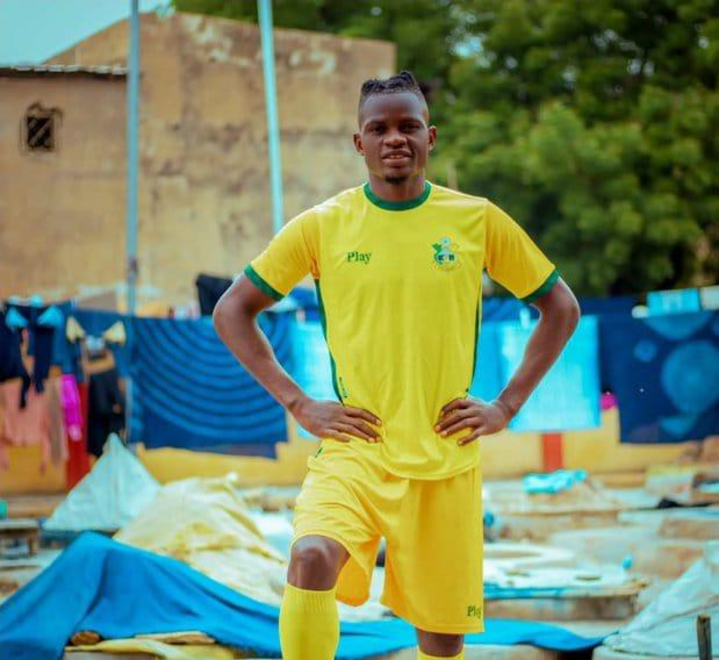
For a brief moment, a nation believed football had witnessed a miracle. In the end, it was left mourning another young life lost far too soon.
Nigeria’s football community has been plunged into mourning following the death of Katsina United defender Ozor Chinedu, the teenage player whose remarkable return to life after being taken to a mortuary had briefly inspired hope across the country.
The 18-year-old defender died after spending several days in critical condition at Katsina General Hospital, bringing a heartbreaking end to a story that had captivated football fans and raised difficult questions about emergency medical care in Nigerian sports.
Chinedu collapsed on the pitch during a pre-season fixture between Katsina United and Niger Tornadoes in the Gusau/Ahlan Pre-Season Cup at the Muhammadu Dikko Stadium in Katsina.
He was rushed to a private hospital, where he was reportedly certified dead before his body was transferred to the mortuary. It was there that mortuary attendants noticed signs of movement, prompting an emergency transfer to the Intensive Care Unit of Katsina General Hospital.
The extraordinary development spread rapidly across the country. Football supporters, teammates and clubs abandoned mourning messages for prayers, hoping the young defender might recover.
That hope has now been extinguished.
His remains are being conveyed to his home state for burial as tributes continue to pour in from across Nigeria’s football fraternity.
A Career Cut Short
Chinedu had only recently joined Katsina United after spells with Kano Pillars’ youth system and Heartland FC. Coaches and teammates described him as one of the promising defenders of his generation, admired for his discipline, composure and determination.
Although he had barely begun to establish himself in the professional game, those who worked with him believed he possessed the talent to progress to the highest level.
Instead, his career has ended before it truly began.
Friends and colleagues say Chinedu’s body is now being taken to his family for burial, where relatives and members of his community are preparing to receive the young footballer whose final journey has drawn national attention. What should have been the beginning of a promising professional career has instead become a funeral procession, leaving a family to mourn a son and a community to bury one of its brightest hopes.
A Tragedy That Raises Familiar Questions
His death has also revived concerns about medical preparedness at football matches in Nigeria.
Across the world, football authorities have strengthened emergency protocols following the collapses of players such as Denmark’s Christian Eriksen at UEFA Euro 2020, whose life was saved through immediate cardiopulmonary resuscitation (CPR), rapid defibrillation and swift specialist medical intervention.
Read Also: From Obituary To ICU: Katsina United defender declared dead, then found alive in mortuary
Cameroon’s Marc-Vivien Foé collapsed and died during the 2003 FIFA Confederations Cup, while Spanish footballer Antonio Puerta died in 2007 after suffering repeated cardiac arrests. More recently, several professional players have survived similar incidents because emergency medical teams and life-saving equipment were immediately available.
Sports medicine experts have long maintained that the first few minutes after a cardiac collapse often determine whether an athlete lives or dies. That reality has fuelled renewed debate over whether every Nigerian professional match has adequately equipped ambulances, defibrillators, trained emergency personnel and clearly rehearsed medical response plans.
While there has been no official indication that deficiencies in emergency response contributed to Chinedu’s death, the circumstances surrounding the incident have inevitably prompted fresh scrutiny of match-day medical arrangements.
Calls for Medical Review
The unusual sequence of events—from an initial declaration of death to the discovery of signs of life at the mortuary—has also sparked wider conversations about emergency diagnosis, patient monitoring and medical protocols before death is certified.
Medical experts note that although extremely rare, cases have been documented worldwide in which patients initially believed to have died later showed signs of life, underscoring the importance of careful observation and strict verification procedures before certification.
The circumstances of Chinedu’s case have therefore generated calls for a comprehensive medical review, both to establish exactly what happened and to identify lessons that could strengthen emergency care for athletes.
Football Pays Tribute
Messages of condolence have continued to arrive from clubs, officials and supporters who followed the teenager’s remarkable but ultimately tragic story.
For many Nigerians, the images remain difficult to forget: a young footballer carried lifeless from the pitch, a family suddenly given hope after signs of life emerged in a mortuary, and days of anxious prayers before the devastating news finally arrived.
His death is more than the loss of a promising defender. It is another painful reminder that talent alone cannot protect athletes where emergency medical systems fall short, and that every minute counts when life hangs in the balance.
For Katsina United, his family and Nigeria’s football community, what began as a story of extraordinary hope has ended in profound grief.